

Tariffs Work – Japan and U.S. Steel Partnership Returning American Manufacturing Power
It’s quite a remarkable story in the arc of history. After WWII American industrial production expert W. Edwards Deming went to Japan and helped them establish some of the world’s best quality manufacturing standards. Eighty years later and the offspring of those Japanese industrial beneficiaries have returned to America to help us rebuild the rust belt.
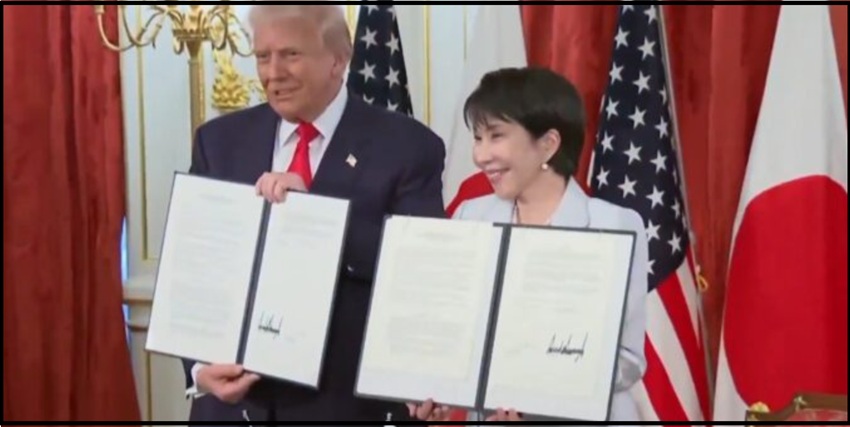
 The story of a renewed Japan-USA partnership, spearheaded by a trade policy of President Donald Trump, is turning into a very special relationship between our two economies.
The New York Times has a lengthy article outlining how the Pennsylvania steel sector is revitalized and enthusiastic about the new partnership {SEE HERE}.
NYT – […] Following a fraught $14.9 billion takeover of U.S. Steel by Japan’s Nippon Steel, a squad of translation app-wielding Japanese engineers has descended on the plant, armed with a multibillion-dollar mandate to drag the aging facility into the 21st century.
In the Mon Valley, an industrial region winding along the Monongahela River in southwestern Pennsylvania, land at the Edgar Thomson site is being cleared for a new steel rolling mill the length of five football fields. Inside the existing facilities, equipment is being upgraded, while engineers dispatched by Nippon Steel are introducing new and more efficient Japanese steel-making techniques.
In Mon Valley, “the excitement level is the highest I’ve seen it here in my 27 years,” said Ron Ferchak, a director at U.S. Steel’s Mon Valley Works. The hope, he added, is “that this will be an operation that will carry on for decades.”
[…] Nippon Steel is busy making preparations for the new $3 billion mill that is expected to prolong the site’s life for decades. In total, the work is expected to generate thousands of jobs and more than $1.7 billion in economic activity for Pennsylvania.
If this project succeeds, industry analysts say, it could serve as a model for reviving American manufacturing after decades of offshoring and lagging domestic investment. Japan has long been known for its high quality, hyper-efficient manufacturing methods pioneered by companies like Toyota.
[…] “Whether it’s for reindustrialization or to compete against Chinese overproduction, the U.S. and Japan are very structurally compatible,” said William Chou, deputy director of the Japan Chair at the Hudson Institute, a think tank focused on trade, economics and national security. Nippon Steel-U.S. Steel-style investments show how “Japanese expertise, capital and technology can reinvigorate U.S. manufacturing,” he said. (read more)


Post a Comment