

President Trump Triggers Reciprocal Block Against Canadian Procurement and Govt Contract Bids
As noted by President Trump, U.S. businesses and contractors are blocked from bidding on most Canadian federal and provincial contracts for goods and services. However, the U.S. does not restrict Canadian companies from bidding on U.S. state and federal contracts.
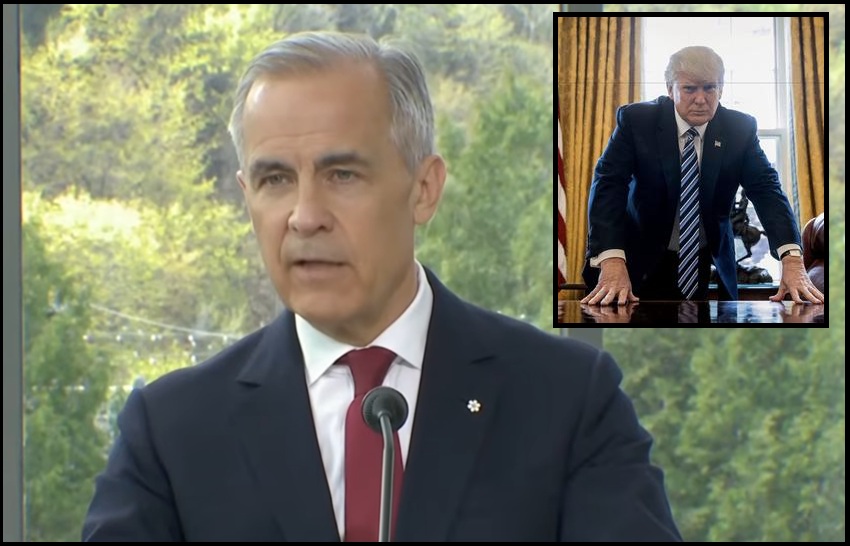 Effective yesterday, that one-way benefit ends.
Keep in mind, as this Truth Social post was made, USTR Jamieson Greer is in a meeting with Canadian USMCA negotiator, Dominick LeBlanc.
(Via Truth Social) – “Everyone knows that Canada doesn’t let our Great Dairy Farmers sell into the Canadian Market, and that the only reason Canada makes Autos is because of previous disastrous Trade Agreements while other Presidents were in Office. Canada has been ripping us off for years, but what many do not realize is that the Canadian Government, including Canadian Provinces, have banned American Small Businesses and Companies from selling into their Government Procurement Markets.
This is the case even though Canada gets broad access into the massive American Government Procurement Market, including those of our States. That is not reciprocity, it is a Canadian Trade Scam. From now on, NO RECIPROCITY – NO ACCESS! I am hereby directing the GSA, working with the USTR, to take all necessary steps to REMOVE Canadian-origin products from GSA’s Multiple Award Schedules unless Canada restores full and fair reciprocity for American Farmers and Companies. Those schedules account for more than 50 BILLION DOLLARS a year. This should have been cut off years ago, by other Administrations, like it was by mine, only to reinstituted by Sleepy Joe Biden. Thank you for your attention to this matter!”
This is also a good opportunity to point out that several media reports on a Deloitte analysis of the Canadian economy, centered around what would happen if the USMCA was terminated, are fundamentally false. The Deloitte analysis has a baseline assumption that is structurally flawed.
You can read the Deloitte Report HERE. In the forward you will notice they ‘assume’ all trade between the U.S. and Canada continues, they assume Canada will retain “most favored nation” status, and they assume without the USMCA Canada will face a global 10% baseline tariff. Each of these assumptions is structurally false.
 There is a lot of wish-casting in those assumptions, the biggest one is that Deloitte ignores the Chinese components in Canadian goods.
Without the USMCA to protect their transshipping operation, Canada will not be able to assemble component parts from China into finished goods bound for the United States. There would be no content agreement with the U.S, nor would there be a defined ‘rules of origin’ to use as a guide.
A singular Chinese component not available in the USA (as an outcome of the U.S-China agreement) would be enough to disqualify the entire product line from Canada.
Within their economy Canada doesn’t independently manufacture all their component parts, specifically the heavy industrial components. Instead, Canada ships the raw materials to China then imports the finished component goods. Canada is more of an assembly plant than a manufacturing plant.
Canada exports raw materials, then imports component goods. THAT is their economic model. They chose that route when they decided that climate change was their gospel, carbon emissions were terrible and industrial manufacturing was dirty work that kills the planet. Now they have a “clean energy” carbon trading system, but electricity alone cannot smelt and pour.
Deloitte misses that BIG PICTURE entirely, in their estimate of losing 163,000 jobs/yr, and losing $402 billion in economic activity over ten years.
Basically, Deloitte pretends some form of a general Free Trade Agreement with the USA will exist, while continuing to believe a bunch of Canadian processes, rules, bans, provincial regulations, tariffs and non-tariff barriers against the USA remain in place. The status quo without the USMCA. I can assure you those massive assumptions are flawed.
Canadian media and govt officials are pushing the Deloitte-ca analysis to maintain their political agenda.
The more likely scenario of a USMCA termination (without a FTA to replace it) would be somewhere around a 30 to 50% drop in all export-driven GDP, totaling well over a trillion dollars in the first 5 years. 70% of all Canadian exports would be impacted, and the job losses are not just in the direct manufacturing or assembly process. All of the ancillary economic activity that is derived from wage spending suddenly stops.
China would need to spend 10x more to subsidize Canada than Europe is spending to subsidize Ukraine.
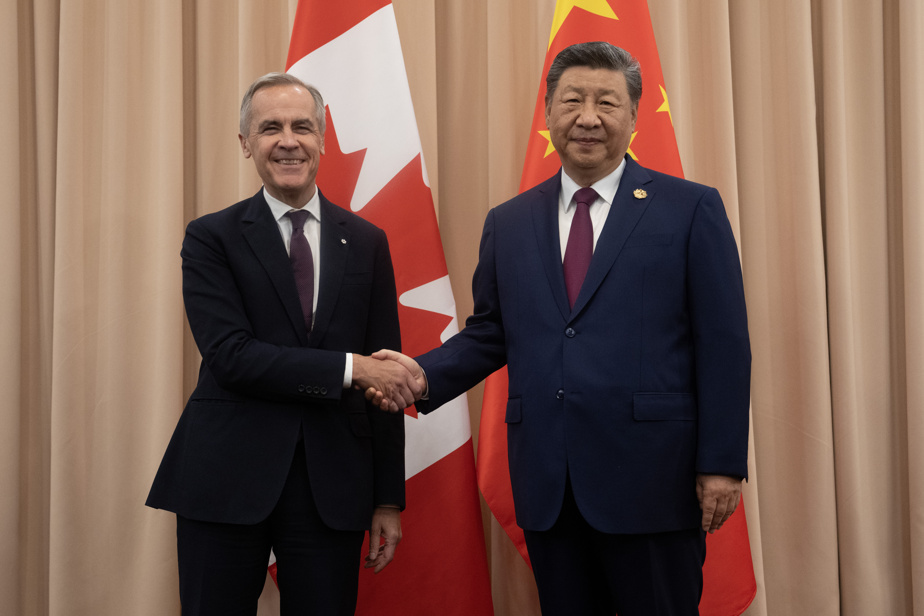
President Trump and U.S. Trade Representative Jamieson Greer waited to see if Canada was going to follow through with their retaliatory tariffs against U.S. imports.
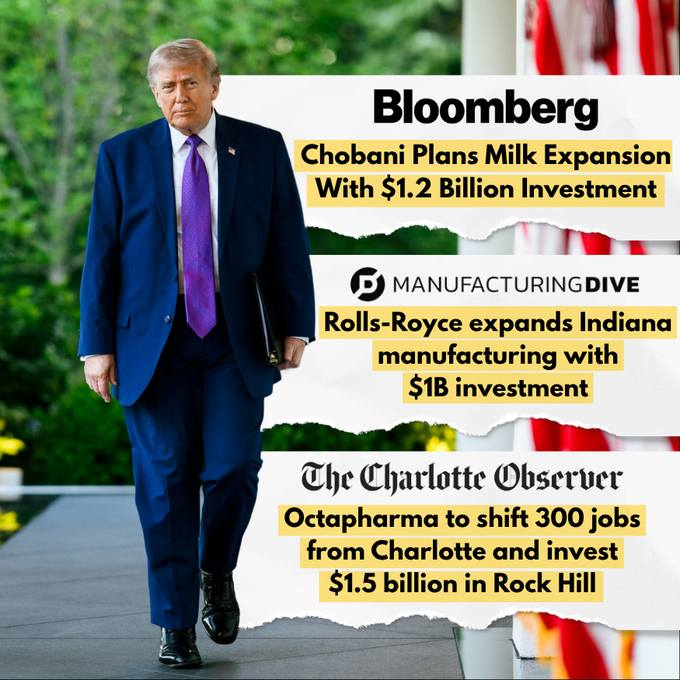 The Canadian government carried out their tariffs, so today the White House introduced 50% ‘stacking tariffs’, on top of pre-existing tariff rates, and additional import bans against several Canadian products.
It should be quickly noted that several North American corporations are already making moves to avoid the issues by shifting production lines and adding additional investment into U.S. manufacturing. As expected, getting locked out of a 32 trillion economy is not an option for survivability.
The easiest way to review the issues is not to read media reports, but rather to read the actual outcomes as announced by the White House and USTR. CTH has noticed several Canadian outlets are already making false claims.
A White House FACT SHEET IS HERE.
The USTR ANNOUNCEMENT IS HERE.
It is worth reviewing both sets of outlines as well as accompanying links to determine the exact types of Canadian products being targeted by stacking tariffs and import bans.
WHITE HOUSE – Today, to address Canada’s increased discrimination against U.S. commerce, President Trump signed five Proclamations pursuant to Section 338 of the Tariff Act of 1930 to ban certain products from Canada and modify the scope of the tariffs on certain Canadian products previously announced on July 20, 2026. President Trump is taking decisive and appropriate action to respond to Canada’s additional retaliation and continued discriminatory treatment of crucial American exports.
- After breaking off trade talks with the United States last month, today Canada imposed new retaliatory tariffs on about $20 billion of U.S. exports, including steel, dairy, and agricultural equipment.
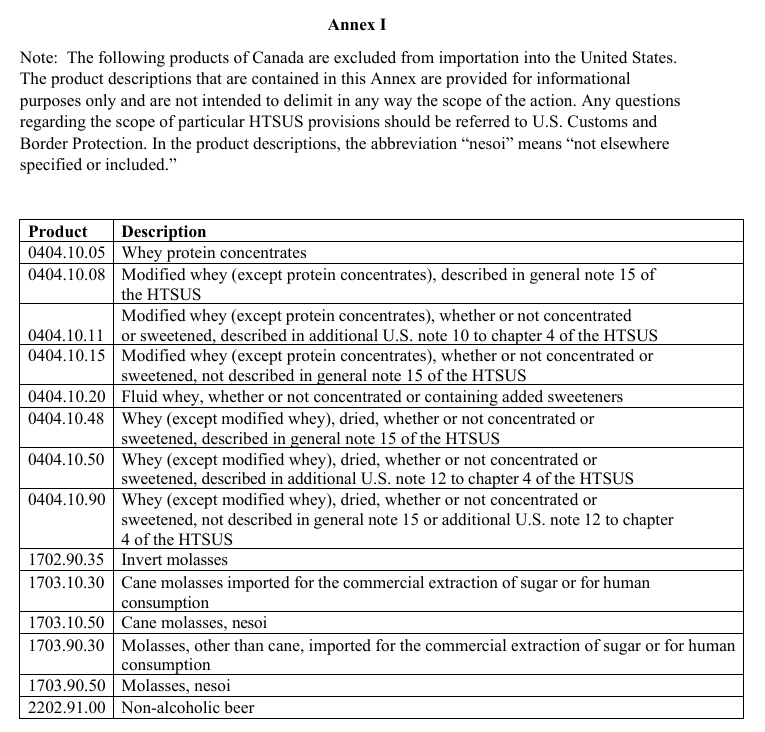
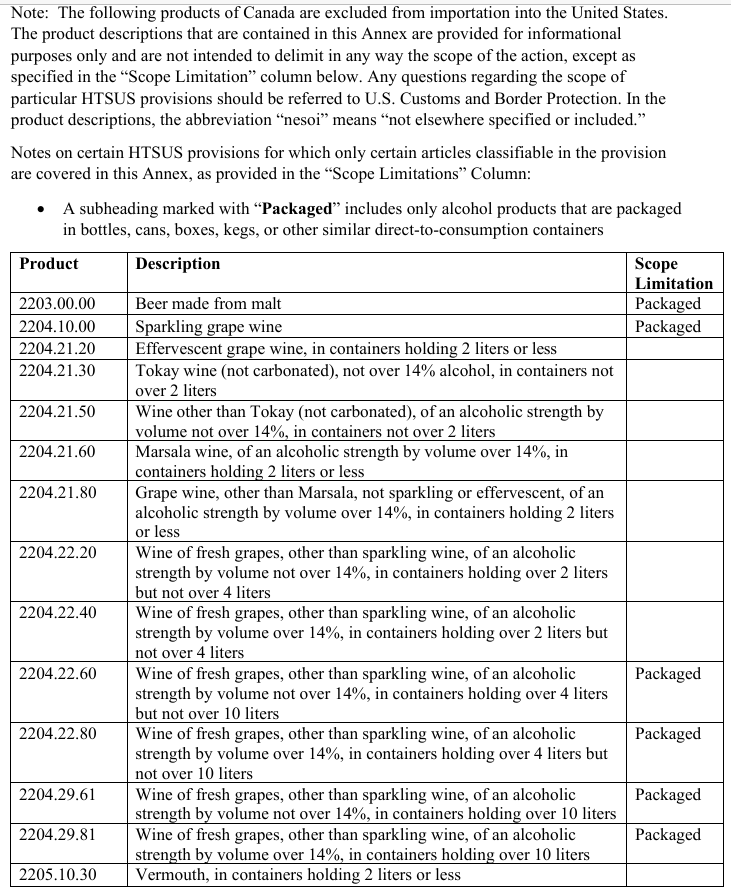
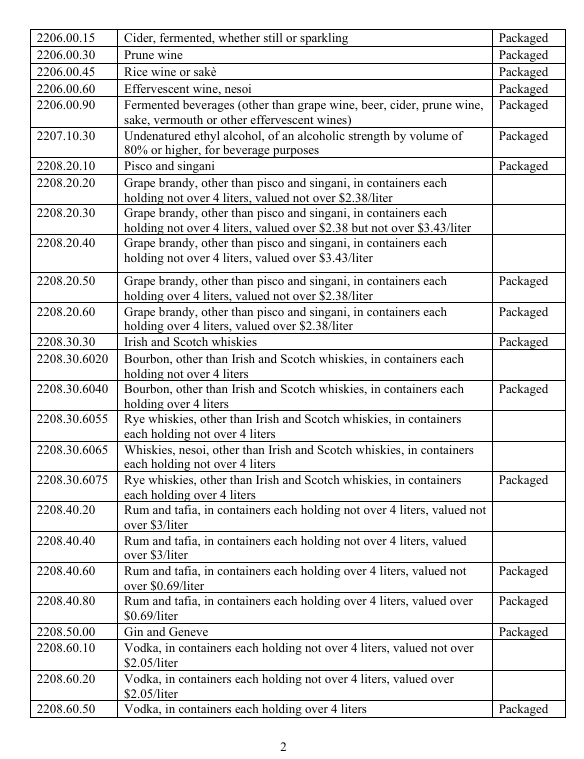
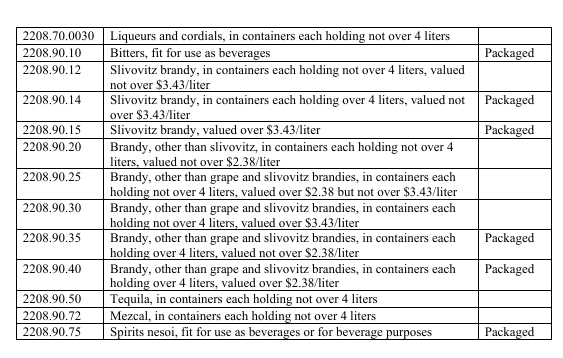
- Because Canada maintained and in fact increased its discrimination against U.S. commerce with respect to U.S. alcoholic beverages, President Trump, under Section 338, imposed import bans on certain Canadian alcohol and other products that were subject to the 50 percent tariffs imposed under Section 338 in Proclamation 11046.
- Moreover, because Canada maintained its discrimination against U.S. commerce with respect to dairy, President Trump, under Section 338, imposed import bans on certain Canadian dairy and other products of Canada that were subject to the 50 percent tariffs imposed under Section 338 in Proclamation 11047.
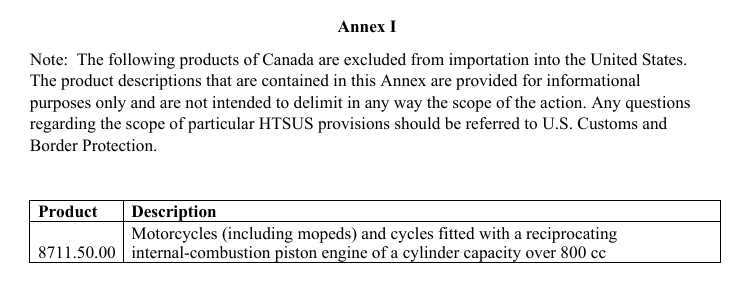
- To offset the burden to U.S. commerce while better serving the public interest, President Trump is also modifying the July 20, 2026 actions by removing certain products, such as rock salt and cement, from the scope of the Section 338 tariffs and replacing those products with new ones, ranging from all-terrain vehicles (ATVs) to additional dairy products.
- These Section 338 tariffs apply to all covered goods regardless of whether a good originates under the U.S.-Mexico-Canada Agreement (USMCA) and apply in addition to tariffs imposed under Section 232 of the Trade Expansion Act of 1962.
- The import bans will take effect on September 29, 2026, and the product additions and removals will take effect on September 15, 2026.
- {SOURCE}
WASHINGTON – Today, Ambassador Jamieson Greer issued a statement after President Trump exercised his authority under Section 338 of the Tariff Act of 1930 to ban certain Canadian products from entering the U.S. market and modify the scope of the July 20 actions to effectively offset the burden or disadvantage to U.S. commerce by Canada’s discriminatory measures.
“After weeks of good faith and intensive efforts between U.S. and Canadian negotiators, Canada walked away from a near-final trade deal that offered better treatment than any other trading partner, and instead Canada chose to embark on senseless retaliation against the United States,” said Ambassador Greer. “Today’s action, combining targeted import bans as authorized by Section 338 and a calibration of the underlying Section 338 tariffs, is a natural consequence of Canada’s continued discriminatory treatment of crucial American exports, ranging from alcoholic beverages to dairy products to motor vehicles. President Trump will continue to leverage the tools at his disposal to defend the interests of American workers and exporters, and restore reciprocity in our bilateral trade relationships.”
Additionally, the President has directed USTR (Office of the United States Trade Representative) and GSA (General Services Administration) to remove $50 billion dollars’ worth of Canadian-origin products from GSA’s Multiple Award Schedules.
To view the lists of Canadian products banned under the Section 338 actions, click here (motor vehicles), here (dairy), and here (alcohol).
To view the lists of product modifications to the Section 338 actions, click here (motor vehicles) and here (alcohol).
To read the proclamations making the above changes, please see:
To read the White House Fact Sheet, click here.
Background:
Section 338 of the Tariff Act of 1930 (19 U.S.C. 1338) empowers the President to, among other things, impose duties of up to 50 percent on imports of a foreign country to offset the burden or disadvantage from a foreign country’s unequal imposition on or discrimination against the commerce of the United States. On July 20, 2026, finding that the public interest will be served by his actions, President Trump took three separate Section 338 actions to level the playing field for important American exports to Canada—motor vehicles, alcoholic beverages, and dairy. Section 338 further empowers the President to exclude products from importation into the United States if a foreign country maintains or increases its discriminatory practices against U.S. commerce.
Based on Canada’s continued retaliation and discrimination against U.S. commerce, President Trump has determined that it is necessary and appropriate to ban certain Canadian products from entering the U.S. market and refined the scope of the July 20 actions to target strategic Canadian sectors while removing certain non-sensitive Canadian goods from the scope of the actions. {Source}
It appears that some of the product categories would be limited by ‘stacking tariffs’, as a consequence the U.S. is simply moving to ban the products altogether.


Post a Comment