

SCOTUS to hear transgender athlete cases Tuesday
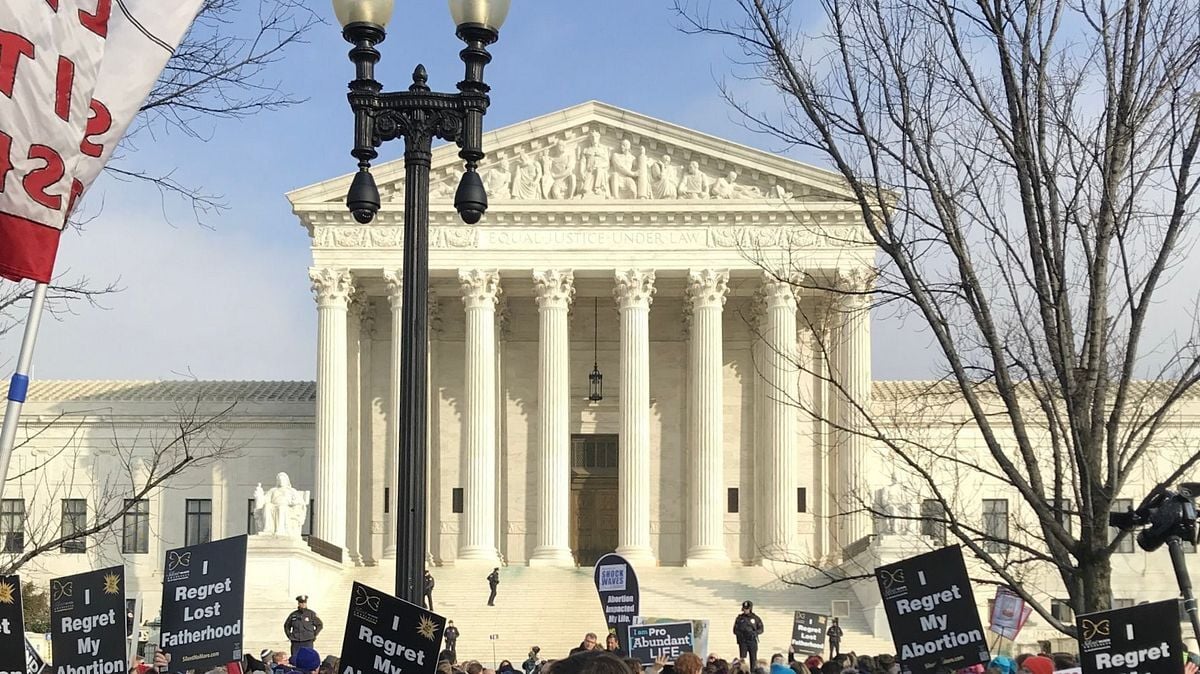
(The Center Square) - The U.S. Supreme Court on Tuesday will hear arguments in two cases on whether biological men can compete in women’s and girls sports.
The cases, Little v. Hecox and B.P.J. v. West Virginia, challenged state laws in Idaho and West Virginia, respectively, that bar transgender individuals from competing in girls and women’s sports.
In April 2021, West Virginia passed the Save Women’s Sports Act, which bars transgender individuals from participating in girls and women’s sports in public secondary schools and colleges.
B.P.J., a 15-year-old student who has identified as transgender since the third grade, said the law violated sex discrimination rules laid out in Title IX and questioned whether the 14th Amendment’s Equal Protection Clause prevented states from offering separate sports teams based on biological sex.
The law was then blocked from going into effect by the Fourth Circuit Court of Appeals. Lawyers for the state argued the West Virginia law aligned with Title IX and prevents unnecessary barriers to sports participation in the future.
“If a school official determines that a male student has a sufficient female identity, that could be enough to participate on the girls’ team under the Fourth Circuit’s ruling – no matter the male student’s appearance or athletic performance,” lawyers for the state warned in a brief to the Supreme Court.
Carrie Severino, president of the Judicial Crisis Network, told The Center Square there is no constitutional basis for biological men to participate in women’s sports. She said state legislators and voters should be able to decide whether they want to allow transgender individuals to compete.
“Whatever you think of the wisdom of allowing biological men to play in women’s sports, they don’t have a constitutional argument for why they need to play in women’s sports,” Severino said. “That’s just never been historically part of our Constitution.”
In 2020, Idaho enacted the Fairness in Women’s Sports Act, which imposes a ban on participation of transgender women and girls on public school sports teams from elementary school through college. In Idaho, Lindsay Hecox, a transgender woman, filed a lawsuit after attempting to join the Boise State University track and cross country team.
Similarly to B.P.J., Hecox argued the state ban violated Title IX protections and the Constitution’s Equal Protection Clause under the Fourteenth Amendment.
The Ninth Circuit Court of Appeals blocked Idaho’s law from going into effect, allowing Hecox to participate in sports at Boise State University. Lawyers for Hecox said the case is meant to focus on one situation, rather than apply to all transgender athlete participation across the country.
“Petitioners seek to create a false sense of national emergency when nothing of the sort is presented in this case,” lawyers for Hecox wrote in a brief to the court.
Lawyers for Hecox also said the National College Athletics Association allowed transgender individuals to participate in women’s sports so long as they suppressed testosterone for one year.
“H.B. 500 was passed specifically to exclude girls and women who are transgender from girls’ and women's teams,” lawyers for Hecox wrote.
Idaho Gov. Bradley Little, in a brief to the court, defended the state’s law as an enforcement measure to protect women and girls from safety hazards and unfair competition standards. He cited examples in Idaho of women's sports teams that refused to participate in competition against transgender athletes for fear of injury.
While the injunction only applies to Hecox, Little said it prevents other states from enacting similar legislation because the ninth circuit defines “sex” using subjective tests.
“These holdings stop Idaho from enforcing its law and thwart similar laws passed to protect women’s sports in Alaska, Arizona, and Montana,” lawyers for Little wrote in a brief to the court.
As the U.S. Supreme Court prepares to hear both cases on Tuesday, Severino said she is hopeful for an outcome that upholds both Idaho's and West Virginia's laws. She said the abundance of justices on the court who prescribe to originalist legal theories will affect the court’s decision.
“There’s just no way to use an originalist analysis and get to the point where you can say states must force their public schools to allow boys in girls sports,” Severino said.
Photo: Sarah Roderick-Fitch / The Center Square


Post a Comment