

Jack Smith Seeks Cover With Latest Claims Related to Biden-Era Arctic Frost Spying Scandal
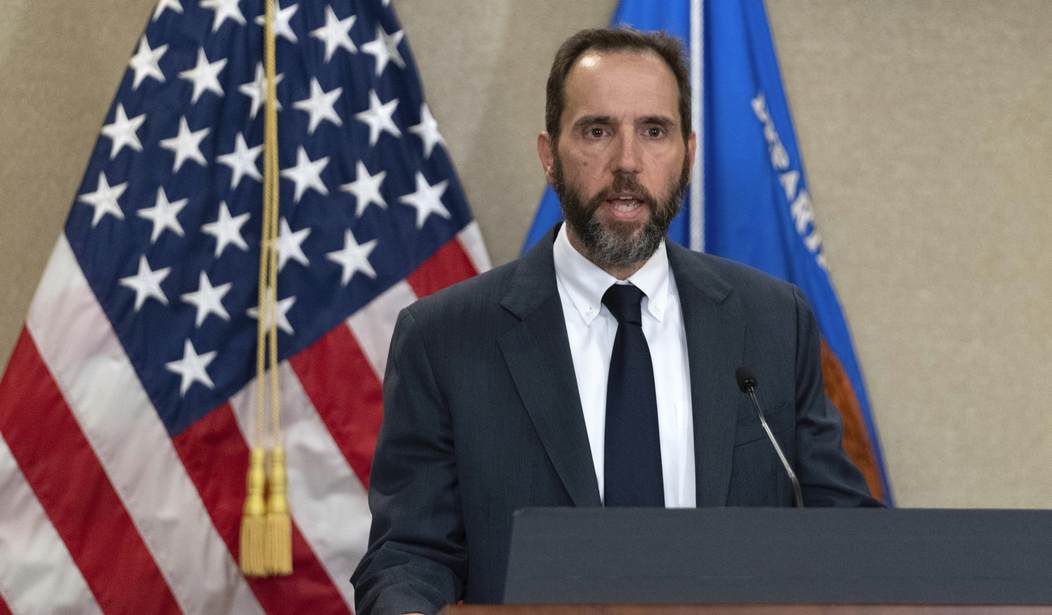
Every day, it seems we are learning more about the massive spying on of Republican members of Congress led by then-special counsel Jack Smith under former President Joe Biden as part of his administration's extensive lawfare.
According to details released Wednesday from the former special counsel’s recent deposition, Smith's latest attempt to find cover from his actions is that it wasn’t the policy at the time to reveal the names of lawmakers in the subpoenas filed with judges demanding the phone records from carriers like AT&T and Verizon. The deposition was taken during a December 17 meeting with the House Judiciary Committee.
Here's how things went down:
Asked by an unidentified Judiciary Committee questioner whether judges who approved the subpoenas knew they were demanding that phone carriers AT&T and Verizon hand over lawmakers’ call logs, Smith said: “I don’t think we identified that, because I don’t think that was Department policy at the time.”
Judiciary members pushed back that Smith’s team risked infringing on constitutional “speech or debate protections” for lawmakers, around a dozen of whom — including former House Speaker Kevin McCarthy (R-Calif.) and the panel’s chairman, Jim Jordan (R-Ohio) — had their cellphone metadata taken.
“When it comes to Members of Congress, though, there are, you know, the Speech or Debate protections, which you totally sidestepped,” the unidentified questioner asked. “I mean, the toll records provide enormous [sic] valuable information, because it shows who a Member of Congress, who a Senator is taking calls from and who they’re calling.”
“And if you map it up against the Senate or the House calendar, you can see, you know, what the inputs are to their legislative decision-making, which is at the core of Speech or Debate. Do you agree with that?” the questioner added.
Smith replied that he and his office personally take the “protections of the Speech or Debate Clause seriously,” noting that they are “an important part of separation of powers.”
Smith claimed that when the subpoenas were sought, "we got approval from [the Department of Justice’s] Public Integrity [Section], who are the sort of keepers of that issue, and they concurred in us getting these subpoenas. It was an apparent attempt to push the actions onto the DOJ.
As RedState reported, GOP lawmakers have called for the impeachment of Judge James Boasberg, who granted those phone records requests, with Senator Ted Cruz (R-TX) calling it an “abuse of power.” Though Smith’s deposition now calls into question whether Boasberg actually knew the subpoenas were for Cruz and other Republican lawmakers.
Another shocking thing that was revealed in the deposition transcript was the fact that Smith admitted that the January 6 Committee’s star witness and former Trump White House aide Cassidy Hutchinson had no firsthand knowledge about some of the wild claims she made about that day and President Donald Trump, Fox News reported.
Smith said specific claims were like those of a “second or even thirdhand witness." Other witnesses shared "different perspectives" than Hutchinson's, he explained.
"If I were a defense attorney and Ms. Hutchinson were a witness, the first thing I would do was seek to preclude some of her testimony because it was hearsay," Smith stated, "and I don’t have the full range of her testimony in front of me right now, but I do remember that that was a decent part of it."
Smith went on to mention that "a number of the things that she gave evidence on were secondhand hearsay, were things that she had heard from other people, and, as a result, that testimony may or may not be admissible, and it certainly wouldn’t be as powerful as firsthand testimony."
My oh my, how things look very different now that President Trump is back in office.


Post a Comment