

8th Circuit Stays Lower Court Injunction of Federal Immigration Enforcement Operations in MN
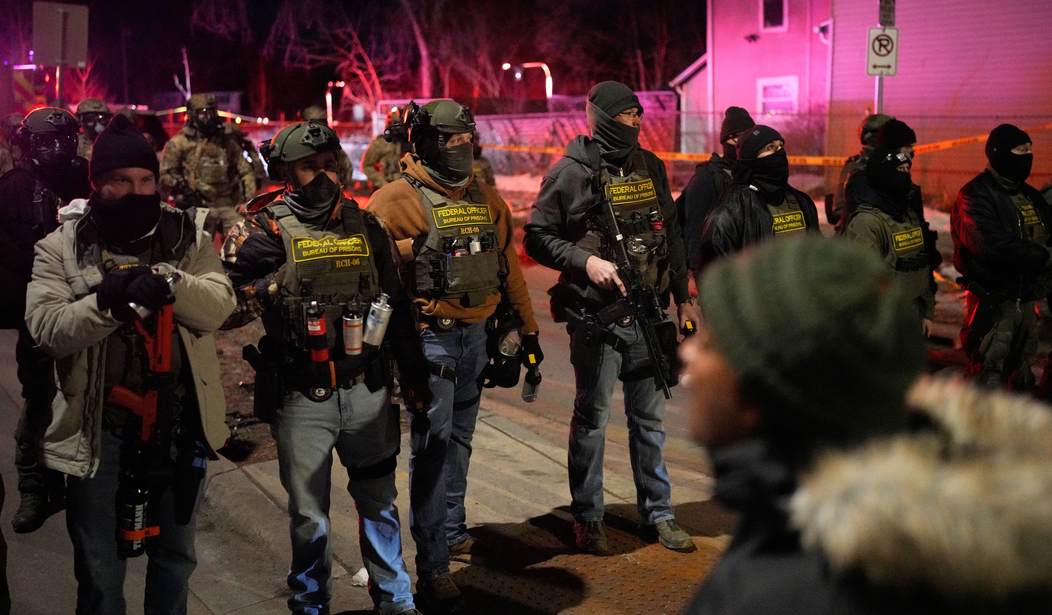
There are multiple lawsuits ongoing involving the Trump administration's immigration enforcement efforts in Minnesota (Operation Metro Surge), but the 8th Circuit Court of Appeals just pressed pause on one of them, issuing a stay pending appeal in the case titled Tincher v. Noem.
As Bob Hoge reported, U.S. District Court Judge Kate Menendez issued a preliminary injunction on January 16th, which:
ordered agents not to retaliate against people “engaging in peaceful and unobstructive protest activity,” or to use pepper spray or other “crowd dispersal tools” in retaliation for protected speech. The judge also said agents could not stop or detain protesters in vehicles who are not “forcibly obstructing or interfering with” agents.
The administration appealed that injunction and sought an administrative stay of it, as well as a stay pending appeal. The 8th Circuit issued an administrative stay on Wednesday and now has issued a formal stay pending appeal.
The court's ruling is brief (only six pages), and turns on its determination that the District Court's injunction is both too broad and too vague (citations omitted):
We accessed and viewed the same videos the district court did. What they show is observers and protestors engaging in a wide range of conduct, some of it peaceful but much of it not. They also show federal agents responding in various ways. Even the named plaintiffs’ claims involve different conduct, by different officers, at different times, in different places, in response to different behavior. These differences mean that there are no “questions of law or fact common to the class,” that would allow the court to decide all their claims in “one stroke.”
Second, in addition to being too broad, the injunction is too vague. Directions not to “[r]etaliat[e] against persons who are engaging in peaceful and unobstructive protest activity” or “[s]top[] or detain[] drivers . . . where there is no reasonable articulable suspicion” are simply commands to “obey the law,” which are “not specific enough.”
Even the provision that singles out the use of “pepper-spray or similar nonlethal munitions and crowd dispersal tools” requires federal agents to predict what the district court would consider “peaceful and unobstructive protest activity.” The videos underscore how difficult it would be for them to decide who has crossed the line: they show a fast-changing mix of peaceful and obstructive conduct, with many protestors getting in officers’ faces and blocking their vehicles as they conduct their activities, only for some of them to then rejoin the crowd and intermix with others who were merely recording and observing the scene. A wrong call could end in contempt, yet there is little in the order that constrains the district court’s power to impose it. “[F]ederal courts do not exercise general oversight of the Executive Branch,” and the structural injunction imposed here, given its breadth and vagueness, is too big a step in that direction.
Of course, this isn't the end of the inquiry. It simply presses pause on the District Court's injunction while the merits of the case are sorted out. We'll continue to follow along and report on any developments as warranted.


Post a Comment