

Chinese Auto Sales to Europe Expected to Top 700,000 Units Sold This year
The geopolitical baseline for Europe is often determined by the economics of their situation. In 2024 approximately 408,000 cars from China were sold in Europe. For 2025 that number is now expected to exceed 700,000 units despite tariffs.
Previously we highlighted the short-term ramifications of the European Union push to force the sale of electric vehicle (EVs) upon the consumer base. {SEE HERE} EU automakers unable to meet the compliance goal began purchasing carbon credits to avoid stiff EU fines. Many of those carbon credits were purchased from Chinese automakers, who then turned around and started using the extra EU revenue to discount Chinese cars sold in Europe.
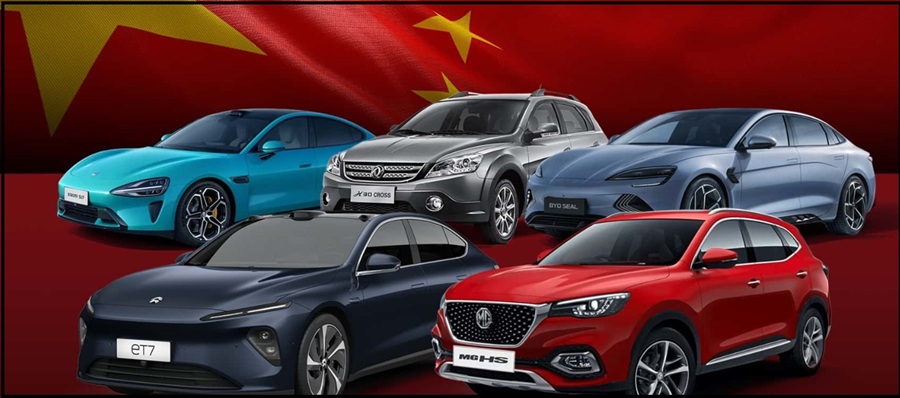
In essence, EU car companies started subsiding China to undercut their own market. An outcome of the EU chasing the ridiculous green energy project throughout the European free trade zone.
Now reports are beginning to surface of how the non-EV segment of the industry is being lost to less expensive Chinese hybrid autos that: (1) are much cheaper, (2) not bad in quality, and (3) are not subject to the 35% EV tariff rate.
The EU tariff applied to gasoline powered cars or hybrids from China is 10%. That tariff is not enough to stop the imports. The Chinese hybrid autos are substantially less than European car brands, and there’s no financial incentive for China to build auto plants in the EU zone especially when you consider the EU is subsidizing those cars by purchasing carbon credits.
When analyzed from a cost and consequence, the entire EU dynamic toward car companies is a little funny. However, for Germany this is a serious issue, and with the German industrial economy already stagnant – every impact to their auto industry only makes the situation worse.
 When you overlay the big picture of their expensive “green energy” costs, the EU find themselves in an unescapable downward spiral. Quite literally, all commonsense seems to have been lost in their green energy chase.
By focusing on energy targets, specifically by trying to force production of European electric vehicles that are not favored by European car purchasers, the EU is shrinking their economy to the benefit of Beijing exploitation.
EUROPE – This year, sales of Chinese-made cars across the EU, UK, and EFTA are expected to exceed 700,000. This is up significantly from the 408,000 that were sold in 2024.
The surge comes despite the fact that additional tariffs of up to 35 percent, on top of the existing 10 percent import duty, were instated in November of last year.
Rather than dampen demand, the tariffs have simply redirected it. While the added fees specifically target EVs and extended-range electric vehicles, hybrid and internal combustion engine (ICE) models remain subject only to the base 10 percent tariff.
Predictably, Chinese brands have leaned into that category, shifting their European strategy toward models that sidestep the higher costs.
Thanks to significantly lower production costs, up to 30 percent cheaper than in Europe, it doesn’t make financial sense for these brands to relocate production just to serve a tariff-guarded market. Instead, they’re exploiting the gap. (read more)
The only Chinese auto plant current in the works for construction is in Hungary, not coincidentally the country with the most common sense as it applies to energy costs. BYD (Build Your Dream) is building a plant in Hungary expected to manufacture 150,000 units/yr.
While most EVs are generally best for short duration use, the Chinese hybrid vehicles are not a terrible build quality if you are an auto purchaser that changes vehicles frequently. We dodged a bullet by electing President Trump in 2024, because Joe Biden (Blackrock) had positioned the North American auto industry toward a similar fate as currently happening in Europe.
Three Chinese automakers were going to spend $5 billion in Mexico creating new EV and hybrid vehicles destined for the U.S. market. However, Beijing abandoned those plans as soon as President Trump won the election.
The Europeans and leftists in the U.S. scoffed at President Trump for rejecting the premise behind the Green New Deal, which included electric car mandates. Those same Europeans are now watching as their industrial economy collapses segment by segment; taken over by far cheaper Chinese industrial outputs.


Post a Comment