
A recent article in Politico quoting several cabinet members of Prime Minister Mark Carney reflects a particular reality of the problem their economy will face in 2026.
 It appears that Canadian government officials have finally recognized the Trump administration plans to dissolve the USMCA or what Canada calls CUSMA next year. With that reality they have a big problem.
Mexico has been working throughout the year to initiate economic policies in alignment with the United States. However, structurally and politically this is an alignment that is impossible for Canada to do. Like many contracting European countries, the economic policies of Canada are centered around their climate change agenda and green energy goals.
For the past few decades Canada bought into the carbon scam and enacted climate change goals into law for carbon pricing, alternative energy production, industry and manufacturing costs. These mechanisms to control “climate change” are nuts in the big picture.
In order for Canada to position their economy to be in alignment with the rest of North America (USA and Mexico), Carney would have to reverse years of legislated rules and regulations. That is not going to happen, and Canada will always be at a disadvantage because of it.
(Politico) – […] It’s a moment of existential crisis for Canada, a senior Carney government official told POLITICO. Waiting out the Trump administration isn’t an option, the official said, arguing that what’s happening in the United States reflects a generational shift — not a temporary disruption — and that returning to a policy of closer integration with America would be foolish. (more)
With three quarters of their economic production tied to exports into the USA, and with the USMCA likely to be dissolved in favor of a bilateral trade agreement, Canada now has to find other markets for its products or lower all the trade barriers currently in place. Prime Minister Mark Carney is trying to find alternative markets.
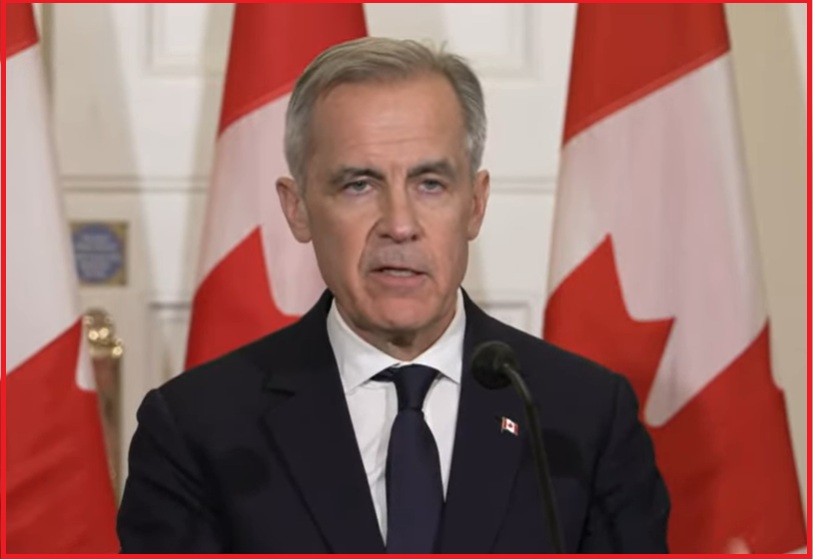 Carney has looked toward Europe, but that is a closed trade bloc difficult to engage. Carney has looked to southeast Asia, but that is an export driven market with limited capabilities to import costly western products. Carney has looked to Japan and China, but on scale there’s little to be gained.
The question is, where can Canada send its products if not to the USA. The brutally honest answer is nowhere. There just isn’t any other market, or combination of markets, who could replace the consumer base of the USA. Canada is refusing to admit this reality and 2026 is going to be a harsh awakening for the Canadian people.
The USMCA is currently facilitating around 60% of Canada’s exports into the United States. Cancel that agreement and suddenly 100% of all Canada-U.S. trade is on the table for negotiations.
U.S. Trade Representative Jamieson Greer and President Trump are going to put the squeeze on Mark Carney and every province within Canada as a consequence of their intransigence.
[…] Two-thirds of Canada’s economy is powered by trade, and roughly three-quarters of its exports flow to the U.S. It’s a C$1.3 trillion annual relationship that was celebrated on both sides of the border in good times but has become a source of leverage for America, especially with the Trump administration expected to continue squeezing Canadian industries with tariffs.
Europe is Carney’s top priority for deepening existing free-trade relationships. But closer integration with the European Union is a long game, and Canada has no interest in joining the bloc, according to the official, pushing Ottawa to explore other regions.
“Trade diversification is nothing new. People have talked about this for decades,” Sidhu said. “The difference here is other countries’ willingness to look at Canada as a reliable, stable trading partner,” he added, saying Trump has had a bigger influence on Ottawa’s strategy than any difference in trade philosophy between Justin Trudeau and Mark Carney.
Canada’s governing Liberal Party is under new management, forcing a cohort of Trudeau-era lawmakers to quickly learn the language of economics to make an impression with the new boss. Social issues have been demoted — as have brown shoes.
Cabinet ministers are competing to establish themselves as closers to meet Carney’s high expectations. The result is overlapping mandates that sow confusion over who owns what.
Canada-U.S. Trade Minister Dominic LeBlanc leads a new portfolio created under Carney, who sliced out North America from the international trade minister’s purview. (read more)
