
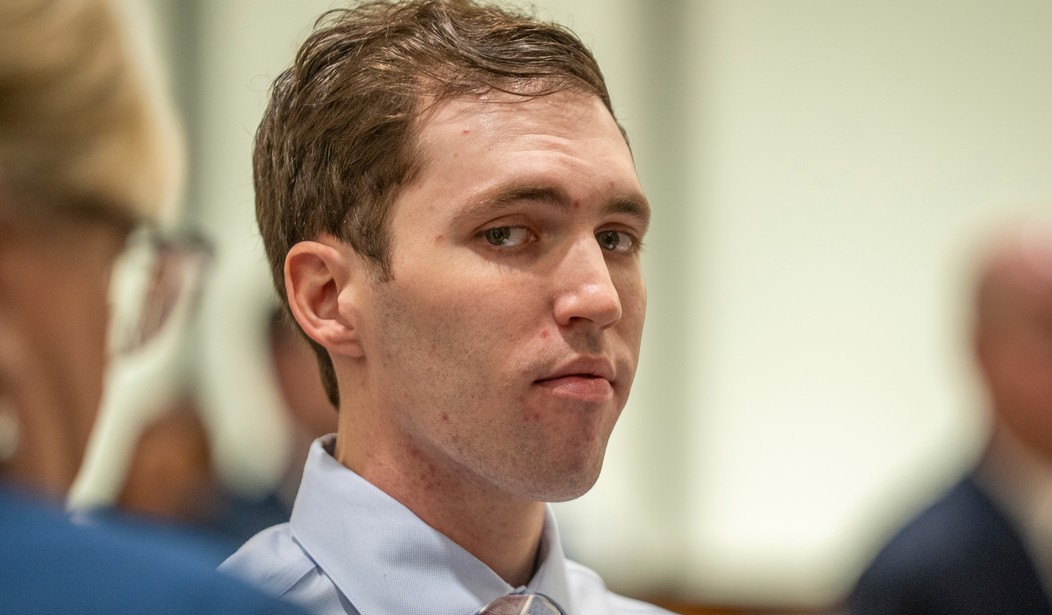
On Thursday, Tyler Robinson, the suspect in the assassination of Turning Point USA (TPUSA) co-founder Charlie Kirk, made his first in-person appearance in a Utah courtroom. Robinson's parents and brother were there for support, and nine Utah County Sheriff’s deputies were also present as security. In prior hearings in this case, Robinson had appeared via video or audio feed from jail.
The main focus of this hearing was to address the request by Robinson’s attorneys and the Utah County Sheriff’s Office that cameras not be allowed in the courtroom during the trial, and that media access be strictly limited.
The hearing was only briefly open to public, as 4th District Judge Tony Graf explained he will be hearing arguments on three issues: a request from the media for access to what occurred during a closed hearing on Oct. 22; a request from prosecutors to amend or clarify the publicity or “gag” order in the case, which governs attorneys and the media; and a request from a group of news organizations, spearheaded by The Salt Lake Tribune, who have asked Graf to allow them to weigh in on any closure requests or any other proposed limitations.
In a phone hearing in October, Judge Graf granted the request by Robinson's attorneys that Robinson be allowed to appear in street clothes during his in-person appearances at hearings and during the trial. However, Graf ruled that Robinson must remain shackled for safety of the witness and everyone in the courtroom.
A coalition of national and local news organizations is standing on the side of media access being allowed, and Jeff Hunt, a legal intervener the coalition had retained, was present at the hearing. Graf included in the standing decorum order required by the media that they could not produce video or still images of Robinson's restraints.
The man accused of assassinating conservative activist Charlie Kirk in the middle of a college event looked calm and chuckled with his lawyers as he appeared for the first time in person in a Utah court — with his family in the gallery.
Tyler Robinson, 22, was brought into the Provo courtroom wearing a simple blue button down and tie as his lawyers prepared to argue that media shouldn’t be allowed to film his hearings by claiming they could potentially taint a jury.
Judge Tony Graf allowed cameras to film for part of Thursday’s proceedings. The judge said he would hear from both sides behind closed doors and then open the courtroom back up to the public afterward. Even Robinson’s family was barred from the secret hearing, despite his lawyers request the kin be allowed to remain.
Robinson looked calm behind the defendant’s table flanked by his attorneys, and even smiled as he appeared to whisper joking comments to one before the hearing began.
Other images show Robinson smirking at times. Not a very good look when your attorneys are pleading for your life in front of a jury. Charlie Kirk's widow, Erika Kirk, stated in a November interview on Fox News that she wanted the trial to be televised. Kirk said she wanted everyone to "see what true evil is."
WATCH:
After the initial proceedings were concluded, Judge Graf directed a closed session with Utah state attorneys, Robinson, and his defense attorneys. Once that meeting was completed, Graf gaveled back into a public session in order to address the other issues at hand, which included his ruling on media access.
Judge Graf was then made aware of a violation of the standing decorum order that had occurred in the earlier public part of the hearing. Defense attorneys claimed that media that were live streaming had aired images of Robinson in shackles. Defense attorneys also claimed that conversation they had at their counsel table had been taped, and images of their computers had been generated. Defense attorney asked for remedial measures.
Jeff Hunt, the attorney intervener representing the coalition of media interests, stepped up to address the alleged violation. Hunt said it was the first time he had heard about it, but did acknowledge that pool photographers had inadvertently filmed the shackles, and measures were taken that the pool videos that were to be disseminated would not show the shackles. Hunt also claimed that any audio from counsel came from their microphones.
Judge Graf ruled that the standing decorum order had been violated, but terminating filming at this hearing would be a disproportionate punishment. He made it clear that transmission of any hearing cannot begin until court is in session, and must end when the court session is adjourned. Graf recessed briefly in order for cameras to be relocated away from the defense table to a location that was more suitable. Graf then warned that if further violations occurred, the court maintains the right to terminate any broadcast of the proceedings.
"This court takes this very seriously. While the court believes in openness and transparency it needs to be balanced by the constitutional rights of all parties," Graf said.
On the issue of media access and cameras in the courtroom for Robinson's trial, Graf heard arguments from the state's attorneys and defendant's attorneys. Once both sides aired their arguments, Graf said he wanted to deliberate further on the matters before him. Graf said a ruling could be expected by February 2026.
Robinson is facing charges of aggravated murder, felony discharge of a firearm causing serious bodily injury, obstruction of justice, two counts of witness tampering and commission of a violent offense in the presence of a child.
After Robinson's first physical appearance in the courtroom, it is clear why defense attorneys have petitioned to not have cameras present. Robinson presented as an empty husk with soulless eyes. At times he appeared disconnected from the proceedings and the people around him. Should Judge Graf rule to allow cameras in the courtroom during trial, Robinson's attorneys will be required to have him undergo serious coaching to improve his demeanor. However, death and evil cannot be easily disguised.