Saturday, November 21, 2026

Russia Responds to Ukraine Attack on Crimea Bridge – Zelenskyy Complains


Following the attack on the Crimea Bridge at the Kerch Strait, Russia has retaliated against Ukraine with a massive multi-regional attack on Ukraine infrastructure.

During a press conference Thursday, Russian Federation President Vladimir Putin noted the specific retaliation would take place {SEE HERE}, as Ukraine has now openly and publicly said they intend to target Russian non-military infrastructure.

Today, Zelenskyy is complaining about the retaliation:

“I held a coordination call with the military and government officials. As of this morning, since last night, Russia has launched more than 400 attack drones and over 110 missiles, 27 of them ballistic. The Russians spread this attack across many cities and regions of Ukraine. Absolutely all the targets were ordinary civilian infrastructure – things that literally sustain people’s lives. Energy facilities, logistics – bridges across the Dnipro, railway infrastructure. Strikes were also carried out, in particular, on substations and power lines that the nuclear power plants depend on and that connect Ukraine’s power grid with our neighbors in the European Union. Ordinary residential buildings were also damaged. Unfortunately, there are fatalities… At this point, we know that the strike killed eight people. My condolences to all their families and loved ones. Nearly 30 people have been injured.

Restoration of energy facilities and infrastructure is already underway throughout Ukraine wherever the security situation allows. The Minister of Energy and government officials reported on all the details of the hits and the resources needed for restoration. The Russians also used missiles with cluster warheads. This was one of the largest attacks. The strike tactics were particularly vicious this time: several groups of missiles were launched, with pauses of 20–30 minutes between them, to make it harder to put out fires, clear rubble, and carry out repairs. People had essentially already been killed by the time specialists were inspecting the initial damage to the facilities, as the Russians were carrying out double-tap strikes.

In total, 79 cruise missiles were shot down – and our warriors did an extremely professional job intercepting cruise missiles today. Our Ukrainian combat aviation performed very well – our F-16s, Mirages, and MiGs. Ballistic missiles are, unfortunately, much more difficult to deal with, and that depends not on our capabilities but on the supply of missiles by our partners. It is also worth separately recognizing our warriors who are trying to destroy Russian ballistic missile launchers using the means we have available. Tonight, we hit three launchers. One was destroyed, and we are still assessing the damage to the other two.

There were also separate reports on the situation in Odesa and the region, Kyiv and the region, Sumy, Kharkiv and the region, the Dnipro region, and Ukraine’s western regions. Restoration deadlines have been set.

We also need a clear response from the world to all this. It is important that our partners not only issue statements in support of Ukraine and Ukrainians, but also follow through on specific agreements on air defense. Putin launched this attack in a highly demonstrative manner – following weak meetings in China and the actual failure of his attempt to somehow “redraw” the world. And against the backdrop of Russia’s positions on the front lines being at their weakest at any point this year. Russia is trying to compensate for its military and diplomatic impotence with precisely this kind of terror, precisely these attacks on life.

I instructed the Ministry of Foreign Affairs of Ukraine to contact today each of the partners who have already begun preparing air defense packages. Deliveries need to be accelerated. I separately discussed with the Minister of Defense of Ukraine communication with our partners in the United States regarding the delivery of PAC-2 and PAC-3 missiles. We are counting very much on the Pentagon releasing the supplies we are waiting for. Glory to Ukraine!” (source)

The Dutch bragged about assisting Ukraine with the targeting of Dutch made missiles against the Kerch bridge.  The Dutch embassy in Kiev was one of the targets {SOURCE}.  According to Canadian Prime Minister Mark Carney, there are 2,500 Canadian military in Latvia.  Latvia has been launching drone strikes against the Leningrad region.

According to French media, France has deployed combat troops into Kiev to assist, […] France has supplied a number of advanced equipment to Kyiv: Caesar cannons, Mirage 2000 aircraft, and precision missiles. The Army has several regiments dedicated to supporting the forces. {SOURCE}

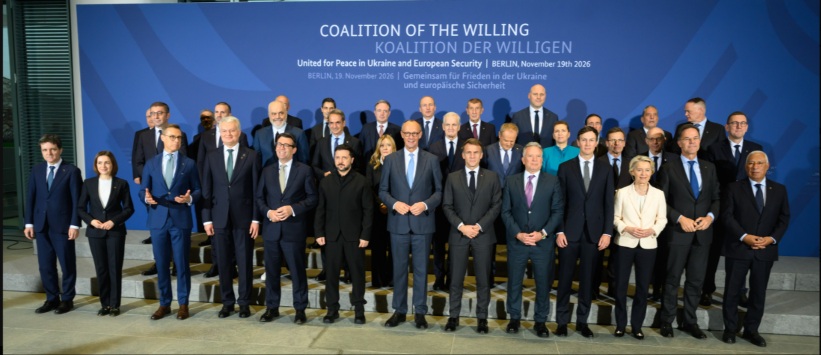
Yesterday, British Prime Minister Andy Burnham noted during a “coalition of the willing” press conference, the U.K. are building drones and missiles for Ukraine {SOURCE}.  German Chancellor Friedrich Merz has also admitted Germany has combatant advisors supporting the German hardware sent to Ukraine.

So, Dutch, Canadian, French, British and German troops are actively involved in combat operations against Russia, while politically the governments of Canada, France, the U.K and Germany are claiming that NATO is in a defense posture because Ukraine is not a NATO member.

The whole world can see this.

Prime Minister Carney Expresses Concern About “Changed Global Order”, Diminished Globalism and Then Makes False Claims About Starlink


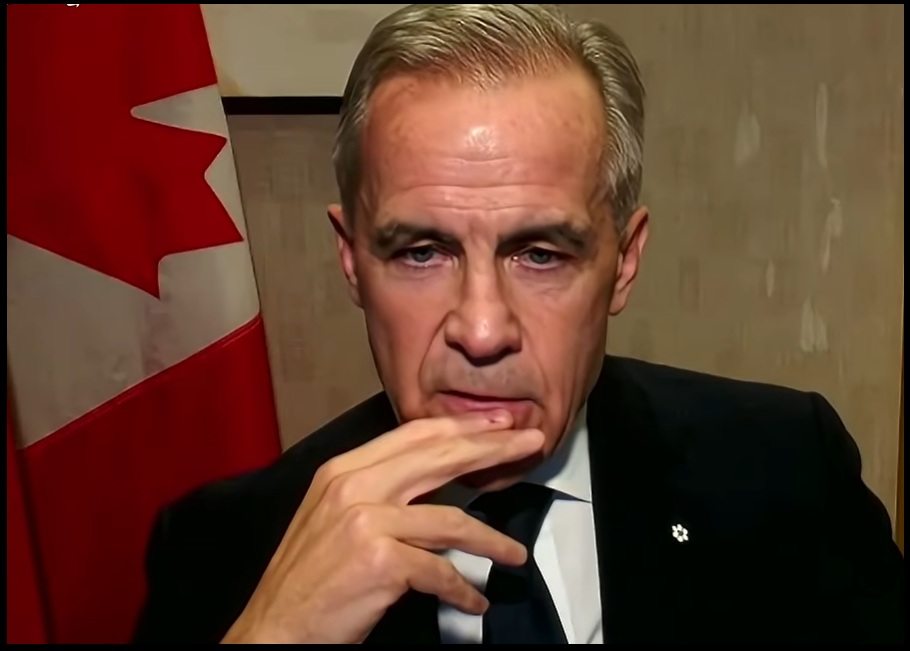
Representing the British Commonwealth perspective, Canadian Prime Minister Mark Carney is interviewed about the current status of U.S-Canada relations and expresses the U.K, EU concern about ‘middle powers’ no longer having control over the rules-based global order; where the rules were formerly determined by the commonwealth approach.

The interview itself is an interesting glimpse into the mindset of Carney, the current British government and the Europeans who have framed their global influence around rules that President Trump is no longer adhering to.  I have prompted the segment to the 9:00 minute mark where you will hear Carney express his concern as the lead-in to his statements about the middle-powers’ reliance on Starlink.

Carney states the experience with Ukraine and Starlink frames his perspective; however, he falsely says Ukraine has been using Starshield and the interruption therein leads his decision-making.  Carney is not a stupid man; he knows the truth of how NATO has never permitted Ukraine to use Starshield due to the ramifications surrounding conflict with Russia. Carney conflates the issue, furthering the lies told by Ukraine President Volodymyr Zelenskyy.  WATCH:


There is also an important background story that is not yet in the public common knowledge.  The current Canadian system known as Telesat “Lightspeed” is in serious financial trouble and on the cusp of a looming debt default.  This is a problem for Carney because the Canadian pension fund is heavily invested in Telesat. {GO DEEP}

$1.71 billion in debt service is due on December 6th, and Canadian Telesat only has $200 million in reserve.  The Canadian government is going to have to bail out Telesat or the investment by the Canadian pension fund will suffer.  In essence, Carney is facing the need to nationalize their Canadian satellite industry or help them achieve financing relief from some other investment mechanism [Think CHINA?].


Tariffs Work – Japan and U.S. Steel Partnership Returning American Manufacturing Power


It’s quite a remarkable story in the arc of history.  After WWII American industrial production expert W. Edwards Deming went to Japan and helped them establish some of the world’s best quality manufacturing standards.  Eighty years later and the offspring of those Japanese industrial beneficiaries have returned to America to help us rebuild the rust belt.

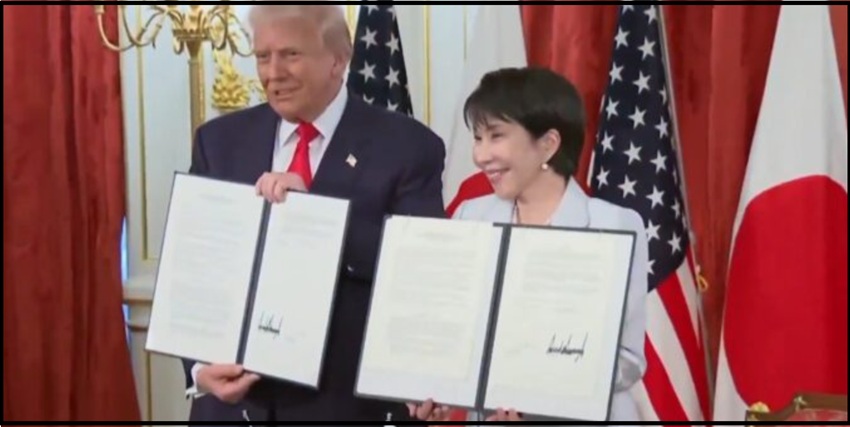
The story of a renewed Japan-USA partnership, spearheaded by a trade policy of President Donald Trump, is turning into a very special relationship between our two economies.

The New York Times has a lengthy article outlining how the Pennsylvania steel sector is revitalized and enthusiastic about the new partnership {SEE HERE}.

NYT – […] Following a fraught $14.9 billion takeover of U.S. Steel by Japan’s Nippon Steel, a squad of translation app-wielding Japanese engineers has descended on the plant, armed with a multibillion-dollar mandate to drag the aging facility into the 21st century.

In the Mon Valley, an industrial region winding along the Monongahela River in southwestern Pennsylvania, land at the Edgar Thomson site is being cleared for a new steel rolling mill the length of five football fields. Inside the existing facilities, equipment is being upgraded, while engineers dispatched by Nippon Steel are introducing new and more efficient Japanese steel-making techniques.

In Mon Valley, “the excitement level is the highest I’ve seen it here in my 27 years,” said Ron Ferchak, a director at U.S. Steel’s Mon Valley Works. The hope, he added, is “that this will be an operation that will carry on for decades.”

[…] Nippon Steel is busy making preparations for the new $3 billion mill that is expected to prolong the site’s life for decades. In total, the work is expected to generate thousands of jobs and more than $1.7 billion in economic activity for Pennsylvania.

If this project succeeds, industry analysts say, it could serve as a model for reviving American manufacturing after decades of offshoring and lagging domestic investment. Japan has long been known for its high quality, hyper-efficient manufacturing methods pioneered by companies like Toyota.

[…] “Whether it’s for reindustrialization or to compete against Chinese overproduction, the U.S. and Japan are very structurally compatible,” said William Chou, deputy director of the Japan Chair at the Hudson Institute, a think tank focused on trade, economics and national security. Nippon Steel-U.S. Steel-style investments show how “Japanese expertise, capital and technology can reinvigorate U.S. manufacturing,” he said. (read more)


What Elon Musk Just Revealed About Ukraine “Starlink” and “Starshield” Should Change the Conversation, and Make The Western World Wake UP!


There is finally some factual information that has surfaced as a result of Palmer Luckey (Andril, weapons tech) and Elon Musk (SpaceX) that sheds light on the Ukraine issues surrounding Starlink and Starshield.

Zelenskyy is Lying! [23:00]

It started with Palmer Luckey giving a simple explanation about how Musk was put in an untenable position by Volodymyr Zelenskyy and his duplicitous European advocates.  Essentially, the U.S. Military and NATO do not want their military satellite constellation known as Starshield to be destroyed by Russia as legitimate military targets.  Instead, the advocates for Ukraine want Elon Musk to provide Ukraine with access to the commercial product Starlink so they can hide behind an obfuscation that NATO is not assisting Ukraine directly.

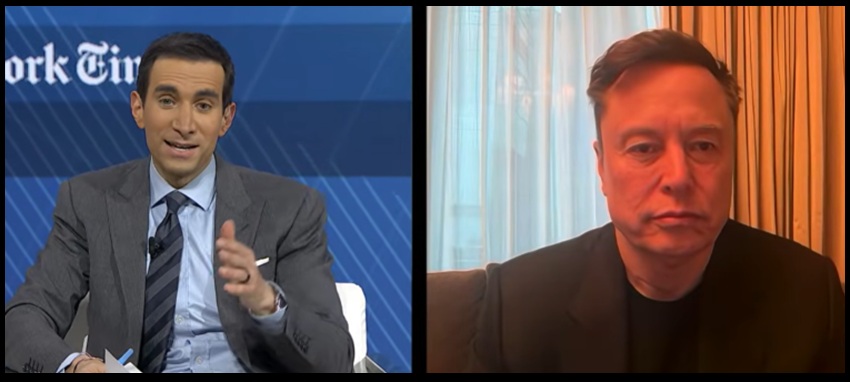
When questioned about it, Musk confirms that Zelenskyy is lying, NATO leaders in Europe are lying and U.S. advocates for Zelenskyy are lying.  Starlink is not permitted to be used for offensive military purposes, it is a commercial network, and Musk has no interest in seeing his commercial product destroyed if Russia labels it as a military target.  Ukraine has never been given permission to use Starlink for military operations. Zelenskyy is lying.  WATCH (prompted):


The United States and EU-NATO have never authorized Ukraine to use Starshield, a completely separate satellite system.

The reasoning is simple, if the U.S/EU-NATO authorize Zelenskyy to use Starshield, Russia may, quite understandably, destroy it because it represents a legitimate military target.  It is a risk NATO is unwilling to make.

The remarks by Palmer Luckey are embedded below.

.…”Nobody in the West actually wants Ukraine to win; they just want them to not lose for as long as possible.” 

With that full understanding at the forefront of any further discussion, now we enter the world of Machiavellian interests.

Canada (Mark Carney) and the EU-NATO coalition demand Elon Musk provide his commercial product to be used by Ukraine for military purposes.  This provides them cover and they don’t care if it is targeted or destroyed by Russia.

Canada and Europe do not have a comparable satellite communication system. They don’t care if Starlink is destroyed, because it is a system that is well ahead of their capability.  They position a private company, SpaceX, to lose their system because they have no downside to Russia destroying it.

Worse still, the U.S. military don’t care if Musk’s system is destroyed because the powers behind the U.S. military industrial complex don’t like the diminishment of their control.  The U.S. military don’t like the capability of a U.S. company to meet or exceed their own capability.  It’s like Musk having a private weapon that is on par with, perhaps even superior to, the weapon operated by the military.

The U.S. military has never authorized Zelenskyy to use the military version called Starshield.

The U.S. military don’t want their Starshield satellite targeting system destroyed by Russia.  So, they are hiding behind Starlink and European leaders are demanding that Musk put his commercial product at risk to support Ukraine.