Monday, November 2, 2026

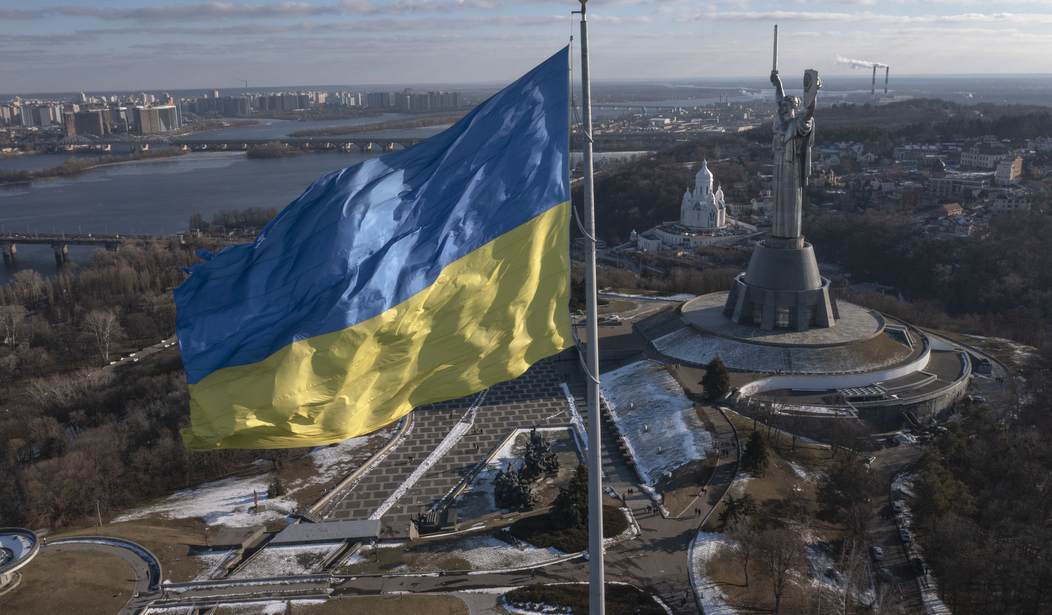
Ukraine Alert System Hacked, Broadcasting False Nuclear and Chemical Alerts

Every current and future war is going to have a cyberwarfare element. 

In the latest example of just this, on Sunday we learned that the civil air-defense alert system in Ukraine was hacked, and false messages sent out warning of possible chemical and nuclear attacks. There were no such attacks. Fox News' Chief Foreign Correspondent Trey Yingst has some on-scene reporting.

Mr. Yingst says:

John, we have some breaking news right now from Ukraine. The air alert system that warns the civilian population of Ukraine about incoming Russian missile and drone attacks has been hacked. Alerts were sent out on phones across this country, warning of a radiation threat and a chemical threat. Additionally, speakers across the Ukrainian capital of Kyiv were blaring with similar messages. Officials here in the Ukrainian capital telling Fox News this is a false alarm and there is a hack underway. 

The Kyiv Independent has more details.

Ukraine's air raid alert system was hacked late Nov. 1, the Air Force said, as sirens sounded across the country and people received false alerts warning of nuclear, chemical, and street fighting threats.

Kyiv Independent journalists on the ground received notifications on their phones from the officially supported Air Alert app, made in collaboration between the Digital Transformation Ministry and security technology company Ajax Systems.

"Hi! A nuclear alert is about to go off all across Ukraine! Don't worry, the Oreshnik is on its way," one of the false warnings read in Russian on the Air Alert app.

Air raid alerts also sounded in streets across the country, including Zakarpattia Oblast in western Ukraine, journalists on the ground reported.

There are no reports of any actual attacks. The reports, though, specifically mention the threat of a chemical or radiological attack, the latter of which doesn't necessarily imply a nuclear weapon, but any kind of dispersal of radioactive material.

As of this writing, there's no indication as to where the hacking attempt originated. However, there are indications from the reporting that there was a phishing (information-seeking) element to it, perhaps hoping to gain increased access to Ukraine's systems. 

Officials also warned the cyberattack could involve a phishing operation with attached links.

"Cyberattack on the 'Air Alert' app. Do not click on the link in the message," Vinnytsia Oblast Governor Natalia Zabolotna reported.

While it seems likely that Russia would be the primary suspect (and that's the way to bet), ever since the beginnings of the internet and cyberattacks, we've seen random anonymous groups messing with a system like this just because they could. And conditions in eastern Europe seem to have most of the continent choosing up sides. 

Here's the thing: If hackers can turn this system on as a false alarm, who's to say they couldn't turn the system off in advance of a real attack? 


♦️𝐖³π πƒπšπ’π₯𝐲 𝐍𝐞𝐰𝐬 𝐎𝐩𝐞𝐧 π“π‘π«πžπšπ


W³P Daily News Open Thread. 

Welcome to the W³P Daily News Open Thread. 

Post whatever you got in the comments section below.

This feature will post every day at 6:30am Mountain time. 


Shop freezers in six European countries hit by suspected cyber-attack


Dozens of supermarkets across six European countries have been hit by a suspected cyber-attack affecting their refrigerators and freezers.

Around 40 Delhaize supermarkets in Belgium and Luxembourg were affected, while a smaller number of shops were hit in Sweden, Ireland, the Netherlands and Estonia.

Sabcobel, a Belgian company that manufactures some of the affected refrigerators, said the units' evaporators were switched to defrost mode causing them to warm up, in what is believed to be the same method used in last month's incident that hit hundreds of French supermarkets. 


Millions of euros worth of food has had to be thrown away, according to local media reports.

Stephan Moelans, the CEO of Sabcobel, which operates Delhaize's systems, told the Belga news agency that the incident was a cyber-attack and that the company had been "working all night and morning to disconnect the affected units from the network".

He said since the French attack in early October, the company had been working to "protect our customers fridges against this vulnerability" but that the units needed physical modifications, not just software updates.

"The simplest solution is to manage the fridges over a secure internet connection. Most of our customers switched to that after the attack in France," he added.

It is unclear who is behind the apparent attack.  


The temperature of freezers in several shops across Europe reportedly rose to as high as 50C (122F).

Both Belgium and Sweden's national cyber-security agencies said they were monitoring the incident.

A Delhaize branch in Hoeilaart, in Flanders, Beligum, told Het Laatste Nieuws it had lost €100,000 (£83,500) worth of produce.

The manager said that estimate did not even take into account further losses that would result from closing the shop.

Carrefour, a French-owned supermarket, said the incident had only affected 15 of its Belgian stores, adding that measures had been taken immediately to ensure all shops remained open.

A spokesperson for Colruyt Group, which operates Spar stores in Belgium under a franchise system, told Reuters news agency five shops had their fridge systems attacked. 


https://www.bbc.com/news/articles/cq1kd1nee80eo  


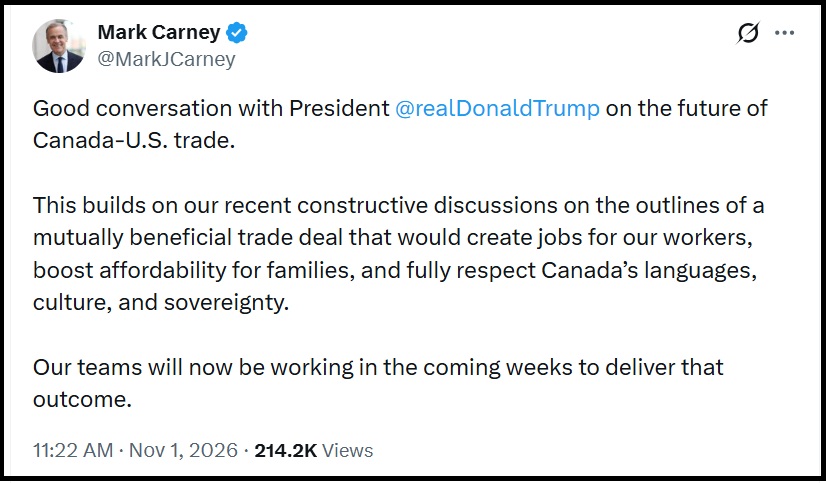
Following EU Assembly Rejection of “Associate Member” Status, Carney Wants U.S. Trade Deal Again


It is a factual datapoint that will not change.  A fully vested Free Trade Agreement with the European Union does not align with an FTA with the United States.  It’s a fact that doesn’t change no matter how much spin is applied.  The EU has structural rules and regulations (climate, energy, net zero, carbon trading) that create distance in any trade effort with the USA.

That said, much to the chagrin of Prime Minister Mark Carney and EU head Ursula Fond-of-Lyin, last Friday the major economies within the EU, specifically Germany, rejected any possibility of an “Associate Member” status for Canada.  Simultaneously, Canadian media realized a trade deal with Europe would subject Canada to carbon taxes that are larger and more economically intrusive than Trump’s tariffs.

Well, whaddyaknow…. This happens:

[SOURCE]

Go figure!

Remember what I said about the North American USMCA being entirely incompatible with the EU regulations on trade? Well, the European Carbon Border Adjustment Mechanism is one brutally obvious example therein.  Canada already having created a carbon trading exchange system may be willing to align and regulate themselves even more with that nonsense, but the USA and Mexico are never going to participate in such self-defeating foolishness.

All of a sudden, Carney needs the USA again!


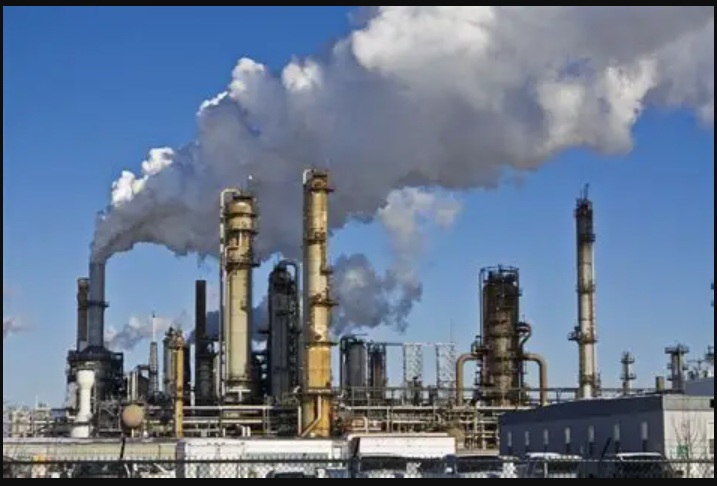
European Commission Begins Reevaluating Emissions Trading System, to Restore EU Oil Refining Capacity


This is an interesting potential shift in energy position for the European Union. There has been zero investment by the EU nations in oil refining capacity. Simultaneously, Europe is now realizing they need diesel and jet fuel.

Under the EU Emissions Trading System (ETS), refineries have an ever-diminishing cap on carbon emissions, and they receive fewer ‘free’ pollution allowances over time.

This means oil refining costs go up steadily, increasing the cost of operating the dirty carbon facilities, while these same refineries must adhere to stricter environmental rules and pollution limits under the Industrial Emissions Directive (IED). The entire regulatory system was created to eliminate gasoline, diesel and eventually jet fuel.

As the EU is now discovering, their climate change policies have been executed but the global and EU drop in demand has not occurred at the same pace. The EU is now in a position where the percentage of their own oil refining production is lower than their needs. More energy dependency has been created.

With the EU energy analysts now saying they don’t have the fuel capacity to support the political demands for a war with Russia, in combination with President Trump continually affirming the U.S. will not get involved in any expanded conflict, the European Union is now reevaluating how to increase domestic fuel production.

EUROPE – Over the past couple of decades, Europe has pursued some of the world’s most ambitious clean energy policies, aiming to become the first climate-neutral continent by 2050. Hardly surprisingly, Europe is now further along the clean energy transition compared to its western peers, with renewables accounting for roughly half of the continent’s power mix compared to about 26% by the U.S. However, Europe is now being forced to reckon with its decision to ditch some of its fossil fuel assets as yet another global energy crisis unfolds just years after the 2022 energy crisis.

[…] the continent has been forced to rely more heavily on imported refined products, exposing it to geopolitical risks. The Iran and Ukraine wars have led to a spike in oil and gas prices, with EU Energy Commissioner Dan JΓΈrgensen terming geopolitical instability and the prolonged diesel squeeze a “wake-up call” for the bloc.

[…] Central European nations like Poland, Czechia, and Slovakia have been pressuring the European Commission to establish a long-term protective strategy for Europe’s oil refineries. They have called for refineries to be protected from carbon leakage and given access to EU funds to upgrade.

[…] now, Brussels is looking to rethink its long-standing approach to the domestic oil-refining industry. On Wednesday, the European Commission launched the first High-Level Dialogue with the European oil refining sector. Co-chaired by Dan JΓΈrgensen (Commissioner for Energy and Housing) and Andrius Kubilius (Commissioner for Defence and Space), the forum discussed Europe’s energy security, industrial competitiveness and defense readiness amid recurring geopolitical disruptions. Participants mapped out short-term responses to supply disruptions stemming from ongoing conflicts in the Middle East, noting that EU refineries currently supply approximately 70% of jet fuel and 85% of diesel consumed across Europe. (read more)


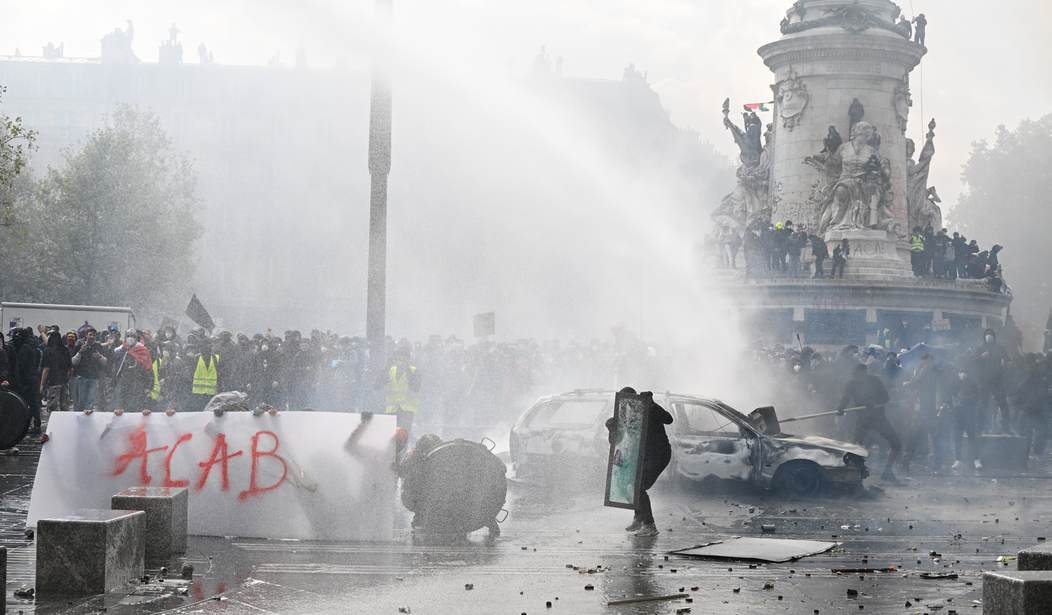
The Violent Unrest in France Is Spreading to Other European Countries

The violent unrest in France continued this weekend and spread to other countries, as footage shows the destruction continuing to escalate.

Numerous videos uploaded to social media show the rioters in France beginning to target police with incendiary devices, destroying American flags, and storming residential buildings.

France has been under siege from violent mobs for over a month now. The lawlessness has inspired similar acts across Europe, with looting and riots taking place in Italy, Spain, and Germany.

As the riots continue to devolve across multiple European states, authorities appear to be powerless to quell the violence.