Monday, October 19, 2026

Treasury Secretary Bessent: “Zelenskyy Needs to be Very Careful About Making Statements That are Not True”


Secretary of Treasury Scott Bessent appears on NBC’s Meet the Press to discuss the current status of the economy and ongoing geopolitical events.  Within the interview [Video and Transcript Below] Secretary Bessent notes that Ukraine President Volodymyr Zelenskyy, who is coordinating closely with both British King Charles and Canadian Prime Minister Mark Carney, needs to be very careful about the malicious lies he is speaking to U.S. audiences. WATCH: 


[Transcript] – KRISTEN WELKER: Welcome back. Joining me now is Treasury Secretary Scott Bessent. Secretary Bessent, welcome back to Meet the Press.

SECRETARY SCOTT BESSENT: Kristen, good to be with you.

KRISTEN WELKER: It’s great to have you back. Let’s start on inflation, these new inflation numbers we got this week. Consumer prices rose in September at the fastest pace in five months, to 3.7%. Are the president’s policies driving up inflation?

SECRETARY SCOTT BESSENT: Kristen, we have an energy shock. And if you look underneath the hood in the numbers, core inflation has been very flat before this month, and it’d been down for four months in a row. So core inflation is down. The food is below the Fed’s targets. The prescription drugs have had the biggest decrease in history. Rents are down. So this is an energy shock. We will get to the other side of the Iran conflict, and those prices will come down.

KRISTEN WELKER: Well, core inflation doesn’t take energy, for example, into account or food into account. And in fact the price of gas is up 44%, Mr. Secretary, since the start of the war with Iran. What do you say to voters right now who say they are struggling and they want change?

SECRETARY SCOTT BESSENT: Well, why don’t we revisit the Biden-era policies where the American people got smoked? 21.5% inflation and only about 17% wage increases. Since President Trump has started, the American people have gotten real wage increases, 1.5%. We’re not satisfied with that. But as I said, you know, we’re getting these wage increases through our economic policies. And the wage increases are going to be persistent. We will get to the other side of the Iran conflict, and I believe that the energy markets are going to be better supplied than they were.

KRISTEN WELKER:

I hear you blaming President Biden, but President Trump has been in office now for 636 days. That’s about a year and a half, and inflation was at 3% when he took office. It’s 3.7% now. At what point does the administration take responsibility for the economy and say this is the Trump economy?

SECRETARY SCOTT BESSENT:

Well, we will own the economy. So far this year, we’ve got a million private-sector jobs. We’ve never had this many people working in the U.S. The net worth of American households are the highest that it’s ever been. So, Kristen, let’s be clear here. This is an energy supply side shock. We will get to the other side of this. This is one factor.

KRISTEN WELKER:

Even President Trump has said this is his economy. Let me ask you, though. You are the Treasury Secretary. Do you anticipate gas prices will come down by the new year?

SECRETARY SCOTT BESSENT:

Well, again, it will depend on what happens with the Iran conflict.

KRISTEN WELKER:

Okay, let’s talk about the war with Ukraine now. President Trump signed an executive order waiving sanctions against Russia. I just talked about this with President Zelenskyy, who tells me this move is a big support for Putin. Why is the president rewarding a dictator who invaded Ukraine?

SECRETARY SCOTT BESSENT:

President Trump has made it clear he wants the killing to stop. And the so-called Graham bill gives the president the flexibility, gives him 60 days to assess the situation. And, Kristen, let’s look at what’s really happening here, that the Europeans have given Russia and Vladimir Putin more money than they’ve given the Ukrainians. They continue to gorge on Russian energy. There is a facility called the Yamal facility. In the first six months of the year, there were 140 cargoes that left. 136 of those went to Europe, to Belgium, to Spain, to France, to the Netherlands. Over $8 billion. So we have asked, in the spring, I asked our European allies to join us in putting secondary tariffs on China, on India. They refused. So why should the U.S. bear the burden? So President Trump, perhaps will be in contact with our European partners. Why should the U.S. go it alone, Kristen?

KRISTEN WELKER:

Well, I guess the question is, “What role should the U.S. play?” During your confirmation hearing in January of 2025, you described the war in Ukraine as one of the greatest tragedies in your life, and you had this criticism about the Biden administration’s approach to sanctions at the time. Take a listen.

[BEGIN TAPE]

SECRETARY SCOTT BESSENT:

I believe that the sanctions were not fulsome enough. I believe that we — I believe that the previous administration was worried about raising U.S. energy prices during an election season.

[END TAPE]

KRISTEN WELKER:

Is President Trump doing what you accused President Biden of doing?

SECRETARY SCOTT BESSENT:

First of all, Kristen, the sanctions were doubled. The Biden administration, in an act of incredible bravery, doubled the sanctions on the way out, in January of 2025. So uh, but we did not take those down. President Trump sanctioned the two largest Russian energy companies, Rosneft and Lukoil, which dealt a catastrophic blow to the Russian energy industry. So no one has been tougher on Russian sanctions than President Trump.

KRISTEN WELKER:

But you there are pushing for even tougher sanctions –

SECRETARY SCOTT BESSENT:

– Kristen, we did the toughest sanctions.

KRISTEN WELKER:

Okay, but why lift them now? What has Putin done to deserve sanctions relief now? That’s my question —

SECRETARY SCOTT BESSENT:

Well, first of all Kristen, that’s not true. No sanctions were lifted on Friday. No sanctions were lifted.

KRISTEN WELKER:

There was a law that was supposed to put more sanctions in place –

SECRETARY SCOTT BESSENT:

Yes, but —

KRISTEN WELKER:

The president effectively waived that.

SECRETARY SCOTT BESSENT:

– Kristen, no sanctions were lifted.

KRISTEN WELKER:

Will they be lifted?

SECRETARY SCOTT BESSENT:

There is a 60-day period so we can examine what’s going on. The only thing that has been lifted is the diesel embargo. And, you know, I will point out the U.K. in May waived their embargo on diesel and jet fuel made with Russian crude. So, you know, where’s the outrage for the rest of the world? President Zelenskyy does not criticize his European partners. He seemed a bit disassembled in that interview. The Europeans are financing the Russian war machine. The U.S. imports $4 billion of Russian products. 1.8 billion of that fertilizer. Europeans import more than ten times that.

KRISTEN WELKER:

You know, speaking of President Zelenskyy, he says Ukraine will not prevail if the United States sides with Russia. A number of Republican senators have said that’s what this move does. Is the president siding with Russia here?

SECRETARY SCOTT BESSENT:

No. Again, that’s a false binary. What does the U.S. provide? The U.S. provides intelligence via Starlink, and we provide, we allow NATO to buy U.S. armaments and resell them to Ukraine. You know, when President Zelenskyy asked for Patriots, the European members of NATO, they have plenty of Patriots. Why aren’t they forthcoming with the Patriots? Where’s Germany giving the Ukrainians Patriots?

KRISTEN WELKER:

You bring up Starlink. President Zelenskyy just discussed Starlink. I’d like to have you respond. Ukraine relies on Starlink, Elon Musk’s satellite network, just for our viewers, to defend against Russian drones. President Zelenskyy just said he believes the U.S. government slowed the speed. Now, President Trump said he had nothing to do with it. But can you definitively say no one in the Trump administration ordered restrictions?

SECRETARY SCOTT BESSENT:

President Trump and Secretary Rubio have categorically said that no one in the Trump administration did that. And I think it is very reckless for President Zelenskyy to make such a charge.

KRISTEN WELKER:

How did it get slowed down? How are these disruptions caused? Because President Zelenskyy also said there was a break in intel sharing as well. Why did that happen?

SECRETARY SCOTT BESSENT:

Again, I don’t know anything about that, but we’ve been very clear. And, you know, President Zelenskyy should be very careful about making statements like this that aren’t true.

KRISTEN WELKER:

Bottom line, Mr. Secretary, is Ukraine an ally of the United States?

SECRETARY SCOTT BESSENT:

President Trump has made it clear that he wants to end this war, that it must stop. And President Zelenskyy presents a false binary this morning that — Ukraine must win. The war must end, and that will be with some kind of a negotiated settlement, and President Trump is working on that every day. He’s done it since he came into office.

KRISTEN WELKER:

And just to the core question, though, does the United States see Ukraine as an ally?

SECRETARY SCOTT BESSENT:

Again, we provide three different things to Ukraine. So that’s what you do for an ally. We’re not providing those to Russia.

KRISTEN WELKER:

So does that mean the United States sees Ukraine as an ally? Can you say one way or another definitively?

SECRETARY SCOTT BESSENT:

Again, I’m not the secretary of state. I’m not the president.

KRISTEN WELKER:

Okay. All right. Secretary, Treasury Secretary Scott Bessent, thank you so very much. Appreciate your being here.

SECRETARY SCOTT BESSENT:

Thank you.

{End Transcript}
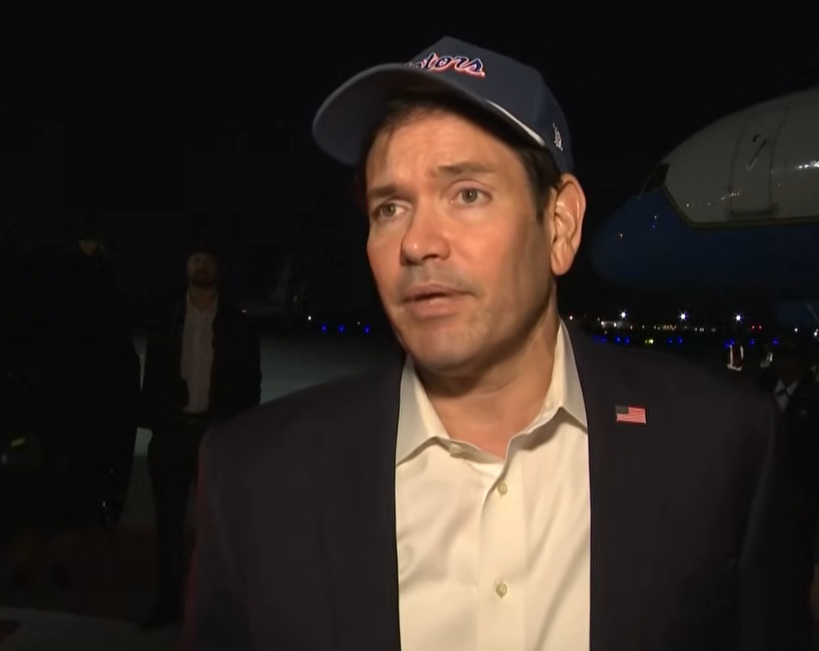

Zelenskyy is Lying – Secretary Marco Rubio Responds to False Claims About Ukraine, Starlink and Starshield


Again, there are multiple dynamics unfolding inside this story.  However, as to the central component of Ukraine President Volodymyr Zelenskyy complaining about hampered access to Starlink and/or Starshield, Secretary of State Marco Rubio sets the record straight.

Ukraine has never had access to the U.S. military version of Starshield; providing that level of guidance access would be akin to the United States being in direct conflict with Russia using a proprietary U.S. military system. This is not our circus and not our war; there is no need for U.S. military conflict with Russia.

Because Ukraine does not have that access, it is now revealed that Zelenskyy has been using Starlink, a commercially available satellite system – but that system is not permitted by SpaceX to be used for military efforts.  This is almost certainly where the relationship between Elon Musk and former Ukraine Defense Minister Michael Fedorov comes into play. Fedorov is no longer in the Ukraine govt.   WATCH:


Rubio notes that Zelenskyy’s claims against the White House are nonsense.  The White House has not interfered or instructed the military about the use of Starshield because Ukraine has never had Starshield to use.  If Ukraine has been violating the terms of service by weaponizing Starlink (they have) then the commercial provider can act independently to block or stop that access. [Full Transcript Below]

In the background of this storyline, we should always remember that about a month ago Russia finalized their own upgraded satellite system that covers Russia and eastern Europe.  It is widely suspected the increased accuracy of Russian targeting inside Ukraine is specifically because of their own enhanced capabilities, which now highlights the vulnerability of Ukraine if they do not have weaponize their Starlink access and the new desperation therein.

Bottom line, Secretary of State Marco Rubio continues to highlight his mastery of cutting through the nonsense and staying focused on the priorities of the administration with messaging that cuts through the media chafe.  Rubio excels in this role far beyond prior expectations. Very impressive.

On the topic of his travel to the “stans”, watch carefully. This is connected to the overall Russia/Central Asia agenda.

Transcript Below:

QUESTION: Mr. Secretary?

SECRETARY RUBIO: What’s going on?

QUESTION: Nice and chilly, right?

SECRETARY RUBIO: It’s all right.

QUESTION: With everything going on in the world and with crisis all over, why are you choosing now, at this time, to go to Uzbekistan?

SECRETARY RUBIO: Well, it’s the time of year that worked for those leaders. It’s not just Uzbekistan, it’s the other four countries from Central Asia. This is an important relationship. I mean, one of the things that suffers is the strategic business. You’re always visiting someplace where there’s a crisis or there’s a problem or there’s a – you’re going because there’s a conference. But there’s countries you’d like to get to because we want to build our relationships with them. And so that’s what we did a couple weeks ago when we went to Greece and other places like that, and earlier, a few weeks earlier than that, we went to Latin America, and now to Central Asia. So – and the chance to see – it was the date that worked to get all five of the leaders together, all five of the foreign ministers from the five countries.

QUESTION: On Starshield, what’s going on? Because Elon Musk said it’s up to the President.

SECRETARY RUBIO: Well, Starshield or Starlink?

QUESTION: Well, just both.

SECRETARY RUBIO: Yeah, I know, it’s confusing. So Starlink is a commercial product, okay? And so they – it’s regulated and handled as a commercial product. Starshield is a defense product, a military product. And as I said, I mean, that is something that we have a military – the United States military uses. It’s not at this moment available to Ukraine, and that’s under conversation. It’s under discussion right now of how they would want to use it.

QUESTION: No, but did the U.S. – did the U.S. have anything to do with it not working in Ukraine? Zelenskyy said it was deliberate.

SECRETARY RUBIO: No. Well, I don’t know what Zelenskyy said. I’m not sure Zelenskyy knows what he’s talking about, but it wasn’t deliberate. We have nothing to do with that. I don’t – the United States, nobody ordered that Starlink speed to be slowed down. It sort of happened, but my understanding is it’s been restored. It’s back to where it was before. That’s Starlink, though. They were using Starlink for their drones.

QUESTION: Has Starshield been restored?

SECRETARY RUBIO: Starshield is a totally different product. Starshield is –

QUESTION: I know, but is it –

SECRETARY RUBIO: No, no, Starshield is a contract with the U.S. military. It has nothing to do with Ukraine. I know Ukraine wants access to Starshield. They do not have Starshield now. They’ve asked for access to it in order to conduct deep strikes inside of Russia. They do not have access to it at this moment. Those are two different products.

QUESTION: But you have to have a theory as to why, obviously, Ukraine has reported disruptions.

SECRETARY RUBIO: Yeah, I don’t know what their theory is, but nothing to do with the White House. I saw a report on that the other day. It’s just categorically false. No one at the White House ordered anyone to slow down internet or slow down speed so that certain drones couldn’t use it. But my understanding is it’s back up and running. That’s what I read – that’s what we heard two days ago.

QUESTION: Sir, on the sanctions waivers on Russia. Senator Ted Cruz today called it a big mistake that only serves to benefit Putin. I’m wondering what your response is to that.

SECRETARY RUBIO: Well, there are other countries – the problem is these sanctions were not just sanctions on Russia. They include tariffs on a number of countries – India, for example, and others. And so I think the President wants to take the 60-day period of time to sort of analyze what imposing both sanctions and tariffs will mean to the global economy and even to the U.S. economy. I think when the bill was passed, one of the reasons the waivers were put in there is understanding that they would need some period of time to study this, given all the different things that are going on in the world right now, including the pressure on global energy supplies that are happening not just because of Iran, not just because of the Straits of Hormuz, but increasingly because of the Houthis attacking Saudi Arabia and because of the war with Ukraine and Russia, where energy infrastructure is being hit. And so that’s having an impact on global prices as well.

So, I think you have to take all of that into account and weigh it against each other. And then you’ve got countries like India, for example, that have voluntarily diversified their energy portfolio but are still getting a substantial amount of energy from Russia because it’s hard to pivot from one day to the next, but they’re also an important ally and partner of the United States. So, the President – we need that period of time to sort of study all this and figure out what the right combination is.

QUESTION: Between this waiver and the diesel deal, I mean, there’s a criticism that you’re basically giving Putin something for nothing, we’re giving Putin these freebies. What’s your response?

SECRETARY RUBIO: Well, that diesel was going to be sold one way or the other. I mean, the diesel that Putin is going to sell, they would make it available to the global market one way or the other. The only difference is how much of it the United States was going to get. So – but this is not unprecedented. If you recall a few months ago, we also did a 60-day waiver on Russian oil when Hormuz was being challenged.

So yeah, these conflicts around the world are starting to crash into each other, and they’re having an impact not just on global oil and diesel prices, but on economics. And I mean, the United States, we’re paying higher prices than we all want to be paying, but you look at some of these other countries around the world, they’re near crisis mode. So, all of these things have to be managed delicately and worked with because they’re all – they’re all coming together now. It’s not just the Strait of Hormuz anymore. It’s what’s happening with Saudi Arabia and the uncertainty that that’s creating. It’s also what’s happening between Russia and Ukraine and the constraints that’s putting on global energy supplies.

QUESTION: I’d like to ask you about violence in the West Bank. My colleague, Heidi Levine, was attacked there yesterday.

SECRETARY RUBIO: I saw that. We’re all – we’re very disturbed by those images and what we’re seeing. We’ve asked the Israelis and continue to ask them to crack down on that stuff. That – the President’s been very clear. He’s said this repeatedly. He does not want to see friction or anything, a crisis, going on in the West Bank. Now, I understand that these are groups that are out there doing it, and the President has been repeatedly clear when he’s said that he doesn’t want to see that. He doesn’t want to see a new spark.

But we saw the reports about what happened yesterday. I don’t have all the details. I only go off media reports. I know we’ve inquired with the embassy, are supposed to get a cable back later today or tomorrow indicating exactly what they know about it. But from what I understand about media reports, it didn’t look good. It was an American reporter; there was a photo of a journalist who was caught behind where some of these groups came in and was beaten. There’s video of that. So look, the whole thing was just disturbing and didn’t – not a good look.

QUESTION: Mr. Secretary, the President, one of the first decisions he took was to lift sanctions against the settlers.

SECRETARY RUBIO: Yeah, I understand, but he doesn’t want to see what’s happening now.

QUESTION: No, that’s not –

SECRETARY RUBIO: Lifting sanctions, which he did earlier in the day, does not mean he’s a supporter of what he’s seeing now on television, what he’s reading about. We’d like to get all the facts and learn a little bit more about it, but that – look, that’s one instance, and it happened to involve a photojournalist. But there are other instances we’ve had complaints about. Now it’s this olive harvest season, and so traditionally that’s always been a time in which a lot of people come into those areas. So, we’ve been watching that closely. We know that’s an issue there, that’s potentially an issue in Lebanon as well. Okay?

QUESTION: Do you agree with the UK assessment, the intel assessment that Russia and Iran may be increasing hybrid attacks over the next few months?

SECRETARY RUBIO: But which assessment are you talking about?

QUESTION: The – both NATO and UK have indicated –

SECRETARY RUBIO: Oh, NATO.

QUESTION: Have indicated that in –

SECRETARY RUBIO: Yeah, but those are two separate things. So in the case of – you’re asking about Russian hybrid attacks. Yeah, we’ve always been concerned that the war in Ukraine can metastasize into other parts of Europe and other parts of the world, whether it be sabotage operations or the like. We’ve always been concerned that that’s one of the risks of a stalemated conflict, is escalation, and escalation can take the form of irregular attacks or irregular events. So that’s something I raised a couple weeks ago and we’re watching that closely.

I think with Iran and UK, what the UK has said is that the Iranians were behind the plot to attack the air base. And obviously we have no reason to disagree with the assessment factually. In fact, we agree with it.

So, all right? It’s cold, guys.

QUESTION: On the case regarding my colleague, what’s –

SECRETARY RUBIO: Did you guys see my Gators today take down Texas on the road?

Go ahead.

QUESTION: The case regarding my colleague who was attacked in the West Bank, what steps will you take to ensure that there’s a proper investigation of this incident?

SECRETARY RUBIO: Well, we want to learn all the facts about it first. Obviously, we’ve seen the video, and we’ve seen the media reporting about it. We have a process to handle these sorts of things. And if, in fact, it turns out to be what it appears it was, then we have ways of communicating that to the Israelis about how we expect – that we would expect them to prevent that from happening in the future. And it’s – again, the President doesn’t want to see a crisis in the West Bank. We don’t need that right now. Israel doesn’t need that right now.

QUESTION: Can I ask briefly on Eritrea-Ethiopia?

SECRETARY RUBIO: Yeah.

QUESTION: How high-risk is the chance of war between them? And do you feel like it was a mistake to lift some of those Ethiopia-related sanctions right before violence flared up?

SECRETARY RUBIO: No, I don’t think those – I don’t – no, I don’t think the sanctions lifting – these were very small sanctions, and they don’t really have anything to do with what’s happening over there. You have these separatists that were attacking inside of Ethiopia. You had an Ethiopian response to it. You see troops surging on both sides of the border as a result of that. And anytime you see troops on both sides of the border in a place like that, you’re always worried that that can turn into a broader conflict.

So, we don’t have the closest relationship with Eritrea, obviously, over the years, although we’ve had communication with them – more than usual – in the past few months. Our hope was that by lifting some of these sanctions, we can increase those links because it’s hard to serve the role of mediator and peacemaker unless you can talk to both sides.

Obviously, the Ethiopian side we talk to a lot more, and I spoke to them this week personally, a few days ago, and just reiterated how important it was – like, we understand the challenge you’re facing from these separatists, and obviously no one is supportive of terrorism and the terrorist attacks that came against them – drone attacks against their own capital – but we also think we – it’s a time to sort of be wise and measured in how you respond to that and make sure it doesn’t turn into a broader war which could ultimately pull in other countries. The last thing the world needs right now is another war.

Okay? Thank you, guys.

{End Transcript}


Canadian Prime Minister Mark Carney Confirms 4 Dead, Several Dozens Injured, During Military Live-Fire Exercise


Saturday at approximately 4:00pm a large fire broke out at a Canadian military base and spread quickly. CFB Wainwright (Canadian Forces Base Wainwright) is situated adjacent to the Town of Wainwright in east‑central Alberta.

CFB Wainwright is one of Canada’s busiest military training bases, where soldiers prepare for combat operations. It is home to the Canadian Manoeuvre Training Centre, which conducts realistic battlefield exercises, and the 3rd Canadian Division Training Centre, which provides military training. {LINK}

Media reports, citing unnamed military sources, {LINK} said that a live-fire training exercise hit a gas line or gas well on the base, causing an explosion that spread as a result of high winds. High wind gusts reaching up to 100km/h fanned the flames, causing the blaze to spread rapidly beyond the base’s perimeter and into the adjacent Municipal District of Wainwright.

A doctor at a hospital in the city of Edmonton, 180km (120 miles) northwest of Wainwright, told Canada’s national broadcaster patients were being brought to hospitals across the city as its health-care facilities became “completely overwhelmed” by the number of people requiring care.  Today, Prime Minister Mark Carney confirms that four servicemembers were killed and several dozens were injured.  WATCH: