During a press conference with the Prime Minister of Estonia, NATO Secretary-General Mark Rutte was asked about Russian threats to NATO and the reports of SpaceX’s slowing Starlink capabilities being used for military purposes.

Officials, including PM Mark Carney and Defence Minister David McGuinty, have condemned American actions in Alberta vote as a serious threat to sovereignty.

U.S. Ambassador to Canada Pete Hoekstra says comments made by Industry Minister Mélanie Joly and actions by other Canadian political leaders could amount to election interference ahead of the U.S. midterm elections.
Hoekstra told “The Really Big Show” podcast that the comments of Industry Minister Mélanie Joly and some other Canadian lawmakers in recent weeks could be seen as meddling in tight electoral races. Americans vote on Nov. 3 to determine which party will control the U.S. House of Representatives and the U.S. Senate for the remainder of President Donald Trump’s term.Allegations of U.S. interference in the upcoming Alberta separation vote center on reports that separatist leaders offered access to the province’s natural resources, including oil royalties and fresh water, in exchange for American support.
BREAK
Elephant in the room
Alberta separatists have gone to D.C. offering fresh water and oil in exchange for American support – and Republican operatives have provided tactical assistance inside the province. Behind the cross-border effort to sway Alberta’s secession vote.
Members of the Alberta Prosperity Project met with U.S. State Department officials multiple times to discuss independence, while Republican operatives provided tactical assistance and voter-targeting software within Alberta.
The pitch began with a prayer.
On an afternoon in late January, Mitch Sylvestre, the leader of Alberta’s most prominent separatist organization, gathered with three of his lieutenants in a boardroom not far from the executive hangars at the Calgary International Airport, where private jets shuttle in and out of the city away from prying eyes.
It was a few hours before thousands of Albertans would gather near the city centre at a rally to launch the separatist campaign. But this meeting, convened behind closed doors a half-hour drive away, was invite only.
The Alberta Prosperity Project chose the location to accommodate its guests, Republican political strategists from Michigan who helped Donald Trump win the state in the 2024 U.S. presidential election.
The American delegation travelled to Calgary to sell them on software developed for Republicans to get out the vote – and how it could be used to wrench Alberta from Confederation. “They were young Christians. Capable, intelligent people,” Mr. Sylvestre said. “We prayed before we started the meeting.”
BREAK
“Absolutely not, we would never do that, and we never accept that also being done to us in Canada,” Joly said when asked about the ambassador’s suggestions.
Hoekstra also referenced comments made by former Prime Minister Justin Trudeau during a Sept. 22 discussion at Brown University, where Trudeau criticized the Trump administration’s trade policies, saying they were driving up prices for American consumers without necessarily benefiting the United States. Trudeau described Canada as one of America’s oldest and best allies, and questioned the impact of Washington’s trade dispute with Ottawa.
Hoekstra said foreign policy leaders were welcome to visit the United States, but said they should keep their “nose out of American politics four weeks before an election.”
The ambassador did not make mention of Conservative Leader Pierre Poilievre’s visit to Michigan to meet with auto industry leaders this week to advocate for a tariff-free auto sector between the two countries.U.S. officials have also raised concerns about other Canadian politicians, including Liberal MP Anthony Housefather, who campaigned for U.S. Democratic Rep. Debbie Wasserman Schultz in Florida during her primary campaign in August, according to officials who spoke to Canadian reporters on background.
Hoekstra was also critical of Ontario Premier Doug Ford’s decision to run a multimillion-dollar advertising campaign last year to oppose U.S. tariffs. Hoekstra said the campaign could be “interpreted as political interference.”Ford has repeatedly criticized the Trump administration’s tariffs, arguing they would hurt workers and consumers on both sides of the border. Speaking to reporters on Aug. 24, after U.S.-Canada trade talks collapsed and Washington imposed new tariffs on Canadian goods, Ford urged Americans to consider the economic impact when voting in November’s midterm elections.
“When it comes to the midterms, I have a message to the Americans: Don’t vote in a person that’s going to kill your jobs,” Ford said at the time.Prime Minister Mark Carney recalled Canadian trade negotiators from Washington on Aug. 21 after negotiations stalled, saying the terms proposed by the White House were unacceptable.
The United States imposed 50 percent tariffs on about US$20 billion worth of Canadian goods effective Aug. 22. Ottawa announced dollar-for-dollar counter-tariffs on U.S. goods on Aug. 25, with the measures taking effect Sept. 8.
https://www.theepochtimes.com/world/us-ambassador-pete-hoekstra-accuses-canadian-leaders-of-meddling-in-us-midterms-6103876?&utm_source=MB_article_paid&utm_campaign=MB_article_2026-10-15-ca&utm_medium=email&est=09pUYObQVbuXh4rPxgjxQZR6hG8f7uIJy2BC%2FYdEd5cV0RywCIXtQ8Pop0YTUbZ5OV65&utm_content=highlight-news-2
BREAK

Gregory Hartzler, a financial consultant to the Alberta Prosperity Project, attended the gathering and recalled the American attendees as affable fellows in casual clothes. “They could have gone and played nine – they would have been perfectly fine.”
David Parker, an organizer for Alberta separation, brokered the meeting and championed the software. Known as 10X Votes, it mines voter lists to identify communities of like-minded people that could be mobilized to potentially swing elections.
“I was blown away by what this can do,” Mr. Parker told a separatist meeting in Edmonton in April, according to video footage of the presentation, where he demonstrated a version adapted for use in Alberta. He called it “the most effective way I have ever come across to win a campaign.”
His movement needed a boost. The separatist cause has never made a sustained push past 30 per cent support.
For Mr. Parker, the software was the path to victory – one that ultimately resulted in a massive privacy breach involving the sensitive personal data of nearly three
million Albertans. The breach raised alarms inside Canada’s security agencies, according to a classified document obtained by The Globe and Mail.
But Mr. Parker’s embrace of the Michigan delegation is evidence of something else – a pattern: separatist factions in Alberta eager to engage the U.S. in their plans for secession, and American actors willing to assist, either privately or openly.
A Globe and Mail investigation has found that Republican political operatives were on the ground in Alberta this year to assist the separatist campaign in its bid to leave Canada, while harbouring their own aspirations for the
province to secede.
The Globe also found that when Alberta separatist leaders went to Washington to meet with the U.S. State department, they offered up key assets from the province’s resource portfolio, including access to fresh water and royalties on crude oil, in exchange for help transitioning to independence.
Through interviews with The Globe on both sides of the border, people involved in politics, the corporate sector and Alberta’s pursuit of separatism have described persistent efforts by figures in the U.S. administration and conservative political establishment to support groups seeking American expansionism and independence for Alberta.
A series of overtures
The separatists arrived in Washington, D.C., last year armed with a determination to leave Canada and a raft of ideas for how an independent Alberta could instead interlace its future fortunes with the United States.
New oil pipelines could be built to the Pacific that would travel through Washington state, evading the politically hostile terrain of British Columbia. The loonie holdings of Albertans could be converted at par into American greenbacks, perhaps paid for by offering the U.S. a royalty on Alberta crude, or even a slice of Alberta’s land for a railroad to Alaska. Other repayment deals could
be struck with the White House by offering Alberta resources in agriculture, forestry, mining and precious metals.
An independent Alberta could even offer fresh water to the U.S., Dennis Modry, a former Alberta heart surgeon who is co-founder of the Alberta Prosperity Project, said in an interview. “We just brought up water as a possible issue. Does the U.S. need more water? Can Alberta provide some more water to them?” said Dr. Modry.
In Washington, the Trump administration has quietly displayed detailed knowledge of Canadian secessionist history, indicating an interest in the outcome of the referendum Oct. 19, in which Albertans will decide whether to pursue independence.
At the same time, Alberta sovereignty has become a talking point for senior American leaders and influential conservative voices, giving legitimacy to a separatist cause that might otherwise have been a fringe provincial movement.
Among those U.S. voices are Drew Born and Drew Wierda, the Michigan-based founders of 10X Votes, whose families are well known Republican royalty.
Mr. Wierda was one of the representatives in the meeting in Calgary
In January, Treasury Secretary Scott Bessent described a “wealth of natural resources” in Alberta, which he said had been trapped by domestic opposition to a Pacific pipeline.
“I think we
should let them come down into the U.S., and Alberta is a natural partner for
the U.S. They have great resources,” he told conservative podcaster Jack
Posobiec.
For Mr.
Rath, it was a sign. That exact topic – a pipeline through the U.S. – had been
raised in the Washington meetings.
“So
obviously, the people we were meeting with are briefing directly to the cabinet
level. There’s a huge amount of support for Alberta independence at the highest
levels of this administration,” Mr. Rath said.
https://www.theglobeandmail.com/canada/article-alberta-separatism-canada-united-states-republican/
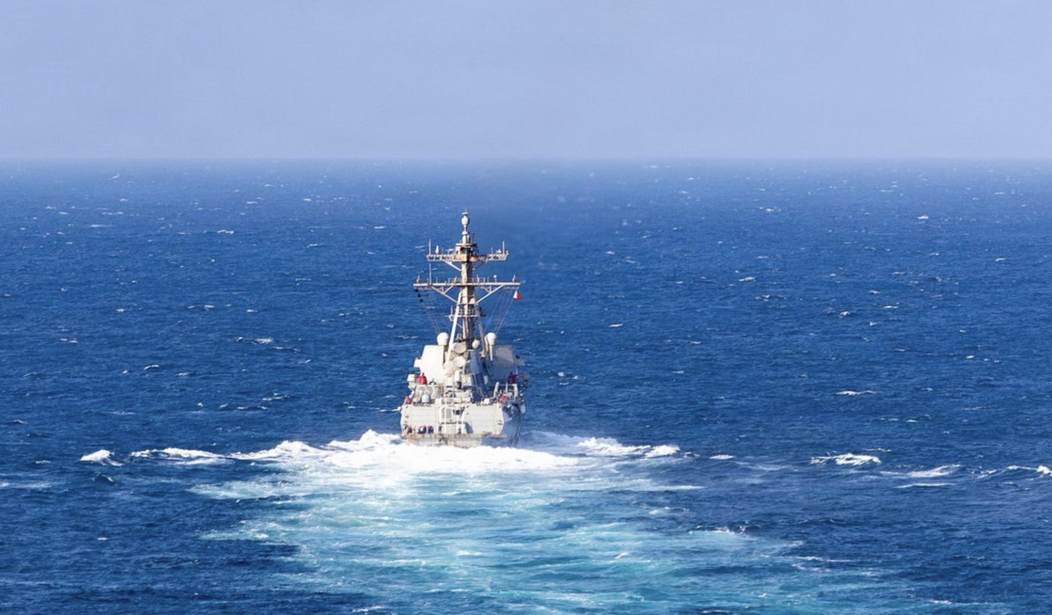
The Iranian regime no longer has a navy after the U.S. wiped out its conventional fleet.
However, the Islamic Revolutionary Guard Corps (IRGC) has employed small speedboats to try to fill in and cause problems with shipping in the Strait of Hormuz.
Just how desperate are they? They're even employing dhows, traditional wooden vessels, in an attempt to blend in and look like regular commercial traffic while they attempt to surveil U.S. forces or other shipping in the area.
But as CENTCOM revealed, it looks like the Iranians didn't put one over on the U.S. with this one.
On Oct. 6, U.S. forces destroyed an Iranian-affiliated dhow conducting surveillance and targeting U.S. Navy ships in the Gulf of Oman. Over the past seven months, Iran's Islamic Revolutionary Guard Corps has continued to indiscriminately target thousands of civilian mariners transiting regional waters in addition to U.S. Navy warships. Crew members were safely removed prior to destruction of the dhow. Repatriation efforts are ongoing.
Looks like that dhow isn't going to be doing any surveillance for anyone in the future.