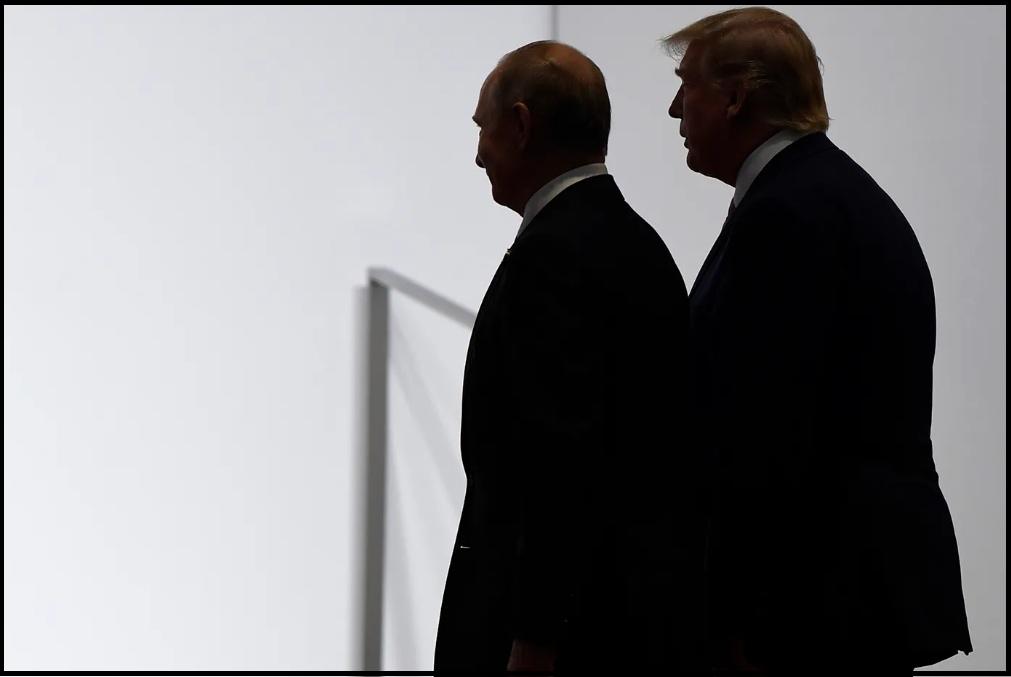
Once again, you may have seen a lot of banter, interpretation and discussion in western media about Russia speaking of defending Kaliningrad with nuclear weapons if needed. To gain a full understanding of the context, I strongly suggest reading the transcript below.
Vladimir Putin addressed the plenary session of the 23rd annual meeting of the Valdai Discussion Club. It is a very lengthy discussion. I am pulling out the key segment and suggest everyone take some quiet time to read.
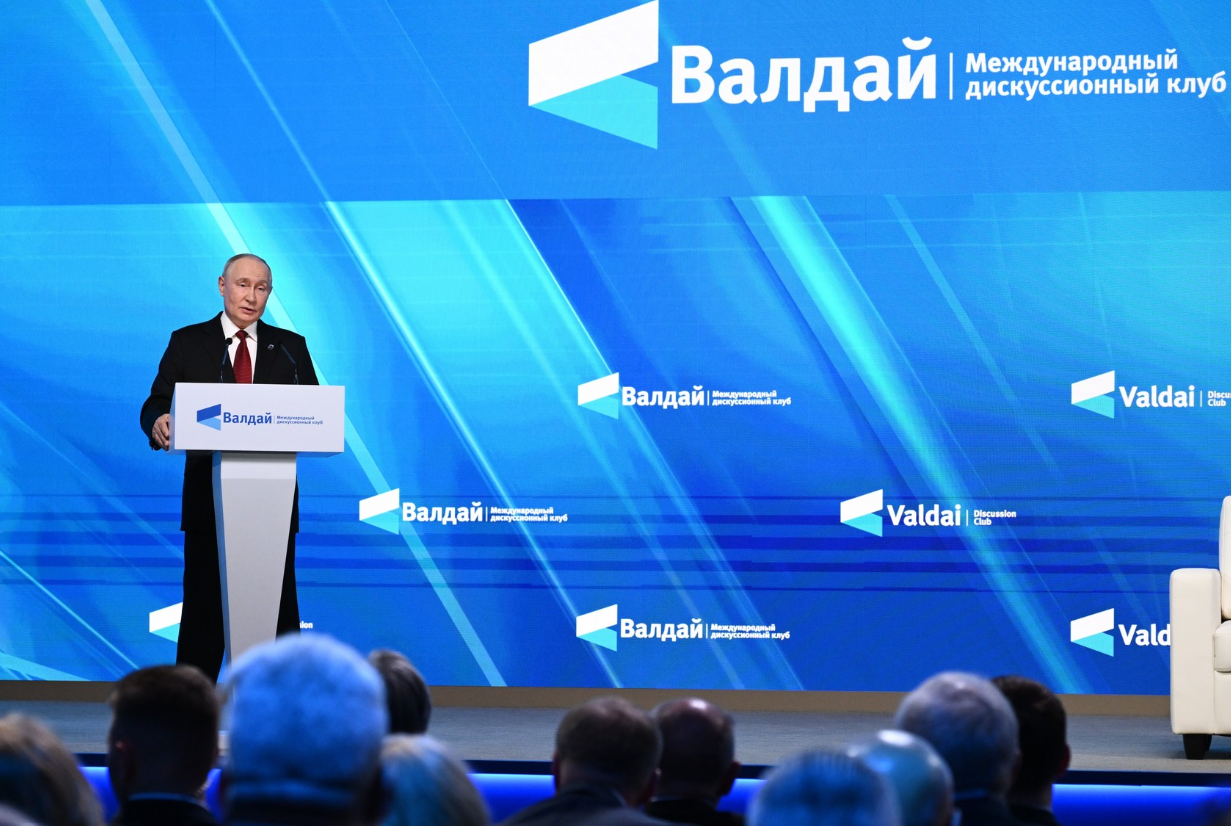
President Vladimir Putin – […] Let me digress from the main topic for a while. There are people here in this room who hold a very diverse mix of opinions regarding an extremely acute present-day conflict – the Ukraine conflict, and what caused it. I would like to say a few words on this matter. It is a fact that many hundreds or even thousands of experts, your colleagues who will study the materials from this Valdai Club meeting, they have their own opinions on this matter. I am, of course aware that some within the expert community might ask why Russia started the war while talking about peace. I have commented this many times already, but let me say this once again in front of this audience.
Where is the truth? The truth is that we did not want and were not the ones who started to fight. In fact, they started to fight against us. They should have refrained from encouraging aggressive nationalism and Russophobia in Ukraine so as to turn it into a tool for fighting Russia. NATO should not have embarked on an effort to make our historical territories part of its military space in its own interests and should not have planned setting up its bases there. Radicals in Kiev should not have been pushed to a government coup while the de facto illegal regime should not have been pumped full of all kinds of offensive weapons after that. Plans for setting up concentration camps for the people from Donbass and Crimea should not have been drafted. Unarmed people should not have been rolled over by tanks, shelled with missiles and bombed from the air and burnt alive just for being Russian, in terms of both their ethnic background and their spirit.
The list of these do-nots goes on, but let me stop at that. I am convinced that this was an intentional effort to place Russia in a situation when it was simply forced to defend itself with arms in hand to respond to this obvious act of aggression. They pushed us to this brink knowingly and intentionally. Overall, Russophobia, oppressing and killing Russian people and destroying Russia should not be turned into state ideology while striving to inflict a strategic defeat on Russia. This was the way it was all articulated, right? No one forgot this. At least, we did not forget this.
If we want to live – and who does not? – as I have already said during one of my public appearances, let us live in friendship and work together for finding ways to accomplish this aim. Of course, confidence building is a painstaking and fragile process. Placing it on the right track is very hard, while it can be derailed very easily.
The interests never fully coincide even when it comes to the closest partners, let alone countries which are rivals and are locked in an all-out competition or even confrontation against one another.
Sooner or later, the international situation and the international system will settle into some form of stable equilibrium. This is undoubtedly a complex, multifaceted and multilayered process built on mutual compromises, willingness to meet each other halfway, and a level-headed assessment of the situation, including by the West. The former hegemon will unavoidably have to acknowledge the realities of a multipolar world – just look at the trends shaping the global economy – and learn to cooperate with the countries of the Global Majority on the basis of respect for their fundamental interests. Of course, this will take time. We are going to have to live in an extremely unstable and ever changing world. The path to a new system will be full of unexpected twists and turns; unfortunately, often unpleasant and even dangerous ones.
I would like to turn to the history of our country. Russia has travelled a thorny path of profound transformation, and this process is still underway. Thirty-five years ago, we experienced the collapse of the state system, which was a genuine tragedy for tens of millions of people who woke up one morning to find themselves beyond the borders of their own country and whose lives – and the lives of their children – were changed overnight. Both in Russia and in neighbouring countries this led to a fundamental transformation and international affairs get transformed as well.
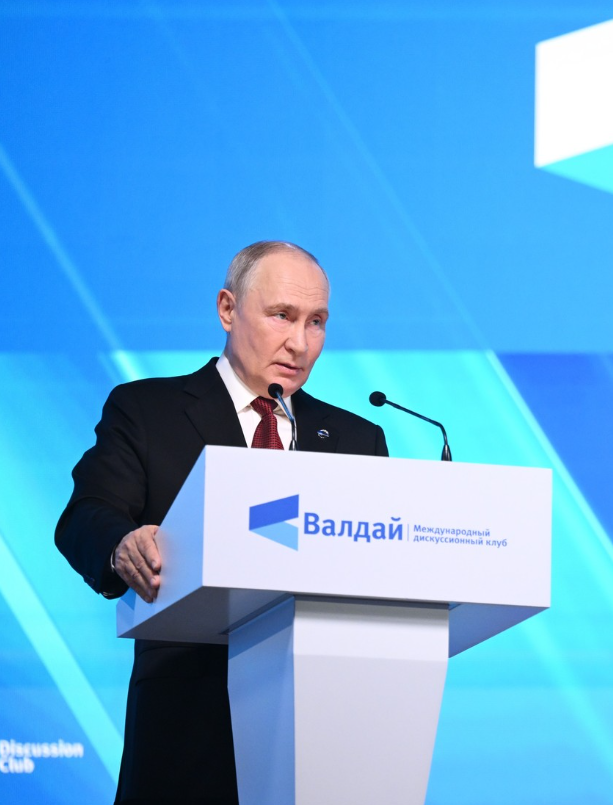 I would also like to highlight a certain naivety, idealism, or perhaps even complacency on the part of those who stood at the helm of the state during the final years of the Soviet era. Blind trust in Western partners and confidence in “gentlemen’s agreements,” when they thought they could simply take someone at their word and come to terms also played a cruel joke on the Soviet Union.
In retrospect, it becomes clear just how destructive a role this played not only in the fate of the Soviet Union, but also in ensuring long-term global stability. The Soviet leaders wanted the West to like them, while Western leaders sought to reshape the world to suit their needs and to grab their share – preferably a large one – of the Soviet legacy. We can see the result now.
The Soviet Union collapsed due to a mix of internal imbalances. This is the most important dimension to it. This is the truth, and this is what happened. Specifically, internal imbalances, as well as mistakes made by successive generations of the country’s leadership. Short-sightedness, narrow and unrealistic ideological dogmas instead of pragmatism, incompetence, and the practice of sweeping obvious problems under the carpet gradually exacerbated and undermined the Soviet Union’s domestic and international standing. Ultimately, these factors led to its collapse.
What is happening in the world today, the present-day conflicts and upheavals – all this largely stems from the fact that late 20th-century politicians, both in the East and the West, were unwilling, unprepared or unable to treat the era of major shifts with the required seriousness and depth. This is not a question of shifting responsibility onto the leaders of the past; this is simply how it all happened in reality.
However, even during that period, there were people, both in the East and West, there were other kinds of politicians who developed a keen understanding of these challenges and offered what I believe to be the right ways of resolving them. Today, their assessments can be viewed as visionary.
You know that I have mentioned Egon Bahr in the past, a politician from the Federal Republic of Germany. He was a member of the Social Democratic Party’s Executive Committee.
I will share just a few thoughts with you. I was very surprised to learn about his contacts with the Soviet leadership in both Bonn and Moscow. What surprised me was the extent to which this person had mastered the subject, his intelligence and competence.
Let me share some of the things he said in June and February 1990. As we all understand, this was a time of radical shifts for Europe and the entire world.
Bahr’s main concern was the threat of a lingering confrontation in Europe after Germany’s reunification, and once, and I quote, “those circles within NATO which are not at all eager to pursue the path of pan-European cooperation and ending the confrontation” reinforced their positions and influence. This is what he said. He could already see at that time that forces of this kind existed. He was well-placed to know this, wasn’t he? During the 1990 talks, Egon Bahr said, and here is another quote: “Without a decisive step towards overcoming Europe’s disintegration into hostile blocs, events can take quite a negative turn that would doom the USSR to international isolation.” This is what he said. What did that mean? By the way, we can see that it all happened just as he had predicted and warned.
What was the offer for Eastern and Central Europe? The proposal consisted of setting up a security council that would include both the United States and the USSR and giving this structure a broad mandate. This council was designed to include almost all Eastern and Central European countries.
However, after the USSR’s dissolution, the forces which came to dominate the West, just as Egon Bahr said, had little, if any, interest in pursuing the path of pan-European cooperation. Despite the fact that new Russia spent many years – and I would like to emphasise that this was a process that lasted for many years – trying to integrate into the so-called Western civilisation, they did everything to effectively isolate the Russian Federation and break it down even further. All the shifts in Russia’s domestic politics notwithstanding, and despite all these changes, they still viewed Russia as the core element of the historical Russian Empire. To this day, they keep talking at all kinds of events and gatherings about the need to complete the effort to break up the Empire.
Taken together, all this produced a rather dangerous, to put it bluntly, situation in Europe and around the world.
I would stress, ladies and gentlemen, that it is my deep belief that Mr Bahr did not have anything other than Europe’s future on his mind at that time. He was thinking about this pan-European home. The USSR leadership also talked about it a lot at that time but, unfortunately, they failed to put words into action.
Russia probably understands better than many the difficulties of overcoming the consequences of historical collapses and cataclysms, and of finding its way forward in new and often unfavourable conditions. We often had to learn by trial and error, making quick decisions in response to emerging situations.
But we never forget that the nation needs a perspective and a clear view of the road ahead. Of course, there is no future without a past. The legacy of our forefathers, who built a great and unique country, must be preserved and strengthened. No society can exist without a historical foundation and respect for traditions. But the opposite is also true: the past becomes meaningless without a future. No matter how great the achievements of our forefathers, the nation must not become a museum of its past greatness.
The true greatness of a state is impossible without the ability to keep pace with the times and, ideally, to move ahead of them. Multiplying one’s heritage and creatively developing it amid modern conditions are the best guarantees of preventing our national tradition from becoming a vintage collectible, a trendy historical accessory, or the sole subject of our undivided attention. We must take into account the vibrant and productive environment for our future accomplishments.
As for the future, much is really shrouded in uncertainty, and there are too many incoming and rapidly changing factors. But we certainly need a roadmap for our movement into the future. What we need is not wishful thinking, an abstract and speculative construct or an unrealistic visualisation of our wishes, but a realistic assessment of risks, capabilities and essential objectives. Russia is building this path to the future for itself, and is certainly ready to do this jointly with other nations around the world.
As I said, the scale and, more importantly, the speed of changes underway in the world are unprecedented. We must realise that the point of no return can come very quickly and unexpectedly for all. It may turn out one day that the logic of escalating mutual retaliation leads to a point of fatal irreversibility.
The word “escalation” is often used now to describe and forecast various global conflicts, meaning unwillingness to use real diplomacy based on reality and respect for the interests of all sides, a desire to aggravate the situation, raise the stakes and even bluff, crossing red lines in the hope of suppressing and intimidating the opponent, and breaking their will. There is nothing new in the escalation of hostilities and sanctions; this practice has been used in many conflicts, and it is never unilateral, because one side’s provocations inevitably trigger a response from the other side. Therefore, the spiral is tightening, and the devastating consequences are growing.
Escalation is based – I am not telling you anything new – on arrogance and overconfidence. It is a path towards a precipice, especially today when the world’s leading powers have weapons in their arsenals that are capable of destroying all life or at least reducing the Earth to a catastrophic state. Can we guarantee that these weapons will never be used? We cannot, of course. We all remember the saying that if you have a rifle hanging on the wall in the first act, it will eventually be fired. We must remember this and try to prevent it.
The more uncompromising a response, and the more clearly the goal of the opponent’s “strategic defeat” is declared, the greater the chances that the battle will escalate into the most violent phase. The survival of the fittest applies not only to the natural world but also to social communities, if they are faced with the possible loss of their independence, dignity and the very right to exist.
Ladies and gentlemen,
Let me reiterate: the fundamental formation of a new world order is inevitable – and one hopes it will occur within the foreseeable future. For now, however, events are unfolding in a highly turbulent and spontaneous manner. We are only beginning to outline, feeling our way towards, the contours of what is to come.
This, however, does not mean we should sit idly by and wait to see what happens next. To reach the phase of building – which, as I have said, will undoubtedly arrive sooner or later – we must first weather the current period of danger and avert the most destructive threats.
I consider it particularly important to emphasise once again two aspects that, in my view, should be the subject of serious discussion by us all – at the political, technical, expert and even philosophical levels.
First and foremost is the issue I have already touched upon: artificial intelligence. A global debate is currently underway as to whether measures should be taken to deliberately slow research and development in this field, to prevent these technologies from spiralling out of human control. This is a multifaceted issue requiring thorough examination. Human history demonstrates that technological progress cannot be halted; however, we must understand the consequences of that progress – above all when it comes to the use of its achievements, particularly in the military domain.
There are already documented cases of artificial intelligence making decisions based on its own assessment of what is expedient. This applies to both civilian and military contexts. As artificial intelligence technologies become more widely adopted, their role will grow, and algorithms will assume greater responsibility. After all, humans simply cannot compete with a machine’s ability to analyse a situation almost instantaneously. Yet humans possess other qualities: instinct, intuition and the ability to make decisions that may not be immediately obvious but ultimately prove to be the only correct ones, and even life-saving.
I would like to recount a story from the Soviet era – from the everyday reality of those years. It was September 1983. Lieutenant Colonel Stanislav Petrov, an officer at a missile early-warning centre, was on duty when the system picked up a signal. Both we and the United States had long since had such systems in place and operational. The system detected the launch of five American intercontinental ballistic missiles. Any algorithm would have classified this as an unambiguous trigger for a retaliatory strike. Yet the experienced officer questioned the accuracy of the signal, suspecting a system malfunction. And he turned out to be right. Had artificial intelligence been in his place, things might have turned out very differently. To my mind, this is a very compelling example.
The limits on the use of AI technologies in the security sphere are a matter of humanity’s survival. AI can increase the effectiveness of means of warfare, which also makes conflicts more destructive.
We need an unbiased and professional international discussion on modern methods of warfare to preserve humanitarian limits and mitigate the most brutal effects of armed conflicts related to the growth of destructive capabilities. I know that your forum held a session that was very accurately titled The Ethics of the New War: Humans and Inhumanity.
It is true that the inhumanity of modern conflicts can be interpreted in two ways. It is increasing brutality and disregard for humanitarian norms. It is also the new forms of confrontation, where AI and autonomous systems play a growing role in hostilities, gradually replacing humans, including in decision-making, which is especially significant. This is a huge and complex topic, which requires the utmost attention. The automation and digitalisation of war lead to the dehumanisation of perception, turning bloodshed and the loss of human lives into a kind of computer game, into a mechanistic routine. To call a spade a spade, this is a path towards the regression of humanity into savagery amid endless talk about grandiose technological progress.
At the end of the 19th century, more precisely in 1899, Russia proposed holding the Hague Conference, which for the first time formalised the rules of war, peaceful settlement of conflicts, and the humanisation of hostilities. Of course, the true and noble ideas laid down back then did not save humanity from the tragedies of the 20th century. The world wars seemingly wiped out the achievements of humanitarian law. But now the time has come when we must again raise the issue of the rules of armed confrontation.
We have no illusions: wars have been a constant feature throughout human history, they are still waged today, and armed conflicts will most likely continue in the future. Regrettably, this is an integral part of human existence. Military service is the profession of those who defend the interests of their countries, but professionalism in the military sphere includes respect for humanitarian norms. In particular, the Russian military have always been guided by the inviolability of these norms, and I would like to emphasise that they were never the first to attack facilities that are not related to the adversary’s military infrastructure.
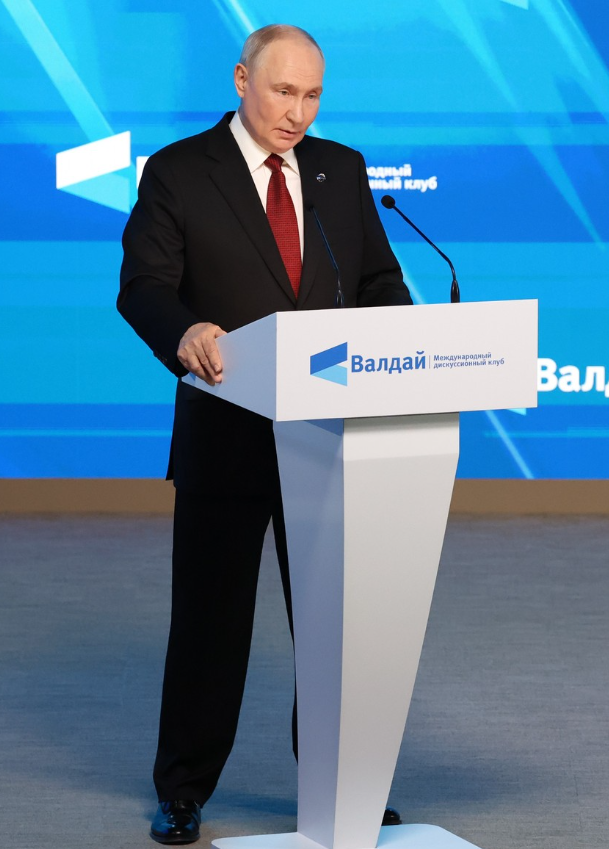 The rise in international tensions and overall confrontation has one more extremely negative and long-term consequence – this is the second fact I would like to draw your attention to today. In this conflict situation, we are sacrificing the solution of global problems of concern to the whole of humanity. We addressed these problems – climate, the environment, poverty and inequality – only recently, but today we have forgotten all about them. They have been pushed aside, but they are growing more acute. This has not changed. Regrettably, there are no grounds to hope that the international community as a single body will be able to deal with this agenda in the near term. But if acute and pressing issues are not settled on a global scale, we must address them at the regional level, especially since it is closer to home and easier for people to understand.
We are all responsible for our planet as a whole, but we are first and foremost responsible for our own home and its immediate surroundings. Our home in the broader sense is Eurasia, a vast territory that is the centre and the setting for the most important processes unfolding in the world. A great deal on the international stage as a whole depends on how we develop Eurasia.
The idea of a Greater Eurasian Partnership advanced by Russia some time ago is acquiring special significance amid growing instability worldwide. Military-political confrontations are undermining global connectivity and endangering industrial, transport and logistics chains, as well as the established trade and communication paths. The task and responsibility of Eurasian countries is to maximally protect our space from global risks and destructive processes, using all available technological and other opportunities to improve the quality of Eurasian interaction and strengthen connectivity across this vast territory.
I would also like to note that Eurasian cultural and civilisational communities have, over many centuries, established mutual understanding even in the most complicated historical eras. Eurasia can become the prototype of international communication in conditions of diverse cultures, approaches and interests, where differences do not become an obstacle but an advantage for the development of a sustainable and balanced partnership.
In this connection, I would like to draw your attention to the initiative we have advanced jointly with our Belarusian friends, the drafting of a Eurasian Charter of Diversity and Multipolarity in the 21st Century. Last week, the foreign ministers of Russia, Belarus, Kazakhstan, Kyrgyzstan and our other partners launched practical work on this fundamental document at their meeting held on the sidelines of the UN General Assembly.
The primary significance of Eurasia is that it is largely self-sufficient and capable of dealing with any problems. The only thing this vast community of nations needs is indivisible security, the absence of military threats, and lasting peace.
Colleagues,
All of us, the international community as a whole, bear overall responsibility for the future. This is not an exaggeration or a metaphor. As I have said, this is an absolutely practical task that requires our immediate attention.
One would like to believe that our descendants will read in their history books that the second quarter of the 21st century was the turning point when humanity, becoming aware of the scope of change and the challenges to its existence, managed to put aside petty squabbles, ambitions and selfishness and joined hands to address common problems, turned the technological revolution from a set of threats into a wide range of possibilities, addressed the problems of social inequality and environmental degradation in deed rather than in word, realised the futility of military confrontation and dictate and the need for mutually acceptable solutions to all arising questions and problems, and started, at long last, to build a new stable world order. I am confident that this is how it will be, because if this does not happen, there is a risk that there will be no one left to use these textbooks, and nobody to write these textbooks.
Let us hope for the best and, most importantly, do everything in our power to make this better future happen and be with us.
I would like to thank you for your attention and to wish you success. I really appreciate our meetings. Thank you very much.
[Break in Transcript]
[This sets up a conversation about the recent statements from European leadership about direct conflict with Russia. This is where people need to pay close attention. /SD]
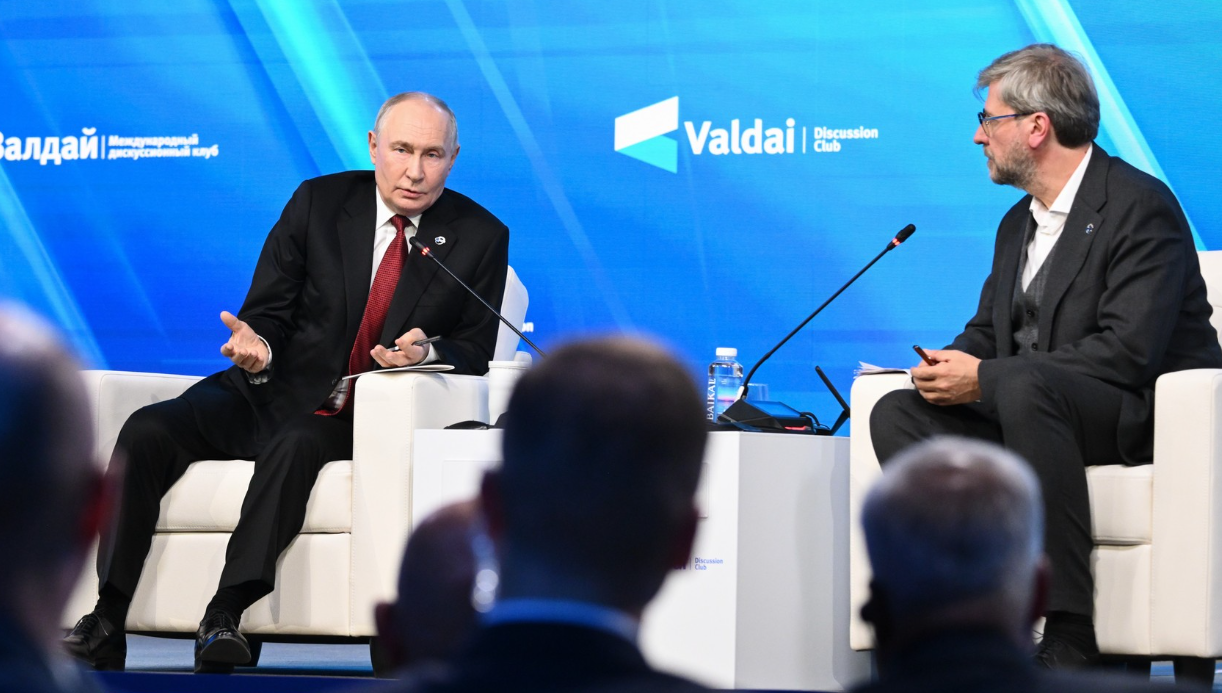
Fyodor Lukyanov: Following this trajectory, as you said, we have now arrived at an interesting juncture: NATO exercises are taking place in the Baltic Sea, accompanied by very stern statements and threats directed at Kaliningrad. Meanwhile, the Russian side has promised that, should the need arise –specifically, in the event of an attempt to blockade Kaliningrad – it would use every means at its disposal, up to and including nuclear weapons. Is this a genuine escalation? Are we on the brink of war, or are we simply trying to scare one another?
Vladimir Putin: We are not trying to scare anyone. What you have just mentioned – the Foreign Ministry’s statement and the letters it sent to certain countries – is not intimidation; it is a response to attempts to intimidate us.
After all, it is not use who are making these statements about the need, possibility, or preparation for a war with Russia in 2029 or 2030. These statements come from Western and European politicians. We hear them constantly. Constantly. And then there are concrete actions: one exercise after another in the Baltic Sea, followed by attempts to detain our ships and vessels. All of this constitutes escalation, as I said in my remarks. All this is escalation.
Then we began hearing a statement concerning the Kaliningrad Region. The Foreign Ministry’s statement and the letters that were sent out were entirely justified. If it comes to a direct attack on the Russian Federation – in this case, Kaliningrad, although it could potentially involve other territories as well – the question of Russia using all the weapons at its disposal would inevitably and immediately arise. That is inevitable.
This has nothing to do with who holds the post of Supreme Commander-in-Chief or President of Russia. The point is this: as I understand it, the NATO Secretary General spoke about the 300 million people in Europe, and so on. Yes, that is precisely why we would inevitably have to consider employing all the forces and means at our disposal.
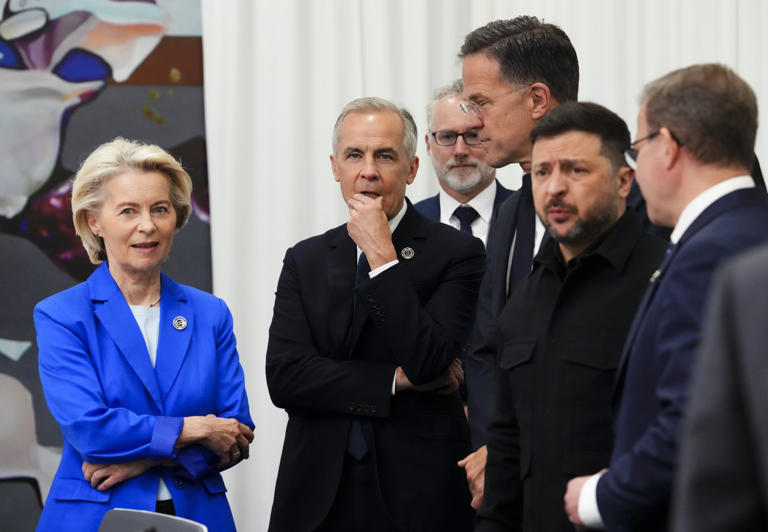 Why? First, we understand that we would be facing an adversary with twice our population. It has immense economic and military potential. Yes, we would not have a vast array of forces and means at our disposal to counter such a threat. We would have to rely on our competitive advantages in this struggle. And what are they? The fact is that we possess such advantages in the means we have to defend ourselves. Yes, of course, France and the UK are nuclear powers. We understand that perfectly well and are fully aware of it. But no one else possesses the kinds of strike capabilities that Russia has today. And these are our competitive advantages.
So, how can we counter an aggressor? We are not threatening anyone. We are simply stating that we do not have all that many means of defending ourselves. And, incidentally, neither that letter nor the Foreign Ministry’s statement mentions the use of nuclear weapons. They speak, as I have just put it, of employing all the forces and means available to our country. As for how that would actually happen, we will decide that ourselves.
Fyodor Lukyanov: But the NATO Secretary General you mentioned reacted to this, I would say, quite calmly. He said they did not consider it serious.
Vladimir Putin: Quite right. Unless, of course, one considers their threats against us to be serious.
Fyodor Lukyanov: One more topic, then, to round off this discussion.
A few weeks ago, the Ministry of Defence…
Vladimir Putin: By the way, Fyodor, excuse me for interrupting, but I think you understand what lies behind the constant escalation of tensions by many European countries. It is driven by the serious deterioration in their economic and domestic political situation.
Just look at what is happening to their economies, their social policy and the living standards of people in the major European countries. Under these circumstances, they desperately need to divert public attention away from domestic problems and towards external issues.
I have just had to respond to the questions you asked me. And I believe this is precisely the kind of response they expected to hear from us, because they will now seize on it and exploit this argument that Russia is threatening them with nuclear weapons. They will use it to distract their citizens from the fact that it is they who are pursuing an aggressive policy towards Russia and pushing their people towards a dangerous threshold of confrontation.
We are not threatening anyone. We have no intention of attacking anyone, whether in 2029, 2030 or 2050. But if we are subjected to aggression, we will have no choice but to respond. People in European countries need to understand this clearly and distinguish between our position and that of their current political leaders. It seems to me, however, that they do understand the difference. We can see it in the election results and in public sentiment across major European countries.
Fyodor Lukyanov: I am beginning to feel like an accomplice in the domestic political manipulations of European governments.
Vladimir Putin: I believe they are doing this deliberately. They are intelligent people who shape their messaging, including their public statements, in such a way as to produce the specific domestic political effect they want.
Fyodor Lukyanov: There is one more point concerning this rhetoric – or the absence of it. A few weeks ago, the Ministry of Defence published a list of European facilities involved in manufacturing and supplying weapons to Ukraine, explicitly identifying them as potential targets. This was subsequently confirmed on several occasions and at various levels, including by the Foreign Ministry.
Suppose that, at some point, such a warning has to be followed up with action, and a strike will be carried out against one of these major facilities. This would most likely be regarded as an attack by Russia and could lead to the invocation of NATO’s collective defence clause. Are we prepared for that?
Vladimir Putin: Countries supplying weapons to other countries is nothing new. This is a matter of military-technical cooperation and does not cause us any concern. However, other countries’ involvement in direct combat operations is certainly a cause for concern.
What do I mean? We are fully aware that strikes deep into Russian territory could not be carried out so smoothly by the Ukrainian armed forces without space-based intelligence and technical assistance from Western specialists. This poses a threat to everyone. It means that these countries are becoming involved in the war against Russia, which creates additional threats for the future.
There is nothing positive about supplying weapons to conflict zones; all countries around the world generally try to avoid doing so. Supplying arms to conflict zones is considered improper. For instance, we do not receive weapons from anyone. We rely solely on our own defence industry and our own economic capabilities.
Ukraine, as I know and as everyone knows, cannot exist on its own. It is actually losing elements of its statehood. In my view, this is obvious: it is being governed from outside. And when someone seeks to fight us through others – in this case, through the Ukrainian regime, which sends its own people (although I doubt it even considers them its own) into the line of fire, effectively to their extermination – when someone starts fighting us through others, that is, of course, a threat. I am not saying that we intend to launch strikes tomorrow against the territory or facilities of the countries supplying weapons to Ukraine. But this is a threat that we must clearly understand, assess, and keep in mind.
And, of course, the Russian Armed Forces and military intelligence must understand where these threats are coming from. We are monitoring this closely. (Continue Reading)
I strongly recommend everyone to take the time to read every word of this discussion to fully understand the position of Russia as the EU-NATO assembly moves closer toward direct conflict.