On one hand you have Canadian Prime Minister seeking to attain “associate member” status in the European Union {SOURCE}. On the other hand, you have U.S. President Trump speaking about a “united Ireland.” {SOURCE} At first blush the stories seem disconnected, until you think about them.
 Canada is a commonwealth country of the United Kingdom (UK) and seeking to achieve ‘associate membership’ status within the European Union is Carney’s way to counter the geopolitical reset currently underway by President Trump. A reset that diminishes the influence of Great Britain's, i.e. London’s. historic economic influences. One way to hit back against the scheme would be to leverage populist sentiment to take down London and Ottawa simultaneously. That approach would support the breakup of the U.K commonwealth governing structure. There’s the connection.
As we review the media reports, keep the U.S-Russia “strategic relationship” approach in mind.
CANADA – Canadian officials are negotiating with the European Union for closer ties with the economic bloc in response to the breakdown of trade negotiations with the United States earlier this summer, the Wall Street Journal reported on Saturday—including potentially becoming an “associate member” of the union.
Although the EU is historically not known for allowing flexible membership arrangements with individual countries, European officials are reportedly open to Canada joining as an “associate member,” anonymous officials from both Canada and the EU told the Journal.
This could mark the largest reorientation of the Canadian economy in decades—the U.S. has long been Canada’s largest trading partner, with about going across the southern border in 2025.
The details of a potential deal are still being discussed, according to the Journal’s reporting, but it could lead to increased trade between the two, including potentially shipping fertilizer through the Arctic and building new natural gas pipelines, which could help Europe end its reliance on Russian natural gas.
A deal could also see the EU and Canada collaborate to lay new underwater cables, launch satellites and build data centers as people on both sides of the Atlantic grow cautious of U.S. tech companies. (read more)
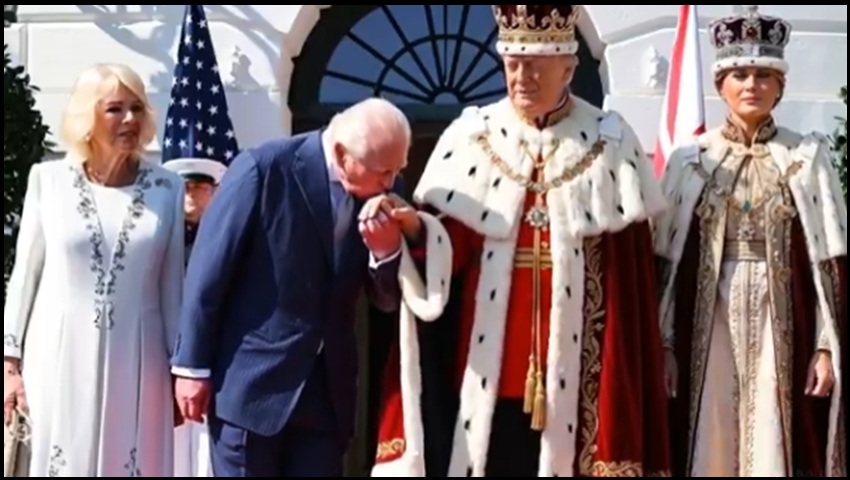
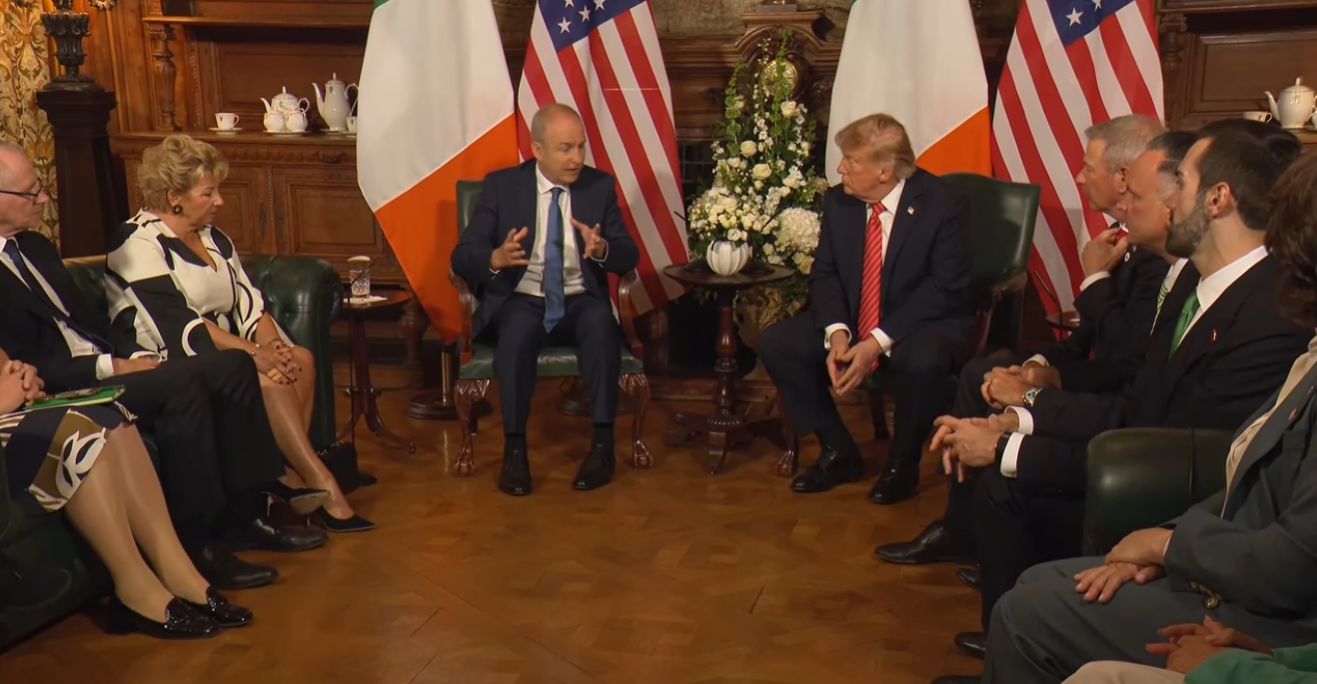 Sitting next to Irish prime minister Micheál Martin on Saturday hours after arriving in Dublin, President Trump was asked about the prospect of the Republic of Ireland joining with Northern Ireland, which is part of the United Kingdom. “I don’t want to cause any problems, but I will tell you, I’d love to see it unified,” he replied. “I think it would be a great feather in everybody’s hat if that happened,” he said.
President Trump’s remarks about a united Ireland don’t come in a vacuum.
There is a meeting happening next week where leaders within Ireland, Scotland and Wales are assembling to discuss a united strategy to exit the United Kingdom, thereby forever removing the entire political construct of the British Commonwealth. Sinn Fein president Mary Lou McDonald is also expected to attend the summit, reported the Telegraph.
FIRST POST – The leaders of Northern Ireland, Scotland, and Wales will meet on Monday to discuss plans for the breakup of the United Kingdom, according to The Telegraph.
First Ministers John Swinney of Scotland, Rhun ap Iowerth of Wales, and Michelle O’Neill of Northern Ireland are expected to sign a joint declaration demanding the right to hold referendums on breaking away from the UK. For the first time, the three constituent nations of the UK are held by pro-separation parties.
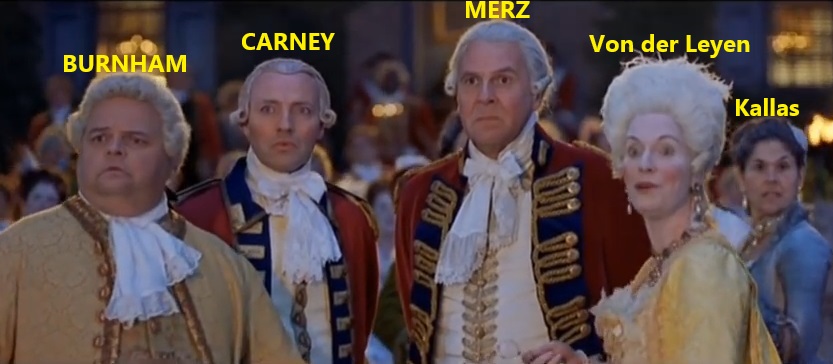
The Telegraph reported sources as saying that the summit’s purpose is to pile more pressure on Prime Minister Andy Burnham after he said in the parliament on Wednesday that he would back another Scottish independence referendum if public opinion backed one.
A source close to Swinney told the newspaper that Burnham “fucked up” by making the comment and unionists should be very worried.
In the UK, unionists are those who support the union of Northern Ireland, Scotland, and Wales with England in UK, whereas parties like Sinn Féin (Northern Ireland), Scottish National Party (SNP), and Plaid Cymru (Wales) support the breakup of the UK.
The source further said: “Burnham has not read his brief and doesn’t seem to know the basics of the UK Government’s position on the Union. If I was a Unionist, I would be very worried.” (read more)
There are trillions at stake.
With a U.S-Russia strategic economic alliance, something factually stated at the end of every message from Moscow, the dynamics of global structures is entirely different. However, all the oppositional interests are well aware of the consequence and their actions reflect it.
The United States and Russia ended World War II. A U.S-Russia alliance would change everything.
Who would benefit from such a strategic partnership? The USA, Russia, India, China, Saudi Arabia, the Gulf States (GCC), ASEAN countries and even Japan and the Caribbean, including Cuba.
Who would oppose such a seismic shift? The U.K, specifically the financial constructs within the City of London, Canada, the EU-NATO states, all the Commonwealth countries and the Five-Eyes group (Australia, New Zealand, Canada, the U.K and the U.S. Intelligence Community).