Sunday, September 13, 2026

Here Are Some Promises That Republicans Can Use to Win in November


We just had the first “mid-term convention.” Do you remember anything from it? Maybe President Trump’s promise to send every adult a $5,000 check if Republicans win, but that's about it. And we all know that is never going to happen, no matter who wins in November, because it’s a bad and stupid idea, said only to motivate people.

Otherwise, what else was there? Vice President JD Vance’s speech was excellent, but it was more for 2028 than anything else, and Robert Kennedy Jr’s speech about how the Democrat Party left him was great, too, though most people didn’t see either because much of the media ignored the whole thing and Americans were watching football.

That the NFL games on Wednesday and Thursday were terrible didn’t matter; that’s where the attention went.

One thing was made clear from the two days: Republicans are struggling to find a coherent message for November.

President Trump gave a long, rambling speech on day one about how it’s important to elect Republicans so he can get things done; then he sat down for an interview with Laura Ingraham the next day and downplayed the horrible results if Republicans lose Congress, saying he’d adapt. Saying something is a big deal, then that it’s no big deal is, to put it mildly, a mixed message.

But Republicans don’t have to have mixed or muddled messages; they can have easy, obvious and simple solutions to some of life’s annoyances.

Gas prices are at the top of everyone’s list, followed by food prices. Republicans need to demonstrate they’re working on those and that there are better days in the near future. But voters know there is no switch to turn on or off to do anything about those prices immediately; it’s a matter of feeling the possibility of improvement.

Along with the promise of things improving soon, there are a few things Republicans can do to help alleviate annoyances that Democrats aren’t bothering to even notice. Republicans should start addressing these and bring the election from the national down to the individual.

Remember the “Do Not Call List”? That was great, and it killed annoying phone solicitors bothering people at dinner or whatever.

Well, I have never gotten more garbage phone calls than I have this year, all of them about some “personal loan” I never applied for and don’t want, being approved. They’re not human beings; they’re AI and designed to skirt the spam screening feature on phones. They have personal-sounding voices, say we’ve talked in the past, which we have not, and they were able to secure me whatever amount at whatever rate. They call sometimes five times a day because they’re automated. Either I'm supposed to push a button to be connected or call them back—up till 11:00 at night. I’d like to set these companies on fire.

I know I’m not unique. Ban these AI calls, and you will be my hero. Reconstitute the Do Not Call List, and I’ll vote for you so many times you’d think I was a dead guy in Chicago.

Also, Republicans should pass a law making home title theft the responsibility of the banks, not the homeowner.

You’ve seen that weird ad with the hot chick with the fake-seeming accent sitting in her car talking about how anyone can take out a home equity loan on your house with a fake signature and a piece of paper; you’re on the hook for it. How the hell is that a thing?

If a bank is dumb enough to believe someone sold their house with nothing more than a signature to verify it, why would the homeowner owe or have to deal with anything? Seems like a gaping hole in the law Republicans should close. A bank should have to do its due diligence and eat it if they screw up; the real victim shouldn’t even be bothered.

These may seem like minor things, and they sort of are but they are real things, and the solutions are deliverable. No one can get big things done right now, especially with a tiny majority. Better to promise things that people are bothered by or worry about that can actually get done, rather than promise the impossible or the insane.


History has repeats - The Capture and Burning of Washington, D.C.


The burning of Washington, D.C., in 1814 was one of America’s darkest hours. The new republic that had been created by the Founding Fathers less than a half-century earlier was in peril. Culminating in a flurry of disastrous British-American interactions that resulted in war - the War of 1812 acted as a pseudo-Revolutionary War that further solidified the United States’ legitimacy as a new nation independent from the British Empire. Since the Revolutionary War, America and Britain were not on good terms. The British navy continually captured American sailors on the high seas, as well as assisted Native American tribes against American expansionist efforts. The most famous of these campaigns is Tecumseh’s War, in which Tecumseh, a Native American chief, led a war against American forces expanding into the region of the modern-day state of Indiana. The American forces, led by William Henry Harrison, won, however, congressmen back in Washington, D.C. blamed Britain for providing aid to Tecumseh and his multi-tribe confederacy. By 1812, Britain was slowly phasing out America from trade in favor of their colonies in Canada and the Caribbean. Americans feared losing Great Britain as a trade partner, as Britain was one of the two major world powers at the time.

The War of 1812 began when war-hawks (government officials who wanted to go to war) pushed for a war bill on June 12th, 1812 in response to Britain’s actions against American interests. In 1812, with the assistance of Napoleon Bonaparte, the United States implemented a trade embargo against Britain in favor of French trade, in return the French would stop attacking American vessels.

The two years leading up to the burning of Washington DC were spent primarily in Canada with a stalemate between British and American forces. The British military in the War of 1812 was not the entirety of the British Army & Navy, rather it was a detachment from the main army that was currently fighting the Napoleonic Wars in Europe. America’s military, however, was not strong due to Congress’ unwillingness to dedicate much needed trained soldiers to fight in the war. Nor could politicians agree on the size of the American Army & Navy. The United States relied primarily on the use of citizen-led militia groups, who were not nearly as effective compared to trained regular soldiers. Both British and American forces were unable to make a dent in either’s armies. Neither side could hold and occupy territories for an extended period of time. It was not until the British began their campaign in the Chesapeake Bay when the British began implementing new strategies to try and win the war.

A later 19th century engraving of the capture of Washington by General Ross and Admiral Cockburn Library of Congress

In August of 1814, the British began raiding the eastern shores of the United States in an attempt to dampen morale and the will to fight in the states. In 1814, Britain and a coalition of nations had recently defeated Napoleon and his army, so Britain’s resources could be directed almost entirely towards the war in America. Britain wanted to invade the southern regions of the United States to move American forces away from Canadian territory. The British chose to assault two cities: Washington, D.C., and Baltimore, Maryland. They chose Washington due to its lack of defenses and easy access from the Chesapeake Bay, and Baltimore due to its importance in ship manufacturing and trade in the Baltimore Harbor. On August 24th, 1814, the Battle of Bladensburg took place outside of Washington, resulting in an embarrassing American defeat. The defeat at Bladensburg allowed for the British soldiers led by Major General Robert Ross(opens in a new window) to enter the nation’s capital.

Later that August 24th evening, British soldiers moved on Washington holding bitter resentment for the American burning of the Canadian capital of York (present-day Toronto) in 1813. When entering Washington, the British and Canadian soldiers had unfettered access to the capital and began burning the city. Government officials were forced to flee the city. President James Madison and First Lady Dolley Madison both fled the White House. Before leaving, Dolley Madison had a portrait of President George Washington, and many other irreplaceable artifacts from the founding of the nation secured. Dolley had the artifacts taken for safekeeping from the flames. Washington’s naval yard was ordered to be set ablaze to prevent warships from being taken into British hands. British Admiral George Cockburn(opens in a new window) ordered his men to burn the White House, Capitol Building, the Library of Congress (located in the Capitol Building at the time), the Treasury, and other government buildings. However, Cockburn instructed his men to not destroy private residences, and they even spared the Patent Office due to the head administrator convincing the British that inside the building contained private property. The administrator argued that if the inventions within the Patent Office were burned that it would be a loss to humanity.

The following day on August 25th, a storm rolled into Washington and put out the fires. Unfortunately, during the storm, a tornado erupted and tore through the city. While the British had spared the private residences, the tornado did not express such mercy to private residences and destroyed some in the city. After the burning of Washington, there was widespread looting throughout the city, and many of the looters were American citizens. Shortly after the British were finished with burning Washington, they left almost immediately towards Baltimore as the British did not intend to occupy Washington.

Portrait of Francis Scott Key

Wood, J. (c. 1816). Francis Scott Key [Oil on Canvas]. The Walters Art Museum, Baltimore, Md.

The Walters Art Museum(opens in a new window)

The burning of Washington did not achieve the effect that the British had hoped that it would cause. Instead of demoralizing Americans, it gave Americans a cause to rally behind in defeating the British once again. The burning of Washington negatively impacted the British, because when the British arrived in Baltimore, Maryland, on September 13th, 1814, the British navy was met with a well-defended city. The Battle of Fort McHenry ensued and resulted in an American victory. While the battle was raging, a Baltimore lawyer by the name of Francis Scott Key was held aboard a British warship and watched the battle unfold. He wrote a poem called the Defense of Fort McHenry, which later became the Star-Spangled Banner, America’s national anthem. The United States’ victory at Fort McHenry led to the eventual end of the war, with Washington left to rebuild from the fires.

The burning of Washington was not a large embarrassment as it was originally thought to be. Washington was quickly rebuilt, with the White House becoming operational in 1817 and the Capitol Building was operational by 1819. Overall, the burning of Washington symbolized that the young nation that was built upon democracy and freedom was able to take a major world power head-on and come out victorious. Thomas Law, a foreign visitor who went to Washington, described the city after the war like a phoenix rising from the fires stronger than ever before. The War of 1812 showed the world that America was a force to be reckoned with and would continue to be perpetual.

https://www.battlefields.org/learn/articles/burning-washington-dc

Podcast thread for Sept 13 🎂


Getting older? Not for the faint of heart

Virtue Matters


The most important lesson I’ve learned in life is this: Virtue matters.  You cannot hope to find happiness until you accept that there are good and bad ways to live.  For most of America’s history, these statements would have been considered common sense.  

The cultural revolutions of the ‘60s and ‘70s changed so much about the structure of society.  Relations between men and women changed.  As women pursued careers, office culture changed.  Family life changed.  Public expressions of shared Christian beliefs slowly disappeared.  Adults stopped acting as adults.  Society embraced infantilism.

Out of this cultural conflagration, society abandoned any commitment to moral commandments.  In the past, people understood that there were moral and immoral ways to behave.  Poor decisions engendered social stigmatization, which produced feelings of personal shame, which encouraged reflection, self-corrective behavior, and future temperance.  After the twentieth century’s cultural revolutions, morality was mocked as an outdated system of social control.  Our institutions — including our churches — increasingly embraced the deception that extolling virtue and condemning sin was an impermissible sin of its own.

The end result has been a sixty-year walk toward nihilism, self-gratification, cynicism, amorality, emptiness, listlessness, and existential dread.  All these descriptive nouns evoke torments one might endure in Hell.  By refusing to admit that there are good ways and bad ways to live, our society has invited the Devil to remake the world in his image.  Then our civic leaders feign surprise when it turns out that this is not a happy place to call home.

I want to make two arguments here: First, Americans will not succeed in the decades to come if they do not recommit to the pursuit of virtuous lives.  Second, the United States will not succeed in the decades to come if its leaders continue to embrace moral equivocation over righteous truth-telling.

As to the first point, one need not look very hard to witness the devastating consequences for a society that abandons virtue and embraces sin.  By treating addictions as psychological conditions beyond the reach of moral judgment, we have absolved addicts of any moral agency.  As a consequence, every American city now “tolerates” entire neighborhoods where vagrants publicly drink, shoot up, fornicate, and defecate in the streets.  Not only is the recreational use of marijuana legal in much of the country but also it has become “politically incorrect” to judge people who depend upon cocaine, heroin, and other opiates to “function” in their daily lives.  

Tens of millions of Americans are using a combination of prescription medicines, pot, alcohol, and illicit drugs that affect their states of mind.  A steady decrease in Americans’ regular church attendance has been inversely proportional to Americans’ steady increase in mental health treatment.  Because medical professionals have been taught that there are pharmacological therapies for every illness, patients now spend decades of their lives on pharmaceutical drugs.  Social consciousness is hazy because members of society do not think clearly.

A natural repercussion of society’s “toleration” for drug addiction has been the normalization of broken families.  Long gone are the days when an out-of-wedlock pregnancy would have brought a sense of shame and perhaps a hastily arranged marriage (at the shotgun-toting future father-in-law’s insistence).  The Sexual Revolution of the ‘60s ushered in an era of libertinism, and the Supreme Court’s 1973 decision in Roe v. Wade to treat the killing of a baby as a woman’s constitutional right supercharged that libertinism.  As sex was decoupled from procreation and promiscuity supplanted chastity, the ancient bonds of marriage lost much of their meaning.  In a society that glorifies pleasure over sacrifice and self-gratification over commitment, marriage has become an object of derision, while divorce has become something to celebrate as an act of “liberation.”  

A society that mocks marriage and condones the murder of children produces fewer stable, healthy families.  That statement is obvious yet rarely articulated out loud.  A child growing up in a home with a mother and father is significantly more likely to become a healthy and successful adult.  Married moms and dads are absolutely the best “medical treatment” a child could be prescribed.  Instead of recognizing the salubrious domino effect of healthy marriages and strong families on every subsequent generation, our society celebrates “hook-up” culture, single parenting, and the idea that lifetime commitments should be discarded whenever they get tough.

Fifty years of this destructive social philosophy has produced an epidemic of loneliness.  Many women who chose to enjoy their sexual liberation sacrificed the support of a husband and the blessings of motherhood for a party that is much less fun after the age of forty.  Many men who gave up on the institution of marriage sacrificed the support of a wife and the sense of purpose that a family provides.  Many children who had no choice in the matter grew up to be dysfunctional — or even menaces to society — because they received too little discipline, direction, love, or some combination of all three.  As a result, everybody is now in therapy.  It turns out that life without family or God is detrimental to one’s mental health.

Whether seen through the prisms of inebriation, selfishness, or debauchery, living a life devoid of virtue invariably leads to hopelessness.  The wages of sin is death.

Just as too many Americans will fail to find happiness unless they recommit themselves to living well, our country will fail to endure unless its leaders find the strength to promote virtue and condemn wickedness.  That is another obvious statement rarely articulated publicly.  

A society that demonizes hard work, skill, and merit as forms of “white supremacy” while giving special privileges to people because of their skin color replaces true virtue with fake virtue.  Societies that celebrate “victimhood” manufacture victims.  Nations filled with “victims” can never be victorious.  Until America’s leaders stop obsessing over historical grievances, they will deprive each generation of the skills necessary for future success.  “Political correctness” is not a virtue.  Racial grievance is not a virtue.  “Transgenderism” or sexual fetishization is not a virtue.  Unlawful residence in the United States is not a virtue.  Diligence, temperance, patience, and humility are virtues.  America will not survive unless its leaders are willing to acknowledge these truths. 

I know what you’re thinking: American leaders never tell the truth.  High-ranking members of the FBI and CIA lied about President Trump colluding with the Russians.  Fifty-one members of the so-called “Intelligence Community” lied about Hunter Biden’s incriminating laptop being a “Russian information operation.”  Our federal government has been lying about the security of our borders for fifty years, while allowing tens of millions of foreign nationals to steal taxpayer dollars.  Our election officials continue to lie about the prevalence of vote fraud in America, including a 2020 mail-in-ballot monstrosity that inexplicably made perennially unpopular Joe Biden the “most popular” politician in American history.  Our public health officials lied about COVID’s origins, the efficacy of masks, the need for school and business closures, and the safety of the experimental “vaccines.”  Trust in corporate news media has never been lower.  Fake Christians celebrate “Pride Month,” “transgenderism,” and even political assassination.  The lies never stop; they just pile up, which is why a record 89% of Americans say that government corruption is widespread.

American institutions will not survive this level of public distrust.  The lies and systemic fraud will sink them.  American leaders will never reclaim any semblance of moral authority until they at least outwardly behave as moral individuals.  You cannot embrace sin and vice and expect people to follow you.  You cannot inspire courage by being a coward.  You cannot build a strong society atop a foundation of cultural weakness.  For America to be great again, Americans must first remember how to be good.  Virtue matters.


🎭 𝐖𝟑𝐏 𝓓𝓐𝓘𝓛𝓨 𝓗𝓾𝓶𝓸𝓻, 𝓜𝓾𝓼𝓲𝓬, 𝓐𝓻𝓽, 𝓞𝓟𝓔𝓝 𝓣𝓗𝓡𝓔𝓐𝓓


Welcome to 

The 𝐖𝟑𝐏 𝓓𝓐𝓘𝓛𝓨 𝓗𝓾𝓶𝓸𝓻, 𝓜𝓾𝓼𝓲𝓬, 𝓐𝓻𝓽, 𝓞𝓟𝓔𝓝 𝓣𝓗𝓡𝓔𝓐𝓓 

Here’s a place to share cartoons, jokes, music, art, nature, 
man-made wonders, and whatever else you can think of. 

No politics or divisive posts on this thread. 

This feature will appear every day at 1pm mountain time. 


Conrad Black : Saxony-Anhalt shows the firewall against the AfD cannot hold

 The breakthrough by Alternative for Germany (AfD) in the Saxony-Anhalt election on September 6 has produced a state of alarm in Germany that probably exceeds anything since the depths of the Cold War and the frequent murder by East German border guards of people trying to escape from East Berlin to the West. 

On the basis of the Alternative’s official policy and the utterances of its principal leaders, it is very difficult to justify the conduct of the Federal Office for the Protection of the Constitution that has consistently declared the Alternative to be an extremist organisation, a classification the Administrative Court of Cologne suspended on February 26 pending a full ruling. 

It is true that a few of its members occasionally utter phrases that are annoyingly reminiscent of echoes of the Third Reich, but there is no evidence of an ambition in the Alternative to curtail democracy, discriminate against minorities or revive any notion of German belligerency.

The leaders of the traditional parties appear to have been hoisted on their own petard: In order to stifle the Alternative, they announced a “firewall” to avoid any collaboration with or the legitimisation of the Alternative. But they have so mismanaged government under successive coalitions that the Alternative is on the brink of crashing through the barrier, where it has to be included in government.

 In Saxony-Anhalt it will surely lead the government since it has almost won a legislative majority on its own, with 39 of the 83 seats in the state parliament on 43.8 per cent of the vote. In order to steal that party’s thunder and take the radical reforming steps necessary to retain the credibility of the Christian Democrats (CDU) at least, it may be impossible to continue coalitions with the Social Democrats as they retard progress of the profound nature that seems to be necessary to recover public confidence for the traditional parties.

And now those parties appear to have reached the point where the once great Social Democrats of Willy Brandt and Helmut Schmidt and Gerhard Schröder will struggle just to qualify for representation in the Bundestag and the Christian Democrats are apt to end up as the junior partner to the Alternative and in no position to exact any conditions for its entry into government.

Saxony-Anhalt is a state of only two million people and has a comparatively low standard of living; it is in the bowels of the old communist East Germany. It is telling that the Office for the Protection of the Constitution, which accuses the Alternative of being extreme, has taken no such position in reference to the Left, which effectively continues the egregious failure of the old communist satellite, the so-called German Democratic Republic.

It appears at this point that in order to take a strong enough stance on immigration, the rollback of excessive climate change restraints on the economy and a tax programme that can stimulate Germany’s almost stagnant economy, the federal Christian Democratic government may have to get rid of the Social Democrats who are now a lead weight around its ankle and there is no one to replace them except the Alternative. If such a step is not taken soon, if long entrenched trends continue, the Alternative will pass the CDU as the largest party in Germany.

Despite all the wailing and gnashing of teeth that such a thought generates, the only aspect of the Alternative’s programme that is seriously disturbing the West is that it inexplicably hears the forest murmurs of Russia and imagines that Germany might make a better deal with the stumbling and stagnant and corrupt dictatorship of Vladimir Putin than it can with the American-led West. It is this discordant note of ancient Teutonic delusional Eastern fantasies that disquiets foreigners.

Russia is now almost a failed state: It has virtually been defeated by Ukraine in its aggressive war yet the Alternative appears to sympathise with Russia, and Russia is now an importer of fuel because of the success of Ukrainian drone attacks on Russia’s refining capacity. It has a GDP barely larger than Canada’s and an army chiefly composed of mercenaries and incarcerated criminals who in a war that has now lasted longer than that between Hitler and Stalin, has been unable to subdue a former province with one quarter of Russia’s population.

The Alternative has been effectively pursuing a parallel track of the very successful Brothers of Italy led by Premier Giorgia Meloni, and what is now the National Rally in France, which has been quite thoroughly housetrained and appears fit to govern.

 Britain’s Reform UK seems to be foundering and is in a three-way dead heat in the polls with the traditional Labour and Conservative parties. There is a general recognition in Western Europe that there will have to be changes to ecological preoccupations that shut down nuclear power in Germany and overregulated industry and has been partly responsible for the European Union’s chronically uncompetitive economic performance vis-à-vis the United States.

The Christian Democrats will have either to steal the Alternative Party’s platform or adopt the less controversial aspects of it and bring it into the federal coalition, or continue their accelerating slide towards a crushing defeat. 

The other German political parties, the Greens, the Left, the Free Democrats and the Social Democrats all appear to be headed to the junkyard of the past. The rise of the Alternative Party will be a positive development to the extent that it moves Germany towards the responsible exercise of its position as the leading power of Europe, for the first time since the man-child emperor Wilhelm II fired the unifier of Germany, Bismarck, in 1890.

It is now clear that Chancellor Friedrich Merz would have been a much better Christian Democratic leader than the prolonged disappointment of Angela Merkel.

 He still has a chance to revive the Christian Democrats and be an outstanding figure in the tradition of Konrad Adenauer and Helmut Kohl, but he will have to be agile, or he will be more like Keir Starmer, pitched by his own party after two years (or less). On balance, the rise of the Alternative is a positive development though it is not without its worrisome aspects.

 It is time for Germany to show its political maturity at last.

For the entire history of the Federal Republic, which was founded in 1949, it has been sheltering under the benign guidance of the United States. Europe needs Germany’s leadership but cannot afford another failure of German leadership, although there is no conceivable possibility that such a failure could, as it did in the 20th century, plunge Europe into war twice. 

Incitement of fears that the Alternative has Nazi tendencies is just defamatory nonsense.

First published in the Brussels Signal

https://www.newenglishreview.org/saxony-anhalt-shows-the-firewall-against-the-afd-cannot-hold/

Trump Wants to Make a Patriotic Shake-Up at This American History Museum

President Donald Trump has called upon the Smithsonian’s American History Museum to launch a celebration of George Washington by constructing a new exhibit detailing his life and legacy ahead of the 300th anniversary of his birth.

Trump has demanded the process to construct the five-year-long exhibit begins with the installation of an 11-foot-tall statue of America’s first president to replace the current Infinity statue in the plaza outside the venue.

“That strange modernist sculpture tells visitors nothing about America, inspires no one, and honors none of our Great American Heroes,” Trump said on social media.

“Replace a sculpture that says nothing about America with the man who, more than anyone else, says everything about America,” Trump said in a second post. “This is how we should begin to honor George Washington in the lead-up to his 300th birthday in 2032.”

Trump also blasted the Smithsonian for failing to include a “Center for American Heroes” on the 250th anniversary of American independence, which instead constructed a “Center for Restorative History” with a “decolonization plan” to focus on the oppressed under President Joe Biden.

Trump explained that the Center currently features an exhibit that describes the period between Christopher Columbus’s discovery of America in 1492 to American independence in 1776 as the “Great Unsettling” of North America.

Trump has indicated that the 11-foot statue should only be the start of the revitalization of the museum, and that a 30-foot statue of Washington needs to be installed on the day that the Washington exhibit opens.


Bill Maher Zeroed in on the Biggest Moral Cowards Post-9/11. It's Exactly Who You Think.

Grab a seat for this one because Bill Maher once again took a blowtorch to his side on the 25th anniversary of the 9/11 attacks. It was a banger, as the kids would say — an evisceration of progressive narratives about the deadliest terrorist attack in modern history. 

First, he took aim at the likes of the BBC and CBC, which issued memos about covering terrorist attacks, like 9/11, to the point that they warned their reporters not to even use the word, as it’s emotionally loaded and could create a barrier to understanding. Maher’s reply was simple: you know what that really does: lying. 

9/11 was a terrorist attack, and the worst thing about it was the 3,000 people who were murdered that day, not the Muslims who were placed under suspicion or the Islamophobia that followed. It’s not even remotely close. There is a clash of civilizations, as Maher said, between radical Islam and Western liberalism. We support religious freedom and the equality of women, and we are not throwing gay people off rooftops. That’s their side, and what Maher found disturbing is how many liberals now side with the Islamists, citing a poll of Gen Z idiots in which one in five thinks Osama bin Laden was an ‘okay’ guy. 

He’s Luigi Mangione in a turban, quipped the HBO host. 

Maher added that the biggest cowards post-9/11 are Democratic Party politicians, whose moral confusion, which has become cancerous over the past quarter century since the attacks, has been laid bare by the Gaza War: a strip of land the Israelis gave back as part of a peace deal, made possible when then-Prime Minister Ariel Sharon ditched Likud to form the now-defunct Kadima Party. It was later taken over by Hamas, a terrorist organization, and used to launch attacks on Israel. Israel launched a counterattack after the equivalent of their 9/11, the October 7 attacks, isn’t genocide. And yet, it’s the issue Democrats police their candidates like the Gestapo—they must say it, or at least not bash the terrorists. 

It’s not a genocide, never was, and never will be. Israel stockpiled 1.8 million tons of aid, delivered it to Gaza, and allowed nearly 40,000 Gazans to leave and seek medical treatment—that’s not genocide. Maher also said that the Israelis are the ‘Indians’ in this war, the indigenous people with historical rights to this piece of land that is their ancestral homeland. As he noted in his monologue, this is why TikTok isn’t a good main hub of information, but you knew that already.

And if one wonders why antisemitism has exploded, this is why. 


Iran's Economy Hits a New Crippling Low - Regime Faces New Problems With People Rising Up

We've been watching the economic fall happening in Iran, and they just hit another number that showed how bad things are getting. 

The Iranian rial fell to another record low, to roughly 2.3 million per U.S. dollar, as the military action and the naval blockade continue to squeeze them and stop the regime's ability to ship fuel and other goods in and out of the country.

Fuel shortages and rising prices are hitting commercial drivers hard, and it's having a dangerous result for the regime. Gas prices in Tehran were doubled for those who go over 110 liters a month, as subsidies were cut. 

The shortages have hit taxi, delivery and truck drivers particularly hard. About 120 taxi drivers in Kerman said fuel cuts were leaving them unable to work for roughly a third of each month, while drivers for Iranian ride-share and delivery giant Snapp have staged strikes in multiple cities, the report said.

“We’ve all stopped; no one is working,” one driver said in footage verified by Storyful.Truckers near the Iraqi border have also gone on strike, while drivers in Bandar Abbas have warned they could follow.

“The issue is that we can no longer bear these pressures,” truckers at the port said in a statement, according to the report.

The drivers striking in the face of possible severe punishment from the government are pretty courageous; it indicates how desperate the situation is getting. It was this kind of anger that led to the people rising up in January. This tends to lead to more such action, and can snowball quickly. 

So signs like these strikes have to make the regime very worried about what will come next. 


Houthis Rally, Seize Mocha As Yemen Coalition Splits and Trump Declines Saudi Strike Plea

My, what a difference a few days makes.

On Wednesday, it looked like a surprise offensive by Yemeni government forces had knocked Iran's proxies, the Houthis, back on their heels. In just a day of hard fighting, the Houthis had been routed from several strongholds and Yemeni Deputy Defense Minister Samir al-Sabri declared that “the decision has been made to retake Sanaa.”

This looked like another case of Iran throwing one of its proxy armies to the wolves in an attempt to save its own hide; see Iran Burns Another Proxy: Houthis Nearing Panic After Tehran-Ordered Offensive Fails.

By Thursday, the story had changed. Not only had the Houthis rallied and stopped the government advances, but they were also pushing their way down the Red Sea coastline toward the Bab al-Mendeb Strait, a maritime chokepoint more critical than the Strait of Hormuz because it controls access to the Suez Canal; see New: Iran-Backed Houthis Seize Vital Yemeni Port - Possibly a New Threat to Shipping.

Houthi gains are the blue area.

Let's take a look at what all of this may and may not mean.

Finger-pointing has started

CNN has a decent roundup of reactions to events. It isn't just some purple-haired, nose-ringed harpy screeching "OrangeManBad," so you could be forgiven for doubting it was produced by that outlet. It is aptly titled: ‘"A f***-up of epic proportions’: Blame game begins after Houthis’ lightning advance down Red Sea coast."

Here are the high points:

  • Saudi Crown Prince Mohammed bin Sultan called Trump twice, asking him to strike the Houthis. But Trump said no.  
  • Yemeni battalions were hollow, filled with "ghost soldiers." Many units were at 20 percent real strength. This is a perpetual problem in Third World armies. Unit rosters are full of names of men who don't exist because that lets the unit commander draw their salaries.
  • The UAE and Saudi Arabia fell out in December. The UAE pulled out, and Saudi Arabia never replaced them. This substantially weakened the Yemeni ground forces.
  • "It's a Saudi-American f**k-up of epic proportions," a regional source told CNN, which is a narrative we will hear a lot of.
  • "The air support never came. And Mocha has now fallen." — senior Yemeni military source. 
  • "They don't need advanced weapons to close Bab al-Mandeb. They can just use a cannon on a car," opined Southern Transition Council — an anti-Houthi, UAE-sponsored faction — official Amr Al-Bidh. 
  • According to the article, Iran now faces pressure on both Hormuz and Bab el-Mandeb simultaneously.  
  • An adviser to Iran's supreme leader called it a "clear victory"  and crowed, "The American people and Washington’s allies are paying the price for the economic crisis and Trump’s ambitions.”

What went wrong?

In simple terms, Yemen's reach exceeded its grasp by quite a margin. The Houthis have a single chain of command and a belief system that unifies them. They had professional IRGC advisers available to help unscrew the mess that was developing on Wednesday. The Yemeni government forces are fragmented. There is a Yemeni Army, but it is a partner in a coalition, and most of its partners are advised and paid by the UAE. 

  • Southern Transitional Council (STC): A political and military separatist organization aiming for an independent southern Yemen. 
  • Giants Brigades (Al-Amaliqa): A prominent UAE-trained and armed military force active on southern front lines. 
  • Security Belt Forces: Paramilitary units deployed across southern governorates like Aden.
  • National Resistance Forces: Led by Tareq Saleh, operating largely along the western coast and aligned within the broader anti-Houthi coalition.

As the UAE has largely extracted itself from this war, the quality and enthusiasm of these forces are anyone's guess.

Whatever cooperation existed between those components is likely over.

While the government forces running out of steam and collapsing was never outside the realm of possibilities probably the biggest mystery is why Saudi Arabia stood by and let its client state get curb-stomped, though that does seem to be the Middle Eastern way of war.

Strange things are happening in Yemen 

That BOTH Saudi Arabia and the US are standing by as the Houthis lock down the coast controlling the Red Sea's maritime traffic makes no sense 

Many possible explanations but none of them explain why it's geopolitically beneficial to do so

Saudi oil at risk

I've posted before on the massive shift of oil from the Persian Gulf to safer routes because of Iran's aggressiveness; see Tehran’s Hormuz Blockade Looks Like History’s Dumbest Trade Own-Goal. One of the key parts of this move is Saudi oil moving by pipeline to the Saudi Red Sea port of Yanbu.

That is now in jeopardy as the Houthis are in a better position to attack Saudi shipping than they were a few days ago. Friday, the Saudi pipeline was hit by a drone attack which heavily damaged a pumping station. For now, tankers are still filling up with Saudi oil from storage tanks, but it underscored the vulnerability of the pipeline and the entire strategy of avoiding the Strait of Hormuz.

I have looked at all the data, and it appears the Houthis have struck this pumping station on the Saudi East-West Pipeline. The pumping station at 23.95909, 40.05338 is still on fire—it's the only pumping station on fire. NASA FIRMS shows every other location on the pipeline conducting flaring at proper locations. The pipeline is likely no longer moving crude, as they have started flaring at Yanbu. Only two VLCCs were docked today. Luckily, only a few vessels were waiting to load. My tool will help ID vessels and fast id known location images

Yemen anti-Houthi coalition splits

The defeat on Thursday resulted in the UAE-sponsored STC blocking the retreat of Yemen government forces and leaving them trapped by the Houthis. This is a huge change in the regional alignment of forces. Whether this is the STC acting out of frustration or a sign that the government coalition is over is something to watch.

UPDATE: As President Leadership Council forces retreat from Mocha, former Southern Transitional Council formations are now blocking their entry into southern areas like Aden and Lahij. 

They're demanding full disarmament before allowing passage. 

In a further twist, STC forces are reportedly mobilizing to seize Aden from the PLC themselves, aiming to prevent the city from eventually falling to the advancing Houthis, deepening the fractures within Yemen's anti-Houthi coalition as the military collapse accelerates.

Houthis: free agents or proxies? 

It is hard to tell if the Houthis are acting as free agents or if they are acting as Iranian proxies. The Houthis announced a blockade of Saudi Arabia in July even as Iran was calling for them to totally block Bab al-Mandeb; see New: Iran Now Calling on Houthis to Block Red Sea Gateway. Since then, their attacks on Red Sea shipping have been limited to Saudi-related vessels. According to reports, the Houthis called President Trump and asked him not to interfere in the conflict. It looks like they got the message he sent in July; see President Trump Puts Iran on Notice: Rein in the Houthis Now or Else

We had discussions. The Houthis called us. They don't want to fight with us. They let us know they don't want to fight with us. They don't want us to go after them. But they called and they talked to us and they don't want us to...they would much prefer not having us involved. They're letting most ships go through. There's one country they're not too happy with and we'll get that straightened out. 

If the Houthis refrain from attacking non-Saudi shipping, then this becomes a back-burner crisis that we can kick down the road a bit.

Is Iran getting cold feet?

The drone attack on the Saudi pipeline pumping station caused a couple of unexpected things to happen. First, Iran, via its Iraqi proxy force, immediately denied any involvement in the episode. This is very much unlike the Iran before Operation Epic Fury which scabbed credit for things it didn't do.

The IRGC-backed "Islamic Resistance in Iraq" officially denies recent accusations that they targeted vital Saudi facilities last Friday. They refer to the alleged attack as an "honor we do not claim," and criticize the Iraqi government for hastily believing these claims without solid evidence or investigation. They warn against falling for "Zionist-American plots" intended to drag Iraq into internal and external crises.

The Iraqi government showed an immediate reaction. It immediately closed the main border crossings with Iran.

Arab sources tell Al Arabiya that Iraq has fully closed the Shalameja, Sheeb, and Mandali border crossings with Iran.

It also fired a military commander responsible for border security.

Iraq has dismissed a military commander after investigations found that recent drone attacks targeting Saudi Arabia were launched from Iraqi territory, the prime minister’s office said.  

The commander, who oversaw operations in Maysan province in southern Iraq, was removed following the findings.

The fact that neither Iran nor its Iraqi proxy have claimed credit is a sign that someone may be tapping the brakes.

U.S. involvement on the horizon?

There are two parts to this.

First and foremost, if the Houthis limit their shipping attack to vessels carrying Saudi cargo, that makes this a Saudi problem. The Saudis were unable or unwilling to lift a finger to help the Yemen government so, in my view, there is no reason for us to do so.

The second part is that we are engaged in a crucial strategic conflict with Iran. If we back down from our stated victory conditions and especially if we allow Iran to control the Strait of Hormuz, then we have lost credibility worldwide. If Trump expands the war to include Yemen, which might have to be done eventually, before the midterms, he will be politically punished. Plus the spectacle of Saudi Arabia asking for the U.S. to fight a war for it on the anniversary of 9/11 was sort of obscene.

Bottom line

The Houthis controlling access to the Red Sea is not a good thing. In fact, it is a bad thing that we may have to deal with later. Right now, we can't afford to take our eye off the main event, the war with Iran, unless the Houthis start acting ignorant.

This is also a lesson for the Saudis. For too long, the Saudis have skated with the U.S. providing its security while it acted like a regional power. To paraphrase the words to the immortal Harry Callahan:


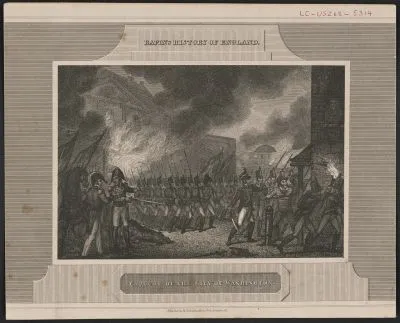
"If they want to play lumberjack, they have to learn to handle their end of the log."


This could end up being a null set, once the queasiness of the world markets settle down. If Suez traffic is uninterrupted and the Saudis care enough to keep their shipping safe, then its Houthi offensive isn't a world or American problem. That could change overnight, just like it did Wednesday.