Saturday, August 29, 2026

Don’t Let Them Blame Data Centers for Their Green Energy Failure


When a wildfire erupts, the left has an explanation ready before the first fire truck arrives: climate change.

In 2025, before the cause of the Palisades Fire was established, Governor Gavin Newsom was already whining about a “changing climate.” Turns out the Palisades Fire was arson. Climate change gets blamed for a lot of things, but it can’t strike the match.

Now America’s electric bills are on the rise, and the left has found another boogeyman: data centers.

Just as an arsonist needs an alibi, a failed politician needs a villain.

Three Socialists, One Talking Point

U.S. Rep. Alexandria Ocasio-Cortez says data centers are inflating electric bills and wants a national construction moratorium. Vermont Senator Bernie Sanders says data centers will drive up electricity costs and wants a moratorium. Kathy Hochul says data centers threaten to hike utility bills and has pushed a New York moratorium.

Same talking points. Same proposed “solution.”

There is just one problem: electric bills were rising long before the current data-center boom.

The left wants Americans to believe electricity suddenly became expensive because computers showed up. They hope nobody asks what happened to the power plants that once kept electricity reliable and affordable.

More Than 83 Gigawatts Gone

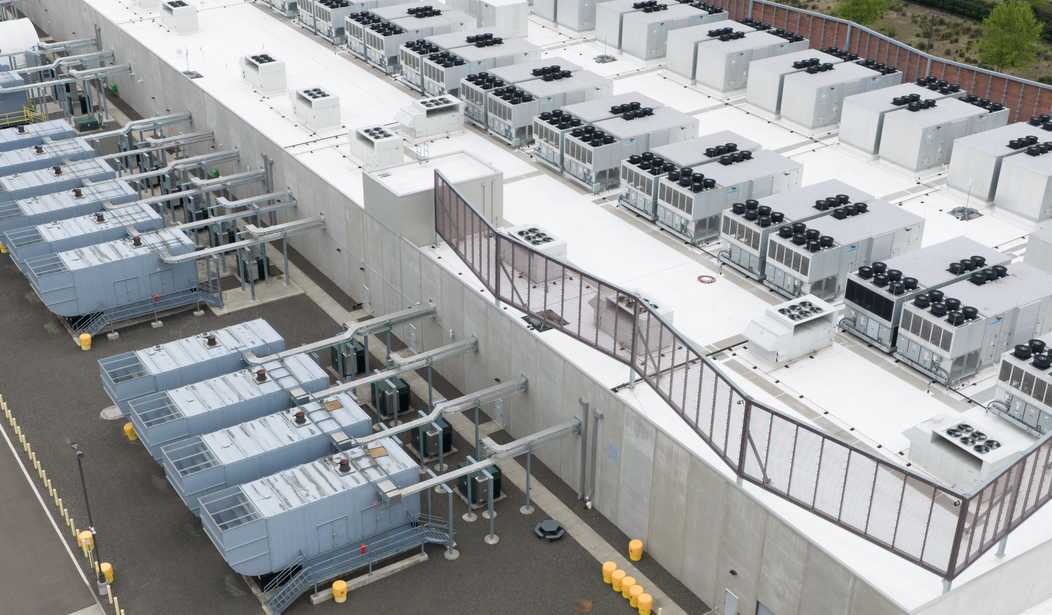
According to the Energy Information Administration’s generator records, America retired approximately 83.2 gigawatts of fossil-fuel generating capacity between January 2019 and June 2026. That’s enough generating capacity to supply roughly 70 million average homes.

Eco-leftists celebrated this as an “energy transition.” Utilities were pressured to close plants. Green groups demanded more shutdowns. Politicians promised wind, solar, and batteries would take their place.

Now demand is growing, the grid is tight, and the same people are acting shocked that electricity costs more.

You don’t get to celebrate the closure of reliable power plants and then blame the customers who need electricity.

Meet The Renewable Portfolio Standard

One of the biggest political weapons behind this transition has been the Renewable Portfolio Standard, or RPS. These mandates require utilities to obtain an increasing share of their electricity from government-approved wind and solar sources. 

That isn’t the free market. It is a government-ordered transition.

Today, 27 states and the District of Columbia have mandatory renewable or clean-energy standards. When their residential electricity prices are compared with those of states without such mandates, the difference is difficult to ignore.

From 2019 through 2024, the average residential electricity price in RPS states increased 28.4 percent. In states without them, it increased 16.8 percent.

The numbers demolish the claim that data centers suddenly caused a problem that was already years in the making.

The Biggest Increases

The largest residential rate increases among mandate jurisdictions between 2019 and 2024 were:

  • California: 66.9 percent
  • D.C.: 36.4 percent
  • New York: 36.2 percent

Then there are the ten states with America’s highest residential electricity prices in 2024: Hawaii, California, Massachusetts, Connecticut, Rhode Island, Alaska, New York, Maine, New Hampshire and Vermont. 

Nine of those ten have mandatory renewable or clean-energy standards.

That is the record AOC, Sanders and Hochul hope Americans never compare.

More Demand Does Not Automatically Mean Higher Rates

One study found that states experiencing the strongest electricity demand growth from 2019 through 2025 saw their inflation-adjusted average electricity prices decline by more than 1 cent per kilowatt-hour. The presence of data centers did not change that conclusion.

The real problem is not demand. It is demand colliding with government-created scarcity.

To be clear, data centers need new power, and they should pay for it.

That is exactly the idea behind President Trump’s Ratepayer Protection Pledge. Participating technology companies are expected to build, bring or purchase the electricity they need, pay for grid upgrades and honor their power contracts whether they use all the electricity or not.

For those keeping score, that’s two very different visions:

President Trump’s answer is more power and to protect ratepayers. The socialist answer is to stop economic growth because their energy policies cannot support it.

Same Playbook, New Villain

The marching orders are not hard to spot.

AOC wants a moratorium. Bernie wants a moratorium. Hochul wants a moratorium.

They are all singing from the same socialist sheet of music: blame data centers, ignore the retired power plants and never mention the renewable mandates that helped make electricity more expensive.

They broke the system. Now they want to blame the customer.

Meanwhile, China is building power plants, expanding its grid and competing to dominate artificial intelligence. If American politicians make it harder to build the infrastructure of the intelligence age here, Beijing will gladly take the investment, jobs and strategic advantage.

China couldn’t be happier that AOC, Sanders, and Hochul are leading the charge.


Podcast thread for August 29


Zzzzz... 😴😴

Because Pride Goeth Before the Fall


One of our culture’s dispiriting trends since the 1960s has been a growing insistence that one be proud of this or that superficial quality or demographic label. I recall the 1968 Olympics, when Tommie Smith and John Carlos stood at the podium, having won the Gold and Bronze, respectively, in the men’s 200-meter sprint. As an American 10-year-old, I was proud of my countrymen for the feat. But the athletes had a statement to make and will be forever remembered for the “Black Power salute” on the Olympic podium, and not their tremendous athletic prowess. I remember something else, though: when Howard Cosell later asked Smith if he was proud to be an American, the elite runner responded that he was proud to be a black American. Both, question and answer, bothered me.

At times, my memory is too good. Finishing up my 68th trip around the sun, I nonetheless recall my potty training. It was then that I learned what it meant to be proud. “Are you proud of me?” I would ask when it came time for my mom or dad to attend to the necessary hygienic details. It never failed to elicit an affirmative reply. And it, in turn, made me proud of… ahem… my accomplishment.

As I grew, my parents instructed me on the finer points of both hygiene and pride. The former took care of itself without much fanfare, as you might imagine. I found the latter, though, to be far more complicated. They told me, for example, that it was not at all a bad thing to be proud of my big brother when he was elected president of his high school student body. And it was admirable to be proud of my remarkably athletic sister when she excelled on the softball field. But neither my brother nor my sister, they told me, should express pride in themselves for those accomplishments.

By the time I reached the 1st grade, I was a thoroughly confused five-year-old when it came to pride. It didn’t help that I was big for my age and excelled at tetherball. I recall a night when I felt awfully proud of myself and eagerly shared my schoolyard exploits at the dinner table. My bragging flopped with my big brother, as we were raised by the same people. For my first true lesson in humility, he led me to the backyard tetherball set. My brother was in college by then and stood 6’2”. In retrospect, it was more a lesson in humiliation than humility. But he made his point. Unless you’re the future King David, it’s pretty easy to get over yourself when you face an opponent who’s two feet taller.

The lesson has stayed with me.

In my suburban, public high school in the 1970s, I scratched my head when we would cry out at rallies before football games that we were proud to be Trojans -- and my class was particularly proud to be “The Spirit of [19]76.” In college, a dear friend had a “Proud to Be Danish” bumper sticker, which I would have confronted her over if I hadn’t been soft on her. A local car wash sold similar bumper stickers for just about every imaginable nationality. On the freeway to work a few years later, I would see a veritable United Nations of commuters crawling to Los Angeles each morning. Years later, for several months after 9/11, “Proud American” became a popular message to proclaim on the roadways. Caught up in the protective and aggressive feelings of the day, I would genially look upon those drivers as fellow travelers, so to speak. But I never bought the sticker.

My oldest living son is now 35. During his college years at UCLA, where he graduated with honors, and for several years beyond, he worked as a model in Los Angeles, New York, and Singapore. It’s not difficult from that sentence to figure out that he was born with intelligence and good looks. I would tell him frequently that I was proud of him, but that it wasn’t due to his native intellect or his physical attractiveness. “You had absolutely nothing to do with those things,” I’d remind him. “It’s your character that counts.”

Back to 1968, why did Cosell’s question to Smith bother me?

Glad to be an American? We should be giddy. Fortunate to be American? Blessed beyond measure. Grateful? When not taking it for granted, tearfully so. Love America? Zealously! But proud? It sounds somehow impertinent, but I am proud of our founders. I am proud of countless American heroes, military, civic, and some unsung. But I had absolutely nothing to do with the circumstances or geography of my birth, so no.

One might assume a case is made here for the non-native citizen, for at least they often worked like dogs for their good fortune. But like the rest of us, they had nothing to do with creating the system -- a miraculously-crafted interweaving of federalism and separation of powers, recognizing that inherent rights cannot be withheld by a government that did not create them. In this, native and immigrant are co-heirs, beneficiaries of a trust that has now lasted a quarter of a millennium.

My misgivings were reawakened recently, upon hearing Lee Greenwood’s “Proud to Be an American” -- a song that always assures me I’m with kindred spirits, but leaves me hollow. How about “Humbled to be an American”? I know the meter is wrong and all, but it is so much more in keeping with the spirit of [17]76.

In today’s conversation, we have “pride flags,” “pride month,” “pride marches,” and “pride parades.” There’s a Pride Library and “pride/proud” cable channels. Except for the Texas Rangers, every team in Major League Baseball has a “pride night” each summer. A certain subculture is absolutely lousy with pride.

In response to these ubiquitous displays, an entrepreneur in my town, Mark Fitzpatrick, tried to fight fire with fire. A couple of Junes ago, the Old State Street Saloon began a tongue-in-cheek “Heterosexual Awesomeness Month.” Had he used “Pride” instead of “Awesomeness,” I might not have patronized his establishment, but the word choice -- not to mention a free beer on Mondays in June for those of us who aren’t… well… too proud -- worked as an invitation I couldn’t resist. Sadly, Fitzpatrick is now selling the saloon. The opposition has made it too cumbersome -- between what he describes as “regulatory pressure, lawfare, legal threats, and worse” -- he doesn’t want the business to be used against him as “leverage.” I am sure his foes are proud.

In Mere Christianity, C.S. Lewis wrote, “The essential vice, the utmost evil, is pride. Unchastity, anger, greed, drunkenness, and all that, are mere fleabites in comparison. It was through pride that the devil became the devil. Pride leads to every other vice; it is the complete anti-God state of mind.”

Lewis was, as usual, absolutely spot on.

Some readers who have made it this far may already be composing rebuttals, urging that my argument takes this anti-pride thing too far. Maybe they had one of the bumper stickers. Maybe they love Lee Greenwood’s anthem. Maybe they think it’s all just semantics.

And some are likely blaming my potty training.


🎭 π–πŸ‘π π““π“π“˜π“›π“¨ 𝓗𝓾𝓢𝓸𝓻, π“œπ“Ύπ“Όπ“²π“¬, 𝓐𝓻𝓽, π“žπ“Ÿπ“”π“ 𝓣𝓗𝓑𝓔𝓐𝓓


Welcome to 

The π–πŸ‘π π““π“π“˜π“›π“¨ 𝓗𝓾𝓢𝓸𝓻, π“œπ“Ύπ“Όπ“²π“¬, 𝓐𝓻𝓽, π“žπ“Ÿπ“”π“ 𝓣𝓗𝓑𝓔𝓐𝓓 

Here’s a place to share cartoons, jokes, music, art, nature, 
man-made wonders, and whatever else you can think of. 

No politics or divisive posts on this thread. 

This feature will appear every day at 1pm mountain time. 


Democrats Are Still Figuring Out That ‘Normal’ Can’t Be Taught


In this week’s edition of ” Why Can’t Democrats Be Normal?” the comically deceitful Democrat front group Third Way just put out guidance for party officials that aims to help them speak like humans rather than demonically possessed psychiatrists. They haven’t quite figured out that if you have to be trained to be normal, you’re not.

“For a party that spends billions of dollars trying to find the perfect language to connect to voters, Democrats and their allies use an awful lot of words and phrases no ordinary person would ever dream of saying,” the group wrote in a report last weekend. It said the alien way Democrats tend to speak “puts a wall between us and everyday people of all races, religions, and ethnicities,” and that regular people only use the same ridiculous terms and jargon “as a form of derision or parody of Democrats.”

Well, yeah. Because Democrats, in earnest, talk about abortion access for men and spend their time concocting stupid terms like “unhoused person” and “justice-impacted individual,” which are patently laughable. Third Way says they’re intended to “include, broaden, empathize, accept, and embrace.”

That’s not true. They are, in fact, simply more ways for Democrats to subjugate the unassuming middle class (white people) by demanding everyone comply with their made-up language rules, or otherwise create the impression that they’re intelligent when they’re the opposite.

They keep doing this. They obsess over “messaging” and — like California governor and likely 2028 Democrat presidential candidate Gavin Newsom recently said — the need to be “more culturally normal,” as if normalcy is a trade the party has a hard time even wanting to understand. It’s like someone asked them to eat at Waffle House and they’ve admitted they hate the idea, and will probably throw up, but are willing to try it if they have to.

“We’ve spent the past five years debating pronouns without noticing that too many students can’t tell you what a pronoun is,” former Chicago Mayor Rahm Emanuel, another likely presidential candidate, wrote in an op-ed last year. Note that he didn’t say “debating pronouns” was unimportant, but only that it perhaps came with the cost of retarding public school students.

There’s a degree of normalcy they’re trying to figure out and tolerate — just the right amount it would take for voters to give them power. And then they can reign over Woke 2, once again imposing their grotesque speech codes on everyone.

Democrats are not normal, no matter how hard they try to learn it.


Trump Called It: X Uncovers Massive Chinese Bot Farm Targeting U.S. Data Centers

The Global Government Affairs team over at X dropped a bombshell Thursday night, revealing that the X Safety team had uncovered proof positive of a foreign influence campaign targeting the build out of AI and data centers in the United States. 

It turns out that, after launching an investigation, the team uncovered a massive bot farm consisting of roughly 200,000 "suspected Chinese inauthentic accounts," including hundreds that appear to have been trying to manipulate debate in the U.S. over artificial intelligence, data centers, and the associated energy costs.

This development comes after President Trump warned last month that “other nations are trying to get us to slow down” and are spending money on “propaganda” to convince Americans that data centers aren’t a positive thing.

According to X, about 200 accounts within the bot farm network were posting claims that data centers drive up household electricity prices and put excessive strain on the power grid. Some of the accounts, ironically, posted AI-generated cartoons depicting data center operators getting rich while ordinary American citizens were stuck paying the bill.


The X Safety team conducted an investigation into suspected Chinese inauthentic accounts involved in influence operations:

We identified a bot farm of approximately 200,000 accounts. Within this farm, we found 200 accounts posting in a manner that could manipulate a legitimate debate about American AI and energy policy.

These posts contained claims that AI data centers are driving up household electricity prices and straining the grid. Others included AI-generated cartoons that depicted data-center operators enriching themselves at the public's expense.

We remain committed to maintaining an open and authentic platform where people debate topics of public interest. We take seriously any attempts to undermine the integrity of the global town square and suspend accounts that violate our Authenticity policy.

Unfortunately, this isn't the first time such an operation has been uncovered.

OpenAI revealed in June that it had shut down an influence operation it called “Data Center Bandwagon.” The campaign, likely also based out of China, used ChatGPT to generate English-language posts that would be pushed out on social media from "Americans" claiming that data centers were driving up their electric bills and forcing them to subsidize Big Tech.

The insidious thing about this kind of foreign influence operation is that it preys on the concerns that many Americans already have about the data centers popping up in their communities – debates about things like electric bills and the robustness of the power grid are already happening here. All a foreign adversary like China has to do is amplify those fears and sow distrust to make it harder for the U.S. to keep building out its AI infrastructure.

Looks like President Trump called this one.


Trump Admin Sends a Warning to Allies Funding Iran As the US Severs UAE Bank From the Dollar

The Trump administration isn't playing any games when it comes to Operation Economic Outcast.

The United States Treasury has moved to cut off Egypt's second-largest bank, Banque Misr’s, UAE operations, from the U.S. financial system. The Treasury says that the bank has processed roughly $1.8 billion in transactions for 103 companies potentially tied to Iran’s shadow-banking networks in support of its war against the United States and global trade.

The move is a warning not only to Banque Misr, but to the UAE and every foreign institution still helping Tehran evade America's economic sanctions. The message is clear: access to the U.S. dollar is not a guarantee but a privilege. By targeting an institution operating in an allied country, the administration is signaling that anyone who provides Iran with an economic lifeline, including partners of the United States, will face severe consequences.

"Today, under Operation Economic Outcast, @FinCENnews proposed a rule that would revoke Banque Misr UAE’s correspondent banking access to U.S. financial institutions," the Treasury wrote on X. "Additionally, Treasury’s Office of Foreign Assets Control sanctioned Bank Melli Dubai manager Reza Mohammad Taeedi, along with a Hong Kong-based front company that has helped launder funds for a sanctioned Iranian exchange house. Operation Economic Outcast is severing the remaining financial lifelines that sustain the Iranian regime."

The move is likely to affect not only Iran but also the UAE, despite the Emirates having acted as a far more dependable American partner in this conflict than many of Washington’s nominal European allies.

By cutting Banque Misr’s UAE branches off from the dollar, the Treasury is sending a clear warning to banks and businesses around the world: helping Iran move money can cost them access to the U.S. financial system. For banks and companies in the UAE, losing access to dollars would make it far harder to do business internationally and could seriously damage their reputation, as the country has built its economy as a hub for trade, logistics, finance, investment, and cross-border commerce.

The move is especially notable as just days earlier, the UAE announced it had halted all trade, commercial exchanges, and financial transactions with Iran.

What separates Operation Economic Outcast from another routine round of sanctions is its willingness to follow Iran’s money wherever it goes, even when it runs through a friendly country. The Trump administration is making clear that an alliance does not create a carveout for banks or businesses that help keep Iran’s financial networks alive. If an institution operating in Dubai or anywhere else is part of Iran’s sanctions-evasion operation, it can expect to be treated accordingly.


CENTCOM Commander Explains Major Milestones Just Achieved in Strait of Hormuz

U.S. Central Command (CENTCOM) Commander Admiral Brad Cooper explained some major milestones that the U.S. military has now achieved in the Strait of Hormuz.

We have successfully cleared sea mines in the strait’s international shipping lanes that were laid months ago by Iran’s Islamic Revolutionary Guard Corps. Internationally recognized transit routes in the strait are free of Iranian sea mines, thanks to the incredible work of the U.S. military.

He then went into detail explaining that U.S. Navy divers, Navy SEALS, and U.S. airpower were all employed to help clear the mines. "The circumstances were challenging and dangerous, to say the least, but we got the job done," he said. 

Then he revealed the number of ships that they helped get through the Strait: nearly 1,500 ships, carrying nearly 750 million barrels of crude oil for global energy markets, "which is a massive volume." While the U.S. has done that, it's also ensured that Iran has exported zero barrels since the U.S. resumed the naval blockade. They've turned around 75 vessels that tried to run the blockade and disabled three vessels that did not comply. 

Secretary of War Pete Hegseth praised their achievements. 

Treasury Secretary Scott Bessent said they'd gotten 130 million barrels out in just the past two weeks and said his duty - Operation Economic Outcast - would help crush the Iranian regime. 

The Iranian economy is already in a tailspin, with Iranian currency at a record low, and the U.S. cutting off its economic lifelines. 


♦️𝐖³π πƒπšπ’π₯𝐲 𝐍𝐞𝐰𝐬 𝐎𝐩𝐞𝐧 π“π‘π«πžπšπ


W³P Daily News Open Thread. 

Welcome to the W³P Daily News Open Thread. 

Post whatever you got in the comments section below.

This feature will post every day at 6:30am Mountain time. 


Federal Judge Blocks USPS Election Integrity Measure Again Days After SCOTUS Stayed Her Injunction


A federal judge Thursday blocked an election integrity measure from the United States Postal Service (USPS) just days after the U.S. Supreme Court lifted that same judge’s injunction on the policy.

U.S. District Court Judge Indira Talwani, an Obama appointee and past Democrat donor in Massachusetts, issued a temporary restraining order on a USPS rule that would require states to provide basic voter data to the Postal Service, as well as change ballot envelopes to include unique barcodes associated with individual voters’ profiles, in an effort to start securing voting by mail.

Talwani had already issued an injunction on the policy before it was even finalized, and the Supreme Court barred this injunction. But Talwani is back now with a new injunction after the policy came out, claiming such publication satisfies the high court’s concerns that the judicial branch only reviews “final rules, not proposed rules,” and arguing that SCOTUS did not answer the question on the merits of the policy itself.

The Trump administration announced Friday it would be appealing Talwani’s decision.

Even Talwani’s review of what USPS is asking for shows how simple the USPS requirements are. Far from anything required in the SAVE America Act, which would require proof of citizenship among other things, USPS’s final rule simply requires the submission of the name of the voter, his address, and a unique barcode. It does not even verify the address, and does not check or alter voter eligibility in the states. Yet Talwani railed against these basic standards:

Through the Final Rule, the USPS is refusing to send mail ballots to eligible voters unless States or local election officials submit their mail ballot envelopes and return envelopes and receive advance approval from the USPS without regard to impending deadlines for the November 3, 2026 election. [Citation removed]. Additionally, the Final Rule requires elections officials to create accounts for a new electronic portal, certify that they have received approval regarding the mail ballot design, and thereafter upload to the USPS portal each voter’s information, including name, address, and a unique intelligent mail barcode.

Talwani called compliance before the midterms “practically impossible,” and claimed that “the record continues to lack any evidence regarding fraudulent absentee or mail-in voting. … The USPS’s interest in correcting an unsubstantiated problem through likely unconstitutional means is dwarfed by the overwhelming risk of pervasive disenfranchisement of citizens who need access to mail ballots in order to vote.”

The Massachusetts judge overlooked the fact that mail-in voting is the least secure method of voting, resulting in multiple ballots being sent to the same person or address and countless ballots being mailed to the incorrect people, sometimes even out of the state.

The restraining order is set for 14 days, stopping USPS from requiring states to comply with the bar code and voter data requirements. According to SCOTUS Wire, Talwani will also consider a longer injunction Sept. 3.

After Trump issued an executive order directing USPS and other federal agencies to implement election integrity measures, Democrat-run states and left-wing organizations like the League of Women Voters filed suit in federal court in an attempt to block the measures.


Kamala Harris Uncorks a Wild Midterm Conspiracy Theory — and the Video Is Something Else

If you've been waiting with bated breath for Kamala Harris's hot take on election integrity and the midterm elections, your wait is over. And let's just say it's not a sober take on things.

The failed Democrat presidential candidate put out a video Thursday claiming that President Trump is trying to rig the November elections by having the USPS tighten up its procedures for handling mail-in ballots.

There are two important things to unpack here: her message and her appearance. 

Let's start with the message. She starts off by saying, "Hey, everybody. Just this week, the United States Supreme Court backed up the president’s agenda. He’s trying to make it more difficult for you to vote by mail." Then adds, "By the way, he votes by mail from Mar-a-Lago, but he doesn’t want you to vote by mail because he knows you’re paying attention."

Because Trump votes by mail and wants to make sure his ballot is handled correctly by the USPS means he doesn't want the same for other voters? Okaaay.

The rules Kamala is questioning cover how mail-in and absentee ballots are to be handled in federal elections. States would be required to tell the Postal Service who is supposed to be receiving these kinds of ballots, and those envelopes would then have to have unique identifiers on them so that each piece can be individually tracked as it makes its way through the mail system.

Democrats do not want any extra scrutiny on mail-in ballots because they need to hold trunks full of them in reserve for election night ... just in case.

And Kamala needn't have gone through the effort to make this video because, as RedState reported Friday morning, an Obama-appointed judge has halted the rules from going into effect, saying the blue states complaining "face irreparable harm where they are required to comply with a likely unconstitutional regulation for which compliance is practically impossible as to the 2026 midterm elections, now little more than two months away."

“By the way, he votes by mail from Mar-a-Lago, but he doesn’t want you to vote by mail.

Hey, everybody. Just this week, the United States Supreme Court backed up the president’s agenda. He’s trying to make it more difficult for you to vote by mail.

By the way, he votes by mail from Mar-a-Lago, but he doesn’t want you to vote by mail because he knows you’re paying attention.

Context is so important. Gas prices are up, food prices are up. He got us in a war that the American people don’t want, and he is worried he is going to lose the midterms.

We are two months away from the midterms. Get out and vote. Let’s get everyone out to vote. They are cheating. They are trying to cheat. And we have got to turn out in big numbers and be too big to rig.

I’ll see you out there.”

Now, about her appearance. I'm not saying she's definitely drunk in this video, but she's definitely not sober.

Our friends over at Townhall noticed there were 15 editorial cuts for a 47-second video, which calls into question what she's been doing these last two years because she certainly isn't coming across as a more polished, coherent future presidential candidate.

Let's just call Kamala's video what it is – a rallying cry for wine moms everywhere to put down their glasses of Chardonnay long enough to scribble out a ballot. Preferably before happy hour gets really under way.

It's also a taste of what Democrats have in store for the midterm elections: every election-integrity measure by Republicans will be called "cheating," every defeat will be blamed on voter suppression, and every ballot box will apparently require a sommelier.