Wednesday, July 22, 2026

America At 250: A Nation Misunderstood, A Nation Unmatched


Now that America 250 has come and gone, it is a good time to reflect on America’s greatness. In today’s cultural environment, it has become almost routine to hear a steady drumbeat of negativity about the United States.

Whether it comes from segments of the media, certain politicians, or celebrities who enjoy the spotlight that comes from criticizing their country, the message is often the same: America is flawed, America is failing, America is somehow the source of the world’s problems. This narrative has seeped into classrooms, entertainment, and social media, shaping the minds of younger generations who are taught to view their own country through a lens of guilt rather than gratitude.

But this narrative is not only incomplete—it is historically inaccurate. It ignores the extraordinary contributions the United States has made to humanity. It overlooks the sacrifices Americans have made for global stability. And it dismisses the innovation, generosity, and moral courage that have defined the American character for 250 years.

To understand how far this narrative has drifted from reality, it is worth revisiting a moment from the early 1970s, when a Canadian journalist named Gordon Sinclair delivered one of the most powerful commentaries ever broadcast about the United States. His words, spoken in 1973, cut through the noise of criticism and reminded the world of a simple truth: America is the nation that shows up. America is the nation that helps. America is the nation that gives.


In this famous commentary, Sinclair pointed out something the world rarely acknowledges: whenever disaster strikes anywhere on the planet—a flood, an earthquake, a famine, a war—the United States is almost always the first to arrive with aid, money, supplies, and manpower. He noted that America rebuilt nations after World War II, fed starving populations, and provided relief to countries that were unable to help themselves.

Yet when America faced its own crises—tornadoes, floods, economic hardship—the world did not rush to help. There were no global fundraising campaigns. No foreign governments sent ships of supplies. No celebrities held concerts to support American victims. Instead, America was expected to take care of itself, quietly and without complaint.

Sinclair’s message was not political. It was observational. He simply described what he saw: a nation that gave more than any other, received less than any other, and was criticized more than any other.

His words resonate even more today. While the world continues to rely on American generosity, American innovation, and American leadership, the cultural narrative has shifted toward condemnation rather than appreciation.

One of the most overlooked facts in modern history is this: American innovation has lifted an estimated 3 to 4 billion people out of poverty over the last 50 years. This is not an exaggeration. It reflects how global development actually works.

The dramatic decline in worldwide poverty—from nearly half the world’s population in 1980 to less than 10% today—is directly tied to technologies, investments, and systems pioneered by the United States.

Energy Innovation

American breakthroughs in energy—from oil and gas extraction to nuclear power and delivery systems—enabled developing nations to industrialize, electrify rural regions, and build modern economies. Without American energy technology, billions would still be living without reliable power and the quality-of-life benefits that flow from it.

Agricultural Machinery

The tractors, combines, irrigation systems, fertilizers, and crop science developed in the United States transformed global agriculture, which saved hundreds of millions from famine, and was driven largely by American research and American equipment.

Computing and Digital Technology

The microchip, the personal computer, the internet, cloud computing—all American inventions. These technologies created entirely new industries across every corner of the world. They allowed developing nations to leapfrog into the digital age.

Medical Breakthroughs

Vaccines, antibiotics, medical devices, genomic sequencing, and advanced surgical technologies—overwhelmingly American-led. These innovations increased life expectancy, reduced disease burdens, and improved quality of life worldwide.

Foreign Investment

American companies and investors have poured hundreds of billions into developing nations, building factories, infrastructure, supply chains, and educational partnerships. These investments created jobs, raised wages, and accelerated economic growth.

When you add all of this together, the conclusion is undeniable: American ingenuity has been the single greatest force for human uplift in modern history.

The question then becomes: Why was the United States able to do all this?Why did this one nation, in just 250 years, accomplish what no empire or civilization had achieved in thousands?

The answer is found in America’s founding documents.

The Declaration of Independence

It states that rights come from God, not government. That freedom is inherent, not granted. That the individual is sovereign, not the state.

This philosophy unleashed human potential on a scale the world had never seen.

The Constitution

It created a system where government is limited, power is separated, speech is protected, enterprise is encouraged, and innovation is rewarded. It placed the citizen above the government—a radical idea in 1776 and still radical today.

This ideological foundation produced the most dynamic, inventive, and prosperous society in human history.

The results of this system are staggering:

1. 25% of the world’s GDP with only 4% of the world’s population

No other nation has ever achieved this level of productivity.

2. The largest and most innovative companies in the world

Apple, Microsoft, Amazon, Nvidia, Tesla—all born from American freedom.

3. The best universities in the world

Harvard, MIT, Stanford, Caltech—magnets for global talent.

4. The strongest military in history

A force that protects global trade routes, deters aggression, and stabilizes entire regions.

5. The global elite send their children here

Even those who criticize America send their children to American universities and American companies. Because they know the truth: Opportunity lives here.

It is easy to be negative. It is easy to become emotionally charged by headlines, social media, and political rhetoric. But on the 250th birthday of the United States, it is important to step back and look at the full picture.

No other country in recorded history has contributed more to the world in such a short period of time. No other nation has lifted billions out of poverty. No other nation has created so much innovation. No other nation has defended so much freedom. No other nation has given so much to people beyond its borders.

Rather than focusing solely on America’s imperfections—which every nation has—we should focus on the greatness of the American people, the American spirit, the American freedom, and the American ingenuity that have shaped the modern world.

America is not perfect. But America is exceptional. And the world is better because this nation exists.


Podcast thread for July 22


'sighs'.

Party’s Over for Foreigners at College


New rules announced by the Trump Administration are addressing the flood of foreign students at American universities. Half a million of them are illegal aliens, while more than a million additional college students are here from foreign countries on student visas.

Until recently, many states, including Republican-controlled Texas, have allowed illegal aliens to benefit from low in-state tuition rates while Americans from out of state were forced to pay much higher rates. The unfair difference over four years can exceed $100,000 per student.

In July 2023, the U.S. Court of Appeals for the Fifth Circuit ruled against a challenge to how a public Texas university charged only in-state tuition to illegal aliens, while charging much higher out-of-state tuition to American citizens. But this month the same court upheld by a 2-1 vote a settlement with the Trump Administration whereby Texas agreed to stop enrolling illegal aliens at preferential tuition rates.

More than a million students in American universities are foreigners here on visa programs, almost entirely from non-Western countries having political systems unlike or opposed to ours. Texas has brought in many non-Christians as collegians and is reacting now against communities they’re forming.

Many of the international graduate students are receiving salaries or other compensation from American taxpayers, in the form of direct government subsidies at public universities and federal grants at private ones. Trump unsuccessfully attempted to cut off the flow of billions of dollars from the federal government to Harvard University.

For half a century, foreigners could enter graduate programs and take many years, far more than four, to complete their PhD programs while remaining in the U.S. without any deadline to leave. The F-1 visa program has been allowing foreigners to remain on visas here for the “duration of their status” at their university, with no time limit.

Trump has just ended this racket. Under a new rule issued by Trump’s Department of Homeland Security, most new F-1 students will receive visas that expire after a fixed period of time, usually four years.

This puts healthy pressure on universities and students to reach the finish line as scheduled, rather than dawdle indefinitely in the academic cocoon. The average length of time in graduate studies has ballooned to more than seven years for a PhD, which harmfully causes students to delay having families and finding employment.

Trump is also cutting back on the period in which foreigners may linger in the U.S. after completing their programs, reducing it from 60 to 30 days. International students who line up jobs here can seek other visa programs, but most should be returning to their homelands.

Trump’s regulatory changes also restrict transfers by foreigners from one university to another, while here. Restrictions are being imposed on foreigners switching academic programs within their schools, too.

Graduate programs are generally funded by universities and government grants, so it is fair to question why there are any foreigners in these positions. Academic teaching positions are particularly scarce, such that in STEM fields there are academic jobs available for fewer than 10 percent of those who obtain PhDs.

Only 4.2 percent of applicants to Harvard College were admitted in its Class of 2029, which is the most recent data available. Every admission of a foreigner takes a spot away from an American applicant.

The blockbuster summer movie is "The Odyssey," based on the ancient Greek classic that became a foundation of Western Civilization. Its concepts, like the “Trojan horse,” have become staples of our culture, and the Texas State Board of Education recently included this book in its new reading list of great texts, including the Bible.

For decades, movies have been shifting away from live-action films into animation. The popularity of "The Odyssey" as a live-action movie, along with the acclaim it has received from movie critics, demonstrates that the traditions of Western Civilization remain relevant and inspiring.

Yet most international students in our universities are from non-Westerncountries whose culture and traditions are entirely alien to American history, culture, and way of life. It would take several generations to assimilate the millions of foreigners already here, and a moratorium on new immigration should be seriously considered.

Universities are already complaining about a decline in international students in graduate programs, which they attribute to Trump’s occasional travel bans and freezing of some federal grants. The drop in high-school enrollment (mostly due to the declining birth rate) means there will be fewer American students in the pipeline for universities in the future.

But universities have only themselves to blame if there is a shortage of American students. Liberal political ideology dominant at universities leans strongly against child-rearing, and if more students are wanted for the future, then there should be more encouragement now by academia for Americans to have and raise their children.


🎭 π–πŸ‘π π““π“π“˜π“›π“¨ 𝓗𝓾𝓢𝓸𝓻, π“œπ“Ύπ“Όπ“²π“¬, 𝓐𝓻𝓽, π“žπ“Ÿπ“”π“ 𝓣𝓗𝓑𝓔𝓐𝓓


Welcome to 

The π–πŸ‘π π““π“π“˜π“›π“¨ 𝓗𝓾𝓢𝓸𝓻, π“œπ“Ύπ“Όπ“²π“¬, 𝓐𝓻𝓽, π“žπ“Ÿπ“”π“ 𝓣𝓗𝓑𝓔𝓐𝓓 

Here’s a place to share cartoons, jokes, music, art, nature, 
man-made wonders, and whatever else you can think of. 

No politics or divisive posts on this thread. 

This feature will appear every day at 1pm mountain time. 


FRANCE Luxury yacht blamed for destruction of WWII aircraft wreck off Saint-Cyr-sur-Mer

 A luxury sailing yacht has been blamed for destroying a well-preserved Second World War aircraft wreck off Saint-Cyr-sur-Mer, prompting an investigation and calls for better protection of underwater heritage.   


 A Second World War aircraft wreck off the coast of Saint-Cyr-sur-Mer has been largely destroyed after being struck by the anchor of a luxury sailing yacht, according to local divers and the French Maritime Prefecture. 


The wreck of a Lockheed P-38 Lightning, shot down by German forces in 1944, lay 38 metres below the surface in Les Lecques Bay and was considered one of the best-preserved dive sites in the region.

Members of the Lecques Aquanaut Center, who discovered the wreck in 1996, said they found it reduced to twisted metal scattered across the seabed when they visited the site on 17 July.

The Maritime Prefecture confirmed that the damage was caused by the Orient Express Corinthian, a luxury sailing yacht launched earlier this year. 


The vessel had anchored directly above the wreck the previous day in an area where anchoring is permitted, although divers say the historic site should have been better protected.

The P-38 had become both a popular attraction for divers and an important marine habitat, home to species including lobsters and red mullet.

Local diving clubs say its destruction represents a significant loss for both underwater heritage and the local tourism industry.

Following the incident, the French Maritime Prefecture has temporarily banned diving and anchoring around the site while specialists assess the damage.

According to local reports, legal action could also follow over the destruction of a cultural heritage site. 


https://www.rivieraradio.mc/article/luxury-yacht-blamed-for-destruction-of-wwii-aircraft-wreck-off-saint-cyr-sur-mer-5HjddwZ_2/   


 Luxury yacht blamed for destruction of WWII aircraft wreck off Saint-Cyr-sur-Mer 


Being Nice Instead Of Godly Is A Theology For Losers


If you’ve ever sat in a pew wondering why your church seems allergic to the culture war, that’s not your imagination. It’s loser theology.


“My daughter was murdered by gender ideology.”

Those are the words of Abigail Martinez, a devout Christian widow in California, who watched the state take her daughter away when she refused to affirm her daughter’s transgender identity. Her daughter, Yaeli, was struggling with depression and her sexuality, so a school psychologist recommended she join the school’s LGBT club (without Abigail’s knowledge or consent). When Abigail discovered what was happening, she refused to affirm her daughter’s transition, so the state removed her from her home.

Activists told Martinez to hold a funeral for her daughter and celebrate the adoption of a “son.” They told her she’d never see Yaeli again if she kept talking about God.

Not long after this, Yaeli killed herself.

When Martinez later testified before Congress, she said her daughter’s death was a murder. Gender ideology killed her.

Now, ask yourself a question. How many Christian leaders and churches have been outspoken about the dangers of gender ideology? How many pastors will boldly and unflinchingly denounce homosexuality, gay “marriage,” transgenderism, and the whole array of LGBT sins? Even though there is a growing movement of courageous pastors speaking out, the reality is, over the last 20 years or so, many of them have been silent.

I’m a pastor. Over more than 20 years in ministry, I’ve watched a theology take root in American evangelicalism that trains Christians to be silent in the face of all kinds of cultural tyranny. It’s a theology that says the church is at her best when she’s losing. It says we should not seek cultural influence because that would only corrupt us. Further, it says we should not seek political power because that’s beneath us. Our only public duty is to do evangelism, because eternal destinies are all that really matters. The culture war is just a distraction. 

I call this loser theology, and it has done great damage to the modern church. Further, it harms society by causing Christians to disengage as the greatest conscience-shaping force in our culture. 

Loser theology is promoted by prominent advocates, though that’s not what they call it. Russell Moore, one of the most influential evangelical voices of the last decade and former head of the Southern Baptist Convention’s public policy arm, wrote in his 2015 book that “the Bible Belt is teetering toward collapse, and I say let it fall.” He argued the church is most faithful when she exists as a “persecuted minority,” never a “moral majority.” He says Christians are better witnesses as cultural losers rather than winners. 

That may sound humble, but it isn’t. It’s simply waving the white flag of surrender to cultural powers who will eagerly destroy us if given the chance. This theology is custom-built to explain away defeat after defeat, training a generation of Christians to lose and feel good about it. Loser theology regards retreat as a virtue.

When loser theology is a dominant motif of modern evangelicalism, what do you think will happen? We don’t have to guess. The same year Moore’s book came out (2015), the Supreme Court invented a right to “gay marriage” in its Obergefell v. Hodges decision. In the six years that followed, public support for gay marriage skyrocketed to 70 percent. During that same period, LGBTQ identification among Gen Z nearly doubled.

Let that sink in. Roughly one-fifth of an entire generation of children who were seduced into sexual perversion in the immediate aftermath of Obergefell. The culture didn’t just suddenly change its mind. Rather, people changed their minds because powerful people signaled this was the new morality. 

And where was the church? She was largely silent because many Christians believed we should just focus on soul-winning rather than culture-warring. Thus, LGBT activism marched on, unopposed.

None of this happened because the culture simply changed its mind. Rather, it happened because the church had abandoned its post as the most powerful conscience-shaping institution in the world.

Obergefell has already done its damage, and it will be very difficult to get that toothpaste back in the tube. In the wake of Obergefell, Christian parents are now losing custody battles over their kids’ gender identities because their churches never gave them a theological framework for resistance, only permission to suffer and lose. And when the church loses her spine, the sheep are left without protection. 

Other battles are ongoing and have yet to be settled where Christians need to assert a strong, prophetic voice. As Islam is already taking Europe hostage, its footprint in America continues to expand. Is it too late? Will we lose this battle also? We certainly will if the church is convinced that our only job is to ignore the culture and just do evangelism. And if we lose the culture, we will be ruled by a jihadist religious system that has no scruples against wielding power to crush its enemies. That’s what Islam is. It’s a system of domination with a religious veneer. They will not simply coexist with us if we let them win.

So, should we let them win so we can be losers for Jesus? If so, how else might we choose to lose? How about family courts, school boards, and city councils? The pattern repeats across every civic institution because the best people to hold the line have been taught for two generations that line-holding is somebody else’s job.

Here’s the part that should bother you most, whether you’re a churchgoer or not. This isn’t happening because Christians are cowards. They’re not. It’s happening because many of them have been discipled to regard passivity as a form of holiness. They’ve been trained to think losing is “the way of the cross” because “Jesus calls us to be weak.” 

These statements sound pious, but they profoundly misunderstand scripture. Yes, when we are weak, he is strong, but scripture never commands us to pursue weakness as an end in itself.

I’ve sat across from men and women in my office who suppress every instinct toward leadership and strength because they’ve absorbed the idea that ambition is sin and confidence is pride. I’ve watched churches refuse to speak plainly about cultural evil because plain speech might be regarded as unkind. This is no accident. It was discipled into people, one sermon at a time.

In short, some Christians are afraid of winning because we’ve been conditioned to believe power can only be used for evil purposes, never as a force for good. That’s not true. To be sure, scripture is full of warnings about the corrupting potential of power, but Jesus also promises to give his people power, and he expects us to wield it righteously (Acts 1:8).

Further, there’s a difference between refusing to worship power and refusing to use it at all. The same Christ who died on a cross now reigns at the right hand of the Father, and scripture says every knee will bow to Him — kings and nations included. That’s not a losing vision. The men and women who built the church that shaped Western civilization understood this. They didn’t do it by convincing themselves that losing was the point.

If you’ve ever sat in a pew wondering why your church seems allergic to contesting anything, or why every act of Christian courage gets treated with more suspicion than every act of Christian retreat, that’s not your imagination, nor is it biblical faithfulness. It’s loser theology. It’s a theology of defeat that’s presented as humility. And it’s long past time we reject it and step into the arena where we belong.


Hawaii’s Supreme Court Declares War On SCOTUS


In its Granillo v. State opinion, the Hawaii Supreme Court aggressively targets the Supreme Court. 
Other courts may follow.


In June, Justice Samuel Alito, writing for the U.S. Supreme Court, reversed a decision by the Hawaii Supreme Court, explaining that the Constitution “cannot give way to ‘the spirit of Aloha.’” That was a repudiation of the Hawaii Supreme Court’s earlier ruling that in Hawaii, “[t]he spirit of Aloha clashes with a federally-mandated lifestyle that lets citizens walk around with deadly weapons.” The Hawaii Supreme Court relied on the “Aloha Spirit” to end-run around the Second Amendment. The U.S. Supreme Court rejected that. And now, the Hawaii Supreme Court has struck back with an opinion in Granillo v. State that attempts to repudiate the current Supreme Court.

There is a version of Granillo v. State that would have made for an unremarkable opinion. On July 15, the Hawaii Supreme Court granted a new trial to a man convicted in 1990 on the strength of FBI hair-and-fiber testimony that modern science has since discredited. Looking at that record and concluding a conviction built on now-discredited testimony cannot stand is normal. Reasonable people can debate the doctrinal test the court adopted, and they often do.

But a doctrinal opinion is not the opinion the Hawaii justices wrote. Around 73 pages into the 91-page opinion, having resolved the case before them, the majority sets the record aside and launches into a deep criticism of the U.S. Supreme Court. When the opinion’s subject changes to the U.S. Supreme Court, the register changes with it — from judicial reasoning to political invective. As a frequent state supreme court practitioner, I have never seen an opinion that so aggressively targets the Supreme Court. Highlighting that problem is vital because other courts are watching and may take this as permission to do the same.

The majority writes that “we take no guidance on the meaning of due process from a court that gutted due process protections in Dobbs” — saying that this criminal procedure case will not rely on U.S. Supreme Court precedent because of a decision about abortion. And unfortunately, the opinion gets even further afield in its attack on binding precedents from there.

Accusations of Racism

The Hawaii Supreme Court declares that “the Court that now defines federal due process does not honor the work of 1954. It revives the work of 1857. The work of 1896” — invoking the discredited cases Dred Scott and Plessy v. Ferguson to imply the Supreme Court is not only racist, it is as racist as the worst jurists before the Civil War. The Hawaii Supreme Court thus accuses our nation’s highest court of continuing the constitutional project of racist slaveholders.

Then, the Hawaii court goes from implicit accusations of racism to explicit. It accuses the Roberts Court as “seeing only white.” Rejecting colorblindness, the Hawaii Supreme Court says that the Supreme Court’s approach “is not blindness. . . . [It] is white sight, by design.” While literally nonsensical, the opinion is trying to accuse the Supreme Court of favoring white citizens over black ones. 

Activism Not Reasoning

Adopting the pose of an activist on X or a spoken-word poet, the Hawaii Supreme Court opinion contains lots of short sentences on misconstrued precedents it disagrees with. “Draining due process. Rolling back voting rights. Flooding elections with money . . . Crowning a president” — and dismisses Supreme Court jurisprudence as “white noise.” White noise both for its racial connotation and because it is in the background and should be ignored. One need not agree with every decision the Supreme Court has issued to recognize that this sounds more like an activist’s press release than a judicial opinion.

Of course, the Supreme Court is not beyond criticism. But judicial criticism should be respectful, reasoned, specific, and tethered to law. Nothing in those eight pages meets that standard. Instead, the opinion almost reads like an AI-generated grab bag of cases that liberal jurists dislike and accuses the Supreme Court of nefarious intent in issuing them. A greatest hits of the last 20 years of centrist and center-right Supreme Court jurisprudence.

Take Dobbs, the majority’s lead exhibit. Whatever one thinks of the result, the decision rested on a real and long-running argument that the Constitution’s text says nothing about abortion and that the question therefore belongs to the people and their elected representatives. That is a position held by serious jurists across the ideological spectrum, including many who favor abortion rights as a matter of policy.

To describe it as “gutting” due process is abandoning debate and slipping into ad hominem. The same is true of the majority’s short swipes at Shelby County (removing outdated race requirements for election law changes), Bruen (supporting Second Amendment rights), Rucho (removing courts from politicized gerrymandering cases), Citizens United (protecting First Amendment rights), and Loper Bright (ensuring democratic accountability for bureaucratic law changes). Each represents a contested but recognizably legal judgment about text, structure, and the proper role of courts. 

Politicized Judging

The Hawaii justices’ opinion is unfortunately more ironic than a reasoned critique. Their central complaint is that the Supreme Court has become political — that it decides cases to “serve its own ends” and advance a “partisan project.” Yet its eight-page aside about the Supreme Court shows its own willingness to editorialize from the bench about matters not before it. A concurring justice urged restraint, noting that the court could resolve the claim without reaching so far. The majority pressed on anyway. A court worried about the appearance of politicized judging would not have reached so far with so little justification. Even leading legal experts like Sen. Eric Schmitt, former Missouri attorney general, have called this opinion out as “judicial insurrection.”

None of that is to deny that state constitutions can, and sometimes do, provide protections the federal Constitution does not. Hawaii is free to read Article I, Section 5 of its constitution to establish broader protections than the federal due process clause. Chief Judge Jeffrey Sutton of the U.S. Court of Appeals for the Sixth Circuit wrote an entire book exploring that phenomenon across the country.

But Supreme Court justices decide the hardest questions in American law, often under withering pressure, and they do it in signed opinions that explain their reasoning and invite disagreement. The better answer to a decision one dislikes has always been the same: a sharper argument, a closer reading, a more faithful account of text and history. Hawaii’s justices could have done that. Instead, they offered an insult. Troublingly, this opinion also seems like a premonition of more insults and attacks on the Supreme Court from within the judiciary.


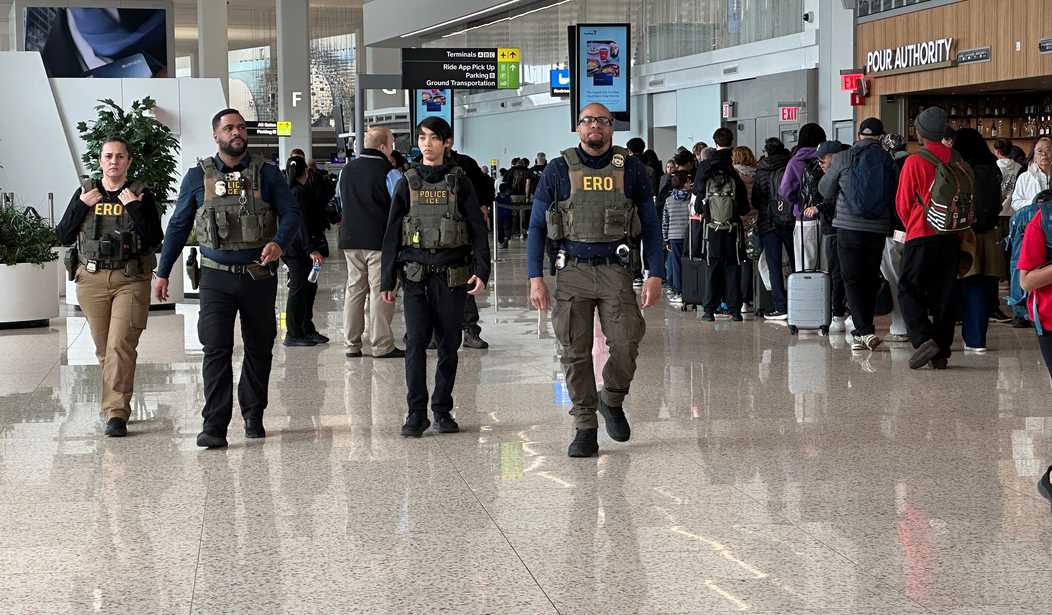
Here's an Update on How the ICE Deportations Are Going

Here's an Update on How the ICE Deportations Are Going


Immigration and Customs Enforcement’s mission continues, the deportations are rolling, and the number of gang members the agency has captured has been astounding. At least 10,000 gang members have been taken off our streets (via Deported News): 

Federal immigration agents recently marked an enforcement milestone, reporting that 10,000 gang members have been taken off the streets since President Trump’s return to office.

The various agencies under the U.S. Department of Homeland Security are delivering on the Trump administration’s goal of making American communities safer and sealing the border, according to DHS officials.

Homeland Security Secretary Markwayne Mullin described the gang members arrested as “vicious criminals who murdered, assaulted, robbed, and terrorized innocent Americans for sport.”

Immigration officers continue to detain and deport illegal migrant criminals despite sanctuary policies and ongoing legal disputes that make their job harder, Mullin said.

[…]

In addition, U.S. Immigration and Customs Enforcement hasn’t let up on targeted raids across the country, announcing another 10,000 arrests in the last week, Fox News Digital reported.

The enforcement surge comes as the U.S. Supreme Court struck down Trump’s executive order ending birthright citizenship, while handing him three other immigration wins.

DHS Assistant Secretary Lauren Bis said in a statement that a majority of arrests in this week’s sweep involve illegal migrants who have previously been charged or convicted of a crime.

“Nearly 70% of ICE arrests are of illegal aliens charged or convicted of a crime in the U.S.,” Bis said. “More than 3 million illegal aliens are out of the country and counting. Our message is clear: if you come to our country illegally, we will find you, we will arrest you, and we will deport you.”

Fox News' Bill Melugin added that over 350,000 illegals have been deported thus far this year, with ICE hoping to have a daily goal of 2,000 arrests per day

New ICE data dump reveals the agency has carried out 356,389 deportations so far in Fiscal Year 2026, which began October 1st. That averages out to roughly 1,260 per day. ICE currently has 65,765 people in ICE detention, 39,576 of whom (60%) have criminal convictions or pending criminal charges. 

The data also confirms border czar Tom Homan's recent statements that June saw a record setting number of immigration arrests with 43,138 arrests, which is higher than January and February when the surge in Minnesota was in effect. July is on pace to potentially break the June record. 

ICE is adjusting its approach, focusing on specific sweeps for illegal aliens rather than the large-scale operations that sparked a public relations disaster in Minneapolis. The arrests of Renee Good and Alex Pretti were conducted smoothly, but the fallout worsened when then-DHS Secretary Kristi Noem criticized Pretti—calling him a domestic terrorist intending to incite chaos—which didn’t help the situation. Still, ICE is reportedly planning a major operation in New York City. 


Houthis Enter the Chat. Yemen Proclaims 'Embargo' of Red Sea Shipping From Saudi Arabia


RedState 

Yemen’s Iran-backed Houthi rebels declared a “maritime embargo” against Saudi Arabia on Monday, marking a sharp departure from the “stay on the sidelines” policy the Houthis have observed since the first round of U.S.-Iran hostilities last summer. This escalation threatens Red Sea shipping routes and an additional challenge to global energy supplies.


Houthi military spokesman Yahya Saree announced the embargo in a televised statement, saying:

The Yemen armed forces affirm their complete readiness for all options and that any foolishness committed by the reckless Saudi enemy through a full-scale escalation, we will confront with a full-scale and harsh escalation by God's will and power.

In an email sent Monday by the Houthis’ Sanaa-based Humanitarian Operations Coordination Center (HOCC), shippers were warned, "Vessels are banned from loading or discharging cargo at or from any Saudi ports." The email also said, "We strongly recommend that your company exercise due diligence and the utmost care in all its dealings.” It further warned, "Any such activity would expose the violating vessels to sanctions. Furthermore, they may be subject to targeting in any location within the operational reach of the Yemeni Armed Forces."

This announcement targets Saudi oil exports and commercial vessels linked to the kingdom, particularly those departing from Red Sea ports such as Yanbu, which handle millions of barrels of oil daily from the Petroline pipeline that allows the Saudis to bypass the Strait of Hormuz; see Latest News Shows Why Strait of Hormuz Move by Iran Continues to Unravel.

Rather than admit that Sanaa was marching to the tune set by Tehran, the Houthi spokesman framed the decision in terms of the ongoing war between Saudi Arabia and the Houthis.

On Monday, Houthi military spokesman Yahya Sarea said Saudi Arabia had imposed an "unjust and oppressive siege on our dear people for nearly 12 years, plundering our resources and imposing a comprehensive blockade on our ports and airports by land, sea, and air".

He then announced that the group had decided to respond by declaring a "maritime embargo against the criminal Saudi enemy, based on the equation of 'an eye for an eye'".

The Saudi Foreign Ministry released a statement that, in best Saudi behavior, says nothing beyond "we've haven't besieged Yemen for 12 years."

The Saudi embargo, together with the ongoing war with Iran, means that about a quarter of the world's oil shipments must navigate a war zone. 

In the hours after the announcement, the Houthis have not attacked shipping with drones or missiles, nor have there been attempts by the Houthis to board vessels. The threat of attack seems to have done the job. According to the Jerusalem Post, "Two oil tankers that loaded Saudi crude for China and India made U-turns in the Red Sea on Tuesday and headed toward the Suez."