Wednesday, July 15, 2026

Who Will Be Held Accountable for the Border Policies of 2021–2025?


Katie Abraham should have graduated from Ohio University this year.

Instead, she is buried.

She was visiting friends in Urbana, Illinois, when she was killed by a man who, according to public records, possessed valid Illinois-issued documents despite allegedly using false identities and aliases and despite documented concerns that should have prompted greater scrutiny.

Her death is not the subject of this article.

It is the reason this article must be written.

Katie's case raises a larger question: who will be held accountable for the policies that created the conditions for failures like these?

The Biden administration never officially adopted an "open borders" policy.

They didn't have to.

People respond to incentives.

Between 2021 and 2025, President Joe Biden and his administration pursued an immigration agenda that dismantled deterrence-based policies, narrowed enforcement priorities, expanded the use of parole authorities, and attempted to end programs designed to discourage unlawful entry.

President Biden set that agenda.

Secretary of Homeland Security Alejandro Mayorkas implemented it through the agencies responsible for border security and immigration enforcement.

Senior White House officials, including Domestic Policy Council directors Susan Rice and later Neera Tanden, helped shape and coordinate immigration policy across the administration.

Chiefs of Staff Ron Klain and Jeff Zients oversaw the implementation of the administration's priorities across federal agencies.

These officials held different roles, but together they designed, coordinated, executed, and defended policies that critics warned would weaken deterrence, overwhelm existing systems, and create the widespread perception that migrants who reached the United States would likely be allowed to remain.

Those warnings were dismissed.

The result was predictable: record border encounters, overwhelmed processing facilities, massive asylum backlogs, strained public resources, and an immigration system increasingly unable to distinguish between those who qualified for protection and those who did not.

States like Illinois reinforced those federal policies.

Governor JB Pritzker championed sanctuary policies and repeatedly promoted Illinois as a welcoming state. Secretary of State Alexi Giannoulias bears responsibility for ensuring the integrity of Illinois' credentialing systems. Attorney General Kwame Raoul has defended the legal framework underpinning the state's sanctuary policies.

Washington created the incentives. States like Illinois amplified them.

Together, federal and state leaders created a policy environment in which enforcement weakened, accountability diminished, and foreseeable risks multiplied.

Too often, Americans who raised concerns about border security and public safety were dismissed as lacking compassion.

Politicians, activists, and sympathetic media voices frequently portrayed stronger enforcement measures as inherently cruel while paying far less attention to the human costs of weak enforcement.

Compassion became a shield against accountability.

But compassion without responsibility is not compassion at all.

A nation can be welcoming without surrendering control of its borders. States can support migrants without abandoning their obligation to verify identities, maintain secure credentialing systems, provide appropriate care, and protect the public.

Cases like Katie's raise difficult questions.

How did someone allegedly using multiple identities obtain valid state-issued credentials?

What verification processes failed?

Were audits conducted?

Were warning signs missed?

If this happened once, how many other cases have gone undetected?

Perhaps the most troubling question is not whether these systems failed.

They clearly did.

The question is why.

Were policymakers warned about the risks? Did they ignore those warnings? Did political priorities outweigh public safety concerns?

The American people deserve answers.

Congress should conduct a comprehensive review of the immigration decisions made between 2021 and 2025. Illinois officials should conduct a comprehensive review of credentialing systems, identity verification procedures, audit processes, and coordination with federal authorities.

If audits were conducted, the public should know the results.

If audits were not conducted, the public deserves to know why.

The architects of these policies made their choices. Their allies defended them. The American people live with the consequences.

And families like mine bear the cost.

The burden should not be on grieving families to demand accountability.

It should be the government officials ' responsibility to provide it.


Podcast thread for July 15


Hope your AC is working today.

EU Expansion Moves Closer With ‘Super Tuesday’ for Candidate Countries

Four countries, including Ukraine and Moldova, took steps in their quest to join the bloc, in what could be its largest expansion in more than 20 years. 

European Commissioner for Enlargement Marta Kos (L) speaks with Lithuanian Foreign Minister Kestutis Budrys (C) and European Union foreign policy chief Kaja Kallas (R) during a roundtable meeting of EU foreign ministers in Brussels on July 13, 2026. AP Photo/Marius Burgelman

Four countries hoping to join the European Union took steps forward in their membership quests on July 14, in the bloc’s biggest expansion push in more than 20 years.

Brussels staged conferences between governments to formally open or close negotiating tracks for Albania, Montenegro, Moldova, and war-torn Ukraine, which are the top four candidates to join the 27-nation bloc. The joining process is long and protracted, meaning that it could be years before any of them are admitted.

“We have not seen this in more than two decades,” Enlargement Commissioner Marta Kos told reporters. “The last time, it was in 2002. This is a Super Tuesday for EU enlargement and Ukraine is part of it.”

Ten countries, including eight former communist states as well as the Mediterranean islands of Cyprus and Malta, were granted admission to the bloc following the Copenhagen Summit of 2002, eventually joining in 2004.

Croatia, the last country to be admitted into the world’s largest trading bloc, joined in 2013.

In 2019, French President Emmanuel Macron said he would block any attempt at enlargement until the EU itself had undergone deep reforms, but geopolitical events, including the Russia–Ukraine war, may have made leaders more expansion-minded.

Leaders in Brussels have frequently referenced the growing influence of China and Russia while they have sought to encourage reform in the candidate nations, which have to fulfill strict criteria in order to be admitted.

All EU member states have to agree to admit a new country, and any member can use its veto to block an application. Unanimous agreement is required for each negotiating chapter to be opened, and then again for it to be closed.

Ukraine applied for membership in 2022, four days after its ongoing conflict with Russia escalated when Moscow launched a full-scale invasion.


Ukrainian President Volodymyr Zelenskyy and European Commission President Ursula von der Leyen pose for a picture ahead of a European Union summit in Kyiv, Ukraine, on Feb. 2, 2023. Ukrainian Presidential Press Service/Handout via Reuters

Hungarian Opposition Ends

Former long-serving Hungarian Prime Minister Viktor Orban maintained cordial relations with Russian President Vladimir Putin and was considered an obstacle to the EU expansion project.

Orban was strongly opposed to Ukraine joining the bloc, citing endemic corruption as well as its economic dependence as reasons why it did not meet the strict criteria.

Orban’s nationalist party, Fidesz, lost the Hungarian election in April, and the premier for 16 consecutive years was succeeded by pro-EU Prime Minister Peter Magyar.

Ukrainian President Volodymyr Zelenskyy has said he sees EU membership as a “security guarantee” for a stable future once the war ends. He would also like NATO membership for Ukraine, which Russia considers a red line, but the United States insists that that cannot happen, and other NATO members are also wary of it joining while fighting continues due to the clause of mutuality, which considers an attack on one member an attack on all.

Some European leaders have expressed fears that Putin could target them in coming years, particularly if Russia ultimately takes the territory it claims as its own from Ukraine.

“The case for Ukraine’s EU membership is very strong,” Kos said.

“The future security architecture of our continent is unimaginable without Ukraine. Ukrainians have turned their country into a military powerhouse with capabilities few other nations can match, especially with its rapidly evolving drone technologies.”

Pro-EU candidate Maia Sandu won the Moldovan presidential election in 2025, defeating the incumbent president, Igor Dodon, who was widely regarded as Russia-leaning and favored closer ties with Moscow.

Joining the bloc has boosted trade and created jobs, most notably in the volatile Balkans region, where a series of wars in the 1990s tore apart the former socialist nation of Yugoslavia. The prospect of EU membership is a powerful driver for reforms demanded of candidate states, most of which are in the Balkans.


Moldovan President Maia Sandu attends a joint news conference with European Union High Representative for Foreign Affairs and Security Policy and Vice-President of the European Commission Kaja Kallas following their meeting in Chisinau, Moldova, on May 8, 2026. Vladislav Culiomza/Reuters

Strict Criteria

Candidate nations must complete negotiations across 35 different policy areas, known as chapters, covering topics including agriculture, taxation, energy, and trade. That process can take years.
Ukraine and Moldova last month opened negotiations on a cluster of five chapters linked to the values and principles on which the EU was founded, including the rule of law, the upholding of fundamental rights, and the functioning of democratic institutions.

The two nations each opened a second cluster on July 14 focused on foreign relations, security, and defense, as well as trade policy, development cooperation, and humanitarian aid.

Albania’s meeting aimed to provisionally wrap up negotiating tracks on education and culture, science and research, and external relations.

Montenegro, a former Yugoslav state that hopes to join in 2028, was aiming to do the same in the areas of competition policy and customs rules.


Hungarian Prime Minister Peter Magyar addresses reporters at European Union headquarters in Brussels on May 29, 2026. AP Photo/Virginia Mayo

9 Candidate States

Nine countries are officially candidates to join the EU: The former Yugoslav states of Bosnia and Herzegovina, Montenegro, North Macedonia, and Serbia; the former Soviet Union states of Georgia, Moldova, and Ukraine; Albania; and Turkey, which has 97 percent of its landmass in Asia.

Accession talks for Turkey and Georgia are on hold due to concerns about democratic standards.

Kosovo, another former Yugoslav state, has also applied to join but has not been granted candidate status.

The EU began in the years following World War II, when leaders on the continent sought a way to make another major conflict between European powers less of a threat.

Following the creation of the European Coal and Steel Community in 1951, the project expanded in 1957, when six founding countries signed the Treaties of Rome, creating the European Economic Community, known as the Common Market.

Over the following decades, membership grew, and common trade policies expanded into areas such as agriculture, the environment, and justice, and European institutions took on greater powers.

The Maastricht Treaty established the EU in 1993, marking a broader political and economic partnership that went considerably beyond a free trade area, introducing closer cooperation in foreign policy, citizenship rights, and the path toward the euro single currency.

The UK in 2020 became the only country to have ever left the EU following the Brexit vote of 2016.

https://www.theepochtimes.com/world/eu-expansion-moves-closer-with-super-tuesday-for-candidate-countries-6062124

Here Is a Preview of the Democratic Socialists of America’s Anti-America Platform


The Democratic Socialists of America (DSA), “the largest socialist organization in the United States,” will officially release its new platform July 14, the Workers Deserve More program, as it seeks to solidify socialism in the United States.

Whereas many Americans still shrug at the rise of the DSA and downplay the possibility that socialism could become the primary policy posture of the Left, I think otherwise.

I believe that, based on polling datapolitical momentumfundraising figures, and recent electoral results, democratic socialism is rapidly becoming the dominant ideology of the Left. I also fear that its popularity with young Americans is especially concerning.

The DSA’s Workers Deserve More program includes four main components: “Thriving Working Class Communities,” “An Economy for the Working Class,” “Working Class Foreign Policy,” and “Working Class Democracy.”

To create “thriving working class communities,” the DSA champions:

Medicare for All: “Universal healthcare with no premiums, co-pays, or deductibles.”

Housing for All: “Universal rent-control.”

College for All: “Make all public higher education tuition-free and cancel all student loan debt.”

“Expansive paid family leave for all workers, and free public universal childcare and pre-K.”

To create an “economy for the working class,” the DSA demands:

The Green New Deal: “Massive public investment to transition away from fossil fuels toward a green and sustainable economy…and public ownership over major transportation and energy infrastructure and natural resources.”

Tax the Rich: “Raise taxes on the richest earners, for-profit corporations, large inheritances, and private colleges and universities. Establish a wealth tax for the wealthiest in society.”

“A 32-hour work week with no reduction in pay or benefits.”

On foreign affairs, the DSA is fighting for what it calls “working class foreign policy.”

Free Palestine: “An immediate and permanent ceasefire in Gaza, an end to military and economic aid, and weapons sales to Israel, respect of the authority of the International Criminal Court and the International Court of Justice, and national sovereignty for the Palestinian people.”

Freedom of Movement: “Allow workers to freely migrate between countries to seek employment without restrictive immigration controls. Demilitarize the border, end all immigrant detention and deportations, immediate amnesty for all immigrants regardless of current immigration status, and provide access to jobs, labor rights, and social services to all immigrants.”

Lastly, to achieve a “working-class democracy,” the DSA advocates:

“Replace the Electoral College with a national popular vote for President.”

“Extend full voting rights to people with criminal convictions and noncitizens and establish statehood for Washington D.C.”

“Replace the two-party system with a multi-party democracy through proportional representation elections… and end the Senate filibuster.”

“Reduce the power of the Supreme Court.”

Americans who value their liberty, private property rights, privacy, and sense of agency should reject these policies in full.

The common denominator among the DSA’s new program is more government coupled with less freedom. While this may appeal to those who would distribute and receive the so-called free stuff, it would be a wrecking ball to the free-enterprise system that has made America the land of opportunity.

The DSA’s program would hinder, not help, working-class Americans trying to achieve the American dream because it would inflict massive inflation, increase their energy costs, and choke economic growth.

On a macro level, it would incentivize government dependency, impede entrepreneurship, and stifle innovation.

On a micro level, this program would dilute the dignity of hard work, undermine individualism, and punish self-reliance.

While I hope that the DSA’s Workers Deserve More program will be met with near-universal scorn and ridicule, I fear that this will not be the case.

As mentioned above, the DSA is super popular among young Americans. The DSA even has a youth group, the Young Democratic Socialists of America, with hundreds of chapters at high schools, colleges, and universities.

In my opinion, this is the largest threat. If democratic socialism becomes the default ideology among a majority of America’s youth, which is currently occurring, it may be only a matter of when, not if, the United States of America devolves into the United States of Democratic Socialism.


🎭 π–πŸ‘π π““π“π“˜π“›π“¨ 𝓗𝓾𝓢𝓸𝓻, π“œπ“Ύπ“Όπ“²π“¬, 𝓐𝓻𝓽, π“žπ“Ÿπ“”π“ 𝓣𝓗𝓑𝓔𝓐𝓓


Welcome to 

The π–πŸ‘π π““π“π“˜π“›π“¨ 𝓗𝓾𝓢𝓸𝓻, π“œπ“Ύπ“Όπ“²π“¬, 𝓐𝓻𝓽, π“žπ“Ÿπ“”π“ 𝓣𝓗𝓑𝓔𝓐𝓓 

Here’s a place to share cartoons, jokes, music, art, nature, 
man-made wonders, and whatever else you can think of. 

No politics or divisive posts on this thread. 

This feature will appear every day at 1pm mountain time. 


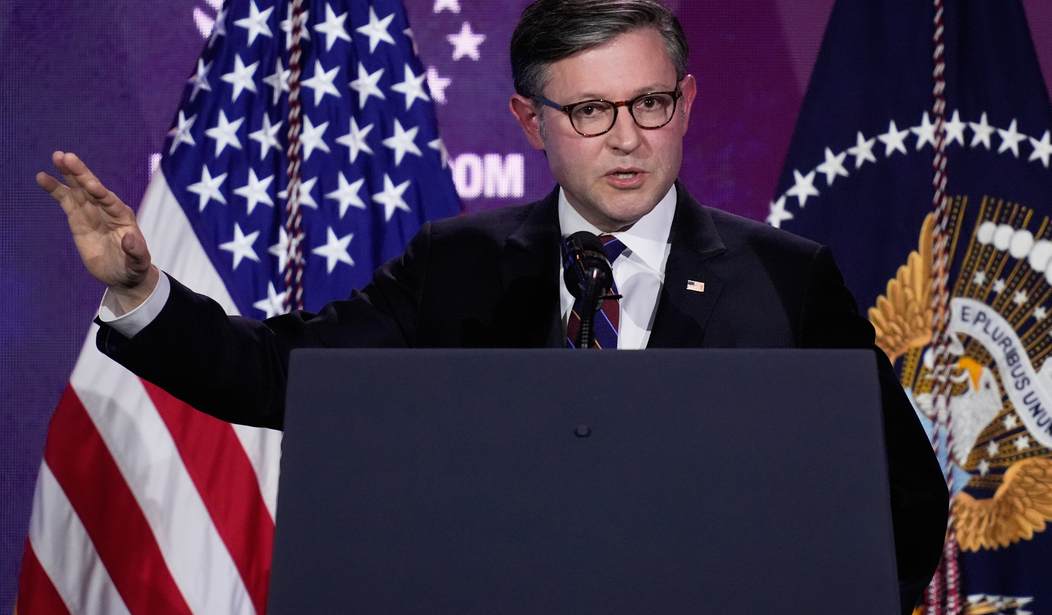
Speaker Mike Johnson Whips Out Some Tough Love on GOP's Approach to Communism - 'This Is Not a Game'


RedState 

The 2026 midterm elections will be like none we have ever seen before. Traditionally, the party in the White House loses seats. In the past, that might not have been a huge deal, but as Democratic Socialists take over the Democratic Party, it is not only a huge deal, but the most deadly serious deal we have ever seen. On Tuesday, House Speaker Mike Johnson tried to impress upon the American people, including a media that will make light of their real agenda, just how serious a threat to the nation this is.

Johnson began by explaining what has happened to millions all around the world who have been under the boot of communism, saying:

"Communism and this philosophy has led to the murder of tens of millions of innocent people in the 20th century alone. It is a nightmare! It is a trail to certain death!"

However, Johnson's explanation will have to go much farther. A 2025 Cato Institute poll showed that 62 percent of Americans under 30 years of age viewed socialism favorably, and even more chilling, 34 percent favored communism. It's no secret why; because what socialism and communism truly are is no longer taught in public schools. What is taught is a kittens-and-sunshine view of both systems where everyone is "equal." Johnson went on to boil things down to a basic choice: Will America retain its freedom as a constitutional republic "that everybody wants to emulate"? Or will we "trade that in, dismantle the foundations and go down this dark road of death to communism"?

Johnson also went on to illustrate the scheme that Democratic Socialists, who are really just a polite way of saying communists, employ to win over potential converts. Johnson said, "If they promise you free stuff, there is far more beneath those promises that even some of these people do not understand themselves." Johnson stated that the Republican Party will "stand on the founding principles of the greatest nation in the history of the world. It is our duty to do that." 

Johnson also included journalists who might not realize what would happen to them under Democratic Socialism, if that's what they want to call it. He said:

"You better agree on these principles because that's what keeps you free. By the way, it's what keeps the press free, okay? This is essential for your well-being and your family. This is not a game."

Speaker Johnson used the phrase "this is not a game" several times and for very good reason. What they are advocating for is the complete and total dismantling of the foundation of America. The history that these people have never been taught shows us that socialism and communism devolve into all but the leaders of the movement being impoverished, miserable, and often dead. 

Mike Johnson summed up the threat the nation faces this way:

"This is not a game. Everybody needs to understand these crazy little mini-Mamdanis who are popping up all around the country — they are a danger to you and your family. This is not a game...This is not our Father's Democrat Party. This is not, we're not arguing over marginal tax rates anymore. We're arguing over whether or not freedom is going to survive!"