Monday, July 13, 2026

🎭 π–πŸ‘π π““π“π“˜π“›π“¨ 𝓗𝓾𝓢𝓸𝓻, π“œπ“Ύπ“Όπ“²π“¬, 𝓐𝓻𝓽, π“žπ“Ÿπ“”π“ 𝓣𝓗𝓑𝓔𝓐𝓓


Welcome to 

The π–πŸ‘π π““π“π“˜π“›π“¨ 𝓗𝓾𝓢𝓸𝓻, π“œπ“Ύπ“Όπ“²π“¬, 𝓐𝓻𝓽, π“žπ“Ÿπ“”π“ 𝓣𝓗𝓑𝓔𝓐𝓓 

Here’s a place to share cartoons, jokes, music, art, nature, 
man-made wonders, and whatever else you can think of. 

No politics or divisive posts on this thread. 

This feature will appear every day at 1pm mountain time. 


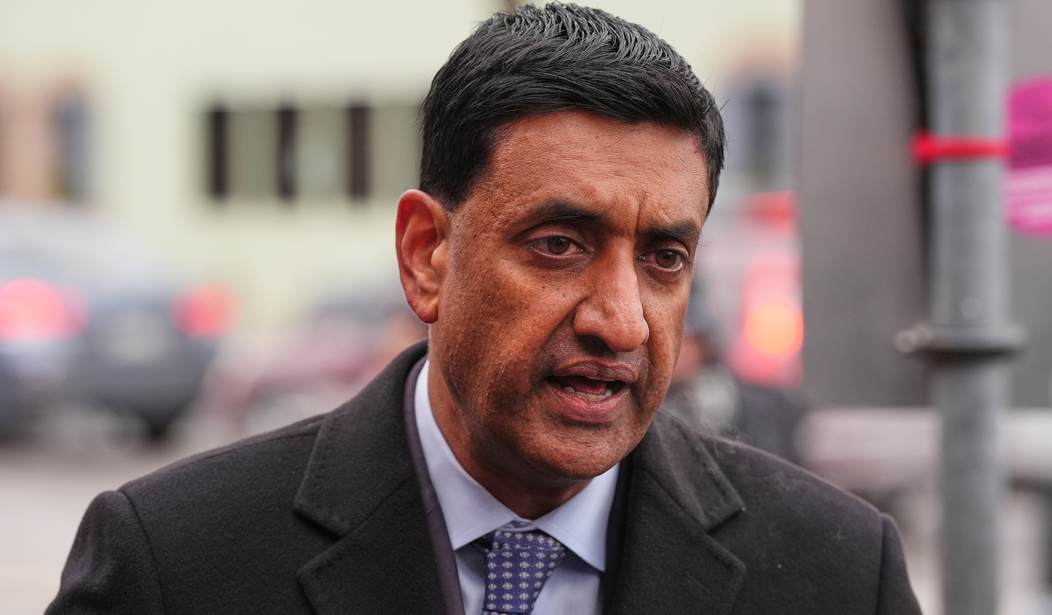
Israeli Ambassador Drops the Boom on Ro Khanna Over His 'Detention' Story


RedState 

We reported on the story that Democratic Rep. Ro Khanna (CA-17) told of being "detained" in the West Bank. 

As we noted, the Israeli Defense Force (IDF) disputed Khanna's claim that they were involved in any "detention" of Khanna's group, and said they helped resolve the situation when they arrived. The Israeli police also said that this was a "closed military zone" (CMZ) area where civilians weren't allowed. 

Now the Israeli Ambassador to the U.S., Michael Leiter, has weighed in and leveled Rep. Khanna. 

Leiter explained how they reached out to Khanna when they found out he was coming, offering to have him meet with survivors of the October 7 attack, as well as see the issues Israel had to deal with at the borders. Leiter said Khanna blew them off. "He ignored that, and he decided to coordinate his trip, not with Israel, but with Palestinian activists," Leiter declared. Maybe this wouldn't have happened had he coordinated with the Israeli government, Leiter asserted. 

Khanna has claimed they did alert the government. Leiter said all they did was ask a question about visas, and that they did not coordinate anything. 

Leiter really laid Khanna out on the timing of this story. 

"You know to have this incident on Wednesday and wait to release it until Saturday. Maybe this had more something to do with his support of Graham Platner beforehand, and the difficulties he had with that? Trying to shift the focus to something else, perhaps? I'm asking a question."  

Leiter also took a jab at Khanna, seeming to use this as a way to "declare a presidential run." That made even Margaret Brennan laugh. But that's what we have here, with all the media and Khanna making sure to talk about 2028. 

It doesn't sound like Leiter or Israel is very worried about the "threat" Khanna made to Israel. Khanna opined that "it wasn't a good idea to detain long-shot presidential candidates,” and “not how you’re going to build good will with the next American president, whoever that is.” Doesn't look like that cowed Leiter in the slightest. 

But Khanna decided to throw in a response to Leiter and that clip, when he just should have stopped digging. 

If a US Congressman & American citizens were detained illegally by settlers & the military of any other nation, the Ambassador would beg the American people for forgiveness and take action against the perpetrators. The height of arrogance.

If what Leiter is saying is true and you're wandering around in a restricted area without having alerted anyone, especially in the wake of October 7th, yeah, that's not a good thing. And the IDF is claiming they actually resolved the situation, yet Khanna is blaming them. 

No, "the height of arrogance" was trying to palm off Platner on us. And calling yourself a "longshot presidential candidate." And comparing yourself to Teddy Roosevelt. 

This new effort isn't going any better than the Platner effort.  


Restoring Obscenity Regulaton: Lessons From America’s Founding Era

Restoring Obscenity Regulation: Lessons From America’s Founding Era

Adam Candeub for Daily Signal

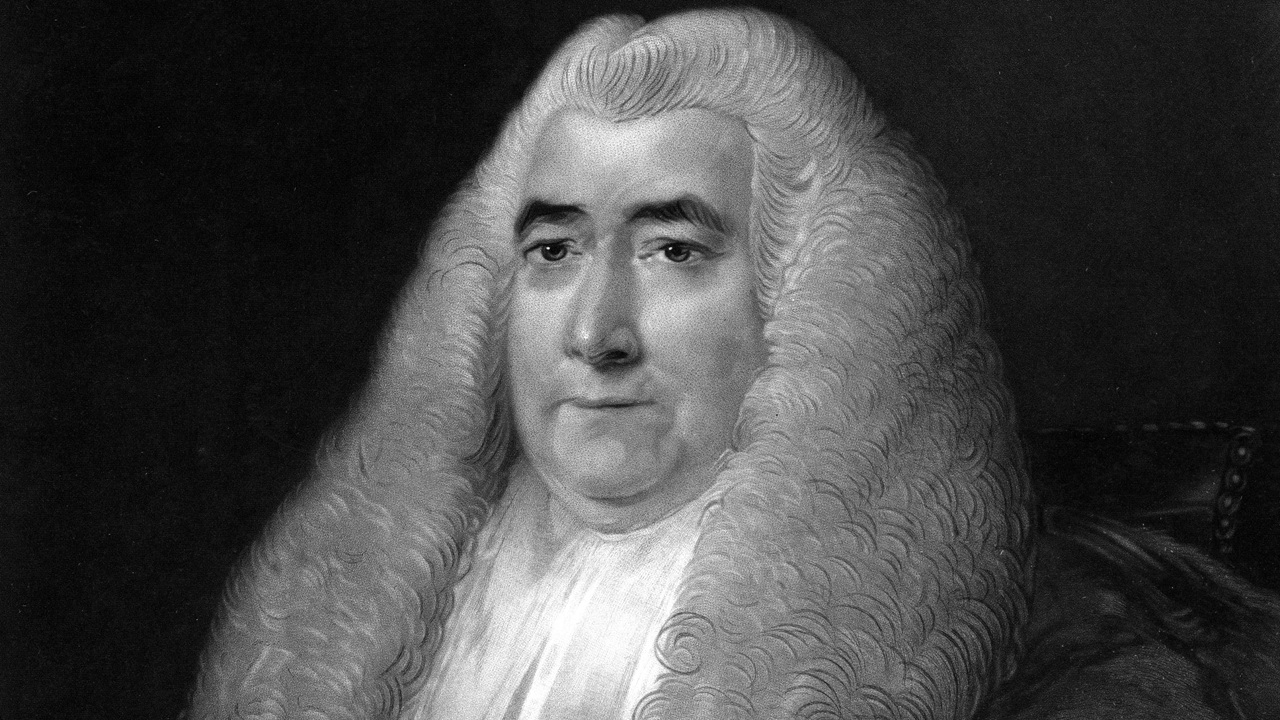
An etching from a portrait of Sir William Blackstone
An etching from a portrait of Sir William Blackstone, 1773. From the New York Public Library. (Smith Collection/Gado/Getty Images)

Americans born after the mid-1990s have lived their entire lives in a world awash with hardcore pornography. Never has so much pornography been so available to so many at so little cost. Our laws leave much pornography effectively unregulated. Our technology, especially smartphones, brings portable, private porn shops to everyone’s phone.

Like today, there were no prosecutions for obscene libel in colonial America or in our early republic. Some take this as evidence that the American Founders were, like today’s progressives, indulgent toward obscenity.

As I show in a new report, in reality, the lack of obscenity laws in early America speaks to the strictness of morals and the costs of publishing and distribution. There were no laws against obscenity until there was obscenity, and there was no obscenity until there was cheap printing. As new technologies reduced printing costs, the national government almost immediately banned the importation of obscene materials, and state governments regulated obscene publications.

The founding generation accepted speech restrictions that furthered public morality. The Founders agreed with English jurist and legal theorist William Blackstone that the state had broad powers to regulate obscenity. In his “Commentaries,” Blackstone recognized that common law courts could sanction as libel “any writings, pictures, or the like, of an immoral or illegal tendency.” Justice James Kent similarly wrote in the American context that, to protect “the tender mercies of the young” from “gross violation[s] of decency … [t]hings which corrupt moral sentiment, as obscene actions, prints and writings … have … been held indictable.”

Only after obscenity arrived, however, did the statesmen of the early republic put such principles into practice. In 1803, Connecticut passed a law forbidding the “print, import, sale, or distribution of books, pamphlets, ballads or other printed material of an immoral tendency containing obscene language, prints, or descriptions.”

Criminal statutes banning obscenity were introduced in Vermont in 1821 and Massachusetts in 1835. In 1815, in Commonwealth v. Sharpless, a printmaker was indicted for displaying an obscene painting. The Pennsylvania Supreme Court upheld the conviction. In Commonwealth v. Holmes, the Supreme Judicial Court of Massachusetts upheld a conviction for publishing an illustrated edition of the erotic novel “Fanny Hill.”

Consider the developments in New York when the publication of “Fanny Hill” led to public outrage and legal responses. Obscenity prosecutions in New York City increased dramatically. Eventually, New York passed an obscenity statute. By the end of the Civil War, 20 states and four territories had passed obscenity statutes. In 1842, Congress passed its first anti-obscenity statute. In 1873, Congress passed the Comstock Act, banning the delivery of obscene materials through the mail.

As obscenity circulated through different media, laws were immediately passed, creating the American tradition of obscenity regulation. When radio and films arose, and later as television became popular, regulations were promulgated and implemented.

Even as courts loosened the definition of obscenity, governments still regulated pornography. Throughout the 20th century, when most obscene material was in print (or later on videocassette), zoning laws forced purveyors of obscene materials to remote interstate highway exits or other similar areas, keeping most pornography away from homes.

Yet this age-old consensus finally collapsed with the advent of the internet, the first technological advance made without a corresponding, effective law to regulate it.

Part of the problem was that the internet cut out the middleman. People could make pornography and then distribute it to any broadband customer; no porn shop was necessary. Zoning laws could no longer cordon off obscenity. The ubiquity of the internet might have prompted the court to extend legislative powers to regulate obscenity. Internet pornography was more easily available and potentially more pervasive.

The court instead rejected Congress’ efforts to regulate pornography as the internet era began. In 1996, Congress passed the Child Pornography Prevention Act and the Communications Decency Act. In 1998, Congress passed the Child Online Protection Act. The courts, seemingly taken with the internet’s technological promise, struck down restrictions against online pornography and obscenity in each case. As a result, the courts permitted private, ubiquitous, and unfettered access to pornography for children and adults alike.

From the Founding through most of American history, courts allowed the legislature to control pornographic material. Judicial reactions to internet pornography broke this tradition to our great detriment. Recent Supreme Court cases allowing states to require age verification for minors accessing obscene material online, however, may point toward its partial restoration.


CENTCOM: Freedom of Navigation Now Prevails in Strait of Hormuz


RedState 

Rhetoric between the United States and Iran on the Strait of Hormuz is beginning to resemble a championship game of ping-pong, with both sides volleying claims back and forth. In one of the latest, on Sunday, the United States Central Command (CENTCOM), which has control over Middle East operations, released a broadside on X, declaring the Strait of Hormuz open despite Iran's claims

The post states:

The Strait of Hormuz is open to all vessels seeking to lawfully transit the international waterway. U.S. forces are positioned and prepared to ensure that freedom of navigation remains available despite unwarranted Iranian aggression, harassment, threats, and arbitrary declarations. Iran does not control the strait. Traffic is flowing.

The graphic accompanying the post states that Iran does not control the Strait, it being an international waterway, and claims that 800+ ships and 400+ million barrels of crude oil have transited the Strait of Hormuz over the last two months, with 140+ of those ships in the last seven days.

This announcement comes on the heels of the third night of operations by U.S. forces continuing to degrade Iran's capabilities in and around the Strait of Hormuz, as CENTCOM detailed in a press release on Saturday.

U.S. forces hit approximately 140 Iranian military targets with precision munitions launched by land- and sea-based fighter aircraft, drones, and naval vessels. Targets included Iranian missile and drone sites, naval capabilities, ammunition storage facilities, communication networks, and coastal surveillance locations.

During three nights of strikes this week, CENTCOM has struck more than 300 targets at the direction of the Commander in Chief to degrade Iran’s ability to attack civilian mariners and commercial vessels freely transiting the strait. Commercial vessel transits through the vital international maritime corridor continue.

Iran is still frothing at the mouth over the Strait of Hormuz, and the Strait does remain a tight strategic bottleneck for shipping in the area. About 20 percent of all the oil traded by sea passes through this bottleneck. And, we might note, since the end of World War II, the United States Navy has been the guarantor of the safety and free passage in the world's shipping lanes, taking on the job previously done by the British Royal Navy and enforcing a Pax Americana on the world's sea lanes. It's not unreasonable to see the enforcement actions by CENTCOM against Iran, where the Strait of Hormuz is concerned, as an extension of that policy.

Iran's Speaker of Parliament (They have that? Who knew?) reportedly issued a predictable and toothless threat:

Iran's main negotiator and speaker of parliament, Mohammad Bagher Ghalibaf, said that "the era of one-sided deals is over".

"We told you: keep your word or pay the price. Reality is knocking," he said in a post on X.

Reality is indeed knocking on Iran's door. They can't keep this up forever.


Manufactured Moral Outrage

 Manufactured Moral Outrage

The Democrats rely on this technique to move the political needle, but there are simple ways to counter it.

Kevin Finn for American Thinker


The Left has repeated its pattern of attack against conservatives so many times that it has become formulaic. Its tactics include, but are not limited to, using Alinsky’s Rules for Radicals, logical fallacies, complicit judges, stenographers in the legacy media, and figures in the entertainment and education industries. I believe these tactics are ultimately aimed at implementing the Cloward-Piven Strategy to dismantle our representative constitutional republic and replace it with some form of socialism.

Activists on the left use psychological and rhetorical tactics to reshape public perception. Taken together, these tactics form a predictable pattern that transforms ordinary disagreements into moral condemnation. This pattern facilitates ridicule, leads to social exclusion, and, in extreme cases, provides justification for harm.

The sequence dehumanizes and invalidates honest emotions and responses, making harm feel deserved and even rendering violence conceivable. It starts subtly but then escalates. It bypasses rational debate by attacking the target’s humanity rather than the target’s arguments.

How many times have we seen the left repeat baseless allegations that quickly devolve into name-calling? They’re the primary arrows in its rhetorical quiver. Leftists repeat unfounded accusations, such as the Russian Collusion hoax and the “Very Fine People” lie.

Then they employ caricatured labels to accuse Republicans and conservatives—not the same thing—of being racists, xenophobes, homophobes, “literally Hitler,” pedophiles, fascists, and, as Dan Bongino so eloquently put it, “istaphobic phobic phobophobes.” They use these terms to evoke revulsion, reframing a person as an archetype of evil. This makes balanced discussion impossible.

Activists on the left reduced Erika Kirk from a mourning spouse to a “pageant girl”—a superficial glory hound. They erased the authenticity of her loss so that she was no longer viewed as a grieving human being but as a symbol to be mocked or opposed. Saul Alinsky told his adherents to “Pick the target, freeze it, personalize it, and polarize it.”

This isolates the person and sends the signal that normal social protections no longer apply. Pick any prominent figure on the right and look for this pattern. They do it to anyone who disagrees with them.

Once they have dehumanized their target, those on the left will then undermine the target’s emotional responses. Any emotion the target expresses, such as grief, anger, fear, or even joy, becomes suspect and is seen as manufactured or manipulative. They ridiculed Erika Kirk when she grieved and criticized her when they saw her smiling.

They view any emotional response as illegitimate, invalidating personal experience and framing their target as insincere or mentally unstable. They called Mrs. Kirk an “emotional asset,” and Jimmy Kimmel once said that Melania Trump had “the glow of an expectant widow.” Public sympathy is eroded when a person’s vulnerability is mocked.

The public begins to distrust the target’s feelings, rendering any platform or position the target holds, or any sympathy the target receives, illegitimate. Not only is the person bad, but the person’s very humanity is seen as fraudulent.

Once this happens, the left shifts its narrative to imply that the target deserves negative consequences. The target is portrayed as a threat whose removal or punishment benefits society. The target “had it coming” because of the target’s alleged crimes.

We’ve seen this used against ICE officers enforcing immigration laws and against conservative or Republican political figures. Aging pop star Madonna once said she dreamed of blowing up the White House. Johnny Depp asked about the last time an actor assassinated a president. Joe Biden saidhe wanted to punch Donald Trump.

At some point, the mere presence of the targeted individual is interpreted as a trigger. Before long, some members of the public begin to feel that opposing the target warrants more direct action.

This is the fourth and final point at which things shift from a generalized taboo to direct action. Assaults against ICE officers who are carrying out their lawful duties have skyrocketed. UnitedHealthcare CEO Brian Thompson and Turning Point USA founder Charlie Kirk were assassinated, and President Trump has survived three, possibly four, assassination attempts.

A disturbingly high percentage of leftists view these as reasonable responses. They’re actually developing an assassination culture.

It is rare to see explicit calls for violence, although they do occur. The “8647” message that James Comey(and others) spread is one example. The message bearers always preserve deniability, claiming variations of “I never called for violence” and “This is not who we are.”

However, by this point, the targeted individuals have been so thoroughly demonized that some listeners interpret the message as permission. Extremists on the left absorb the subtext—that certain people represent such severe threats that violence is necessary and justified.

However, by this point, the targeted individuals have been so thoroughly demonized that some listeners interpret it as permission. Extremists on the left absorb the subtext—that certain people represent such severe threats that violence is necessary and justified. We’ve seen the results: public harassmentdoxing, and even physical confrontations. 

The pattern works because we are wired to reject evil and protect our group. Extremists hijack these instincts by casting their targets as existential threats. Social media, legacy news organizations, and celebrities all parrot the message and perpetuate the cycle.

What starts as mere pejoratives evolves, step by predictable step, into the normalization of violence. The targets are isolated, their emotions are invalidated, and their existence is framed as an existential threat so that some on the left begin to see their fellow citizens as obstacles to be removed. We’ve seen where this road leads when left unchecked.

Countering these tactics requires that we re-embrace the principles of classical liberalism, “the ideology advocating private property, an unhampered market economy, the rule of law, constitutional guarantees of freedom of religion and of the press, and international peace based on free trade.” The more we fail to interrupt this pattern, the more likely it is that we will descend from debate into tribal conflict.

We must be able to engage in reasoned debates and argue against principles, not people. Unfortunately, there are very few, if any, on the left who appear willing to do so.

We can’t wait around and hope they return to sanity. We must break this pattern at multiple points, responding with principles and evidence, not counter-personal attacks.

Here are some suggestions:

• Ask questions to force the conversation back to policy outcomes: “How has this policy affected crime rates, inflation, or education outcomes?”

• Continue to support and create alternatives to legacy media, businesses, and content creators that don’t self-censor.

• We must aggressively pursue legal accountability for violence, doxing, threats, and clear lawfare abuse. This can be achieved through strategic litigation and state-level action.

• Call out specific journalists, celebrities, academics, or officials who amplify dehumanizing rhetoric. This makes it harder for them to continue using the “this is not who we are” defense.

• Frame issues around universal principles, such as fairness and color-blindness, which undercut moral-monopoly claims.

• Humor and targeted ridicule weaponize mockery effectively. We can use them without descending into the same dehumanization.

• Engage the undecided and persuadable, especially among the working class and minorities, with results-focused arguments. People respect competence and character at scale: delivering objectively better results on crime, the economy, borders, education, and family stability.

• The strongest interrupter is raising people who value evidence and logic over tribal signaling. School choice, homeschooling, and classical education models are already showing results.

When enough people experience the gap between rhetoric and reality, the pattern loses its hold.

Image created using AI.


U.S. Launches Fresh Strikes on Iran to Protect Shipping in Strait of Hormuz

U.S. Launches Fresh Strikes on Iran to Protect Shipping in Strait of Hormuz


The U.S. has launched fresh strikes against Iran at 5 p.m. on Sunday, the U.S. Central Command posted on social media. 

The strikes followed Iran attacking a commercial ship on Saturday and claimed that the Strait of Hormuz had been shut. 

“At 5 p.m. ET today, U.S. Central Command forces began launching more strikes against Iran to continue degrading their ability to attack civilian mariners and commercial ships freely transiting the Strait of Hormuz. The Commander in Chief has directed the strikes to hold Iranian forces accountable.”

CENTCOM refuted fake news from the Iranian state media that claimed Iran had killed four U.S. service members in a strike in Kuwait. 

The relationship between the U.S. and Iran has deteriorated after Iran reportedly planned to assassinate Trump while he was in Turkey earlier this week. 

In response, Trump said that “1000 Missiles" are aimed at Iran in case it assassinates him. 

If that happened, Trump said that he gave orders to “completely decimate and destroy all areas of Iran…” 


The Wrong People Hold Health Care Purse Strings

The Wrong People Hold Health Care Purse Strings 

Healthcare will never become affordable until Americans — not employers, insurers, or government bureaucrats — control their own medical spending.


Healthcare will never become affordable until Americans — not employers, insurers, or government bureaucrats — control their own medical spending.

When the American Heart Association (of which I was a member) reports on our “healthcare affordability crisis,’ they describe a major symptom for both the nation and individual Americans. They do not identify the etiology or root cause of unaffordability: “bureaucratic diversion.” 

USpolitical commentary

Last year, the U.S. expended $5 trillion on its healthcare system. That is a greater amount than the entire GDP of Japan. At least half of that enormous sum, $2.5 trillion, was spent on BURRDEN — bureaucracy, unnecessary rules and regulations, directives, enforcement, noncompliance activities — and thereby diverted from patient care.

Give all the money they earned to We the People (We the Patients).  Let them shop, spend, and save.

In 2025, the U.S federal government spent $7.0 trillion. Since it received $5.2 trillion in revenue, the deficit was $1.8 trillion. Thus, inefficient healthcare spending, i.e., spending that produces no patient care, aka wasteful spending, was greater than the entire deficit.

If DOGE had been able, miraculously, to eliminate wasteful government spending just on healthcare, there would have been a surplus last year, not a deficit.

On the individual/family level, “unaffordable” is an interesting word. Both insurance as well as care has been priced beyond the average pocketbook for years and prices keep rising. Last year double-digit  increases in insurance costs provoked a Democrat government shutdown. Now, insurers want an average 14 percent increase in ACA premiums for next year.

Apparently, there is no brake on price increases, which could be aptly described as gouging. Individuals have no choice as to whether to pay whatever they charge. Whatever the price of health insurance, people pay it because they need health care to live and be healthy or recover from sickness.

In any free market (which healthcare is not), there are forces tending to drive prices downward: consumers’ need to economize and inter-seller competition. The absence of free market forces  in healthcare misaligns incentives causing prices to rise without end in sight. Consumers, aka patients, are not the payers — they are not spending out of pocket for the full, exorbitant price. Since they are (or think they are) spending OPM (other people’s money), they feel no need to economize.

In healthcare, sellers of both insurance and care do not compete for patients’ dollars. They compete for contracts. Any price reduction caused by such competition does not redound to patients, who only see and pay charges, not negotiated, proprietary, and confidential prices.

In 2025, 84 million American workers obtained health insurance through so-called employer-sponsored health insurance (ESHI). So-called because it is not “sponsored” by the employer. The money sent to insurance companies is wages earned by employees but not paid to them. ESHI is an obsolete hold-over from World War II wartime wage freezes that should have been repealed eight decades ago. 

USpolitical commentary

Last year, the average amount employers paid to insurance companies averaged $26,993 for 84 million workers and their families. These are wages  rightfully belonging to the employee that were diverted to insurance companies.

$26,993 times 84 million equals $2.2 trillion. Intriguing how the number of $2 trillion keeps cropping up, especially if it could be used for patient care.

What if workers were paid their full wages and were able to use that money for their medical needs? No third parties making decisions about medical care or spending. By the numbers, Americans could have more than $2 trillion by repealing the ESHI. They could put $26,993 in a new, no-limit HSA and pay for care and insurance out of pocket.

Prices would fall dramatically as free market forces mentioned above come back into effect.  There would be no need to spend the $2.5 trillion “healthcare” dollars that were diverted from care to pay for bureaucracy. The U.S. could then have a balanced budget.

In addition to making care and insurance affordable and available, there is another benefit from repealing ESHI and “send the money directly to the people” (President Trump, November 2025). When people pay directly rather than third-parties and especially federal government freely expending taxpayer dollars, medical fraud such as the Minnesota Medicaid multi-billion-dollar scam becomes impossible.

The best solution for the healthcare affordability crisis is not price fixing and certainly not more costly regulations. It is treating the root cause of unaffordability: the wrong people control healthcare spending.

Give all the money they earned to We the People (We the Patients).  Let them shop, spend, and save. They will use it more wisely than faceless, unaccountable bureaucrats.


♦️𝐖³π πƒπšπ’π₯𝐲 𝐍𝐞𝐰𝐬 𝐎𝐩𝐞𝐧 π“π‘π«πžπšπ


W³P Daily News Open Thread. 

Welcome to the W³P Daily News Open Thread. 

Post whatever you got in the comments section below.

This feature will post every day at 6:30am Mountain time. 


Jake Tapper vs NATO Ambassador Matthew Whitaker

NATO Ambassador Matthew Whitaker appears on CNN with Jake Tapper to discuss the recent 2026 NATO assembly in Ankara, Turkey.   Tapper asks Whitaker about the New York Times report on Airforce One and subsequent DOJ subpoenas, and Whitaker doesn’t take the bait, “not in my purview.”  WATCH:


Mitch McConnell Releases Image and Statement


The Office of Senator Mitch McConnell has released a picture and statement intended to answer questions about the status of the Kentucky senator.   However, many are questioning the content.

Personally, the accompanying image doesn’t really matter much – it is reported to be AI enhanced, but who can tell.  However, the message that accompanies the picture?  Well, that text is total BS and did not come from McConnell.

You can tell McConnell did not write it by the way it is written (particularly paragraph #2), and more importantly, there is no mention of condolence following Senator Lindsey Graham’s death.

WASHINGTON, D.C. – U.S. Senator Mitch McConnell (R-KY) released the following note to constituents regarding his hospitalization and recovery:

“To my fellow Kentuckians –

“When you elected me to a seventh term and made me our Commonwealth’s longest serving Senator, you did so trusting that I’d keep showing up to fight for you every day. And over the past several weeks, Elaine and I have appreciated both your well wishes and your honest questions about what was keeping me away from the Senate.

“You all know how folks of my generation often hesitate to share the vulnerability that comes with growing older. Even in the public eye, I feel that same instinct – I can’t help it.

“But at the same time, I’ve had more than my share of experience with physical vulnerabilities. Surviving childhood polio meant spending my entire life with mobility challenges. They haven’t exactly gotten easier to manage with age. And last month, I took a fall which landed me in the hospital.

“My doctors have confirmed that I didn’t break any bones or suffer a concussion. I didn’t have a heart attack or a stroke. I don’t have any tumors or hemorrhages. But I was briefly unconscious and was taken to the hospital. While receiving excellent care over the past several weeks, I’ve also had to deal with a mild case of pneumonia.

“I can assure you that I’ve been a good patient. At my age, I tend to do what my doctors tell me to do. I’ve submitted to every test they can think of to help figure out what caused this incident. And I’m continuing to do everything they ask to speed my recovery. In fact, with signs of continued progress, I’ve been able to move from hospital care to a rehabilitation center where I’ll keep regaining my strength.

“As much as it frustrates me, this process takes time. And on the advice of my doctors, I won’t be able to return to the Senate floor to vote quite yet. But rest assured that, in the meantime, I’m not taking a break from the Senate business that matters to you. I’ve been working closely with my legislative staff on current issues, and with my Kentucky team who help me provide timely constituent services across our Commonwealth. I’ve also been keeping in touch with my Senate colleagues on the appropriations process, midterm politics, and everything in between.

“You’re right to expect your representatives to work hard for you. And part of my decision to retire at the end of my term this coming January was being honest about the demands of Senate work. But I still have unfinished business to complete on your behalf, and I have every intention of finishing the job you elected me to do.

“I’ll keep working hard to get back on the Senate floor as soon as possible. And I’ll keep you posted on the progress of my recovery. Until then, I’m so grateful for your prayers and well wishes.”

###

From the Office of the Attending Physician:

“Senator McConnell has experienced several falls throughout the year that have been attributed to his post-polio condition. He was admitted to the hospital four weeks ago after falling at home and sustaining minor injuries.

“A comprehensive evaluation by a multidisciplinary team determined that he had no fractures, cardiac abnormalities, stroke, tumor, or hemorrhage. Early in his hospitalization, he developed pneumonia, which responded rapidly to antibiotic treatment.

“The remainder of his hospital stay focused on physical therapy and strategies to reduce his risk of future falls. He has been medically cleared to continue fully participating in his intensive physical therapy program.”

Comrade Suspicious Cat remains, well, increasingly suspicious.