Saturday, July 4, 2026

The Militia That Wasn't: What the Founders Really Meant and Why Bruen Got It Right


My brother spent over 20 years in the military before retiring as an 18 Bravo (Weapons Sergeant) in the Army Special Forces. My son graduated from West Point and flies Army helicopters. I graduated from Marine Corps OCS almost forty years ago. Three of us have carried weapons professionally, under oath, in service to this country. So, when constitutional law professors explain what the Second Amendment's militia clause really means — and invariably conclude it means you don't have an individual right to own a firearm — I listen carefully. Then I disagree.

The argument runs like this: the Second Amendment's prefatory clause ('A well-regulated Militia, being necessary to the security of a free State') conditions the operative clause ('the right of the people to keep and bear Arms, shall not be infringed'). Therefore, the right belongs to the militia, not to individuals. Therefore, gun control is constitutional. It's a clean syllogism. It's also wrong, and the Supreme Court said so in District of Columbia v. Heller (2008).

In 1789, when Madison proposed the amendment, there was no standing army to speak of. The Founders were deeply suspicious of one. Permanent professional armies were how European monarchs kept domestic populations in line, and the men who had just fought a war against the Crown understood that better than anyone alive. Their solution was the militia: not a government-controlled force, but the body of the people — able-bodied male citizens who brought their own arms to muster, maintained those arms at home, and constituted the republic's defense against both foreign invasion and domestic tyranny.

The key word is 'their own.' Militiamen of the founding era didn't draw weapons from a government armory. Each man arrived with the firearm he kept in his house. The right to keep and bear arms wasn't ancillary to militia service — it was its prerequisite. An unarmed citizenry couldn't form a militia. The prefatory clause explains why the right matters; it doesn't restrict who holds it.

The Court in Heller held that the Second Amendment protects an individual right, unconnected to militia service, to keep and bear arms for traditionally lawful purposes including self-defense in the home. Justice Stevens's dissent argued that the militia clause conditions everything. The majority answered that no other provision in the Bill of Rights works that way — the prefatory clauses in the Third and Fourth Amendments don't limit their operative clauses either. Constitutional text isn't written so that subordinate clauses erase the rights that follow them.

Heller was the necessary correction. New York State Rifle and Pistol Association v. Bruen was the structural one.

Bruen replaced it with a historical-tradition test: a firearms regulation is constitutional only if it's consistent with the historical tradition of firearm regulation in this country. If you can't point to a founding-era analog — something the Founders or early republic legislators actually did — the modern regulation fails. The Court applied that test to New York's requirement that concealed carry applicants demonstrate 'proper cause,' meaning a particularized need beyond a general desire for self-defense. New York couldn't find the historical analog. The requirement fell.

But the alternative wasn't neutral. Means-end balancing systematically favored legislatures over rights-holders, because any sufficiently creative government lawyer can construct a governmental interest. The Founders didn't write 'shall not be infringed, except when the government has a sufficiently compelling reason.' They wrote 'shall not be infringed.' Bruentakes that text seriously in a way the balancing framework never did.

The objection I hear most often from the professorial class is that founding-era history can't govern modern weapons. The AR-15 didn't exist in 1791. True. Neither did the internet, and the First Amendment applies to it without much controversy. Heller's holding — that the government cannot categorically prohibit civilian ownership of weapons in common use for lawful purposes - doesn't require a perfect analog to every modern firearm. It requires that regulations be anchored in a tradition of constitutional governance, not in a judge's policy preferences.

The fight over Bruen's implementation continues. California, New Jersey, Maryland, and New York have enacted regulations designed to minimize its reach - sensitive location expansions, training requirements, storage mandates, ammunition restrictions. Wolford v. Lopez, decided 6-3 in June 2026, struck down Hawaii's requirement that concealed carry permit holders obtain express permission before entering private property open to the public. That ruling will generate follow-on litigation in every state with a comparable default rule. The court has already indicated that it has added major gun casesto the 2026-2027 docket, including challenges to state bans on semiautomatic rifles such as AR-15s.

The constitutional argument here isn't partisan. Madison's draft, the Anti-Federalist record, and the linguistic structure of the prefatory clause don't belong to either political party. They belong to the document. Bruen read the document. The states' engineering workarounds should too.

The militia clause wasn't a loophole for future legislatures to exploit. It was the reason the right mattered most — and still does.


Podcast thread for July 4th (250th)


Freedom is never free. 

Hope your day was peaceful and those fireworks being lovely.

Trump: The Perfect President for America 250


President Trumps second term has delivered numerous measurable wins: an impenetrable border, record-low murder rates, the ending of multiple foreign conflicts, a surging stock market, and a replenished military.  However, one of his most profound achievements cannot be measured by numbers alone: the resurrection of the American spirit, which has flowed from his deep, unwavering, and evident belief in American exceptionalism.

To grasp this immeasurable occurrence, one must recall the American political sphere when Trump came down the escalator just over eleven years ago.  American spirit and patriotism were in a steep decline thanks to Barack Obamas worldwide apology tour for all of Americas perceived misdeeds, his criticism of our nations founding documents and origins (which he continues to express to this day), and his penchant for race-baiting identity politics that divided a nation previously unified in the years following 9/11.

Meanwhile, the Republican Party failed to offer any inspiring counter-movement.  Though they possessed better policies (a low bar, considering Obamas steering of the Democrat party toward socialism), they failed to effectively counteract the new wave of unabashed anti-Americanism.  Instead, they settled for a pathetic excuse for a resistance movement that invoked inspirational references to our forefathers but proved to be empty platitudes, given the lack of action behind them.  The Tea Party movement struck a chord with some, but it lacked the powerful force, identity, or figurehead necessary for any movement, team, or nation to be great.

Thankfully, the once formidable left-wing dominance of the culture war has swung back even harder in the proper direction and inspired a new wave of American patriotism, just in time for its 250th birthday.  Though worth celebrating, it is also important to acknowledge that it was far from easy.  The only reason for this new Golden Age” of America is Donald Trump and his insistence on touting American greatness by putting it in the spotlight as often as possible.  His presence at our nations biggest sporting events, his tactful use of Washington, D.C.s historic landscape, and the concerted efforts to beautify the capital city have reminded Americans of their inherent greatness — and that the decline we have endured for far too long wasnt inevitable, but rather a choice made by Americas failed ruling class.

Presidents are largely judged on their policy achievements, but one of the lesser known of the ten roles of the presidency is Chief Citizen,” which describes the president as the representative of all the people.  In times of national celebration, he acts as the leader and public voice of the American public.  Trump is the undisputed champion among all American presidents in this regard.

American sports have predominantly served as a great unifier and display of American greatness, given that the best leagues of the four major sports in the world are played in America.  The unfortunate infusion of liberal virtue-signaling made them divisive in recent years, but in this second term, Trump has made it a point to change that.  By attending numerous big-ticket sporting events as Americas chief representative, he has shown that he views sports as an opportunity to unite.  He became the first sitting president to attend the Super Bowl and the NBA Finals, the Yankees game in New York on September 11 of last year to mark the 24th anniversary of the 9/11 attacks, both NCAA football and wrestling championships, and countless UFC fights and NASCAR events.

He has made further efforts to put sports at the forefront of American culture by using Washington, D.C. as the venue to host events such as the recent UFC Freedom 250 fights on the White House grounds, the upcoming INDYCAR Series race that will take place throughout the capital streets with iconic landmarks serving as the backdrop, and the 2027 NFL Draft that will converge on the National Mall.  He has even weighed in on topics previously reserved for average Americans outside the political elites, such as new NFL Kickoff rule, NIL in college sports, and the ensuing labor war over an MLB salary cap.

Beyond the world of sports, President Trump has also taken significant steps to beautify Washington, D.C. by cleaning, rebuilding, and potentially even adding new landmarks to the capital of the greatest nation on Earth after it was unconscionably left to decay under previous administrations.  While his restoration of the reflecting pool between the Washington Monument and the Lincoln Memorial (as well as the vandals who desecrated it) has garnered most of the attention, Trump has also revealed plans to build a new Triumphal Arch (with a prototype on display at the Great American State Fair) on Memorial Circle on the Arlington Bridge, as well as a promenade extending from the back of the Lincoln Memorial up to the Potomac River.  He even released a newly designed color scheme and interior remake for the iconic Air Force One, which will now appropriately feature the colors of the American flag.

And though less glamorous than the aforementioned projects, recent statistics also showed hundreds of instances of monuments, statues, and memorials being cleaned and regilded, fountains repaired, and multiple new statues installed.  All of these efforts, including his work on the White House grounds — such as his renovation of the Rose Garden by replacing grass with paved patio stone to make it more easily maneuverable for women in heels, repaving the West Colonnade walkway connecting the residence to the Oval Office with polished black granite, and his renovation of the East Wing into a state-of-the-art ballroom that will double as a venue to host events of importance and a shield for a military complex underneath it—prove that he is paying attention to everything, including the things the average American takes interest in.

Trumps policy successes speak for themselves, but his going the extra mile in this area is undeniably unmatched.  No president has ever made his deep love for America, and his belief that it is truly the greatest and most exceptional nation to ever exist, so clear.  In fact, long before becoming president, he regularly expressed his disgust, displeasure, and disappointment with Barack Obamas shortcomings in this area, stating that although he was never a supporter, he believed that the one thing Obama had a chance to be good at was being a cheerleader for the nation.  The fact that Trump was thinking about this role even when all other voices were focused elsewhere explains why he has always exhibited a natural talent for it while serving as president.

Trump has spoken many times recently about how, during his first term, he almost lamented that, given his intent and expectation to serve a second consecutive term from January 20, 2021, to January 20, 2025, he wouldnt be able to preside over the America 250 celebrations (2026), the FIFA World Cup (2026), or the 2028 Olympics — all set to take place in the U.S. under whoever would have succeeded him as the 46th president.  There are very few silver linings from the awful Biden reign America endured, but if there is one, it is that the most unapologetically pro-America president in American history gets to preside over arguably the most celebratory term in our nations storied history, featuring the most unprecedented displays of American greatness ever.


🎭 π–πŸ‘π π““π“π“˜π“›π“¨ 𝓗𝓾𝓢𝓸𝓻, π“œπ“Ύπ“Όπ“²π“¬, 𝓐𝓻𝓽, π“žπ“Ÿπ“”π“ 𝓣𝓗𝓑𝓔𝓐𝓓


Welcome to 

The π–πŸ‘π π““π“π“˜π“›π“¨ 𝓗𝓾𝓢𝓸𝓻, π“œπ“Ύπ“Όπ“²π“¬, 𝓐𝓻𝓽, π“žπ“Ÿπ“”π“ 𝓣𝓗𝓑𝓔𝓐𝓓 

Here’s a place to share cartoons, jokes, music, art, nature, 
man-made wonders, and whatever else you can think of. 

No politics or divisive posts on this thread. 

This feature will appear every day at 1pm mountain time. 


Here’s Your Movie Guide For Hosting The Ultimate America 250 Film Fest


What better way to celebrate Independence Day than with American stories featuring the good, true, and beautiful — and the occasional epic chase scene?


Millions of Americans spanning 50 states are preparing to spend one of the best weekends in history celebrating the best country in history. And nothing goes better with freedom, good food, and blowing things up than a late-night patriotic film fest with family and friends.

Whether you’re planning to fashion a makeshift drive-in movie screen in your backyard with bed sheets and a projector or gather in the living room because you can’t sleep over the sound of your neighbors’ semiquincentennial celebrations, here is your ultimate guide to distinctly American movies the whole family can enjoy for the 250th. (Obviously, the mandate to rewatch The Patriot and HBO’s John Adams miniseries is already implied.)

Old School Americana

Patriotism, traditional roles of the two sexes, clean comedy, chivalry, family, happy endings: Old movies from the American golden age not only have a way of inspiring me to embrace what is today too widely considered old-fashioned, but also help build up an intolerance for streaming services and AI slop. What better way to celebrate Independence Day than by observing and conserving American stories featuring the good, true, and beautiful (that is, actually artistic cinematography)?

Make sure you have the tissues for this one. The Best Years of Our Lives (1946) follows a group of WWII veterans who return home from fighting overseas and must readjust to family and civilian life. The film portrays the hardships and permanent wounds faced by many veterans upon their return to the home front.

Holiday Inn (1942), starring Bing Crosby and Fred Astaire, already made it into my Christmas-themed movie guide, but when the plot of a film literally centers around an inn open only on holidays, that means it’s appropriate all year round. Astaire’s famous firecracker tap-dance routine alone makes this movie an Independence Day must-watch.

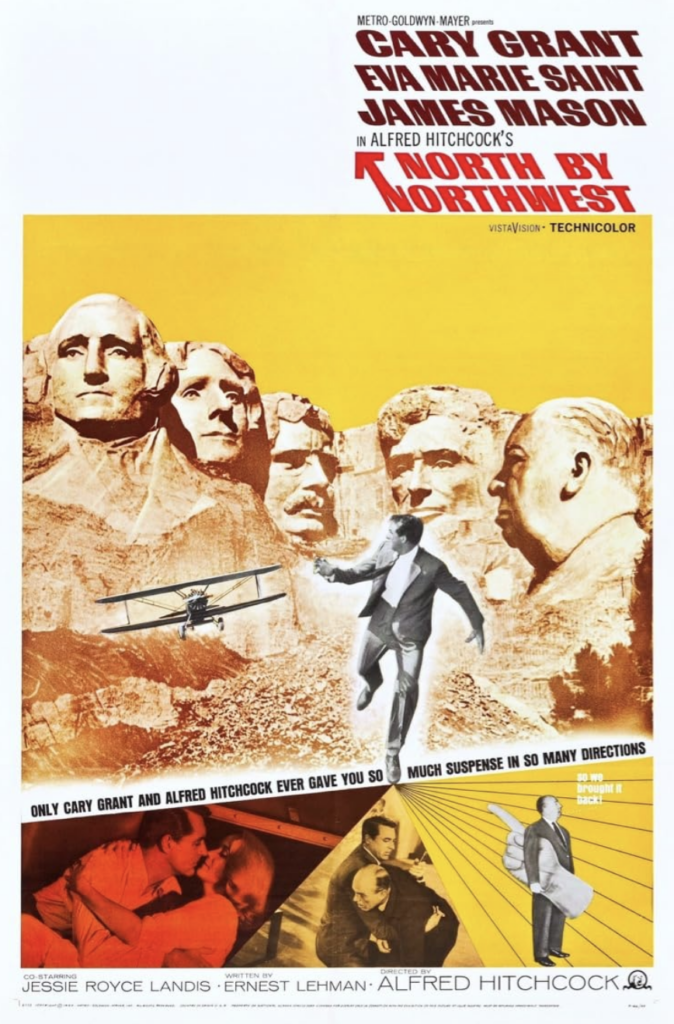
For the Alfred Hitchcock fan, North by Northwest starring Cary Grant has it all — mistaken identity, romance, an airplane chase, and Mt. Rushmore! As IMDb summarizes it, the movie follows an advertising executive who “goes on the run after being mistaken for a government agent by a group of foreign spies.” Fun fact: The movie features a foot chase across Mt. Rushmore, and Hitchcock said he had “wanted Cary Grant to hide in Lincoln’s nostril and then have a fit of sneezing.” Although such a scene is not in the final version of the movie, screenwriter Ernest Lehman titled his initial drafts “The Man in Lincoln’s Nose.”

I have yet to see Frank Capra’s Mr. Smith Goes to Washington (1939), but the classic starring James Stewart comes highly recommended. The story centers on a “naive youth leader” who quickly encounters corruption and sabotage after being nominated to fill a U.S. Senate vacancy.

Speaking of James Stewart, he also plays Charles Lindbergh in The Spirit of St. Louis (1957), which captures the pilot’s historic transatlantic flight.

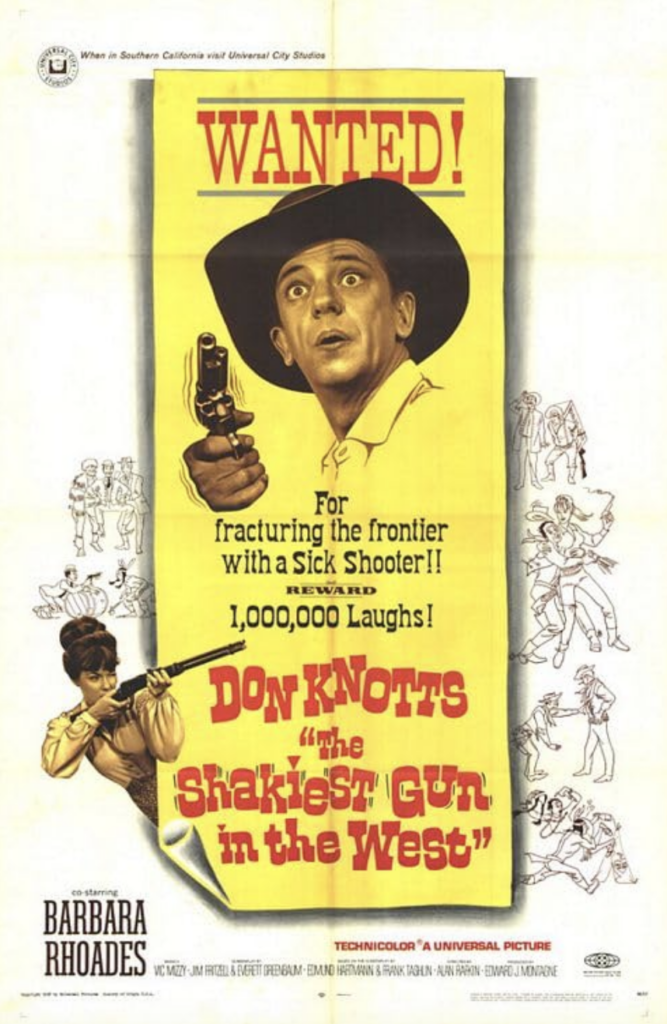
Don Knotts is an American treasure. He is most widely known for playing Deputy Barney Fife on The Andy Griffith Show, but he also stars in a variety of other classic films the whole family will love. While the Fourth of July is the perfect time to enjoy a Western, if you’re looking for something more family-friendly than Tombstone, The Shakiest Gun in the West (1968) and The Apple Dumpling Gang (1975) — both starring Knotts — are two comedies perfect for kids and parents alike. The former tells the story of a dentist from the East Coast who hops on a wagon train and unknowingly gets tied up in a plot to bust a group of smugglers. In the latter, Knotts and comedian Tim Conway play “the West’s worst bank robbers,” who attempt to get their hands on gold in the late 1870s. Be sure to check out the sequel, too.

Classic ’80s Summer

How would a patriotic movie list be complete without a section dedicated to one of the best decades in American history? Whether you’re looking for a John Hughes classic or a killer soundtrack, the ’80s called and they have what you need. (Note that most of these are probably a bit intense for younger viewers.)

The original Top Gun (1986), followed by the recent sequel. Need I say more?

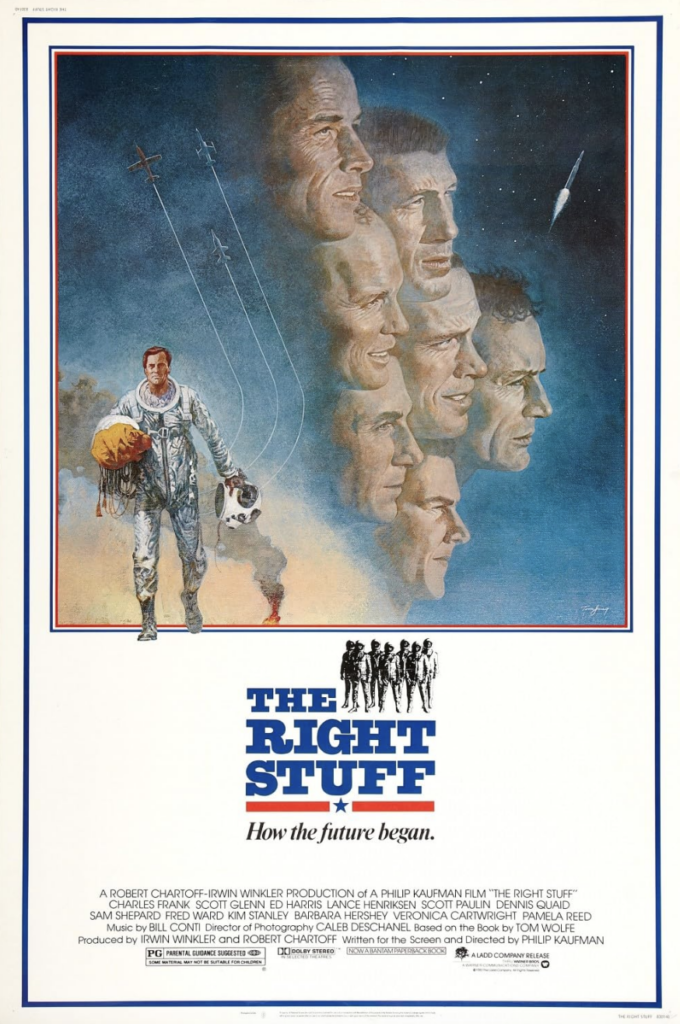
If you’re looking for another movie featuring aeronautics and American grit, The Right Stuff (1983) comes highly rated by my male family members. The movie “chronicles the first 15 years of America’s space program,” and also highlights Chuck Yeager’s historic flight that broke the sound barrier in the Bell X-1. Note: If you live in the northern Virginia or D.C. area, you won’t regret making a trip to the National Air and Space Museum’s Steven F. Udvar-Hazy Center in Chantilly, where you can see Yeager’s Bell X-1, nicknamed the “Glamorous Glennis.”

The Rocky franchise is another that needs no introduction, but Rocky IV (1985) specifically would be perfect to put on this weekend. Amid our Marxist-ridden culture, Rocky Balboa’s Cold War fight against Soviet Union boxer Ivan Drago is a much-needed reminder that American exceptionalism will always be superior to communist conformity. And James Brown’s over-the-top performance of “Living in America” in the movie is, of course, an added bonus.

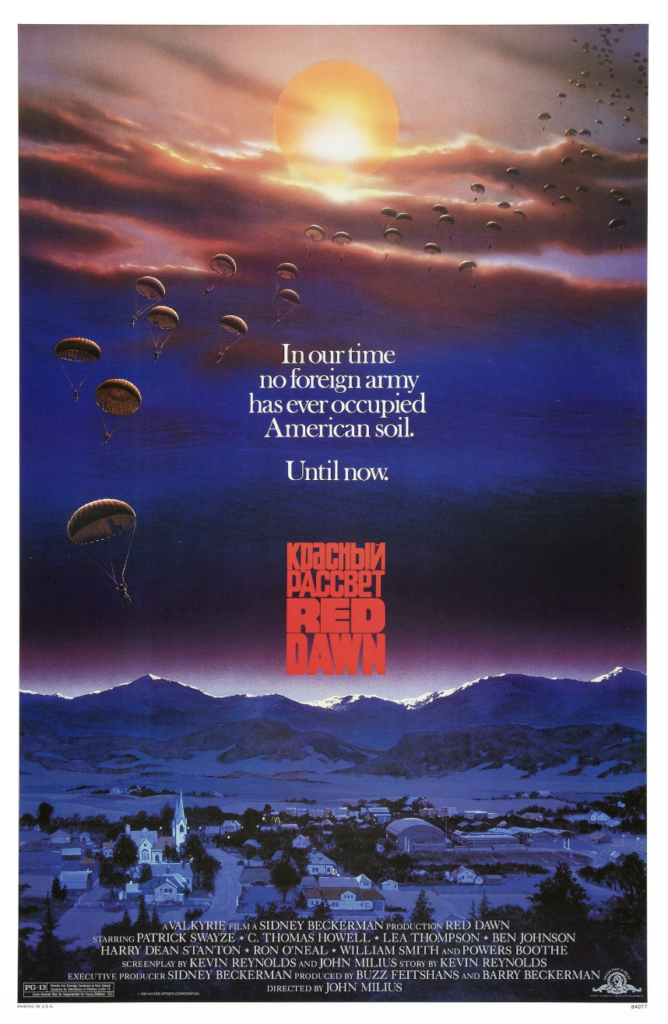
Speaking of fighting the commies, Red Dawn (1984), starring C. Thomas Howell and Patrick Swayze, follows a group of Western American teens as they band together to defend their hometown from invading Soviet forces.

Point Break (1991), also starring Swayze, follows an FBI agent attempting to bust a group of surfers he suspects to be an infamous bank-robbing gang known as “The Ex-Presidents.” This movie is not technically from the ’80s, but Ronald Reagan does make an appearance — sort of.

Looking for something a little more light-hearted? John Hughes’ The Great Outdoors (1988), starring John Candy, is a classic ’80s comedy, great for summertime viewing. A Back to the Future marathon or a few episodes of Magnum, P.I. are also fail-proof options for a dose of ’80s Americana.

Summer Sing-Alongs

Tired of the Hamilton soundtrack? So am I. Give these classic musicals a try instead.

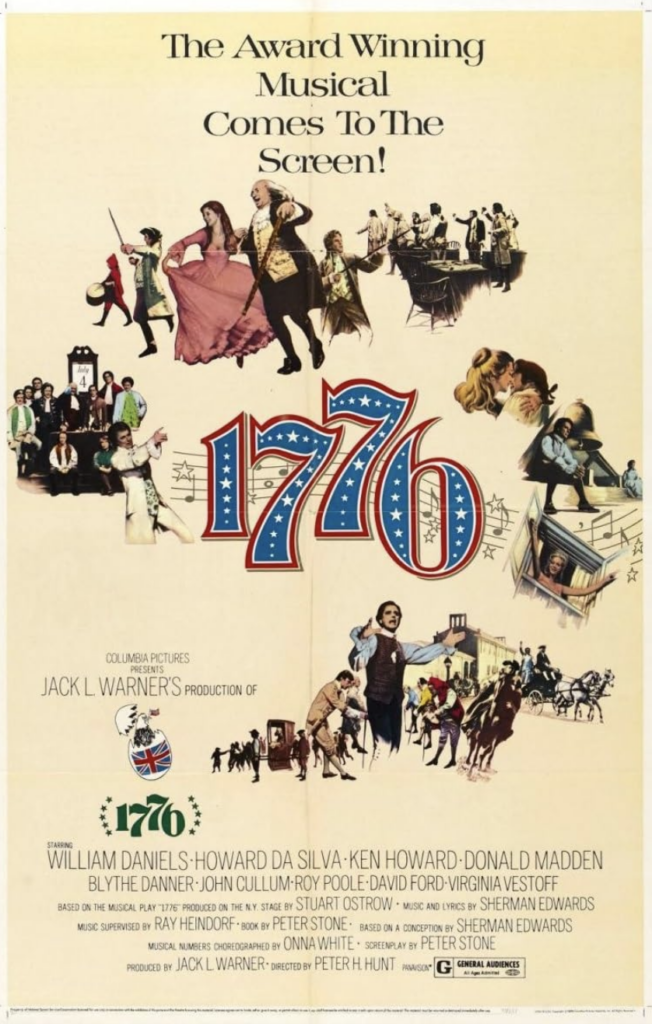
You may have thought it an impossible task to turn the happenings of the Continental Congress into a comedic musical, but 1776 would prove you wrong. The musical numbers are pleasantly witty, humorous, historical, and genuinely creative — a stark contrast to many modern Broadway-esque movies and performances.

Seven Brides for Seven Brothers is about a group of backwoods brothers in 19th-century Oregon who want to get married. So naturally, each brother kidnaps the woman he likes from the nearby town. The women, ultimately trapped at the brothers’ homestead for the winter thanks to an avalanche, greatly protest — but not for long. (Oklahoma! is also a good choice if you’re looking for another classic set in the pioneer days of America.)

Singin’ in the Rain (1952) and Good News (1947) are both set in 1920s America. The former is about a silent movie actor (Gene Kelley) and his changing career as Hollywood adjusts to “talking” films. The latter follows the drama among a group of college students, honing in on the story of a football star “who falls in love with his French tutor.”

Maybe you are looking for a break from screens this weekend, but still want to get into that ’76 spirit. Spotify has plenty of America-250-themed playlists. Or you could curate your own! Don’t skip on old faithfuls like Toby Keith and Lee Greenwood, but don’t be afraid to throw together artists ranging from Alan Jackson to Journey to Ambrosia for a dynamic intersection of American sounds.


SCOTUS Birthplace Citizenship Decision Is John Roberts’ Roe v. Wade


Trump v. Barbara may ultimately come to be remembered not as the final word on birthplace citizenship but as another constitutional detour waiting to be corrected.


There are Supreme Court decisions that faithfully interpret the Constitution, even when reasonable people disagree about the outcome. And then there are decisions in which the justices appear to begin with the outcome they want and only afterward search for constitutional language to justify it. The Supreme Court’s decision in Trump v. Barbara belongs firmly in the latter category.

The case centered on one sentence of the 14th Amendment: “All persons born or naturalized in the United States, and subject to the jurisdiction thereof, are citizens of the United States and of the State wherein they reside.”

The court interpreted this language to constitutionally guarantee citizenship to virtually every child born on American soil, including the children of illegal aliens and temporary visitors who come to the United States solely to give birth.

Justice Samuel Alito captured the consequences better than anyone else in his dissent:

As interpreted by the Court today, the Fourteenth Amendment confers citizenship on virtually everyone who happens to be born in this country, including the children of “birth tourists,” women who come here solely for the purpose of giving birth to a child and then promptly return home.

A Chinese woman can board a flight from China, spend a few weeks in the Northern Mariana Islands, give birth, return home, and her child acquires an American passport as a constitutional right. The practice has become so widespread that, by some estimates, well over a million Chinese nationals have acquired American citizenship through this mechanism.

And after Trump v. Barbara, Congress cannot simply vote to change it. Nor can the American people. Five justices have placed the issue beyond the reach of ordinary democratic government and elevated it into constitutional doctrine.

Echoes of Roe

For conservatives, the irony is almost unbearable. This opinion represents exactly the sort of judicial behavior they spent half a century condemning in Roe v. Wade. The objection to Roe was never simply abortion. It was that the court manufactured constitutional law from its own policy preferences, transforming a disputed political question into an immutable constitutional command without the constitutional text actually requiring it.

Chief Justice Roberts, joined by the three liberal justices as well as Amy Coney Barrett, has now done much the same thing for birthplace citizenship. Whether history ultimately concludes that this opinion reflected policy preferences, ideology, or simply another manifestation of Trump Derangement Syndrome, one thing is unmistakable: The majority did not faithfully interpret the 14th Amendment.

The truly astonishing aspect of the decision is that the court managed to get wrong what should have been the easiest constitutional question in the entire case.

There are serious debates surrounding the phrase “subject to the jurisdiction thereof.” Constitutional scholars have argued for generations over whether it requires complete political allegiance, obedience to American law while physically present, or lawful permanent residence. Reasonable people can disagree about those questions. One can make serious constitutional arguments both for and against extending birthplace citizenship to categories such as illegal aliens or lawful permanent residents, because the phrase “subject to the jurisdiction thereof” is capable of more than one plausible interpretation.

Those are difficult questions. Birth tourism is not. Unlike the debate over illegal immigration, there are no comparably serious competing arguments when the parents are nothing more than temporary visitors who enter the United States for a few weeks, give birth, and immediately return home. The constitutional text simply does not support treating a tourist as a resident.

The Forgotten Requirement of Residence

In fact, birth tourism is the one factual scenario that ought to unite every honest interpreter of the 14th Amendment. Part of the reason is that, with so much focus on the words “subject to the jurisdiction thereof,” almost nobody has paid attention to another part of the same sentence. The citizenship clause does not simply identify who becomes a citizen of the United States. It also provides that such persons become citizens “of the State wherein they reside.”

Residence is a well-defined concept in American law. A child born during a brief stay by parents who never intended to settle in the United States, who return home days later, and whose family never establishes any residence here does not reside in a state. That is not what residence means. Yet Roberts ignores that language altogether.

In contrast, Justice Clarence Thomas treats the case as what it actually is: one of the most consequential constitutional disputes ever to reach the Supreme Court. American citizenship is one of the world’s greatest privileges, something billions of people would gladly claim if they could. Before handing it out like candy, the court ought to conduct a serious analysis of the constitutional text that governs it.

Thomas’ dissent is roughly three times the length of the majority opinion because he does not merely announce conclusions. He reconstructs the historical record step by step, examining the debates surrounding the Civil Rights Act of 1866 and the 14th Amendment, analyzing 19th-century legal authorities, and testing the majority’s conclusions against the historical understanding of citizenship, jurisdiction, residence, and allegiance.

Among the historical examples Thomas discusses is the case of Mary Deveraux, an Irish immigrant who arrived in New York in 1889 and gave birth a day after reaching American shores. Because, at the time of the birth, Deveraux hadn’t yet been “lawfully admitted” into the United States, it was concluded that her American-born child did not acquire United States citizenship. Thomas’ point is not that this single episode resolves the constitutional question by itself. It is that in the decades following its adoption, the 14th Amendment plainly did not treat mere birth on American soil as sufficient for acquiring American citizenship. His point is that constitutional interpretation requires engaging both the constitutional text and the historical evidence rather than assuming the answer from the outset.

The contrast between the two opinions is striking. Roberts writes largely in broad doctrinal assertions, moving quickly from premise to conclusion. Thomas builds his argument brick by brick.

The American Indian Contradiction

But Thomas’ most devastating point concerns something much simpler. It is so straightforward that anyone can understand it, and once you see it, the majority’s opinion simply collapses under its own logic. The problem is that Roberts’ opinion cannot explain the 14th Amendment’s treatment of American Indians, nor can it reconcile a system that denied them citizenship with one that now extends it to Chinese birth tourists.

For decades after the 14th Amendment was ratified, Native Americans born within the territorial United States were not considered citizens under the citizenship clause. Congress ultimately had to enact separate legislation granting them citizenship because the 14th Amendment itself had not done so. That history is beyond dispute.

The majority attempts to reconcile this by arguing that members of Indian tribes belonged to “alien and sovereign” nations and therefore were not fully subject to the jurisdiction of the United States. Thomas then asks the obvious question the majority cannot answer. As he writes:

It is difficult to understand why China, for example, would be less alien or less sovereign than the Cherokee Nations. It is also difficult to understand why tribal Indians would be less entitled to American citizenship if born on non-Indian land within the United States than children of birth tourists who immediately returned to China.

It is an extraordinarily powerful point. If belonging to an alien and sovereign nation excluded Native Americans from automatic citizenship, why does the same principle not apply to a Chinese tourist?

China is every bit as alien and every bit as sovereign as the Cherokee Nation was understood to be in the 19th century. A Chinese birth tourist remains a Chinese citizen, owes allegiance to China, intends to return to China, and usually leaves the United States almost immediately after giving birth.

If tribal Indians could be excluded because their political allegiance remained with another sovereign, it is impossible to explain why temporary visitors from China are somehow more completely within the jurisdiction contemplated by the 14th Amendment.

That contradiction lies at the heart of the majority opinion. Roberts never resolves it because it cannot be resolved.

A people whose ancestors had lived on this continent for centuries, who were born on American soil and knew no other homeland, were excluded from automatic citizenship under the original understanding of the 14th Amendment. Yet under Roberts’ interpretation, a Chinese national can fly from Beijing to Saipan, remain for a few weeks, give birth, fly home, and her child acquires an unconditional constitutional entitlement to American citizenship.

American Indians did not qualify, while Chinese birth tourists do. If the majority has an answer to that contradiction, it never tells us what it is.

A Constitutional Fix That May Never Come

Unfortunately, there is no easy fix. A few obvious policy changes, such as eliminating visa-free access that facilitates birth tourism into the Northern Mariana Islands, might reduce the practice around the margins. But they cannot solve the constitutional problem the court has now created.

A constitutional amendment is theoretically possible but practically unattainable. It would require approval by two-thirds of both houses of Congress, followed by ratification by 38 state legislatures. That is extraordinarily unlikely.

The more realistic path resembles the one that ultimately overturned Roe v. Wade. Congress could enact legislation specifying that birthplace citizenship does not extend to categories such as birth tourists, illegal aliens, and other temporary visitors. That statute would almost certainly be challenged immediately, requiring the Supreme Court to confront the constitutional question directly.

Indeed, such a case would present a stronger vehicle than Trump v. Barbara itself. Roberts was reviewing an executive order, an exercise of presidential authority that courts naturally scrutinize more skeptically because it lacks the democratic legitimacy of an act of Congress. A statute enacted by Congress would present the issue in a fundamentally different posture, forcing the court to decide not whether a president exceeded his authority but whether Congress itself correctly interpreted the 14th Amendment.

That does not mean such a law would prevail before the current court. A majority consisting of the three liberal justices, Chief Justice John Roberts, and Justice Amy Coney Barrett has now committed itself to an expansive reading of the citizenship clause. Until the composition of the court changes, there is little reason to expect a different outcome.

Unlike Roe, however, this decision rests on the narrowest possible majority: five to four. That means a future court could revisit the issue far sooner than the half-century it took to overturn Roe. If Congress presents the court with the right case, and if a future majority adopts a more historically grounded understanding of the 14th Amendment, Trump v. Barbara may ultimately come to be remembered not as the final word on birthplace citizenship but as another constitutional detour waiting to be corrected.


The American Revolution Was Fought And Won In Neighborhood Bars


American taverns became rooms where our founders could leave without making every disagreement permanent.


Colonel Benjamin Tallmadge noticed it from across the room. For eight years, he had watched Washington and learned to read the small signals: the set of the jaw, the economy of movement, the way the general’s silence could crowd out other men’s noise. He had never seen the hand shake — not at Long Island, where the army nearly dissolved into the East River; not at Valley Forge, where it nearly froze to death; not at Yorktown, where it won.

It was Dec. 4, 1783. The fighting had ended months earlier. Washington had asked his officers to meet him at Fraunces Tavern, on the corner of Pearl and Broad in lower Manhattan. They came up the stairs to the Long Room on the second floor. He raised a glass of Madeira, and when he opened his mouth to speak, what came out was one sentence: “With a heart full of love and gratitude, I now take leave of you.”

That was all he managed. He stood there, unable to continue while the officers who had followed him across eight years and a continent wept without embarrassment, without apology, without any of the management that men in uniform usually apply to grief in public. Then he walked to Henry Knox, put his arms around him, and said nothing. He moved to the next man, and the next, until he had embraced every officer in the room, and then he walked out.

He could have done this anywhere. He chose a tavern. That choice tells us something about the country those men had just made.

The men who made the American Revolution made it in rooms like this one. Start with a brick building on Union Street in Boston, the one with a copper dragon over the door.

The Green Dragon Tavern was owned by a Masonic lodge  — a tavern on the ground floor, a lodge hall above  — and Samuel Adams used it the way a general uses his headquarters. The Sons of Liberty met there. The North End Caucus met there. Paul Revere later recalled that through the winter of 1774 and into 1775, he belonged to a committee of about 30 men, “chiefly mechanics,” who gathered at the Green Dragon to watch British troop movements and report back, swearing themselves to secrecy over a Bible before every meeting.

Adams had learned the room’s machinery from his father, who had run the original Caucus Club out of a similar room a generation earlier. What he understood, and what his British counterparts perpetually underestimated, was that a tavern was not merely a place where men drank. It was where men without formal power could sit long enough to become dangerous together: arguing, drinking, counting votes, testing courage, and leaving with something to do before anyone official knew enough to stop them. The Green Dragon held carpenters and lawyers at the same tables, men who disagreed about religion, about commerce, about how far resistance ought to go… and it held them long enough for disagreement to become coordination.

In the fall of 1773, the British East India Company shipped half a million pounds of tea to the colonies, undercutting local merchants and forcing the colonists to pay a tax Parliament had imposed without their consent. The consignees  — the merchants designated to receive and sell the tea  — were a handful of well-connected men who had decided they could do business with the arrangement. The rest of Boston had decided otherwise.

A surviving lodge record from that winter notes drily that the “Consignees of Tea took up the Brethren’s time” at one meeting, and that the gathering broke up late. On the night of December 16, 1773, somewhere between 30 and 130 men (the historical record is deliberate in its vagueness) boarded three ships in Boston Harbor and dumped 342 chests of tea into the water. The men who planned it were the same men who poured drinks and paid their tabs at the Green Dragon. They did not leave a detailed written record of the planning. They knew better. They left a lodge note that said the consignees took up the time, and they let history figure out the rest.

That is the thing about the rooms that were doing the real work. Their power was that they left so little for the official record to seize. The Crown could read pamphlets. It could read newspapers. It could not read what happened at a table of men who had sworn an oath and knew how to keep it.

By April of 1775, the British had run out of patience. General Thomas Gage ordered his troops to march to Concord and seize the colonial military stores. On the night of April 18, Revere rode out from Boston. The man riding was the same man who had sat in the Green Dragon through those long winters of organizing, watching, and waiting.

The next morning, British regulars marched onto Lexington Green and found a line of about 77 colonial militiamen waiting for them. Parker’s men had spent the small hours before dawn gathered in Buckman Tavern, a few steps from the green, warming themselves by the hearth, muskets stacked against the wall. When the alarm finally came, they walked out the door and formed their line on the grass. A shot was fired — famously, no one has ever established with certainty who fired it. And when the smoke cleared, eight militiamen were dead. The war that had been organized in a bar began, in earnest, at the door of another one.

The war lasted eight years, and when it was finally, officially over, the men who had survived it had to figure out how to build what they had fought for. That turned out to be a different kind of problem.

In the summer of 1787, the delegates to the Constitutional Convention gathered in Philadelphia with the explicit assignment of fixing the Articles of Confederation and the implicit understanding that the whole frame of government might need to come down and be rebuilt. They sealed the windows of the Pennsylvania State House against the July heat and the public ear, posted guards at the doors, and argued for four months in secret.

The arguing was real, and it was brutal. The small states and the large ones nearly broke the convention over how seats in Congress would be apportioned. The slaveholding states and the northern ones struck bargains that both sides knew were postponements rather than resolutions. Men who had fought a revolution together voted against each other week after week and walked out into the Philadelphia summer carrying grievances that had no outlet inside the sealed room.

The outlet was City Tavern, four blocks east on Second and Walnut, the most genteel public house in America. The delegates ate there most evenings, off the record, in the way that people who have been formally disagreeing all day sometimes need to be informally together at night. A bill from one September dinner survives. 55 gentlemen. 54 bottles of Madeira. 60 of claret. Seven large bowls of rum punch. And at the bottom, in the tavern keeper’s even hand, one final line: Breakage. The glasses had broken. So, nearly, had the convention.

Three days after that dinner, the Constitution was signed. Washington wrote in his diary that the members “adjourned to the City Tavern, dined together and took a cordial leave of each other.” Twelve words for the last night of the most consequential summer in American political history. The document was finished. The harder task was finding out whether the men who had fought over it could remain in one another’s company. That, too, had been worked out, over months of evenings, in a room four blocks from the official one.

Which brings us back to Fraunces Tavern, and the shaking hand.

Tallmadge recorded what happened. Washington filled his glass, said one sentence, and then stopped. He was, Tallmadge wrote, “suffused in tears and incapable of utterance.” He walked to Knox and held him in silence. Then every officer in the room came forward one by one, and Tallmadge wrote: “Such a scene of sorrow and weeping I had never before witnessed and fondly hope I may never be called to witness again.”

Consider what those men had been through to get to this room. Revere riding out in the dark from the Green Dragon, the whole conspiracy of a revolution carried in his head. Parker’s men walking out of Buckman Tavern into the cold and the gunfire. Eight years of war. And then Philadelphia, the sealed windows and the brutal arguments and the broken glass at the bottom of the bill, and somehow, against the weight of every precedent in human history, a constitution. They had built something that had never existed: a republic of free men, equal before God and law, governed by their own consent, answerable to no crown. For all of recorded history, that had been an idea. These men, in these rooms, had made it a country.

They wept because they knew what it had cost. They wept because they knew what it was.

What Tallmadge was witnessing was not a ceremony. It was the thing a ceremony is supposed to honor but almost never actually depicts: the human cost of what got done, acknowledged among the people who paid it, in a room where that acknowledgment was allowed.

None of this diminishes the documents. The Declaration and the Constitution deserve their place under glass. The chambers matter. The signatures matter. Go see them. But do not mistake the official room for the whole republic.

The documents could not contain what the monuments cannot show. Paul Revere and 30 mechanics swearing oaths over a Bible in a lodge hall above a tavern bar. The Brethren’s time taken up by the consignees of tea, and the note in the ledger that names no names. Parker’s men at the hearth in Buckman Tavern in the hour before the war. The broken glass at City Tavern was tallied honestly at the bottom of the bill. Washington’s hand shaking over a glass of Madeira while 30 officers wept without shame in the room around him.

That is where the republic was practiced, not just proclaimed. The founders did not agree themselves into a country. They argued themselves into one, and then kept returning to rooms where they could leave without making every disagreement permanent.

Nineteen days later, Washington resigned his commission before Congress in Annapolis. But before he became the marble figure surrendering power, he stood in a tavern with a shaking hand and became, briefly and completely, a man among men.

This July, America turns 250. There will be fireworks and speeches and ceremonies, and all of that is right and good. But the founders would recognize the fireworks more readily than they would recognize us: a country that has largely stopped sitting in rooms with people it disagrees with, that has traded the tavern for the timeline and the cordial leave for the mute button.

Most of the rooms are gone now. The Green Dragon disappeared in 1854, and City Tavern followed it into dust the same year. Fraunces survives, restored and slightly domesticated, with a museum upstairs and decent food downstairs for tourists who may or may not know what happened above them.

But the specific building was never really the point. You need a table, a few people you don’t see entirely eye to eye with, and the willingness to order something and have it out — over a bowl of punch if you want to be historical about it, over a Zombie Dust if that’s what’s on tap. At the end of the night you settle the bill and take a cordial leave, the way they did, because the argument is not finished and you are going to need to come back.