Tuesday, June 30, 2026

The Electric Grid Is Actually America’s Most Important Homeland Security System


Americans think about the electric grid when they pay their utility bill or lose power during a storm. What many don’t think about is how deeply the electric grid is intertwined with national security and every other aspect of the modern nation state. From military installations and emergency response networks to hospitals and water infrastructure, reliable electricity underpins nearly every critical function in modern American life.

In a world defined by increasing geopolitical competition, more frequent severe weather events, and advancing technological threats, protecting and strengthening the electric grid is not simply a policy priority; it is a national security necessity. America is the world’s most prosperous and powerful nation, thanks to our electrical power capabilities.  That means the utilities responsible for maintaining and modernizing the grid must be treated as essential national security partners, not political targets.

The United States depends on one of the most reliable electric systems in the world, delivering power with approximately 99.95% reliability. That level of reliability did not happen by accident. It’s a result of decades of planning and investment by electric utilities across the country. Americans may think about electricity when prices rise or severe weather causes outages, but extraordinary reliability is often taken for granted. We assume that our lights will stay on, military systems will work, and hospitals will remain operational; all without considering the source of it all. Reliability has become so routine that we often forget how much of our daily lives and national security depends on it.  People living in other countries (guests or citizens) are seldom “shocked” by power outages or infrastructure problems.  Americans are not just shocked by them but also pretty darned upset because of their infrequency.

That reliability cannot be taken for granted. Severe weather has become one of the greatest threats to grid resilience in the United States. According to a recent report by Concentric Energy Advisors, approximately 80% of major power outages are driven by severe weather, and the number of billion-dollar weather disasters has increased substantially, moving from 1.5 annually in the 1980s to 23 annually during 2020-2024. From hurricanes, winter storms, wildfires, and extreme heat to more, the threats facing the power grid are growing as America’s dependence on electricity increases. Protecting and investing in the grid is no longer just about keeping the lights on; it’s about ensuring the resilience of the systems that underpin our economy, security, and way of life.

Maintaining reliability in the face of these growing challenges requires more than just realizing the problem. Grid modernization is a long-term investment in economic and national security. According to the report, every dollar invested in transmission infrastructure saves customers between $1.60 and $1.80 in future system costs. That finding matters because delaying infrastructure investment does not make costs disappear. It often turns planned upgrades into emergency repairs, avoidable outages, higher operating costs, and greater risk to customers.

Utilities are uniquely positioned to make these investments because they plan over decades, maintain direct obligations to serve customers, and operate under public utility commission oversight. Their investments are scrutinized through formal regulatory processes, including engineering analysis, financial modeling, public filings, and review by regulators and consumer advocates. That process exists to ensure projects are prudent, necessary, and tied to reliability. Undermining that investment framework may sound appealing in a political moment, but it risks weakening the very system America depends on.

The urgency of this challenge is only growing. The race for technological leadership is increasingly tied to energy security. Data centers and AI are not problems to be feared; they are signals that America’s economy is growing and that our infrastructure must grow with it.

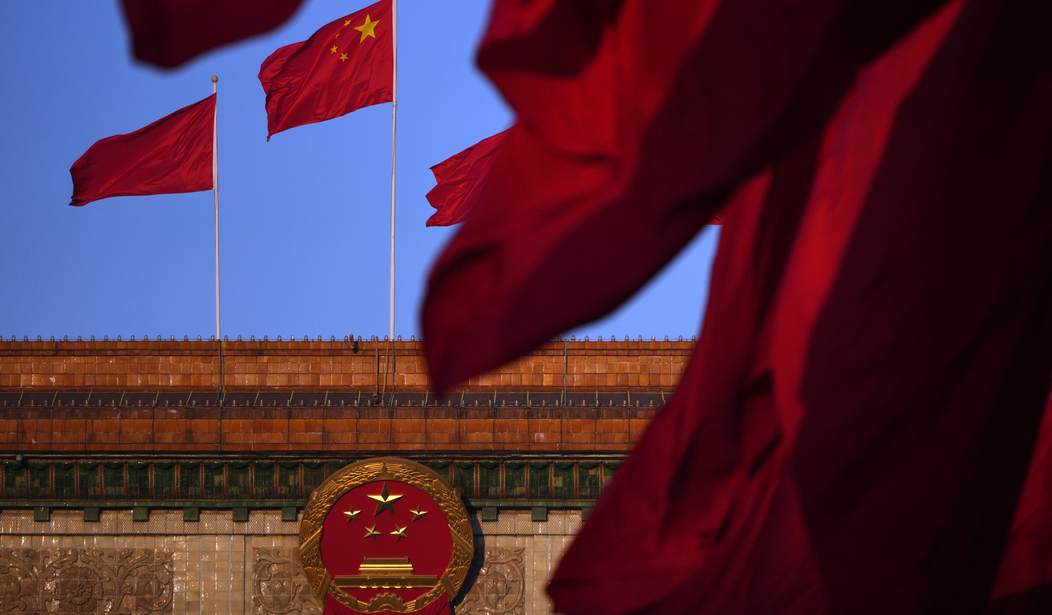
Our adversaries understand this reality; nations such as China are executing massive upgrades to their energy infrastructure, highlighted by China's state-run utility announcing a record-breaking $574 billion investment plan to build out ultra-high-voltage transmission lines across the country. They recognize that economic power, technological innovation, and national security are all driven by energy production and resilience. The United States cannot afford to fall behind. A modern physical and digital economy and a capable 21st-century military all depend upon access to abundant, reliable electricity. Falling behind also increases our national security vulnerability to cyberattacks and other threats targeting critical infrastructure.

The consequences of falling behind go far beyond higher costs or slower economic growth; they are a serious threat to America’s security and resilience. The utility companies responsible for maintaining and modernizing our grid are proven partners, and we shouldn’t use these companies as political punching bags if we are serious about winning the future economy.


Podcast thread for June 30


The sun rises and sets each day as scheduled, no matter how bad of a day you're having.

CONRAD BLACK : Canada Needs to End Its Self-Flagellation and Focus on Building a Prosperous Future


A statue of founding Prime Minister Sir John A. Macdonald on Parliament Hill in Ottawa

Iran's Theocracy Has Given Way to an IRGC Military Dictatorship


The 12-day war involving the United States, Israel, and Iran may prove to be one of the most consequential events in modern Middle Eastern history. While international attention has focused on military strikes, damaged nuclear facilities, and regional security implications, a more profound transformation has been unfolding inside Iran itself. The conflict has accelerated a process that had been gathering momentum for years: the gradual replacement of clerical rule with direct military domination by the Islamic Revolutionary Guard Corps (IRGC).

For decades, many observers described Iran as a theocratic state governed by senior clerics under the doctrine of Velayat-e Faqih (guardianship of the jurist). Today, that description feels increasingly outdated. Real power rests less with the religious establishment and more with the commanders of the IRGC, whose influence stretches across every sector of Iranian life. The war has merely exposed a reality that millions of Iranians already understood. The mullahs provide the ideological faΓ§ade, the Guards wield the guns, control vast economic assets, and direct the machinery of repression. Iran now resembles a military dictatorship wrapped in religious symbolism.

The consequences for ordinary citizens have been catastrophic. Official statistics released by regime institutions reveal an economy spiraling into crisis. Inflation has surged to levels that devastate household incomes. Food prices have risen at a pace that places basic necessities beyond the reach of millions. Wages lag far behind living costs. Savings evaporate. Families who once enjoyed modest security now struggle to provide bread, medicine, and shelter for their children. Even these grim figures probably understate the scale of the disaster.

The regime's priorities explain the decline. Rather than investing oil revenues in infrastructure, industry, healthcare, education, or job creation, enormous resources have flowed into the IRGC, ballistic missile programs, nuclear projects, and proxy militias scattered across the Middle East. While military commanders accumulated wealth and influence, roads crumbled, water systems deteriorated, and electricity networks decayed. The result appears across the country. Power blackouts have become a regular feature of daily life. Factories sit idle during electricity shortages. Businesses lose income. Students attempt to study by candlelight. Hospitals face mounting pressure. Across vast regions, water scarcity has reached alarming levels. Government reports indicate that renewable water resources continue to decline while desertification advances relentlessly. Rivers shrink, reservoirs empty, and agricultural communities confront an increasingly uncertain future.

Iran possesses immense natural wealth, abundant human talent, and enormous economic potential. Yet decades of corruption, mismanagement, and militarization have pushed the country toward economic exhaustion. The suffering extends far beyond economic hardship. The Iranian people endure one of the most repressive political systems on earth. Executions continue at an alarming rate. Dissidents face imprisonment. Journalists encounter censorship. Women resisting compulsory veiling confront brutality and intimidation. Ethnic and religious minorities endure systematic discrimination. Trade unionists, teachers, pensioners, and students who raise legitimate grievances frequently encounter arrest rather than dialogue.

Such conditions inevitably generate resistance. During recent years, waves of protests have erupted across Iran. Workers, pensioners, teachers, farmers, and students have all taken to the streets demanding change. Demonstrations emerge in large cities and remote provinces alike. Every new economic shock, every blackout, every water shortage, and every rise in food prices deepens public anger. The regime's response follows a familiar pattern: repression, arrests, and violence. Yet repression no longer guarantees stability.

A growing number of Iranians have concluded that meaningful reform cannot emerge from within the existing system. The concentration of power in the hands of the IRGC has effectively closed avenues for gradual change. Elections inspire little confidence. Competing factions offer cosmetic differences while preserving the same underlying structure of authoritarian control. Against this backdrop, the organized resistance has gained increasing prominence. The National Council of Resistance of Iran (NCRI), together with the People's Mojahedin Organization of Iran (MEK), has maintained a nationwide network capable of challenging the regime's narrative and mobilizing opposition. Resistance Units operating inside Iran continue to demonstrate remarkable resilience despite severe repression. Their message resonates with a population searching for an alternative to dictatorship, corruption, and economic collapse.

The regime understands this threat. That explains the relentless propaganda campaigns, mass arrests, and demonization directed against the organized resistance. Authoritarian governments fear organized opposition far more than spontaneous protests because organized movements possess the capacity to transform public anger into political change. History offers many examples of regimes that appeared invincible until the moment they collapsed. The Shah's dictatorship seemed secure during the late 1970s. Communist governments across Eastern Europe projected strength until they suddenly disintegrated. Authoritarian systems often appear stable from the outside while internal decay steadily weakens their foundations.

Iran today displays many of the same symptoms. Economic collapse undermines legitimacy. Infrastructure failures erode confidence. Corruption breeds cynicism. Water shortages fuel unrest. Electricity blackouts expose incompetence. Military domination alienates broad sections of society. Every crisis chips away at the regime's remaining credibility. The war has accelerated these trends. Rather than emerging stronger, the ruling establishment appears increasingly dependent upon coercion. As the IRGC tightens its grip, the distinction between the military apparatus and the state itself grows ever thinner. Such systems rarely generate prosperity or stability. They generate fear, resentment, and eventually resistance.

A decisive confrontation between the Iranian people and their oppressors seems increasingly inevitable. Predicting the timing of revolutionary change remains impossible. History seldom follows a precise timetable. Yet the direction of travel appears clear. A young, educated, and highly connected population seeks freedom, prosperity, and democratic government. The ruling elite offers economic hardship, repression, and endless militarization. That contradiction cannot endure forever. The future belongs neither to aging clerics nor to IRGC generals. It belongs to the Iranian people. When the next great uprising comes, and many signs suggest that day draws closer, it may finally sweep away a failed dictatorship and open the path toward a democratic republic founded upon freedom, human rights, and the rule of law.

After nearly half a century of tyranny, that moment would represent far more than political change. It would mark the rebirth of a nation whose people have waited long enough for liberty.


🎭 π–πŸ‘π π““π“π“˜π“›π“¨ 𝓗𝓾𝓢𝓸𝓻, π“œπ“Ύπ“Όπ“²π“¬, 𝓐𝓻𝓽, π“žπ“Ÿπ“”π“ 𝓣𝓗𝓑𝓔𝓐𝓓


Welcome to 

The π–πŸ‘π π““π“π“˜π“›π“¨ 𝓗𝓾𝓢𝓸𝓻, π“œπ“Ύπ“Όπ“²π“¬, 𝓐𝓻𝓽, π“žπ“Ÿπ“”π“ 𝓣𝓗𝓑𝓔𝓐𝓓 

Here’s a place to share cartoons, jokes, music, art, nature, 
man-made wonders, and whatever else you can think of. 

No politics or divisive posts on this thread. 

This feature will appear every day at 1pm mountain time. 


What Part Of ‘The Right To Keep And Bear Arms’ Do Democrat States Not Understand?


If states may simply enact new statutes every time SCOTUS strikes down the old ones, judicial review becomes little more than an advisory opinion.


The Supreme Court should not have had to say it again. Yet on Thursday, in Wolford v. Lopez, the court once more reminded state officials that the Second Amendment is part of the Constitution, not an inconvenient policy preference to be circumvented whenever a legislature dislikes the result.

The court held that Hawaii’s attempt to forbid licensed citizens from carrying firearms onto virtually all private property open to the public, unless the owner had affirmatively granted permission, violated the Second and 14th Amendments. In practical effect, Hawaii had tried to accomplish indirectly what New York State Rifle & Pistol Association v. Bruen said it could not do directly: make the right to bear arms largely meaningless.

One cannot read Wolford without noticing a troubling pattern.

When the Supreme Court decided District of Columbia v. Heller in 2008, it held that the Second Amendment protects an individual right to possess firearms for self-defense. Two years later, McDonald v. Chicago made clear that this right limits state and local governments as well.

Then came Bruen in 2022, rejecting New York’s discretionary licensing regime and insisting that modern gun regulations must be consistent with this nation’s historical tradition of firearm regulation.

One might have expected those decisions to settle the matter. Instead, several states responded not by respecting the court’s rulings, but by searching for creative ways around them.

New York enacted its so-called “Concealed Carry Improvement Act,” declaring vast swaths of public life to be “sensitive places” where firearms were prohibited. Hawaii copied much of New York’s playbook while adding its own extraordinary rule that licensed citizens could not carry firearms on private property open to the public unless the owner expressly invited them to do so. Illinois has likewise pursued increasingly aggressive restrictions that repeatedly test the outer boundaries of Heller and Bruen. The message has often seemed less like faithful constitutional compliance than legislative resistance.

Wolford is therefore about more than one Hawaii statute. It is about whether states may effectively nullify constitutional rights through clever drafting after losing in court.

Justice Samuel Alito’s opinion properly and forcefully answered no. The Constitution does not guarantee merely the appearance of a right. It guarantees the right itself. A constitutional liberty cannot be transformed into an empty promise simply because legislators devise new mechanisms for producing substantially the same forbidden result. As the court explained, Hawaii had replaced one unconstitutional barrier with another that sharply departed from the traditional common-law rule governing access to private property open to the public.

But there is another aspect of Justice Alito’s opinion that deserves even greater attention. Throughout the modern Second Amendment cases, Justice Clarence Thomas has argued that the court has been relying on the wrong provision of the 14th Amendment. Rather than incorporating the Second Amendment against the states through substantive due process, Thomas has consistently maintained that the privileges or immunities clause supplies the proper constitutional foundation. His separate opinion in McDonald traced that clause to one of the central abuses Reconstruction sought to eliminate: southern states’ systematic disarmament of newly freed slaves through the infamous “Black Codes.”

That history is impossible to ignore. Following the Civil War, many southern governments recognized that freedmen who possessed firearms would be far more capable of defending themselves against racial violence and intimidation. The solution was not to outlaw self-defense outright. Instead, they enacted laws that made firearm ownership practically impossible for black citizens.

Congress responded by adopting the 14th Amendment, including the privileges or immunities clause, precisely because state governments could no longer be trusted to respect fundamental rights on their own.

Justice Alito’s opinion notes that Justice Thomas reached the incorporation question in McDonald through the privileges or immunities clause, not substantive due process. That acknowledgment may seem modest, but it signals increasing recognition that Thomas’ historical account cannot simply be ignored.

The timing is especially noteworthy. Only days after Americans celebrated Juneteenth, a holiday commemorating the final enforcement of emancipation, we received a reminder that one of Reconstruction’s principal constitutional achievements was protecting the right of newly freed Americans to possess arms for their own defense. The 14th Amendment was not adopted in the abstract. It was written in response to concrete efforts by state governments to deprive former slaves of fundamental civil rights, including the right to keep and bear arms.

That historical reality often disappears from modern political debate. Many of the same voices that rightly celebrate Reconstruction’s promise of equal citizenship are remarkably reluctant to acknowledge that one of its principal guarantees was an enforceable individual right to armed self-defense.

History, however, is stubborn. The Reconstruction Congress understood that constitutional rights mean little if hostile state governments may evade them through legislative ingenuity. That lesson remains just as true today.

Reasonable people will continue to disagree about background checks, prohibited possessors, or particular safety regulations. Nothing in Wolford prevents states from enacting constitutionally permissible firearm regulations.

What they may not do is pretend that the Supreme Court’s decisions affirming the individual right to keep and bear arms never happened. The Constitution is not optional. Neither is the Second Amendment.

One might ask: Just what part of the right to keep and bear arms do states not understand? But the truth is, they clearly understand. Their persistent refusal to accept authoritative decisions of the Supreme Court therefore raises an even more troubling issue that extends well beyond the Second Amendment. If states may simply enact new statutes every time the Supreme Court strikes down the old ones — each designed to accomplish essentially the same unconstitutional objective — then judicial review itself becomes little more than an advisory opinion. Constitutional rights become rights in theory but not in practice.

Our constitutional system has confronted this problem before. Southern states resisted Brown v. Board of Education for years. A governor stood in the schoolhouse doors. Federal courts issued injunctions. Ultimately, presidents of both parties demonstrated that Supreme Court decisions are not suggestions but the supreme law of the land. When Gov. Orval Faubus attempted to block the integration of Little Rock Central High School in 1957, President Eisenhower federalized the Arkansas National Guard and sent the 101st Airborne Division to enforce the Constitution and the Supreme Court’s decision in Brown. And after the violence at the Edmund Pettus Bridge in Selma, Alabama, Congress reinforced the constitutional guarantees recognized by the courts by enacting the Voting Rights Act of 1965, ensuring those rights could be effectively exercised. 

The lesson is neither partisan nor ideological. It is constitutional. The rule of law cannot survive if states are free to nullify constitutional decisions they happen to dislike. Whether the right at issue is free speech, equal protection, religious liberty, or the right to keep and bear arms, absent some extraordinary error such as the Dred Scott decision, constitutional guarantees mean what the Supreme Court says they mean until the Constitution itself is amended or the court itself overturns its precedent.

That is the principle Wolford reaffirms. The real question now is whether those states that have spent years searching for ways around Heller, McDonald, Bruen, and now Wolford will finally accept the answer — or whether they will continue their efforts to nullify constitutional rights and proceed down a path fraught with so much historical peril. 


The DSA Is The Logical Conclusion Of Democrats’ Insane, Anti-American Positions


Of 257 Democrats in Congress, just 15 were willing to sign onto a coalition to combat rising socialism and communism. As part of their “Promise to America,” the 15 Democrats declare (among other things): “We are capitalist, not socialist,” “We want safety, not lawlessness,” “We are proud, not ashamed of America.”

In other words, more than 90% of congressional Democrats declined to sign onto a statement opposing socialism, at a time when Democratic Socialists of America (DSA) candidates are surging. Yet rather than mount a group effort to stop the growing rise of socialism, most Democrats appear to have no problem with it.

But that should come as no surprise. After all, the DSA candidates aren’t inventing any new ideas or positions. They’re merely taking positions already embraced by much of the Democrat Party and just following them through to their logical conclusion.

Take immigration for example. For years so-called mainstream Democrats have insisted that illegal aliens should not be treated as criminals and should have pathways to citizenship.

Then Sen. Kamala Harris said in a 2017 post on X that “an undocumented immigrant is not a criminal. Give people a path to citizenship. The vast majority of folks we’re talking about are living a lawful life and paying taxes.”

Rep. Ilhan Omar, D-Minn., (though a so-called “progressive” herself) declared: “Let me be clear: No human being is illegal.”

After then-President Joe Biden called illegal aliens illegal during his 2024 State of the Union address, Democratic Reps. Delia Ramirez, Chuy Garcia, and Joaquin Castro all said some variation of “no human being is illegal.”

The DSA also argues that no human is illegal. The logical conclusion of that is flat out calling to abolish ICE and end all deportations, which is what some DSA candidates are calling for.

New York DSA candidate Darializa Avila Chevalier has said “all deportations are wrong” even for those convicted of crimes.

The same pattern goes for police and prisons. Mainstream Democrats have spent years calling for police reform and an end to “mass incarceration.”

During her 2020 presidential campaign, Harris’ campaign had a plan explicitly entitled to “transform the criminal justice system” with a section on “End Mass Incarceration.” Biden likewise pledged to reduce federal incarceration. The DSA arrives at a more sweeping conclusion — but a conclusion that is ultimately the logical end of mainstream Democrats position. DSA candidates frequently endorse just abolishing prisons and police departments entirely.

Chevalier said: “A world without borders — just like a world without prisons or police — is possible, necessary, and the only moral way forward.” She also posted: “No. It means ending policing full stop. Period. No more police at all ever” in response to defund the police debates.

Willie. Burnley Jr, a DSA endorsed candidate, was elected to Somerville, Massachusetts City Council and co-founded the Defund Somerville Police Department organization.

Or take housing. Mainstream Democrats have adopted positions for more government-subsidized housing and expanding welfare. Biden declared that “Housing should be a right, not a privilege” and directed HUD to create a national strategy for “making housing a right for all.”

The DSA begins with the same premise but then advances policies that logically flow from it: yes, housing is a human right and therefore aggressive rent controls and freezes follow suit.

In each instance, the only difference is that Democrats simply try to hide the ball on the end goal of their positions. If no human is illegal, then why should there be deportations? If incarceration is unjust, why should prisons exist at all? If housing is a human right, why should markets and landlords determine housing prices? Democrats try to avoid answering those questions, but DSA candidates don’t. In fact, they embrace answering them. So many Democrats refuse to publicly distance themselves from socialism and these candidates because they fundamentally agree with them.


Trump DOJ Hammers Marxist Billionaire Singham Over China Ties, Dark Money Fraud


RedState 

China, as we have seen with alarming clarity in recent years, is not a nation friendly to the United States. China is a trade partner, yes, and a major trade partner at that. But that's not the same thing as being friendly. In the Western world, we tend to remain on at least tolerably good terms with people we do business with, because it's in the best interests of both parties to keep that business going. 

But China is very different. They may be a major trading partner, but they are, at best, a rival; at worst, an adversary. For an example of how China harbors people who are attempting to interfere in American politics, we need look no further than the far-left operator Neville Roy Singham, who operates out of China. Now, an American grand jury is looking into Singham's activities, including possible money laundering and other possible financial crimes involved in his bankrolling leftist extremist groups in the United States and elsewhere.

A Fox News investigation piece has the details.

According to sources familiar with the matter, the grand jury in Manhattan has issued subpoenas as part of a probe launched by U.S. Attorney Jay Clayton for the Southern District of New York, one of the country's most powerful districts for federal prosecutions. Acting U.S. Attorney General Todd Blanche authorized the investigation as the Trump administration seeks to crack down on fraud, money laundering, and other financial crimes in the multibillion-dollar nonprofit industry.

The grand jury action follows a Fox News Digital investigation published in mid-March, documenting how Singham pumped $285 million from his base in Shanghai into a Goldman Sachs philanthropy fund and two shell corporations that then fed the money into a constellation of nonprofit organizations, media operations and activist groups pushing sectarian division, identity politics and support for socialist politicians.

The investigation is examining the movement of the money in Singham's financial network and attempting to determine if Singham, the organizations he funded or their leaders committed wire fraud, bank fraud, money laundering or other financial crimes, according to sources familiar with the matter.

This is a big deal. 

For a detailed timeline, check out this X thread from Fox News' Senior Editor, Investigations, Asra Nomani:

The thread goes on in great detail from there. The thread describes in detail the entities through which money, allegedly around $278 million, entered the United States financial system, how the funds were then routed (one might say, laundered) through at least six nonprofit organizations, several of them run by Marxist activists, and finally how those funds were distributed. Recipients reportedly include the ANSWER Coalition and the Party for Socialism and Liberation. The subpoenas are now, according to these reports, flying far and wide.

I urge you to read the entire thread. It's... enlightening.

China is not a friendly nation. Friendly nations, allies, don't engage in this kind of interference. As for any claim that it is Neville Singham, and not the Chinese Communist Party, that is behind this, hogwash. Very little, if anything, goes on at this scale in the Middle Kingdom without the Chinese Communist Party being involved, or at least giving the attempt a thumbs-up. 

This investigation is just beginning. China will not, of course, extradite Neville Singham, no matter what this investigation reveals. But there are people here in the USA who are reportedly involved, and there is a trail of money we can shut down. That is worth doing, every day and twice on Sunday.


The French Are Now Blaming Americans for the Deadly European Heatwave


RedState 

We're headed into the dog days of summer, so it's not surprising that the topic of air conditioning is on the minds of many Americans these days. A heatwave has been pummeling much of Europe for the past week, and the East Coast of the United States is about to be placed firmly under a "heat dome," with temperatures expected to climb into the 100s later this week in Virginia and North Carolina. 

Our ACs will be humming, to be sure, along with the usual warnings of possible "rolling brownouts" to keep the power grids operational during the surge in usage. 

And no one is loving our temperature-controlled houses, hotels, and restaurants more than our international visitors who are here for the World Cup – there have been a flood of amusing videos on social media showing them discover the wonders of choosing your room's temperature and wondering why their countries don't embrace it. They are loath to return home, and not just because their team has been eliminated. 

The European heatwave – which has resulted in an estimated 1,300 deaths since it began on June 21 – coinciding with the World Cup taking place in America has led to plenty of conversations about air conditioning. As RedState's Ward Clark reported over the weekend, Europe's far-left climate policies that punish modern conveniences like air conditioning have had deadly consequences.

Of course, many places see warm summer weather, and for the last few decades, people who live in the civilized world have had a great modern solution to hot weather: Air conditioning. AC not only makes life more comfortable, but for some people, like the elderly and people in poor health, it can be a lifesaver during serious heat waves.

It's a lifesaver that's now being denied to Brits, because of the government's lunatic Net Zero policies.

With the number of deaths climbing each day as the heat pervades in Europe, the blame game has well and truly begun. One of Paris' top politicians, Deputy Mayor Audrey Pulvar, is now pointing the finger directly at the United States.

Audrey Pulvar, the city's deputy mayor for international relations, has raged at Americans mocking France's limited air conditioning - and claimed their greenhouse gas emissions are to blame.

"Dear American journalists and social media 'influencers': for days, some of you have been criticising and making fun of Paris because the city does not have A/C in every room... OMG, this is so rich!" she blistered.

"As the second-largest emitter of greenhouse gas emissions in the world, you bear a significant amount of responsibility for global warming and the consequences we, in France, are experiencing."

"So please, enough with the lecture. Just start doing your part. Best regards."

And, in case you were wondering, Pulvar has not issued a similar directive to China.

Pulvar is undoubtedly feeling the heat as the death toll rises in her city and residents take to sleeping outdoors in parks and question the wisdom of creating a city in which metal roofs adorn most buildings, turning them into ovens with fews options for relief when the temperatures soar. 

As it turns out, it's not Americans embracing their AC units that's the problem here, but rather France's hard-left climate policies that prioritize politics over the well-being of its citizens. 

The problem in France is ideology. The political, cultural and media elite is dominated by the left and a central tenet of their dogma is the belief that air-conditioning is bad for the environment.

“Installing air conditioning everywhere just means making the damage worse,” declared Jean-Luc MΓ©lenchon, leader of the far-left la France Insoumise. “You mustn’t do that under any circumstances.”

It’s a neat trick, really – spend years demonizing air conditioning as the world's worst environmental sin, build a society where relief from dangerous heat is treated like a luxury and not the life-saving solution it is, and then blame the forward-thinking Americans when the inevitable bad things happen.

Luckily, the heatwave blanketing Europe subsided on Sunday, but warnings have gone out that it may return around July 6. 


♦️𝐖³π πƒπšπ’π₯𝐲 𝐍𝐞𝐰𝐬 𝐎𝐩𝐞𝐧 π“π‘π«πžπšπ


W³P Daily News Open Thread. 

Welcome to the W³P Daily News Open Thread. 

Post whatever you got in the comments section below.

This feature will post every day at 6:30am Mountain time.