Saturday, June 6, 2026

Congress is Getting Nervous About Reauthorizing FISA-702


The authority for the United States government to capture the electronic records of all Americans without warrant falls under the auspices of FISA-702.  Reauthorization of the current authority is being debated.  This is a deep walk into why this issue is so important to our government.

Having researched almost every aspect to the construct and the argument, I am confident FISA-702 authority underpins a much bigger, quasi-constitutional justification for the collection of U.S. citizen metadata.  Without the 702 authority the legal justification for the apparatus of surveillance no longer exists.  It really is that simple.

It is not the just the illegal searching of the NSA database that presents the issue, although that aspect has received the majority of attention, the capture itself violates the Fourth Amendment. The only way the government can justify the capture of U.S. Citizen data is if there is some quasi-constitutional or national security reason for it.  That’s where FISA-702 comes in.

Take away “702” search authority, and the data collection argument collapses. Any “incidental” search of the database then loses any plausible legal justification.  702 is the camel’s nose under the privacy tent that forms the baseline for all data records to be intercepted, stored and ultimately available for review.

♦ Only one legal case has ever pushed into the sphere of challenging this unconstitutional exploitation. A 2025 decision in the U.S. v. Hasbajrami in Brooklyn, New York, where Eastern District Judge LaShann DeArcy Hall identified the misuse of FISA-702 “backdoor searches” regarding defendant, Agron Hasbajrami.

Hasbajrami plead guilty to charges of attempting to provide material support to a terrorist organization, alleging that he intended to travel to the Federally Administered Tribal Area of Pakistan, where he expected to join a terrorist organization, receive training, and ultimately fight against U.S. forces and others in Afghanistan and Pakistan. However, after his guilty plea, while he is serving time in prison, prosecutors admitted some of the evidence against him came as a result of privacy violations, unlawful FISA-702 searches.

Hasbajrami sought to have the evidence against him thrown out on 4th amendment grounds (fruit of the poisoned tree) and withdraw his guilty plea. The Second Circuit Court of Appeals denied Hasbarjami’s blanket evidence suppression motion for the exclusion of all FISA Section 702 collection in his case but did not weigh in on whether the warrantless Section 702 database queries were constitutional, instead remanding the case back to Judge Hall for a review of that question.

Judge DeArchy Hall received the case again and reviewed all of the government motions against the request to suppress the evidence.  What results is a very well-constructed explanation and opinion of how FISA-702 was misused in the case [SEE 60-pg Opinion HERE].

The judge determined that U.S. government officials did factually violate the technical rules and procedures for the use of FISA-702 searches, and the DOJ should have gone to court to obtain a warrant to look at Hasbajrami’s private communication.

In essence, yes, the 4th amendment protections of Hasbajrami were violated.  However, the issue of overturning the resulting evidence becomes a matter of legal distinction.

The defendant, who admitted guilt (twice) did not claim the evidence was a result of misuse or a wrongful approach in searching the NSA’s library, from which FISA-702 search results are determined (a structural flaw in the defense motion).  Instead, the defendant filed a suppression motion on the issue of his 4th amendment rights being violated.

The judge opinion holds that the FBI’s Section 702 queries violated the Fourth Amendment; however, the court ultimately denied the defendant’s motion to suppress the resulting evidence on separate grounds.

The value in the ruling by Judge Hall, is a few fold:

First, it is an excellent review of the FISA-702 origin and all of the constitutional arguments that surround the controversial law.

Second, the ruling clearly shows that FISA-702 searches are currently being used unlawfully and continually by government officials.

Third, the ruling clearly shows how “backdoor” 702 searches are violations of the Fourth Amendment. [Albeit in this case, of no value to the argument put forth by Hasbajrami.]

[SEE CASE RULING HERE]

The ruling essentially underpins the reality that government officials are using their access to the complete library within the NSA collection and storage database to conduct searches of U.S. communication that removes the constitutional protections of the 4th amendment.

Mr Agron Hasbajrami was ensnared by this surveillance process and admitted his guilt thereafter.

However, the issue is not Hasbajrami’s intent, or even his guilt.  The issue is this constant surveillance state, the metadata library and the tens-of-millions of searches that are done on the private papers of American citizens.  In essence we have a domestic surveillance state looking for suspect people who are operating against the interests of government.

Do not forget, now we have over 10,000 log-in portals with access to the NSA database, including an FBI workstation at the DC office of the Perkins Coie law firm that ties into the NSA database {GO DEEP}.  Perkins Coie is a national security contractor with the DOJ and FBI .

Mr. Hasbajrami was caught wanting to join a terrorist organization.  However, as we have witnessed in the reality of the J6 roundup, a “terrorist organization” may well be defined as your local “patriot group”, “parent’s advisory committee” or designated “anti-vaxxers.”

♦ The Fourth Amendment aspect to the ‘warrantless’ government capture of American citizen records has never been fully argued in court; the modern definitions are opaque, and the govt has a vested interest in retaining the untested status quo.  The last thing the executive and legislative branches of government want is a valid 4th Amendment privacy case to reach the Supreme Court.

The Intelligence Community (IC) has told Congress, particularly the House and Senate Intelligence Committees, that all hell will break loose if they don’t reauthorize full electronic surveillance of Americans.

Congress has historically been scared of the “seven ways from Sunday” IC.

However, Director of National Intelligence Tulsi Gabbard slowly began to change things; specifically change things as they pertain to the domestic use of intelligence agencies.

According to intelligence experts, Speaker Johnson and most Republicans believe the IC justification.  I do not buy this argument, because too much recent evidence exists showing how Congress is aware how this metadata capture is being continually exploited.

The only way to really test congressional knowledge is to question them.  No one is questioning them. The congressional position is willful blindness.

The IC argument is: we have let thousands of terrorists into the country through the southern border crisis.  They say: “we need to monitor terrorists, and if you take away the 702, the foreign terror cells will activate and start killing us all.  Do you want that blood on your hands?”   You cannot take away surveillance tools.

The DC conversation is, “Ok, we’ll reauthorize it, but you cannot use it against us – and all the sex parties and perverted stuff we do when no one is around; you must promise to keep our secrets hidden“…  Then, just like the 2024 reauthorization, they exempt themselves.

The IC agree to accept a reauthorization that exempts Congress.   The IC keep the process – just promise not to use it against Congress.   This outlook is similar to what we saw in the CR bill extension that included text forbidding the FBI from seeking search warrants against Senator’s telecommunications.

If you ask me why, I now take the position that FISA-702 is the gateway to the massive surveillance system being put into place using Real ID and the AI facial recognition software provided by Palantir (CIA exploit).  In essence, the gateway that allows the full-scale surveillance state, is opened by the prior authorization of FISA-702 that negates any 4th Amendment protection.

All of the surveillance mechanisms being updated and enhanced by AI search and capture, come from the IC being allowed to exploit the NSA database.  That same database access is the targeting mechanism for FISA-702.  If warrantless searches of the NSA database were stopped, the Palantir/IC and Tech Bro collaboration could hit a brick wall.  The significance of this FISA-702 issue is much bigger than most can appreciate.

There is still no warrant requirement in the newest version of the FISA (702) reauthorization bill as proposed [SEE HERE].  The new modifications are only nine pages, and I previously recommended all those interested review the language.

The House proposal was originally for a three-year extension of 702 with a new structural compliance report process requiring the FBI to submit a monthly report to the Civil Liberties Protection Officer (CLPO) within the office of the Director of National Intelligence.

Essentially, the ODNI becomes the compliance auditor for how the FBI uses the process.

The CLPO reviews the names and summaries of intents that have been searched through the use of FISA (702) as submitted -monthly- by the FBI. If there are any violations or concerns the CLPO notifies the Intelligence Community Inspector General for investigation.  Both the CLPO and the ICIG report to the ODNI (Tulsi Gabbard, currently).

The Inspector General of the Intelligence Community shall investigate each query referred … to determine whether the query constitutes a violation of laws, rules, or regulations or an abuse of authority.” It’s another layer of compliance review intended to stop search abuses within the database that is held and maintained by the NSA and U.S. Cyber Command.

Here’s the issue with that part: The FBI can only submit the names that were searched if they are aware of them. Meaning, the FBI doesn’t maintain the audit trail, so the FBI only knows who was searched using 702 based on the FBI ‘searcher‘ reporting their search.

This compliance process doesn’t address unlawful database searches that are not reported because they are unknown to the FBI compiling the report.

The NSA and Cyber Command would still need to be monitoring and auditing the searching of the NSA database; and those searches may, or may not, be done by FBI officials who are filling out reports telling the DNI of their activity.

If a non-FBI person is abusing the database; or if an FBI agent simply doesn’t report his search; that/those search(es) would not show up on the monthly report to be delivered to the CLPO. Hence, how would the Civil Liberties Protection Officer even know?

That layer of compliance just doesn’t make sense.

If this audit process was going to be a compliance review, then the report should come from the NSA/Cyber Command, not the FBI.  And the NSA/Cyber Command could simply provide the audit trail to the Civil Liberties Protection Officer (DNI) monthly.

This could even be done today, without any FBI involvement whatsoever.

The simple fact that congress is putting the FBI into the compliance loop tells me that congress is trying to maintain a system that can be exploited for unlawful or unauthorized searches.

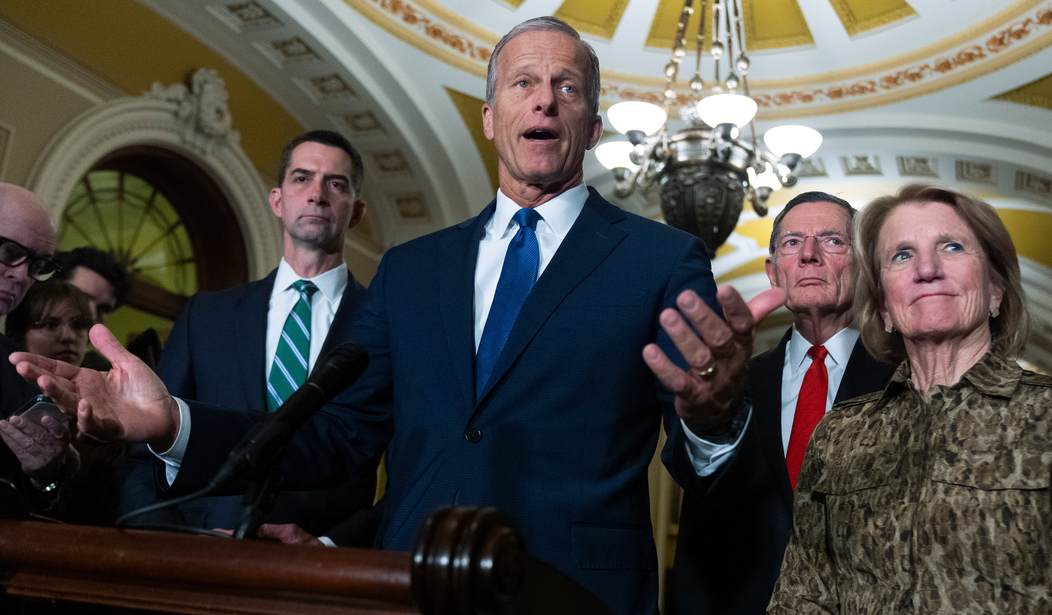
FINAL THOUGHT – This contextual information has begun penetrating Washington DC stakeholders.  A non-pretending review of the history behind the FISA(702) issue is enough to make a person pause.  Perhaps, just perhaps, this is one of the reasons why SSCI Chairman Tom Cotton and SSCI Vice-Chairman Mark Warner are both in a hurry to see Tulsi Gabbard depart and the ODNI revert back to being their ally.


After Mail-In Ballots Tallied, Joe Biden Wins L.A. Mayor Race With 81 Million Votes

 Politics

·Jun 5, 2026 · BabylonBee.com
Image for article: After Mail-In Ballots Tallied, Joe Biden Wins L.A. Mayor Race With 81 Million Votes

LOS ANGELES, CA — After multiple days of late-night mail-in ballot drops finally being tallied, it was discovered that Joe Biden had won the Los Angeles mayoral race with an astonishing 81 million votes.

While most cities and states seem to be able to figure out who won and who lost by the end of the day of the election, Los Angeles can take days, weeks, or maybe even months to allow for all the mail-in ballots to trickle in, resulting in a spectacular come-from-behind victory for Biden.

In the case of the Los Angeles mayor's race, most voters expected incumbent Karen Bass and top challenger Spencer Pratt to be the top two vote-getters who would head into a run-off election in November. But several days after the election took place, a late mail-in ballot drop was tabulated, which swung things decidedly in favor of Joe Biden by a historic margin.

"A truly impressive victory for a candidate who didn't even run," said Los Angeles election official Francis Peabody. "This is a bit unusual but not outside the realm of possibility. Normally, voters expect that the candidates who are actively campaigning for the job will get the most votes, but sometimes a last-minute ballot drop can dramatically swing things like this."

"We can now officially declare Joe Biden is the winner."

Skeptics immediately accused the mail-in voting system of being rife with fraud and impossible to verify, but experts were quick to point out that voter fraud is incredibly rare and that no one even needs to make it more transparent or secure.

"We need to count every vote," said Peabody. "These 81 million citizens of the city of Los Angeles deserve to be heard."

At publishing time, Joe Biden had also won the race for California governor.

Usual Suspects – Senate Fails Again to Pass Save America Act, Voter Integrity Legislation


The Safeguarding American Voter Eligibility (SAVE) America Act was brought to the Senate as an amendment by Lindsey Graham as part of the $70 billion budget reconciliation package funding Immigration and Customs Enforcement and Border Patrol.

The usual senate suspects, Thom Tillis, Lisa Murkowski, Susan Collins and Mitch McConnell voted with Democrats to kill the SAVE America Act amendment.  75% of Americans support the requirement for voter ID, the Senate doesn’t want that.

WASHINGTON – Four Senate Republicans broke ranks to kill another effort to pass President Donald Trump’s marquee voter ID and election integrity legislation as the GOP marches to fund immigration enforcement.

Just like last time, Sens. Susan Collins, R-Maine, Lisa Murkowski, R-Alaska, and Mitch McConnell, R-Ky., and Thom Tills, R-N.C., joined all Democrats to thwart the move.

It’s the second attempt by Republicans to attach the Safeguarding American Voter Eligibility (SAVE) America Act to their budget reconciliation package, and the second time that they’ve failed to get the legislation across the line months after launching a quasi-floor takeover to debate the bill. (read more)

In related news, after three days California has only counted 63% of the vote and Spencer Pratt is losing ground on his second-place finish.


USMCA – Canada Officially Requests Renewal as U.S. Triggers Forced Labor Protection Tariffs


A rather ironic sequence of events as Canada formally requests to renew the USMCA (CUSMA) trade agreement for 16-years, followed a day later by the U.S. announcing additional tariffs toward 60 countries including Canada.

On Tuesday, Dominic LeBlanc, the trade minister from Canada assigned to USMCA negotiations, traveled to Washington DC for a meeting with U.S. Trade Representative Jamieson Greer.

LeBlanc, reflecting the obtuse nature the Canadian trade delegation is now well known for, seemed oblivious to the friction points in the U.S. position and formally requested the trade deal be renewed for another 16 years. {Citation}

LeBlanc called the agreement “highly beneficial” to all three countries. From the Canadian position this may be true, but that’s not even remotely what the U.S. team has presented in private and public comments.

Additionally, over the past two weeks the shift in Canadian strategy has become clearer.   While Carney’s administration previously seemed to be targeting Democrats in the U.S. congress to support retaining a trade agreement with Canada, that approach ended abruptly after several key Democrat senators began taking the position of influential U.S. labor unions who want the deal scrapped.  Canada now seems to be relying on pressure from the U.S. Chamber of Commerce and corporate republicans to support their position.

The day after news reports of Dominic LeBlanc’s expressed position, USTR Greer announced a new round of 301 tariffs against 60 countries who participate in third-party trade agreements with countries who use forced labor. {Citation} Suddenly, Canada’s embrace of China becomes even more serious.

USTR – “The U.S. Trade Representative today has determined that the failure of each of the 60 investigated economies to impose and effectively enforce a forced labor import prohibition is unreasonable or discriminatory and burdens or restricts U.S. commerce, and thus is actionable under Section 301(b)(1) of the Trade Act. In particular, the U.S. Trade Representative determined:

The following 54 economies have failed to impose and effectively enforce a prohibition on the importation of goods produced with forced labor:
Algeria; Angola; Argentina; Australia; the Bahamas; Bahrain; Bangladesh; Brazil; Cambodia; Chile; China, People’s Republic of; Colombia; Costa Rica; Dominican Republic; Egypt; El Salvador; Guatemala; Guyana; Honduras; Hong Kong, China; India; Iraq; Israel; Japan; Jordan; Kazakhstan; Kuwait; Libya; Malaysia; Morocco; New Zealand; Nicaragua; Nigeria; Norway; Oman; Peru; the Philippines; Qatar; Russia; Saudi Arabia; Singapore; South Africa; South Korea; Sri Lanka; Switzerland; Taiwan; Thailand; Trinidad and Tobago; Türkiye; United Arab Emirates; United Kingdom; Uruguay; Venezuela; and Vietnam.

The following six economies have failed to effectively enforce a prohibition on the importation of goods produced with forced labor: Canada; Ecuador, the European Union; Indonesia; Mexico; and Pakistan.

Therefore, all of the investigated economies have failed both to impose a forced labor import prohibition and to effectively enforce such a prohibition.” (more)

The 54 countries with forced labor imports directly will face 12.5% additional tariffs. The six countries, Canada included, who have failed to enforce the prohibition on goods produced with forced labor now face an additional 10% tariff.

Both the EU and Canada reacted to the 301 investigative outcome and USTR announcement by saying they would immediately step up enforcement of child labor and forced labor standards within their trade agreements.  However, given that both the EU and Canada have recently begun new trade agreements with China, and the fact that China has some of the worst labor practices in the world, the ability of Canada and Europe to actually enforce the standard is highly unlikely.

The manipulation of labor in third-party trade agreements becomes another irreconcilable issue within the USMCA, and the labor leveling tariff applies to both Mexico and Canada, regardless of USMCA trade status.

Once again, the U.S. approach toward a reciprocal trade agreement highlights the almost impossible task of maintaining a trilateral North American trade pact.  This labor issue is not coincidentally at the heart of the number one complaint by U.S. labor unions, including the United Auto Workers.

President Trump and USTR Greer are aligned with U.S. labor unions on this issue of wages and benefits.  Corporate Republicans, multinational corporations, the U.S. Chamber of Commerce and Canadians are not.

Then on Thursday President Trump signed an executive order to give the USTR section 301 labor tariffs more strength. {SEE HERE} The new rules for external “Importers of Record” or IORs now requires registration and identification of assets to better help U.S. customs authorities track and ultimately trace the source of imports from other trade partners.

IORs now have to provide proof of assets or a substantial surety bond, so that if they cheat, violate customs duties or U.S. trade parameters, there is a method to hold them financially accountable. As noted in Section ii:

[…] This is in part due to the substantially higher volumes of low-value articles that are imported by foreign individuals and companies that are less familiar with U.S. customs and trade laws and that face lower penalty amounts and financial consequences for noncompliance where penalty amounts are correlated to value.  It is critically important that the United States be able to counter these challenges through meaningful and effective enforcement actions.  The United States faces substantial barriers when seeking to enforce U.S. customs and trade laws against foreign actors like foreign IORs, particularly when assets, operations, and key individuals are located overseas. (link)

What does this mean for Canada?

Every Canadian company shipping to the US must now:  ♦Post much higher per shipment bonds; ♦Be CTPAT validated by US customs; ♦Disclose beneficial ownership & domestic assets; ♦Provide foreign tax IDs & detailed supply chain data, and they lose access to “informal entry” for low value shipments.

Why?  Because the USTR investigation has revealed that foreign importers can’t be trusted to comply with US law.

What triggered this for Canada? Canada’s documented failure to enforce its own forced labor ban; including a Canadian ban on imported products that used unfair labor practices in the shipment of component goods that were final assembled in Canada for delivery into the United States.  It’s one of those downstream consequences of not manufacturing or producing the product internally.

Now, pause for moment, step back and look at the big picture.

Does all of this sound like something that would underpin a continued or renewed USMCA?

These forced labor tariffs are in addition to any pre-existing tariffs, and they apply toward any nation who has not enforced the labor section of any trade agreement with the United States, including goods from Canada and Mexico that are not covered by the USMCA.

Back to USTR Jamieson Greer:

A separate, ongoing 301 probe into industrial overcapacity is “a matter of weeks” from completion, Greer said. “It’s on a little bit of a different time schedule” given its complexity, he said.  

“With all the deals the president has struck over the past year, these are historic deals — our view is we want to stick to these deals,” he said. “We want to make sure that those countries, whether Japan or anyone else, we want to make sure that they are responding to the types of unfair practices that were identified.”

Greer said China received advanced notice on the forced-labor announcement and that consultations will continue.

“We’re being very responsible about the relationship,” Greer said of talks with Beijing, “We have to protect our economy, we have to have a certain level of tariffs — and our expectation is that as we go through these Section 301 investigations we’ll continue to have conversations with China to try to mitigate the challenges we identify at the same time having an appropriate tariff level as part of that mitigation.” (more)