Monday, June 1, 2026

Colombia elections: Can 'El Tigre' consolidate Latin America's swing to the right?


Two decades ago, Colombia was an absolute disaster. Leftist guerrillas surrounded the capital with tanks and other professional weaponry and had more firepower than the Colombian army.  The nation looked like a goner. 

Then they elected a conservative -- a very conservative -- leader, Alvaro Uribe, who vowed to crush the left. Uribe meant that close to literally, as he once told the Wall Street Journal didn't believe in the political pendulum theory. 

After that, the miracle happened -- the violence ended. The FARC guerrillas were on the run. The country prospered. The trash was picked up. Crime was gone -- one could walk around in Bogota at midnight with no problems at all. The roads were improved. The waves of illegal immigrants fleeing to the U.S. ... reversed. Colombia even became a tourist and expat hotspot.

It all slid downward again after Uribe left office and the RINOs took over. It culminated in the leftist result seen now -- Gustavo Petro, a garrulous clown who was a close ally of Hugo Chavez, who fought with President Trump, and who was something of a pervert on the side. 

Now it's election time again, probably a first round of two, and having suffered through four years of radical leftism under Petro, Colombia must decide again whether it will say 'basta' to the radical left as it did in 2002, and refuse its decline as it once did with Uribe, this time electing 'El Tigre,' Abelardo de la Espriella. Its alternaative is to elect another radical leftist, FARC terrorist-friendly, 'I'm not a communist' creep Ivan Cepeda who promises to be even worse than Petro.

It could happen that Cepeda gets the most votes -- the Wall Street Journal did a spread a week ago, saying he could.

Reuters says the same today:

Colombians voted in the first round of a presidential election, with leftist Ivan Cepeda leading in the polls after promising reforms to reduce poverty and negotiate peace with armed groups https://t.co/mDoD1L3fGjpic.twitter.com/rUK1m0ilHN

— Reuters (@Reuters) May 31, 2026

But as of today, other polls look like this:

Esto puede marcar una tendencia en #Colombia (escrutado 22.6%).
La gente de Paloma y el Centro Democrático debe decidir en la ruta de parar a los socios del chavo-madurismo.

🔵Abelardo — 43.6%
🔴Cepeda — 42.1%
🔵Valencia — 6.3% pic.twitter.com/5KKyvVT3f6

— Yole (@yolevenezuela) May 31, 2026

And betting markets are friendly, too:

¡TERREMOTO POLÍTICO EN COLOMBIA! 🇨🇴

Abelardo de la Espriella en las apuestas de Polymarket gana la elección presidencial con un 68% de los Votos.

¡Se disparó a un impresionante 68%! 📈 pic.twitter.com/3wpiGsRPQg

— ¡DIFUNDELO YA! (@DIFUNDELOYA) May 31, 2026
I think I agree with DW, the German publication, that the race will be tight.

But I also think there's considerable reason for hope, even if Cepeda takes the first position in Sunday's race, with a runoff planned on June 21.

Many Colombians likely remember the difference Uribe made in their lives when he was elected.

Abelardo de la Espriella is a similar candidate, and his polling numbers shot up when he vowed to build ten El Salvador-style CECOT-style prisons for Colombia's criminals and terrorists who have resurged under Petro.

As 'El Tigre,' which is his nickname, he identifies considerably with Argentina's successful president, Javier Milei, who is often identified with a lion. Colombian who can't remember Uribe can see the success of El Salvador and Argentina, and may well long for a slice of it themselves.

The broader picture is that the entire hemisphere is swinging rightward, with hardcore conservatives elected to office in Ecuador, Argentina, Chile, Bolivia, Paraguay, Honduras, Costa Rica, El Salvador and Panama, and apparently two on the way in Brazil and Peru (fingers crossed), while Venezuela, if it can ever hold free and fair elections, would with certainty elect the conservative, Trump-friendly Maria Corina Machado as president to join the wave.

If Colombia opts to go the other way, it would seem strange indeed because the trend is one's friend, but politics is full of oddities.

Abelardo is a promising candidate for Colombia and one can only cross one's fingers that he manages to make it to the runoff, scarfs up the votes that center-right third candidate Paloma Valencia would have otherwise gotten and then takes the communist down.

Here's an early call from lefty Adam Isacson, whose specialty is Colombia:

Colombia does deserve better, Colombia is a vital U.S. ally, and now one can only hope that the victories keep coming.

Update: He's doing it!

The great repudiation of socialism in Latin America is continuing on ... here's the tweet of the day:

Grok translate:

A tiger in Colombia and a lion in Argentina are going to devour all the hyenas of communism on this continent. I won't even mention the eagle of the U.S. because that one is liberating the entire world.


Podcast thread for June 1st


busy day

A Political Theory of Everything


If you are a worried conservative, take a deep breath and try to relax. If you follow politics closely these days, as many conservatives do, you are likely to be agitated and suffering from high blood pressure. My political awareness began sometime around Goldwater's run for president. Those were good times, even though LBJ soundly trounced Goldwater by almost 23%! Yet, the next day, there were no riots in the streets, no calls for violence, or anyone marking that day as the beginning of the end of America. We took it in stride as Republicans and conservatives do. And, as a country, we were relatively happy, patriotic Americans even when we lost. Even Dems, when they lost, mostly handled disappointment the same way back then. 

My, how things have changed.

LBJ was many things, but today's progressives would disown him. They'd say he's "A corporate, establishment Democrat masquerading as a reformer" or "A war hawk who can't be trusted with foreign policy" or "A relic of the past who doesn't understand modern progressive priorities" and "Good on civil rights, but that's not enough" or lastly "Another Biden‑style moderate who talks big but won't deliver structural change." In other words, they would skewer him as a DINO—a Democrat in name only. He, like Kennedy, would have no place in American politics, and the left would destroy them both. So much for any connection between Democrats back then and what they call themselves today, bearing zero resemblance to what Democrats once stood for. 

Mid-century Democrats like Truman, Kennedy, and Johnson rooted their politics in a muscular, unapologetic Americanism that treated patriotism as a civic duty rather than joining a cult. They, too, believed the United States was a force for good in the world, spoke openly about our greatness, and saw assimilation, shared identity, and loyalty to American institutions as fundamental to a country's cohesion. Their liberalism operated inside a recognizable patriotic framework: expanding civil rights, fighting poverty, and strengthening the middle class were all understood as furthering the American Dream, uniting us and making us more competitive. We were Americans first. By contrast, today's Democrat Party is controlled by a powerful progressive/Marxist wing that treats traditional expressions of patriotism with outright hostility, viewing it as exclusionary, nationalistic, or supportive of historical injustices. Where Democrats of the past celebrated American exceptionalism, progressives today emphasize systemic flaws, structural oppression, and America plundering the rest of the world as their rallying cry. Witness the dramatic shift: a party once anchored in confident national pride now seems unified in a belief that Americanism is no longer a unifying ideal, but instead a patrician relic to be expunged.

The question is: why the shift? This is particularly important, with the understanding that America, with all its faults, has reduced real poverty (regardless of what you've been told), seen an increase in longevity overall, has undoubtedly been a force for good globally, and essentially guaranteed a market basket of social services and safety nets for all citizens. This in itself is a demarcation split with the old guard, as new Democrats no longer believe someone needs to be a citizen to access America with all its goodies.

For many Americans, the puzzle isn't simply that Democrats have moved to the far left on policy — it's that a significant faction of the party no longer believes in the very idea of American exceptionalism. The older Democratic Party, whatever its flaws, believed deeply in the American experience: that the country was imperfect but fundamentally good, capable of self‑correction, and worthy of loyalty. 

Today's progressive movement starts from the opposite premise: that America is defined primarily by its sins, not its achievements. This worldview didn't emerge overnight. Over decades, it grew methodically with the overt actions of academics, teachers' unions, constant cultural criticism, and activists, many supported by foreign money, hammering the belief that patriotism masks oppression rather than a unifying virtue. When you teach two generations that the nation's founding was illegitimate, its institutions irredeemable, and its global role harmful, you inevitably produce a political movement hostile toward America, creating a false morality believed by millions of empty minds.


Another reason for the shift is that the Democratic Party's intellectual center of gravity has migrated from working‑class communities that valued national pride to an artificial construct that has replaced God with a godless collectivist mentality. Democrats used to believe in expanding opportunity within the American system; the new progressive wing argues that the system itself must be deep-sixed. 

That's why achievements like reduced poverty, longer lifespans, and a broad social safety net no longer matter— they're dismissed as insufficient or tainted by the fundamental imperfections of our "colonial" system. Gratitude for what America has accomplished is treated as being naive, and patriotism is recast as evil complicity. The result is a party that was once mainstream is now struggling to articulate why America is worth defending at all.

What's impossible to ignore is the extent to which this new progressive narrative aligns perfectly with the interests of America's adversaries. Nations that fear a confident, united, and self-assured United States have every incentive to amplify voices portraying America as fundamentally broken, morally illegitimate, or unworthy of global leadership. They understand that a country divided against itself can be manipulated, deterred, and defeated. 

The more we teach Americans to distrust their own country, despise our history, and question the importance of citizenship, the weaker we become on the world stage. In that sense, the rise of modern progressivism isn't just a domestic political shift; it's a strategic gift to those who want to see America diminished. Our enemies don't have to defeat us militarily if they can convince enough of us that the nation isn't worth defending in the first place.

The stalemate with Iran is a perfect illustration of where this crisis of leadership and the rise of progressive narratives merge. A generation ago, American power was understood as a stabilizing force — imperfect, yes, but essential to keeping adversaries like Iran in check. Today, however, the dominant instinct in progressive circles is reflexive. It’s an aversion to projecting strength, distrust of American motives, and a belief that assertiveness abroad is further evidence of imperial intent. That mindset has paralyzed us. Iran reads our internal division as weakness, our moral self‑doubt as a gift, and our vacillating messaging as an invitation to stonewall. The result is a foreign policy that neither deters aggression nor advances American security. The Iran impasse isn't an isolated failure — it's the logical outcome of a political movement that no longer believes America has the right, or even the legitimacy, to lead.


Newsom Designates California Sanctuary State For Fraud

 Politics

·May 29, 2026 · BabylonBee.com
Sheila Fitzgerald / Shutterstock
Image for article: Newsom Designates California Sanctuary State For Fraud

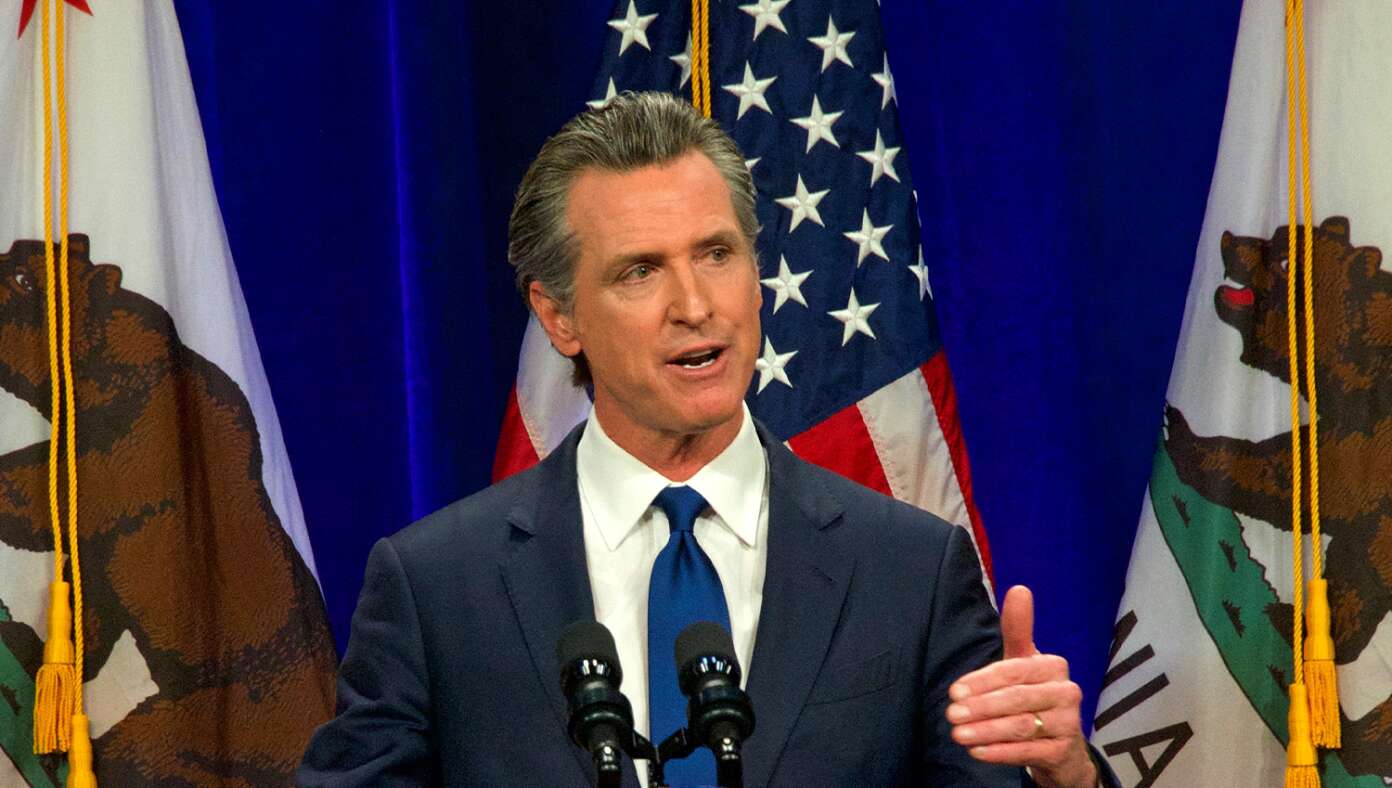
SACRAMENTO, CA — Governor Gavin Newsom signed legislation on Friday officially designating California a sanctuary state for fraud.

California lawmakers drafted bill SB.55 in response to what they considered Trump's "outrageous" attempts to enforce federal law. According to sources, the bill made it to the governor's desk in record time.

"Trump needs to know we will not stand idly by while he investigates crimes that benefit us," Newsom said at the bill signing. "Only dictators do that."

The bill signing took place at a local Quality Ospice Center in downtown Sacramento, where Newsom had a desk set up so he could mug at the cameras as he signed the bill with a defiant flourish, imagining himself to be a modern-day John Hancock.

"I am really great, and I want Trump to know that," Newsom said as he signed the largely symbolic bill that had no bearing on federal policy. "See, Trump, I can sign stuff too. How about that?"

At publishing time, the Department of Justice announced that it had launched an investigation into Newsom due to suspicion of fraud.

🎭 𝐖𝟑𝐏 𝓓𝓐𝓘𝓛𝓨 𝓗𝓾𝓶𝓸𝓻, 𝓜𝓾𝓼𝓲𝓬, 𝓐𝓻𝓽, 𝓞𝓟𝓔𝓝 𝓣𝓗𝓡𝓔𝓐𝓓


Welcome to 

The 𝐖𝟑𝐏 𝓓𝓐𝓘𝓛𝓨 𝓗𝓾𝓶𝓸𝓻, 𝓜𝓾𝓼𝓲𝓬, 𝓐𝓻𝓽, 𝓞𝓟𝓔𝓝 𝓣𝓗𝓡𝓔𝓐𝓓 

Here’s a place to share cartoons, jokes, music, art, nature, 
man-made wonders, and whatever else you can think of. 

No politics or divisive posts on this thread. 

This feature will appear every day at 1pm mountain time. 


A Conversation About Artificial Intelligence (AI)


Ironically, I find myself with a grin on my face as I read the recent media reports about how the data processing demand behind AI is beyond the scope of financial sustainability.

For several years I have asserted, accurately, the business model for social media was never feasible because the data processing demand needed for the scale of simultaneous users was beyond the capabilities of the revenue side of the equation.  I have been told by all the high-horse experts on the matter how wrong I am.  However, each story they write about the prohibitive cost of AI proves I was not wrong.

CTH watches the tokenization and subscription fees for various AI model use with the same perspective CTH viewed over a decade of false claims within the financial market that told lies about social media viability and data processing costs.

Now, we watch the seemingly exponential growth of AI capabilities and associated costs with the same pragmatic perspective.

Robotic pool cleaners were introduced two generations ago.  Did the pool cleaner business dry up? No, it expanded.  Robotic vacuums broke into the popular household appliance market five years ago, you probably have one, did it eliminate maid services?  No, still growing.

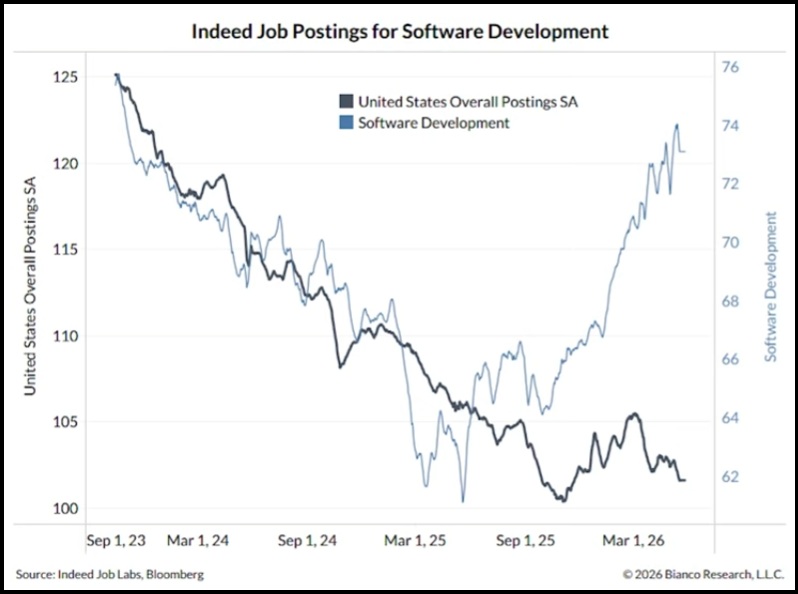
AI can now write its own code to generate outputs. Are software developers getting fired?  No, demand for software designers and engineers is up 15% in the past year.

The mainframe approach, the one AI brain to run all systems, will never work – it is cost prohibitive (see first paragraph – wash, rinse, repeat).  Deny this reality at your own investment risk. If needed, politely absorb the ridicule – for it matters not.

CTH predicts AI will become a localized and optimized sub-set for each sector of the economy, requiring each major organization and corporation to adopt specific cost/benefit data libraries and networks for use and functionality.

At scale, a thousand coders each working on Gemini, ChatGPT, Anthropic, Grok, etc. will become 100,000+ software designers working inside companies to create personalized, targeted, bespoke AI data systems and networks; each system specifically tailored to the industry or sector of business.  The intranet of internets will happen again.

Creating and selling AI system networks and integration functions that are personally tailored to highly specific company functions, creates an entirely new sector of the technology industry that has not even begun yet. [There’s an investment opportunity there]

Will AI robots replace some repetitive human functions?  Yes, the ice rink Zamboni will likely not have a steering wheel, just an emergency joystick. A reference for a comparative industrial scale Roomba vacuum, or the robotic pool cleaners.  However, at scale the robotic industry is slower than human efficiency in almost all sectors that matter; the cost benefit analysis will limit growth.  The maid service sector will not be impacted any more than the software developers (see chart above).

It is not an issue to fear some AI task efficiencies will grant more time available that will be filled with alternate task capabilities.  Human productivity will increase in certain sectors of the economy, but humans will not lose work opportunities.  Blue collar jobs will continue to expand as each of the hardware tools developed will need manufacturing, installation, maintenance and monitoring.

The further downstream the worker is from a repetitive function within the [XXXX] industry, the more irreplaceable they become; remember that.

As to the bigger picture of fully developed AI and the intersection of information and knowledge; yes, the automation of AI can present an issue.  However, all AI concerns can be mitigated so long as multiple, alternative AI systems exist within the larger information realm.

As a nation we need dozens of different AI models each competing within the industry for the best AI product.  As long as we have multiple AI systems, alternatives to the hive-mind, we do not need to fear the AI network as a source of information.  If we don’t like the AI outputs, we can switch to an alternate AI provider.

If the subscription cost of the AI is too high, then as long as we have a competitive market where a lesser expensive, perhaps bespoke, AI option can exist, we should be okay.  Let the free-and-fair market decide.

If AI outputs don’t offer empirical truth or real value to the end user, we should be fine as long as consumers have alternative options available.  AI providers should be information providers in the same concept as cell phone providers.  The key is to have multiple, competing AI systems available for industrial, business, professional and personal use.

On the upside of this information worry dynamic -in the pragmatic and optimistic perspective- we have the cost limiting nature of a massive singular AI information network.

A single AI central brain handling over 360 million users at once, all requiring identical responses that update with every tiny change in a multi-trillion datapoint-per-millisecond data stream, is far beyond the capacity of any computational AI system. The costs tied to such a setup are only now becoming clear, and AI business models are starting to fall apart in real time. This is a hard truth that isn’t going to change.

Within the AI business, those who can carefully write AI input instructions to achieve maximum value in AI output -industry by industry- will become increasingly more valuable.  Those who can train AI to be cost effective -and provide materially beneficial outputs- within their granular sector of business, within each company, will become priceless to the organization.  Wage rates will follow competency.

As noted by David Sacks in this segment highlighted below, the one key about AI to emphasize is the need for multiple competing models.  If China (hive mind) has their model, and Europe (another hive mind) has their model, and the United States (entrepreneurial competitiveness) has multiple competitive models – we will win and simultaneously we will retain freedom.

What we don’t want is a singular AI model to win the support of the United States government and then end up with an AI regulatory system where they start defining terms of “safety” to eliminate information adverse to the interests of the government that regulates it.  Both China and Europe will predictably do that.


What Lies Beneath: Massive Secret Vault Under Lincoln Memorial to Be Opened to Public for America250


RedState 

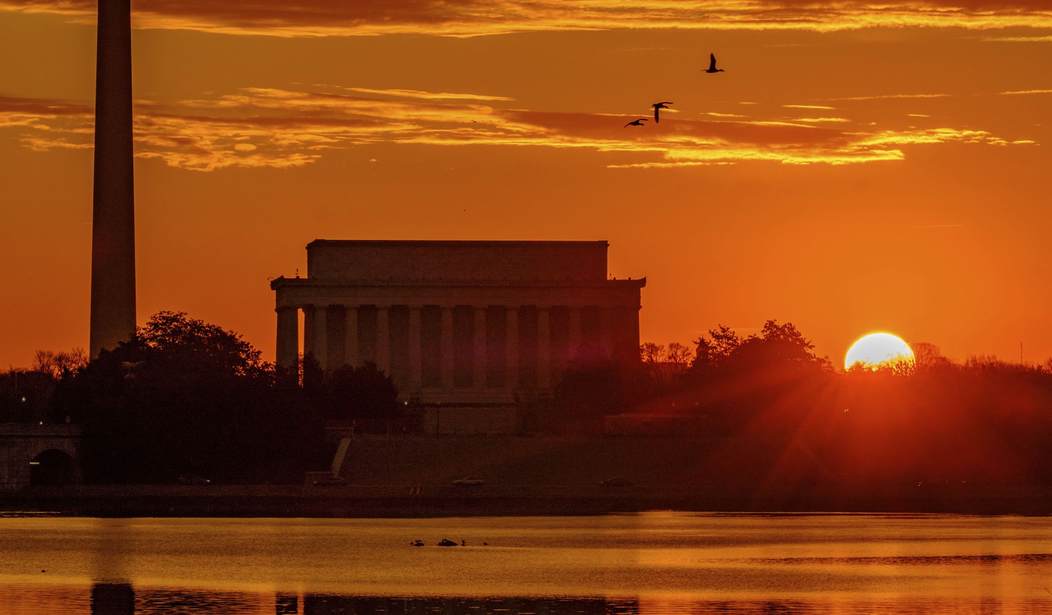
If you’ve ever been to the Lincoln Memorial in Washington, D.C., you’ll know it’s a majestic site, with the 19-foot-tall Georgia white marble statue of Honest Abe overlooking the Reflecting Pool and then further off, the Washington Monument and the U.S. Capitol.

Something you presumably didn’t see on your visit, however, is a massive 50,000-square-foot foundation built to keep the whole thing from sinking into the swamps of D.C. It’s called the Undercroft, and it’s been a tightly held secret for decades. In June, the Department of the Interior will invite the public to see the hidden vault, Secretary Doug Burgum announced Sunday:

For whatever reason, I always love underground sites and find them mysterious and fascinating. They’re right under our feet, and yet we have no idea they’re there. In fact, I’d be lying if I didn’t admit to getting caught up more than once in episodes of the 2017 Science Channel show, “Secrets of the Underground.” Where is that Nazi gold?! I want to know.

Burgum appeared on CBS News’ “Sunday Morning” and showcased the spectacular little-known space:

For more than a century, one of Washington's best-kept secrets lay beneath the Lincoln Memorial: the Undercroft, a soaring 50,000-square-foot foundation built to keep the landmark from sinking into D.C.'s swampy ground.

Beginning in June, the public will be able to visit the space, now with a museum tracing the memorial's history, from its construction to its role as a powerful stage for the civil rights movement. https://cbsn.ws/4vief5h

Sign me up.

Correspondent Faith Salie explained how the massive structure, which is unbelievably almost twice the size of the memorial above, came to be:

To call Washington a "swamp" is a metaphor, but also the literal truth. So, when planning began for the Lincoln Memorial in the early 1910s, builders faced a real sinking problem. Their solution led to one of Washington's best-kept secrets, hidden for over a century … until now.

Underneath the Lincoln Memorial is what's known as the memorial's Undercroft (a term usually reserved for the vaulted basement of a medieval castle or cathedral). Here, 120 massive concrete pillars sink 50 feet into the ground, down to the bedrock, to support the weight of the marble above.

Of course, it wouldn’t be a mainstream news story if Salie didn’t press the secretary on how woke the unveiling and its exhibits would be. Burgum was eloquent in his response:

There's a place to have current cultural debates. And then, there's a place to just tell and celebrate our history. We're not a nation without flaws, but we are a nation that was based on continuous improvement. And we may have 'over-rotated' towards a point of some kind of massive self-criticism, 'cause maybe it was expedient, politically, in the short term. It's important, when we're using federal dollars, that we tell the story that celebrates this country.

It’s unclear whether Democrats and activist judges will try to block the opening, because it might hurt the environment or improve the overall monument experience. That is a sarcastic statement — at least for now — but activist groups, jurists, and Democrats have tried to stop virtually every effort the president and his team have made to beautify and improve our nation’s capital.

It’s not the only improvement the National Park Service has brought to the monument in preparation for America’s 250th birthday:

Part of the Lincoln Memorial undercroft project, the elevator is now open. With that done, the temporary accessibility ramp that was built on the front steps two years ago has now been removed. With a few finishing touches left, we're excited to show off this iconic American memorial later this summer. Learn more about the project at 
http://nps.gov/nama/learn/news/undercroft.htm
#LincolnMemorial #WashingtonDC

I took the family to the Lincoln Memorial back in the day. Now it looks like we need to make a return visit.


Inside Trump’s Massive New Secure East Wing Modernization Project


RedState 

Saturday, President Trump gave his daughter-in-law, Fox News personality Lara Trump, a walk around the White House and described some of the features of the East Wing remodeling that's underway; this includes the new White House ballroom. 

First, the president describes the East Wing's planned new structure, including a glass tunnel.

Here's that conversation:

President Trump: This will be the entrance into the ballroom. The ballroom will be right here. This is a glass, beautiful glass tunnel. Beautiful tunnel that goes right into the ballroom, ballroom's right there. Pretty good, right?

Lara Trump: You’ve had so much fun, I feel like, designing this.

President Trump: Well, I did. It’s going to be one of the greatest... I would say it will be the greatest facility of its kind ever built by far. There’ll never be anything like it. And we’re ahead of schedule. We’re right on budget. 

Lara Trump: That’s par for the course. 

President Trump: And it’s a gift from me and from great patriots… You know, It’s going to cost the country nothing.

Lara Trump: But you still had Democrats and people try to stop you with legal challenges. It's crazy.

President Trump: Well, they want us out only because it’s me. If anybody else were doing this, you know, they want to stop it… But the ballroom is a gift for America. For me and from Apple, and from lots of great people and companies… 400 million dollars. It was going to be 2; we doubled it up, because they needed more space. The military's involved. The Secret Service is involved. It's very secure. The most secure facility ever built. And obviously with the way the world is now, that’s very important. When you have President Xi… you’ve got King and Queen of England; we had the King and Queen in this room, but we could hold 107 people. And we would have had 2,000 people. We've got to have one that, nobody will have one like that. But you come in, and you have the entire White House main floor, cocktails, everything. And then they go in the door, and they go into the dinner.

It's an ambitious project, and President Trump is likely correct about the various lawsuits; if Barack Obama or Joe Biden had undertaken this same project, it would have been hailed by the legacy media and Democrats as a heroic effort and a vital national security measure.

The glass tunnel is an interesting touch. Obviously this won't be glass, but some impact-resistant polymer, but that won't spoil the view any.

Next, the tour went outside.

Here's what was said:

Lara Trump: What is our projected end date here?

President Trump: Well, we'll have this. I'll have this... Actually, the funny thing is, from the standpoint of usage, other presidents will have it for 200 years. I'll have it for about six months. In other words, when it's finished, I'll only have it for... the use of it for six months. It's a great facility, and we're gonna have the inauguration here.

Lara Trump: Oh wow. 

President Trump: We'll have the inauguration here. It holds... I had mine in the Capitol. Uh, in the Capitol I had 902 people, and it was still beautiful, but it was 902 people, and it's not safe like this. This would be totally fair. I'm going to look over here anyway; they'll want to see what's happening. (Speaking to workers) Pretty good fellas, huh? 

Lara Trump: Well, the best part is this is what you used to do as a developer, 

President Trump: It is what I do.

Lara Trump: You loved going out there. 

President Trump: I did this better than anybody. Your man is very good, I have to say. Eric Trump is a really good builder. He has the gene. He has a gene that I have. I have my gene. And Eric really has it. He's done a great job. Fantastic build. He looked at this, understood it immediately. Look at the amount of rebar in there. That is not a normal situation, is what I'm saying. This is not what you do for a normal floor. Look at that, it's all, it's all rebar. 

Lara Trump: How often are you coming out here to check the progress?

President Trump: A lot. But I can also check it right from the windows. This is all military. 

Lara Trump: We're on what will be kind of the ground floor of the ballroom, here. 

President Trump: This will be the kitchen floor. 

Lara Trump: The kitchen, and then the floor above. There will be one above that.

President Trump: And then you have the drone ports, and then you have the sniper ports, you have everything above. 

President Trump has indicated in the past that the military was involved in the design and construction, as well as the Secret Service, and that the lower levels of the new addition will be devoted to national security concerns. But drone ports and sniper ports? The massive extra layers of rebar? This looks to be a structure that is not only spacious and beautiful, but capable of holding off an attack by a pretty good-sized force.

Another interesting observation from all this is how at home the president seems in discussing all this. He's been in politics long enough now that we, on occasion, have to be reminded that for most of his adult life he was a builder, and a pretty successful one. He seems in his element in this interview, reminding us that he came up as a real estate guy from Queens.

Construction continues. Stay tuned!