Wednesday, May 20, 2026

The Wonderful, Loving Left


They try so hard to convince people how “wonderful” and “loving” they are. And, frankly, countless millions fall for it. You see, folks, it’s “loving” to let a mother murder her unborn child. Or to let a child be mutilated for life. Or to keep people enslaved under government welfare with little hope of ever getting out of it. It’s a wonderful thing to let people sleep on the streets, or to turn criminals loose so they can prey on innocent citizens, or to open the borders of America so that countless people can illegally come to America, live off the hard-earned money of American taxpayers, or take American jobs, or kill and rape American citizens.

These are all “wonderful,” “loving” things, aren’t they. Well, millions of people believe that they are, and that is a great cause of the division in the country today. And if you oppose these things and call them evil, then you are a hypocrite (if you are a Christian) because Jesus loves everybody, you know. Especially women who murder their babies or mutilate their children, etc., etc. Well, let me say, I do believe, very strongly, that Jesus loves everyone, but that love told a sinner to “go and sin no more.” “Love” is not condoning sin and evil that will destroy someone on earth and in eternity. That isn’t Christian love at all.

So, the Left’s “love” is sheer, individual selfishness. As long as you give them what they want, as long as you allow them to do whatever they wish (murder their babies, etc.), then yeah, they can be nice people (some of them). They will appear so sweet, and gentle, and caring, and compassionate. Loving.

Even Adolf Hitler did that.

But when you scratch them beneath the surface, in other words, when you oppose them, expose them, and condemn their godless decadence, then the true leftist comes out. The vile, filthy, self-centered leftist appears. Let me give you an example.

Kevin Sorbo, in a recent X post, noted that he flies a lot and that America is not overpopulated. Now, in a subsequent post, he said that he wanted to see growth by natural births, not by filling the country with illegals, but that wasn’t really clear in his first message. I responded to his first post, saying that I did think the country was overpopulated with Democrats, and I didn’t really expect much response. But it brought a firestorm from some leftists.

One lefty, in his wonderfully grammatical, intelligent way, responded to me, “That’s fine come November we’re going to take the house in the Senate and then we’re gonna imprison your piece of s**t president.” That is an exact quote, so editors, please don’t edit it. I realize that people don’t always strive to be literarily accurate on X (I make frequent mistakes, too), but I find his leftist response pretty typical. I don’t know why, but I responded to him: “Why don’t you m*rder him like you Leftists have already tried to do 3 times and your Marxist heroes Lenin, Stalin, Mao etc did to 100s of millions of innocent people? It would be perfectly in line with your Leftist philosophy. And like we all know you wish it would happen” (ok, my writing wasn’t perfect, either).

But he apparently understood my point—leftists are murderers. I revealed him for what he really is, and he saw red. Folks, he didn’t care that leftists murder people; he just didn’t want me exposing it. He followed up with these three posts: “For the record, you little slant eye g**k, you have no credibility. Go back to your s**t hole country.” And, “You’re not even American fa**ot.” And, “You can go f**k yourself all of you Maga morons are g*dd**n traitors.” Nice guy, huh.

Now, not all leftists are like that (I hope), but quite honestly, I have met quite a few who are. They can be nice people as long as you don’t cross them and give them what they want (so could Hitler). When you expose them, well, you see what I got. Very foul-mouthed, which is VERY common among leftists; four-letter curse words are about the only adjectives they know. I’ve seen that (and been the victim of it) countless times.

But notice his racism and homophobia: I’m a “slant eye g**k” and a “fa**ot.” I don’t know where he got that I’m not American; maybe from my X ID, which is “@thailandmkl,” though I identify myself in my profile as a native Texan. But my point is, scratch a leftist, and look what you find below.

The problem, of course, is that the Left has become totally unencumbered by any moral values except the ones they create for themselves—and then try to foist upon others through intimidation, force, or violence. They have succeeded in booting God and the Judeo-Christian moral code out of the hearts, minds, and lives of countless Americans, and so there is no reason any longer not to be filled with hate and viciousness. They are totally uncontrolled by any god-like spirit. They have thrown godliness and righteousness out the window, make their own rules, and the final result is “every man does that which is right in his own eyes.” And as loudly and as long as they scream about “racism” and “homophobia,” their racism (and probably homophobia) is worse than anyone’s. There is no reason for them not to be racist and homophobic.

So, here is the “wonderful,” “loving” Left. Rather, what happens is, scratch a liberal—call him out, expose his evil, confront him with the truth—and he explodes in a cacophony of profanity and putrid, vile degeneracy. That’s leftism. There’s no reason for it not to be, given their totally individualistic, subjective moral standard. And it is destroying America because so many people now believe and act this way. Can we ever recover from it?


Podcast thread for May 20


Zzzzzzzzzzzzzz.....

Following Trump’s Lead on the Climate Hoax


There has been a huge shift within the public and private sectors on climate change as it has dawned on governments and companies that the United States, under President Donald Trump, will no longer be a patsy to a cabal of international elites who seek to impose costly climate restrictions upon American businesses and international climate boondoggles upon nations.

Trump’s actions are draining the climate swamp of resources, supporters, spirit, and momentum. These include defunding climate boondoggles across federal agencies, pulling the United States out of the Paris climate agreement, withdrawing the United States from dozens of climate-monitoring and wealth-transfer organizations (most importantly the UN Framework Convention on Climate Change), and rescinding the greenhouse gas endangerment finding.

With America no longer playing the fool, public and private entities are withdrawing from or reducing their climate commitments and reembracing fossil fuels. Of course, this would not happen if they really believed the hype that the world faces a pending climate catastrophe that can be stopped exclusively by eschewing fossil fuels. They are tacitly admitting Trump is right and climate change is a scam/hoax.

Examples of the rapid decline of the climate alarmism narrative are all around us. For example, the UN IPCC recently held its 64th meeting of the science committee, at which it failed to set a date for the production of the next IPCC Assessment report. It’s not just that they can’t agree on who will write the report or what its scope will be, they can’t even decide on a deadline for when to produce and publish it.

At an international meeting in Colombia this April, 60 countries agreed on the need to phase out fossil fuels -- sounds like a big move forward until one realizes that is less than a third of the countries (more than 200) that had previously agreed to timelines for emission reductions in the Paris climate agreement. Importantly, none of the world’s top emitters signed on. China, the United States, India, Russia, and 140 other countries didn’t bother joining Colombia’s anti-fossil fuel crusade. That’s a step backward, not forward, as the media tried to portray it.

In another blow to the climate scam, researchers warned in an article in The Lancet, one of the preeminent medical journals, that the European Union was truncating the reach and scope of its emission-reporting requirements. The proposed regulatory change would exempt an estimated 80 percent of organizations previously bound by law to report emissions and work toward reductions from doing so.

Then there is the case of Germany, where grim electoral prospects seem to be forcing the government to end its enforced adoption of certain green technologies and fuels.

“In a shock move, the German government will allow citizens to use oil and gas to heat their homes again, even though this might increase global temperatures by a thousandth of a degree in 80 years time,” reports Jo Nova. “The government or rather, the taxpayers, will still be forced to subsidize 30 to 70% of the cost of a new heat pump, but won’t actually fine anyone or put them in jail if they buy an oil or gas heater.”

Moving on to the private sector, industries are quickly abandoning their emission-reduction targets. Shortly after Trump was elected but before he took office, hundreds of banks and other companies began abandoning various UN-sanctioned or -endorsed climate groups, which set reporting requirements for carbon dioxide emissions and goals for emission reductions. By early in 2025, big tech companies, fearing a lack of energy for their AI data centers, began to embrace nuclear power, natural gas, and to a lesser extent even coal in some locations. They want whatever is needed to power the burgeoning AI industry and their tech reliably, climate concerns be damned.

More recently, 18 major automobile manufacturers, including major brands like Ford, Honda, Nissan, and Volkswagen, dramatically scaled back their electric vehicle goals, in some cases abandoning entire lines of electric vehicles and programs entirely. Demand for electric vehicles flattened in 2025, only to take “a dive off a cliff after federal tax credits phased out at the end of September,” as Autoblog reports.

And it’s not just car companies. Bloomberg NEF reports that oil companies, which never should have jumped on the suicidal climate-alarmism bandwagon in the first place, are also reducing their emission-reduction goals, with the world’s largest oil and gas companies cutting spending on low-carbon technologies by more than a third over the past year, to $25.7 billion from more than $38 billion in 2024. It’s the first time in eight years their spending on climate change has decreased.

The power sector is not immune to the gravitational pull of Trump’s common sense climate agenda, either. Environment America has reported that as of March, 8.1 GW of coal capacity, consisting of 33 fossil fuel generating units across 15 power plants, that had been scheduled for closure by the end 2025, have been kept online to maintain grid reliability and power AI expansion. Most recently, the two largest coal power plants in Pennsylvania agreed to stay in operation through 2032, four years beyond their planned retirement date, specifically to ensure grid stability in the face of growing AI data center demand. Even Gov. Josh Shapiro, a Democrat, approved the plan to keep the plants open.

Climate change just isn’t the political or economic draw it once was, which is a good thing. Now the world’s companies and governments can get back to their real jobs of protecting individual rights and advancing economic prosperity for the poor and rich alike. Thank you, President Trump!


The Minerals Consortium Will Result in Malinvestment

The Minerals Consortium Will Result in Malinvestment

Joseph Solis-Mullen for Mises.org


In Washington, bad ideas rarely die—they rebrand. Industrial policy—long discredited in theory and practice—has returned under the more palatable language of “resilience” and “strategic supply chains.” The Trump administration’s proposed minerals consortium is the latest iteration. Sold as a necessary response to dependence on China for the processing of rare earths and other critical minerals, it promises coordination, investment, and independence. What it will deliver instead is distortion, waste, and a fresh round of politically-driven malinvestment.

There is, to be sure, a kernel of truth animating the policy. The United States and its allies do rely heavily on China for refining capacity in rare earth elements and other inputs essential to modern industry. But this dependency did not arise by accident, nor is it evidence of “market failure.” It is the result of decades of global specialization—firms locating production where it is most efficient, given costs, regulations, and accumulated expertise. Washington’s answer is not to understand this process, but to override it.

A government-backed consortium—whether explicitly funded or quietly guaranteed—substitutes political priorities for market signals. And, as Ludwig von Mises demonstrated a century ago, without genuine price signals formed in voluntary exchange, rational economic calculation breaks down. Capital is no longer allocated according to profitability, but according to political favor. The predictable result is malinvestment: projects that exist not because they make economic sense, but because they satisfy a policy objective.

In the capital-intensive world of mining and mineral processing, this is a recipe for overreach. Subsidized or protected firms expand beyond what the market would sustain, creating overcapacity in some areas and shortages in others. Resources are pulled away from higher-valued uses and locked into ventures that require continuous political support to survive. What appears, in the short term, as a burst of “investment” is, in reality, a misallocation that will only be revealed when the subsidies falter or the political winds shift. And where politics directs capital, opportunists follow.

Recent reporting has pointed to a surge in dubious corporate filings, many routed through places like Delaware, from entities suddenly eager to position themselves in the “critical minerals” space. These are not, for the most part, seasoned operators responding to market demand. They are speculators, middlemen, and would-be contractors, drawn not by profit in the economic sense, but by the prospect of tapping into government-backed funding streams.

This is not corruption of an otherwise sound system; it is the system working as designed. As Friedrich Hayek observed, when economic power is concentrated, the incentives shift toward those most adept at influencing the decision-makers. The minerals consortium will not insulate the United States from dependency: it will create a new class of domestic dependents, firms whose business model is inseparable from state patronage. If this sounds familiar, it should.

The United States has experimented with industrial policy in the energy sector before, most notably in the synthetic fuels push of the 1970s and early 1980s. Backed by billions in federal support, these projects were heralded as essential to energy independence. They collapsed under their own inefficiency once market conditions changed, leaving taxpayers to absorb the losses. More recently, waves of subsidies and policy favoritism in shale and renewable energy have produced their own cycles of boom, overexpansion, retrenchment, and corruption—hardly the stable foundation that “strategic” planning promises. The minerals consortium risks replaying this pattern on a new stage.

None of this is to deny the geopolitical backdrop. Washington’s renewed interest in critical minerals is plainly tied to its broader posture toward China. Policymakers speak openly of great-power competition and the need to secure supply chains in anticipation of potential conflict. But here again, the logic is circular. The same political class that fostered deep economic interdependence now treats that interdependence as a liability—one to be corrected not through market adaptation, but through further intervention. Again we see a familiar pattern: intervention begets intervention.

From an Austrian perspective, the deeper problem is not merely incentive-based, but epistemic. No consortium—no matter how well staffed or well intentioned—can replicate the knowledge embedded in market processes. Decisions about where to invest, which technologies to pursue, and how to structure production depend on dispersed, often tacit information that cannot be centralized without loss. Committees do not discover prices; they guess at them. And when they guess wrong, as they inevitably do, the consequences are not borne by the decision-makers but socialized across the broader economy.

Historically, it has been shown that the invocation of “national security” only accelerates this process. Once a sector is designated as critical, normal economic constraints are suspended. Losses are rebranded as investments, inefficiencies as redundancies, and failure as the cost of preparedness. The discipline of profit and loss, the only reliable mechanism for distinguishing value from waste, is replaced by the logic of bureaucratic persistence.

What emerges is not resilience, but rigidity: an economy less responsive to real conditions, more prone to politicized allocation, and ultimately less capable of sustaining the very security it seeks to guarantee.

A genuinely market-oriented approach would look very different. It would begin by removing barriers to domestic production, streamlining permitting processes, reducing regulatory uncertainty, and allowing entrepreneurs to respond to price signals without political interference. It would recognize that diversification and resilience are byproducts of free exchange, not its substitutes.

Whether such an approach is politically viable is another matter. Industrial policy offers something markets do not: the appearance of control. It allows policymakers to point to specific projects, specific firms, specific “wins.” It generates headlines, ribbon-cuttings, and the illusion of strategic coherence. But illusions have a cost.

The minerals consortium may well mobilize capital and generate activity. It may even succeed in shifting some production. But if it does so by subordinating economic calculation to political priorities, it will deepen the very distortions it claims to solve. Like the industrial policies before it, it will leave behind a trail of misallocated resources, entrenched interests, and unmet promises.

And when it does, Washington will invariably move to do what it always does: rebrand, and try again.


🎭 π–πŸ‘π π““π“π“˜π“›π“¨ 𝓗𝓾𝓢𝓸𝓻, π“œπ“Ύπ“Όπ“²π“¬, 𝓐𝓻𝓽, π“žπ“Ÿπ“”π“ 𝓣𝓗𝓑𝓔𝓐𝓓


Welcome to 

The π–πŸ‘π π““π“π“˜π“›π“¨ 𝓗𝓾𝓢𝓸𝓻, π“œπ“Ύπ“Όπ“²π“¬, 𝓐𝓻𝓽, π“žπ“Ÿπ“”π“ 𝓣𝓗𝓑𝓔𝓐𝓓 

Here’s a place to share cartoons, jokes, music, art, nature, 
man-made wonders, and whatever else you can think of. 

No politics or divisive posts on this thread. 

This feature will appear every day at 1pm mountain time. 


Israel’s Envoy to Christians Describes a Middle East Without Israel, and It's Alarming

Israel’s Envoy to Christians Describes a Middle East Without Israel, and It's Alarming

AP Photo/Mahmoud Illean

It is profoundly mystifying why so many Christians in the West expend so much of their energy on condemning Israel, when Israel is truly the only nation in the Middle East with equal rights for adherents of all religions and freedom of religion for Christians.

God handed the land of Israel over to the Jewish people as a perpetual possession thousands of years ago (Genesis 17:8). Indeed, based on the Bible, modern Israel ought to include some of the land handed over to the so-called Palestinians, Syria, and the invented nation of Jordan. And it would be much better for Christians in the Middle East if Israel did control more land, because the Israeli government is the only one in the region that respects Christians' religion and their rights as human beings. That is the message from Israel's envoy to Christians, George Deek.

In an inspiring video posted Tuesday, Deek explained, "I come from an Arab Christian family that has lived in this land for centuries, and today, I have the honor of representing Israel to over 2 billion Christians around the globe. My mission is simple: to speak the truth, to listen carefully, and to deepen friendship between Israel and Christian communities everywhere."

I come from an Arab Christian family that has lived in the Holy Land for centuries.

Today, I have the honor of representing Israel to the Christian world.

This is my message to Christians everywhere. pic.twitter.com/1usJ6dK3tb

— George Deek (@GeorgeDeek) May 19, 2026

He expressed his concern at anti-Israel propaganda coming from some Western Christians. "In recent days, some have tried to paint a false picture about Christian life in Israel. So let me tell you the truth. In Israel, Christians worship freely, we speak freely, and we live freely," he emphasized. "In Israel, Christians are not just surviving, we are thriving."

Israel is the only Middle Eastern nation that can make such a boast. Deek stated, "And I do not take that for granted, because across our region, ancient Christian communities are shrinking, persecuted, and disappearing. When people ask me why an Arab Christian would represent the Jewish state, my answer is simple: because I know what this region looks like without Israel. When hatred begins with Jews, it never ends with Jews. It reaches Christians, Jews, Yazidis, and every minority that refuses to disappear."

Deek said emphatically, "A Middle East with no room for a Jewish state is a Middle East with no room for anyone who is different. And that is why Israel and Christians share the same hope, to build a Middle East where all people can live freely, worship without fear, and pass their faith on to their children in peace. That is the mission, and I believe our best chapters are still ahead of us, as allies, as friends, and as voices for peace. God bless you all."

All the other countries in the Middle East are Muslim, and Islamic sacred texts explicitly endorse the rape and killing of non-Muslims. Syria, Gaza, IraqIran, Egypt, Saudi Arabia, and Qatar are just a few of the Middle Eastern countries/areas that persecute Christians. When Bethlehem was first under Israeli rule, it was majority Christian, but ever since the Palestinians took over, the Christian population has plummeted. And frankly, Israeli Christians are better off with Jews in charge than if we tried to hand control of the Holy Land over to one particular branch of Christianity. Anyone who has been to the co-owned Church of the Holy Sepulcher in Jerusalem, where Catholics, Orthodox, Coptics, and others either barely tolerate or openly fight with each other, knows that is a disastrous arrangement.

Major (res.) Itamar Sapir, 27, was killed this morning in a Hezbollah terrorist attack launched from this church in southern Lebanon.

Hezbollah once again turned a holy site into a terrorist stronghold - desecrating a place of worship, violating international law, and breaching… pic.twitter.com/2tLuBlS7Bl

— Israel Foreign Ministry (@IsraelMFA) May 19, 2026

The case for Christians supporting Israel is so obvious, commanded by the Bible (Genesis 12:3) and supported by countless facts, that it is astounding any Christians are anti-Israel.


This Democrat Candidate Has Insane Plans for ICE Detention Facilities

This Democrat Candidate Has Insane Plans for ICE Detention Facilities


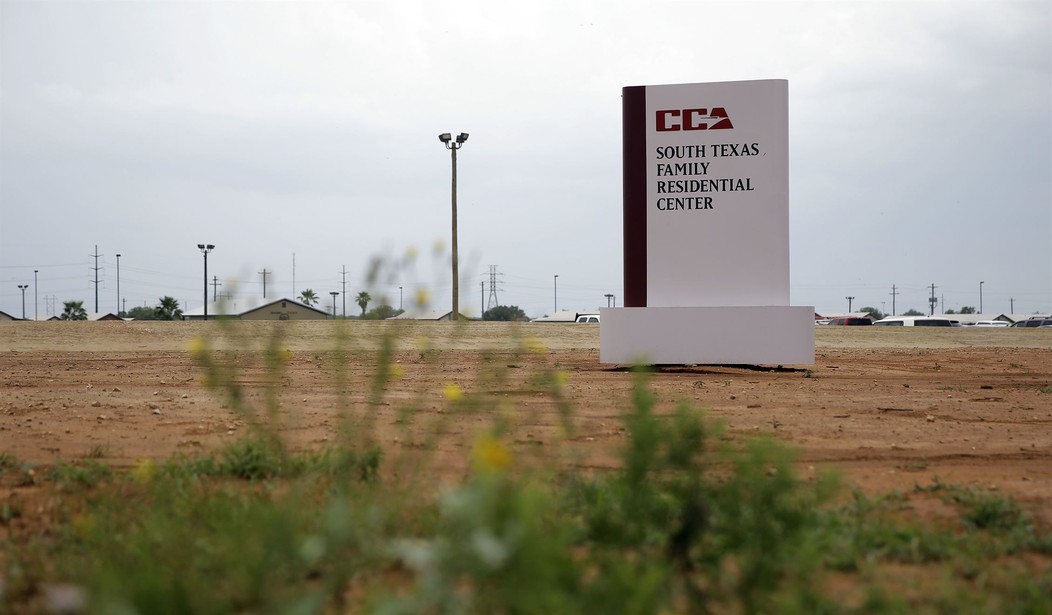
Maureen Galindo, a Democrat candidate running for office in Texas’ 35th Congressional District, caused a stir with voters on Tuesday after comments surfaced about her plans to reappropriate an immigration detention facility located within her district.

Galindo posted an odd message to her Instagram profile written in the third person describing how she would turn a local ICE detention facility “into a prison for American Zionists and former ICE officers for human trafficking.”

“It will also be a castration processing center for pedophiles which will also be most of the Zionists,” the post continued.

Galindo also accused her Democrat primary opponent Johnny Garcia of participating in a human trafficking conspiracy perpetuated by “billionaire Zionist Jews” and has promised to put Garcia on trial for treason, according to the San Antonio Current.

Galindo’s campaign website describes her top issues as ending the privatization of the oil and mineral industries, prosecuting and jailing ICE agents, and banning school choice vouchers.

Galindo has advanced to a run-off election against Garcia, which will be held on May 26. Should she win, she will face off against John Lujan or Carlos de la Cruz in November.


There Is No Such Thing As A Deal With Iran

There Is No Such Thing As A Deal With Iran

We did not assemble the greatest armada the world has known to write Iran a traffic ticket.

Michael C. Hurley for American Thinker


A wildly outmatched adversary is “obliterated” by American military power yet remains stubbornly unbowed. Sound familiar?

Nixon’s deal with the North Vietnamese for “Peace with Honor” was little more than a rhetorical fig-leaf to mask our ignominious retreat and the chaos that followed. The “deal” that Nixon brokered required the communists to pull out of Laos and Cambodia. They did no such thing. Once the Yanks were gone, both countries fell to communist control along with the rest of Vietnam by 1975. Two million Cambodians died in Pol Pot’s killing fields between 1975 and 1979. So much for peace. So much for honor.

All of the points that Donald Trump repeats ad nauseam today about the scale of the American “victory” in Iran—that we have completely destroyed their navy and air force and air defenses—were equally true of Vietnam for the most of that conflict, and yet the Vietnam War ended in defeat for America, thinly disguised by an ostensible “deal.” You’ll forgive me if today I’m having feelings of dΓ©jΓ  vu.

First, let’s be honest with ourselves: no one in the Trump administration expected six months ago to be talking about Iran, today. After Operation Midnight Hammer, White House Press Secretary Karoline Leavitt announced, on June 24, 2025, that American forces had “conducted a perfectly executed mission to obliterate Iran’s nuclear program.” Webster’s defines the word “obliterate” to mean “to remove from existence, destroy utterly all trace, indication, or significance of.” Trump protested reports that cast doubt on the finality of this obliteration by denying, repeatedly, that Iran retained the capacity to produce a nuclear weapon and insisting that they could not recover that capacity for “years.” This remained the official position of the White House for months. Then came Mr. Trump’s 3 a.m. post on Truth Social on January 2, 2026.

Iran had of course recently threatened protestors who had taken to the streets in the wake of deteriorating conditions in that country, to which Mr. Trump replied: “If Iran shoots and violently kills peaceful protesters … the United States of America will come to their rescue. We are locked and loaded and ready to go.”

What legion of hobgoblins plagued Mr. Trump in that late hour, history will long wonder. Whatever the reason, he suddenly decided to announce an unprecedented escalation in American foreign policy toward Iran. What followed amounted to a declaration of war.

In a social media post. At 3 a.m.

Even by Mr. Trump’s standards, this was something utterly new. It was also the reddest of red lines. But then something happened that no one expected—least of all President Trump. Iran not only crossed his red line, you might say they “obliterated” it. They massacred, publicly, not one or two but tens of thousands of peaceful protestors. Suddenly the question (“What now?”) that the president had likely failed to ask his advisors before letting that 3 a.m. post rip, had to be asked. The answers the generals presumably gave him didn’t quite match the “locked and loaded” derring-do of Mr. Trump’s late-night imagination.

Mr. Trump hemmed and hawed for weeks while Iran repeatedly called his bluff, and is it any wonder why? Simply stated, we were never in any position to “rescue” the Iranian people and had no plan to do so. Iran had indeed shot and violently killed peaceful protesters, but how, exactly, could America “come to their rescue”? American attack helicopters shooting and being shot at in the skies over Tehran? Paratroopers dropping by the thousands into the Iranian desert and fanning out into city streets?

What is more remarkable than the unsatisfactory answers to these questions is the fact that exactly no one in the administration was asking them before Trump’s 3 a.m. Truth Social post. There was not one word from the Trump administration in the months between the conclusion of Operation Midnight Hammer and the January 2, 2026 post to signal that the United States was considering, much less ready to commit to, a dramatic shift in policy to intervene militarily in the internal unrest in Iran.

There was also not one word from the administration between the end of Operation Midnight Hammer and Mr. Trump’s January 2, 2026, post to suggest that Iran was anywhere close to reconstituting its theretofore “obliterated” nuclear program. For this reason, people harbor deep skepticism of Steve Witkoff’s sudden insistence, on February 21, 2026, that Iran was then “probably a week away from having industrial grade bomb making material.”

Obliteration clearly ain’t what it used to be.

In the meantime, the facts on the ground keep getting in the way of the administration narrative. On April 1, 8, 15, and 17, the White House assured America and the world that the Strait of Hormuz was fully open and ready for business, while on April 5, 7, 8, 13, and 28, the White House demanded that Iran reopen the strait. On May 16, the AP reported that the same Iran that supposedly has no navy still has “a chokehold on the Strait of Hormuz” despite a U.S. naval blockade.

Suffice it to say, things have not gone to plan. As with our war against the North Vietnamese, we can boast of “obliterating” and “bombing the sh*t” out of a great many things in Iran, and Mr. Trump often does, but now as then, tactical success has not given us strategic victory. The Iranian regime remains firmly in charge. If they didn’t fully appreciate the significance of having a nuclear weapon before, they now understand acutely the need to get one. And if the regime survives, they will.

I support Donald Trump. Even if Moses had made a wrong turn after crossing the Red Sea, that wouldn’t be a reason to run back to the pharaoh. While I would sorely like to believe that we didn’t back ourselves into the present conflict on the basis of an ill-considered 3 a. m. tweet, how we got here matters much less, now, than how we get out.

We did not assemble the greatest armada the world has known to write Iran a traffic ticket. Our president made a promise to rescue the Iranian people, and that promise must mean something if America is to mean something. No matter what Pete Hegseth says, we set out to defeat the regime. Having undertaken that ostensible goal, if we now leave them in power, we will have made them immeasurably stronger in the eyes of their terrified citizens and the world.

The Iranian theocracy is not a government but a death cult bent on destroying the Jews and the west. We have seen their ilk before. We did not stop 100 miles from Berlin to offer Hitler a “deal.” There is no such thing as a deal with death, and there is no such thing as a deal with Iran. Finish what you started, Mr. President.

Image generated by ChatGPT.


Hakeem the Extreme: Bitter Jeffries Unloads Rage at Voters, Athletes, and Reality


RedState 

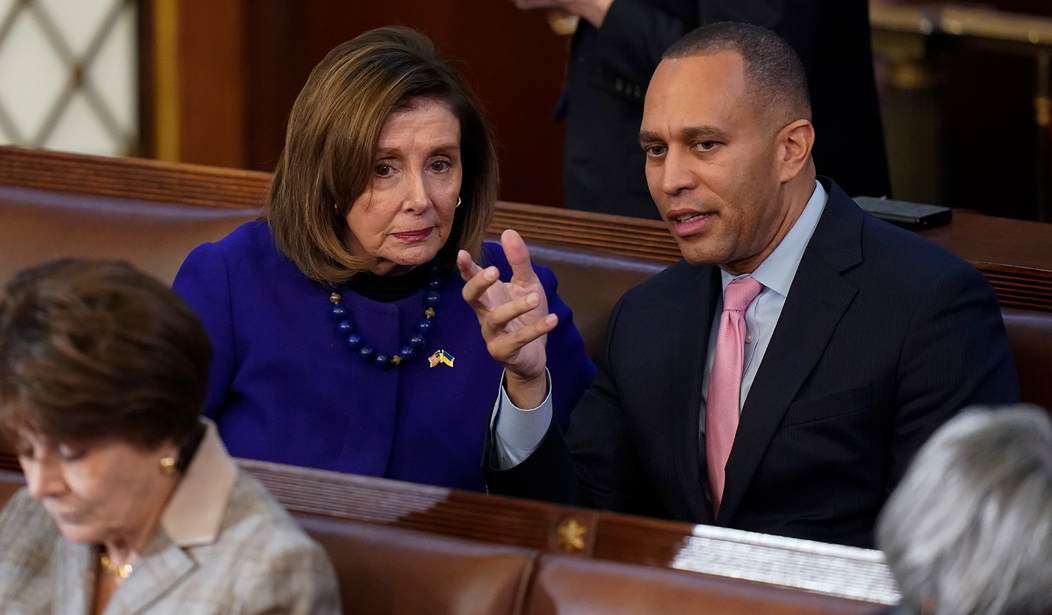
House Minority Leader Hakeem Jeffries (NY-08) has always had a slightly desperate air about him since he took over the reins from Rep. Nancy Pelosi in November 2022. He lives in her shadow, and in fact, many observers consider him her puppet.

He has grown increasingly bitter over the years as his political impotence is exposed almost daily by the Republicans, who keep trumping him on issue after issue. He's gone from just being generally unlikable to bitter, vitriolic, and resentful, and his endless rage stands in stark contrast to the optimism and hope that Trump and the GOP radiate.

He was at it again on Tuesday, using inciting rhetoric at a progressive event to further inflame his base. Even in an era where we’ve seen increased political violence, this is the kind of language he inexplicably finds appropriate:

Jeffries, who stands to gain the House speaker’s gavel if Democrats take the majority in the midterm election, said that "part of how we as House Democrats view this moment, either MAGA extremists are going to break the country, or we're going to break them, and our goal is to break them."

During the panel, Jeffries assured, "As a guarantee, we are taking back control of the United States House of Representatives in November."

"We will defeat them," he continued. "We have to beat them electorally, and then we have to break their spirit, because of the extremism that's being unleashed on the American people, that's completely and totally unacceptable."

What even is this?! He wants to “break” over half the voters in this country (77 million) who chose Trump in ’24? That’s some pretty sick stuff.

Minnesota GOP Rep. Walter Hudson summed things up nicely:

Conservative Actor/Director/Producer/Author Nick Searcy, director of “Gosnell,” had some choice words for the divisive NY rep: “The good guys don't say things like this. The super villains do.”

Hakeem the Extreme wasn’t done, though. On Tuesday, he stood on the Capitol steps, joining forces with the NAACP and the Congressional Black Caucus (CBC), to stoke racial division by calling on black athletes to boycott the powerhouse athletic conference, the Southeastern Conference (SEC), to protest redistricting areas in southern states.

You mean the kind of redistricting effort that you heartily endorsed just days ago in Virginia, and an illegal gambit that even the VA Supreme Court couldn’t stomach? Or the kind of trashing of the state constitution promulgated by California Gov. Gavin Newsom with his Prop. 50 scheme?

Let’s see if we can undermine race relations and send them back to another era:

Leader @hakeemjeffries: This is an unprecedented moment with an attack on Black political representation, and it requires an unprecedented response. We are here in solidarity with the NAACP and its call for athletes to boycott SEC institutions in these states that have unleashed these Jim Crow racially oppressive tactics.

Bitterness, angst, fear, and hate: those appear to be the Democrats’ main political postures since Biden was finally exposed as a puppet president and sent packing. Hakeem is even outdoing his sclerotic counterpart in the Senate, Chuck Schumer (D-NY), and it’s dangerous.

No matter how much rage and hate rhetoric Jeffries spouts, it will never make him captivating or appealing to anyone but his most hardcore acolytes. In the meantime, however, he’s doing a lot of damage. 


Voting Rights Act Never Mandated Racial Districts

Voting Rights Act Never Mandated Racial Districts

COMMENTARY Frank Miele for Real Clear Politics


Ever since the recent decision of the Supreme Court limiting the use of race in drawing congressional districts, there has been a steady drumbeat of criticism claiming that the ruling somehow took away the rights of blacks and other minorities.

But nothing could be further from the truth.

As Justice Samuel Alito explained in his majority opinion, the prevailing interpretation of the Voting Rights Act of 1965 as requiring states to create congressional districts along racial lines actually undermined the constitutional rights of other citizens by colliding with the Equal Protection Clause of the 14th Amendment.

Unfortunately, the legal language of Alito’s opinion is difficult for the average reader to penetrate, so it is worth stepping back and looking at the actual language of the Voting Rights Act itself. The part of the law at issue is Section 2.

As originally passed in 1965, Section 2 simply said:

No voting qualification or prerequisite to voting, or standard, practice, or procedure shall be imposed or applied by any State or political subdivision to deny or abridge the right of any citizen of the United States to vote on account of race or color.

This was a just and appropriate guarantee that no state could use devices such as literacy tests or other discriminatory practices to prevent citizens of a particular race from voting.

And in 1965, those concerns were tragically real.

On March 7 of that year, the infamous Bloody Sunday attack occurred on the Edmund Pettus Bridge in Selma, Alabama, where state troopers and local police attacked civil rights demonstrators with billy clubs, tear gas, mounted horse charges, and whips. Similar efforts to intimidate black voters existed throughout much of the South.

Thus when President Lyndon B. Johnson signed the Voting Rights Act into law later that year, it was widely understood as a landmark effort to guarantee minorities access to the ballot box as equal participants in the democratic process.

What it was not understood to require was racial engineering of congressional districts.

There was no suggestion in the original text that states would someday be expected to create congressional districts designed primarily around race in order to increase minority representation in Congress.

That interpretation arose largely after Congress amended Section 2 in 1982 under President Ronald Reagan. Although subsection (a) continued the language of the original 1965 act, subsection (b) added new language that stated that minority voters must have equal opportunity “to participate in the political process and to elect representatives of their choice.”

For more than 40 years, courts interpreted that language in ways that encouraged or required states to create majority-minority districts.

But let us look carefully at the actual text of the revised Section 2 to see whether the law itself truly mandates racial districting.

Subsection (b) states:

A violation of subsection (a) is established if, based on the totality of circumstances, it is shown that the political processes leading to nomination or election in the State or political subdivision are not equally open to participation by members of a class of citizens protected by subsection (a) in that its members have less opportunity than other members of the electorate to participate in the political process and to elect representatives of their choice.

The statute then adds an important limitation:

Nothing in this section establishes a right to have members of a protected class elected in numbers equal to their proportion in the population.

That limitation matters enormously.

The plain language of the section is not itself racist, but the interpretation of the courts gradually became race-centered. Whereas every voter has a chance to elect representatives of their choice from among the candidates on the ballot, courts increasingly interpreted minority voters’ ability to “elect representatives of their choice” to require districts in which minority-supported candidates had a realistic opportunity to win.

The distinction is crucial.

The revised Voting Rights Act never explicitly required states to create majority-minority congressional districts. Nor did it establish a right to proportional representation. Yet over time, courts developed a doctrine that pushed states toward drawing districts heavily influenced by race.

The theory was that if minority voters consistently supported certain candidates, and majority voters consistently defeated those candidates through bloc voting, then the political process was not “equally open” to minority participation.

But that interpretation transformed a law intended to guarantee equal access to voting into a system increasingly focused on electoral outcomes.

To be fair, courts did not openly declare that minority voters are entitled to representatives of the same race. The legal test instead focused on “minority-preferred candidates.” But in practice, race became central to the analysis because courts relied heavily on evidence of racially polarized voting patterns.

And that is precisely the constitutional problem Justice Alito addressed.

The Equal Protection Clause does not permit states to sort citizens primarily by race absent an extraordinarily compelling justification. However well-intentioned the goals of the Voting Rights Act may have been, courts gradually interpreted the law in ways that encouraged states to divide voters into racial categories and design congressional maps accordingly.

The absurdity of the doctrine becomes especially obvious when compared to Senate elections.

Every state elects its senators statewide. In almost every state, minority voters routinely vote in elections where most candidates are white. Yet courts have never suggested that Senate elections violate the Voting Rights Act simply because minority voters do not always elect their preferred candidates.

Defenders of the current doctrine argue that House districts can be manipulated in ways statewide Senate elections cannot. That is true. But it still does not explain why equal participation in the political process should require government officials to sort citizens by race when drawing congressional boundaries.

At some point, a law intended to eliminate racial discrimination became a justification for government-mandated racial line-drawing.

That is why the Supreme Court’s recent ruling matters.

Contrary to the claims of critics, the court did not take away anyone’s right to vote. Nor did it repeal the Voting Rights Act. What it did was recognize that the Constitution places limits on how far government may go in using race as a political tool – even for ostensibly benevolent purposes.

For decades, courts attempted to reconcile two competing principles: the Voting Rights Act’s guarantee of equal political opportunity and the Constitution’s guarantee of equal treatment under the law. Increasingly, those principles came into conflict.

Justice Alito’s opinion did not erase that conflict. But it did move the law back toward a simpler and more constitutionally sound principle: Citizens should be treated as individuals, not sorted into political categories based primarily on race.


♦️𝐖³π πƒπšπ’π₯𝐲 𝐍𝐞𝐰𝐬 𝐎𝐩𝐞𝐧 π“π‘π«πžπšπ


W³P Daily News Open Thread. 

Welcome to the W³P Daily News Open Thread. 

Post whatever you got in the comments section below.

This feature will post every day at 6:30am Mountain time.