Monday, April 13, 2026

Irish Patriots are Fighting Back


So you say you want a revolution?  Well, take a look at what’s happening in Ireland right now.  Tens of thousands of farmers, truckers, and other fed-up “normies” are taking to the streets of Dublin to protest fuel taxes, mass immigration, and poverty-inducing “climate change” policies.  For the most part, corporate news propagandists in both Europe and North America are intentionally ignoring the combustible situation.  Just when I had begun to think that all the “fighting Irish” had moved to America, the Old Country has started to show signs of life.  Perhaps there are still a few irascible pugilists willing to bash heads and take on the globalist empire after all.

Speaking of irascible pugilists, Irish slugger Conor McGregor issued a bit of an ultimatum to the ruling class after the government mobilized the military and sent tanks to intimidate the protesters: “One wrong move by government here, and you will see, at the very least, 250k Irish people descend on the capital in a blink.  They must step down, there is no other way.”  Declaring war against ordinary Irishmen isn’t a good look for an Irish Deep State that can’t be bothered to guard its borders from hordes of invading foreigners.  While McGregor and his compatriots are out feeding protesters in the streets, the Irish government is hiking taxes on those who can least afford to pay them.  “One wrong move” could spark a revolution. 

Perhaps that’s why — after an initial show of force — Ireland’s globalist government appears to be trying to settle things down.  Reports on the ground say that police officers have remained friendly with protesters.  Some have suggested that Irish authorities are wary of following in the footsteps of Canada’s former prime minister, Justin Trudeau, when he exercised martial law powers to seize the bank accounts of and jail “Freedom Convoy” truckers protesting coercive COVID “vaccination” mandates.  On the other hand, a lot of the Irish protesters have also described a sense that many of the law enforcement officers patrolling the streets appear to be on their side.  If that’s the case, then Ireland’s political class may be worried about the effectiveness of siccing the military on a broadly-backed citizen uprising.  

Although few people saw the present brouhaha coming, Ireland makes a natural “ground zero” in the war between Big Government globalists (aka, the “international rules-based order” club of World Economic Forum totalitarians) and ordinary citizens willing to defend their nation’s sovereignty and their own personal freedoms.  For two decades, the globalists have been taking over Ireland and stripping it for parts.  As a country that once took pride in its meaningful traditions, customs, family loyalties, and Catholic heritage, Ireland has been one of the globalists’ favorite targets for conquest.  If the “multicultural” atheists could convert Ireland into another globalist outpost devoid of religious or civilizational allegiances, they knew that they would collect a valuable scalp in their war against the West.  Sadly, the globalists have been largely successful.  By transforming a conservative, staunchly pro-life, Catholic nation into a “woke” re-education zone embracing abortion, “trans” surgeries for children, open borders, Islamic supremacy, and the fetishization of “diversity,” the World Economic Forum’s “Borg” hive mind gutted one of the most culturally rich nations on the planet and mounted Ireland’s head on globalism’s wall of slaughtered states.  

Two months ago, free speech defenders Lorcán Price and Graham Linehan testified before the House Judiciary Committee concerning the mass censorship operation being run through the expanding Big Tech enclave in Dublin.  There are over 32,000 NGOs in Ireland receiving billions of dollars in U.S. and E.U. grants meant to help shape public opinion.  These organizations — one for every 155 Irishmen — represent the “information warfare” army that supports Europe’s globalist policies.  Over 70% of Irish legislation is copy-and-pasted from bureaucratic edicts originating in the European Union.  These laws include special incentives for illegal immigrants who arrive on Ireland’s shores.  They also include “hate speech” laws that have been used to criminally prosecute Irish citizens who object to foreigners raping and murdering their children.  The NGO-E.U. takeover of the Irish political system this century has drastically reshaped the country.

Once Christian Ireland now has constitutional protections for gay “marriage” and abortion up to a baby’s birth.  Two years ago, Ireland’s globalist cabal nearly succeeded in removing all mentions of “women” from the national constitution, as well as nearly redefining “family” as a “durable relationship.”  The Irish government continues to attack Ireland’s Catholic history, going so far as to depict Catholic saints as pagan goddesses in shameless acts of historical revisionism.  Globalists continue to rename historic institutions due to ludicrous accusations that Irish clergymen and scholars had ties to slavery and “white supremacy.”  As Irish writer Roger Berkeley sorrowfully observes, “Ireland shows what happens when elites, bureaucracies, and ideology override national identity.”

Wherever they conquer, modern globalists prefer to implement blunt-force “divide and conquer” tactics that pit parts of society against each other.  Women versus men.  Young people versus families.  “Green energy” fanatics versus small businesses.  Islamic supremacists versus Christians.  “Multiculturalism” versus Western civilization.  Non-whites versus whites.  Globalists succeed wherever they are able to stir up so much domestic strife that nobody pays attention to the cultural, economic, and political agendas being enforced upon the invaded countries.  After targeting Ireland for destruction and subverting its traditional culture, globalists appeared to have taken over the island for good.  

However, when an outside force conquers a nation, there’s always an inherent risk that forced subjugation sparks a rebellion.  When those being gradually enslaved begin to believe that they have nothing else to lose, the ruling class has real problems.  Despite the corporate news media’s best attempts to cover up what is going on in Ireland, the current protests against “climate change” taxes and mass immigration suggest that the natives are growing restless.  What happens next isn’t entirely clear.  

What is clear is that ordinary people in nations across the West are becoming aware of the information war that has long been waged against them.  For decades, they have been conditioned to believe false things: “Diversity is our strength.”  “Islam is a religion of peace.”  “Trans-women are real women.”  “Sex is a social construct.”  “Man-made climate change is killing the planet.”  “New taxes will save the planet.”  “Christianity is hate speech.”  “Hate speech is a violent crime.”  “Free speech requires government-moderated censorship.”  “National sovereignty is fascist.”  “Families promote white supremacy.”  “Merit is white supremacy.”  “Math, home ownership, mowed lawns, and punctuality are all forms of white supremacy.”  “Equal rights require ‘Diversity, Inclusion, and Equity.’”  “Unelected bureaucrats protect democracy.”  “NATO must protect non-NATO Ukraine.”  Et cetera ad infinitum.  

Perhaps globalism’s lies have become too numerous for the average Westerner to ignore.  Or perhaps globalists’ hubris has grown too grating for the average Westerner to tolerate.  Either way, there is a growing movement of people dedicated to defending Western civilization from the pernicious cancer of godless, multicultural, “woke,” and totalitarian globalism.  Because globalists control the corporate news media, these people are disparaged as “populists.”  In truth, they are Western citizens committed to national self-determination, the preservation of individual rights, and protections for personal liberty.  

Globalists call the will of the people “populism” and the will of bureaucrats “democracy.”  But when enough people decide to fight back against the bureaucrats, the spirit of revolution hangs in the air.  Perhaps that’s what we’re seeing right now in Ireland — a fresh reminder of Thomas Jefferson’s observation that no “country can preserve its liberties” if its “rulers are not warned from time to time that their people preserve the spirit of resistance.”  After all, the “tree of liberty must be refreshed ... with the blood of patriots and tyrants.  It is its natural manure.”


Podcast thread for April 13


don't be oversensitive to dumb things

Goodbye NATO, Hello America First


The North Atlantic Treaty Organization (NATO) was founded in 1949 and has grown to 32 nations.

Not surprisingly, the United States of America is the largest contributor to the organization, supplying 16 percent of the overall NATO budget and having the largest expenditure on national defense, totaling $980 billion, which is 62percent of the overall defense spending of all member nations.  

Realizing that many nations were freeloading and not contributing their fair share, in 2014, the leadership of NATO mandated that members spend at least two percent of their Gross Domestic Product (GDP) on defense spending. Unfortunately, in 2024, then-NATO Secretary General Jens Stoltenberg admitted that nine member nations had still not met their two percent goal.

The new goal for NATO is for members to spend 3.5 percent of their annual budget on defense spending by 2035. Currently, only three nations have met that goal.

Throughout the history of NATO, the United States has played a leadership role. In recent conflicts, such as Bosnia and Herzegovina (1992-1995), Kosovo (1999), Libya (2011) and Ukraine (2014 to present), the United States has contributed military personnel, equipment, air strikes, logistical support, and strategic command.

Unfortunately, when the United States needed help in the war in Iran, NATO nations refused to get involved. Not only did these countries decline to help militarily by providing naval vessels to patrol or help secure the Strait of Hormuz, but they also refused to allow our planes to overfly or to access military bases in their nations.

These actions are an unforgivable betrayal of their “big brother,” the nation that has been providing for their military protection for almost eight decades. NATO has become a “one-way street,” with the United States delivering support and getting only lip service in response.

Why should American taxpayers continue to fund an organization that delivers nothing in return?

In fact, there are legitimate questions about why NATO even exists today. It was founded at the beginning of the Cold War with the Soviet Union. However, the “evil empire” no longer exists and neither does the Warsaw Pact of communist nations aligned against NATO.

The United States needs to place its own security interests first, which is why President Donald Trump has been so eager to obtain Greenland from Denmark, a NATO nation. Greenland is essential for our country’s planned “Golden Dome” missile defense program.

It also has a huge supply of rare earth reserves, with 1.5 million tons, the eighth largest in the world.  Long term, access to these vital supplies will help the United States become independent of China, which controls 69.8 percentof the worldwide production of rare earth deposits.

On Friday, the White House posted on social media, “NATO WASN’T THERE WHEN WE NEEDED THEM, AND THEY WON’T BE THERE IF WE NEED THEM AGAIN. REMEMBER GREENLAND, THAT BIG, POORLY RUN, PIECE OF ICE!!!”

European nations were outraged when the President made a pitch for ownership of Greenland in January and they retaliated in March when they refused to assist with the war in Iran. According to Michael Lucci, founder of State Armor, a national security organization, “The gap between American and European perceptions of security threats is quickly becoming unsustainable.”

Lucci told Newsweek, “European capitals do not perceive the same threats America perceives, and they went out of their way to kneecap us in the Iranian conflict even though the Iranian threat is much closer to Europe than to America.” He continued, “Greenland has dramatic security implications for North America,” and “the gap between American and European perceptions of external threats continues to grow.”

President Trump stated that NATO’s lack of support for the war in Iran is a rupture in the alliance “that will never disappear.” In the view of Jim Townsend, of the Center for a New American Security, “There will be no return to business as usual in NATO, during neither this US administration nor the next one. We are closer to a break than we have ever been.”

To formally leave the alliance, the President will need either “a two-thirds majority in the US Senate or an act of Congress.” Neither scenario is likely to occur, but he can take bold action that would send an unmistakable message to NATO.

The United States has 84,000 troops stationed in Europe in 31 military bases. The President could close those bases and move the troops to friendlier countries or areas facing greater threats.

Last Wednesday, President Trump held a heated meeting with NATO Secretary General Mark Rutte. Afterwards, a White House official said, “As President Trump said yesterday, NATO was tested, and they failed. He has zero expectations for NATO at this point and did not ask them for anything, even though it’s a fact they benefit from the Strait of Hormuz far more than the United States.”

Even Rutte admitted that during his meeting with Trump, “I sensed his disappointment about the fact that he felt that too many allies were not with him.”

With the President announcing a naval blockade of the Strait of Hormuz, after peace negotiations failed to secure a deal, European nations are continuing to remain on the sidelines. For example, German Chancellor Friedrich Merz said he told President Trump, “Following a peace agreement, Germany will help ensure freedom of navigation in the Strait of Hormuz, provided there is a mandate and a viable plan for doing so.”

Thus, after the United States secures the peace, NATO will step in, but only when it is safe. These are fair-weather friends, no doubt. These countries have been taking advantage of the United States not only with our military protection, but also with unfair trade deals.

A divorce makes sense, especially since Europe is advancing headlong into multiculturalism, attacks on free speech, and open borders, while the Trump administration moves America in the opposite direction.

Our values and goals are no longer aligned. We must put America first and say goodbye to an alliance built for a bygone era. 


‘Old Days and Old Age’: A Friendly Reminder of What Truly Matters

 ‘Old Days and Old Age’: A Friendly Reminder of What Truly Matters

Four old friends reunite and prove that decades of loyalty and shared history can outlast politics—and that some bonds are worth more than any argument. 


The text message arrived for a last-minute, miniature high school reunion of sorts.

Tom, an old friend who had settled out east, was back in town visiting family. He would pop by the house of another high school friend, Nick. Of all those who had been invited, my friend Paul and I, it turned out, were the only ones who could make it that night.

Since the last time we had seen Tom was at our 40th high school reunion and since he was only infrequently back in Michigan, we set aside our other plans and made the short trek to Nick’s house.

After picking up some pizzas for the gathering, Paul drove, and I rode shotgun, a question lingering as we neared our destination. Hesitantly, he raised it. He said Tom did not share our political outlook, and Paul did not know if Nick did either.

I acknowledged his assessment, and then pointed out to Paul that we, too, did not always agree on politics— he usually being more moderate and, by my reckoning, perpetually wrong. I told him I knew Tom’s political persuasion but did not know Nick’s. I did note that Tom and Nick likely understood both of our political beliefs (certainly mine), but that did not prevent our being texted with the invite.

We both agreed that our evening would not end in acrimony and recriminations over politics. After all, it was never a problem when we were younger, so why should it be now?

Still, Paul was compelled to astutely and ominously note that when we were younger, there was no cancel culture or articles calling upon people to boycott Thanksgiving dinner and cut relatives out of their lives based upon their political beliefs. I was loath to admit it, but Paul had a point . . .

When we arrived and reconnected with Tom and Nick, it was not like we were back in high school, bruised from football practice and trying to figure out where we could illicitly come into some beer to soothe our aches and teenage angst. Too much time— too much life— had gone by for that. We were vastly different people from those days— and thankfully so.

Nevertheless, there was a timeless quality to the evening. We had all been friends for decades. While we had not been constantly in touch with each other, our bond nonetheless remained. It was evident during the COVID lockdown when Tom initiated a biweekly internet meeting of the old high school class, because some of our number had been dealing with cancer. (Two of whom are still with us, thank God; and may the third rest in peace.) The meetings did tail off when the crisis ended for all intents and purposes, culminating in our 40th class reunion.

So, what did we talk about? What 60-year-old parochial school chums usually talk about: old days and old age. Sure, there was discussion of some current events, including the opioid crisis, to which Tom had a ringside seat and trenchant insights given his chosen profession. But there was never a moment when anyone was boorish or bored. The conversation flowed with the synchronicity of an aging rock band reuniting for a gig. We knew when not to step on each other and when not to take the song in a selfish direction. All in all, it was a splendid evening.

On the ride home, I did not tell Paul I had somewhat sandbagged him. During those COVID class reunion calls, Tom reached out to me to make sure they stayed apolitical. The reason Tom reached out to me was because—and this is no compliment—I was recognized as being the most politically involved, given my years in public life and office. But there was another reason. Tom and I had a minor spat on Facebook over an article I had written. It took a bit for me to tether my argumentative instinct, but I finally recalled something Paul McCartneyhad said about his often-bitter arguments with John Lennon:

One of my great memories of John is from when we were having some argument. I was disagreeing, and we were calling each other names. We let it settle for a second, and then he lowered his glasses, and he said, ‘It’s only me.’ And then he put his glasses back on again. To me, that was John. Those were the moments when I actually saw him without the facade, the armor, which I loved as well, like anyone else. It was a beautiful suit of armor. But it was wonderful when he let the visor down, and you’d just see the John Lennon that he was frightened to reveal to the world.

Tom and I had our “It’s only me” moment, working out our disagreement by agreeing to disagree and moving forward. Hence, when he made the request to keep our reunion calls politics-free, I wholeheartedly agreed.

Politics is a fleeting, divisive part of life. It certainly is not life itself. There are far more important and permanent things in life— faith, family, community, and country. And, yes, old days and old age for four aging high school pals to banter about over pizza and libations. Driving home, I recalled something else  Sir Paul McCartney said about his fellow Beatles: “How lucky was I to have those men in my life?”

Amen, Sir Paul. Amen.


🎭 𝐖𝟑𝐏 𝓓𝓐𝓘𝓛𝓨 𝓗𝓾𝓶𝓸𝓻, 𝓜𝓾𝓼𝓲𝓬, 𝓐𝓻𝓽, 𝓞𝓟𝓔𝓝 𝓣𝓗𝓡𝓔𝓐𝓓


Welcome to 

The 𝐖𝟑𝐏 𝓓𝓐𝓘𝓛𝓨 𝓗𝓾𝓶𝓸𝓻, 𝓜𝓾𝓼𝓲𝓬, 𝓐𝓻𝓽, 𝓞𝓟𝓔𝓝 𝓣𝓗𝓡𝓔𝓐𝓓 

Here’s a place to share cartoons, jokes, music, art, nature, 
man-made wonders, and whatever else you can think of. 

No politics or divisive posts on this thread. 

This feature will appear every day at 1pm mountain time. 


This New Poll on Iran Is Eye-Opening

This New Poll on Iran Is Eye-Opening


With the conflict between the United States and the Islamic Republic of Iran geared to restart after peace talks stalled on Saturday night, a new poll shows that President Donald Trump’s agenda with the Persian state is quite popular amongst Americans.

Three fourths of respondents to the YouGov poll indicated that they believed that the objectives of Operation Epic Fury were agreeable, with nearly 90 percent stating that they believed that the Strait of Hormuz needs to be reopened and that oil needs to flow through the Gulf states once more. 76 percent desire a permanent end of Iranian nuclear weapons development.

Furthermore, more than half of respondents claim that it would be unacceptable to end the conflict if the Islamic regime continues to retain power.

Just hours after peace talks broke down, reportedly due to the Iranians wholly rejecting American demands, Trump announced that the Strait of Hormuz would be blockaded. The Iranians had made their demands clear that any oil shipments made through the Strait would be subject to a $2 million fee. Trump further indicated that ships which paid the fee would be subject to interdiction.

Trump stated that any attempts to interfere with U.S. activities and peaceful maritime movement would be met with overwhelming force.


Iran Sounds Like It's Scrambling to Save Face in Response to Trump's Action in the Strait


RedState 

As we reported earlier, President Donald Trump announced the U.S. would be taking control of the Strait of Hormuz, blocking ships as they cleared the area for mines, and then saying it would be open to all. Basically, they would be cutting off Iran's ability to use it as a chokehold. 

Trump said they would not be allowed to profit from their actions in the Strait. 

The US has also deployed minesweepers to the Strait of Hormuz to rebuild confidence among oil vessels seeking to traverse the critical chokepoint in the future. 

“We will also begin destroying the mines the Iranians laid in the Straits. Any Iranian who fires at us, or at peaceful vessels, will be BLOWN TO HELL!” Trump warned.

The U.S. already demonstrated that power by having two warships transit the Strait, and Iran was unable to stop them. 

So that's left Iran scrambling to save face.

Iran’s Islamic Revolutionary Guard Corps Navy hit back, insisting it has “full control” of the Strait and that the waterway remains open for non-military vessels.

“Contrary to the false claims of certain enemy officials, the Strait of Hormuz is open for the passage of non-military vessels under smart control and management, in accordance with specific regulations,” the naval forces said in a statement, according to two semi-official Iranian news agencies.

The IRGC warned that any approach by military vessels toward the Strait would be treated as a violation of a cease-fire agreement.

Well, first, they weren't able to stop the two ships that had already gone through. Then, second, if it's supposed to be open, as they agreed to according to the ceasefire, and ships are addressing the question of the mines they claim they left in the Strait, they should be happy we're helping them fulfill their obligation. 

Then, too, it sounded like the Iranian President Masoud Pezeshkian realized that they'd overplayed a weak hand, because he told Russian President Vladimir Putin during a call that he thought achieving a deal was "not out of reach." Trump predicted they would be forced to "come back and they give us everything we want." 

"I told my people, I want everything. I don't want 90%, I don't want 95%. I told them, I want everything. They have no cards," Trump told Sunday Morning Futures' Maria Bartiromo. 

Number one on that hit parade is making sure they can never have a nuclear weapon. But continuing to play games will only ensure that they get clobbered and their options diminish further. 


Trump Predicts His Approval Ratings Will Be Resurrected In Three Days


Politics·Apr 13, 2026 · BabylonBee.com
Image for article: Trump Predicts His Approval Ratings Will Be Resurrected In Three Days

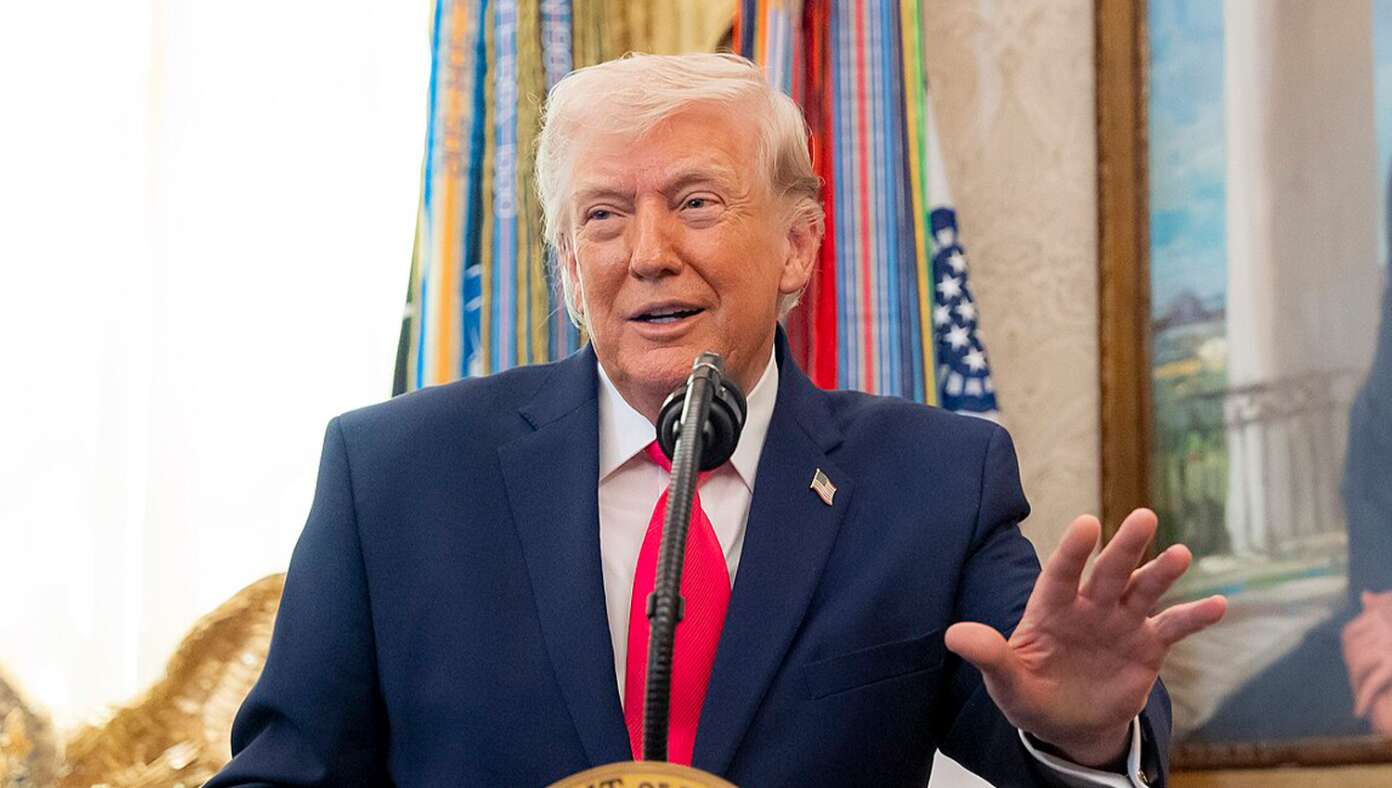
WASHINGTON, D.C. — President Trump told reporters on Monday that he wasn't concerned about his recent dip in popularity or the controversy that resulted from his posting of a social media image depicting himself as Christ, boldly predicting that his approval ratings would be resurrected in three days.

Trump's popularity had slipped as of late, following a tweet of himself as a Christ-like figure and the ongoing war in Iran. Even his most ardent supporters, who had continued to champion him through various scandals, were put off by what they called a sacrilegious depiction of himself in place of Jesus. But not to worry, said Trump, as his approval would soon rise again to newness of life.

"Verily, verily, I say unto you — my poll numbers will go up," Trump said. "You want me to delete my tweet, but you do not understand — I must suffer many things, especially a drop in my polling numbers, for the sake of doing whatever I want. But do not fear, for after three days, my approval will be higher than ever. Everyone says so."

He added, "I could dress as Jesus while standing in the middle of Fifth Avenue and not lose any voters. It's incredible, okay?"

Trump's closest advisers reportedly told the president he was deeply wrong about this and needed to repent. Some even questioned among themselves: "This is a hard saying. Who can understand it?"

According to sources, Trump said, "Does this offend you? What then, when you see my approval rating ascending higher than ever before?"

At publishing time, President Trump had predicted that someone in his cabinet would betray him.

Argentina Is Booming—Capitalism Remains Undefeated

Argentina Is Booming—Capitalism Remains Undefeated

Commentary by David Harsanyi for Daily Signal

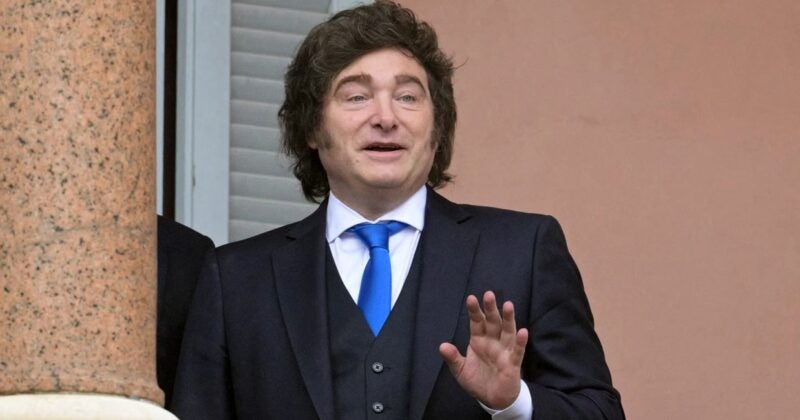
Argentina's President Javier Milei holding up his hand

Argentina's President Javier Milei in Buenos Aires on April 6, 2026. (Juan Mabromata / AFP via Getty Images)

In 2023, over 100 leading economists from around the world, including progressive darling Thomas Piketty, signed a letter warning that “far-right” Argentine presidential candidate Javier Milei’s policies, which were “rooted in laissez-faire economics,” would cause “devastation,” spike inflation, expand poverty, and worsen unemployment.

Celebrated economists never penned any open letters warning that the preceding Peronists’ or Kirchnerists’ perverse blend of fascism, socialism, and unionism would drive Argentina—once one of the world’s wealthiest nations—into destitution, unemployment, soaring inflation, and bankruptcy.

But that’s how it always goes.

Political scientist Ian Bremmer warned, “Economic collapse is coming imminently.”

Felix Salmon, then chief financial correspondent at Axios (now at Bloomberg), argued that Milei’s “wrecking ball” policies would plunge Argentina into “a deep recession.”

When the U.S. provided Argentina with a $20 billion currency swap line last year, former New York Times columnist and Milei critic Paul Krugman argued that there’s “no plausible scenario in which even $20 billion in U.S. loans will save Javier Milei’s failing economic strategy.”

Argentina only tapped around $2.5 billion of that funding and then fully repaid the loan in January of this year with interest, far ahead of schedule.

Well, Argentina’s 2025 gross domestic product also blew past expectations, growing 4.4%, the highest in years. The International Monetary Fund expects the GDP will grow at similar rates in 2026 and 2027.

When Milei’s socialist predecessor Alberto Fernandez reopened the economy after COVID-19 and saw the entirely predictable rise in GDP, popular Nobel laureate economist and Hugo Chavez fan Joseph Stiglitz called it an “economic miracle.” Over the next year, inflation rose to 97%, while poverty spiked, real wages fell, and GDP stagnated.

Since Milei’s party won power in 2023, inflation has dropped over 200%, plunging to the lowest level in eight years.

Though this is likely the fastest any nation experiencing hyperinflation has improved its position in modern history, Stiglitz still warns that Milei is leading Argentina into “crisis.”

Yet it had a fiscal surplus for the second consecutive year in 2025, marking the first time since 2008 that it accomplished the feat, and the poverty rate dropped significantly in 2025, reaching its lowest level since 2018.

The crisis Milei took on was stark: In the first half of 2024, around 52.9% of the population was living in poverty, with 18% in extreme poverty.

Poverty fell 14 percentage points, to 38%, last year. It is at 31% now.

Milei did all this the old-fashioned way.

He removed price controls, got rid of tariffs and opened trade, privatized a slew of government-run agencies, cut red tape, weakened union monopolies, made major cuts in spending, and eliminated an array of needless state jobs.

In other words, all the usual stuff that free marketers preach will work—and experts warn us will bring on Armageddon.

True capitalism has never been tried. But even partial capitalism works every time.

And we never run out of examples.

After gaining independence and moving away from a planned economy in the 1990s, Estonia was one of the first former communist nations to embrace free-market solutions. It soon became one of the most successful, tech-driven economies in Europe.

The Poles moved slower, but they also shed socialism for capitalistic reforms, abandoning price controls and scaling back state power.

Now they’re one of the few former communist nations economically on par with the West.

In the 1980s Ireland was the poorest nation in Western Europe. After its stagnant economy adopted a slew of laissez-faire reforms, deregulations, and lower taxes, Ireland not only grew to have a higher GDP per capita than Britain but became the third-wealthiest nation in the world.

Singapore, once destitute, transformed into a free-market economy and now edges out Ireland on the world’s-richest list.

South Korea, also once one of the poorest nations, undertook economic liberalization efforts in the 1980s and accelerated them in the 1990s, shedding its top-down government-controlled protectionist economy for a market system.

Now it’s one the world’s most dynamic economies.

For its first decades of existence, Israel was a one-party quasi-socialist state with a union-run economy that was constantly teetering on the edge of economic crisis.

It wasn’t until the 1990s, after an extensive deregulation of Israel’s economy, that the nation experienced an explosion of productivity and quality of life.

Israel’s per-capita GDP now outperforms most European nations, while its tech sector outperforms most of the world.

Yet no matter how many times the technocrats or socialists or progressives are proven (sometimes catastrophically) wrong, they are never treated as the radicals.

No matter how often free-market reforms work to better the lives of millions, they will never be credited.

COPYRIGHT 2026 CREATORS.COM