Kevin
Cramer, the plain-spoken U.S. senator from North Dakota, is nothing if not a
steadfast supporter of President Donald Trump.
He was among
the first elected Republicans to endorse the president in his 2016 run for the
White House and once even likened voting against Trump’s policies
to cheating on a spouse.
“I know
Donald Trump really quite well. I really do, and I love him very much,” the
senator told the National Post in a recent interview. “I love him at a personal
level.”
But in at
least one prominent way, he has consistently pushed back on the
commander-in-chief he so admires. As Trump slapped a succession of crushing
tariffs on Canada, while musing about economically coercing and annexing this
country, Cramer has called for stronger relations – economically, militarily
and culturally – and developed close, affectionate ties with Canada’s
representatives.
Amongst
other gestures, he introduced a resolution in the Senate that could
almost have been written by staff down the street at the Canadian embassy. It
talks of an “indispensable economic and security partnership” and says the
prosperity of both nations is supported by a “mutually beneficial economic
relationship.”
Cramer, 65,
attributes his views to the extensive trade between North Dakota and
neighbouring Canadian provinces, and to personal ties that include a childhood
spent crossing the border like it barely existed. He says his closeness to
Trump – whom he telephones regularly – is actually what makes it possible for
him to get the president’s ear on the Canada question.
“I’ve earned
some of that (political) capital by being an ardent supporter of his,” he says.
“It means when you disagree, you have a little more … street cred. And to me,
the U.S.-Canada relationship is worth spending some of that on.
“I do talk
to him and I give him my opinion. He generally gets mad at me and then we move
on.”
At the same
time, Cramer does not give Canada a universal pass. He says Canadians need to
be less emotional about the president’s barbs and that an “insufferable” Justin
Trudeau helped inform Trump’s antagonistic approach to this country. Current
Prime Minister Mark Carney is a much better fit, he says.
But at a
time when it often seems the ruling party in America – at least as embodied by
the administration – is at war with Canada, Cramer offers an unlikely
counterpoint.
“He is
indeed a true friend of Canada,” said Kirsten Hillman, who was ambassador to
the U.S. until she retired from the foreign service in February. “He has been
extremely helpful to us …making points to the president in ways that resonate
with the president.”
Cramer in
turn says “I love Kirsten,” and showed his fondness for the diplomat by having
a special American flag flown in her honour over the Capitol building, then
taken down and presented to her as a parting gift.
Their bond
was strengthened in part by her own youth, when she spent summers at her
grandparents’ farm near Goodlands, Man., about 10 kilometres from the North
Dakota border, and sometimes crossed into the state to get pizza.
“I told the
president once ‘You know, this idea of Canada as a 51st state is really dumb,’
“ Cramer says. “But I said ‘I would take Saskatchewan and Manitoba and Alberta
as three states. They’re practically us, you know.’ ”
Hillman, now
a distinguished fellow at the University of Toronto’s Munk School of Global
Affairs, said the senator is one of many Republican members of Congress who
would like to see a friendlier approach to Canada. A resolution calling for the
tariffs to be rescinded was supported by four GOP senators – Rand Paul, Susan
Collins, Mitch McConnell, and Lisa Murkowski (though not Cramer). But he stands
out as the lawmaker who is closest to Trump, said the ex-ambassador.
A former
tourism and economic development director in the North Dakota state government,
Cramer grew up at a time when the northern border was almost a formality. The
family would drive the short distance to Killarney Lake in Manitoba, merely
waving to customs officers on both sides in lieu of showing passports, he says.
He has an uncle who lives in Revelstoke, B.C., and Canadian cousins.
Cramer was
elected to the House of Representatives on his third try in 2010, then ran
successfully for a Senate seat in 2018.
He’s without
question a “hard-core” conservative, says Mark Jendrysik, a political science
professor at the University of North Dakota who once had Cramer talk to his
class. The senator has opposed abortion and same-sex marriage and wrote the
energy platform for Trump’s 2016 campaign that favoured more oil production and
downplayed climate-change science. His politics are in keeping with the general
leanings of the state, one of the few where Trump’s approval ratings have
stayed over 50 per cent, said Jendrysik.
But at the
same time he’s not one of the “culture-war flame throwers” who have a tight
grip on the North Dakota Republican Party, the type of people who call
Democrats communists and tout Trump as the greatest president in American
history, the professor said.
Still, his
loyalty to Trump – and the views of North Dakotans who realize their economy
relies heavily on Canada – makes it possible for him to oppose the White
House’s protectionist policies, said Jendrysik.
“He has
absolutely no worry about re-election, to put it bluntly, so he can afford this
small break from Trumpian orthodoxy, because local people think he’s defending
their local interests.”
Those
interests are fairly clear. North Dakota’s exports to Canada – mostly oil but
also farm machinery and agricultural goods – have ranged from $4 billion to $6
billion annually in recent years, 70-80 per cent of its total exports. Cramer
said that trade is by design deeply intertwined, each side playing to its
strengths.
“A hog
crosses the border multiple times before it becomes bacon,” he says, evoking
the kind of international connectivity often cited by the auto industry.
Trump has
taken a very different view of the economic relationship. Though much of what
is sold back and forth moves tariff-free for now under the Canada-U.S.-Mexico
free-trade agreement – and his first wave of duties was struck down by the U.S.
Supreme Court – Canadian automobiles, steel, aluminum and lumber still face
punishing tariffs. Meanwhile, Trump is eager to see more goods produced in
America and has said “we don’t need anything” from Canada. He recently
threatened to impose 50-per-cent tariffs and block certification on imported
Canadian aircraft because a regulator here was taking too long to approve new
American jets, and said he might block a new bridge between Detroit and Windsor
paid for by Canada.
Trump has
talked repeatedly about making this country a U.S. state – calling both Carney
and Trudeau “governor” – and when asked if he would use military force to do
so, said he’d opt for “economic force.”
Cramer says
Trump is frustrated by the fact Canada is rich in minerals and resources and
“we don’t have more access to those things.”
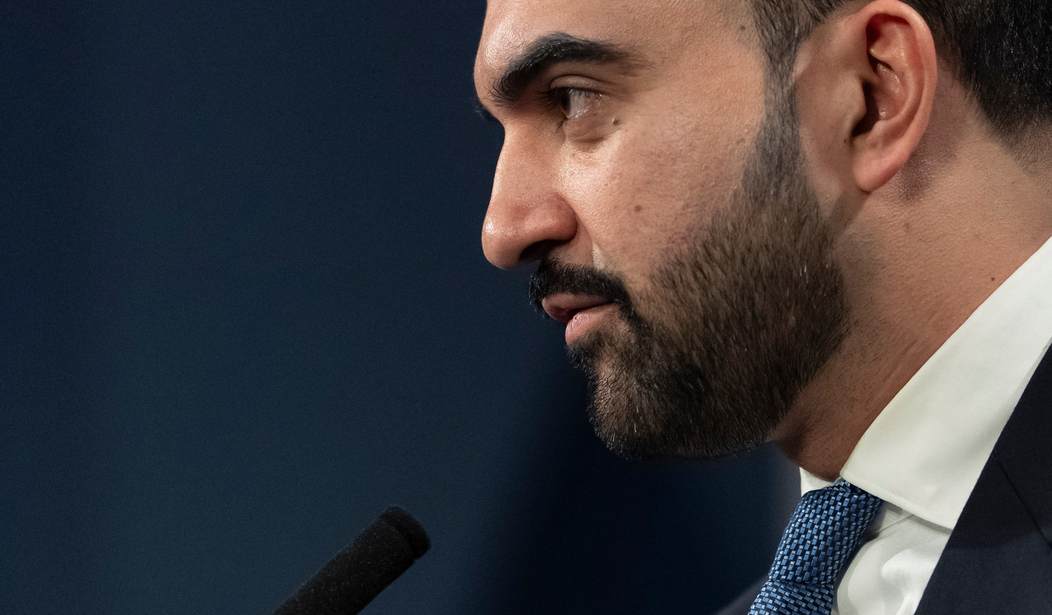
Republican U.S. Sen. Kevin Cramer “is
indeed a true friend of Canada,” says former ambassador to the U.S. Kirsten
Hillman. Photo by Alex Wong/Getty Images
The senator
cites his own encounter with Trudeau at a Canadian embassy reception a couple
of years ago.
Having
written a letter encouraging Ottawa to boost defence spending, he broached the
topic with the prime minister, suggesting Canada could reach the NATO-endorsed
goal of spending two per cent of GDP on the military by selling uranium to the
U.S. for use in nuclear weapons.
“He quickly
jumped to, ‘Oh, we never will allow our uranium to be used for weapons.’ And
I’m like, ‘I’m trying to help you here. I’m trying to give you an off ramp, if
you will,’ ” the senator recalls. “He’s a pacifist, and he’s fine with the
United States being the guardian over the skies of the Arctic, but it seems
irresponsible to me.
“I only had
one conversation with him, and I thought ‘This is hopeless.’ ”
Canada has
in fact just reached the two-per-cent threshold and Carney has promised to
raise defence spending to five per cent of GDP by 2035, while agreeing to buy
into Trump’s Golden Dome missile-defence plan. Cramer is a booster of the
current prime minister – “a charming guy, but he’s also very smart and eloquent
and he’s a finance guy, for crying out loud” – and says increased defence
spending is a key way to Trump’s heart.
Ultimately,
though, how the bi-national relationship winds up could be determined by a
review of the North American free trade accord just getting underway.
Cramer says
he hopes it results in “minor changes, not an overhaul.” Hillman says it’s too
soon to predict how the talks would end, but said one bright spot are comments
this week by Jamieson Grier – the U.S. trade representative – that the deal has
“load-bearing pillars” that work well. She notes that the agreement covers not
just tariffs but a whole host of other matters, from customs procedures to
intellectual property rules
“If
(CUSMA) didn’t exist … we would have to recreate it again.”
Meanwhile,
Cramer jokingly suggests Canadians could get under Trump’s skin, not by
spurning U.S. travel, but by buying up Florida property around the president’s
Mar-a-Lago estate and raising Canadian flags there. He has some more
controversial advice, too, as polls indicate Canadian opinions about America
are at a historic low.
“Canadians
seem to be so personally hurt over Donald Trump’s, you know, playing with them
over the 51st state issue. And I have found it odd,” he said. “My advice would
be ‘Get over yourselves, don’t be so sensitive, because you look just a little
bit weak.’ ”
https://nationalpost.com/news/canada/republican-pro-trump-u-s-senator-is-canadas-unlikeliest-fan