Tuesday, April 7, 2026

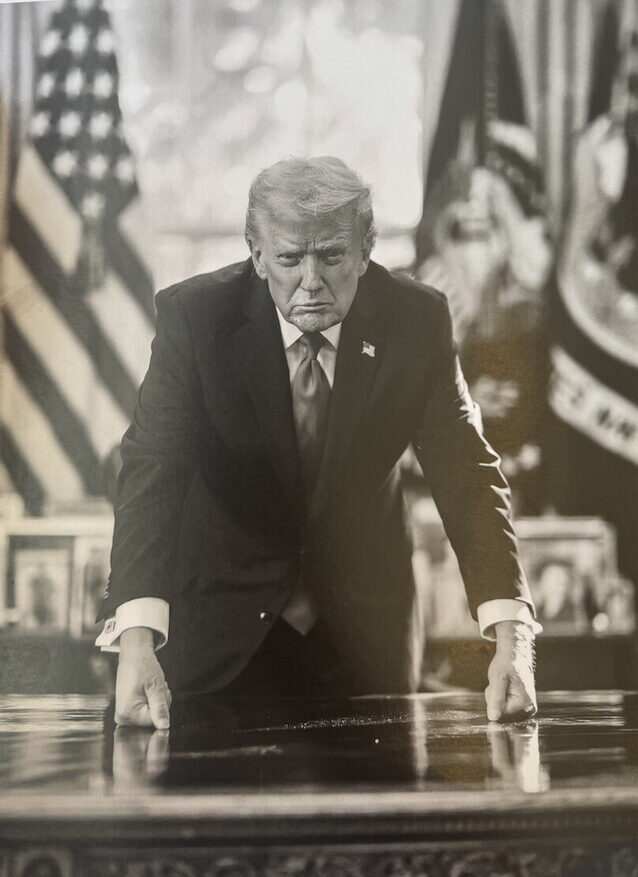
President Trump Postpones “Civilization” Ending Attack on Iran Contingent Upon Hormuz Strait Opening


President Trump has announced a two-week delay in destroying Iran, based on a reciprocal agreement to open up the Strait of Hormuz for shipping.   (VIA TRUTH SOCIAL)

“Based on conversations with Prime Minister Shehbaz Sharif and Field Marshal Asim Munir, of Pakistan, and wherein they requested that I hold off the destructive force being sent tonight to Iran, and subject to the Islamic Republic of Iran agreeing to the COMPLETE, IMMEDIATE, and SAFE OPENING of the Strait of Hormuz, I agree to suspend the bombing and attack of Iran for a period of two weeks. This will be a double sided CEASEFIRE!

The reason for doing so is that we have already met and exceeded all Military objectives, and are very far along with a definitive Agreement concerning Longterm PEACE with Iran, and PEACE in the Middle East. We received a 10 point proposal from Iran, and believe it is a workable basis on which to negotiate.

Almost all of the various points of past contention have been agreed to between the United States and Iran, but a two week period will allow the Agreement to be finalized and consummated. On behalf of the United States of America, as President, and also representing the Countries of the Middle East, it is an Honor to have this Longterm problem close to resolution. Thank you for your attention to this matter!” President DONALD J. TRUMP


Nothing Terrifies Democrats More Than a Little Transparency


Sunshine is the best disinfectant, but serious scrutiny so concerns some Democrats that you’d think they, themselves, were the infection. Democrats would like you to think they’re nothing but a naked body behind a thin sheet of Saran Wrap – totally transparent and honest. But dig just a little and that clear wrap becomes aluminum foil. Democrats are terrified of a little scrutiny, and should tell you a whole lot.

Eric Swalwell, the, gassy, buffoonish Congressman from California who regularly steps into a field of metaphorical rakes, even in friendly interviews, is absolutely terrified that the FBI might release their file of the Bureau’s investigation into his being honey-potted by the Chinese Communist Party. In the past, Eric has insisted he was completely exonerated after he was targeted by our enemy, so why would the release of information the FBI gathered that led to that conclusion scare him?

That’s an important question to ask, especially given how Swalwell was a very loud voice in the calls for the Epstein files to be released. He wanted everything out in that case, mostly so his fellow Democrats could weaponize every garbage scrap of paper in it, no matter who stupid or fraudulent it clearly was. Eric doesn’t want that to happen to him. 

There’s also the reality that the only person’s word we have to go on when it comes to just how “sweet and innocent” he was in the affair is him. Granted, he could be stupid enough to not know, but he could also be lying. After all, why would a moderately attractive woman want to have anything to do with him in nature? It was pretty obvious he was played, but the extent to which he was (and by extension, us, since he would have betrayed all of us, inadvertently or not) we don’t know. That file might help us understand.

But he’s running for Governor of California, so that he’s terrified and threatening to sue to keep those secrets sealed tells you pretty much everything, doesn’t it? He’s previously denied anything sexual happened – surely Fang Fang wishes that were true – but won’t go into any details about any of it or give interviews with anyone with the integrity to ask about it; he’s just hoping to run out the clock.

Maybe he will be able to do it, too. Time will tell, just as time will tell if the people of California will support a Forrest Gump with honey pot problem who pays his wife for “child care” for her own kids. All kinds of gross, those Swalwells…

But the Swalwells aren’t the only trash in the Democrats’ dumpster. On the other side of the country, Westly Moore – who goes by Wes to hide his rich kid upbringing – the Governor of Maryland wants you to know he has nothing to hide…while being terrified at the prospect of anyone looking into the probably fiction he has woven about his own life.

Westley served in the military and talks about it often. But he won’t release his military records, for some reason. He swears his service was honorable, even being awarded some medals. Only he wasn’t, at least not at the time he claimed it. Weirdly, it was “awarded” later, after the “mistake” of him not having been given it was noticed, or so we’re told. Don’t know too much more about his service, beyond what he’s claimed. 

If Westley’s file backs up his story, why wouldn’t he want it released? 

But when the Baltimore Sun decided to ask some questions about the state’s Governor and his biography, the Moore-ons ran to Semafor for protection. 

Pro-tip: If you’re a “news” organization and members of one party run to you for cover and security when they’re facing tough questions, you’re doing something wrong. When it works, you’re an embarrassment. 

Their headline, “Maryland’s biggest newspaper is going after the governor’s 2028 campaign.” 

Why is a media outlet vetting a Democrat who was never really vetted somehow “news” or “going after” that politician? What happened to that “We speak truth to power” crap the media always cries when they’re screaming at the President? 

Gone. Semafor worked intimately with Moore’s people to preemptively deflect any questions about his biography, his service, his family and his fortune. That’s a whole lot of work for someone with nothing to hide. 

Realistically, Semafor should have been asking these questions, or demanding answers to stories like those uncovered by the Washington Free Beacon showing Westley’s claims that his great-grandfather was run out of the country by the KKK were completely made up. But that’s too much like work, and way too honest for a left-wing media that serves more as a security blanket for “progressive” politicians and an emotional tampon for Democrats desperately searching for a savior.

If basic information about your life coming out has you terrified, you probably shouldn’t be anywhere near the levers of power. If you have something to hide, feel free to hide it in the private sector. But if you’re afraid of people you seek to represent getting a peek beyond how you’ve chosen to represent yourself, maybe you’re the problem…


Podcast thread for April 7


it all works out in the end.

Leftism Fears Jesus Christ


On Easter, the holiest day of the year, we celebrated the resurrection of Jesus Christ, our Lord, Savior, and Treasure.  Just saying those words out loud — LordSaviorTreasure — it is easy to recognize why modern socialist governments find Christianity so threatening.  For if He is the King of kings, then all of our would-be masters in this world are pale imposters.  If He alone is the Way and the Truth and the Life, then the marble halls of Big Government are just false paths leading to false idols that promise false salvation.  If He is the only Treasure, then all of the things that governments do to make us envious, resentful, and hateful toward one another are tricks and lies meant to blind us from the Truth.

A Canadian writer named Dimpee Brar wrote a beautiful and insightful essay on this subject last month.  In that essay, Brar draws attention to the more than eighty churches that have been set on fire across her country.  She deftly describes how government-sponsored lies instigated these attacks on Christian houses of worship and argues persuasively that Marxist-globalist governments view Christ, Christians, and Christianity as foremost enemies.

Brar notes that the corporate news media routinely downplay these recurring acts of desecration by undercounting the number of churches set on fire and reporting on the crimes with intentionally vague language that obfuscates the perpetrators’ obvious motives.  Canadian journalists report upon the church attacks as if they were “random accidents” happening inside of commercial businesses.  She argues that each of these church fires should instead be seen as “episodes in a larger campaign” of a “war being waged against the West.”

Brar points out that all of this destruction is based upon the government-perpetuated lie that mass graves of indigenous children have been found on the grounds of Christian schools.  The lie has been exposed, but Canadian politicians continue to defend the actions of arsonists as “understandable.”  “To the Left…the truth is secondary to the permission it grants.”  Hatred for Western civilization is disguised as “justice.”  The attacks on Christian churches implicitly instruct the youngest generations that “nothing is sacred.”  Canada’s prime ministers elevate grievances over God’s enduring Truth. 

Canadian citizens are not spontaneously burning churches to the ground.  Canadian schools, cultural institutions, and businesses first taught citizens to despise their civilization.  By teaching entire generations that “all ways of life are equal; that any claim to superiority is a disguised will to power; and that distinctions between noble and base, just and unjust, good and bad, and above all, true and false, are instruments of ‘oppression,’” anti-Western radicals replaced Jesus Christ with relativism.  The Marxist-globalist orthodoxy that now oppresses us cannot countenance Western civilization’s proclamation “that our way of life is superior not by race or conquest, but because it is true; therefore, it is good, just, and noble.”

Demonstrating true intellect, Brar recognizes that our civilizational inheritance as Westerners includes “the twin roots of Jerusalem and Athens: biblical revelation and reason.”  Although distinct sources of wisdom, both “roots” lead us to Truth by recognizing that there is a “best way” to live and a “standard” that exists “both outside and above us.”  The gifts of Western civilization are therefore lasting impediments to leftism’s need for “tyrannical rule.”

“This is why our churches must burn,” Brar concludes.  The “steeples are the most visible symbol of the biblical half of our inheritance….guiding our eyes, and with them our souls, upward to the highest things.”  Jesus Christ reveals the left’s moral relativists as false prophets because “when there is God and Truth, then everything is not permissible.” 

Here is where Brar’s argument reveals profound personal wisdom.  She looks around at all the churches burning across Canada and recognizes that “our enemies pay us great compliments.”  The left’s “hatred” and “resentment” reveal how much they fear us.  If those of us committed to defending Western civilization were truly defeated, Marxist-globalists would treat us with “pity” and “indifference.”  Instead, their “rage is proportional to the threat they perceive.”  Leftists understand that Christianity “remains the greatest obstacle to the tyranny they wish to institute.”  

Recognizing that leftists have unintentionally revealed what they fear most, Brar rallies Christians to stop hiding or apologizing.  Instead, she charges, we must “regain a seriousness equal to that of our opponents.  If they judge this way of life dangerous enough to burn, then it is time we judged it once more worthy of living and defending in full.”  

Do her words not light a spark within you?  Does her call not embolden you to defend your Christian faith?  Has she not revealed leftism as nothing more than a magician’s trick or a desert’s mirage?  Has she not proved that Christ’s Truth is the Way?  

How can we allow ourselves to ever feel defeated if we remain faithful followers of Christ?  How could we stand with Him and worry that mortals such as Mark Carney, Barack Obama, Keir Starmer, Emmanuel Macron, or Ursula von der Leyen could vanquish Western civilization with Marxist-globalism’s moral relativism?  Power does not rest with godless political leaders.  Eternal Truth begins and ends with God.  Jesus Christ defeated death.  Why would we fear the legacies of politicians, bankers, actors, or musicians who demand to be worshipped in this life?  

The war being waged against the West is real.  Every church that leftists burn to the ground is a reminder of the stakes.  But a house of God is much more than bricks and stones.  Arsonists can demolish walls and steeples.  Only we can demolish our faith.  

That’s a vital distinction.  Leftist governments want to humiliate, demoralize, and enfeeble us.  Moral relativists want us to feel weak and defeated.  Marxist-globalists wish for us to accept that Western civilization is lost.  What our enemies know — and what we too often forget — is that we alone decide whether to submit.  We alone decide whether to give in to tyranny or to continue fighting it.  We alone decide whether leftists really have the power to vanquish Reason, Truth, and Christ.  

On one side stand those who wish to divide, diminish, and destroy.  On the other side stands our Lord, Savior, and Treasure, Jesus Christ.  On Easter, we remember His sacrifice.  Let us also remember that He is the Way, the Truth, and the Life.  So long as we sustain our faith, Western civilization will endure.  It is leftism — false, resentful, and evil — that will die, wither, and fade away.


Islamic NATO? Saudi Arabia reshapes Middle East's alliance map to set new regional rules


 Opinion: 

Riyadh’s pivot toward Turkey, Qatar and Pakistan, growing assertiveness in Yemen and Sudan and frustration with US guarantees show Saudi Arabia is no longer just hedging risks but actively redefining the Middle East balance of power

By Dr. Yoel Guzansky

Saudi Arabia is working to build an alternative network of strategic backstops as it confronts growing uncertainty in its relationship with the United States, concerns over Israel’s rising power and unpredictability, and the need to reinforce its regional standing.

he kingdom no longer relies solely on its traditional partnership framework. Instead, it is seeking out new actors, including former rivals, that can provide security capabilities, strategic flexibility and economic and industrial value. The aim is to reduce Saudi vulnerability in an increasingly complex and competitive regional environment.

טראמפ ובן סלמאן

Crown Prince Mohammed bin Salman

A first step in this direction is an emerging security agreement that includes the potential purchase of Chinese-Pakistani JF-17 fighter jets. The deal would allow Saudi Arabia to expand its deterrence capabilities and give substance to the defense agreement it signed with Pakistan in September 2025, following the Israeli strike in Qatar.

At the same time, reports point to the possible integration of Turkey into this emerging framework, creating what some describe as a kind of “Islamic NATO.” Such a structure would offer a flexible response to regional threats: Pakistan brings an operational nuclear capability, Turkey a large conventional military and industrial base, and Saudi Arabia vast financial resources, diplomatic clout and religious legitimacy as the custodian of Islam’s holiest sites.

These moves are not merely a reaction to rising regional uncertainty. They are also part of a broader effort to reshape the regional order and preserve Saudi Arabia’s leading position at the expense of the United Arab Emirates. Abu Dhabi is increasingly seen in Riyadh not only as an economic competitor but as a state working, alongside Israel, to undermine core Saudi interests, particularly in the Red Sea arena.

The warming of ties with Turkey and Qatar at the UAE’s expense, deepening security and economic cooperation with Pakistan, and Saudi Arabia’s growing assertiveness in Yemen and Sudan all point to a kingdom acting not just in self-defense, but with the ambition to redraw alliance patterns and rewrite the regional rules of the game.

During Crown Prince Mohammed bin Salman’s most recent visit to Washington, he was greeted with considerable ceremony, and the host even pledged to sell Saudi Arabia advanced F-35 fighter jets, a move important to the crown prince’s prestige and status. Yet bin Salman has grown wary of promises alone. He has yet to secure what he truly wants from President Donald Trump: a formal defense treaty and a civilian nuclear cooperation agreement.

That gap underscores, in Riyadh’s view, the need for additional backing and for building a multilayered partnership network. The potential inclusion of Pakistan and Turkey in a new transregional framework reflects a classic hedging strategy, allowing Saudi Arabia to navigate rising uncertainty while signaling to Washington that it has alternatives.

Over the past five years, bin Salman focused on reducing regional tensions and pursuing détente, primarily with Iran, to concentrate on implementing his ambitious Vision 2030 economic reform plan. Now, he appears confident enough to once again attempt to shape the regional order.

There is also a personal dimension. Bin Salman wants to restore Saudi Arabia’s perceived rightful place in the Arab hierarchy, not only as king of Saudi Arabia, but as the leading Arab power.

Saudi Arabia is not merely seeking improved defensive capabilities. It is redefining itself as a central regional actor, expanding its room for maneuver and moving away from outdated assumptions of rigid, dichotomous camps toward a new strategic reality.

Israel is not part of this vision. In Riyadh, there is growing disillusionment with an Israeli government seen as unwilling to meet what the kingdom considers a minimum threshold, namely a pathway toward a Palestinian state. Moreover, Saudi Arabia’s recent moves, and the potential alignment with Qatar and Turkey, could place Saudi Arabia and Israel on opposite sides of an emerging regional divide.

Dr. Yoel Guzansky is head of the Gulf Program at the Institute for National Security Studies and a former official at Israel’s National Security Council.

https://www.ynetnews.com/opinions-analysis/article/ryelkbchbg

Trump to End (Iran) Civilization? It May Be the West’s!


AND THEN THIS :


President Trump is captured by Netanyahu and if he carried out this threat at 8PM tonight, it would violate every foundation of international law. He will not only isolate the United States as is taking place with Israel, but he will undermine the entire Republican Party. 

You do not destroy civilian targets in time of war. Netanyahu is a ruthless war monger who will destroy Israel under the pretense of saving it. Netanyahu cannot be trusted whatsoever. I am about to release a special report on The Fate of Israel and it does not look pretty. 

He called Trump to complain about a ceasefire. He wants total war and nothing less.


Netanyahu’s obsession with the destruction of Iran is insane for all the gains of Israel with the Abraham Accords are going to be worthless. 

What he has done with Gaza is no different from what is intends for Iran and Lebanon. 

He has Trump in the palm of his hand and has been manipulating US foreign policy to serve his personal agenda. 

Trump does not realize it yet, but the US has lost the Middle East. 

Even Saudi Arabia has not just formed the Middle East NATO with Turkey and Pakistan, but they have also linked up with China.

COUNTERPOINT TO THE ABOVE :

Saudi Arabia has not formed a trilateral "Middle East NATO" with Turkey and Pakistan. Despite earlier speculation and advanced talks in early 2026, Saudi officials officially confirmed that Turkey will not join the defense pact, stating the agreement with Pakistan will remain a bilateral arrangement to preserve economic ties with India and avoid disrupting the US-Israel strategic axis. 

While Saudi Arabia and Pakistan signed a Strategic Mutual Defence Agreement in September 2025 that includes a collective defense clause, no formal trilateral "Islamic NATO" was established, and the inclusion of Turkey was rejected. 

China's involvement is limited to military technology and economic partnerships rather than a formal defense alliance. Reports indicate Saudi Arabia is considering purchasing Chinese-Pakistani JF-17 fighter jets and collaborating on missile systems, but the search context clarifies that the defense pact itself does not include China as a formal member and remains distinct from a NATO-style structure. 

  • The "Islamic NATO" concept was driven by speculation that Turkey, Saudi Arabia, and Pakistan would form a "triangle of power" combining financial resources, nuclear capabilities, and industrial manufacturing. 
  • Turkey's interest in joining was motivated by fears of being encircled by a Greece-Cyprus-Israel axis and a desire to leverage Saudi financial power and Pakistan's nuclear umbrella. 
  • China's role involves supplying arms (81% of Pakistan's imports) and potentially facilitating technology transfers, but Riyadh has explicitly kept the defense pact bilateral to maintain strategic flexibility. 


Our War Model projected this would start in February with a Directional Change in March escalating into April with a Panic Cycle in July. I fear that President Trump is captured by Netanyahu who only looks at his personal agenda like Zelensky who has been attacking Russian oil production and attempting to sabotage the pipelines to Hungary rejecting Trump lifting sanctions on Russian oil to offset the damage from the Middle East.


The Islamic Revolutionary Guard Corps said if the US crossed red lines, Tehran’s response would be “beyond the region” and that oil and gas supplies to the US and partners would be disrupted for years to come. Our computer models show that Trump is NOT going to end the Persian Civilization. 

We see that their threat to disrupt energy for years to come should not be taken lightly. We showed a Panic Cycle this week in Natural Gas for this week since March and this will extend into next week. Crude oil will indeed be disrupted and this appears to be escalating into the end of April.

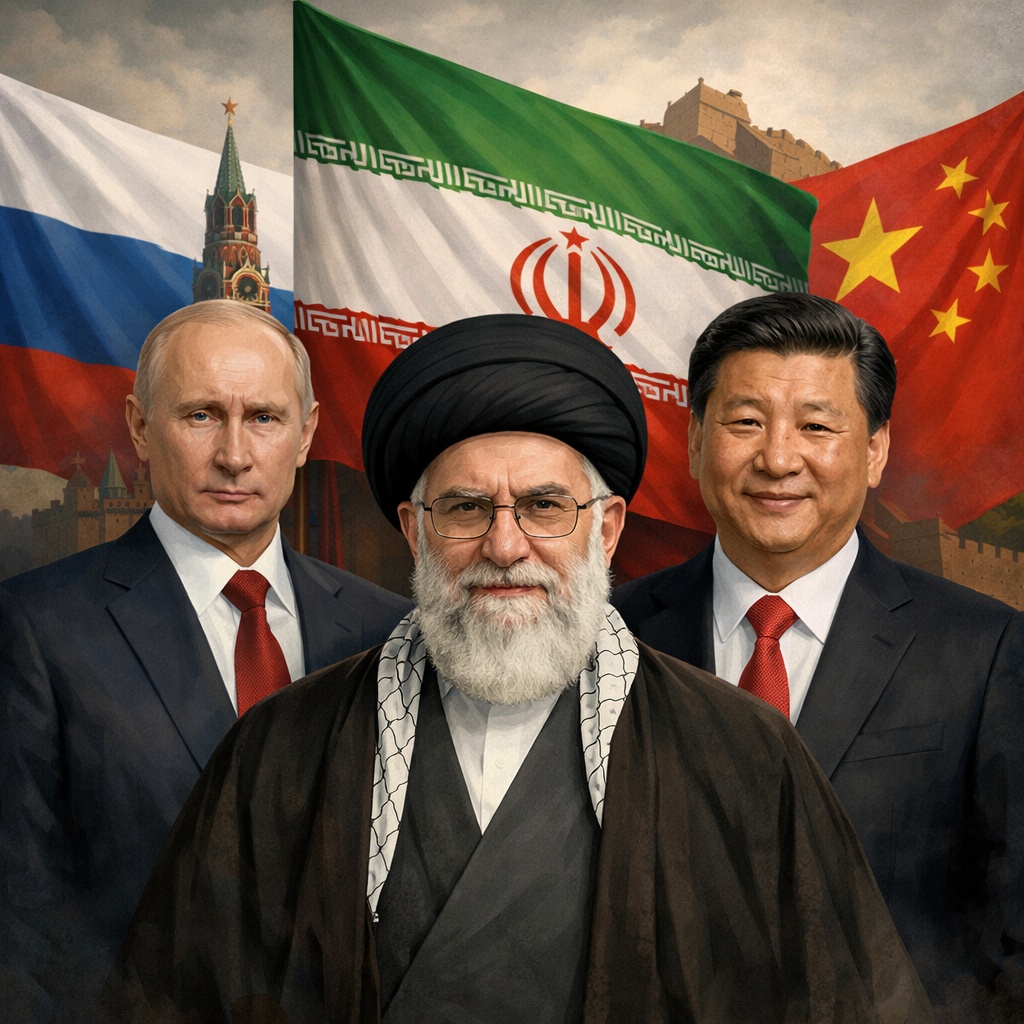
Iran Russia China

“Let us wait twenty minutes; when the enemy is making a false movement we must take good care not to interrupt him.” That is attributed to Napoleon from the 1805 Battle of Austerlitz. 

That has become over time: Never interrupt your enemy when he’s making a mistake. If I were Russia and China, I would hope Trump carries out his threat and I would assist Iran in bringing down Asia and the West to their knees cutting off all energy. 

That would leave both Europe and Asia vulnerable where they could even be conquered. Our computer is showing sharp rise in volatility in China this week and we have an important shift in global trend next week. We will address these issues in upcoming Private Blog Posts.


https://www.armstrongeconomics.com/international-news/iran/trump-to-end-civilization-it-maybe-the-wests/


Regime Change Without Nation Building

Regime Change Without Nation Building

America and Israel are at war with Iran, a fact that should be neither shocking nor surprising. Both countries have been targeted by the Islamic Republic since its inception in 1979. Both countries have engaged in painful battles with the regime’s proxies. Both nations battled Iran for 12 days last year; Israel targeted nuclear assets and other key military targets, paving the way for a crescendo of American strikes that hammered Iran’s nuclear capabilities.

But the regime refused to back down. It continued to pursue its nuclear program and its violent proxy project. Its ballistic missile stockpile also grew at an alarming rate.

Seven months after American planes did their damage, U.S. President Donald Trump parked a massive armada in the waters surrounding Iran. For weeks, he exhorted the regime to negotiate and surrender its illicit nuclear program. Concurrently, the Israelis threatened war if the regime continued to stockpile missiles.

The clerics refused to stand down, thus triggering a widening war. And so we begin anew the debate inside the United States since the last helicopter escaped the American compound in Saigon in April 1975. What is the role of the American military in achieving American aims, and should American aims include using force to change regimes we believe violate the international order and pose a long-term threat to us and to the West? Never mind that the Iranian regime has all but asked for this war since 1979. The conversation is not about Iran; it’s about the United States almost exclusively—with Israel thrown in as well. The 21st-century meaning of “America First,” the vague slogan that Donald Trump revived when he began his political career in 2015, is now being hashed out and defined in real time.

The moment war erupted, critics hammered Trump—and Prime Minister Benjamin Netanyahu. Tucker Carlson called the war “disgusting and evil.” He declared, “Just because the prime minister of Israel wanted a regime change… It certainly wasn’t a good idea for the United States.”

Former Representative Marjorie Taylor Greene lamented, “Trump, [Vice President JD] Vance, [Director of the Office of National Intelligence] Tulsi [Gabbard], and all of us campaigned on no more foreign wars and regime change.” She later stated, “We voted for America First and ZERO wars.”

The anti-Trump left piled on. Senator Elizabeth Warren released a statement saying. “‘America first’ doesn’t mean dragging the United States into another forever war built on lies while ignoring the needs of Americans here at home.” Representative Ro Khanna posted on X decrying the “illegal regime change war in Iran with American lives at risk.”

Critics on both sides seek to discredit Trump by invoking the phrase “America First” and claiming that it means something other than the war Trump launched in 2026. They suggest that he has betrayed his voters and tricked the American people by wielding those words and then using massive force against a faraway country many Americans know little about. To be fair, Trump did repeatedly declare that he would steer America away from costly foreign entanglements. But we don’t know the cost or impact of this war. Moreover, declarations and actions are two different things. Over the past few decades, presidents have fallen into the habit of speaking belligerently and then acting cautiously. Trump has done almost exactly the opposite and seems (as of this early writing) unfazed by the complaint that he has been untrue to his own doctrine.

Wars have a way of destroying presidential legacies or securing them. For Trump, his presidency’s success, both now and in history’s retelling, hinges on battlefield performance and a paradigm shift. He must first bring down the Iranian regime while limiting the spread of the conflict. But he also cannot commit to costly and futile nation-building. Finally, he must avoid Iran’s maddening complexities, especially its sectarian and nationalist baggage. In short, he must pursue “America First” regime change. But what does that mean, exactly?

Not all regime change is bad or disastrous. The U.S. has overthrown more than three dozen hostile regimes in modern history. Some have been remarkable successes.

The defeat of Nazi Germany in 1945 was the product of total war culminating in Germany’s unconditional surrender. The Marshall Plan directed billions of dollars into rebuilding West Germany. Over time, Germany emerged as a stable and democratic European ally. Similarly, the defeat of Imperial Japan in 1945 ushered in a military occupation led by General Douglas MacArthur. U.S. authorities dismantled Japan’s institutions and oversaw the adoption of a democratic constitution and parliament. Today, Japan is one of Washington’s most important Asian allies.

In 1983, U.S. forces entered Grenada to evacuate U.S. citizens, restore stability, and prevent the spread of violence after the government collapsed. Approximately 7,000 U.S. troops, alongside Caribbean forces, rapidly defeated the Grenadian military and Cuban forces on the island. The United States then supported constitutional elections in 1984 that restored civilian democratic rule, which Grenada still boasts today.

In 1986, the United States toppled Philippine President Ferdinand Marcos after fraudulent elections that rocked the country. As mass protests and military defections grew, U.S. officials worked to facilitate a peaceful transition. In February 1986, the U.S. evacuated Marcos to exile in Hawaii. Subsequent American efforts focused on democratic institutions and economic stabilization. Today the Philippines is among America’s oldest and most important allies in Asia.

In 1989, the United States removed Panamanian leader Manuel Noriega, a figure indicted in U.S. courts on drug charges. Approximately 27,000 U.S. troops were dispatched to the region. Noriega surrendered in January 1990 and then stood trial in the United States. After a period of transition, Panama remained stable and democratic.

More recently, America toppled the dictator of Venezuela, a narco-state that undermined American security and national interests in South America. The U.S. attempted to pressure President Nicolás Maduro to leave power under threat of military action and an oil blockade. Even with a massive fleet positioned off the coast of Venezuela, Maduro refused to yield. American forces arrested him in Caracas, removed him from the premises, and shipped him to America to stand trial. Trump then threatened Delcy Rodríguez, Maduro’s successor, with a “big price, probably bigger than Maduro” if she did not cooperate. She has since cooperated with American demands: passing pro-business oil laws, cutting off oil sales to American adversaries, and releasing hundreds of political prisoners.

Admittedly, not all regime change efforts have ended well. For example, in the 1950s, the Eisenhower administration overthrew Guatemalan President Jacobo Árbenz, whose Communist leanings also alarmedWashington. However, the new regime of Carlos Castillo Armas was unstable. He was assassinated in 1957, triggering a series of military takeovers, insurgencies, and weak civilian governments.

In the early 1970s, the Richard Nixon administration sought to derail the Chilean government of Salvador Allende. Economic pressure, diplomatic isolation, and covert support contributed to the 1973 military coup that marked the rise of General Augusto Pinochet—who did everything to derail efforts later in his rule to let free elections take place.

A more recent suboptimal outcome was the 2011 Libya intervention. The United States and allies combinedsanctions, diplomatic isolation, and limited military force to topple strongman Muammar Qaddafi during the Libyan civil war. NATO enforced a no-fly zone, enabling an air campaign that targeted Libyan military infrastructure while supporting rebel advances. Washington froze billions of dollars in regime assets to finance the new government. After Qaddafi fell, however, the Libyan government failed to consolidate power. Rival Muslim states backed opposing forces, yielding a deadlock that has endured since the re-eruption of the civil war in 2014.

Iraq and Afghanistan are America’s ultimate regime-change failures. In the case of Afghanistan, the war was just; the Taliban sheltered al-Qaeda leaders before the 9/11 attacks. President George W. Bush’s error was trying to forge Afghanistan into a flourishing democracy, using American taxpayer dollars, during an ongoing insurgency. The total cost reached $2.3 trillion, with more than 2,300 U.S. service members dead, before a cringe-inducing American withdrawal in 2021.

The 2003 war in Iraq was equally destructive but also less just. The rationale for intervention centered around allegations that Iraqi dictator Saddam Hussein had “chemical and biological weapons” and was “seeking nuclear weapons.” That turned out to be wrong. But Bush’s gravest error in Iraq was the same one he made in Afghanistan. He sought to turn Iraq into a democracy during an asymmetric terror campaign to derail America’s efforts. The war cost American taxpayers morethan $2 trillion, with 4,300 U.S. service members dead.

America didn’t lose because regime change was bad. Regime change was hard, and it was made insuperably so due to the interference of one key player in both Iraq and Afghanistan. That player was Iran. Iranian training and material support for Iraqi militias enabled deadly attacks against American troops. The Pentagon assesses that Iran was behind 603 deaths (more than one-quarter) of American service members in Iraq. And while numbers are not available for Afghanistan, William Wood, former U.S. ambassador to Afghanistan, said, “There is no question that elements of the insurgency have received weapons from Iran.”

Questions linger as to why President George W. Bush chose not to widen the War on Terror to include the Islamic Republic. He included it in the “Axis of Evil,” after all. But given the long history of Iranian attacks against the United States, it’s fair to ask: Why did presidents over the course of 11 terms of office across 46 years refuse to act against the regime that was the most implacably hostile to America?

The trail of blood began in 1979, with the hostage crisis during which 52 Americans were held by the nascent Iranian regime for 444 days. President Jimmy Carter appeared feckless, hoping to resolve the crisis with diplomacy. The election of Ronald Reagan ended the ordeal, but Tehran was not deterred. In 1983, the regime was behind a suicide bombing of the U.S. Embassy in Beirut that killed 63 people, including 17 Americans. The culprit was Hezbollah, an Iran-backed terror group. Later that year, Hezbollah carried out a truck bombing at a Marine compound in Beirut, killing 241 service personnel. The following year, Hezbollah kidnapped CIA station chief William Buckley in Beirut, later killing him. Hezbollah then managed to hijack two different airplanes, killing three Americans. Reagan followed the advice of his defense secretary, Caspar Weinberger, and repeatedly stood down.

President George H.W. Bush had an early brush with Iran-backed Hezbollah when it killed U.S. Marine Corps Colonel William Higgins after kidnapping him in Lebanon. Result: nothing.

President Bill Clinton was no more challenging to Iran than his predecessors had been. During the 1990s, amid an American push for Middle East peace, Iran armed and funded proxies in the Palestinian arena, where it shed more American blood. Car bombings and suicide bombings by Hamas and Islamic Jihad not only derailed America’s foreign policy but also killed and wounded scores of Americans.

The regime grew bolder. In 1996, a truck bombing rocked Khobar Towers in Saudi Arabia, killing 19 Americans. The Iran-backed Hezbollah Al-Hijaz was blamed. Then, with the assistance of Hezbollah, al-Qaeda bombed the U.S. Embassies in Kenya and Tanzania, killing 224 people, including 12 Americans, and wounding thousands. Clinton’s flaccid response to terrorism in the 1990s is the greatest foreign policy stain on his reputation.

By contrast, President George W. Bush’s War on Terror was expansive. But it was arguably not expansive enough. The 9/11 Report concluded that Tehran enabled the travel of 9/11 terrorists, noting “strong evidence that Iran facilitated the transit of al Qaeda members into and out of Afghanistan.” Bush declined to hold the regime accountable.

Similarly, Bush appeared paralyzed during the second intifada (2000–2005), when Iran-backed terrorists embarked on a terrorism rampage in Israel. Hamas suicide bombings continued to claim American lives. In 2003, Iran-backed terrorists even killed three U.S. diplomatic personnel in Gaza.

The Barack Obama presidency was marked by appeasement. The 2013 Joint Plan of Action (JPOA) yielded hundreds of millions of dollars to the regime in exchange for the mullahs’ agreeing to sit at the table. The 2015 Joint Comprehensive Plan of Action (JCPOA) gave the regime billions in exchange for fleeting restrictions on its illicit nuclear program. The agreement never addressed terrorism.

President Donald Trump’s first term saw a spike in Iranian aggression, particularly after he exited the JCPOA in 2018. In 2019 and 2020, attacks by Iran-backed militias targeted American forces in Iraq. This prompted Trump’s famous drone strike, which felled Iran’s top general, Qassem Soleimani. Iran, however, was not deterred. In September 2020, American intelligence exposed a plot to assassinate the U.S. ambassador to South Africa.

The presidency of Joe Biden began with a push for renewed diplomacy with the regime. This did not halt Iranian aggression. Iran-backed militia attacks killed or wounded American soldiers and contractors in Iraq and Syria between 2021 and 2023. Then, the Hamas attacks of October 7, 2023, plunged the Middle East into chaos. Iran-backed Hamas killed at least 48 Americans and kidnapped at least 12 Americans that day. As the war widened, American service members were hit with multiple Iranian proxy attacks, resulting in dozens of injuries and three deaths.

In 2024, the U.S. Department of Justice announcedcharges against an Iranian national and two American accomplices for plotting to assassinate President Trump. A U.S. jury then convicted agents of Iran for plotting to assassinate Iranian-American activist Masih Alinejad. Former U.S. officials Mike Pompeo, Brian Hook, and others were also targets of Iranian assassination plots. In March, as the bombs were falling on Tehran, a man working for the Islamic Revolutionary Guard Corps was convicted of entering the United States in 2024 with the intent of killing former Ambassador to the UN Nikki Haley.

In short, Iran’s war against America has been relentless. There is no question as to whether the current war is just. It is. The debate is not about Iran. It’s about America’s role in the world.

None of Trump’s war critics question American military competence right now. What they question is the cost of the war, Trump’s endgame, and what they perceive as similarities between this action and the wars of the Bush era. In essence, Trump is being pressed to explain how the “America First” president who vowed to avoid foreign entanglements intends to steer America through this war.

Trump has already rejected the Pottery Barn Rule, a heretofore-unknown principle adduced by Secretary of State Colin Powell that supposedly required the United States to repair Iraq once we had “broken” it. Trump’s rejection is commendable. Just because America stands up to another country’s aggression does not mean that its taxpayers must finance the removal of rubble, let alone the rebuild. This was a novel precept, and it is one that Americans broadly eschew. Americans today seem to understand that the world is a dangerous place and that dangerous actors may require overwhelming responses—but they want to prevent the spilling of American blood or treasure for the benefit of others.

The Venezuela model for regime change is therefore, on the surface, an appealing model for the future. Minimal risk, all-but-certain mission success, and the promise of oil profits all sound ideal. However, surgical opera-tions with little destruction or bloodshed were never in the cards when it came to engaging Iran. Hundreds of top leaders and thousands of targets have been wiped out, with oil facilities in flames. The United States may yet find an Iranian Delcy Rodríguez should the regime begin to buckle. Then again, it’s hard to overestimate the ideological nature of the Islamic Republic. The task of finding pragmatists inside the regime may prove Sisyphean.

Here is where it is useful to remember that the people of Iran are arguably the country’s greatest resource. They are educated. A less radical, more pragmatic regime existed in Tehran in the memories of everyone older than 55, and the experience of living under theocratic tyranny has been the only experience young Iranians know.

Is Iran ripe for regime change? In 2009, Iranians overwhelmingly voted for liberalization, only to have the mullahs fix the result—leading to an uprising that had to be crushed, though not nearly as brutally as the killing spree in January 2026 that showed the regime’s truly murderous colors in the mass slaughter of tens of thousands. Indeed, Iranians have in recent memory sought to carve a different path and, just two months ago, were in open revolt. This is not a quiescent population whose will has been shattered.

Unfortunately, little is known about the opposition on the ground right now. But Iranian unity will be crucial to any effort to reach a stable end state in this war. We’ll soon see if the Persian-speaking majority can join forces with the complex patchwork of Iranian minorities.

Self-defined experts on these matters look at the prospect of Iranian common cause with deep skepticism. But we Americans are hardly the best judges of the ways to achieve common ground. Our divisive politics have in recent decades rendered American foreign policy schizophrenic, with key principles shifting violently every four or eight years. The debates over military intervention, regime change, and even America’s place in the world have yielded chaos and confusion, both at home and abroad.

While Americans have been exceptionally vociferous in expressing their varying political views in recent years, the Iran war has finally brought a major fault line to the surface. This heated battle on both the left and the right is between neo-isolationists and interventionists. For those who believe no good can come of war and that America fails when it fights, no argument exists that will penetrate their hard shell of determinist defeatism. But foreign policy theorists in the neo-isolationist camp—those who do not want to appear to be isolationist but rather realist—warn that whatever America does is merely a distraction from the real issue of the 21st century. That issue is our “great power competition” with China. Any cent we spend for any purpose other than countering China is a penny wasted. Of course, since China is allied with Iran and sees Iran as an extension of its sphere of interest, an American defeat of Iran would serve the purpose of putting China on notice that we will not look kindly on another totalitarian regime’s effort to spread its shadow across the globe. Nor will we sit idly by.

The task before Donald Trump is finding a middle ground that appeals to the isolationists and interventionists, on the left and the right, all of whom fervently believe that they are putting “America First.” To secure his place in American history, and to end this war on his terms, he must find a way to validate both camps while engineering a decisive victory in Iran that heralds a new Middle East, sets back rivals like China and Russia, and does not empty out the U.S. Treasury.

None of this is simple or intuitive. But history is replete with American regime-change experiments that did not bankrupt America and did not thrust it into a forever war. Should Trump find a way of repeating that history, and not the failures of the early 21st century, while vanquishing the greatest threat to American interests in the Middle East, “America First” won’t just be a political slogan. It will be a blueprint for other important battles amid the litany of geopolitical challenges that lie ahead.

Photo: Anton Petrus/Getty Images