Friday, April 3, 2026

Paid to Rage: How Astroturf Protesters Hijack the First Amendment


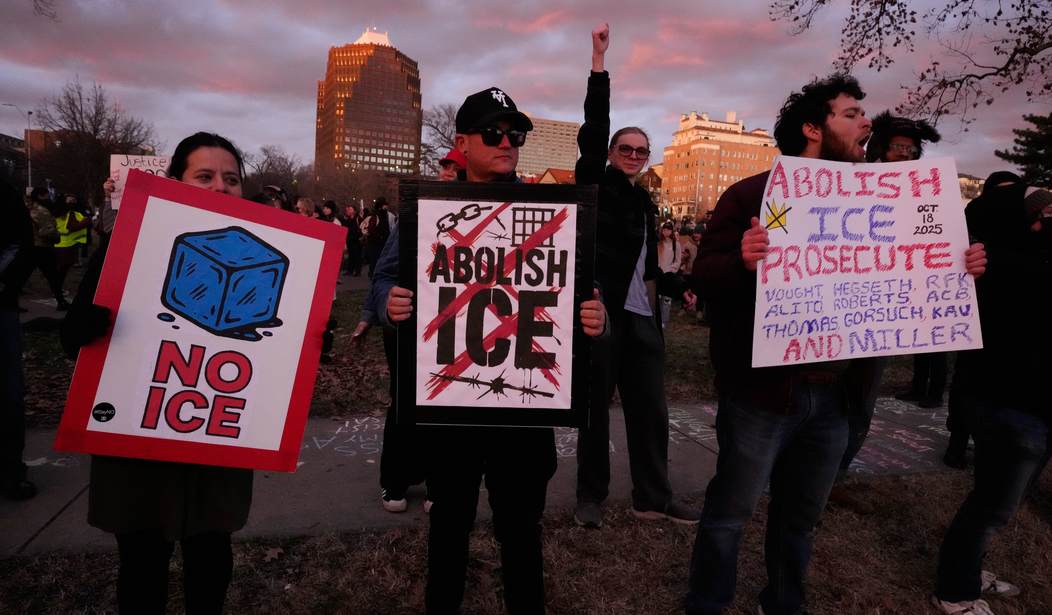
The First Amendment was written for citizens, not contractors. It was designed to protect the Boston Tea Party — not a corporate logistics operation with pre-printed signs, walkie-talkies, gas masks, and a direct deposit agreement.  Yet that is precisely what American protest culture has become in the era of billionaire-funded nonprofit networks.  The gap between the constitutional ideal and the operational reality has grown wide enough to drive a bus of Crowds on Demand participants through.

Adam Swart, CEO of Crowds on Demand, confirmed to Fox News in August 2025 that his firm has seen a 400% surge in paid protester requests year over year.  Compensation runs from the low hundreds per gig — varying by location, duration, and, as Swart put it, the challenges of holding a progressive sign in rural Mississippi.  Swart insists that his roster consists of sincere advocates.  But when the marketplace for dissent has a clearing price and a staffing agency, what we are witnessing is not civic engagement. It is astroturfing — a term coined for tobacco-industry lobbyists in the 1980s and since perfected by a left-wing apparatus that has transformed manufactured outrage into a funded career path.

The complaint here is on constitutional grounds.  When hidden money turns protests into paid performances and foreign-adjacent networks coordinate the logistics, the democratic signal that lawmakers and courts are supposed to interpret becomes noise.  As John Stuart Mill understood, the marketplace of ideas functions on honest exchange.  Conceal the subsidies, and you distort the debate.  People have a right to protest, but should billionaire-funded organizations operating like professional advocacy firms enjoy the same disclosure exemptions as private citizens gathering spontaneously at a town square?

The fingerprints of George Soros’s Open Society Foundations (OSF) are not subtle.  A September 2025 report by the Capital Research Center documented that since 2016, OSF has directed more than $80 million to organizations tied to terrorism or extremist violence.  More than $23 million went to seven U.S.-based groups the FBI classifies as engaged in domestic terrorism, including the Ruckus Society, which trained activists in property destruction during the 2020 riots.  Another $18 million flowed to the Movement for Black Lives, which co-authored a guide glorifying Hamas’s October 7 massacre and instructing activists in infrastructure blockades and false identification.  OSF denied the characterizations.

OSF’s role in the “No Kings” protests of October 2025 is well documented.  Fox News Digital reported that OSF provided $7.61 million in cumulative grants to Indivisible, the organization managing data and communications for those nationwide demonstrations.  Chuck Schumer attended.  Ted Cruz cited “considerable evidence” of Soros network involvement.  OSF responded with its standard formulation: It does not “pay, train, or coordinate protesters.”  The legal dodge is elegant.  The money trail is not.

The anti-ICE riots that tore through Los Angeles in June 2025 cost taxpayers $32 million — confirmed by L.A. city controller Kenneth Mejia, with 92% attributed to LAPD response costs.  The House Judiciary Committee opened an investigation into whether the Coalition for Humane Immigrant Rights (CHIRLA), which received nearly $34 million in government grants, including federal DHS funding, used those resources to fuel the unrest.  In Minnesota, OSF-backed entities including The People’s Forum, linked to Chinese Communist Party–connected financier Neville Singham, coordinated anti-ICE agitation through networks that blur the line between domestic advocacy and foreign-adjacent influence operations.

I have spent more than thirty years tracking capital flows that institutions would prefer stay invisible.  This one is not complicated.  Follow the money.

Then there is Lisa Fithian, the 63-year-old professional agitator the NYPD identified by name during Columbia University’s 2024 Hamilton Hall occupation.  Video shows her directing building-breach tactics.  Her decades-long career, funded through progressive nonprofit networks, makes her the Jane Fonda of organized disruption, except Fonda eventually moved on.  Fithian is still at it, better capitalized than ever.

The gap between funded protest narratives and actual public opinion is not theoretical.  The February 2025 Harvard/Harris poll found that closing the border ranked among Trump’s three most broadly supported policies, with 76% approval.  By June 2025, 63% of registered voters supported border closure measures, with 74% backing deportation of criminal aliens — majorities that crossed party lines.  Against that backdrop, professionally organized riot logistics costing $32 million in Los Angeles, funded by tax-exempt networks, represents not policy disagreement, but structural corruption of the civic signal.

Spotting hidden cash flows is table stakes in financial services.  You do not analyze a balance sheet by reading only the stated income line.  You follow the capital structure through the footnotes, the related-party transactions, the off-balance-sheet commitments.  What OSF and its downstream grantee network represent is the dark-money equivalent of a leveraged buyout of American protest culture — with taxpayers holding the unsecured debt.

As Justice Brandeis observed, sunlight is the best disinfectant.  The question is whether Congress has the spine to open the blinds.

The solution is not complicated. The Lobbying Disclosure Act of 1995 already requires registration for those spending more than 20% of their time influencing federal officials.  The Foreign Agents Registration Act (FARA) of 1938 — born in the era of Nazi propaganda — mandates registration for agents of foreign principals engaging in political activities, even where control is merely implied.  Both statutes have gaps wide enough to accommodate an entire ecosystem of paid organizers, professional trainers, and grant-funded coordinator networks.

Congress should close those gaps.  A Protest Transparency Act modeled on an expanded Lobbying Disclosure Act would require DOJ registration for any individual or organization receiving compensation exceeding $3,500 per quarter for coordinating, organizing, or providing logistics for public demonstrations — with full disclosure of funding sources and foreign affiliations.  For foreign-adjacent cash, FARA enforcement must be rigorous: OSF-linked organizations operating under implied foreign principal influence should register.  The 2025 FRONT Act, targeting nonprofits funded by adversary nations, provides a template worth expanding to protest-specific coordination.

The First Amendment protects speech, not anonymity in commercial advocacy.  Lobbyists register.  Foreign agents register.  PACs disclose.  There is no principled reason why a professional protest coordinator drawing a salary from a tax-exempt foundation should operate with less transparency than a K Street lawyer.  Contact your representative at house.gov and urge co-sponsorship of protest transparency legislation, and back candidates who treat FARA enforcement as a national security priority rather than a bureaucratic afterthought.

The First Amendment protects the right to speak truth to power.  It does not protect the right to rent a mob, bill it to a Swiss-registered foundation, and call it democracy.  When professional organizers collect salaries to amplify foreign-funded narratives while ordinary Americans absorb the $32 million tab for the riot response, we are auctioning liberty.

Neil Peart of Rush — a philosopher who happened to play drums at superhuman velocity — warned that “glittering prizes and endless compromises shatter the illusion of integrity.”  The same applies to a protest movement that cannot survive without a direct deposit.  Genuine conviction endures adversity.  A paid performer clocks out when the checks stop clearing.

America’s experiment in self-government requires citizens at the controls, not contractors.  Time to require they wear a name badge.


Podcast thread for April 3rd


 'it is finished'.

What Exactly Is the Purpose of NATO in the Year 2026?


One month into Operation Epic Fury against the Islamic Republic of Iran, a long-overdue conversation has finally broken into the open: What, exactly, is the enduring rationale for NATO? For decades, this question has been treated in Washington foreign policy circles as heretical. But it isn't. And to their credit, President Donald Trump and Secretary of State Marco Rubio are now saying so plainly.

As Trump recently put it, "They haven't been friends when we needed them. We've never asked them for much. ... It's a one-way street." Rubio has been similarly blunt: "If NATO is just about us defending Europe if they're attacked but then denying us basing rights when we need them, that's not a very good arrangement. ... So all that's going to have to be reexamined."

They're spot-on.

At best, America's European "allies" have spent decades free-riding on the U.S. security umbrella. Despite repeated commitments to meet baseline defense spending targets, many NATO members still under-invest in their militaries and outsource their national defense to American taxpayers. The imbalance is staggering: The United States accounts for the overwhelming majority of NATO's military capabilities, logistics and strategic lift. Overall, American taxpayers contribute about 60 percent of total spending on NATO defense.

At worst, some of these same European allies actively undermine U.S. operations at critical moments. Major Western European countries, such as Spain and France have restricted or complicated the U.S. use of their airspace during Operation Epic Fury. That is farcical. A so-called alliance in which members obstruct one another's ability to wage war is not actually an alliance — it is a liability.

This raises the core question: Why, exactly, does NATO exist in the year 2026?

Let's recall its origins. NATO was founded in 1949 with a clear and urgent mission: to contain and, if necessary, defeat the Soviet Union. That mission was compelling — indeed, existential. Western Europe lay devastated after World War II, and the Soviet threat was real, immediate and hegemonic.

But that world quite literally no longer exists.

The Soviet Union collapsed three and a half decades ago. The Berlin Wall fell the year I was born. The Cold War is now a relic of history. By any reasonable metric, NATO achieved its raison d'etre by the early 1990s. But instead of declaring victory and recalibrating, the alliance drifted. It expanded ever further into Eastern Europe and shifted its ostensible mission into ... well, something.

Simply put, NATO is today an organization in search of a purpose.

Is NATO a collective defense pact against the geopolitical successor to the Soviet Union, the Russian Federation? If so, why do so many European NATO members fail to take that threat seriously enough to invest in their own national defense? Is NATO now instead a vehicle for global counterterrorism? If so, why have its members sat on the sidelines and refused to join the United States as it goes to battle against the world's No. 1 state sponsor of jihad? Or is NATO nowadays just a political club for liberal democracies? If so, what does that have to do with a hardheaded conception of the U.S. national interest?

NATO has become a catch-all institution, long on triumphalist platitudes but short on the strategic realities on which its existence was predicated.

Meanwhile, the global order is shifting. The initial post-Cold War era of enthusiastic multilateralism has slowly given way to a more interest-driven, nationalist paradigm. Nation-states are rediscovering the primacy of sovereignty, borders and self-interest. In such a world, the idea that the United States should blindly remain bound to a 20th-century transnational alliance structure is untenable.

This certainly does not mean that America should retreat into isolationism. But it does mean that our alliances must be rethought, recalibrated and — where necessary — replaced.

The geopolitical future lies not in outmoded multilateral boondoggles but in agile, strategic bilateral and trilateral partnerships. These smaller, more focused arrangements allow for clearer expectations, greater accountability and more direct alignment of national interests. They avoid the bureaucratic inertia and free-riding that plague massive superstructures like NATO.

The highly effective binational U.S.-Israel assault on Iran over the past month illustrates what a dynamic 21st-century bilateral alliance can do. The contrast with the sclerotic NATO member states of Western Europe is stark.

For too long, American policymakers have treated NATO as an article of faith. But alliances are not sacred. They must be consistently reevaluated to determine whether they still serve their intended purpose and advance our national interest.

If NATO cannot meet that test — if it continues to function as a lopsided arrangement in which the United States pays, protects and sacrifices while others equivocate and obstruct — then it is not only reasonable but necessary to question its future and America's role in that future.

Operation Epic Fury has exposed these contradictions in stark relief. Something clearly must change. The ball is in NATO's court. Because the status quo is no longer defensible — and deep down, everyone knows it.


When a Regime Enlists its Children

When a Regime Enlists its Children

The Islamic Republic's dark sign of degeneracy - and desperation.

The Islamic Republic of Iran has lowered the minimum age to 12 for participation in war-related activities. No, it’s not that boys and girls will be sent off to fight. Instead, children as young as 12 will now be used to help man checkpoints, to go on patrols (presumably to watch out for saboteurs, or for signs of discontent and defeatism among the population), and to help with logistics. The Iranian state needs all the help it can get — even from its children. More on this sign of desperation can be found here: “Iran Lowers Minimum Age for War Roles to 12, Sparking Outcry Over Child Soldier Use,” by Ailin Vilches Arguello, Algemeiner, March 26, 2026:

The Iranian regime has lowered the minimum age for participation in war-related activities to just 12 years old, a move that will likely fuel the concerns of human rights groups, which have condemned Iran’s treatment of children.

In a televised interview with state media, Rahim Nadali, a cultural with Iran’s Islamic Revolutionary Guard Corps (IRGC) in Tehran, announced that the new initiative “For Iran” is recruiting participants to assist with patrols, checkpoints, and logistics.

“Since children are increasingly volunteering to take part, we have lowered the minimum age to 12,” Nadali said, urging young children to join the war effort if they wish.

Iran International first reported Nadali’s statement, which has since circulated on social media.

As part of the regime’s state media coverage of the US-Israeli war against Iran, this latest announcement has ignited mounting backlash over the use of minors in security‑related roles — a practice that is not new in Iran.

“Recruiting children into military activity is a violation of international laws and the international community must not stay silent,” Iranian-American activist Masih Alinejad posted on social media, along with video of Nadali’s comments. “This is the same regime that lectures the world about morality. But when it comes to survival? They’re willing to send children into danger.”

In the past, widely circulated social media images and videos have repeatedly shown children and teenagers in military-style uniforms cracking down on protests, including during the 2022 Woman, Life, Freedom uprising, which erupted nationwide after Mahsa Amini, a young Kurdish woman, died in a Tehran police station following her arrest for allegedly violating hijab rules.

Under international law, Iran’s move flagrantly violates the Convention on the Rights of the Child, which explicitly prohibits the use of children in military activities, marking a dramatic breach of its global obligations.

When a regime decides to call on its children to take part in a war, this is clearly a sign of desperation. This lowering of the age at which children in Iran can take part in the war effort puts one in mind of National Socialist Germany, when in 1945, children as young as 12 were drafted in an effort to defend Berlin and the remnants of the regime. And that is not the only thing about the Iranian regime that should remind us of Nazi Germany.


🎭 π–πŸ‘π π““π“π“˜π“›π“¨ 𝓗𝓾𝓢𝓸𝓻, π“œπ“Ύπ“Όπ“²π“¬, 𝓐𝓻𝓽, π“žπ“Ÿπ“”π“ 𝓣𝓗𝓑𝓔𝓐𝓓


Welcome to 

The π–πŸ‘π π““π“π“˜π“›π“¨ 𝓗𝓾𝓢𝓸𝓻, π“œπ“Ύπ“Όπ“²π“¬, 𝓐𝓻𝓽, π“žπ“Ÿπ“”π“ 𝓣𝓗𝓑𝓔𝓐𝓓 

Here’s a place to share cartoons, jokes, music, art, nature, 
man-made wonders, and whatever else you can think of. 

No politics or divisive posts on this thread. 

This feature will appear every day at 1pm mountain time. 


Todd Blanche: ActBlue Allegations a 'Priority' of New DOJ

Todd Blanche: ActBlue Allegations a 'Priority' of New DOJ


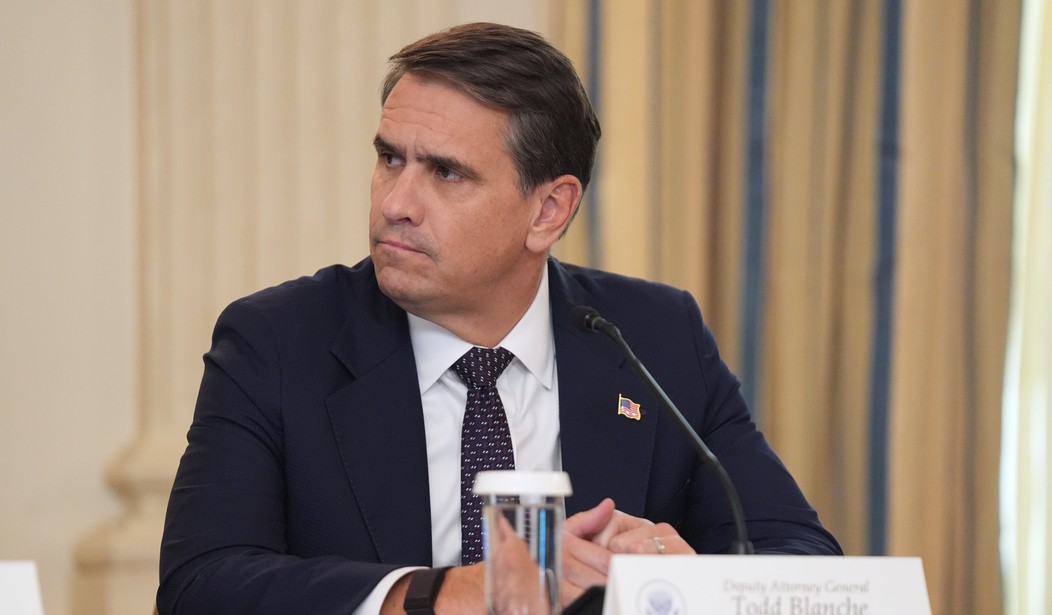
Acting Attorney General Todd Blanche suggested that the Department of Justice is investigating ActBlue after a New York Times report said that ActBlue might have lied to Congress about vetting foreign donations. 

Blanche told TV show host Jesse Waters: "That's a priority of this administration and this DOJ. It's something that a lot of people have been worried about it for a very long time. You can rest assured that it includes the Department of Justice and it includes me."


The Shrieking Commences As Islamic Society of Milwaukee President Detained by ICE


RedState 

The president of the Islamic Society of Milwaukee, who some claim is a long-time Hamas supporter, was detained by U.S. Immigration and Customs Enforcement (ICE) officers on Monday. It’s unclear what he’s being held for.

Federal agents reportedly followed him before nabbing him, the Islamic Society alleges:

The Islamic Society of Milwaukee said ICE agents followed Salah Sarsour on Monday as he left his home, surrounded his vehicle, and took him into custody.

The organization said Sarsour was taken to an ICE facility in Broadview, Illinois before being transferred to a detention center in Indiana.

The Islamic Society of Milwaukee said Salah Sarsour has been a legal resident of the Milwaukee community for over 32 years, and is a lawful permanent resident, whose wife and all six children are citizens.

Even though there’s scant information thus far, Sarsour’s supporters wasted no time before shrieking about discrimination and Islamophobia. Wisconsin Congresswoman Gwen Moore (D-04):

This is completely unacceptable. Salah Sarsour is a respected leader in the Milwaukee community, and his detention raises serious concerns about the continued targeting of lawful residents based on the color of their skin or their political beliefs.

Moore was not alone in immediately assuming that ICE had racist, dark intentions:

Milwaukee County Executive David Crowley said in a statement that Sarsour's arrest "is an affront to everything Milwaukee stands for."

"Let's be clear about what happened here: Agents did not stumble upon Mr. Sarsour," said Crowley, who is running for governor. "They followed him and monitored him based on his profile and the community he leads. That is religious profiling and government surveillance of a faith community happening right here in Milwaukee, and this administration expects us to simply accept it."

Although the Society says that Sarsour has been a model citizen for decades in the U.S. and is not a supporter of terrorism, he does have a history, according to RAIR Foundation USA (Rise Align Ignite Reclaim), an organization that the media loves to claim is “extreme right-wing” and which warns about  Islamic extremism.

Sarsour’s Hamas connections aren’t speculation: They are laid out in Israeli court records, U.S. FBI memos, and congressional testimony. In 1995, Sarsour was arrested and jailed for eight months in an Israeli prison for supporting the U.S.-designated terrorist group Hamas. While incarcerated, he became “close friends” with Adel Awadallah, the West Bank commander of Hamas’s military wing, the Izz ad-Din al-Qassam Brigades. According to his own brother Jamil Sarsour (arrested in 1998 for funding Hamas), Salah helped plan attacks against Israel and used his Milwaukee furniture business to send money to Awadallah via checks.

A November 2001 FBI Action Memorandum explicitly listed Salah Sarsour (and brother Imad) as a Hamas fundraiser operating through the Holy Land Foundation (HLF) – the largest terror-financing case in U.S. history. HLF was later convicted in federal court of funneling millions to Hamas. Sarsour had previously worked with the Islamic Association for Palestine (IAP), a known Hamas propaganda and recruitment arm that provided “media, communications, and fundraising support” to HLF. Law enforcement documents show he raised money “in the name” of HLF for Hamas.

We will know soon enough if Sarsour was wrongfully detained and is 100 percent innocent, as the Islamic Society of Milwaukee claims, or if he's a danger, as RAIR alleges. Considering the reality that we do not know why ICE picked him up, however, it’s a little early — and histrionic — to be shrieking about Islamophobia, racism, and discrimination already.

Let’s wait and see what the facts actually are.


There Is No Property-Rights Case for Birthright Citizenship

There Is No Property-Rights Case for Birthright Citizenship

The US Supreme Court now has before it the case of Trump vs. Barbara. The Trump administration is arguing that birthright citizenship is not guaranteed by the Fourteenth Amendment. Since the Amendment’s adoption in the 1860s, advocates of immigration and widespread naturalization have argued that the amendment applies to anyone born on US soil, even if his or her parents are only temporarily traveling within the US. Others have argued that the amendment was intended as a measure designed only to avoid statelessness for former slaves and their children in the United States. That is, the amendment was a post-Civil War measure designed to address a problem of the time. 

I have covered this controversy in some detail in an article titled “Birthright Citizenship Isn’t Real.” That article, however, was centered on legal arguments. Whatever one makes of claims surrounding the constitutionality of birthright citizenship, legal arguments alone can’t establish a moral case for birthright citizenship, or establish citizenship as a natural right. A government-created legal “right” is not the same thing as a natural right. History has shown that government judges and their allies argue for all sorts of special legal “rights” that are not derived from natural rights at all. The Supreme Court has ruled, for example, that residents of the US effectively have a “right” to public schooling—paid for by taxpayers, of course—under the so-called equal protection clause. Government judges have also decided that US residents have a “right” to kill human babies in utero, and a “right” to vote. None of these “rights,” however, are based on any property rights derived from the natural rights of life, liberty, and property. The legitimate natural rights—as explained by early classical liberals such as Thomas Jefferson and John Locke—are founded in legitimately held property, such as that acquired through homesteading, peaceful exchange, or the natural ownership of one’s own physical body. 

Birthright citizenship, on the other hand—i.e., automatic naturalization based on the political jurisdiction in which one is born—is one of these invented legal “rights.” 

This helps explain why, among those who claim to be the protectors of property rights—i.e., many self-described “libertarians”—we virtually never encounter an argument for naturalization based on property rights. For example, in a new press release from the CATO institute, emailed out this morning in response to oral arguments at the Supreme Court (see below), all of the CATO scholars quoted rely entirely on legal arguments about constitutional law and on consequentialist claims about alleged benefits of federally-mandated mass naturalization. Private property is never mentioned. David J. Bier does mention “rights of every...citizen” but, tellingly, no actual property rights are mentioned.

Yet, even if we are talking about protecting the property rights of non-citizens, that is an entirely separate question that does not depend on naturalization or citizenship.  If the question is “do non-citizens have property rights in the United States?” the answer is an emphatic “yes.” The Bill of Rights, after all, clearly doesn’t limit itself to citizens. Moreover, the Bill of Rights does not guarantee a right to naturalization or, by extension, a right to vote. In other words, the authors of the Bill of Rights clearly did not view “rights” as reliant on the government-issued status we call “citizenship.” This is because classical liberals in the eighteenth and nineteenth centuries did not believe that voting and citizenship were akin to property rights like “life, liberty, and property.” (I explain in more details in this article.)

So, let’s look more closely at why naturalization is not a property right and why there is no property-based argument—and thus no libertarian case—for mass naturalization or birthright citizenship. 

Property Rights vs. Naturalization “Rights”

The first important distinction that must be made is between immigration and naturalization. The two are not at all the same thing. 

Immigration is the process of human beings moving from one place to another. In the current context, this nearly always means migration across an international boundary. Immigration policy, therefore, is the process of restricting—or not restricting—the movement of these persons. In practice, the question of immigration policy necessarily raises the question of whether or not government authorities ought to restrict migration by various regulations. Immigration regulation necessarily involves the regulation of property, whether we’re talking about the property of the migrant—in his physical person—or the property of landlords and employers (and other market participants) who seek to contract with migrants.

Naturalization is something different altogether. Naturalization is the process by which persons gain access to political institutions. This requires an administrative act of a government agency. Citizenship can bring with it greater access to taxpayer-funded amenities like the welfare state, but the most crucial aspect of citizenship, in democratic states, is that citizenship provides access to the ballot box and to public office. Unlike immigration policy, naturalization policy does not involve the regulation or property.

Indeed, citizenship is not any type of property and there is, therefore, no natural right to citizenship. In the libertarian view of property, one can acquire property either through homesteading or through contract. Citizenship, in contrast, cannot be obtained through the same means of obtaining property. One cannot “homestead” citizenship or purchase it from the “owner” of citizenship in the private sector. 

Moreover, property exists in nature regardless of the existence of civil governments or states.  Citizenship, however, does not exist independent of government institutions at all. Citizenship is fundamentally a creature of the state.

This important distinction between bona fide property and citizenship is clear in the real world, as demonstrated by the fact that, worldwide, many millions of immigrants are free to live and work in places where they are not citizens. In the United States, for example, countless non-citizens are free to own property, hold a job, and travel freely. It is not necessary to become a citizen to enjoy natural property rights or even to enjoy procedural rights such as due process rights for criminal trials. In other words, non-citizens can enjoy the same property rights that citizens enjoy.

Do Libertarians who Favor Expanded Naturalization Have an Argument other than “The Constitution Says So”? 

It is difficult to find articles by libertarian writers that even acknowledge these distinctions. Even fewer attempt to address it in any detail. The Mises Institute is a rare exception to this. Murray Rothbard provides some brief comments on the artificial nature of citizenship as a product of state power. I have an article covering it here.

With the exception of a handful of Rothbardians, libertarians have been virtually silent when it comes to making a specifically libertarian case for or against naturalization. This has apparently been the case for quite a while since, back in 2012, Mark Krikorian of the Center for Immigration Studies publicly asked—not snarkily, but earnestly—if there is a libertarian position on citizenship at all

At the same time, Krikorian did note that in exactly one case he had personally encountered a libertarian who acknowledged the difference between naturalization and immigration. According to Krikorian:

[T]he only time I recall a libertarian addressing the citizenship issue … was Jacob Hornberger of the Future of Freedom Foundation. During a panel we were both on Hornberger was challenged that immigrants would vote for socialism; he responded that immigration and citizenship are separate issues, and that immigrants shouldn’t necessarily be allowed to naturalize and vote …

Assuming this anecdote is true, Hornberger is correct on the matter. Like Rothbard, he also gets to the core and key issue of naturalization and citizenship: voting.

This voting issue was also acknowledged, very briefly, in an article by Sheldon Richman, in one of the rare cases where a libertarian has attempted to argue for expanded citizenship on libertarian grounds. Unfortunately, like most articles by libertarians ostensibly about citizenship, it’s mostly an article about immigration mixed in with a bit of legal positivism. However, near the end of the article, Richman admits that the article is really just advocating for immigration and he says “The case presented here might seem to justify no more than legal residency.” To remedy this, Richman provides exactly three sentences on the matter of naturalization. He writes:

What about citizenship? To take that step, one need only consider that a legal resident is subject to the government’s power to tax and regulate. Since his bid for exemption from U.S. government impositions would not be recognized, we are forced to the second-best disposition, namely, that the legal resident ought to have a say—as small as it is—over government policy, that is, the privileges and immunities of citizens.

This seems to be all we’re going to get from immigration expansionists on the topic of citizenship, and it is only a minor afterthought following 800 words of appeals to Constitutional authority. But, at least Richman has bothered to say something about the topic based on an appeal to some sort of presumably libertarian principle.

Every single other “libertarian” article on citizenship I have seen relies solely on legal arguments or, in some rare cases, appeals to the practical benefits of expanded citizenship. (Here’s one that says expanded naturalization is good because it helps “assimilate” immigrants, as if assimilation has something to do with libertarian goals.)

There are a couple of problems with Richman’s very short argument, though. First of all, Richman does not in any way establish that citizenship is a property right of any kind. As such, “protecting” this non-right of citizenship is not mandated by any libertarian principle. This is not necessarily a fatal problem. A libertarian argument could still reasonably advocate for more naturalization on the prudential and pragmatic grounds that expanded naturalization limits state power. That may be Richman’s tactic here.

Yet, it is not at all apparent that the extension of citizenship and naturalization have served to limit the size or scope of the state anywhere. Certainly, the example of expanded citizenship during the French Revolution points in exactly the opposite direction. Indeed, citizenship has historically been an important tool in building the modern centralized state

Moreover, if expanded citizenship means an extended franchise—which it does in the modern West—then an argument in favor of expanded citizenship would rest on evidence that an expanded franchise has limited state power. It seems that exactly the opposite has happened. Indeed, it is probably not a coincidence that the total war and totalitarianism of the twentieth century closely followed the rise of the modern democratic state.

Richman tells us that citizenship and the vote is a means of residents protecting themselves from the excesses of government taxation and regulation. Yet, in the United States, an ever-expanding franchise has caused—or at least failed to prevent—a multi-fold increase in the burden of taxes and regulations. 

It is likely that the early libertarians like the Levellers and John Locke—who opposed the idea of an unlimited franchise—were right all along. 

The reasons for this were put into a modern context by Ludwig von Mises who showed in 1944 that that once a sizable portion of the population becomes accustomed to demanding material benefits from the state, then the size of the state will only grow.

So, it appears that the expansion of naturalization and citizenship are not justified by any libertarian claim, whether rights-based or pragmatic. This may be part of why most libertarian pundits so often avoid the issue altogether.

Appendix: The CATO press release on the Supreme Court’s consideration of birthright citizenship does not appear to be available online. Here is the text:

Following today’s oral arguments before the Supreme Court, Tommy Berry, director of the Cato Institute’s Robert A. Levy Center for Constitutional Studies, was present for the arguments and released the following statement:

“Chief Justice Roberts had the line of the morning when he said, “It’s a new world, but it’s the same Constitution.” That really does sum up why the government’s policy-based arguments had no bearing on the constitutional question.

“Today’s oral argument focused on the original public meaning of the Fourteenth Amendment’s text, which is the correct approach. And a clear majority of the Justices were unconvinced by the government’s argument that this meaning has been misunderstood for over 150 years. As multiple Justices noted, the government’s argument is very difficult to square with the reasoning of the Supreme Court’s Wong Kim Ark decision from more than a century ago. Yet the government did not even ask the Court to overrule that decision if the Court interpreted it to protect traditional birthright citizenship. 

“Based on today’s argument, it seems that the most likely outcome is a simple opinion reaffirming that the Court meant what it said in Wong Kim Ark: those born on U.S. soil are U.S. citizens, with very rare exceptions for those who are to some extent exempt from following U.S. law. I expect the challengers to the President’s order will receive somewhere between 6 and 8 votes in their favor.”

Alex Nowrasteh, the senior vice president for policy at the Cato Institute, released the following statement:

“The United States is an immigrant-assimilation machine partly because birthright citizenship makes all their US-born children equal under the law. The legal arguments in favor of continuing birth-right citizenship are solid; the social case is overwhelming.”

David J. Bier, the Director of Immigration Studies at the Cato Institute and occupies The Selz Foundation Chair in Immigration Policy, released the following statement:

“The implications of ending birthright citizenship for the rights of Americans are stark. Not only would it expose some native-born Americans to deportation, but it would also deny all Americans the use of their birth certificates as the only foolproof defense against immigration arrest, detention, and removal. Especially with the administration carrying out papers-please profiling throughout the country, ending or curtailing birthright citizenship would imperil the rights of every natural-born American citizen, regardless of ancestry.”

Ilya Somin, the B. Kenneth Simon Chair in Constitutional Studies at the Cato Institute, also released a statement:

“As Justice Barrett suggested in today’s oral argument, the Trump Administration’s rationales for denying birthright citizenship to children of undocumented migrants would also have denied it to numerous freed slaves and their children. That goes against the main purpose and original meaning of the Citizenship Clause. It is, by itself, sufficient reason to reject the administration’s position, even aside from all the many other reasons why that position is wrong.”

  • Rather than defending the private-based worldview of libertarianism—the radical wing of classical liberalism—these advocates of mass naturalization appear to be motivated more by a political program that rather naively asserts that voting—a form of political participation closely tied to naturalization—and written constitutions will somehow meaningfully restrain government power. For a more complete view of this naive view of politics and libertarianism, see: https://mises.org/podcasts/libertarian-scholars-conference-2026/classical-liberalism-has-not-failed-and-we-need-it-now-more-ever

  • In a purely private society, “citizenship” would be replaced by “ownership” in which the resident would have a property-based stake in the community. Early liberals, by restricting the vote to people perceived to have “skin in the game” or to have a stake in the community, were attempting to mimic this idea. With the creation of universal suffrage, however, citizenship lost all connection to any notion of having to be invested in the community in which one participates politically.