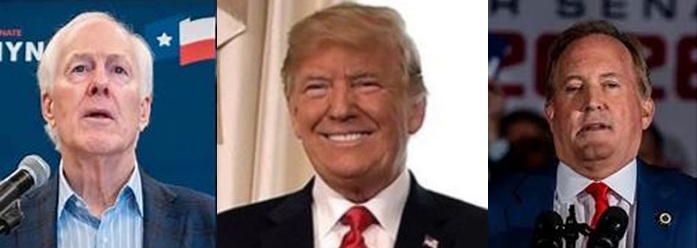
It’s frustrating to watch congressional Republicans bollix up this critical moment in U.S. history. Time is running out to secure American elections, eliminate all the welfare fraud and birth tourism that operate as magnets for illegal aliens, and pass legislation that gives President Trump’s executive orders the force of law. You can already see the familiar scene shaping up on Capitol Hill: professional Republicans’ “failure theater” is back for another shameless performance.
Over 80% of Americans believe that our elections will not be secure until voters are required to show proof of citizenship and photo identification (common-sense requirements enforced in “democratic” nations around the world). This 80-20 split with the electorate is important to note. Safeguarding the legitimacy of elections is consistently popular in the United States. Over 80% of Americans also believe that ballots should be counted on Election Day. Similar percentages reject universal mail-in ballots. Republican voters are close to 100% in support for these election safeguards. Nevertheless, Senate Majority Leader John Thune continues to play “failure theater” as he finds new ways to sink President Trump’s election-safeguarding SAVE America Act. Utah Senator John Curtis is already joining forces with Democrats to push for mass amnesty for illegal aliens (a recurring dream of Establishment Republicans who enjoy betraying Republican voters more than defeating Democrats’ plans for destroying the United States).
Republican voters have watched this deranged kabuki theater all their lives. Republican voters push for something that they want. Republican politicians promise to “get it done on day one.” Republican voters put those Republican politicians in office. Then victorious Republican politicians find inexplicable ways to break their promises and do nothing. Their failures in leadership hand control of Congress to the Democrats. The Democrats get whatever they want done on day one…usually with the help of at least a few so-called “Republicans” in Congress.
One of the more recent infuriating examples of Republicans’ “failure theater” occurred after President Obama and Senate Majority Leader Harry Reid rammed socialized medicine (aka, Obamacare) through Congress in 2010 and set us down the path toward universal, government-run healthcare.
Republican voters knew what would happen. Private medical practices would disappear. Inexpensive private insurance would disappear. Families struggling to make ends meet would be forced to pay the welfare costs of people (including illegal aliens) who had no insurance coverage of their own. Republicans knew that Obamacare would destroy the medical profession, increase consumer costs, and shove an ever-increasing number of taxpayer-funded government bureaucrats inside each examination room.
Republicans had no power in Congress or the White House when Democrats forced Obamacare on the American people. Republican members of the House and Senate pleaded, “Give us your vote, and we’ll save you from this Obamacare monstrosity.” Republican voters (including grassroots conservatives who were springing up across the country as part of the largely unorganized Tea Party Movement) went to the polls in huge numbers in the 2010 midterm elections. Republicans won sixty-three seats in the House, the largest shift since 1948, and secured the majority. Republicans picked up seven seats in the Senate but failed to take back the chamber. In a rare moment of honesty, Obama called the 2010 midterms a “shellacking” of the Democrat Party. How did the victorious Republicans use their new powers in the House to hinder, block, or otherwise stymie Obama’s government takeover of medicine? They mumbled, “Sorry, we can’t do anything without control of the Senate.”
So grassroots Republican voters went to work again. It took them four years, but they finally secured Republican control of the Senate in 2014. Those midterm elections were another huge Republican victory. Republicans picked up nine seats in the Senate, the largest gain by either party since 1980. Republicans won thirteen more seats in the House, giving them their largest majority since 1928. Now surely Republicans would be able to fight the Democrats’ government takeover of healthcare and put a stop to new Obama taxes and regulations suffocating the middle class…right? Nope. Speaker of the House John Boehner and Senate Majority Leader Mitch McConnell said, “Sorry, there’s just nothing we can do without the White House.”
Republican voters spent four years giving Republican politicians the power to stop Obamacare in its tracks, and the politicians stabbed the voters in the back. What happened next? Two things:
First, Obamacare (with more than a little help from pretend conservative judicial hack John Roberts) became entrenched in America’s labyrinthine regulatory system that exists to extract money and personal autonomy from the American people and deposit money and control to the permanent bureaucracy. The old days of a private, professional relationship between doctor and patient are gone. Now the federal government’s bureaucratic regulations combine with the insurance companies’ regulations and the corporate hospitals’ regulations to determine mandatory medical outcomes before a patient even arrives.
Second, Republican voters learned that Republican politicians can never be trusted again.
Young Americans who are just coming of age to vote in this year’s midterms will have few, if any, memories of how Donald Trump successfully beat a smorgasbord of talented Republican candidates in the 2016 primaries before overcoming Democrat nominee Hillary Clinton’s monetary and public relations advantages to take the presidency. Although the propagandists in the corporate press will never stop blaming Hillary’s embarrassing loss on the Russians (state-sanctioned disinformation that rational people now recognize as the Clinton-Obama-Intelligence-Community-invented Russia Hoax), she had more advantages in the 2016 election than any candidate in American history.
The Clinton campaign and its network of NGOs and partisan advocacy groups spent somewhere between three and five times as much money as Donald Trump did in the run-up to the election. The corporate press (including so-called “conservative” institutions) almost unanimously endorsed Clinton over Trump. Hillary’s team booked the Jacob K. Javits Center in Manhattan to celebrate her certain victory on election night under an enormous glass ceiling (which she was certain to “break” as the first woman president, get it?). Hillary was so confident of victory that she started campaigning in Texas. Two weeks before the election, Hillary even sent out a Tweet with a picture of herself as a little girl and a caption reading, “Happy birthday to this future president.” Hillary, the Democrats, Republican politicians, the news media, almost all of the pollsters, almost all of the pundits, the whole permanent bureaucratic Establishment running D.C., and every elite institution in the United States all predicted a Hillary Clinton victory in 2016. Newsweek even printed a “special commemorative edition” with Hillary’s face taking up the whole cover with an emblazoned headline, “MADAM PRESIDENT,” and a subheading announcing, “Hillary Clinton’s Historic Journey to the White House.”
Something strange happened on the way to Hillary’s coronation. The American people elected businessman Donald Trump as president of the United States. Some of those voters chose him because they liked his policies. Others voted for him simply because he ran as a Republican. Above all else, though, the American people recognized Trump as the first legitimate “outsider” running for high office. The Establishment hated him, and, from the American people’s perspective, that hate was a ringing endorsement for Trump’s candidacy.
Ten years later, and Establishment Republicans still haven’t learned the lesson of the 2016 election. They think that they can weather a couple more years with Trump in office and then get back to business as usual. They’ve got another think coming.
After Republican politicians failed to save Americans from Obamacare, Republican voters learned that professional Republicans can’t be trusted. Watching the Washington Establishment spend the last ten years trying to put Trump and his voters in prison have only reinforced that lesson. Voters are going to get only louder after Trump’s presidency. RINO “failure theater” no longer works. Senator Thune must step up or step aside.