Thursday, March 26, 2026

If You Think Democrats Care About You, Then You’re an Idiot


I hate these people, I really do.

When was the last time you actually thought a Democrat politician had your back on something? I mean, really had your best interest in mind, even if only in words and not deeds? I’ll wait.

I can’t think of one. Maybe on 9/11, from the moment of the attack, through the spontaneous singing of God Bless America on the steps of the US Capitol, and for about a week after that. Then the wheels came off and they started to return to, well, themselves. They asked: “What did we do to deserve this attack?” And it was off to the races ever since.

How a party that actively roots against the best interests of the people who elect them, and enacts policies to harm them, manages to win elections is a mystery – I know people are into masochism, I just didn’t realize there were that many people into it.

Republicans are not perfect, but Democrats are actively promising to prioritize illegal aliens over Americans, and still, there is a good chunk of the population who will vote for these people. Here in Maryland, the spoiled rich kid-turned-author who pretended to be poor and a victim of racism by proxy through his grandfather (a lie, it turns out) named Westley Moore (he goes by Wes because his real name sounds too rich) and a Member of Congress, April Delaney – who lives 30 minutes outside of the southernmost point of the district she represents – released a video pledging to protect illegal aliens criminals from both deportation and custody in the state.

Why? Because Rachel Morin, the 37-year-old mother of five who was raped and murdered by an illegal alien in the state, doesn’t matter to them. She’s dead, who cares?

None of the dead matter to Democrats; this is about the future voters they’re trying to make. Moore lives in a safe neighborhood and will never face any of the consequences he’s imposing on others, nor will his kids. Delaney is married to a man who was one of the richest Members of the House, John Delaney, and her family will never face any consequences either. If something awful happened to someone they cared about, maybe they’d think differently, but only maybe. Sociopaths tend not to really care, no matter what.

That’s how Democrats can look at what they’ve done at airports across the country and see an opportunity, not pain. TSA agents unable to pay their rent do not register as anything more than props. A hungry kid is a great photo-op and a good story for a press conference, before attending a lunch at Morton’s paid for by some lobbyist.

A deal was basically reached this week, when Republicans agreed to pay Homeland Security employees and give Democrats almost everything they wanted regarding ICE, except masks. Then Democrats backed out. Why? Why not? They want the issue, and the suffering of Americans helps the issue. What do they care if you miss your flight? They’ve got an agenda to advance.

The pain IS the point.

Democrats used to bill themselves as “champions of the little guy,” but they’re not the pawns of billionaires. Soros, Sandler, Singham and the like – these people are the real evil in the world, every bit as bad as history’s greatest monsters. What despots did at the barrel of a gun, these people do with their checkbooks and a pen.

There’s barely a drop of blood criminally spilled in the United States today that can’t be traced back to a “progressive” policy decision somewhere along the line. These monsters and the people they pay to implement their hate are unindicted co-conspirators to all the crimes they enable, and they’re proud of it.

If you know someone who still believes these people have any interest in your well-being or anything related to your life…you should probably stop smoking crack. They are about politics and power. They morphed “Black Lives Matter” into “No Kings,” not because black people stopped being killed, but because they are killed more often by other black people and those lives do not matter to them. Dump one boogeyman for another and always march to the next outrage, that’s how Democrats roll.

If anyone thinks that party cares about them, then they are idiots.


Podcast thread for March 26


Slow internet stinks. :(

Trump’s Trifecta: Advancement for America and Setbacks for China


Iran is understandably the number one news story with primary focus on the progress of U.S. military and diplomatic engagement and the responses of the Shiite mullah regime in Tehran. Almost no one is thinking or talking about the equally important spiritual and cultural ramifications for Iran, and the region, if the United States prevails -- driving the current regime in Iran out of power. There’s even less analysis of the shifting geopolitics resulting from the combined effects of successful U.S. operations restoring control of the Panama Canal, Venezuela and its resources, the collapse of Cuba, and the degradation of narco-terrorism -- all in the Western Hemisphere, and the fall of the current Iranian regime -- in the heart of the Middle East.

Christianity has ancient roots in Iran, which was known as Persia, dating all the way back to 1st century A.D., making it one of the oldest Christian communities in the world. Acts 2 recounts that at the time of the Pentecost when Jewish people from all parts of the diaspora were gathered in Jerusalem, they heard people speaking in many tongues, including the Parthians, Medes, and Elamites -- three separate groups that came from what is now in the territory of Iran.

After Pentecost, two of Jesus’ Apostles, Saint Thaddeus and Saint Bartholomew, traveled east to evangelize in what is now Iran, Iraq, Armenia, and Azerbaijan. Armenia, which now borders north Iran, would become the first nation in the world to adopt Christianity as its official state religion in 301 AD.

The original Monastery of Saint Thaddeus was established in northern Iran in AD 66–68, after Thaddeus became a martyr, making it one of the oldest church-monasteries in the world. Because Saint Thaddeus is credited with bringing Christianity to Armenia in the 1st century, the monastery in his name located in Iran has served as a major pilgrimage destination for Armenian Christians for some nineteen centuries.

The Christian population in Iran today is growing at about 20% each year -- faster than in any other country in the world. This high growth is confirmed by missionary research organizations such as Operation World, Elam Ministries, and Transform Iran who all report Iran as having Christian conversion growth rates of about 20% per year.

This high annual growth rate of Christians in Iran is attributable to underground evangelical home churches (mostly Muslim-background converts), rather than the formal small ethnic Armenian and Assyrian Christian churches. Recent estimates of the number of Christians in Iran now vary from one to two million (and even up to three million in higher estimates).

There are two other factors behind the high growth rates happening in Iranian home churches: 1) The penetration of satellite and internet technology in educating and evangelizing; and 2) The widespread disillusionment with the Islamic Republic and Shia Islam. Decades of theocracy have been accompanied by economic hardship, corruption, oppression, bloodshed, and cultural isolation.

Credible independent surveys, like one published in 2025 that was conducted by the Dutch organization known as GAMMAAN (Group for Analyzing and Measuring Attitudes in Iran) have found that Iranian popular support for “the principles of the Islamic revolution and the Supreme Leader” -- which are core to the regime’s ideological foundation -- is just 11%.

When we combine the political and cultural facts and trends that the Iranian people are overwhelming opposed to the Shia clerical regime and the Islamic Republic with a sustained annual 20% growth rate of the Christian population in Iran, there has been substantive reason to expect major changes in Iran even before the current war.

The total military defeat of Iran in the Middle East combined with what the U.S. has accomplished in the Western Hemisphere -- wresting control of Panama and its Canal from China, taking on the Latin American narco-terrorists, and cutting China off from Venezuelan oil -- will deliver a multifaceted strategic and economic blow to China and the CCP, shifting the geopolitical tectonic plates in favor of the United States and the cause of freedom.

 This outcome stems primarily from China’s documented dependence on Iran and Venezuela for oil, its infrastructure stakes in Panama, and its ties in the Western Hemisphere drug trade. China is the world’s largest crude oil importer (at 11.6 million barrels per day) by more than a factor of two over India -- the next largest importer of oil (at 4.8 million barrels per day), while the U.S. is now a net exporter of oil. Previously, China purchased more that 50% of Venezuela’s oil exports, which has been cut off following the U.S. ouster of President NicolΓ‘s Maduro. China imports 80-90% of Iran’s crude oil exports, which funds Iran’s military budget -- a budget that will be radically curtailed with a U.S. victory in Iran. All of this gives the U.S. leverage in the global markets China depends on.

Additionally, both Venezuela and Iran have significant debts to China because of multi-billion-dollar project investment structured with Belt and Road Initiative (BRI) debt. Venezuela now has a pro-U.S. government in place that could repudiate BRI loans of $10-20 billion under legal categorization of being “odious debt.” Should Iran end up with a pro-U.S. regime with the defeat of the mullahs, Iran could repudiate some $400 billion in BRI investments for oil and gas petrochemical infrastructure.

Strategically, Venezuela, Panama, and Iran have represented three key nodes in China’s anti-US. alignment: 1) Panama as a crown jewel of the Belt and Road Initiative (BRI) to promote and prioritize Chinese infrastructure, trade and transit interests: 2) Venezuela as a Latin American beachhead with domestic narco-terrorist groups, such as Cartel de los Soles (formerly headed by Maduro), and Cuban and Iranian security forces, and terrorist groups (notably Hezb’allah) and 3) Iran as a Middle East bridge -- a BRI land-sea connector -- and the world’s largest sponsor of anti-American terrorism.

Trump’s shrewd and precise targeting in Venezuela and shockingly powerful and persistent kinetic attacks in Iran effectively collapsed this threefold strategic partnership and the “infrastructure debt-for-resources” model of BRI. This has also weakened the BRICS cohesion and is forcing China into costlier and more risky energy deals. Trump’s trifecta, fraught with risk, has effectively put the United States on a path of greater dominance in these three theaters, while delivering clear strategic setbacks to our chief adversary, CCP-controlled China


Is the American Empire Doomed to Crumble?


History does not whisper. It warns.

Empires do not collapse because of a single moment of weakness. They erode from within, slowly hollowed out by overreach, moral ambiguity and the false belief that their power exempts them from consequence. The question before us is not whether America is strong. It is whether we are wise enough to endure the burden that comes with being the world's lone superpower.

Scores of empires have come before us. Each one believed itself indispensable. Each one believed its reach was justified. And each one eventually fell, often not at the hands of foreign enemies but by the cumulative weight of unsustainable wars and internal contradictions.

World War I alone shattered the Ottoman, Austro-Hungarian, Russian and Chinese empires, while accelerating the decline of the British and French. The so-called thousand-year German Reich lasted barely more than a decade. The Soviet Union dissolved in 1991 under the pressure of its own excesses. Even Rome, arguably the greatest empire in history, could not escape the trap of perpetual conflict.

Economist Joseph Schumpeter described Rome's fatal flaw with chilling clarity: Threats were constantly manufactured, interests endlessly expanded, and wars justified under the banner of necessity and honor. When no clear enemy existed, one would be invented. The result was a state perpetually at war, convinced it was always acting in self-defense.

We would be foolish to believe we are immune from that pattern.

The United States is still young by historical standards — just 250 years old. In its early years, our conflicts were limited and often defensive. The War of 1812 was fought to protect sovereignty. But as our power grew, so did our ambitions.

The Mexican-American War marked a turning point. Even then, voices of conscience emerged. Ulysses S. Grant would later call it "one of the most unjust ever waged by a stronger against a weaker nation." That moral clarity should not be lost on us today.

From there, expansion accelerated, with Hawaii annexed, territories seized after the Spanish-American War, and influence asserted across Latin America. By the 20th century, the United States had begun to resemble the very empires it once rejected.

After World War II, our global role solidified. With it came a new reality: the responsibility and the temptation of unmatched power. Korea, Vietnam, Iraq, Afghanistan, Libya and ongoing conflicts across multiple regions have defined decades of American foreign policy. Each engagement carried its own rationale. Each was framed as necessary.

But taken together, they reveal a pattern that demands scrutiny.

Today, the United States maintains hundreds of military installations around the world and spends more on national security than the next several nations combined. We are engaged directly or indirectly in conflicts that span continents. At the same time, our national debt approaches historic levels, with interest payments alone rivaling core government expenditures.

This is not merely a question of strategy. It is a question of sustainability and of morality.

Because while we project strength abroad, we must also ask: What is happening at home?

A nation cannot indefinitely bear the cost of external commitments while internal fractures widen. The burden of being the world's lone superpower is not just financial, it is moral. It requires restraint where excess is tempting, clarity where narratives are convenient, and accountability when decisions carry consequences measured not in headlines but in lives.

And today, the rhetoric itself reflects the danger of that imbalance.

President Donald Trump has issued stark warnings of overwhelming force, signaling a willingness to escalate if adversaries do not yield. Iran, in turn, has responded with its own uncompromising threats, vowing retaliation not just regionally but against broader U.S. and allied interests. This is the language of brinkmanship, where words are no longer simply signals but accelerants.

At the same time, renewed instability surrounding Cuba, long a geopolitical flashpoint and just 90 miles from American shores, serves as a reminder that pressure points are not confined to one region. When tensions rise simultaneously across theaters, the risk is not isolated conflict but convergence.

War is never abstract. It is paid for in the blood of the young, the grief of families, and the long shadow it casts over generations. It is easy to speak of strategy in distant capitals. It is harder to confront the quiet return of flag-draped coffins and the unanswered question of what, ultimately, was gained.

We must also be honest about the danger of normalization. When a nation becomes accustomed to constant conflict, when war becomes background noise rather than a last resort, we risk losing not only our resources but our moral compass.

And that is where decline truly begins.

Empires rarely recognize their own unraveling. The British once declared that the sun would never set on their dominion. Rome believed its reach was eternal. History proved otherwise.

America stands at a crossroads. Not of immediate collapse but of cumulative consequence.

We can continue down a path of expansive commitments, rising debt and strategic ambiguity, trusting that our power will carry us indefinitely. Or we can pause, reflect and ask the harder questions:

What are we defending?

What are we sustaining?

And at what cost?

This is not an argument for isolation. The world remains interconnected, and American leadership still matters. But leadership without discipline becomes overreach. Power without restraint becomes peril.

The burden of being a superpower is not simply to act but to know when not to.

If we fail to learn that distinction, history suggests a sobering outcome: not sudden collapse but gradual decline. Not a single decisive moment, but a series of choices that lead us away from the very principles that once defined us.

Only humility, restraint and moral clarity can alter that course.

The warning signs are there.

The question is whether we are willing to see them.


Appeals Court Hands Trump Big Win on Detaining Illegal Immigrants

Appeals Court Hands Trump Big Win on Detaining Illegal Immigrants

Fred Lucas for Daily Signal

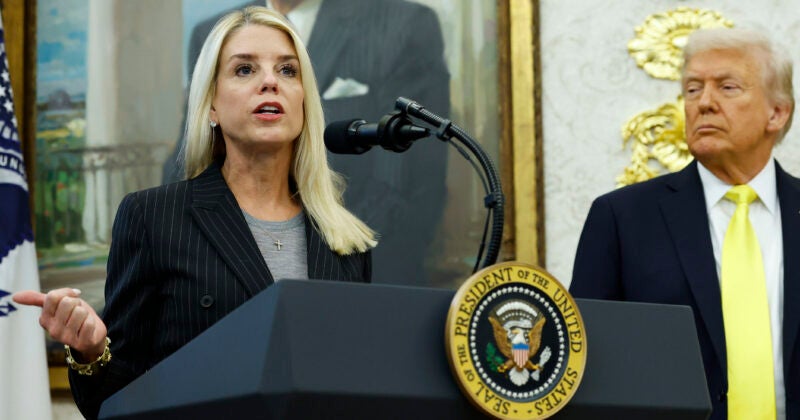
WASHINGTON, DC - OCTOBER 15: U.S. Attorney General Pam Bondi (L) speaks as U.S. President Donald Trump looks on during a press conference in the Oval Office of the White House on October 15, 2025 in Washington, DC. Trump and Federal Bureau of Investigation Director Kash Patel provided an update on the Trump administration’s progress in reducing violent crime. (Photo by Kevin Dietsch/Getty Images)

Attorney General Pam Bondi speaks as President Donald Trump looks on. (Kevin Dietsch/Getty Images)

The Trump administration scored a victory on Wednesday as an appeals court ruled that it can detain illegal immigrants without bond.

A three-judge panel of the 8th U.S. Circuit Court of Appeals ruled 2-1 in favor of the Department of Homeland Security’s detention policy, in the case of illegal immigrant Joaquin Herrera Avila.

All three judges on the 8th Circuit panel were Republican appointees, one appointed by President George W. Bush and two by President Donald Trump.

Avila, an illegal immigrant from Mexico, was apprehended in Minneapolis in August 2025. The Department of Homeland Security detained Avila without bond and brought removal proceedings against him. When Avila sued for habeas corpus, U.S. District Judge John Tunheim, a Bill Clinton appointee, sided with him.

On Wednesday, however, the panel majority rejected the plaintiff’s argument that being in the United States was the same as being legally authorized to enter the country, or “admitted.” It reversed the district court’s ruling that the administration could not detain Avila without bond under the relevant statute.

“Being ‘admitted’ does not merely mean being present in the United States; under immigration law, it signifies having made a lawful entry into the country,” stated the opinion by Judge Bobby Shepherd, the Bush appointee, joined by Trump-appointed Judge L. Steven Grasz.

Attorney General Pam Bondi, among the officials named as a defendant in the case, praised the decision in a post on X as a “MASSIVE COURT VICTORY against activist judges and for President Trump’s law and order agenda!”

She cited two other circuit court rulings that illegal immigrants can be detained without bond. “The law is very clear, but Democrats and activist judges haven’t wanted to enforce it,” Bondi posted. “Imagine how many illegal alien crimes could have been averted if the left had simply followed the law?”

Judge Ralph Erickson, a Trump appointee, dissented, writing, “The court does not rely on recent Congressional action or a change in the regulations governing detention but rather engages in a novel interpretation of ‘alien seeking admission’ that eluded the courts and five previous presidential administrations.”

The 8th Circuit Court covers Arkansas, Iowa, Minnesota, Missouri, Nebraska, North Dakota, and South Dakota.


Japanese Universities Abandon Merit


As the West walks back gender studies, Japan is opening the door.

Brother and sister are charged after an explosive device was found outside a Florida Air Force base


Alen Zheng is charged with of attempting to damage government property, unlawfully making a destructive device and possessing an unregistered destructive device.


 A man who fled to China and his sister have been charged after an explosive device was left outside a gate at MacDill Air Force Base in Tampa this month. Their mother was detained for deportation, having overstayed her visa, a federal prosecutor said Thursday.

Alen Zheng, 20, and Ann Mary Zheng, 27, were charged Wednesday in separate federal indictments. The sister was arrested upon her return from China, where she flew with her brother after the threat. Both have U.S. citizenship, U.S. Attorney Gregory Kehoe said during a news conference.

“If you threaten to harm somebody or if you harm somebody in the Middle District of Florida, you will be brought to task,” Kehoe said.

Alen Zheng faces 40 years in prison if convicted of attempting to damage government property and unlawfully making and possessing the explosive device found in a package outside the base. Ann Mary Zheng faces 30 years if found guilty of witness tampering and being an accessory after the fact to the crime, by allegedly selling the car he used to drop off the package.

A defense attorney for Ann Mary Zheng declined to comment. Online court records didn’t list an attorney for Alen Zheng.

Kehoe said the investigation developed very quickly after a suspicious package was found outside MacDill on March 16. Agents determined that Alen Zheng actually planted the device on March 10 before making a 911 call to inform authorities about the bomb. Air Force personnel had searched the base without discovering the device initially.

The day after the 911 call, the Zhengs sold their Mercedes-Benz SUV and flew to China. Ann Mary returned to the U.S. several days later. By then, investigators had used phone data to connect the 911 call to Alen Zheng, and spotted the SUV on surveillance video. By the time they reached CarMax, the car had been vacuumed and cleaned, but they were still able to find evidence including residue from the explosive, Kehoe said.

When agents executed a warrant at the family’s home, they reported finding explosive device components. Meanwhile, the device was flown by helicopter to an FBI lab in Huntsville, Alabama, for further examination, FBI Special Agent in Charge Matthew Fodor said.

Kehoe said he’s not sure if the siblings also have Chinese citizenship. He said they have no immediate evidence that Alen Zheng was working on behalf of the Chinese government or any other country. Officials are working to have him returned to the U.S. to face prosecution, he said.

The U.S. Central Command is located at MacDill and is responsible for U.S. military operations in the Middle East, Central Asia and parts of South Asia. MacDill is one of the U.S. bases that has been on heightened alert since the war in Iran began.

Another man was arrested earlier this week on charges of making threatening phone calls to the base days after the device was discovered, though investigators haven’t accused that caller of planting any devices. There was no immediate connection between that caller and the Zhengs.

https://www.advocate-news.com/2026/03/26/fbi-florida-air-force-base-charges/

🎭 π–πŸ‘π π““π“π“˜π“›π“¨ 𝓗𝓾𝓢𝓸𝓻, π“œπ“Ύπ“Όπ“²π“¬, 𝓐𝓻𝓽, π“žπ“Ÿπ“”π“ 𝓣𝓗𝓑𝓔𝓐𝓓


Welcome to 

The π–πŸ‘π π““π“π“˜π“›π“¨ 𝓗𝓾𝓢𝓸𝓻, π“œπ“Ύπ“Όπ“²π“¬, 𝓐𝓻𝓽, π“žπ“Ÿπ“”π“ 𝓣𝓗𝓑𝓔𝓐𝓓 

Here’s a place to share cartoons, jokes, music, art, nature, 
man-made wonders, and whatever else you can think of. 

No politics or divisive posts on this thread. 

This feature will appear every day at 1pm mountain time. 


Canadian Gun Confiscation Program Not Shaping Up Well


Canada's attempt at confiscating so-called assault weapons has been a master class in how to carry out a complete and total cluster...flop. We'll go with flop here. What I mean, though, is that at every step along the way, they managed to find a way to bungle it.

Now, as the deadline closes for gun owners to declare their firearms if they want any compensation for them from the government, it seems pretty clear that nothing has changed.

In fact, it's downright hysterical, because even if Canadians are less likely to be as defiant in the face of their government as Americans are, they're not exactly bending the knee, either.

Gun owners have reported more than 51,000 firearms to the federal government with one week left to go in a program to provide compensation for banned guns, Public Safety Minister Gary Anandasangaree said Monday.

The figure is well short of the 136,000 firearms for which the government set aside money when the buyback program for individual owners opened in January.

Anandasangaree said he is "cautiously optimistic" leading up to the March 31 deadline for the program, which offers owners compensation for turning in or permanently deactivating their guns.

Since May 2020, Ottawa has outlawed about 2,500 types of firearms, including the AR-15 and Ruger Mini-14, on the basis they belong only on the battlefield.

Prohibited firearms and devices must be disposed of — or deactivated — by the end of an amnesty period on Oct. 30.

It's possible they'll get something like another 130,000 declarations in the last week, but it would seem to me that most of those inclined to take the government up on its offer would have already done so.

And anyone interested in complying would be more likely to take the compensation deal than just destroy their guns for nothing.

What we're looking at here is that Canada's gun confiscation effort is coming up short, with fewer than a third of those expected being declared so far, and that's well short of the upper end of the estimates for semi-auto firearms in the Great White North, which is around 250,000 or so.

While what happens in Canada doesn't directly impact us, it's worth comparing this to the NY SAFE Act, which had a similarly low rate of compliance from AR-style rifle owners. That particular law just required registration with the state police, and ridiculously few complied. 

The takeaway here is that no matter how anti-gun a government wants to be, just snapping their fingers and expecting armed people who intend to resist tyranny to just give up the best guns they have for that purpose simply because the government says so is about as stupid as thinking Starfleet Academy was the best offering of Trek in years.

You can say it, but it just makes you look like you should ride a bus to school with a lot less steel than the average, if you know what I mean.

If Canadians aren't playing that game, there's absolutely zero chance of Americans playing it, so the anti-gun left needs to give that crap up while they're ahead.


Democrats Just Can't Let This Go


For some reason, Democrats are still trying to use their politically-motivated investigations into President Donald Trump to score cheap political points against their opponents.

The barrage of prosecution efforts failed to achieve their intended purpose: To ensure Trump didn’t win the 2024 election. But folks like Democratic Rep. Jamie Raskin (MD-08) still can’t let go of special counsel Jack Smith’s investigations into the president.

This time, it involves the classified document case that resulted in the raid of Trump’s home in 2022. Raskin sent a letter to Attorney General Pam Bondi accusing Trump of stealing highly sensitive classified documents when he left office after the 2020 election. 

The lawmaker criticized Bondi and the Justice Department for trying to “gag” Smith and conceal key findings about why Trump retained documents that were so sensitive, “only six people in the entire U.S. government had access to them.” He asserted that some of the documents “would be pertinent to certain business interests,” which supposedly established “a motive for retaining them.”

“We must have those documents,” Raskin wrote.

The lawmaker referred to a memo in which prosecutors cautioned that disclosing these records constituted “an aggravated potential harm to national security” and characterized them as “highly sensitive documents—the type of documents that only presidents and officials with the most sensitive authority have.”

Raskin brought up other incidents he claims are examples of reckless handling of classified documents, including a young aide who “uploaded the scan to a cloud” and Trump showing “a classified map” to passengers on a plane. 

In a rather desperate moment, Raskin attempted to insist that Trump’s possession of those documents is part of his business dealings with Saudi-backed ventures and pointed out that the president repeatedly boasted about having Pentagon war plans “done by the military and given to me” about a possible attack on Iran.

Raskin warned that if a classified Middle East map were shown to foreign officials, it would be “an unforgivable betrayal” of troops and claimed that the DOJ already has evidence that Trump “has already endangered national security to further the interests of Trump family businesses.”

You want to know what was missing from Raskin’s letter? You guessed it: Evidence. He provided no evidence to back up his claims that Trump is endangering national security.

The Justice Department released a statement on X in response to the lawmaker’s letter, saying Raskin “is blinded by hatred of President Trump” but that “he needs to get his facts straight—this Department of Justice is the most transparent in history in part because of our efforts to expose the weaponization of the Biden administration in full compliance with the law and the court.”

The statement slammed Smith’s team, saying it was “desperate to prosecute Biden’s top political opponent, so it is no surprise that his files contain salacious and untrue claims about President Trump.

Here’s the thing: Nobody, and I do mean nobody, cares about the classified documents case anymore. Anyone with an IQ higher than my shoe size could see that this case, along with all the others, was not motivated by a desire for justice or national security. Democrats simply wanted to use the justice and court systems to attack a political opponent — and it worked about as well as Biden’s Afghanistan withdrawal.

The fact that Raskin is even bringing this up shows that Democrats might not be in as favorable a position as they might have us believe. 


Congress Can Split Up the Homeland Security Funding

Congress Can Split Up the Homeland Security Funding

ICE agents patrol at John F. Kennedy International Airport in New York City, March 23, 2026. (Adam Gray/Reuters)

And to think, Congress was just about to look competent.

For the first time in decades, lawmakers came close to achieving regular order by passing eleven of twelve annual bills to fund the federal government on time. The one bill it left on the table was for the Department of Homeland Security (DHS), which has been without funding for well over a month. As Americans begin to feel the pain of this partial shutdown, it’s time to break the impasse.

Democrats forced the shutdown in February to block funding for federal immigration agencies: Immigration and Customs Enforcement (ICE), which detains illegal migrants in the nation’s interior, and U.S. Customs and Border Protection, which traditionally polices the border but has recently been deployed to cities. Furious at the Trump administration’s deportation agenda, Democrats refused to fund these agencies’ overarching department until they secured changes. Republicans have balked at their proposals, arguing they would kneecap lawful operations.

Although the policy battle in Washington has centered on ICE and Border Patrol practices, the immigration agencies are largely unaffected by the shutdown. Agents’ salaries are still being paid from money allocated in last year’s sprawling reconciliation bill. The law provided $75 billion in funding for immigration enforcement through 2029, and DHS can spend that money flexibly even during a shutdown.

The main victims of the shutdown, therefore, are the non-immigration agencies under the DHS umbrella: the Coast Guard, the Secret Service, and the Transportation Security Administration (TSA). FEMA, the federal government’s emergency-response agency, is not receiving new funding but has billions of dollars left over from previous congressional appropriations.

Given their vital national security role, most Coast Guard and Secret Service personnel are required to work despite missing paychecks. The same is theoretically true of the TSA. In practice, however, thousands of TSA agents are not coming in to work, knowing that they won’t be paid until Congress funds the agency. More than 400 officers have quit since the shutdown began. Of those who remain, up to a third of TSA officers at certain airports have called in sick or simply not shown up.

Extraordinary absence rates have made airport security even more of a nightmare than usual. This spring break season, travelers have encountered security lines that last for hours as screeners are stretched thin. The situation could get much worse soon. Even more TSA officers, overworked and unpaid, may stop coming in. Smaller airports might be forced to close temporarily, putting greater strain on other locations.

Lawmakers on both sides of the aisle are proposing a solution to end the pain caused by the shutdown. Ted Cruz (R., Texas), the chairman of the Senate transportation committee, has called for splitting DHS funding between the two immigration agencies and the rest of the department. Senate Republicans would first join with Democrats to fund all agencies except ICE and Border Patrol, including the TSA. Negotiations would continue over deportation changes.

Reports suggest that an immigration compromise may be within reach. But if Democrats’ demands remain unreasonable, Cruz advocates that Republicans use the reconciliation process a second time to fund immigration enforcement. That would allow Senate Republicans to bypass the filibuster and pass the funding bill on a party-line vote — without any policy riders. They could also use it as a vehicle to adequately fund defense.

A concern with this strategy is that it could prevent Republicans from passing another reconciliation bill later this year to further reform taxes and spending. Yet lawmakers acknowledge that such a large legislative push would be an uphill climb, and President Trump has said there is no need for a second bill. The truth is that, after the One Big Beautiful Bill passed, there was almost no chance that Republicans would take up reconciliation again. Funding immigration agencies without Democratic support is likely the last chance to put the process to use before the midterms.

There is no reason for airport security to be disrupted indefinitely because of a dispute over immigration policy. Funding the majority of DHS would end the shutdown’s worst pain point. Meanwhile, ICE and CBP can remain functionally funded thanks to last year’s reconciliation bill until they receive regular appropriations. To help out federal workers, travelers, and their own political prospects, Republicans should get this deal done.