Monday, March 16, 2026

Dirty Words Trump Dirty Deeds for the Next SCOTUS Pick


If Samuel Alito decides to call it quits this summer – and there are good reasons for him to do so that have nothing to do with his stellar performance as a justice on the US Supreme Court – last week’s dissent in one of the most appalling court decisions in recent memory – which is saying something – should shoot Judge Lawrence Van Dyke to the top of President Trump’s SCOTUS shortlist. We need a straight shooter. We need a fearless fighter. We need someone who’s willing to call a… well… let me explain.

The Ninth Circuit Court of Appeals, which I had the dubious pleasure of arguing in front of back when I was still doing law, recently chose to refuse to review a decision that allowed Washington state to essentially force young girls – and I mean, like thirteen years old – to come face-to-face with naked perverts who get off on exposing themselves to women and children.

The court didn’t put it that way, of course. The courts rarely put things forthrightly when they do something that seems like madness to normal people, but which leftist ideology demands. Instead, they deflect and distract, employ euphemisms and clichés, and ignore precedent and common sense to avoid actually describing the reality of what their decisions mean.

Well, not Judge Van Dyke. Not by a long shot.

Let’s take a look at his opening salvo in dissent in Olympus Spa v. Armstrong. Caution – it’s a little bit vulgar, but that’s intentional, and I’ve truncated the key word at issue to keep in line with Townhall‘s family-friendly focus.

This is a case about swinging d***s. The Christian owners of Olympus Spa—a traditional Korean, women-only, nude spa—understandably don’t want them in their spa. Their female employees and female clients don’t want them in their spa either. But Washington State insists on them. And now so does the Ninth Circuit.

You may think that swinging d***s shouldn’t appear in a judicial opinion. You’re not wrong. But as much as you might understandably be shocked and displeased to merely encounter that phrase in this opinion, I hope we all can agree that it is far more jarring for the unsuspecting and exposed women at Olympus Spa—some as young as thirteen—to be visually assaulted by the real thing.

Sometimes, it feels like the supposed adults in the room have collectively lost their minds. Woke regulators and complicit judges seem entirely willing, even eager, to ignore the consequences that their Frankenstein social experiments impose on real women and young girls.

As you can see, Judge Van Dyke has had it. He’s had it with a judicial system that is focused not even on the needs of weirdos, losers, and mutations but on the base and disgusting desires of weirdos, losers, and mutations. We see this all the time in cases where we’re expected to simply tolerate hobos defecating on our streets, criminals stealing and killing, illegal aliens illegal aliening, and, here, adult men who are either mentally ill because they believe they are women, or, more likely, are flat-out perverts who get off on exposing themselves to little girls. It’s not the creepy deviant who has to bear the limited burden of not wagging his genitals in front of horrified women and girls– again, some as young as thirteen. No, it is we, normal people, who must bear the burden by swallowing our dignity and violating our faith in order to accommodate these degenerates. 

And again, this isn’t some necessity. They’re not going to die if they don’t get to expose themselves to children. They want to expose themselves to children because they derive sexual satisfaction from doing so. It’s all about these creeps getting off. What these judges are saying, as Judge Van Dyke unforgivably points out, is that not only are we normal people expected to be punching bags, subsidizers, and tolerators of every kind of aberrant human behavior, but now we’re expected to be involuntary participants in the grody onanism of these disgusting sickos.

Of course, to the majority, the real problem isn’t that they would force normal people to be active actors in the personal psychodramas of these skeevy creeps. The real problem is that Judge Van Dyke described exactly what the court is doing without hiding it under a heap of euphemisms and clichés. These judges are saying that if you want to engage in a personal and private cultural activity, like a Korean spa, you’ve got to let some naked dude join in. You know, just like the Founders intended.

But liberal judges don’t want to contend with that reality or speak that truth clearly, and there’s a good reason. It’s either insane or evil – or both – and they know it. They don’t want normal people to realize what they’re doing. It must be obfuscated; otherwise, that’s how conservatives end up getting elected, to put a stop to this perversion of the law and everything else. So, they fall back on the Margaret Dumont maneuver of “Oh, well, I never!” upon being confronted with the indisputable truth of their appalling position. How dare you use such uncouth language to describe the bizarre sexual freak show we just mandated!

And their allies are joining in the pile-on, not that Judge Van Dyke cares. At the garbage blog AboveTheLaw.com, they got really mad that Judge Van Dyke stood up to the perverts and called him “an unqualified hack.” They also noted how the American Bar Association rated him “Not Qualified.” Of course, he has a stellar legal record, which includes having been a solicitor general in two states and graduating from Harvard Law – maybe they had a point. So, he is not unqualified in the sense that normal people might understand the term “Not Qualified.” He’s unqualified in their eyes because he’s conservative. Proudly so. Uncompromisingly so. And, most offensive to the left, unapologetically so. 

Of course, the American Bar Association is a joke. It’s not actually a governing body that licenses lawyers; it’s a leftist organization that pre-based Republicans used to consult with on judicial appointments until they finally figured out what the ABA’s rigged game is. If you want to understand the state of the ABA, it is currently insisting that the Equal Rights Amendment, which failed to be ratified, actually was ratified because Joe Biden said so. 

In any case, Judge Van Dyke should wear the contempt of his loser enemies like a badge of honor. When someone makes these people mad, you know he’s on the right track.

Judge Van Dyke has become a notorious dissenter on the Ninth Circuit, which has been improved slightly by his and some other Trump appointees’ presence, but still remains an oft–overturned circuit that’s reliably eager to embrace the worst of woke using the most dubious of legal arguments. He has been particularly good about standing up to the Ninth Circuit’s unbroken record of upholding every single gun control law that’s come before it, no matter how blatantly it offends the Second Amendment. It’s also home to a notorious maneuver that outright ignores the law and precedent by automatically staying immigration deportation orders upon filing a habeas corpus petition instead of after individually reviewing the claim, thereby effectively giving illegal aliens months or years more in the country.

No wonder that, in such an environment, Judge Van Dyke is best known for writing in dissent, but dissenting is important. Without his dissent in Olympus Spa, we would barely be aware of this latest judicial atrocity. But with a simple four-letter word, he has thrown a spotlight on this disgraceful legal abomination. And you can tell he’s drawn blood by his opponents’ howling about him using a dirty word to describe the dirty concept they fully support.

And that’s exactly what we need on the United States Supreme Court. Justice Alito has been a stalwart conservative, with uncompromisingly honest jurisprudence, unflappable patriotism, and a standing rejection of leftist legal Calvinball in favor of constitutional truth. Justices Barrett, Kavanaugh, and Gorsuch get some grief, yet they generally perform adequately. But adequate isn’t enough anymore. We need a superstar to replace a superstar. That’s why, when that next vacancy comes open, President Donald Trump should consider making Judge Lawrence Van Dyke into Justice Lawrence Van Dyke.


Entertainment and podcast thread for March 16


Hope none of you were impacted by that huge storm yesterday

The ‘Religion of Peace’ Sure Likes to Kill and Maim


Since President Trump initiated strikes on Iran’s theocratic, totalitarian regime two weeks ago, members of the so-called “religion of peace” have been carrying out revenge killings across the United States. 

On March 1, a naturalized U.S. citizen from Senegal wearing a “Property of Allah” hoodie opened fire on patrons having fun at an Austin, Texas, beer garden.  He killed three Americans and injured a dozen more before being put down.  When feds searched the shooter’s home, they found an Iranian flag and pictures of Iranian leaders.  There was a Quran in the killer’s vehicle.

On March 7, two Muslim men (an eighteen-year-old Turk and a nineteen-year-old Afghan) traveled from Bucks County, Pennsylvania, to the Yorkville neighborhood of Manhattan and attempted to detonate two bombs in a crowd of Americans protesting the Islamification of New York City.  Although no-one was hurt, the would-be murderers had pledged allegiance to ISIS and were trying to carry out an even deadlier attack than 2013’s Boston Marathon bombing (also an act of Islamic terrorism).  The terrorists had considered shopping malls and other targets that would allow them to maximize the number of Americans they could murder.  Islamic terrorists have used similar bombs to kill in India, France, Belgium, and the United Kingdom.  New York City’s Muslim mayor — a naturalized U.S. citizen — has spent more time criticizing the American protesters than the terrorists who attempted to murder them.

On March 12, a naturalized U.S. citizen from Sierra Leone yelled, “Allahu Akbar,” before opening fire on a Reserve Officers’ Training Corps class at Old Dominion University in Norfolk, Virginia.  The Islamic terrorist killed the ROTC instructor, Lt. Col. Brandon Shah, and critically injured two cadets before other class-members stabbed him to death.  The Islamic State ally was allegedly trying to recreate the 2009 slaughter at Fort Hood, Texas, in which another Islamic terrorist murdered fourteen Americans and injured several dozen more.  He had already been sentenced to eleven years in prison for providing material support to ISIS, was a known admirer of slain al-Qaida leader Anwar al-Awlaki, and had expressed a desire to murder Americans during the month of Ramadan.  The Biden administration released this killer from federal custody with years left on his sentence.

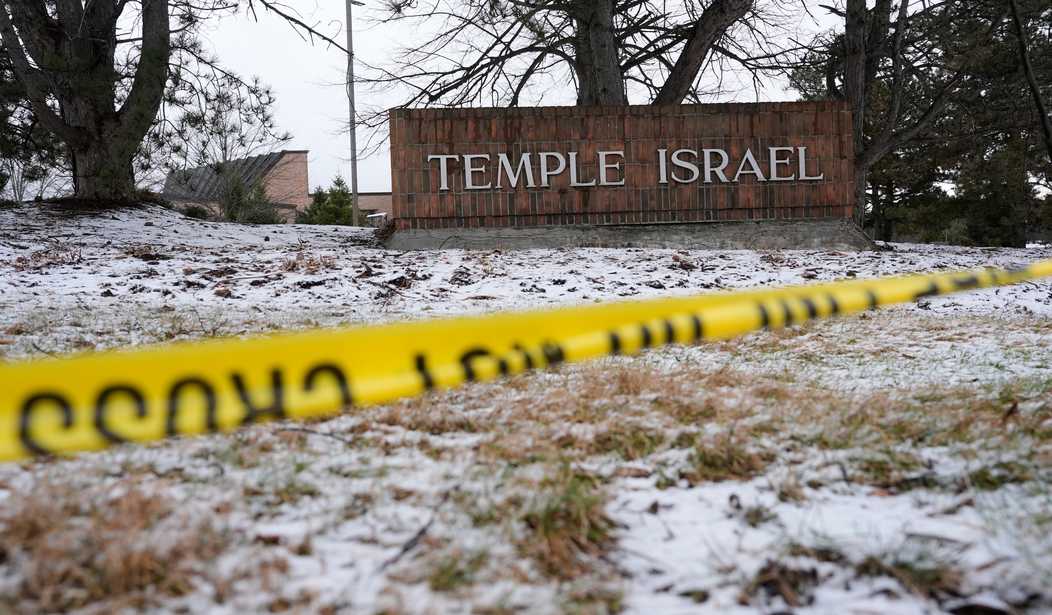
Also on March 12, a naturalized U.S. citizen from Lebanon attacked the Temple Israel synagogue and daycare in suburban Detroit — one of the nation’s largest Reform synagogues — with an explosives-packed car.  After ramming his car into the building, the Islamic terrorist opened fire before security guards neutralized him.  He lived in Dearborn, a suburb with the notorious reputation of being the “Jihadi capital” of the United States.

Do you think we might have a problem with naturalizing foreigners unworthy of American citizenship?  Is it possible that after decades of fighting Islamic extremists “over there,” we might have an even bigger problem with Islamic extremists already in the United States?

Whenever politicians or pundits observe that Islamic immigrants often refuse to assimilate to American culture and are often downright hostile to the United States (while living off of state and federal welfare programs), those politicians and pundits are denounced as “Islamophobic” bigots.  Apparently, if you are unwilling to look the other way while Islamic terrorists murder Americans, you are “guilty” of being insufficiently “politically correct.”  Heaven forbid that we ever have another Islamic terror attack on the same scale as 9/11.  Public school teachers’ unions will insist that we deserved it.  Jake Tapper and CNN will find a way to blame President Trump.  The Democrat Party (and Establishment Republicans) will look for new ways to bring millions of unvetted Islamic foreigners into the United States.  And NYC Mayor Mamdani will hold Islamic prayer services in Times Square.

That last prediction is hardly far-fetched.  On March 13, Muslims held a “Quds Rally” (as in pro-Islamic Revolutionary Guard Corps) in Times Square during which crowds held portraits of Iran’s “Supreme Leader,” waved Hezbollah flags, and chanted, “Shame, Shame, U.S.A.”  This obscenity was put together after four Islamic terror attacks inside the United States over the last two weeks.  A reasonable American might assume that openly supporting our enemies during times of war is tantamount to treason.  Imagine seeing supporters of Osama bin Laden parading down Broadway after 9/11.  Or watching German Nazis or Imperial Japanese doing the same thing in the middle of WWII.  Yet we have al-Qaida and ISIS supporters cheering for Islamic terrorists in the heart of Manhattan today, and Americans are expected to accept that this moral abomination is a sign of a healthy “democracy.”  I have seen few public figures denounce the fifth column operating with abandon inside the United States.

A common observation holds that if you want to know what problems the United States will be facing in fifteen short years, just look across the pond to see what’s going on in the United Kingdom.  I’ve always found that statement a bit depressing because it has proved remarkably accurate.  I say, “depressing,” because I have watched Britain commit civilizational seppuku all of my life.  During the 2012 Summer Olympics in London, the opening ceremony featured a troupe of dancing nurses performing some bizarre routine meant to glamorize socialized medicine.  Little did I realize at the time that American nurses would be emulating their performance less than a decade later during the great COVID panic.

Once “the empire on which the sun never sets,” the British Empire was so large that it included over a quarter of the entire planet.  It had trading posts, possessions, territories, mandates, protectorates, colonies, and dominions everywhere.  As the empire collapsed over the last century, an unusual thing occurred: The foreign peoples of all those former colonies and territories moved into the British Isles.  The United Kingdom once controlled much of the world.  Now much of the world lives inside and controls the United Kingdom.  

How has this geographical inversion worked out for the native Brits?  Let us count the myriad ways that life has changed: (1) Out of deference to its foreign “newcomers,” the British government has decided that the English, Scottish, and Union Jack flags should be considered “tools of hate.”  (2) British museums are “fighting colonialism” by covering up historic portraits of long-since-departed Brits accused of “racist” or “imperialist” sympathies.  (3) The Bank of England is similarly “fighting imperialism” by replacing Winston Churchill’s likeness on British currency with native wildlife.  (4) The British government is demanding that schools, councils, and workplaces monitor and report “anti-Muslim hostility.”  (5) Following the government’s new directives, regional councils are warning schools that children’s drawings “could be blasphemous under Islamic law.”  (6) And London buses and Underground Tube stations are being equipped with “deep wound stab kits” and “bleed kits” for unstated reasons.  

The British government is purging the United Kingdom of its flags, artwork, and history.  While it enforces Islamic law against native Brits of all ages, the government protects its Islamic conquerors from insult.  At least authorities in the U.K. have supplied city buses with “bleed kits.”  It’s incredibly compassionate of the government to work so hard to save the lives of Britain’s sons and daughters who get stabbed by Parliament’s protected class of Islamic terrorists.

How much of the insanity now disemboweling formerly Great Britain feels fifteen years away, and how much of it seems entirely too familiar?  Just as the U.K. is paying the price for inviting the world to live inside its gates, America is paying a price, too.  Four Islamic terror attacks in two weeks suggest that a civilizational war is already raging.  When “Islamophobia” is described as a “bigger threat” than Islamic terrorism, we have a pretty good idea who is winning.


For Trump to Win the War on Fraud, States Must Be Held Accountable

For Trump to Win the War on Fraud, States Must Be Held Accountable

President Donald Trump speaks during a Women's History Month event in the East Room of the White House in Washington, D.C., March 12, 2026.
President Donald Trump speaks in the East Room of the White House in Washington, D.C., March 12, 2026.(Evan Vucci/Reuters)

During his recent State of the Union address, President Donald Trump declared “war on fraud,” featuring a new task force led by Vice President JD Vance to curb waste and abuse in America’s welfare programs. Although official welfare fraud estimates are hard to come by, the Government Accountability Office estimated that Medicaid and the Supplemental Nutrition Assistance Program (SNAP) alone were responsible for more than $40 billion in improper payments (of which fraud is a component) in fiscal year 2024. But based on reports from Department of Agriculture officials and the Paragon Health Institute, the true scope of financial mismanagement is likely much higher. Every year, billions of working Americans’ taxpayer dollars go toward anti-poverty programs designed to help the needy but are lost to waste, fraud, and abuse.

On its face, Trump’s move should be welcomed by everyone, especially amid the fallout from Minnesota’s multibillion-dollar fraud scandal. But Congress must take the lead and fix the broken incentives that have allowed fraud to persist at such a scale in the first place.

Most of America’s means-tested programs are administered by the states but have federal government picking up the tab. This financing model creates a dangerous incentive misalignment, where states have little reason to be judicious with how they spend the money in the assistance programs they administer. When fraud happens, it’s someone else’s money, so it’s someone else’s problem.

The numbers bear this out. SNAP is 95 percent funded by the federal government. More than $320 million of that funding was lost to EBT card theft between October 2022 and December 2024, with card reader skimming being one particularly common form of loss. States can easily remedy this by adding chips to EBT cards, but 41 states have no plans to make the switch.

Similarly, Secretary of Agriculture Brooke Rollins claimed that at least 500,000 Americans in 28 states were collecting SNAP benefits in more than one state simultaneously. States can help fix this by adopting the National Accuracy Clearinghouse, a data-matching tool used to catch duplicate enrollments. Only 15 states have done so since its launch two years ago.

Why are states dragging their feet on adopting even standard technological safeguards? Because adopting these changes requires states to pay for adjustments they won’t see any direct fiscal benefit from, since the costs of fraud and the savings from preventing it don’t return to the states themselves.

Nothing illustrates this dynamic more clearly than Minnesota’s recent scandal. More than half of the $18 billion in Medicaid funds supporting 14 programs in the state since 2018 may have been lost to fraud. What the programs implicated in the scandal have in common is — you guessed it — that they were administered by state officials but funded largely by federal taxpayers.

State auditors had been raising red flags about programs like the Feeding Our Future nonprofit for years, but the state kept approving payments anyway, resulting in a $250 million fraudulent children’s nutrition program. Would state officials have been so tepid in their response if that money had come from their own budgets?

The perverse incentives don’t stop at negligence. The financing structure for many of America’s welfare programs actively encourages states to game the system with budget gimmicks and loopholes to get federal taxpayers to pick up the tab for state overspending.

For example, the federal government finances roughly 70 percent of Medicaid, the largest means-tested program. Between 2015 to 2024, federal Medicaid improper payments approached $1.1 trillion, according to some estimates. Additionally, states employ gimmicks like provider taxes — levies on health-care providers that are recycled back to the very providers who paid them — to draw federal funds out of thin air at no direct cost to state budgets. In 2022, one out of every five dollars spent on Medicaid was drawn down by states through legalized shell games like these. Federal taxpayers should be rightfully outraged that their money is being wasted on such fraud — and even more so that they’re only hearing about it now

But the ones who suffer the most from this financial mismanagement are the people on welfare themselves. Every dollar that lines a fraudster’s pocket is a dollar that could’ve gone toward meals for needy children, or housing for the elderly or adults with disabilities, or medical services for children with autism, or substance abuse treatment, or a litany of other people belonging to demographics that the welfare state is supposed to help.

The system failed these people by divorcing authority from accountability. To the states, federal money will always be free money, and scapegoating immigrants and minorities won’t change that.

The best solution is to overhaul the system such that states foot the bill for the programs they run. If a state wants to run a welfare program, it should pay for it with state dollars. Or, it can step back and let civil society and private organizations provide more effective and personalized assistance.

But reforms of this kind can only be achieved through Congress, and that starts with Congress owning the role it played in designing and repeatedly failing to reform the financing models that enabled this mess.

Fraud is an issue that transcends party lines, and the solutions should, too. Democrats who care about the integrity of social programs should want every dollar to reach the person it was meant for. Republicans who care about fiscal responsibility should want a financing model that gives states real accountability for every dollar they spend — and real consequences for when they waste it.

Trump is right to wage war on fraud. Indeed, if the federal government is going to keep pouring hundreds of billions of dollars into welfare programs every year, it has the prerogative to ensure they’re being spent properly. But if he hopes to win it, then Congress has to work with Trump to build on the One Big Beautiful Bill Act’s reforms and completely restructure how these programs are financed to give states real skin in the game. Otherwise, the war on fraud is likely to end up like DOGE — making outsized promises but falling short of the systemic change that only Congress can deliver.


🎭 𝐖𝟑𝐏 𝓓𝓐𝓘𝓛𝓨 𝓗𝓾𝓶𝓸𝓻, 𝓜𝓾𝓼𝓲𝓬, 𝓐𝓻𝓽, 𝓞𝓟𝓔𝓝 𝓣𝓗𝓡𝓔𝓐𝓓


Welcome to 

The 𝐖𝟑𝐏 𝓓𝓐𝓘𝓛𝓨 𝓗𝓾𝓶𝓸𝓻, 𝓜𝓾𝓼𝓲𝓬, 𝓐𝓻𝓽, 𝓞𝓟𝓔𝓝 𝓣𝓗𝓡𝓔𝓐𝓓 

Here’s a place to share cartoons, jokes, music, art, nature, 
man-made wonders, and whatever else you can think of. 

No politics or divisive posts on this thread. 

This feature will appear every day at 1pm mountain time. 


Minnesota Elections Official Finally Admits What We All Knew About Illegals Voting

Minnesota Elections Official Finally Admits What We All Knew About Illegals Voting


We have been told for years that there is no need for stricter identification requirements in American elections. The Left has claimed that our elections are secured, and that the Right has simply lied about the issue, or they want to put up restrictions on women or minorities voting by instituting measures to prove citizens and identity before casting a ballot. When put on the record, it seems that those on the Left are finally telling the truth about the matter: illegals are easily able to vote in American elections.

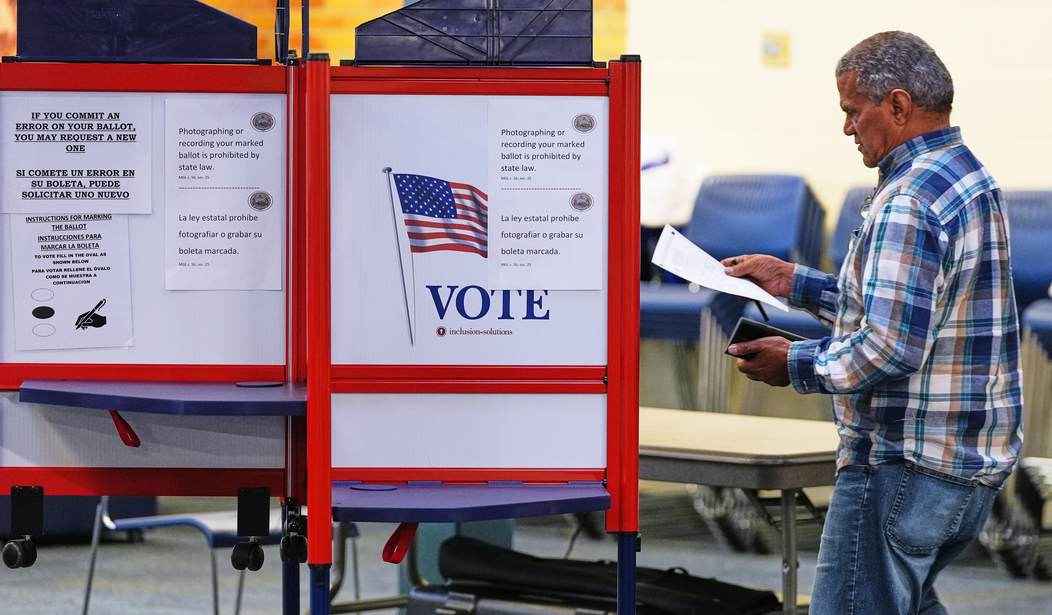
“They get their driver’s license, because again we give them to anybody here, they register to vote, it doesn’t match with the Social Security number so they’re flagged, but they come in and as long as they have an ID, which is the driver’s license, and they sign that they’re—ya know—eligible to vote, they can vote and they’re no longer flagged, is that correct?” a Rep. Patti Anderson, a member of the Minnesota legislature asked during a hearing.

Minnesota Director of Elections Paul Linnell then delivered a word salad answer, but admitted to the key facts that a driver’s license is simply “an affirmation of identity” rather than eligibility to vote and indicated that reports of possible fraudulent votes are only created and referred to the county attorney if they have been challenged.

“So the answer to my question is yes,” Anderson clarified after Linnell seemingly attempted to avoid a direct answer to the question.

Despite these admissions from blue state election officials, a few GOP holdouts continue to prevent the Senate from sending the SAVE America Act to President Trump’s desk.


Telling the Truth Is Not "Phobic

Telling the Truth Is Not "Phobic"

AP Photo/Paul Sancya

Did you know that all the problems in the world are caused by "phobias" that white supremacists suffer?

I have been reliably informed that every time a Muslim commits a terrorist attack, it is a justifiable response to colonialism and Islamophobia, and the West's subservience to the hook-nosed Jews hiding in the background while running the world. 

Or some version of that. Racism, sexism, homophobia, transphobia. Any time a white person criticizes anything, it is because we are irrationally terrified of a benign or positively wonderful thing. 

Mountains of bull*!t have been built to support this narrative. How many times have you heard that white supremacists commit the majority of terrorist attacks?

When somebody says that, ask them about how many they remember. You will get some variation of January 6th and the Oklahoma City bombing. After that, there is a lot of handwaving. 

Now ask yourself, how many trans-terrorist acts do you remember from the past year or two? Or Islamist attacks? We just had four in a week, and if you start looking at mass shootings, you can pretty much guess who did it when one pops up. How about random attacks in public, on trains, buses, or in subway stations? Are those the scary white supremacists? 

White supremacists? Name the terrorist attacks attributed to the Patriot Front. I dare you to. The jerks march around. That's about it, yet we are supposed to be paralyzed in fear over them and ignore the Islamists trying to commit mass murder. Because noticing is "Islamophobic."

We're sick of the gaslighting, and the Overton Window has moved. People are now willing to say what they only muttered in private. 

POLITICO took a shot at Tommy Tuberville for saying the obvious: the enemy is inside the gates. We just had four terrorist attacks, and he is supposed to be ashamed to have said out loud that being worried about Islamists committing violence is smart. 

Staying frosty when an enemy is trying to kill you is not a phobia. It is a survival instinct, and one that Pravda and the left are trying to beat out of us. 

Are troops on the front lines "dronephobic," or looking out for drones because they are deadly? 

Is watching your back in a bad neighborhood some form of "ism" or "phobia," or just smart planning? 

It's about damn time that prominent people stand up and tell the truth: certain behaviors, cultures, and even religions are incompatible with civilization, or at least Western civilization. Yet Ivy League schools employ professors to spout Jihadist propaganda. 

I still believe that there are Westernized Muslims with whom we can coexist, and even that some Western values are making inroads in the Arab world. 

But we have an Islamist problem, and we have to fix it. Or they will subjugate or kill us. 

It's not a phobia that drives this conviction; it's a clear-sighted recognition of an obvious truth.  


Up to 700 Iranian Military and Government Officials May Be Living Illegally in Canada and No One Cares


RedState 

Canadian security services have identified at least 30 high-ranking members of Iran's government who are currently hiding in Canada.

Canadian border authorities have identified nearly 30 suspected senior Iranian officials who they believe should be barred from remaining in the country under a federal ban, amid a widening conflict in the Middle East that could see more regime officials seek refuge.

The Canada Border Services Agency has been investigating 95 cases involving possible high-ranking members of the Iranian regime, up from 66 last June, according to figures provided by the agency.

Of those 95, the CBSA has identified 28 people it believes are inadmissible since senior Iranian officials were banned from the country in November, 2022. That number is up from 20 last year.

But the CBSA has so far removed only one official from Canada – a number that remains unchanged from last year.

This does not include run-of-the-mill illegals; the group is composed of former cabinet members, IRGC members, senior military and intelligence officers, former ambassadors, former judges, and top-ranking civil servants.

This has been a problem for years, but the rate of entry seems to have accelerated since shortly after Operation Midnight Hammer.

According to a statement by Canada's Conservative Party, Iranian officials fleeing to Canada to keep from getting killed, never mind the amount of blood on their hands, are eligible for asylum because they are in danger.

Some political hay is being made, but Canada ceased to be a serious country some years ago.

Though, given what we went through with Joe Biden's "give us your scammers, your terrorists, your mental defectives" policy, I suppose I should be more generous.

Some of these "refugees" have already engaged in acts of violence and intimidation against legitimate Iranian refugees, indicating their role as more of regime enforcers among the Iranian diaspora than actual fellow refugees.


Canadian Prime Minister Boasts About Blocking 10,000 IRGC Members from Entering Country


In the midst of the two pontificating princesses of Parliament verbally slapping each other with cashmere sweaters, Prime Minister Mark Carney made a rather remarkable statement.

According to the Canadian Prime Minister, he has blocked ten thousand IRGC members from entering Canada {at 1:00 minute of video below}. Now, why would 10,000 Iranian Revolutionary Guards think it was a solid option to exit the conflict for safety in Canada? WATCH:


Only Power Can Check Power: Why We Need Decentralization

Only Power Can Check Power: 

Why We Need Decentralization


A central problem of political theory has long been the question of “who watches the watchers?” This stems from the fact that it is generally assumed that it is necessary to grant the civil government a monopoly on coercive power in order to protect the subject population from domestic crime and from aggression by some other state. (Once the civil government obtains this monopoly, it is transformed into what we call a “state.”)

But once the state possesses this power, how can the state be tamed if it then abuses that power? This is a question that has long plagued theorists who have attempted to create constitutions and political systems that would somehow prevent the state’s abuses of power, or provide for some means of reining in the state and its powers, should abuses occur. 

In the early years of American independence, this was a common concern. 

In 1787, when the American Federalists were pushing for a new United States constitution, they promised (among other things) that the constitution would ensure the government would not grow to the point that it could violate the freedoms of Americans. 

Many Americans, however, were skeptical that the federal government needed the vast new powers it was demanding. After all, the new constitution granted new taxation powers to the central government and provided the central government with a means of easily raising armies and wielding federal power against the people of the states themselves. “Don’t worry!” was the Federalist response to these fears. The Federalists pointed to elections and elected legislatures as guarantees against abuses of federal power. Hamilton, for example, claimed that no one in the federal government would wield any powers that were not specifically granted by the text of the new constitution. 

Clearly, the Federalists were wrong. Federal power is today far, far larger than any eighteenth-century American could have imagined, and the American states have been reduced largely to administrative units of the federal government. Today, it would be absurd to claim that the federal government has never wielded or abused powers that were not specifically granted to it in the text of the constitution. The existence of the central bank, the spy powers of the Patriot Act, and the so-called “selective service” are only three examples.

Nor can we say that elections and Congressional votes have ever been a sufficient bulwark against federal power. Indeed, “Congress assembled” in Washington has done much to empower the federal government beyond its promised “limited” powers. After all, almost immediately following the adoption of the new constitution, the federal government erected a vast new system of federal courts, imposed new taxes, and imposed new “sedition” laws. By the end of the nineteenth century, the federal government was raising increasingly large standing armies for purposes of territorial conquest and the military subjugation of American member states. Today, the federal government grows with no limits on its power except its own internal legal “experts”—i.e., the federal Supreme Court—which are members of the same Washington elite as the rest of the central government.

Only Power Can Check Power 

So why has the US Constitution failed to restrain federal power in any meaningful way? Beyond the fact that relatively few Americans now actually care about limiting federal power, the primary reason is there is no independent power that can check federal power. Allowing the federal government to function this way is like allowing a police department to investigate itself to determine if it has abused its power. 

This was understood by countless Americans of the revolutionary generation. Thanks to the real-world experience of an eight-year war, and the well-known history of the English Civil War, many Americans knew that no piece of parchment and no legal framework ultimately is sufficient to restrain the prerogatives of a powerful state. In other words, these Americans understood the timeless political truth that once a state is resolved to aggress against its own people, only power can check power. Or, perhaps phrased more precisely: only de facto power can check power. Theoretical legal powers, written down on a piece of paper, mean little in the state of emergency.

This did not trouble the pro-centralization Federalists of the time who had convinced themselves that internal checks and balances could limit federal power. The Federalist Papers are filled with this sort of thing, although, it is unclear how much the Federalists themselves actually believed the claims. The Federalist Papers, after all, were primarily propaganda designed to convince people to support the new constitution. The authors were willing to say whatever it took to get their new constitution. So, they used many thousands of words concocting theories of how various parts of the federal government—all parts of the samegovernment and all controlled by the same governing elite—would somehow limit its own powers. 

But, in spite of all the talk about how Congress would never let the president get away with abusing federal power—an argument that is almost laughable in the twenty-first century—the end goal was a consolidated federal government that would be able to independently exercise vast new military and coercive powers.

Yet, many did not buy the argument that Americans “assembled” in Congress would somehow prevent the federal government from turning its power against Americans. The solution among the opponents of new centralized government—now known as “anti-federalists”—was to ensure that the states themselves would have the means of resisting federal power by force of arms. One of the most concise and animated summaries of this position comes from Patrick Henry at the Virginia ratifying convention in 1788. After being told that assemblies of delegates could address the problem of federal power, Henry responded

The honorable gentleman who presides told us that, to prevent abuses in our government, we will assemble in Convention, recall our delegated powers, and punish our servants for abusing the trust reposed in them. O sir, we should have fine times, indeed, if, to punish tyrants, it were only sufficient to assemble the people! Your arms, wherewith you could defend yourselves, are gone ... Did you ever read of any revolution in a nation, brought about by the punishment of those in power, inflicted by those who had no power at all? You read of a riot act in a country which is called one of the freest in the world, where a few neighbors cannot assemble without the risk of being shot by a hired soldiery, the engines of despotism. We may see such an act in America.

A standing army we shall have, also, to execute the execrable commands of tyranny; and how are you to punish them? Will you order them to be punished? Who shall obey these orders? Will your mace-bearer be a match for a disciplined regiment? In what situation are we to be? The clause before you gives a power of direct taxation, unbounded and unlimited, exclusive power of legislation, in all cases whatsoever, for ten miles square, and over all places purchased for the erection of forts, magazines, arsenals, dockyards, &c. What resistance could be made? The attempt would be madness. You will find all the strength of this country in the hands of your enemies; their garrisons will naturally be the strongest places in the country. Your militia is given up to Congress, also, in another part of this plan: they will therefore act as they think proper: all power will be in their own possession. You cannot force them to receive their punishment: of what service would militia be to you, when, most probably, you will not have a single musket in the state? For, as arms are to be provided by Congress, they may or may not furnish them.

The answer for the early Americans was to oppose any federal standing army and to ensure that the states themselves had the means of defending themselves from federal incursion. These early Americans understood the phrase “only power can check power.”

The French Liberals in the Wake of the Revolution

Similar concerns were voiced within the French (classical) liberal school following the French Revolution. After the Terror, and the wreckage of Napoleon’s reign, and 25 years of warfare, the French liberals observed that the problem of the Revolution did not lie only with its disastrous ideology. An additional problem was the centralization of political power under the revolutionaries. 

Although opponents of the state are often rather naive about the necessity of maintaining the independence of powers to defy the central state, the advocates of greater state power, on the other hand, have always understood this. Thus, those who want stronger states always, without fail, also want more political centralization. 

The French revolutionaries advocated centralization of political power in France on an unprecedented scale. Yet, the revolutionaries also benefited from centuries of centralization that had already taken place under the ancien régime. As Rothbard notes in his history of political thought, the absolutist French state had worked to centralize power for the same reasons the French revolutionaries had done so: to facilitate a strong state and to enable the central state to more easily put down any who resisted. 

By the time of the Revolution, this process was already well under way, as noted by Spruyt: 

The [French] king explicitly sought to reduce political fragmentation of the French realm. He strove to make French politics ultimately subject to royal control and to act as the sole representative of the French kingdom in international affairs. ... The many privileges that the aristocracy maintained until the French Revolution were hardly the same as the large political autonomy of the lords before the success of the Capetian kings. Before the Capetian consolidation, some great lords could call their territories regna—kingdoms in their own right; after the consolidation, they merely had privileges.  

Note the importance of asserting the French state’s control over all international affairs. Without political consolidation, many of the nobility maintained their own means of military defense, and it is primarily due to this that we can call the realms of the nobility “regna.” This, of course, presented a very inconvenient reality to the central state: local institutions could resist, by force if necessary, the incursions of the central state. 

Similarly, Alexis de Tocqueville noted: 

During the aristocratic ages which preceded the present time, the sovereigns of Europe had been deprived of, or had relinquished, many of the rights inherent in their power. Not a hundred years ago, amongst the greater part of European nations, numerous private persons and corporations were sufficiently independent to administer justice, to raise and maintain troops, to levy taxes, and frequently even to make or interpret the law.

Again, we see one of the most important characteristics of this independence was the fact the local sovereigns, whom Tocqueville here tellingly refers to as “private persons,” were capable of military resistance, should the central state truly overstep its powers. This acted as a sizable check on the national monarchies’ attempts to centralize power. 

Yet, by the time of the revolution this had largely been swept aside, and all that was left was a prize that had been prepared and nicely packaged for the revolutionaries to seize: a centralized state that had already made the regional powers impotent. 

Thus, in the wake of the revolution, Tocqueville could see the mistake of centralization, as did the influential French liberal Benjamin Constant. Constant had, according to historian Henri Michel, coined the term “decentralization” (in French, “décentralisation”) which Michel notes: “It is under this name that it has entered the program of the [French] Liberal School, where it constitutes an essential article.”

After the revolution, Constant sought to preserve what was left of those local sentiments that provided some means of resistance. Constant, for example, lamented that the revolution had done much to break up the old regional allegiances, going so far as to break up the traditional French regions to conform to a new scheme of provinces developed by the new state. And he notes: 

To build the edifice [of the new French state], they began by crushing and reducing to powder the materials they were to use. They almost designated cities and provinces with numbers, just as they designated legions and army corps, so great was their fear that sentiment might disturb the metaphysics of what they were establishing. ... Today, admiration for absolute unity—a genuine admiration in a few narrow minds, feigned by many servile ones—is accepted as religious dogma by a multitude of assiduous echoes of every favored opinion.

As Ralph Raico shows, Constant’s response was to point to the essential importance of both regional and religious allegiance, hoping this would provide a foundation for resistance against the central power. “Patriotism” for Constant was necessarily local: 

While patriotism exists only through a keen attachment to local interests, blind patriots have declared war on these interests. They have dried up this natural source of patriotism and sought to replace it with a contrived passion for an abstract entity, a general idea stripped of everything that strikes the imagination and everything that betrays reality.

Constant wasn’t saying all this only because he liked the diversity of local culture embodied in French regionalism, but because he saw “Local interests contain a seed of resistance that authority tolerates only reluctantly and hastens to eradicate.” Without this, there is no hope of fostering any true power that can counter the central power. 

Frédéric Bastiat, ever the radical, took Constant’s view further, advocating the abolition of the French standing army altogether, and replacing it with armed private citizens.

This version of setting power against the central power is the natural progression of the Bastiat-Constant view of the state in which, as Michel writes “two rival, even hostile, principles appear and stand in opposition to one another: the state and the individual. Every triumph of one is a setback for the other.”

In this view, the individual and the state are never complementary, and naturally necessitate the preservation of non-state powers—religion, local institutions, and individuals—against the state. It is essentially a zero-sum game in which the coercive power of the state must be countered by constant effort to resist, by arms if necessary. 

Thus, by the end of the nineteenth century, Bastiat’s disciple Gustave de Molinari ultimately concludes we must question the very idea of the state’s monopoly on coercion. Molinari therefore advocates for widespread secession as a counter to this monopoly. 

We can contrast the late French liberal school—skeptical and realist, and not fooled by promises of legal bulwarks against state power—with the more naive Anglo and American view of “checks and balances” within the state apparatus itself.  It was not always so. The American anti-federalists had the federal government’s number. They understood the ultimate end of federal consolidation and the unification of the state’s coercive power under a single federal government. The anti-federalists, lost, of course. The advocates of a “united America” won, and as with France after the revolution, Constant’s words are relevant when he says “admiration for absolute unity—a genuine admiration in a few narrow minds, feigned by many servile ones—is accepted as religious dogma.” 

  • Hendrik Spruyt, The Sovereign State and Its Competitors (Princeton, NJ: University of Princeton Press, 1994), p. 107.

  • Alexis de Tocqueville, Democracy in America, vol. 2, bk. 4, chap. 5, https://en.wikisource.org/wiki/Democracy_in_America/Volume_2/Book_4/Chap ter_5.

  • Henri Michel, L’idée de l’état (Paris: Libraire Hachette, 1896), p. 308.

  • Benjamin Constant, Cours de politique constitutionnelle (Paris : Guillaumin, 1872), p. 288. 

  • Ibid., p. 287. 

  • Ibid.

  • Henri Michel, L’idée de l’état, p. 308.