Sunday, March 15, 2026

Deep State Protection Of The Seth Rich Files May Be Ending


In the predawn darkness of July 10, 2016, 27-year-old Seth Rich was shot twice in the back as he walked home in Washington, D.C.’s Bloomingdale neighborhood. The official story from D.C. Metro Police is that this was a botched robbery. Yet the killers took nothing—no wallet, no watch, no phone. No suspects have ever been arrested, and the case remains unsolved nearly a decade later.

The timing seems too perfect to have been a random crime. Just days after Rich’s murder, WikiLeaks began releasing thousands of DNC emails that exposed the Democrat party rigging its 2016 Democrat primaries against Bernie Sanders and for Hillary Clinton.

The media blamed Russian hackers. The Mueller Report, intelligence community assessments, and CrowdStrike’s quick (but unverified) attribution pushed the foreign-interference line hard. But Julian Assange repeatedly implied that WikiLeaks’ source was not Russian—and forensic analysis suggested a local transfer, such as a thumb drive handoff, not a remote hack. Rich, the DNC’s Voter Expansion Data Director and a vocal Sanders supporter, had motive and access. Was he silenced to protect the emerging Russia collusion hoax?

This case sits at the center of what looks like a RICO-level criminal enterprise: elements of the Deep State—FBI, DOJ, CIA, and allied networks—engaged in fraud, obstruction, election subversion, and worse. I’ve argued that point in articles from 2020 onward, all built on public records, FOIA battles, declassifications, and whistleblower leaks. Fully disclosing Rich’s seized laptops, drives, and related files could blow open the entire 2016 Russia narrative, exposing ties to Benghazi arms trafficking, Clinton Foundation pay-to-play, FISA warrant abuses, Ukraine meddling, and more. Instead, the FBI has stonewalled for years. However, the Trump DOJ and FBI may finally be ending the silence.

On February 3, 2020, at NoisyRoom.net, I framed the Deep State as a de facto criminal enterprise under the RICO Act, committing treason, fraud, obstruction, and other racketeering acts in a continuing pattern (18 U.S.C. §§ 1961–1968).

The DNC “hack” fit the pattern: Assange denied Russian involvement and forensic analysis pointed to an insider leak, yet the FBI never inspected the DNC servers themselves, relying on CrowdStrike’s report. This misdirection fueled the Russia-Trump collusion hoax, justifying surveillance, media smears, and the Mueller probe. Under those circumstances, Rich’s potential role as a whistleblower threatened the whole house of cards.

Over the next few years, I authored a string of investigative reports, drilling down with hard evidence:

  • June 3, 2022: “Who Really Killed Seth Rich?— Reexamined the murder as the Russia hoax collapsed, highlighting Rich’s access and Sanders loyalty.
  • July 12, 2022: “Use RICO to Get to the Bottom of Seth Rich’s Murder”— Proposed RICO as the tool to connect the hit to a broader conspiracy.
  • September 18, 2023: “Who is Seth Rich? Who Murdered Him? And What’s The Deep State Hiding?”— Linked to Durham Report findings of FBI misconduct.
  • February 2, 2024: “The FBI Again Tries to Block Seth Rich’s Laptop from Public View”— Exposed defiance in FOIA cases like Huddleston v. FBI, with exemptions claimed for “classified” or “personal” data.
  • March 18, 2025: “The FBI Must Investigate Itself And, Once Cleaned, Several Other Political Crimes”— Drew parallels to Epstein, calling for systemic reform.
  • August 2, 2025: “Was the Death of Seth Rich a Hit by the Deep State?”— Incorporated ODNI declassifications (under Tulsi Gabbard), Metro PD leaks from Officer Douglas Berlin, and the bombshell “Prohibited Access” files—a secret FBI repository shielding sensitive records.
  • August 8, 2025: “Seth Rich: Dead Men Tell No Tales”— Framed it as a murder mystery riddled with media disinformation (e.g., Michael Isikoff-style amplification of false narratives), unproven CrowdStrike claims, and urgent calls for probes under Kash Patel and Pam Bondi.

These articles relied on verifiable sources: FOIA denials-turned-admissions, court orders ignored, intelligence lapses (no crime-scene forensics pushed, devices held since 2016, but contents suppressed). Whispers persist, and in an unsolved case, such rumors are almost inevitable. The same holds for the broader possibility of a professional or contracted operative several levels removed from any decision-maker: plausible deniability is the hallmark of these operations.

Now, however, at long last, the Trump FBI is ever so slowly giving up its secrets. Senator Chuck Grassley deserves major credit. Attorney Ty Clevengerused Grassley’s discovery of hidden FBI files to advance his FOIA suits. Matt Taibbi at Racket News just posted an exclusive update on these hidden FBI files. John Solomon of Just the News just dropped an article detailing how prohibited-access files shielded politically sensitive cases, including an intriguing quote from Assistant Attorney General Harmeet Dhillon. The Federalist published these bombshell articles, too (hereherehere, and here). Whistleblower tips to Grassley’s office blew the lid off. Grassley demandedthat AG Bondi and Director Patel produce records; some have been turned over amid internal resistance, and Patel’s task force is now excavating decades of hidden material.

Grassley said:

If it weren’t for whistleblower disclosures to my office, the very existence of the FBI using “Prohibited Access” files for some investigations would have remained in the dark. I’ve asked Attorney General Bondi and Director Patel to turn over certain Prohibited Access records to Congress. I’ve received some but am still waiting on others. I urge the DOJ and FBI to keep digging—which previous administrations apparently didn’t make any effort to do—so that the facts can come to light. The FBI’s secret stash of records is scandalous.

I know how law enforcement record-keeping works. Over my 35 years in law enforcement, I started as a police cadet filing hard-copy reports in long rows of 4-drawer cabinets lining the wall. We used drum files of index cards sorted by name to locate report numbers, then pulled the physical file. Records clerks handled merging the cards during filing. The digital Records Management System (RMS) eliminated the drum file, but we still worked with hard copies. Old cases were microfilmed or purged; DIRS digital scanning arrived in the late 90s/early 2000s.

Investigative units, especially homicide, kept their own hard copies of police reports indefinitely, and they were never locked away (murders and officer-involved shootings, and the like). The FBI’s top-brass-only restriction is deliberate concealment, not oversight. Scandalous doesn’t cover it. Reporting from Just the News shows these “prohibited access” files have been a go-to method for burying records in politically charged investigations for years—exactly the kind of tool that could explain the ongoing stonewalling in cases like Rich’s.

In Rich’s case, Attorney Clevenger has repeatedly exposed the FBI’s contradictions: first denying any records existed, then admitting they held Rich’s laptops, a DVD, a thumb drive, and thousands of pages—yet continuing to withhold them under the excuse of an “ongoing investigation.” Following Judge Amos Mazzant’s August 24, 2024, ruling ordering full production, the FBI was required to comply by March 10, 2025—but the bureau only delivered a Vaughn index—that is, a list of withheld documents—not the documents themselves (see my March 2025 American Thinker piece on the FBI’s defiance).

This strongly suggests the withheld information may contain exculpatory evidence of a domestic leak, which would dismantle the Russia-hack narrative. Shades of the Hunter Biden laptop—branded “Russian disinformation” by 51 former intel officials and suppressed across media and social platforms before the 2020 election. Clevenger tells me more developments could emerge soon. Nearly ten years later, there are still no arrests, no real progress—only obstruction.

With Trump’s election, Patel and Bondi are now in charge of the DOJ and FBI, and the moment is here. The old CYA days are over—the winds have shifted—but the files are still sealed, plausibly to keep the lower ranks and conspirators unsuspecting while the real work happens. Dragging this out much longer risks losing ground politically before the midterms. Will the truth come out, or will caution become the enemy? The American people have waited long enough—no more delays.


Podcast thread for March 15


Team USA is always the best. :)

The War With Iran That Was Never Explained


On February 28, 2026, American and Israeli forces launched a coordinated assault inside Iran, striking military bases, command centers, and strategic infrastructure across the country. For more than four decades, the confrontation between Washington and Tehran had simmered through sanctions, covert operations, and proxy conflicts stretching across the Middle East. That shadow war is over. The conflict between the United States and the Islamic Republic has entered a direct and dangerous new phase.

In Washington, the campaign was dubbed Operation Epic Fury. In Israel, it carried another name: Operation Roaring Lion.

The most dramatic moment came at the outset of the operation, when a targeted strike killed Iran’s Supreme Leader, Ayatollah Ali Khamenei.

In the immediate aftermath, President Donald Trump suggested that Washington could play a role in shaping what came next, even hinting that Iran’s leadership’s successor “would not last long without our approval.” The reality proved more complicated. Iran’s political system moved quickly to elevate Mojtaba Khamenei, a 56-year-old cleric and the slain leader’s son, to the position of Supreme Leader.

Before a war, governments marshal intelligence, present evidence, and attempt to persuade their citizens that the risks of conflict are justified. In 2003, the United States did exactly that. George W. Bush’s administration spent months building the case that Saddam Hussein possessed weapons of mass destruction and posed an imminent threat to global security. (Ultimately, the weapons were never found, leaving behind one of the most debated intelligence failures in modern American history.)

Today, America faces a strange inversion of that moment. We’re already at war with Iran, yet the administration has failed to argue its case.

The case should be easy: Iran has long boasted about its nuclear program and has openly pursued uranium enrichment for years. It possesses stockpiles enriched to levels approaching weapons grade. Its most sensitive nuclear facilities are buried deep underground or carved directly into mountains, including the Fordow enrichment complex near Qom.

Secretary of State Marco Rubio has pointed to those hardened locations as a central concern, asking why a supposedly peaceful nuclear program would need to hide its most sensitive infrastructure hundreds of feet beneath a mountain. President Donald Trump has also emphasized that Tehran has consistently refused to clearly state that it will never build a nuclear weapon.

Western intelligence agencies have continued to monitor activity connected to Iran’s nuclear infrastructure, including the movement of equipment, materials, and personnel between underground locations. Officials have warned that stockpiles of enriched uranium may still exist inside Iran.

Therefore, the question isn’t whether Iran has the capability to build a nuclear weapon, but how quickly it could do so.

For months before attacking Iran, President Donald Trump dispatched envoys, including Steve Witkoff and Jared Kushner, to explore whether it was possible to reach a diplomatic resolution. Trump explained that the discussions stalled on a central question: Iran’s leadership was unwilling to state clearly that it would never pursue a nuclear weapon.

Iran’s threat also extends beyond nuclear power. Over four decades, Tehran has constructed an extensive network of allied militias stretching across Lebanon, Syria, Iraq, and Yemen. This system of armed groups—often described as the “Shia crescent”—has allowed Iran to project influence across the Middle East while maintaining plausible deniability.

The 1979 Iranian Revolution and seizure of the American embassy in Tehran during the Iran hostage crisis are the genesis of what’s happening today. Following the revolution, the cleric Ruhollah Khomeini returned from exile in France and consolidated power, transforming Iran from a monarchy ruled by Shah Mohammad Reza Pahlavi into an Islamic Republic. Khomeini became the country’s first Supreme Leader, combining religious and political authority in a theocratic system that would define Iran’s government.

America became a target the moment he returned. Protesters seized the American embassy in Tehran and took diplomats hostage, chanting “Death to America” and burning U.S. flags.

The rebels held American diplomats as hostages for 444 days. The crisis humiliated Washington and became one of the defining geopolitical shocks of the Cold War era. It is widely believed to have contributed to President Jimmy Carter’s defeat in the 1980 election, bringing Ronald Reagan to power. In a symbolic moment, Iran released the hostages the day Reagan took his presidential oath.

The confrontation did not end there. In 1983, Iran-backed militants carried out the U.S. Marine barracks bombing in Beirut, killing 241 American service members. During this period, U.S. Ambassador Francis E. Meloy and CIA station chief Robert Ames were assassinated in Lebanon, and CIA station chief William Buckley was kidnapped and later died in captivity. Iran-backed Hezbollah also carried out suicide bombings against the U.S. Embassy and its annex in Beirut. These attacks were widely attributed to Iran’s Revolutionary Guard Corps, which had been cultivating militant allies in Lebanon.

Over the decades, Iran expanded that network of proxy forces across Lebanon, Syria, Iraq, and Yemen.

The current war is the most direct confrontation between the United States and Iran in more than four decades.

The strike that killed Iran’s Supreme Leader (and, reputedly, several family members) introduced a volatile element: succession. The leadership of a nuclear-capable state now rests with Ali Khamenei’s son, Mojtaba Khamenei. This may lead hardliners to argue that Iran must move more quickly toward the ultimate deterrent: a nuclear weapon.

In the short term, Tehran opted for immediately launching missile and drone attacks against American bases, diplomatic facilities, and allied targets across the region. Strikes were reported in Iraq, Bahrain, Kuwait, Qatar, the United Arab Emirates, and Saudi Arabia, many aimed at bases hosting American forces. Some attacks struck residential areas and commercial infrastructure.

Days later, Iran activated its proxy network. Hezbollah opened attacks against Israel, while Iranian-backed militias in Iraq intensified strikes against American targets.

Iran also attacked the Gulf energy infrastructure. A drone strike against the Ras Tanura refinery in Saudi Arabia forced temporary shutdowns and sent shockwaves through global energy markets.

Iran has also threatened to shut down the Strait of Hormuz, through which nearly one-fifth of the world’s oil supply passes. Officials warned that if attacks continue, “not a litre of oil will pass through the Strait of Hormuz,” and suggested oil prices could surge toward $200 per barrel.

Even as the conflict expanded across the region and energy markets reacted nervously, President Donald Trump suggested the campaign might already be nearing its conclusion. In an interview on March 11, 2026, he said that “any time I want it to end, it will end,” adding that after days of strikes, there was “practically nothing left to target” inside Iran.

This begs the question, though: If Iran’s nuclear ambitions persist and its leadership continues to threaten regional stability, what exactly would ending the war mean?

At moments like this, wars are not fought only on battlefields. They are also fought in the realm of public understanding. Trump is surrounded by experienced advisers and military leaders capable of prosecuting the conflict. What is needed now is a clear explanation of why this war matters. American lives and allies are at risk, and public understanding becomes a form of national strength.

The war now unfolding is therefore not simply about Iran or even the Middle East.

It is about whether the United States is still willing—and able—to defend the strategic order it has upheld for decades. If Washington walks away from this confrontation after initiating it, the consequences will extend far beyond Tehran or the Gulf.

Across the world, America’s adversaries will draw their own conclusions. In capitals from Moscow to Beijing, the outcome of this conflict will be studied closely.

The stakes of this war are therefore global. What happens in Iran will shape how the world measures American resolve—and whether the balance of power that has defined the international system for decades still holds.


Here’s Why the Filibuster Is Just As Important If Not More So, Than the SAVE Act Right Now


Some days you sit down to write a column and realize all the ideas you have are going to piss a large section of the audience off. At that point, you have a choice to either pick one and plow ahead, anger be damned, or scrap the whole thing and write something that panders to readers because it’ll get a lot of “Hell, yeah!” comments. That pandering track just isn’t how I can roll, so here we go: While I support the SAVE Act, it is not necessary to win the midterms, nor is it worth blowing up the filibuster over. 

I know, I suck. I can hear some of you formulating the strongly worded email already. It doesn’t matter. You’re free to still send it, but it is not going to change my mind. 

Why did I come to this conclusion? Why have I forsaken President Donald Trump and the conservative agenda? I haven’t, not even a little. Let me explain my thinking:

This ain’t my first rodeo, I’ve been working in politics for, good lord, for the better part of three decades, including a stint in the US Senate. While the filibuster is annoying as hell, killing it to pass the SAVE Act would be like studying yoga so you could kick yourself in the groin – it’s a lot of effort for very little, if any, reward. 

I support everything the SAVE Act would do, but I prefer the filibuster for a few reasons. 

First, the idea that Republicans simply can’t win without voter ID ignores the reality that Republicans won 2 of the last 3 presidential elections (only losing a sketchy one during COVID when ballots were mailed around like the particles of an uncovered sneeze). Not only the presidential elections were won, the 2022 midterms were, too. 

In fact, since 1994, when the GOP took the House for the first time in 40 years, Republicans have won control of at least one chamber of Congress 21 times compared to the 11 times Democrats did. Of those Congresses, Republicans controlled both houses for 8 terms while Democrats only held both 3, with the rest being split. All with no voter ID.

That doesn’t mean Democrats don’t cheat, or that they’re positioning themselves to cheat more, it means that we can beat their best cheating (short of a pandemic) and we need poll watchers on a much larger scale while we wait for enough votes to pass the SAVE Act. 

Second, with an issue that 85-15 in favor of Republicans, use the hell out of it in the election. Make Democrats choke on blocking something so common sense and wildly popular. If you can’t do that, you’re the real problem. 

I understand that sometimes (more often than seems possible) Republicans couldn’t message their way out of a wet paper bag if their lives depended on it, but very few of those issues Republicans tripped over were as popular as protecting the integrity of the vote, nor were they as easy to talk about. If, as Democrats say, “the right to vote is sacrosanct,” why isn’t it worth it to literally do the least thing possible to protect the integrity of that vote? 

How many American votes are Democrats willing to have canceled out by illegal votes? Make them answer that. Hell, make them answer how many Americans murdered by illegal aliens will make them support mass deportations? No one is a murderer until they murder, and every American murdered by an illegal would still be alive were the illegal not allowed into the country…by Democrats.

The ads write themselves.

But the most important reason to keep the filibuster is that most of the time the filibuster helps the minority party stop bad things from happening. Republicans are the majority in the Senate right now, but they won’t be forever. When the Democrats killed the judicial filibuster in 2013 to stack the lower courts with a bunch of liberals…and it cost them three Supreme Court Justices. 

Decisions for immediate gratification have a funny way of biting you in the rear in politics, sooner rather than later.

By killing the filibuster to pass the SAVE Act, that would mean Democrats would be able to repeal it the same way. What good will it have done when that happens? It’s better to run good candidates, tell the voters what you want to do and why, and then actually do as many of those things as possible and keep fighting for the rest of them. 

Once the filibuster is gone, the Senate becomes the House with fewer members – simple majorities can push anything through, and Democrats will push through dramatic things like amnesty and citizenship for illegals, statehood for DC and Puerto Rico, socialized medicine, etc. While those things could then be repealed with a simple majority vote by Republicans, do you really think they would be? Remember how the repeal of Obamacare worked out? Do you think courts would allow mass citizenship repeal or the reversal of statehood? 

Is any of that, let alone all of it, worth something Republicans could get done with the proper strategy and learning how to message? If they were to kill the filibuster, do you really think it would go into effect before the midterms anyway? A court would slap an injunction on it faster than Chris Murphy could abandon his wife and kids for a much younger woman. Do you really think that would be resolved even before 2028? 

It sucks, I get it, but reality is not dependent upon anyone’s comfort level with it. Better to fight harder to win in the long term than pretending any particular battle will be the difference-maker in a war that will never end. 

I know, I’m the skunk at the garden party, but someone has to be. Sometimes you have to not only choose your battles wisely, but also your victories and how you get them. There are many ways to get the SAVE Act through Congress, one being the fastest and easiest does not mean it’s the best.


🎭 𝐖𝟑𝐏 𝓓𝓐𝓘𝓛𝓨 𝓗𝓾𝓶𝓸𝓻, 𝓜𝓾𝓼𝓲𝓬, 𝓐𝓻𝓽, 𝓞𝓟𝓔𝓝 𝓣𝓗𝓡𝓔𝓐𝓓


Welcome to 

The 𝐖𝟑𝐏 𝓓𝓐𝓘𝓛𝓨 𝓗𝓾𝓶𝓸𝓻, 𝓜𝓾𝓼𝓲𝓬, 𝓐𝓻𝓽, 𝓞𝓟𝓔𝓝 𝓣𝓗𝓡𝓔𝓐𝓓 

Here’s a place to share cartoons, jokes, music, art, nature, 
man-made wonders, and whatever else you can think of. 

No politics or divisive posts on this thread. 

This feature will appear every day at 1pm mountain time. 


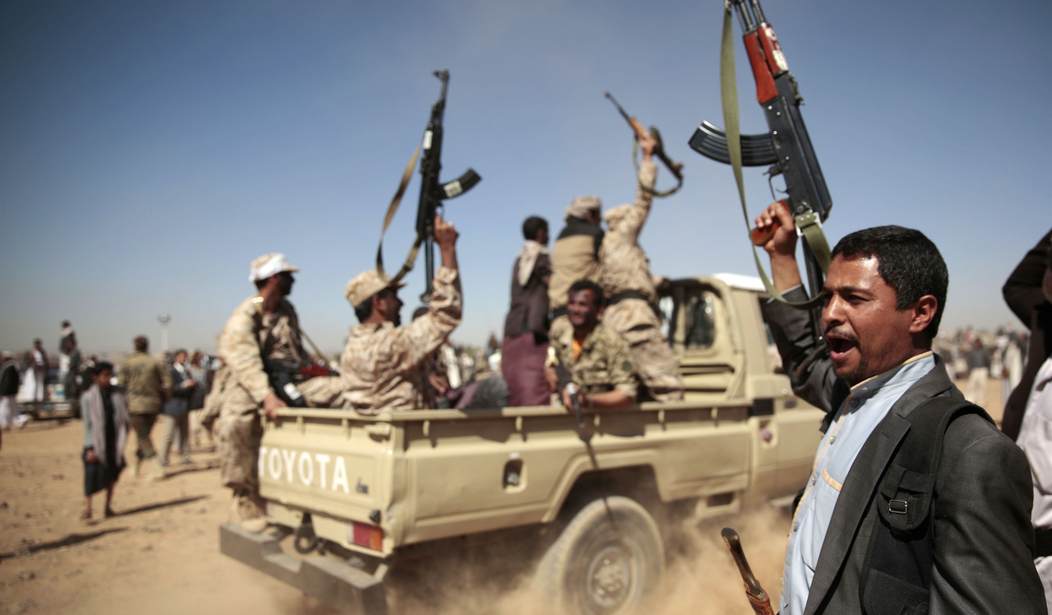
Do the Houthis Want a Piece of the Iran War or Are They Just Shooting Their Mouth Off?


RedState 

Houthi leaders are making noises like they are about to jump into the Iran War. Mohammed al-Bukhaiti, the governor of Yemen's Dhamar province and spokesman for Yemen’s Houthi rebels, also known as Ansar Allah, said in an interview on Friday that the decision to stand with Iran “has been made,” saying the “zero hour” declaration will occur when the time is ripe. He further elaborated in Kamala-esque word salad that the war “is not an aggression against Iran alone, but a broader battle targeting the countries of the region." Considering Iran is flinging missiles at every nation in the Persian Gulf, plus Cyprus and Turkey, it is sort of difficult to unpack who, other than Iran, is being targeted by the U.S. and Israel.

Brigadier General Abed al-Thawr, a military advisor to the regime and regime television talking head, further discussed in an interview with the Palestinian Quds News Network. "The first step will be declaring a naval blockade against the U.S. and Israel,” to prevent commercial and military traffic through the Red Sea. “Another possible measure is closing the Bab al-Mandab Strait and imposing a complete maritime embargo on ships heading to Israel, in a move similar to what Yemeni forces did during the Gaza support operations,”

There are multiple angles to this development.

Saudi Arabia's oil production is now mostly going to the Red Sea. Since the war broke out, the pipeline's volume has increased from one million barrels per day to seven million barrels per day.

This is becoming a favored route rather than running the Strait of Hormuz, paying extravagant war insurance premiums, and knowing that the reception you get will depend on how enthusiastic the sheep were last night.

Saudi Arabia’s race to bypass the Strait of Hormuz has led to a buildup of oil supertankers waiting off the kingdom’s Red Sea coast to collect cargoes, as Riyadh tries to overcome unprecedented disruption caused by the Iran war.

In the past day or so, 11 very-large crude carriers reached the port of Yanbu and are now waiting nearby before starting loading, ship-tracking data compiled by Bloomberg show. 

Any outbreak of usual Houthi behavior would throw a wrench into this workaround.

The real question is what, if anything, do these statements mean. Not to draw broad generalities, but Arabs are sort of renowned for equating words and actions. Saying you will sink an aircraft carrier is the same as sinking one. So the statements may mean they've reached an agreement to go to war in concert with the Iranians, or it may mean they like the idea but can't fit it into their Ramadan fasting schedule.

Having had a can of whoop-ass opened on them back in the April timeframe, and having the benefit of seeing what the full effect of American airpower is, I'd hope they'd be a bit reticent before jumping in, but who knows? They don't seem as bright as the graduates of the famed Quality Learing Center.

A lot of what happens next will depend on the true condition of Iran's defenses. The Houthis rely entirely upon Iran for their supplies of missiles to attack shipping. If, as I suspect, Iran's stocks are low and the missile and drone factories demolished, the Houthis will have to make a display with what they have on hand. I don't think that will be a terribly attractive prospect. If, on the other hand, those people claiming Iran is reserving its best stuff for the real fight are correct, then we will see the Houthis enter the fray in a week or so. That will be a sign that Iran's stockpiles are larger and manufacturing capacity more robust than most of us had considered possible.


Here's What Iran Just Said About the Strait of Hormuz - It Sounds Like a Huge Cave After Trump Threat


RedState 

We saw President Donald Trump take the audacious move of launching U.S. strikes against military targets on Iran's very important Kharg Island, where so much of their oil goes through. 

While Trump said they wiped out the military targets, he also made it clear they didn't hit the oil installations. But he warned Iran that if they didn't open the Strait of Hormuz, they would consider hitting them. He also said the United States and other countries would send warships to ensure that the Strait was open. Marines were also being dispatched to the region. 

After Trump's warning and action against Kharg, we get what sounds like a huge cave from Iran.

Iran said Saturday that all countries besides the US and Israel may pass through the Strait of Hormuz, in a desperate attempt at coalition busting less than a day after the US bombed military targets on its oil-critical Kharg Island.

“As a matter of fact, the Strait of Hormuz is open,” Iranian Foreign Minister Abbas Araghchi said.

“It is only closed to the tankers and ships belong[ing] to our enemies, to those who are attacking us and their allies. Others are free to pass,” Araghchi told MS NOW.  

So that immediately gives up most of the leverage they might have thought they had, probably out of fear of what Trump would do. He's shown them in the past that he will follow through. 

They're trying to salvage things, hoping to break up the coalition by saying it's only the people firing on them. 

Araghchi noted that many ships “prefer” not to undertake the journey due to “security concerns,” but insisted, “this has nothing to do with us.”

“And I can say that the Strait is not closed, but it is only closed to American, Israeli, you know, ships and tankers, and not to others.”

The U.S. doesn't have a lot of traffic through the Strait; the real impact has been on Asian markets. If they're saying they're letting those countries through, that should calm those markets. That also sounds like the report of mines in the Strait from Iran is probably a myth. 

Things are going through on Saturday. 

Two Indian-flagged tankers carrying liquefied petroleum gas crossed the Strait, Reuters reported Saturday.

“They crossed the Strait of Hormuz safely early this morning and are en route to India,” Rajesh Kumar Sinha, the minister of ports and shipping in New Delhi, said.  

Araghchi claimed many ships were traversing the Strait. 

He's clearly hoping to stave off a further attack around the Strait from the U.S. and Israel. 

Aragchi also tried to quell questions about the condition of the "Supreme Leader," Mojtaba Khamenei.

“He sent his message yesterday and will perform his duties - he is performing his duties according to the constitution and will continue to do that,” Araghchi added.

If Khamenei is able to work, then he should be able to broadcast a message in his own voice or make a physical appearance. But he hasn't. So that's not convincing people. 

We'll have to see what Trump's response is to this. But sounds like Iran knows it went too far, and is furiously backpedaling. 


Hamas Pleads With Tehran to Stop the Gulf State Strikes Now


RedState 

Is Hamas urging restraint on the part of Iran? Well, that probably wasn't on anyone's bingo card for today, but it's happening. Hamas has now released a statement, appealing to their patron state, Iran, to stop randomly tossing missiles and drones around the Persian Gulf states, lest they lose any remaining vestiges of support in the region.

Will Iran listen to them? It's hard to tell what desperate men will do, but Hamas's interest in this is clear.

The Palestinian armed group Hamas has called on Iran to stop its attacks on Gulf states, in a rare appeal to its key ally.

In a statement, the Tehran-backed group urged its "brothers in Iran to avoid targeting neighbouring countries", saying all regional nations should co-operate "to preserve the bonds of brotherhood".

At the same time, Hamas, which governs Gaza, affirmed Tehran's right to defend itself against attacks by the US and Israel, who are continuing to strike Iran.

The Iranian authorities have said their own retaliatory strikes target "American installations" on Gulf soil rather than the neighbours themselves - but many attacks have hit civilian infrastructure.

Hamas does have an interest in this. First, let's employ some plain and accurate language here, instead of this outpouring of legacy media horse squeeze: Hamas isn't a "Palestinian armed group." They are a vicious, barbaric Islamic terrorist group, responsible for the deaths of thousands of innocent men, women and children. Their concern in this matter is simple: They don't want the flow of support from Iran to stop.

In its Saturday's statement, Hamas said it was "following with deep concern the ongoing war in the region".

It said it called upon "all states and international organisations to work towards halting [the war] immediately".

Translation: "We don't want the theocratic regime in Iran to fall, because then our flow of weapons, munitions, and other supplies will stop, and that will seriously hamper our ability to plan and organize another deadly, barbaric attack on Israel."

There's some Richter scale irony in this pleading from Hamas. They want Iran to stop randomly tossing missiles and suicide drones around the Gulf states, not for any humanitarian concerns, not out of any concern that Iran may hit non-military targets, but because they don't want Iran to anger every single other nation in the area. That would put the correlation of force even more overwhelmingly against Iran than they already are, and we should remember, Iran's civilian leadership already appears to have scurried off to Mashhad, up near the Afghan border, as my friend, fellow veteran, and colleague streiff recently reported.

One can hardly blame them, not with American bombs and missiles falling all around them like a spring rain.

Hamas isn't concerned about the nations of the Persian Gulf, other than that they don't want them joining in Operation Epic Fury to end the vicious, barbaric rule of the mullahs in Iran. Hamas isn't concerned with the fate of any innocent civilians in that region, unless those innocents are Jews, in which case Hamas will try to kill them themselves. No, Hamas is only worried about the support from Iran ending, because without that, they are just a group of ill-equipped, poverty-stricken barbarians, hiding under any flat rock lest the Mossad and the Israel Defense Forces find them and give them what they deserve.

Then, there's this:

Iran has not publicly commented on Hamas's statement.

You don't say.


Iran and the United States: A Long History of Antagonism

 The governments of both countries have repeatedly cast the other as evil, perpetuating a cycle that has culminated in the present war.


March 15, 2026, 5:01 a.m. ET

While President Trump has used a scattershot approach to explain the goals of his war on Iran — one day it’s regime change, the next stopping an immediate nuclear threat — he has been relatively consistent in framing the conflict as the culmination of historic grievances.

“For 47 years, the Iranian regime has chanted ‘Death to America’ and waged an unending campaign of bloodshed and mass murder, targeting the United States, our troops and the innocent people in many, many countries,” Mr. Trump said in his first speech about the war on Feb. 28, stressing repeatedly that it was time to end the threat.

His comments fit into a longstanding narrative. No country has bedeviled the United States quite like Iran ever since the Islamic Revolution in 1979 toppled Shah Mohammed Reza Pahlavi, a brutally repressive, staunch American ally. A fundamental clash in political agendas has repeatedly brought the two countries to the brink of war.

Iran cast the United States as the “Great Satan,” with habitual chants against America and Israel at virtually every officially sanctioned prayer gathering or demonstration. All that might seem like agitprop. But the ritual underscored that a cornerstone of the Muslim Shiite theocracy was to undermine American influence in the Middle East and beyond.

“I don’t think Americans actually care that much about Iran, but Iran deeply cared about America and deeply cared about its commitment to overturning what it saw as the American-led global order,” said Afshon Ostovar, the author of “Wars of Ambition: The United States, Iran and the Struggle for the Middle East.”

“Israel was a huge piece of that,” he added, with Iran encircling it by empowering a rogue’s gallery of hostile organizations, including Hezbollah, Hamas and the Houthis. Iran “advanced its agenda but also stayed on the radar of the United States,” he said.

The Birth of a Rogue State

For Washington, Iran became something of a permanent boogeyman starting within months of the revolution, when militants seized the U.S. Embassy in Tehran and held 52 employees hostage for 444 days. Iran’s refusal to follow diplomatic protocol cemented the U.S. perception of it being a rogue state.

Iran would say the bad relationship began further back, in 1953, when the C.I.A. engineered a coup to empower the shah as an absolute ruler by overthrowing Mohammad Mosaddegh, the prime minister who had moved to nationalize the oil industry.

A black-and-white image of a crowd of people standing on a wall and burning an American flag.

Burning the American flag on top of the U.S. embassy wall in Tehran in 1979. Credit...Bettmann

Both sides have repeatedly sought to reshape the region through force.

Col. Charles A. Beckwith, the founder of the Army’s elite Delta Force unit, was compelled to abort a commando raid inside Iran to rescue the American hostages in 1980 after a string of blunders, leaving eight American servicemen dead.

Asked later why military force outweighed diplomacy, Colonel Beckwith made an oblique reference to the Muslim belief that martyrdom in battle leads directly to heaven. “I am not interested in wooing terrorists,” he said. “I am interested in speeding them on their way to meet their maker.”

The hostage crisis set the tone for the ensuing decades, each marked by a cycle of confrontation.

Violence Through the 1980s

In 1983, with Iran building proxy forces across the region, the nascent Hezbollah militia drove a truck bomb into a U.S. Marine barracks in Beirut, Lebanon, killing 241 U.S. servicemen.

Image

A scene of destruction shows a large white military vehicle surrounded by extensive concrete rubble. Several people, some in camouflage, are near a collapsed structure.

The site where a truck bomb detonated in a U.S. Marine barracks in Beirut, Lebanon, in 1983. Credit...Philippe Bouchon/Agence France-Presse — Getty Images

During the Iran-Iraq war, which lasted eight years after Saddam Hussein invaded in 1980, the United States provided intelligence and other support to Baghdad. When Iran began sowing mines and attacking shipping in the Persian Gulf, the U.S. Navy escorted oil tankers through the narrow waterway and the Strait of Hormuz.

In 1988, after the U.S.S. Samuel B. Roberts, a missile frigate, hit an Iranian mine and nearly sank, U.S. forces attacked Iranian oil platforms and its navy. That year, another American warship, the U.S.S. Vincennes, mistakenly shot down a civilian Iranian airliner over the Strait of Hormuz, killing all 290 people aboard. Iran has never forgotten that event.

The 1990s and the New Century

During the 1990s, Iran’s proxy forces continued to wreak havoc on American interests. Suicide bombers repeatedly attacked Israelis to undermine the 1993 Israeli-Palestinian peace treaty. Iran also targeted the growing U.S. military presence in the Gulf after the 1991 war to liberate Kuwait. In the worst example, a group linked to Iran blew up a U.S. Air Force dormitory in Dhahran, Saudi Arabia, in 1996, killing 19 U.S. servicemen.

Image

A multistory building whose facade was destroyed by a bomb. Many people stand near a crater left by the explosion.

A terrorist group linked to Iran blew up a U.S. Air Force dormitory in Dhahran, Saudi Arabia, in 1996.Credit...U.S. NAVY, via Associated Press

In 2002, about a year before invading Iraq, President George W. Bush denounced Iran together with Iraq and North Korea as an “axis of evil.” After the United States overthrew Saddam Hussein, Iranian-supplied Shiite militias killed and maimed hundreds of U.S. soldiers with lethal roadside bombs.

Iran’s secretive nuclear development program was also revealed in 2002, and although Tehran denied seeking a weapon, that prompted a new cycle of confrontation and coercion, including years of harsh Western economic sanctions.

SKIP ADVERTISEMENT

The confrontation often operated in the shadows, including cyberspace, with joint American-Israeli weapons like the Stuxnet computer worm, which was deployed to destroy the centrifuges used to enrich uranium.

The Nuclear Deal

In 2015, Iran reached an international agreement to limit its nuclear enrichment program, but Mr. Trump withdrew from the deal in 2018, in his first administration, prompting renewed tensions.

In 2020, Mr. Trump propelled the fight into the open. An American drone strike in Baghdad killed Maj. Gen. Qassim Suleimani, the powerful head of the Quds Force, the overseas arm of Iran’s Islamic Revolutionary Guards Corps.

Image

A blurred dark car speeds along a road next to a concrete wall. The wall has multiple posters with images of people, a red sign and many small holes.

Outside the Baghdad airport, where an American drone strike assassinated Maj. Gen. Qassim Suleimani, the head of the Quds Force, the overseas arm of Iran’s Islamic Revolutionary Guards Corps.Credit...Sergey Ponomarev for The New York Times

After Hamas, an Iranian ally, attacked Israel in October 2023, the ensuing Gaza war led to a 12-day confrontation in June 2025 with American and Israel warplanes bombing Tehran, killing at least 20 senior military commanders. They also attacked the country’s nuclear development facilities, while Iran struck Israel with missiles. Afterward, the Trump administration initially sought to bridge differences through negotiations but ultimately went to war.

A Stumbling Block for American Presidents

Over the years, U.S. presidents have found themselves entangled with Iran in ways that influenced their domestic political fortunes.

The nagging hostage crisis contributed to Jimmy Carter losing a second term. His successor, Ronald Reagan, withdrew U.S. peacekeeping forces from Lebanon in 1984 after a series of bloody attacks by Iranian-backed militants. Then there was the Iran-Contra scandal, the revelation that Mr. Reagan’s national security team was selling arms to Iran in order to free U.S. hostages held by Iranian-backed groups in Lebanon, while using the proceeds to fund Nicaraguan insurgents.

The scandal led to public hearings, high-level resignations and a sharp plunge in Mr. Reagan’s approval rating.

Although Mr. Bush presented the war in Iraq as the springboard to greater democracy in the Middle East, Saddam’s overthrow incited a grueling civil war that fortified Iran’s regional influence.

Throughout the decades, Washington has maintained some hope that a more moderate ruling faction might pursue détente. But the regime’s twin pillars — both the former supreme leader, Ayatollah Ali Khamenei, the authoritarian ruler for nearly 37 years who was killed in an Israeli air raid on Feb. 28, and the Islamic Revolutionary Guards Corps — have remained staunchly hostile toward the United States.

Heavy gray smoke rises from buildings in a city, spreading across the sky. An Iranian flag waves in the foreground.

Attacks by Israel and the United States in Tehran earlier this month.Credit...Arash Khamooshi for The New York Times

“Those who want to make amends with America cannot deliver, while those who may be able to deliver do not want to make amends,” Karim Sadjadpour, an Iran policy analyst at the Carnegie Endowment for International Peace in Washington, wrote in an article in The Atlantic.

The current crisis, the first open war, is the most violent, sustained confrontation yet. Overall, American presidents might have preferred to ignore Iran starting decades ago if Tehran had not constantly upped the ante, said Mr. Ostovar, the political scientist.

“Iran has been picking a fight for 47 years, and it finally got that fight,” he said.

https://www.nytimes.com/2026/03/15/world/middleeast/united-states-iran-history.html

Trump Announces Build Up of War Ships in the Strait of Hormuz

Trump Announces Build Up of War Ships in the Strait of Hormuz


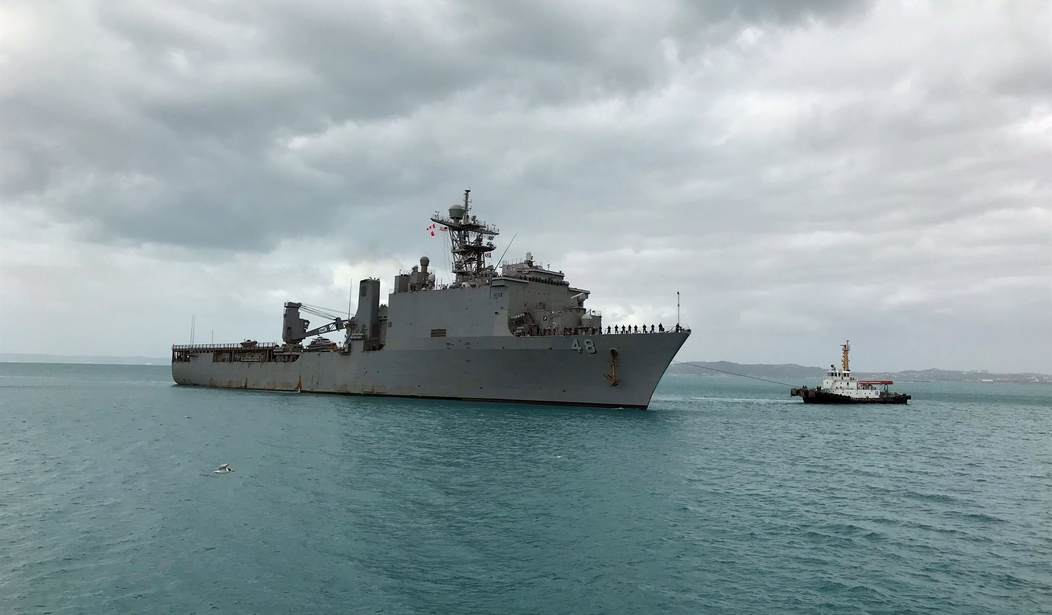
President Donald Trump has announced that the United States Navy will begin deploying war ships to the Strait of Hormuz in order to secure the vital global shipping route and protect the flow of oil. Trump's announcement stated that "many countries" would be joining in on the operation, but did not clarify which.

Trump has also asked that the other military powers of the world join him in sending forces to the region, specifically calling upon China, France, Japan, South Korea, and the United Kingdom in order to protect the waterway under siege from “a nation that has been totally decapitated.”

Trump has said that “100% of Iran’s military capability has been destroyed” but the Persian state has been able to utilize what remains of their drone, missile, and naval mine arsenal in an attempt to terrorize shipping vessels that pass through the Strait.

Trump had previously vowed to increase strikes leveled at the Islamic Republic of Iran should they threaten oil shipments through the Strait. We saw that promise fulfilled when Trump announced that U.S. forces had conducted a massive set of strikes against Kharg Island, one of the most important locations for Iranian oil infrastructure.

Operation Epic Fury has now entered its third week.