Wednesday, March 11, 2026

Nobody’s Calling London


Imagine having a major war, and some of the most powerful countries in the world just a few decades ago didn’t get an invitation, or even a warning. Totally dissed and dismissed. Britain, France, Germany – nothing. The second tier states – Canada and Spain – got even less respect. They didn’t even get a phone call to tell them it was going down. It’s especially pathetic when it comes to Great Britain, a nation once so martial that even the names of its best punk bands (The Clashand the Sex Pistols) evoke a martial mindset. Now it’s a nation of military Teletubbies. The United States called up Britain and said, “Hey, we want to use some of your airfields,” and Labour loser Kier Starmer decided to turn the special relationship into an unnatural one by refusing. And what happened? America shrugged and went on to glory with its new pals. And Britain was humiliated.

It’s nothing. It’s not even an afterthought anymore. Poland has a bigger army. Israel has a more effective one. Now Israel is the peer ally that Britain once was, a force that America cannot only interact with but can actually provide value. What does Britain provide? Its once-mammoth fleet is a puny flotilla. The Royal Air Force is a shadow of what the legendary RAF was in World War II. Sure, its troops are skilled. They’re very good at what they do – both of them. But despite their quality, they’re lacking in quantity. They are providing the answer to the question, “What if we gave a war and nobody else from the West came?”

They were on the outside looking in. And everybody sees what’s happening. Everybody sees what these great powers have devolved into. This isn’t an accident. This is deliberate. The fact that none of these great powers can field anything like an effective military force that has the capacity to stop a bunch of seventh-century savages who want to stick a hot rock on top of its next generation of ballistic missiles. They couldn’t quite do it when Donald Trump initiated the beginning of the end of this 47-year-long war against America and civilization – the ayatollahs have fired missiles at a dozen neighboring countries in retaliation – even though the next generation of ballistic missiles is going to be able to drop on Berlin, Paris, Madrid, or London. 

Think about it. They were on the verge of being held hostage by the mullahs, and they couldn’t summon up the intestinal fortitude to do anything about it. Worse, when America did do something about it, along with Israel, they whined about how it’s against “international law.” Which international law is that? The one they enforce? They enforce nothing. We enforce international law. We are international law. International law is a B-2 bomber dropping a bunker buster in an Iranian factory 50 feet underground.

They’re just a bunch of nation-state Karens blowing their stupid whistles at the ICE agents hauling thieves, rapists, and murderers out of their neighborhood.

But then, the great powers of Western Europe seem to have a suicide wish. Most of their best and brightest died on the fields of World War I. The studs, the heroes, the guys who yelled, “Follow me,” were the first to get mowed down by machine gun fire. The good ones died in World War II as well. What you have left, in Britain, for example, is a pathetic simulacrum of what was once a great and powerful nation. The same legendary Navy that once terrorized its foes around the globe – that was before Twitter international law experts decreed you can’t sink enemy ships on the high seas – has to sit and watch its former colony sending Iranian boat after boat down to get face-to-face with Davey Jones. It can’t even stop a bunch of dinghies packed with Third World invaders from crossing over the Channel from France. And it’s not only the US of A that is annoyed.

It's embarrassing. But it’s also a choice.

Britain and the rest chose decline and dishonor. Leadership and honor require effort. They require perseverance. They require sacrifice. And the exhausted, self-doubting ruling class of the formerly great powers could not summon up the testosterone to live up to the example of their sires. Instead, they decided that because meeting the standards of the past was hard, they would pretend that everything that came before was bad and evil and wrong when, in fact, the civilizing power of colonialism was the greatest gift Europe ever bestowed upon the world. But if they could convince themselves that the examples from history were immoral and bad, then they could be excused from not even trying to live up to them. Their moral posturing is an elaborate attempt to excuse their own weakness and fecklessness; they tell themselves it’s a moral imperative that they be overrun and overthrown by the Third World invaders they invited in.

And, of course, when that immigrant influx meets critical mass, then the country can’t resist the haters, either at home or abroad. Starmer was less afraid of the few drones tossed toward their remaining bases in the Middle East. He was scared of the jihadi sympathizers in his own country.

The globalists running these countries into the ground have plenty to say about America, whining and crying in an effort to shame America into limiting its use of its power, accepting terrible trade deals, and subsidizing the European welfare states. For 80 years, America’s foreign policy intelligentsia demonstrated how stupid the intelligentsia usually is by going along with this manipulation. For decades, we took their grief, we ignored their failure to pull their weight, and we were silent about their cultural suicide.

And then Trump came along. He did not buy the foreign policy establishment nonsense that persisted for 80 years, and would continue perpetually if the Foggy Bottom Boys had their way. He was transactional, and he was clear. Business as usual is over. Do your part, or we depart. But there’s no moral strength left in Western Europe to do its part. Self-hatred, sick secularism, and martial apathy have made them weaklings. It’s sad. But again, they chose it.

So, the once great powers sit not even on the sidelines – because to do so would indicate a potential for getting in the game – but not even in the stadium. Great things are afoot; enormous changes will shift the balance of power in ways not seen since the Soviet Union fell, and they will have no part of it.

They are dying nations, unsure that they even believe in their own right to exist. Even before the base use betrayal by the Brits – Starmer actually has his heart set on giving critical Diego Garcia away to a ChiCom ally because Muh Colonialism Sadz – the special relationship was on life support. Starmer’s sell-out treated it like a Canadian doctor treats a guy with a headache and euthanized it.

But the worst part for the Euros is that it doesn’t matter, because they no longer matter.


Podcast thread for March 11


Wonderful day today. :)

The Case for Trump’s War Fog

The Case for Trump’s War Fog

Abe Greenwald, Executive Editor for Commentary


Regarding Donald Trump’s Iran endgame, all we can do is speculate. Depending on when you catch the president, he might speak about the ultimate goal of the war in precise, vague, or even self-contradictory terms.


A lot of Americans have a problem with Trump’s back-and-forth declarations. It’s understandable to want clear, convincing answers about why American men and women are fighting. Is this about achieving a long-lasting peace through regime change or buying a few years of relative Iranian paralysis by destroying the country’s most threatening weapons capabilities? 


Yet over the past 10 days, I’ve become strangely comfortable with Trump’s confusing statements about the war. I have a couple of reasons.


Since we’re all left to speculate, I’ll throw in my hunch with everyone else’s (and we’ll all be wrong in the end, anyway): Trump expects this to be a regime-change war but doesn’t want to say so with clarity until he can determine that the U.S.-Israel campaign has made the prospect viable—or considerably more viable than it is this early into the fighting. Similarly, he doesn’t want to signal the coming of U.S. ground troops unless and until he’s assured that the regime’s fighting forces have been sufficiently pacified and that Americans won’t be dropping into a fatal misadventure. 


Why is that a bad thing?


Critics complain that the president doesn’t know how to end the war. Forget that the war just started. The more important point is that the changing facts on the ground and in the sky will shape the kind of victory the U.S. is able to achieve. Why should Trump demand or forecast regime change before he knows whether doing so will come back to bite him? If we take out a dozen more newly minted supreme leaders, destroy the regime’s missile stocks, secure its fissile material, ensure safe passage in the Strait of Hormuz, and find that the Iranian people are still unable to seize political power from the remnants of the regime, then this will have been a successful war to defang Iran for the coming years. 


If, however, the regime is blown to smithereens, the IRGC is decimated and induced to give up, and Iranians obtain arms and take control, this will have been a war for regime change. That’s the preferred outcome. But even those of us who are most eager to see Iranians liberated don’t believe that it’s the U.S.’s responsibility to ensure their freedom with a lengthy, high-risk nation-building investment. Those days are long gone.    


There’s another reason that Trump’s ambiguity makes good sense. The only thing he should be telegraphing to Tehran is American strength. And for all his unintelligibility, he has repeatedly delivered that message in simple, straightforward terms. If we’re guessing at his next moves, so is the regime. All they know—despite what they claim—is that it’s taken less than two weeks for the U.S. and Israel to raze to dust what the regime has been building up for half a century. 


That’s all we know, too. For now, I’ll take it. 


The Myth of the ‘Imminent Threat’


For nearly half a century, the Islamic Republic of Iran has treated its conflict with the United States as a war.  The real question is not whether Iran threatens America, but whether Americans are willing to recognize that reality.

A familiar argument has been repeated by politicians and much of the mainstream media: Iran posed no “imminent threat,” and therefore military action against it was unjustified.  But this claim ignores the true nature of the conflict between the United States and the Islamic Republic.

For many advancing it, the argument is less a strategic assessment than a political one — repeated to obscure danger in the hope of undermining the policy and weakening President Trump and Republicans ahead of the coming election cycle.

Iran’s war against America began on November 4, 1979, when Islamist revolutionaries stormed the U.S. embassy in Tehran and held 52 American diplomats hostage for 444 days — cementing hostility toward the United States as a defining principle of the new regime.

The debate over whether Iran poses an “imminent threat” misses the broader reality. The United States has been under sustained attack from the Iranian regime for nearly half a century, and Iran’s hostility toward America — measured in lives lost, resources expended, and instability exported across the region — is beyond dispute.  The regime has never hidden its intentions, repeating its familiar mantra, “Death to America,” while pursuing a strategy of indirect warfare through proxies and militant allies.

Iranian-backed forces carried out the 1983 bombing of the U.S. Marine barracks in Beirut that killed 241 Americans and the 1996 Khobar Towers bombing in Saudi Arabia that killed 19 U.S. servicemen.  Iran’s Revolutionary Guard later armed and trained militias in Iraq that deployed specialized roadside bombs responsible for a significant share of American casualties during the Iraq War.

Beyond direct attacks on Americans, Tehran has spent decades extending its influence across the region — dominating Lebanon through Hezb’allah, influencing Iraq through allied militias, and constructing what its leaders call a “ring of fire” of armed proxies surrounding Israel.  These networks allow Iran not only to threaten Israel, but also to challenge American interests and destabilize governments across the Middle East.

Iran’s war also reaches beyond the battlefield.  In 2011, U.S. authorities disrupted a Quds Force plot to assassinate the Saudi ambassador in Washington, D.C. — by bombing a restaurant in the American capital.  More recently, a Pakistani national is currently in Washington facing charges for allegedly attempting to assassinate Donald Trump, claiming that Iranian operatives threatened his family if he refused to cooperate.

Meanwhile, Iran has continued advancing toward strategic capabilities that would dramatically shift the balance of power.  U.S. and international analysts estimated that Tehran was only weeks away from producing weapons-grade nuclear material when American B-2 bombers struck the Fordow and Natanz enrichment facilities last June.  At the same time, Iran has spent years expanding one of the largest ballistic missile programs in the world, steadily increasing the range and sophistication of systems that already reach eastern Europe and are projected to threaten western Europe — and potentially the eastern seaboard of the United States.

Had the world’s leading state sponsor of terrorism achieved nuclear capability and reliable long-range delivery systems, the deterrent immunity such weapons provide would have dramatically constrained America’s ability to project power and influence around the globe.

Is that not the very definition of an imminent threat?

If the terrorists of September 11 had been detected while their planes were taking off or still approaching their targets, would anyone seriously argue that the danger was not imminent simply because the planes had not yet reached the buildings?  At what distance would the threat suddenly become real — thirty miles?  Ten miles?  One?

An enemy does not suddenly become dangerous at the moment of impact.

One would have to suspend reality to believe Iran posed no imminent threat.  Clearly, it did.

Authoritarian regimes routinely probe their adversaries for weakness to exploit.  The familiar adage that weakness invites aggression is repeated so often because history continues to confirm it.  For revolutionary regimes like Iran’s, confrontation with the West is not merely opportunistic, but ideological, making perceived weakness especially tempting to test.

The lesson was illustrated dramatically during the very crisis that launched the modern conflict between Iran and the United States.  For 444 days, Iran held American diplomats hostage while negotiations dragged on through the final year of the Carter administration.  Yet the hostages were released on January 20, 1981 — minutes after Ronald Reagan was sworn in as president, ending the crisis the moment a new administration widely perceived as tougher took office.  The symbolism was unmistakable.  Iran had been willing to defy the United States for more than a year, but it chose to resolve the crisis the moment the balance of perceived American power shifted.

Over the following decades, this relationship between American policy and Iranian behavior has often followed a predictable cycle.  Periods when American strategy projects strength tend to restrain Iranian aggression, whereas periods of hesitation or strategic retreat encourage Tehran to expand its activities.  Each time deterrence weakens, Iran tests the limits again.  The past decade illustrates this dynamic clearly.  The 2015 nuclear agreement negotiated during the Obama administration lifted major sanctions in exchange for limits on Iran’s nuclear program.  The agreement provided Tehran with significant economic relief, which the regime used to expand its regional proxy network and military activities across Lebanon, Syria, Iraq, and Yemen.

The Trump administration withdrew from the agreement and implemented a campaign of economic pressure aimed at restricting Iran’s ability to finance those networks.  Since 2021, however, under Biden, Iranian-backed militias have again intensified attacks across the region while Tehran continues strengthening its proxy relationships and military capabilities, tragically exemplified by the October 7 massacre.

Iran’s ambitions have never been limited to the Middle East.  Tehran has become an important node in a broader anti-Western alignment linking the Iranian regime with Moscow and Beijing.  Iranian drones have been supplied to Russia for use in Ukraine, where they are routinely used to attack civilian infrastructure.  At the same time, China has continued purchasing large quantities of Iranian oil — often outside the formal sanctions system — providing the regime with critical revenue that helps sustain its military and proxy operations.

Disrupting Iran’s military and economic infrastructure, therefore, has implications far beyond Tehran.  Restricting Iran’s ability to export oil weakens a supply channel that has helped fuel China’s rise.  Preventing Iran from supplying drones limits the tools Russia uses to terrorize Ukrainian civilians.  Constraining the regime’s regional proxy networks reduces the instability that has plagued the Middle East for decades.

In that sense, confronting Iran does more than neutralize a single adversary.  It alters the strategic environment across multiple theaters, shifting the balance of power toward the United States and its allies.  It also weakens the ideological momentum of radical Islamist movements — both in the region and in the West — by demonstrating that the regime long claiming to lead that struggle can, in fact, be decisively defeated.

Trump is not starting a war.  He is ending one.


The Left Is Planning a Summer to Change the Meaning of Your American Flag

The Left Is Planning a Summer to Change the Meaning of Your American Flag

AP Photo/Alex Brandon

The left hates America. This we know. The left also likes to project, and it does so every time it purposefully decides to ruin something important to the nation in the interest of amassing power. 

We can go way back. The main reason you pay so much in taxes is to give Democrats more power, to fund do-nothing jobs that take care of their constituents, to fund do-nothing social safety net programs that don’t solve societal problems, and to ultimately fund NGOs and slush funds that help Democrat politicians buy beach homes. 

So, when the Republicans tried to cut some of that spending in the interest of cutting waste, fraud, and abuse, through something like DOGE (Department of Government Efficiency), the left had a cow. It blamed Republicans for doing the very things the left was doing.

Led by Elon Musk, DOGE uncovered billions and billions of dollars in waste and likely fraud. More importantly, DOGE proved that it’s not that difficult to get to the root of a significant amount of wasteful allocation of your tax dollars.  

The left was so threatened by that that it waged a violent campaign against Musk, accusing him of all sorts of things, but not mentioning that actual threat he was – the threat to their massive pipeline of cash. 

So the paid protests started, people were targeted, and useful idiots were conned into illegally damaging their own neighbors’ Tesla cars. An environment of divisiveness was created in a very psyop manner nationwide. It was professionally managed, “messaged,” and a narrative was written. 

Elon Musk was an “unelected billionaire” with unchecked access to federal government power. Never mind that the Democrats and their elected officials couldn't do what they do without their large stable of unelected billionaires. The only difference is that Trump and Musk are transparent about it. The left never is. 

That’s the projection part of it all. Accuse the other side of doing what we’re doing so we can brand them with the allegation, creating a certain immunity from it for ourselves. 

It’s the same playbook every time. No different than when the left violently impedes Immigration and Customs Enforcement (ICE) operations and then blames the Trump administration for the mayhem it planned, organized, and funded. 

You might think that the upcoming celebration of the United States of America’s 250th anniversary might not rise to the point where the left will give it the same treatment, but it will. 

The reason is simple. If the country were to spend this summer, in unity, celebrating its freedom, its American heritage, and all things red, white, and blue, the left would see that as a setback. It would see that as a summer-long commercial for America-loving patriots who just might win in the midterms. 

It doesn't see a celebration of freedom of speech, freedom to legally own a gun, freedom to live your life without government control and interference in the same way you do. It bothers the left to even think you have such freedoms. 

We already got a taste of this when the U.S. Army decided to celebrate its own 250th anniversary with a parade, which the left and the media framed as a Soviet-style exercise of power by the Trump administration. The left organized paid protests across the country to overshadow the Army’s event, and the media was complicit. 

The left resents America as founded. It wants a divided America, which is why it loves Diversity, Equity, and Inclusion (DEI), which is systemic discrimination based on race. The left wants an easier-to-control populace, which is why it wants curbs on speech and gun ownership. And it wants open borders, because it wants to replace the current American voting bloc with one that hates America as much as the left already does. 

The left would love nothing more than to create a country that on July 4 would wave any flag other than the stars-and-stripes – the “pride flag” or the Palestinian flags would suffice. 

And so, while the summer celebrations of America come into view, expect the left to build at least a part of its campaign of "summer of love" disruption to center on “America 250.” 

The left feels compelled to ruin it for everyone. And it will know just who to blame – President Donald J. Trump. It will do so by taking actual events, materials, plans, and words, and converting them into a bastardized narrative that frames it this way.  

The Trump administration is hijacking America 250 for Christian nationalism and white supremacy. Every flag-waving event enjoyed by real Americans will be portrayed as unadulterated displays of racism, because we all know by now, the left says the flag “doesn’t stand for everyone.” 

For every program, initiative, or even a simple local library talk about Paul Revere’s ride, there will be one about the bitter, inaccurate, deceptive “1619 Project” the New York Times ginned up. 

Dare to even mention the relationship between God and country, and the left will be ready with a rapid response attack on your “Christian nationalism,” complete with some paid protestors at your doorstep. Contemplate talking about the founding fathers without mentioning that some of them owned slaves, and that alone will be enough to justify doxxing you. 

The bottom line is, don’t think for a second that the left is going to sit this one out. It is fully prepared to make this one of the most miserable celebrations of America ever. It’s probably got the funding, the messaging, and the infrastructure already in place. 

The good news is that on this one, the left is easily defeated. There’s an old saying about dealing with bad things when they happen: “If it rains, let it.” 

That’s pretty much the best way to deal with the left when it comes after us for celebrating America. Let it. It won't work. Not this time.

When it comes to our side, do what you want to do, say what you want to say, party the way you want to party for America. Saturate your wardrobe, your house, your yard, your car, and anything else with red, white, and blue. And when they try to shut you down or take your fun away, laugh at them, and just keep on going. Don’t let a movement that's built on killing all joy take your joy away. This can and will be a good year, so long as we don’t allow them to hijack our national celebration of "America 250."


🎭 𝐖𝟑𝐏 𝓓𝓐𝓘𝓛𝓨 𝓗𝓾𝓶𝓸𝓻, 𝓜𝓾𝓼𝓲𝓬, 𝓐𝓻𝓽, 𝓞𝓟𝓔𝓝 𝓣𝓗𝓡𝓔𝓐𝓓


Welcome to 

The 𝐖𝟑𝐏 𝓓𝓐𝓘𝓛𝓨 𝓗𝓾𝓶𝓸𝓻, 𝓜𝓾𝓼𝓲𝓬, 𝓐𝓻𝓽, 𝓞𝓟𝓔𝓝 𝓣𝓗𝓡𝓔𝓐𝓓 

Here’s a place to share cartoons, jokes, music, art, nature, 
man-made wonders, and whatever else you can think of. 

No politics or divisive posts on this thread. 

This feature will appear every day at 1pm mountain time. 


Volkswagen Loses Half Their Profit, Now Plan to Cut 50,000 Jobs Over Next Four Years


The origin of this issue goes back to 2021 and the relaunch of the Build Back Better European green energy program to fight the non-existent climate change problem.  We have been highlighting the consequences within the EU auto sector.

We noted in October of last year, the EU’s mandated fines against auto manufacturers who do not hit their production goals for electric vehicle sales began in 2025.  EU automakers unable to meet the regulatory compliance goal began purchasing carbon credits to avoid stiff EU fines.  Many of those carbon credits were purchased from Chinese EV automakers, who then turned around and started using the extra EU revenue to discount Chinese cars sold in Europe.

At the same time as Chinese autos hit record highs in Europe, EU car sales are flat or declining.  Now, Volkswagen is announcing they lost half their profits in one year and will be cutting 50,000 jobs in the next four years.

(MSM – Europe) – Volkswagen just revealed its operating profit sank like a stone last year, dropping by more than half as tariffs, Chinese competition, and shifting strategies took a serious bite out of the bottom line. And that performance now has the VW Group’s execs reaching for the cost-cutting scissors, including plans to shed 50,000 jobs by the end of the decade.

The German automaker reported an operating profit of €8.9 billion ($10.3 bn at current rates) for 2025. That’s down a hefty 53 percent from the year before and well below what analysts were expecting. Revenue, meanwhile, barely moved, slipping only slightly to around €322 billion ($374 bn). (read more)

This was very predictable. In essence, EU car companies buy Chinese car company carbon credits, to avoid the EU fines.  The Chinese car companies then use the carbon credit revenue to subsidize lower priced Chinese EVs to the European car market, thereby undercutting the European EV car companies.

The EU tariff applied to gasoline powered cars or hybrids from China is 10%.  That tariff is not enough to stop the imports. The Chinese hybrid autos are substantially less than European car brands, and there’s no financial incentive for China to build auto plants in the EU zone especially when you consider the EU is subsidizing those cars by purchasing carbon credits.

When analyzed from a cost and consequence, the entire EU dynamic toward car companies is a little funny.  However, for Germany this is a serious issue, and with the German industrial economy already stagnant – every impact to their auto industry only makes the situation worse.

When you overlay the big picture of their expensive “green energy” costs, the EU find themselves in an unescapable downward spiral.  Quite literally, all commonsense seems to have been lost in their green energy chase.

By focusing on energy targets, specifically by trying to force production of European electric vehicles that are not favored by European car purchasers, the EU is shrinking their economy to the benefit of Beijing exploitation.

German Chancellor Friedrich Merz recently travelled to China for a discussion with Chairman Xi Jinping.  Chancellor Merz returned to German with a stark message about how the nation needed to quickly get productive in order to meet the far superior work ethic he saw in China.

At the same time, the EU has destroyed its energy sector by chasing windmills and solar farms instead of maintaining the much cheaper coal and gas alternatives.  Overall, Europe has made a series of really bad decisions, but those consequences will surface the hardest within the largest industrial economy, Germany.

They’ve got major problems now.


Fani Just Can't Win - Judge Deals Willis Yet Another Defeat in Fulton County Election Interference Case


RedState 

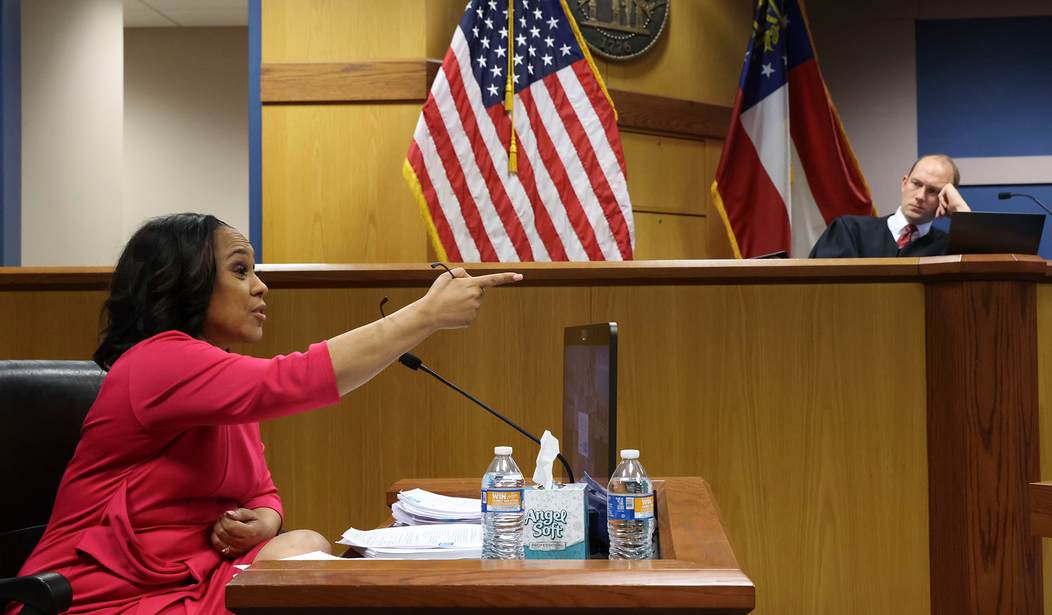
Fulton County, Georgia District Attorney Fani Willis just got humiliated by a judge ­— again.

Remember, if you will: After former President Joe Biden “won” the 2020 presidential election, the knives came out for Donald Trump, and it seemed just about everybody with a law degree tried to ruin him. 

You had the crusading former Attorney General Merrick Garland’s Department of Justice launching multiple investigations, Manhattan District Attorney Alvin Bragg trying get to get his by using a “novel” legal theory to charge him with 34 felony counts of falsifying business records, the TDS-riddled AG of New York, Letitia James, filing a civil suit against him for allegedly overvaluing his real estate holdings, and you had columnist E. Jean Carroll suing with her preposterous story of a department store sexual assault decades ago.

All along the way, we saw judges like NY’s Arthur Engoron and New York Supreme Court Justice Juan Manuel Merchan routinely ruling against Trump and bending the law to fit the preferred outcome (which of course was always, destroy Orange Man).

Most of the cases have been dropped or are in various stages of appeal.

And then there was Willis, who in 2023 thought she could nail the then-former president on Racketeer Influenced and Corrupt Organizations Act (RICO) charges alleging interference in the 2020 election. She forgot a basic rule, however: You probably shouldn’t have an affair with your lead counsel while prosecuting a case; it’s a bad look. The Georgia Court of Appeals eventually tossed her off the case for “appearance of impropriety.”

Trump and the other defendants want their legal fees reimbursed by the DA’s office — nearly $17 million worth — and Fani wants her say in the matter.

You should have thought about that earlier, a judge ruled Monday:

A Fulton County judge on Monday rejected the Fulton County District Attorney's Office's attempt to withhold payment from President Trump, ruling that the office remains disqualified while allowing Fulton County itself to join the fight over nearly $17 million in legal fees sought by former defendants.

The decision from Superior Court Judge Scott McAfee sets up the next phase of litigation in the once-sweeping racketeering case, which collapsed after prosecutors dropped charges against Mr. Trump and several allies.

Fourteen former defendants — including Mr. Trump — are now seeking $16,853,810.28 in attorney's fees and costs under a newly enacted Georgia law that allows defendants to recover expenses when a prosecutor is disqualified. 

Judge Scott McAfee said that not only was Willis disqualified from the case earlier, but that she was “wholly disqualified.” Another figurative slap in the face for Fani, but another win for Trump, who during the prosecution had (correctly) called her a "rabid partisan" who was on a "witch hunt." 

The lead attorney who represented Trump in the matter, Steve Sadow, said the judge made the right call:

Judge McAfee has properly denied DA Willis’ motion to intervene in POTUS’ action for reimbursement of attorney fees because her disqualification for improper conduct bars Willis and her office from any further participation in this dismissed, lawfare case.

This serves as yet another setback for Willis, who, despite her disqualification from the case, is still the Fulton County DA. The scandal reminds us once again how corrupt the system became as Democrats used every tool at their disposal — whether legal or ethical — to topple the then-private citizen and prevent him from ever taking the Oval Office again.

Guess who got the last laugh.


Trump May Waive the Jones Act for Oil Shipments. Let's Repeal It Instead.

Trump May Waive the Jones Act for Oil Shipments. Let's Repeal It Instead.

The century-old law makes energy more expensive even when there isn't a war raging in the Middle East.

President Donald Trump meets with oil company executives at the White House in January 2026. | JIM LO SCALZO/UPI/Newscom

(JIM LO SCALZO/UPI/Newscom)

One of the spillover effects of the recently launched war in Iran is higher energy costs: The prices of oil and gas have risen considerably since President Donald Trump piggybacked on Israel's bombing campaign.

Now, Trump is reportedly considering a workaround to address the problem in the short term, by suspending enforcement of a protectionist law. That's a good start, but we should go one step further and repeal it altogether.

"The war has effectively closed the Strait of Hormuz, a critical choke point between the Persian Gulf and the Indian Ocean," Reason's Eric Boehm wrote Monday. "A large portion of the world's oil supply flows through it."

"The price of Brent crude, the international benchmark, briefly surged to $119.50 per barrel on Monday—its highest level since the summer after Russia invaded Ukraine in 2022," the Associated Press reported. While it later fell back into the double digits, there is every indication that oil prices will continue to be a major concern.

On Monday, Reuters reported that Trump was considering a series of options to address the crisis, including "intervening in oil futures markets, waiving some federal taxes and lifting requirements under the Jones Act."

Under the Merchant Marine Act of 1920, more commonly called the Jones Act, cargo shipped between two U.S. ports must be carried by ships that were built in America and are primarily owned and staffed by Americans.

As a result, oil pumped in Alaska can only be transported to the U.S. mainland by a small subset of available vessels, making it much more difficult—and expensive—to do so. Americans pay more for certain energy products like natural gas, even when it's produced here.*

"The logic behind the law was that restrictions on foreign competition would, among other things, encourage the development of a strong U.S. shipbuilding sector," Colin Grabow of the Cato Institute wrote in 2019. But "rather than prospering, U.S. shipyards have been in a decline for decades, and there are only a mere handful that build oceangoing commercial ships. That may seem a headscratcher to some given the Jones Act's U.S.-build requirement, but it makes more sense when one considers that these ships cost up to five times more than equivalent vessels built in foreign shipyards."

"The U.S. only had 92 Jones Act-compliant ships in 2024," writes Caleb Petitt of the Independent Institute. "However, there were 185 U.S.-flagged ships that year. The other 93 are foreign-built ships that have been flagged in the United States." Even though the ships are registered in the U.S., they can't carry cargo between American ports since they weren't also built here.

"Oil tankers make up 55 of the 92 ships in the Jones Act fleet," adds the Grassroot Institute of Hawaii. "In 2014, the Hawaii Refinery Task Forceconcluded that the Jones Act was a major reason Hawaii is almost wholly dependent on foreign oil, since the cost of importing oil from the U.S. mainland aboard Jones Act tankers…is more expensive."

But presidents can waive the law's requirements in times of crisis. Trump would not be the first president to do so: After Hurricane Fiona knocked out power across Puerto Rico in 2022, then-President Joe Biden granted a waiver allowing a tanker carrying 300,000 gallons of diesel fuel to dock.

Trump himself also waived the Jones Act for Puerto Rico in 2017, after Hurricane Maria hit the island—though the waiver only lasted for 10 days.

In fact, Puerto Rico provides a perfect example of why the Jones Act is counterproductive even in peacetime. The law makes Puerto Rico pay more for liquefied natural gas (LNG) than its neighbor, the Dominican Republic. There currently exists no LNG tanker compliant with the Jones Act, so even though the Dominican Republic can buy LNG from the U.S., Puerto Rico—a U.S. territory—must buy its LNG from foreign sources, including Russia.

"I introduced the Open America's Waters Act last year to repeal the Jones Act, which raises the cost of energy and goods on consumers," Sen. Mike Lee (R–Utah) posted on X in response to the news that Trump was considering a waiver. "Chucking this outdated policy would be a great step to alleviate fuel prices for American families."

In fact, Lee has advocated repealing the Jones Act for several years. The current oil shock provides the perfect excuse to do so.

"The decrepit Jones Act fleet makes it cost prohibitive to move products from Gulf Coast refineries to the Northeast or the West Coast," The Washington Post editorial board wrote Monday. "The Trump administration is reportedly considering waiving the law, and there is already legislation introduced in Congress to repeal it. That's a great idea regardless of anything happening with Iran."