Sunday, March 8, 2026

The United States is the World Policeman


One of the most popular public global debate topics is: The U.S. is the World Policeman. American policymakers have been largely loathe to accept the title with an enduring conviction since Vietnam that the role is not sustainable. President Warren Harding’s memorial to the “unknown soldier” is a testament to the enduring isolationism of the American public and the keen aversion to risking the precious lives of young Americans abroad. John Quincy Adams’ proclamation to the Congress while serving as Secretary of State in 1821 remains a compelling admonition to present policy makers: “America goes not abroad in search of monsters to destroy.”

Despite these profound historical caveats, America does appear to be the indispensable power in global affairs and the current military engagement in Iran deepens that reality and urges growing acceptance that the United States is ‘the world’s policeman.’ The abrupt capture of Venezuelan strongman Nicolás Maduro eviscerated the global mood of bluffing or relying upon Trump’s promise to not increase U.S. commitments for military intervention. The ease of Trump’s military entries and exits from diverse locations defies one of the most important rhetorical premises rooting American isolationism: “quagmire.” The term remains the media’s ‘gotcha’ to presidential plans of “limited intervention.” The 21st century version of the quagmire problem is the Iraq war of 2003 fought by President Bush. Trump himself denounced the war as one of the nation’s greatest mistakes. Punditry successfully lodged the enduring false memory that Saddam Hussein ‘never had weapons of mass destruction,’ -- though the dead bodies of Kurdish children at Halabja bear the marks of a dictator who used chemical weapons as “human insecticide.”

From Vietnam to current conflicts, American public culture venerates an intense skepticism about American combat. The idea of being “anti-war” is generally well received by journalists and is cultivated as a mechanism for holding in check American military interventions. Organizations such as Code Pink and ANSWER rally public events to turn the American public against “war.” The chic anti-war sentiment has not ultimately aged well. The clean dichotomy of war and peace has dissolved in the 21st century as the ‘peace’ found in Afghanistan after the departure of U.S. troops in 2021 looks ugly and inhumane. Today’s skeptics like Representative Thomas Massie say that ‘bombing Iraq will not stop the Epstein files.’ But sex with children is an uncomfortable and common reality in the Afghanistan ‘liberated’ from U.S. troops and free from our ‘imperial colonialism.’ The larger rhetorical infrastructure of anti-war sensibility like that produced by Noam Chomsky do not effectively dissolve the imperialism and structural injustice of empires like the 47-year-old theocracy of Shia supremacism spreading from Persia to Christian Lebanon. Iranian activists seeking liberation from Shia supremacism complain that while Americans lament the deaths of government protesters Pretti and Goode, they appear ambivalent or disengaged from 35,000 citizens assassinated in the cities of Iran.

The United Nations is not rising to its original charge of being the kind of global custodian that the United States increasingly is called upon to fulfill. The U.N. and various internal committees of it seem cooperative and helpful to inhumanity, including holding Jewish hostages in the Gaza Strip in the role of paid educators from UNRWA. The failure of the United Nations to stop the slaughter at Srbrenica or Kigali in the 1990s is not resolving favorably in the 21st century. Nor does any multipolar alliance of China and Russia appear near or compelling. Russia’s two-week takeover of Ukraine is indeed a four-year quagmire recently hindered by the realization that Elon Musk’s Starlink system is no longer available for their drone warfare. The current conflict is revealing the deeper undercurrents of American technological supremacy as Musk’s specialized military satellite network -- Starshield -- provides far more advanced battlefield power than the civilian technology of Starlink used by Ukrainian military. Iran’s best battlefield technology was the Shaheed drone -- stolen from U.S. technology captured by the Iranians during the Obama administration. In this attack, the U.S. is using drone bombers exponentially cheaper than the Iranian Shaheeds sold to Russia. U.S. ingenuity stole the Iranian innovations back into the American arsenal. Our Israeli counterparts are demonstrating their own radical innovations with new laser missile interception systems that are also exponentially cheaper than the missile-based systems such as THAAD. European basing power is proving increasingly irrelevant with Britain, Spain, and Turkey all blocking U.S. access. Exceptional bomber technology allows the U.S. to fly 36-hour missions from the U.S. to any point in the world with precision, stealth, and devastating lethality.

Another important constraint on U.S. interventionism in the Middle East has long been the risk to global oil supplies. It is hard not to perceive a deliberate hegemonic move by the Trump administration to take Venezuela first followed by a second more comprehensive attack on Iran. With the U.S. now controlling the massive oil holdings of Venezuelan reserves alongside streamlined domestic extraction procedures, the U.S. is arguably the largest global supplier of the world’s most expensive commodity. Not only that, but one of America’s most significant geopolitical rivals -- China -- depends greatly upon oil imports from Venezuela and Iran. Higher oil prices do not affect the United States in the same manner they did when the problem was such a crux in the 1970s. The United States could profit handsomely from higher oil prices.

Rhetorically the Trump role as global cop faces severe scrutiny from the MAGA base that thought the President would reduce the resort to war. Trump does have a useful counter in the clarity that the Islamic government of Iran has been at war with the United States since its inception in 1979. With daily chants of “Death to America,” and deadly attacks on U.S. Marines from 1983 to 2005, Iran was continually at war with the United States. It is possible that if the regime could not recover, that the 47-year war fought by Iran against the U.S. would end.

All of this must be seen through the larger lens of human suffering. Humanity was four times as likely to die from genocide as combat in the 20th century. The non-response to the Rwandan genocide of 1994 was not encouraging for any semblance of a moral global order. In 100 days, more than a million Tutsis perished under the eyes of an indolent world. A world that is effectively alert and willing to interrupt a regime slaughtering tens of thousands on their streets is a better world. The American creativity of the Liberian intervention in 2003 allowed 6,000 Nigerian troops to end the deadly genocidal savagery of Charles Taylor and usher in the first female president on the continent of Africa. That better world can be composed of “coalitions of the willing” where those sympathetic with authentic human rights not screened through the ugly lens of anti-Semitism can triumph and provide meaningful relief. The role of the Unites States as the world policeman is a more just world.


Podcast thread for March 8


Friendly reminder on this 'Women's Day':

NCIS LA made it's best decision when they cast a dwarf sized Oscar winner as it's real leader, it's why it lasted for as long as it did.

The US-UK Relationship in Crisis: Iran Is Only the Latest Problem


The global NGO-industrial complex has become one of the most insidious threats to free societies in the West, including Europe and the UK. Foreign-funded networks—often unaccountable, unelected, and pushing policies no voters ever endorsed—are exerting massive influence over governments, draining resources, compromising sovereignty, and enabling intimidation, espionage, and cultural erosion. This "parallel government" operates outside democratic oversight, answering to donors (including adversarial foreign powers) rather than the people. As recently highlighted by DataRepublican after meetings with government representatives from dozens of countries in DC, the NGO problem is identical worldwide: officials feel their nations are no longer truly in control, with NGOs imposing unwanted agendas through funding leverage and backdoor pressure. In the UK and much of Europe, this has contributed to migration crises, free speech crackdowns, security vulnerabilities, and, in the UK, a Labor government accused of yielding to external threats. The United States must urgently expose these influence networks—starting with cutting off any federal dollars flowing to them—while Britain fights to reclaim its own culture. Failing to do so risks letting key allies fall into the wrong hands, amplifying dangers from Chinese infiltration, Islamist extremism, and other anti-Western forces.

This past week, headlines across the US and UK have spotlighted the fallout from PM Starmer’s reluctance to allow US use of UK bases for strikes on Iran, and his delayed deployment of defensive assets like jets and warships to regional partners. This has left allies like Cyprus exposed to potential Iranian retaliation. But the fact remains that the US is decisively winning this conflict with little to no help from Britain. So why does it matter? 

While America isn't desperate for the UK's lagging military support, the "special relationship" is in deep crisis, and the Iranian situation has only sharpened the focus. Contrary to the ideas of some conservatives eager to shed European ties, the erosion of this alliance between two of the West's oldest partners is a serious problem that demands attention.

Before Operation Epic Fury against Iran, the UK already drew President Trump’s criticism over a questionable backroom deal on the vital Diego Garcia base. Additionally, Britain has endured severe free speech restrictionsoutpacing the USSR, and faces overwhelming migration issues that sap its economic and global strength. Those are just a few of the myriad problems eating away at the UK-US relationship in recent years.

As a foreign affairs journalist with experience in DC, I've discussed US-European relations with many insiders. On one such occasion, a senior State Department diplomat and I were discussing the reputation of the European desk at State and across the national security ecosystem. Many in DC consider it to be a “boring” place to be assigned due to the relative lack of excitement available in modern, western, developed countries. This official told me something I will never forget: The Europeans are the ones you call in a crisis. Who else has ready, advanced, technologically superior militaries? Global intelligence networks? Diversified industrial bases for humanitarian and medical aid? Western Europe (alongside the US) represents the core of civilized, capable allies.

In the Middle East, Gulf partners provide invaluable regional support, but most are small, oil-dependent, and still building advanced defenses. As seen in this conflict—where the UAE has faced heavier Iranian missile targeting than even Israel—many rely heavily on US protection. We also need partners who can defend themselves and us.

It would be impossible to continue with this analysis without mentioning Israel, which has stepped in to fill the gaping holes left by the UK and some of our other past European allies, flawlessly. Their modern defense industrial complex, advanced training and military skill, and integrated partnerships with US forces has been a force multiplier that the world must reckon with.

But the UK? The only real barrier is internal. Its Labor government faces accusations of siding with terrorists under pressure from its Muslim refugee population (some of whom have caused havoc when demands go unmet). Recent trials expose deeply embedded Iranian spies in UK society and government, alongside Chinese spying allegations in Parliament. The entire system could be compromised—via espionage, Chinese payoffs, or terrorism threats.

Can we afford to let the UK slip into hostile control? We're already infiltrated by Chinese and anti-Western Islamist elements here; a fallen UK would heighten our risks exponentially. Recall WWII warnings—if Britain fell to Hitler without US involvement, America's peril would multiply.

The same logic applies to Chinese ambitions or Islamist caliphate goals. These scenarios may seem unlikely, but given the current state of affairs on mainland Europe, they warrant serious consideration.

Rather than viewing the current tensions as proof that the UK relationship is obsolete, we should see it as a stark warning. We cannot let the UK fall into the wrong hands. Addressing the global NGO-industrial complex is essential—it's plagued the US and many allies, with foreign influence only now coming to light. DataRepublican's recent revelations from DC confirm this is a worldwide issue. While Britain's people must ultimately save their nation, the US can lead in exposing these networks, cutting off funding, and spreading the truth.


Trump Cracks China’s Fortune Cookie


MAGA  is  bringing  the  fight  to  CCP

American Thinker 

It’s easy to forget that ten years ago, candidate Donald Trump was the only national politician who took China’s growing geopolitical power seriously.  He talked about China so frequently and pronounced those two syllables so deliberately — Chi-na — that comedians and voters alike enjoyed doing imitations of the MAGA-man taking America’s geopolitical adversary to task.

On the stump, Trump called both Republicans and Democrats “stupid” for how they had permitted the Chinese Communist Party to devour American assets.  He would list beautiful American buildings and historic American real estate that the Chinese had acquired since President Bill Clinton and both parties in Congress decided to ignore China’s past bad behavior (including the ’89 massacre of pro-democracy protesters in Tiananmen Square) and welcome it into the world’s premier economic clubs.  He pointed to two decades of multinational trade “deals” that had resulted in the closures of industrial and manufacturing plants across the United States, as once-American companies shifted operations to China and took advantage of the communists’ disregard for workers’ safety or subsistence wages.  He argued that China’s currency manipulation, organized theft of American trade secrets, and sidestepping of environmental and human rights treaties ensured that American wealth flowed in one direction: directly into the pockets of the CCP.  

Trump couldn’t believe that American politicians could be so reckless, or worse, consciously willing to sabotage American economic interests for a traitor’s paycheck from Chinese-run lobbyists.  He excoriated national companies for betraying Americans while profiting from slave labor on the other side of the world.  His campaign for president was simultaneously a campaign against this percolating notion in the West that the twenty-first century belonged to China.

Remember how common it was a decade ago to hear pundits proclaim with certainty that this was “China’s century”?  The Brits had handed Hong Kong to China’s communists in ’97 (with false assurances from the CCP that the former British colony’s democratic traditions would be respected for at least fifty years).  President Clinton successfully maneuvered China into the World Trade Organization on his way out of office.  As the new millennium began, businesses in the United States shifted manufacturing operations to China, and it seemed as if everything being sold in America now had a “made in China” label.  The managers of Wall Street’s big firms and the presidents of London’s big banks all opened fortune cookies promising big fortunes in China.  European globalists such as the World Economic Forum’s Klaus Schwab found the CCP’s totalitarian surveillance state an ideal model for the rest of the world to emulate.  China’s billion-plus population and abundant supplies of critical natural resources led Western think tanks to conclude that there was no stopping China’s future global domination.  As Hollywood partnered up with China’s communists to produce blockbuster movies, a message consistently made its way to the screen: China would soon lead the world and dominate the future.

Have you noticed that sometime between Donald Trump’s famous trip down Trump Tower’s golden escalator in 2015 to announce his presidential ambitions and his return to office last year (after surviving Deep State sabotage, lawfare, and assassination attempts) most of the “really smart” pundits have stopped talking about this being “China’s century” with so much certainty?  The shift in “punditry” didn’t happen overnight.  During President Trump’s first term, if you recall, all the “smartest foreign policy people” told television viewers that Chinese President Xi Jinping would use “flattery” and “pragmatic fawning” to appeal to Trump’s “narcissism” while outsmarting him every step of the way with regard to crucial trade imbalances between the two countries.  Xi invited Trump to China’s Forbidden City in 2017, a rare honor for a foreign guest.  The no-longer-relevant scribblers at Time covered the historic event with this headline: “President Trump Meets the World’s Most Powerful Man in Beijing.”

Entirely dismissive of President Trump’s negotiating skills during his first term in office, Time’s editors advised the billionaire businessman to arrive with hat in hand and “ask nicely.”  Time further declared, “China’s ascendancy is stark and only set to grow.”  Xi’s Belt and Road Initiative “will boost Beijing’s influence beyond its borders just as Trump’s questioning of bedrock principles such as free trade, and toadying to authoritarian regimes, is diminishing Washington’s.”  Here’s Time’s final kicker (which I love): “Trump might talk tough, but don’t expect Xi to tremble.”  

Boy those geniuses at Time sure framed the Trump-Xi dynamic accurately, didn’t they?  Fast-forward to today, and everywhere you look, two things seem crystal clear: Trump is on the attack, and China is backpedaling.  Do leftwing “journalists” still believe President Trump is all bark, no bite?  

Sundance over at The Last Refuge put together a succinct list of Trump’s MAGA kung fu: “First blow: the Trump tariffs hit Beijing hardest.  Second blow: the Beijing tentacle on the Panama Canal is severed.  Third blow: global tariff threats changed the risk dynamic for southeast Asia countries who acted as transnational shippers for China.  Fourth blow: cheap sanctioned oil from Venezuela was cut-off.  Now, the fifth blow: cheap, sanctioned Iranian oil is disrupted.”  Nearly 20% of Beijing’s oil came from Iran and Venezuela, and both countries had given Xi a premium discount in exchange for promises of Chinese technology and security.  China was purchasing more than 80% of Iran’s shipped oil.

What happens when oil stops flowing to China?  Alarm bells go off.  China has immediately halted domestic refiners from exporting diesel and gasoline.  First Trump takes China’s supply of oil coming from Venezuela.  Then Trump takes China’s supply of oil coming from Iran.  At the same time, Trump reasserts the supremacy of the petrodollar on world oil markets, just as China was successfully negotiating purchases in yuan.  While taking out narco-terrorist dictator Nicolás Maduro in Venezuela and Islamic terrorist dictator Ali Khamenei in Iran, Trump simultaneously defends the dollar from Chinese attack.  

Newsmax host Carl Higbie did an excellent job the other night explaining in nine short minutes all the different ways President Trump is making America’s position stronger and China’s position weaker in the world.  While China funds domestic protests inside the United States to frustrate Trump’s policy initiatives, the president pursues rare earth elements in Greenland (to end any long-term dependency on China), severs Chinese influence in South and Central America, and re-establishes American dominance over oil supplies in the Middle East.  Higbie takes a hard look at members of Congress, Western allies, and even NATO and concludes that President Trump is singlehandedly “containing” China while everyone else is “asleep at the wheel.” 

President Trump refuses to give communist China control over the world’s future.  In speech after speech, he tells listeners that both the twenty-first and twenty-second centuries will be “American centuries.”  Every economic and foreign policy decision Trump makes considers that policy’s impact on the war already being waged between China and the United States for global supremacy.  

There’s a well-known but apocryphal Chinese curse: “May you live in interesting times.”  President Trump should send truckloads of fortune cookies to President Xi containing that wish.  On the flip side where the lucky numbers usually go, he should print this in red: 45-47, MAGA, KAG.


🎭 𝐖𝟑𝐏 𝓓𝓐𝓘𝓛𝓨 𝓗𝓾𝓶𝓸𝓻, 𝓜𝓾𝓼𝓲𝓬, 𝓐𝓻𝓽, 𝓞𝓟𝓔𝓝 𝓣𝓗𝓡𝓔𝓐𝓓


Welcome to 

The 𝐖𝟑𝐏 𝓓𝓐𝓘𝓛𝓨 𝓗𝓾𝓶𝓸𝓻, 𝓜𝓾𝓼𝓲𝓬, 𝓐𝓻𝓽, 𝓞𝓟𝓔𝓝 𝓣𝓗𝓡𝓔𝓐𝓓 

Here’s a place to share cartoons, jokes, music, art, nature, 
man-made wonders, and whatever else you can think of. 

No politics or divisive posts on this thread. 

This feature will appear every day at 1pm mountain time. 


This New Report Destroys the Leftist Narrative on the Iranian Ship Sinking

This New Report Destroys the Leftist Narrative on the Iranian Ship Sinking


A report for Iran International has revealed that American forces involved in Operation Epic Fury notified an Iranian warship twice that an attack was impending and advised the Iranian sailors to abandon the vessel, the outlet published on Saturday.

The outlet has cited testimony from and individual close to the family of a deceased sailor aboard the IRIS Dena. The family member claimed that the sailor had called his father shortly before the torpedoes were launched. The commander of the vessel reportedly forbade crewmembers from abandoning the vessel, leading to an argument on the ship.

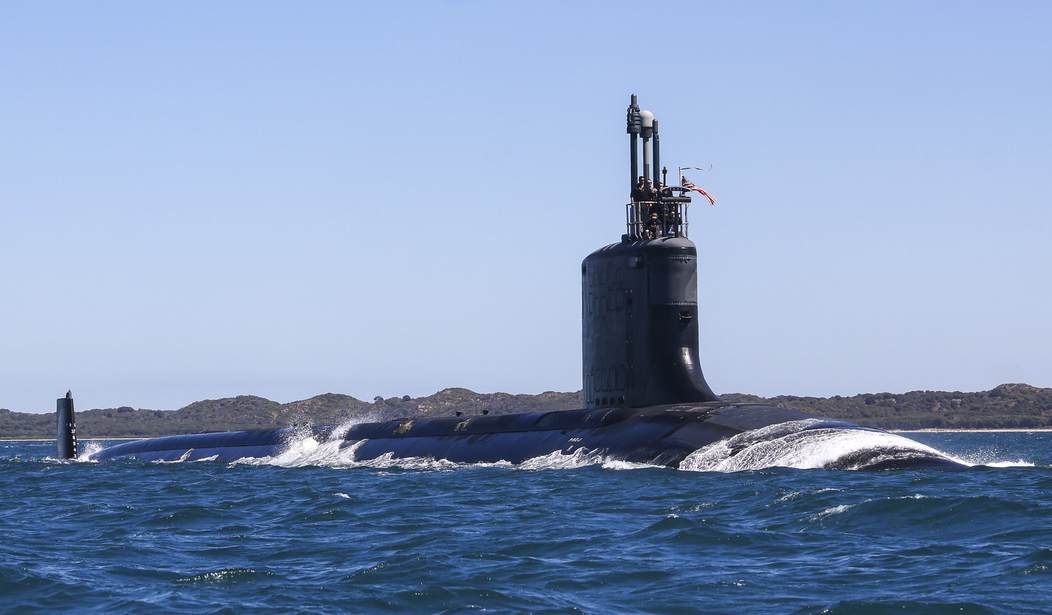
The Department of War released footage of the sinking of the Dena on Wednesday, after the ship was hit by torpedoes from an American submarine.

32 of the survivors were rescued by the Sri Lankan Navy. Many on the Left jumped on the sinking of the ship, labeling the move as a “war crime” since the American submarine did not conduct rescue operations for the Iranian sailors. They have conveniently ignored that the Iranian ship was a legitimate target, and that submarines lack the necessary capabilities to conduct widespread rescue operations. INDOPACOM has indicated that they coordinated with Sri Lankan forces to provide aid those aboard the Dena as well.

With this new report, it is clear that American forces gave the Iranians every chance possible to save their own lives. That fact will remind the world of the morality of the United States, so don’t be surprised when it gets memory-holed.


WHY IRAN - WHY NOW ? Iranian and Iranian-Backed Attacks Against Americans (1979-Present)


 Armed conflict between the United States and Iran did not begin in 2026, but instead has deep roots that extend back to the 1979 Islamic Revolution. For nearly five decades, the clerical regime in Tehran and its proxies have committed a range of attacks against Americans, posing a longstanding and continuing threat to U.S. national security. This memorandum, first published in June 2025 during the 12-Day War, provides select documentation of these assaults. While the list is not comprehensive, it demonstrates that Tehran has long endangered U.S. forces in the Middle East, the American homeland, and Americans residing across the globe.

November 1979-January 1981: Iranian students — with the backing of Tehran — take dozens of Americans hostage at the U.S. Embassy in Tehran.

April 1983: A suicide car bombing kills 63 people, including 17 Americans, at the U.S. Embassy in Beirut. The Iran-backed terrorist group Islamic Jihad, a precursor and early branch of Hezbollah (not to be confused with Palestinian Islamic Jihad), claims responsibility.

October 1983: Operatives of the Iran-backed Hezbollah drive a truck bomb at a Marine compound in Beirut, killing 220 U.S. Marines and 21 other service personnel.

December 1983: Hezbollah operatives drive an explosives-filled dump truck through the gates of the U.S. Embassy in Kuwait City. No Americans are harmed.

March 1984: Terrorists kidnap CIA station chief William Buckley in Beirut, subsequently torturing and ultimately killing him in 1985. Islamic Jihad claims responsibility.

December 1984: Hezbollah terrorists hijack Kuwait Airways Flight 221 on its way from Kuwait to Pakistan and divert it to Tehran, killing two American officials from the U.S. Agency for International Development.

June 1985: Hezbollah terrorists hijack TWA Flight 847 en route from Athens to Rome and kill a U.S. Navy diver.

July 1989: Hezbollah operatives kill U.S. Marine Corps Col. William Higgins after kidnapping him the previous year while on a UN peacekeeping mission in southern Lebanon.

April 1995: An explosives-laden van crashes into a bus near Kfar Darom in the Gaza Strip, killing one American and seven Israelis. Palestinian Islamic Jihad claims responsibility.

August 1995: A Hamas suicide bomber blows up a bus in the Ramat Eshkol neighborhood of Jerusalem, killing an American and three other passengers and wounding more than 100.

February 1996: A Hamas suicide bomber blows up a Jerusalem bus, killing three Americans and wounding three other Americans. A total of 26 people die in the attack.

March 1996: A suicide bomber blows up the Dizengoff shopping center in Tel Aviv, wounding two Americans. Twenty people die and 75 others are injured in the attack. Both Hamas and Palestinian Islamic Jihad claim responsibility.

May 1996: Gunmen kill an American-Israeli dual citizen in the community of Beit El in the West Bank. Another U.S. citizen and three Israelis are wounded. No group claims responsibility, but Israel suspects Hamas or Palestinian Islamic Jihad.

June 1996: A truck carrying 5,000 pounds of explosives blows up the Khobar Towers, a U.S. Air Force housing complex in the Saudi Arabian town of Khobar. Nineteen Americans die and some 500 people are injured. The Iran-backed Hezbollah Al Hijaz, a terrorist group in Saudi Arabia, is deemed responsible.

September 1997: Three Hamas suicide bombers blow themselves up at the Ben Yehuda shopping mall in Jerusalem, killing a U.S.-Israeli dual citizen and wounding seven other American citizens. Four other people die and nearly 200 are wounded in the attack.

August 1998: With the assistance of Hezbollah, al-Qaeda suicide bombers almost simultaneously blow up the U.S. Embassies in Kenya and Tanzania, killing 224 people, including 12 Americans, and wounding thousands. According to the 9/11 Commission Report, al-Qaeda developed “the tactical expertise for such attacks months earlier, when some of its operatives — top military committee members and several operatives who were involved with the Kenya cell among them — were sent to Hezbollah training camps in Lebanon.”

August 2001: A Hamas suicide bomber blows up the Sbarro pizzeria in Jerusalem, killing a U.S.-Israeli dual citizen and two other Americans. A total of 15 people die in the attack.

September 11, 2001: While the 9/11 Commission Report concludes that Iran had no foreknowledge of al-Qaeda’s attacks on the World Trade Center, the report indicates that Tehran facilitated the travel of some of the terrorists. “In sum,” the report notes, “there is strong evidence that Iran facilitated the transit of al Qaeda members into and out of Afghanistan before 9/11, and that some of these were future 9/11 hijackers.”

January 2002: Gunmen affiliated with the Iran-backed al-Aqsa Martyrs’ Brigade kill a U.S.-Israeli dual citizen and wound another individual in the West Bank community of Beit Sahur.

July 2002: A bomb planted by a Hamas terrorist kills five American students at Jerusalem’s Hebrew University, including an American-Israeli dual citizen and an American-French dual citizen. A total of nine people die in the attack.

June 2003: An American citizen, along with 16 other people, die when a Hamas terrorist blows himself up on a bus in Jerusalem.

October 2003: Terrorists from the Iran-backed Popular Resistance Committees kill three U.S. diplomatic personnel in a bombing in Gaza.

2003-2011: Iranian-backed militias kill at least 603 U.S. troops in Iraq, according to the Pentagon. Iranian training and material support for Iraqi militias during the surge greatly increased the difficulties U.S. forces faced while combating the insurgency and included some of the deadliest weapons used against American troops, such as explosively formed penetrators (EFPs) and improvised explosive devices (IEDs).

August 2003: A Hamas suicide bomber blows up a bus in Jerusalem, killing five Americans and wounding one other American. A total of 24 people die in the attack.

August 2006: Hezbollah fighters kill American citizen Michael Levin, a soldier in the Israel Defense Forces (IDF), during the Second Lebanon War. He is the only American to die in the conflict.

January 2007: Twelve men affiliated with the Quds Force of Iran’s Islamic Revolutionary Guard Corps (IRGC) disguise themselves as U.S. soldiers, enter the Provincial Joint Coordination Center in the Iraqi city of Karbala, kill five U.S. soldiers, and wound another three. In 2019, the U.S. State Department issues a $15 million bounty for information on an IRGC Quds Force commander who planned the attack and other “assassinations of coalition forces in Iraq.”

July 2014: Hamas terrorists kill two Americans serving in the IDF during fighting between the terrorist group and Israel in Gaza as part of Operation Protective Edge.

October 2015: Hamas terrorists kill an American citizen and his wife, residents of the West Bank community of Neria, in their car in a drive-by shooting.

December 2019: Rockets fired by Kataib Hezbollah, an Iran-backed militia, kill an American security contractor and wound several U.S. service members and Iraqi personnel at the K1 military base in the Iraqi city of Kirkuk.

January 2020: A direct Iranian ballistic missile attack against the Ain al-Asad airbase in Iraq causes more than 100 U.S. troops to suffer traumatic brain injuries.

March 2020: The family of former FBI agent Robert Levinson, who disappeared in Iran in 2007, announces that he likely died in an Iranian prison at an unknown date.

September 2020: U.S. intelligence reports indicate that Iran is weighing a plot to assassinate U.S. Ambassador to South Africa Lana Marks.

February 2021: A rocket fired by an Iran-backed militia at coalition forces in the Iraqi city of Erbil wounds a U.S. service member and four U.S. civilian contractors.

July 2021: Iranian-backed militias conduct at least three rocket and drone attacks against U.S. forces in 24 hours in Iraq and Syria, wounding two U.S. service members.

September 2022: An Iranian rocket attack kills an American citizen in Iraqi Kurdistan.

November 2022: A captain in Iran’s IRGC orchestrates the killing of an American citizen living in Baghdad who worked at an English language institute.

March 2023: An Iranian drone kills an American contractor and wounds five service members and another contractor when it strikes a coalition base near the Syrian city of Hasakah.

October 7, 2023: Hamas kills at least 48 Americans and kidnaps at least 12 Americans in a massacre of 1,200 people in southern Israel.

December 2023: A drone attack conducted by an Iranian-backed Iraqi militia against U.S. forces in Erbil wounds three American soldiers, including one critically injured with shrapnel to the head, which placed him in a coma.

January 2024: A drone launched by Kataib Hezbollah kills three U.S. soldiers at a U.S. military base in Jordan and wounds more than 40 other service members.

October 2024: Iran executes German-Iranian national and U.S. permanent resident Jamshid Sharmahd on fraudulent terrorism charges.

November 2024: A report released by the Foundation for Defense of Democracies indicates that Iran and its proxies have conducted more than 180 attacks against U.S. forces in the Middle East between October 17, 2023, and November 19, 2024, resulting in more than 180 wounded and three killed U.S. service members.

November 2024: The U.S. Department of Justice announces charges against an Iranian national and two American accomplices for plotting to assassinate President Trump.

March 2025: A U.S. jury convicts two agents of Iran for plotting to assassinate Iranian-American journalist Masih Alinejad in New York in 2022.

June 2025: At least three U.S. bases in Syria and two U.S. bases in Iraq are attacked with missiles or drones, likely by Iranian-backed militias.

March 2026: Six American soldiers are killed in action during U.S. operations against Iran.

March 6, 2026 | Insight   https://www.fdd.org/analysis/2026/03/06/iranian-and-iranian-backed-attacks-against-americans-1979-present/


FBI Secret Stash of 'Ghost' Files Shows How Difficult Transparency and Oversight Has Become


RedState 

Federal Bureau of Investigation (FBI) Director Kash Patel has repeatedly affirmed his mission as director: "Let good cops be cops—and rebuild trust in the FBI."

Efforts to thwart this continue to come from outside and within the agency; most recently, Retuers revealed that White House Chief of Staff Susie Wiles and Director Patel had their phone records collected by the FBI in 2023, during "Operation Arctic Frost." This information was labeled "prohibited," which hid them from routine search and scrutiny not only by FBI officials, but Congress. Patel fired over 10 agents involved in these covert acts, and is now seeking to end this practice of "prohibited" categories, which appears to be engineered to not only avoid transparency, but to encourage FBI rogue operations to flourish. 

According to Matt Taibbi of Racket News, Patel recently commissioned a task force to dig up a separate set of books that had been designated "prohibited access." 

In mounting this task force, Patel might not have realized that he is going further down what has increasingly become a secrecy rabbit hole.

A Federal Bureau of Investigation task force has begun excavating the separate set of books FBI keeps using an inaccessible “prohibited access” file designation, according to multiple government sources. Though an internal fight over how to handle the files continues, embattled FBI Director Kash Patel has assigned personnel to examine decades of hidden history, Racket News has learned, with some files already turned over to Congress.

“This is it — the deep state,” one of the sources said.

Judiciary Committee Chair Chuck Grassley, whose work with whistleblowers and pressure across years was key to prying prohibited access files loose, expressed cautious optimism.

“If it weren’t for whistleblower disclosures to my office, the very existence of the FBI using ‘Prohibited Access’ files for some investigations would have remained in the dark,” he said. “I’ve asked Attorney General Bondi and Director Patel to turn over certain Prohibited Access records to Congress. I’ve received some, but am still waiting on others. I urge the DOJ and FBI to keep digging – which previous administrations apparently didn’t make any effort to do – so that the facts can come to light. The FBI’s secret stash of records is scandalous.”

Scandalous doesn't even scratch the surface. This is horrifying and worse than the Mitrokhin/KGB filing system. These are not just secretive documents. They are documents that, when the rubber meets the road, never existed in the first place.  

Files given a prohibited access designation are not merely secret. They are “ghosts” which “do not exist,” records rigged to return false negatives when searched for in the FBI’s SENTINEL system. They’re digital descendants of paper records that as far back as Richard Nixon’s presidency were kept in locked offices, accessible to just a few officials, typically at the deputy director level and above. Currently, the number of people with the ability to access the files can be counted on one hand.

The implications of the nation’s chief federal law enforcement and counter-intelligence organization having kept a separate, non-searchable filing system are mind-boggling.

“It’s not like turning over a rock and finding a few bugs,” said retired FBI Supervisory Analyst George Hill. “It’s like turning over a manhole and finding a whole city.”

“You don’t run a Constitutional republic on secret files,” added legal analyst Margot Cleveland.

These files were kept secret from the majority of the FBI, even high-ranking officials, and fully hidden from any Congressional oversight. It is impossible to police the police and ensure transparency when an entire nexus of operations not only appears opaque, but non-existent.

 According to Taibbi, the files span at least 25 years. Starting around 1999, they cover multiple administrations and involve information from both political parties.  

They include potentially hundreds of case numbers and involve off-books activities, such as surveillance and disruption efforts tied to investigations like Arctic Frost (related to post-2020 election matters) and the Trump-Russia probe. 

No formal rules govern the transfer of access across administrations; instead, it's reportedly maintained as an informal, oral tradition among a small circle of senior FBI officials, insulated from lower-level agents, political appointees, Congress, and even the White House.


TWO OPOSSING VIEWS OF LATIN AMERICA - TOO LONG TO PUBLISH - USE LINKS TO READ

ONE


Author:

https://www.theepochtimes.com/article/mapping-chinas-influence-in-latin-america-5992113?&utm_source=MB_article_paid_c&utm_campaign=MB_article_2026-03-08-ca&utm_medium=email&est=ouOKkKvKdSefUAW7fxRx744SDZQ0qML%2BlOtazbTmSxcN1A18%2B7DCLqC%2Fp82AS0655XJa&utm_content=more-top-news-3

TWO

Trump Announces Military Coalition With Latin American Leaders to Eradicate Cartels

More than a dozen Latin American leaders joined the U.S. president to launch a new security initiative, called ‘The Shield of the Americas’ in Miami.
https://www.theepochtimes.com/us/trump-announces-military-coalition-with-latin-america-leaders-to-eradicate-cartels-5995534?&utm_source=MB_article_paid_c&utm_campaign=MB_article_2026-03-08-ca&utm_medium=email&est=qrxAlDF1qfkPewAQ0kSfdr3N8bqi79vzlOnFf3Zx6VouggyCd3zqTgInK8qj8xH4wzdr&utm_content=more-top-news-2