Thursday, February 26, 2026

The Future of the Department of War: Warfighters, Not Woke Harvard Students


For most of our nation’s history, we did not have a Department of Defense. We had a Department of War. That name was not accidental. It reflected a clear understanding of purpose: the United States military exists to fight and win the nation’s wars. Not to mirror cultural trends. Not to absorb the ideological priorities of elite universities. Not to serve as a laboratory for social experimentation. Its mission is singular: to defend the United States of America and, when necessary, defeat those who threaten it.

Yet increasingly, American taxpayers are underwriting a military culture that appears shaped less by battlefield realities and more by the intellectual fashions of institutions like Harvard. Based on an overview of Harvard Kennedy School initiatives, the university maintains a wide range of Diversity, Equity, and Inclusion (DEI) programs embedded across its schools and fellowships. While this is something the Biden administration may have tolerated, the Trump administration is committed to ending this woke madness.

The Women and Public Policy Program promotes initiatives such as “Work and Gender Equity,” focused on “debiasing systems,” as well as research designed to advance gender equity in political participation. The Center for Public Leadership runs an Equity Fellowship recruiting students committed to “dismantling barriers to equity across society.” Even when offices are rebranded, such as renaming the Office of Diversity, Equity, and Inclusion to the Office of Community and Belonging, the core mission remains unchanged.

Harvard is free to pursue its priorities. It is a private institution with its own governing philosophy. The question is not whether Harvard can advance equity initiatives or host academic fellowships. The question is whether this woke university should be involved in any way with the Department of War. Hard-working American taxpayers expect security and strength, not their money to be going to a lefty university with a $60 billion endowment.

We can’t forget the firestorm surrounding the Harvard Kennedy School’s appointment of Chelsea Manning, convicted of leaking classified materials, as a visiting fellow before the fellowship was rescinded. These episodes may be framed by some as academic exercises in dialogue and reform. But to many Americans, they underscore a deeper concern: the values and priorities dominating elite academic spaces are increasingly influencing institutions whose primary responsibility is national defense.

War is not a seminar. It is not a panel discussion. It is not an equity workshop. War is violent, unforgiving, and decisive. Our adversaries are not calibrating their forces around inclusive language or social frameworks. China is modernizing its navy and expanding its missile capabilities. Russia is refining electronic warfare tactics and testing NATO’s resolve. Iran and North Korea continue to poke and prod at the West. In that environment, the United States military must be ruthlessly focused on readiness, lethality, cohesion, and strategic superiority.

There is nothing wrong with educating military leaders in history, strategy, and the ethical dimensions of command. In fact, such education is essential. But education must serve combat effectiveness, not ideological conformity. Standards must be anchored in performance and capability, not in political fashion. Promotions and training priorities must reflect what wins wars, not what earns applause on a university campus.

The American soldier deserves clarity of mission. He or she deserves leadership that emphasizes discipline, physical excellence, and devotion to country. And the American taxpayer deserves assurance that defense dollars are being spent to sharpen the spear, not to rebrand bureaucracies or replicate academic activism within the ranks.

The original name, Department of War, conveyed urgency and realism. It acknowledged that peace is preserved through strength and that strength requires seriousness of purpose. Our military must be oriented toward victory above all else. Not because dialogue and fairness are unimportant in civil society, but because the battlefield is governed by different laws.

The United States of America remains the greatest country in the history of the world, not by accident, but because generations of Americans understood the difference between academic debate and existential conflict. It is time to remember that distinction and ensure our soldiers are adopting the warfighter mindset, not the woke mind virus.

Entertainment and podcast thread for Feb 26


Patience is a virtue. :)

San Francisco Approves Reparations Ordinance for Black Residents, Providing Race-Based Education Benefits


City proposes $5 million payments to black residents, student loan cancellation, an HBCU campus, and compensation for teaching a ‘white supremacy curriculum.’

In San Francisco, local lawmakers are putting reparations into practice—a set of policy recommendations and legislative changes that have yet to be adopted at the state level. The effort began in July 2023, when the city’s Human Rights Commission, which oversees discrimination complaints and restorative justice initiatives, drafted the San Francisco Reparations Plan.

In December 2025, the San Francisco Board of Supervisors adopted the plan as an ordinance, and Mayor Daniel Lurie signed it into law in January 2026. The measure includes a proposed $5 million one-time lump-sum payment to eligible black residents, along with more than 100 recommendations to support repair, restitution, and long-term community investment.

Among the sweeping proposals—many of which provide race-based benefits in homeownership, employment, business, education, and health—the city government will now be tasked with (pages 22-24):

  • Funding tuition assistance for 2–4-year college institutions, trade schools, and other post-secondary school options.
  • Investing in pathways for Black SFUSD (San Francisco Unified School District) graduates who return to San Francisco to work at SFUSD. The City will provide funding to eligible returning professionals to help cover housing, student loans, and related expenses.
  • Establishing a satellite Historically Black College or University (HBCU) campus in downtown San Francisco.
  • Eliminate student loan debt for blacks who attended SFUSD.
  • Increasing funding for existing programs that support college readiness and completion.
  • Providing housing stipends for black educators that are commensurate with market-rate housing needs.
  • Using the Urban Ed Academy model, expand the program to include black women and build professional pipelines to attract and retain black women educators.
  • Compensate black educators for the harm they experience teaching a “white supremacy curriculum.”

Notably, the plan’s education provisions include some jaw-dropping action bulletins, such as to “[e]stablish a Black youth hotline to report discrimination,” “[e]stablish an Afrocentric K-12 school,” “[i]ntroduce a mandatory core Black History and Culture curriculum into all SFUSD grade levels,” and “[i]ncorporate meditation, yoga, and other mindfulness principles into the classroom and afterschool programs.”

Compared with California’s state-level reparations prototype, which cunningly insists on identifying recipients by lineage rather than race, San Francisco’s model does not bother to hide its racial intent. When the city ordinance was codified, a San Francisco supervisor commented: “This would be the first time a city in California actually spent money towards achieving reparations for Black people.”

Certainly, many concerned San Franciscans warned their local representatives against abusing government power and taxpayer funds for blatant racial spoils. Advocate and commentator Richie Greenberg said:

I’ve been keenly paying attention to this issue of Reparations for several years now, watching as city hall officials (and now the mayor), have consistently ignored law and constitutional rights of us taxpayers. They have put rhetoric and ideology ahead of the city’s residents. I have reached out to the Board of Supervisors, the mayor, the city attorney and the reparations committee itself to demand they cease wasting taxpayers’ money on this unconstitutional plan, and the time has come to bring them to court.

Greenberg’s words fell on deaf ears, as San Francisco supervisors pushed the proposal through.

The mayor signed off on the plan rather quietly, without a press conference or media briefing. But defenders of equal rights, such as the Pacific Legal Foundation (PLF) and my organization, the Californians for Equal Rights Foundation (CFER), had been closely monitoring developments and working behind the scenes to build a case. On February 5, CFER and two member co-plaintiffs, Mr. Greenberg and Mr. Arthur Ritchie, represented by PLF, sued the City and County of San Francisco and the San Francisco Human Rights Commission.

Our lawsuit argues that San Francisco has violated the constitutional principle of equal protection in instituting the reparations fund. The plan essentially imposes “racial classifications on present-day residents who neither endured enslavement nor inflicted it.” By doing so, San Francisco has weaponized government action, public authority, and taxpayer dollars to distribute benefits on the basis of race and ancestry. Specifically, the San Francisco Reparations Plan violates the Fourteenth Amendment to the United States Constitution, Proposition 209, and the California Constitution’s guarantee of equal protection (Article I, Section 7).

When reason and persuasion fall short of reigning in a government entity so determined to violate the law in the service of racial classifications, the court of law becomes our last resort. Alarmingly, this timely lawsuit was filed only weeks after CFER and two other member co-plaintiffs, under the legal counsel of the American Civil Rights Project, settled with San Francisco for the latter to defund four unconstitutional welfare programs on the basis of race and gender identity.

The battle to defend equality seems like a never-ending game of Whack-A-Mole. And the stakes have just become higher, since the California Assembly is now poised to approve Assembly Constitutional Amendment No. 7 (ACA 7), a 2025 bill aimed at repealing education-related provisions of Prop. 209. In May 2025, ACA 7 was paused and turned into a two-year bill by the California Assembly Appropriations Committee. It was subsequently unfrozen and approved on January 22, 2026, in an unconventional move, as most two-year bills die of inaction in the same committee.

If ACA 7 is approved on the November state ballot, the myriad of education-themed recommendations in the San Francisco reparations plan would gain significant legal leverage. Considering this, the problem of perpetual race-centric policymaking has become multifaceted, meriting swift and resolute action from the side of truth across all fronts: legal, legislative, grassroots, and more.

We believe supporters of individual equal rights are on the side of truth, and having acquired this knowledge, we stand firm in it.

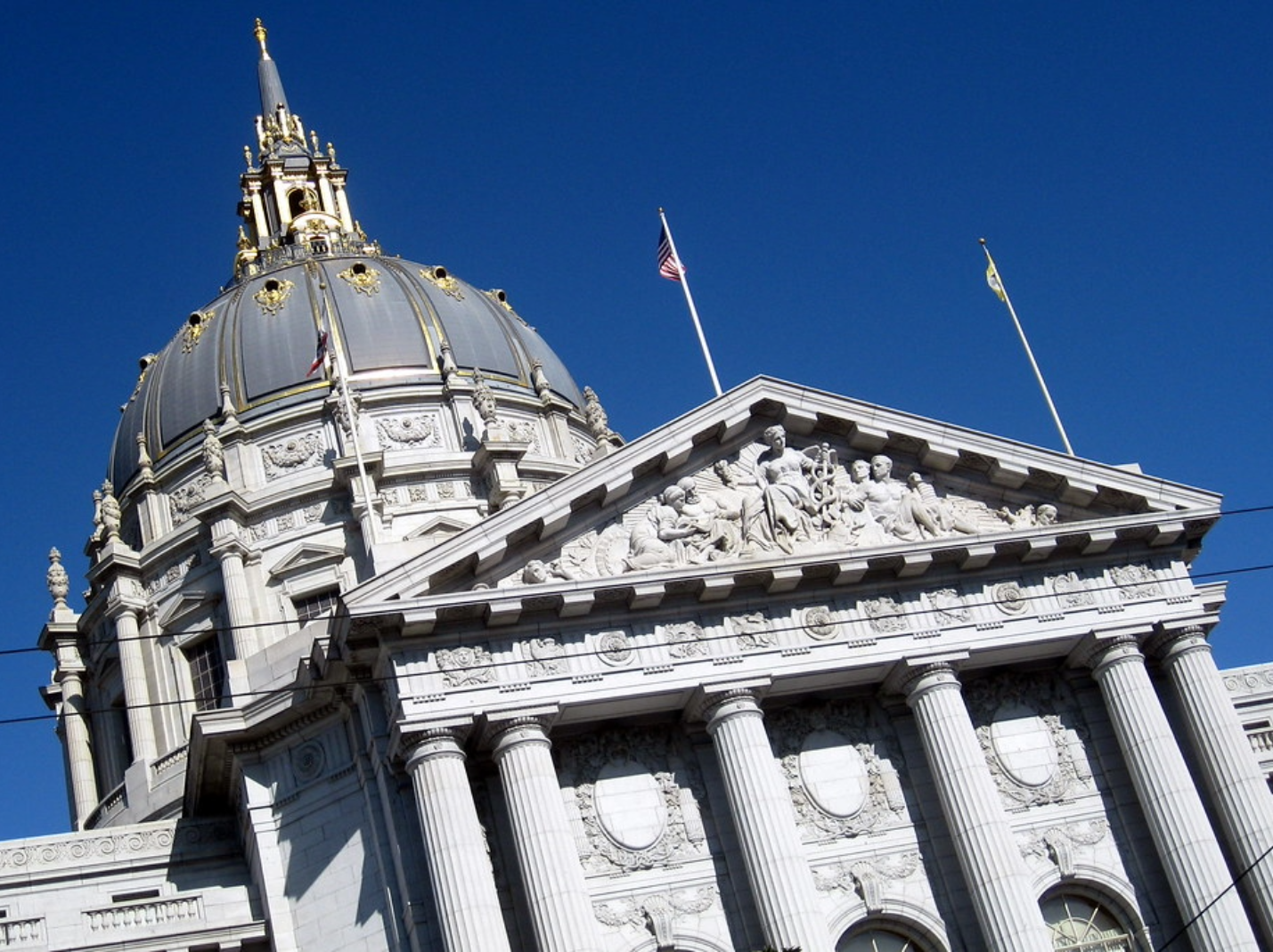
Image: “San Francisco City Hall” by Wally Gobetz on Flickr: https://www.flickr.com/photos/wallyg/3951504681

https://mindingthecampus.org/2026/02/17/san-francisco-approves-reparations-ordinance-for-black-residents-providing-race-based-education-benefits/


The Clash of Civilizations Restarts History

The Clash of Civilizations Restarts History

Western globalists won’t last long.

J. B. Shurk for American Thinker


Thirty-five years ago, American political scientist Francis Fukuyama made a name for himself by advancing the proposition that the end of the Cold War and the dissolution of the Soviet Union promised the ascendency and universalization of so-called Western liberal democracy.  As a Marxist-Hegelian who saw the progression of history as an evolutionary process with a natural and predetermined conclusion, Fukuyama envisioned Western-styled liberalism as both “the endpoint of mankind’s ideological evolution” and “the final form of human government.”  Expecting all human struggles to barrel toward a state of imminent equilibrium and future peace, Fukuyama stated out loud what many other late-twentieth century thinkers also believed: Humanity had reached the end of history.

After the 9/11 Islamic terror attacks in the United States, two decades of the “Global War on Terrorism,” communist China’s expansive “Belt and Road Initiative,” immigration-fueled social strife, the collapse of public trust in government institutions, the prevalence of pre-civil war conditions across Europe, the rise of Indian economic power, the emergence of Donald Trump’s nationalism as a counterbalance to the World Economic Forum’s vaunted globalism, the return of the Russian Federation as a major source of European angst, the growth of “multiculturalism” and its attendant fracturing of national unity, the “great powers” competition for hydrocarbon energies and other natural resources, the new geopolitical race to project strength in the Arctic, and the ever-present discussion of an impending World War III — just to name a few of the numerous global conflicts of the first quarter of the present century — Fukuyama’s “end of history” argument has probably reached the end of its usefulness.  

Before the curse of humanity’s short memory stores Fukuyama’s “end of history” thesis in the cupboard until it can be retrieved, dusted off, and recycled for practical use next century (just as Fukuyama had done with the historical conceptions of Hegel and Marx), it is worth noting how much of the academic world bought into this argument.  I remember listening to two young political science professors discussing Fukuyama’s work after the 9/11 terror attacks, and even then — in the midst of such a horrific rebuke to the proposition that a globalized form of Western liberalism was preordained — both academics were staunch believers in the “end of history” and disagreed only about whether Professor Fukuyama was worthy of so much praise for having merely stated what was glaringly obvious.

I was around another man at the time named Samuel P. Huntington, and he had written an essay and book that took Fukuyama’s thesis to task.  In The Clash of Civilizations and the Remaking of World Order, Professor Huntington argued that unbridgeable cultural conflicts would continue to remake the world.  Although critics called him “racist,” “Islamophobic,” “ignorant,” and even “Hitlerian” for dismissing the unifying effects of “diversity” and “multiculturalism,” Huntington’s predictions for a volatile twenty-first century were much more accurate than anything coming from the “end of history” camp.  Still, even after death, the man who dispassionately forecasted a civilizational clash and an emerging period of global uncertainty is still maligned as “prejudicial,” “white supremacist,” “bigoted,” and “imperialist.”

Is there any conflict raging in the world today that can’t be described in terms of competing cultural values?  Israel and its Islamic neighbors have been in a perennial state of war for eighty years.  Indian Hindus and Pakistani Muslims remain at each other’s throats.  Christianity and Islam have added fuel to fiery tribal conflicts that continue to rage across the continent of Africa.  Armenia’s Christians and Azerbaijan’s Muslims struggle to maintain peace.  The Balkans remain a potpourri of combative cultures and ethnic groups whose simmering passions can quickly boil over.  Burma, India, Bangladesh, Thailand, China, Cambodia, Vietnam, and Laos fight against each other and themselves as civilizational loyalties turn ancient resentments into recurring bouts of violence.  The War in Ukraine centers around the contested Donbas region whose people more closely align with the language, religion, and culture of Russia than with the historic identity that unites the people living in the western two-thirds of Ukraine.  

Everywhere in the world, battle lines are drawn around civilizational identity.  Religious conflict, historic grievance, and cultural incompatibility drive violence around the planet.

Yet Western globalists in Europe and North America pretend not to notice.  They organize annual conventions where members of the World Economic Forum or the Council on Foreign Relations or the Royal Institute of International Affairs can bloviate about “multiculturalism,” “open borders,” “established norms,” and the “rules-based international order.”  They speak about “nationalism” and “patriotism” as if they were diseases requiring quarantine for those showing symptoms.  They like Islam and are willing to imprison anyone seen as violating Sharia Law or causing offense to Muslims.  But they generally despise Christians and Jews and don’t mind when medieval cathedrals mysteriously burn to the ground or Hamas terrorists rape Israeli women and kill Israeli babies.  They pray fanatically at the altar of their “green energy” religion, while replacing entire domestic industries with the coal-powered, slave-labor-produced, government-subsidized exports of the Chinese Communist Party.  White, Western globalists prefer to ignore the threats of Islamic jihad and Chinese totalitarianism, sip from glasses brimming with crisp Sauvignon blanc, and stew in the intoxicating vapors of their own haughty uselessness.  

One might think that the last twenty-five years of global volatility would have given globalism’s biggest promoters some measure of pause as the “end of history” arrived and passed.  But Western “elites” generally suffer from cerebral deficiency, shameless incuriosity, and pathological stubbornness.  According to the blue bloods on both sides of the Atlantic — such as Canada’s banker-turned-prime-minister Mark Carney, France’s banker-turned-president Emmanuel Macron, Germany’s BlackRock-board-member-turned-chancellor Friedrich Merz, and the European Commission’s noble-aristocrat-turned-installed-president Ursula von der Leyen — “multiculturalism” is our future, “diversity is our strength,” and “cultural nationalism” is a “terrorist ideology” that breeds “hate.”

Even after President George W. Bush’s failed “nation-building” gambit to bring “democracy” and “women’s rights” to Afghanistan and the Middle East, Western globalists insist that civilizational clashes aren’t real.  Even after the exposure of Muslim “rape gangs” trading local girls as sex slaves in the United Kingdom, the Netherlands, Belgium, Germany, and France, Western globalists insist that “diversity is our strength” and “multiculturalism” is our future.  Even after communist China’s increasingly provocative saber-rattling regarding Taiwan, pervasive espionage and sabotage within the United States, and public promises of world domination, Western globalists insist on transferring huge sums of national wealth to the Chinese Communist Party in exchange for China’s lip service to “international norms.”  What Talleyrand said of the Bourbons applies equally well to the West’s suicidal cult of self-hating globalists: “They have learned nothing and forgotten nothing.”   

As we enter the second quarter of the twentieth century, the world is about to receive a harsh education in the persistent reality of civilizational conflict.  The “end of history” tripe was always a figment of self-deluding theoreticians who envision themselves as philosopher kings.  In the real world, values matter.  Culture matters.  Religion matters.  The past matters.  Honor matters.  Violent conflict does not disappear in a puff of smoke when Marxist-Hegelians hold up their dog-eared copies of Das Kapital and declare it must be so.  In the real world — where bullets fly faster than words — theories written on scraps of paper are rolled up into cigarettes or left under a rock near the trench latrine.  In the real world, people fight.  Cultures compete.  And civilizations clash.  

Western globalists who refuse to learn the basics won’t long last.  From the Arctic to the Antarctic, battle lines are being drawn and redrawn everywhere.  The past informs the present.  The present informs the future.  The rest of history is just now beginning.

Image: tomaszmichalkania via PixabayPixabay License.


🎭 𝐖𝟑𝐏 𝓓𝓐𝓘𝓛𝓨 𝓗𝓾𝓶𝓸𝓻, 𝓜𝓾𝓼𝓲𝓬, 𝓐𝓻𝓽, 𝓞𝓟𝓔𝓝 𝓣𝓗𝓡𝓔𝓐𝓓


Welcome to 

The 𝐖𝟑𝐏 𝓓𝓐𝓘𝓛𝓨 𝓗𝓾𝓶𝓸𝓻, 𝓜𝓾𝓼𝓲𝓬, 𝓐𝓻𝓽, 𝓞𝓟𝓔𝓝 𝓣𝓗𝓡𝓔𝓐𝓓 

Here’s a place to share cartoons, jokes, music, art, nature, 
man-made wonders, and whatever else you can think of. 

No politics or divisive posts on this thread. 

This feature will appear every day at 1pm mountain time. 


Cutting Through the SCOTUS Tariff Fog, USTR Jamieson Greer Discusses Baseline Tariff Reset Shifts and Reciprocity Tariffs


The Supreme Court tariff ruling has created the need for U.S. Trade Representative Jamieson Greer and U.S. Commerce Secretary Howard Lutnick to modify the baseline tariff approach with the approvals of President Trump.

The baseline tariffs are being reset to 10% with upward adjustment to 15% as planned.  The reciprocal tariffs will not require any substantive modifications as most of the Free Trade Agreements have been cemented with reciprocity tariffs as part of the negotiated deals.

USTR Greer appears on Bloomberg to clarify the current situation and provide some information as to the transitional baseline tariffs as now modified. Additionally, and importantly, Greer begins discussing the USMCA review and his acceptance that President Trump is openly questioning the value for us. Greer notes Mexico and Canada being used as import hubs to avoid tariffs is a big issue. WATCH:


Section 232 [Steel and Aluminum examples] of the Trade Expansion Act of 1962 (19 U.S.C. §1862, as amended) authorizes the President to impose trade restrictions—such as a tariff or quota—if the Secretary of Commerce determines, following an investigation, that imports of a good “threaten to impair” U.S. national security. {SOURCE}

Section 301 tariffs are a trade enforcement mechanism established under the Trade Act of 1974. They allow the U.S. government to impose tariffs on imports from countries that are found to be engaging in unfair trade practices. The Office of the United States Trade Representative (USTR) conducts investigations to determine if a country is violating trade agreements, and if so, it can impose tariffs as a corrective measure {SOURCE}

Section 122 of the Trade Act of 1974 allows the U.S. president to impose tariffs of up to 15% to address “large and serious” balance-of-payments deficits. This authority can be exercised without prior congressional approval for a limited duration of 150 days. After this period, any tariffs must be extended by Congress. {SOURCE}

*FYI, there is a lot of distracting noise in the various social media platforms about internecine MAGA battles and ego-driven points of specific interest.  CTH chooses to focus energy and attention on the substantive policy issues that will generate substantive policy outcomes for America.


The Right’s Brand Is ‘America First.’ The Left’s Brand Is Getting Mad About That


At Tuesday’s State of the Union, Democrats set themselves up as angry foils to basic civics and 
feel-good American patriotism.


In the most made-for-TV of many made-for-TV moments in Tuesday night’s State of the Union address, President Donald Trump urged every member of Congress to “stand up and show your support” for the statement: “The first duty of the American government is to protect American citizens, not illegal aliens.” Cameras panned to show nearly the entire left-hand side of the chamber awkwardly remaining in their seats. After two minutes of Republican cheering and Democrat scowling, Trump suggested that Democrats should “be ashamed of yourselves,” and the cameras showed Rep. Ilhan Omar, D-Mogadishu, shouting angrily in response.

Sure, the question was a setup, but it was a really, really easy setup, the kind of statement you might assume was a trick question if it showed up on a civics exam. Democrats could easily have neutered the stunt just by agreeing that a government’s primary duty is to its citizens, a concept that even the known right-wing radicals at the World Economic Forum recognize in word if not in practice.

Instead, they took the bait, affirming to constituents and voters everywhere that they do not view your interests and rights as their concern and are put out by the suggestion that they should.

In April, Democrat Sen. Chris Van Hollen made a special trip to El Salvador to gaze into the eyes of Kilmar Abrego Garcia, an illegal alien who has been found to be a member of MS-13 and is suspected of human trafficking. Van Hollen referred to the El Salvador native as his “constituent,” to the ire of some of his actual constituents back in Maryland. Tuesday night, scowling in their seats, his congressional colleagues sent the same message.

It was a spectacular gift to GOP midterm campaign ads everywhere, and it wasn’t the only point in the speech where Democrats set themselves up as foils to an evening program of feel-good American patriotism. Early on in the evening, Trump paraded out the victorious Team USA hockey champions with a dramatic entrance in the press gallery, in a spectacle that should have been a bipartisan moment of celebration. A handful of Democrats couldn’t bring themselves to join the prolonged standing ovation, taking cues from the corporate media guilt-tripping of the team for accepting kudos from the president and laughing at his joke.

Throughout the address, Trump handed out medals to American heroes left and right: Medals of Honor to 100-year-old war hero Navy Captain Royce Williams and to Chief Warrant Officer Eric Slover, a pilot in the recent capture of Venezuelan dictator Nicolas Maduro. The Presidential Medal of Freedom to Team USA goaltender Connor Hellebuyck, and the Legion of Merit to Petty Officer Scott Ruskan, who saved 165 lives during a deadly flood in Texas last year. And Purple Hearts to the parents of National Guard Specialist Sarah Beckstrom and to Staff Sergeant Andrew Wolfe, for wounds inflicted when Beckstrom and Wolfe were attacked while peacefully patrolling in the nation’s capital, allegedly by an Afghan national. Wolfe’s smile of surprise at the honor — and his appearance after surviving a gunshot to the head — was one of several tearjerker moments of the night.

The White House even found a World War II veteran, Buddy Taggart, who will celebrate his 100th birthday on July 4 of this year, as the country celebrates her 250th anniversary. America 250 was the theme of the night, and Trump managed to stay on message masterfully.

Coming off of such a high note, Democrat Virginia Gov. Abigail Spanberger’s rebuttal speech was more or less dead on arrival. She whined about immigration law enforcement and about “affordability,” a weird point of emphasis for a governor whose legislative counterparts have introduced taxes on everything from leaf blowers to dog walkers to Amazon deliveries. The gist of her pitch was “life is awful under Trump,” a killjoy message delivered with all the moral snobbery of a DEI breakout session facilitator scolding you for having a good time. Stop cheering for the Olympians and war heroes and remember you’re living under the reincarnation of Nazi Germany, darnit! The minority response is always a foil for the State of the Union, but given the rah-rah-USA nature of Trump’s address, being the counterargument was not the most fortunate look.

Trump has made “America First” a central mantra of his presidency since day one, informing policies from international trade to illegal alien deportations. That makes his critics, like the Utah Democrat who said “America First” was “code” for “white supremacists,” very angry. Opposition to that basic principle has become the animating feature of their operation, so much so that they will come out against the 25 most popular men in America because they enjoyed a patriotic moment with the president. 

They will also come out, apparently, against the idea that Americans’ elected representatives should serve Americans and not foreign citizens who have broken our laws. They won’t just passively oppose the concept, either — it will make them uncontrollably angry. Democrats might have gone into Tuesday night hoping to make Spanberger the heavily shellacked face of their party, but the defining picture of the evening is this one right here.


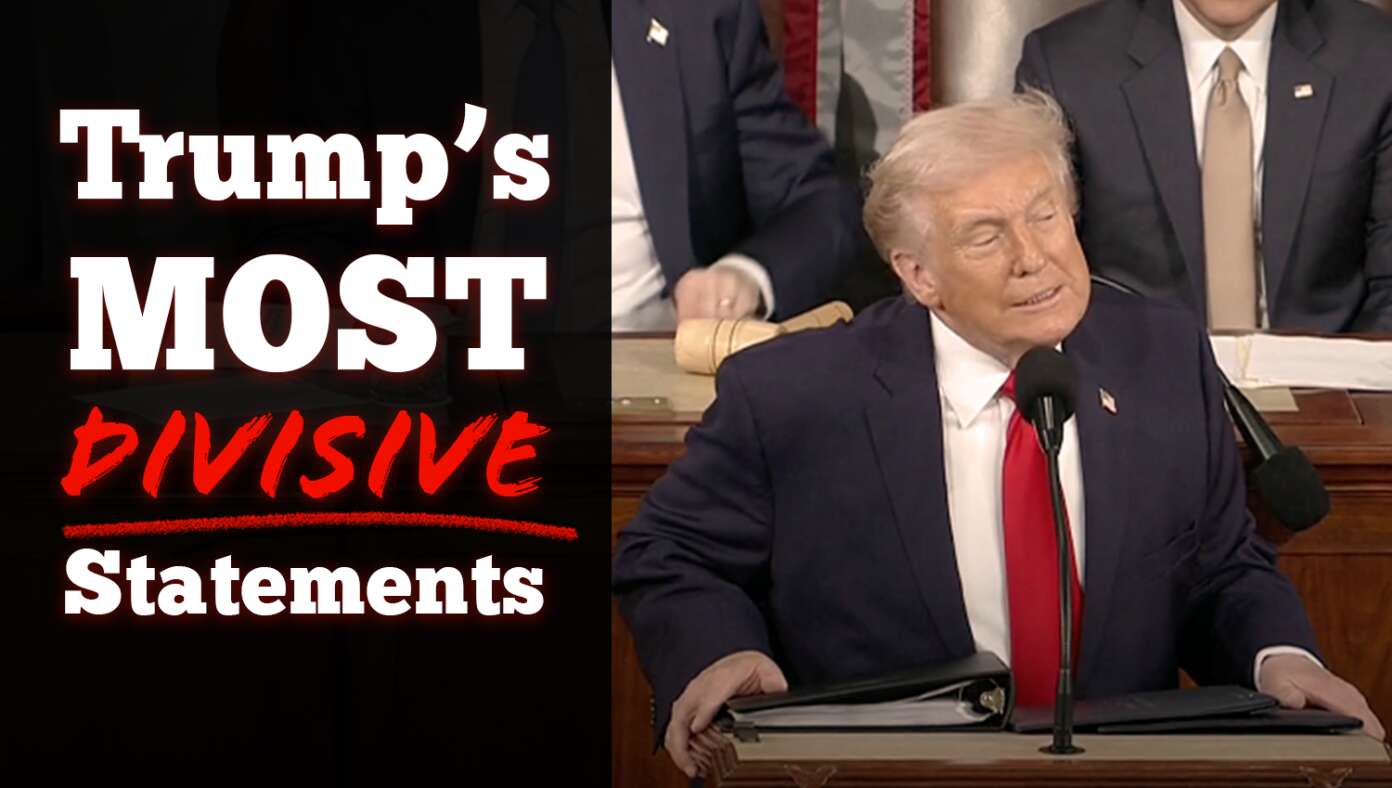
8 Most Horribly Divisive Statements From Trump's State Of The Union 8 Most Horribly Divisive Statements From Trump's State Of The Union

8 Most Horribly Divisive Statements From Trump's State Of The Union

Image for article: 8 Most Horribly Divisive Statements From Trump's State Of The Union

With last night's polarizing State of the Union, President Trump continued fracturing the country with pointed rhetoric designed only to widen the chasm between the country's left and right. From the many awful things Trump said, here are the eight most divisive statement's from last night's speech:

  1. "Good evening": Trump wasted no time in tearing the country apart with this contentious opening.

  2. "Congratulations to the gold medal-winning U.S. hockey team": A team that literally fought our own ally, Canada. Conflict is the goal.

  3. "The American government is responsible for serving Americans"Trump could have brought unity. Instead, he brought this.

  4. "We should not hurt children"Fomenting discord with radical statements, like always.

  5. "Violent crime is bad"Another grenade of disunity lobbed at America.

  6. "Thank you to our wounded veterans for their service"It's like Trump wants nothing but to stir controversy.

  7. "Female refugees being killed on trains is wrong"Why must Trump insist on driving us apart?

  8. "God bless America"Trump is literally asking us to fight each other.

Our country stands more divided than ever in the wake of Trump's belligerent antagonism. It is on all of us to rise above his rhetoric and find national healing.


It’s Time To Use The Talking Filibuster To Pass The SAVE Act


Elon Musk has joined a chorus of conservatives pushing for Senate Majority Leader John Thune, R-S.D., to force Democrats into a talking filibuster in order to pass the SAVE America Act, which requires proof of U.S. citizenship and photo ID to vote in federal elections.

“The filibuster rule is meant to allow senators to present their arguments before a bill is passed. It is NOT intended to require 60 votes to pass anything at all!” Musk said on social media. “STOP THE ABUSE OF THE FILIBUSTER NOW. Either senators must talk or they must pass the bill to SAVE AMERICA!”

Musk was responding to a post from Sen. Mike Lee, R-Utah, who said it is “great” that Thune decided to force a vote in the Senate on the SAVE America Act. But, Lee pointed out, “A vote isn’t enough; President Trump and the American people are calling on us to PASS this bill,” and “for that reason, senators wanting to filibuster it must be required to speak.”

The battle in the Senate is a procedural one, but it is the result makes all the difference. On the one hand, Republicans can bring the bill to the floor, essentially symbolically (as the outcomes are almost always predetermined), and inevitably lose because there are not 60 votes to reach cloture. On the other hand, they can force Democrats to actually stand and speak for hours, either holding the floor in perpetuity or relenting and allowing the bill to pass with a simple majority vote.

The “talking filibuster” is what most Americans think of when they picture a filibuster: former Sen. Strom Thurmond, D-S.C., holding the floor for 24 hours and 18 minutes in speaking against the Civil Rights Act of 1957. The cloture-based filibuster often allows those in the majority to claim they tried to get something passed, while blaming the minority for nothing ever happening.

As The Federalist CEO Sean Davis said, “This is classic failure theater from Thune. He doesn’t want to do the work of forcing Democrats to maintain a real filibuster, so he’s just going to file cloture on their zombie filibuster, which will fail. Then he can immediately move on to what he really cares about: passing corporate welfare for K Street. Failure theater from do-nothing Republicans should be mocked and condemned, not praised.”

The “talking filibuster” was the norm in the Senate until 1917, as Chronicles Magazine points out, when the cloture rule was introduced. However, while the cloture rule became more regularly used, it did not replace the talking filibuster — which is still a rule that can be invoked.

It would take discipline on the part of both Republicans and Democrats if either side is to win. Democrats would need to make sure they never yielded the floor, because the moment they stop speaking they would lose it. Republicans would need to table amendments offered by Democrats until they are so exhausted they are forced to yield.

With the Senate in a state of gridlock, the talking filibuster appears to be the only way to pass much of the Trump administration’s agenda.


Trump’s Pro-America Vision Will Only Succeed If He Pushes Republicans To Implement It


President Trump painted an uplifting, “America First” vision for the country during his State of the Union address on Tuesday. Filled with recognitions of American patriotism and savvy political moves, the president pledged that America’s future “will be bigger, better, brighter, bolder, and more glorious than ever before.”

While Trump’s address was certainly as pro-America as it gets, there was something particularly notable about the speech that is unlikely to get a lot of attention. That is, many of the accomplishments that the president rattled off have come as the result of his executive action — and not from the GOP-controlled Congress.

From shutting down the Biden-manufactured invasion at the southern border to ridding the government of racist DEI ideology, the president achieved most of these wins on his own.

That’s both an indictment of feckless Republicans’ failure to codify Trump’s agenda into law and a warning signal to the president that many of the policy items he proposed Tuesday night face strong headwinds in the months to come.

Throughout his speech, Trump called on Congress to pass bills that ban insider trading for members of Congress and “make sure violent and dangerous repeat offenders are put behind bars and, importantly, that they stay there.” He also asked lawmakers to approve a bill (the “Dalilah Law”) “barring any state from granting commercial driver’s licenses to illegal aliens” and the SAVE America Act, which would implement voter ID and proof-of-citizenship requirements in federal elections.

Taken collectively, these are common sense proposals that the majority of voters are likely to get behind. Their passage into law, however, can only happen if Trump uses his political capital to pressure Republican lawmakers into making it happen.

While Trump has often waged public pressure campaigns against the Freedom Caucus and more conservative members, he’s largely abstained from deploying the same level of pressure against the GOP establishment — many of whom he’s endorsed for reelection in the decade he’s led the Republican Party. With history favoring a Democrat victory in November, the time for a pressure campaign against the latter is now.

Trump’s address offered Americans a compelling and promising vision for the country. But that vision can only become reality if he’s willing to put the screws to the GOP hucksters to enshrine it into law.