Friday, January 2, 2026

On Immigration and Citizenship, Listen to George Washington


As news reports proliferate of multimillion-dollar -- and possibly billion-dollar -- fraudulent diversions of government funds involving Minnesota's Somali immigrant community, it may be time at one year's end and the next one's beginning to take a longer look at America's experience with immigration, and to seek the guidance of the first and one of its two greatest presidents.

The Founding Fathers were aware that their new nation was gifted with vast acreage, but only 4 million people were counted in the first decennial Census in 1790. The Constitution's first words, drafted by the gifted wordsmith Gouverneur Morris, stated that its authority came from "We the People of the United States, in Order to form a more perfect Union, establish Justice, insure domestic Tranquillity, provide for the common Defence, promote the general Welfare, and secure the Blessings of Liberty to ourselves and our Posterity."

There is a tension in these words: The new federal government is designed to guarantee liberty but also to "insure" tranquility, all for the existing citizenry and for their descendants. But not just for them. Article I, Section 8, Clause 4 grants Congress the power "to establish an uniform Rule of Naturalization ... throughout the United States."

Leave aside, for a moment, current controversies over whether and how the federal government can prevent the states from obstructing the enforcement of federal immigration laws. The larger point is that the Framers envisioned that it was possible and desirable that foreign migrants enter the U.S. and, under specified terms and conditions, become full citizens.

This was inconsistent with British and European ideas, which envisioned that people born within a kingdom would remain subjects of its monarch for life. This was the basis on which the British impressed American seamen, capturing them in ships and enrolling them in the Royal Navy -- the main reason Congress declared war in 1812.

The Founders' attitude toward immigration and citizenship was enunciated best by the man who presided over the Constitutional Convention and who was elected unanimously as the first president, George Washington.

After his election, Washington embarked on carefully choreographed tours of the northern and then the southern states. The story is told vividly in Nathaniel Philbrick's 2021 book "Travels with George: In Search of Washington and His Legacy."

On his northern trip, Washington skipped Rhode Island, which didn't ratify the Constitution until May 1790, but he paid a special visit in August 1791. There, he made a point of stopping at the Touro Synagogue in Newport, where the Jewish community dated back to 1658.

Washington was very much aware that Article VI of the Constitution stated that "no religious test shall ever be required as a qualification to any office or public trust under the United States." And he certainly knew that the text of the First Amendment to the Constitution, which would be approved by Congress in September and ratified by the states in December, provided that "Congress shall pass no law respecting an establishment of religion or prohibiting the free exercise thereof."

These again were departures from British and European experience. Membership in the British Parliament was open only to members of the established churches of England and Scotland, and would be until 1829. Almost every part of Europe excluded or imposed special restrictions on Jews.

Washington addressed the Touro congregation, in words echoing in part the welcome of its Warden, Moses Seixas, and spoke words that deserve to be remembered today.

"The citizens of the United States of America have a right to applaud themselves for having given to mankind examples of an enlarged and liberal policy -- a policy worthy of imitation. All possess alike the liberty of conscience and immunities of citizenship."

He went on. "It is now no more that toleration is spoken of as if it were the indulgence of one class of people that another enjoyed the exercise of their inherent natural rights for, happily, the Government of the United States, which gives to bigotry no sanction, to persecution no assistance, requires only that they who live under its protection should demean themselves as good citizens in giving it on all occasions their effectual support."

In the 340 words of Washington's letter is enduring guidance for immigration policy. He endorses the idea of the moral equality of all citizens and contemplates that citizenship will be extended widely, to the benefit of the nation. So much for the foolish notion that somehow "heritage Americans," descendants of Washington's 4 million contemporaries, have some entitlement to deference.

But there is also the notion of reciprocity. Washington's default assumption is that people of many different backgrounds can be good citizens. But the assumption is rebuttable: They must also, he adds, give the U.S. "on all occasions their effectual support."

Thus, Congress has the task of making prudential choices as to who can be naturalized and under what conditions -- and it can provide, as it has, that citizenship once granted can be revoked under extraordinary and clearly defined circumstances.

Those prudential decisions are often controversial. Even in the Ellis Island era (1892-1924), immigration was not unrestricted: Chinese were excluded, Latin Americans were disfavored, and stringent public health restrictions were enforced, theoretically by federal inspectors but in practice by steamship companies, which did not want to provide free return passage for rejected applicants.

Some look back on the Immigration Act of 1924, which almost cut off immigration from southern and eastern Europe, as necessary for assimilating migrants from different cultures, although immigration fell toward zero in years of depression and war (1930-45) and was partially blocked by the Iron Curtain even longer (1947-89), and assimilation was fostered during World War II and actively encouraged by articulate elites for the first two-thirds of the twentieth century.

With elites skeptical of assimilation over the last half-century, it's not incompatible with Washington's vision to restrict immigration from cultures that are adversarial to or incompatible with the wide range of acceptable American cultural folkways. But we block migrants from hostile venues; what about the people there who reject those cultures and cherish America's?

In addressing such issues, it's worth keeping in mind the counsel Washington provided in Newport 234 years ago, and the constitutional framework, including the supremacy of federal laws over state preferences, that he did so much to create.



Entertainment and podcast thread for Jan 2nd


At least today feels more clear.

This Past Year Was Pretty Great. Here's a Wish List for 2026.


Listening to the usual legacy media suspects, one might think 2025 was an apocalyptic wasteland of sorts -- an authoritarian fever dream brought on by the return of Donald J. Trump to the Oval Office. The reality looked very different. This past year was, in many ways, a pretty great and clarifying one. Let's take stock of what happened when our government remembered whom it serves, as well as what unfinished business remains as we flip the calendar.

First, the obvious: Political sanity was restored to the nation's capital. After years of leftist elite-driven chaos -- wide-open borders, hyper-vindictive lawfare, fecklessness on the world stage, and more -- the nation has begun to revert back to first principles: national sovereignty, law and order, and strong leadership abroad. Under Trump, the United States has once again acted like a real nation-state that pursues its real interests -- not a nongovernmental organization with a nagging guilt complex.

That reorientation has paid huge dividends. On immigration, the Biden-era invasion at the southern border has tapered by more than 90%. On energy, a renewed embrace of domestic production has led to the lowest average national gas prices in nearly five years. Violent crime, thanks to Trump's law enforcement operations and innovative use of the National Guard, has dramatically fallen: Murders decreased by nearly 20% from 2024, and robbery and burglary also saw double-digit percentage decreases. Abroad, allies and adversaries alike recalibrated to the reality that the White House once again means what it says.

Still, work always remains. Here, then, is my 2026 wish list.

1. Peace in Eastern Europe. The Russia-Ukraine war has gone on far, far too long. The Trump administration has exerted tremendous diplomatic effort trying to orchestrate a peace deal, which thus far remains elusive. A durable peace -- one that halts the senseless slaughter on both sides, respects Ukrainian sovereignty and accommodates legitimate Russian concerns, and avoids a wider great-power conflagration -- should be a paramount Trump administration foreign policy goal in 2026. Russia is the invader, and Vladimir Putin is the greater obstacle to a lasting peace, but both sides need to make painful -- if, frustratingly, also painfully obvious -- concessions.

2. Victory on Birthright Citizenship. Back home, a consequential legal battle now sits before the U.S. Supreme Court: the Trump administration's righteous challenge to the erroneous practice of constitutionally "required" birthright citizenship for U.S.-born children of illegal aliens. The notion that the 14th Amendment, ratified in 1868 in the aftermath of the Civil War, was meant to constitutionalize a global human trafficking magnet -- granting automatic citizenship to all children born here, including those whose parents entered the country illegally -- is indefensible as a matter of plain constitutional text, the congressional history in the House and Senate Judiciary Committees, and basic common sense. Indeed, birthright citizenship has been nothing short of ruinous for the United States. A Trump administration victory would restore Congress's rightful authority over circumscribing citizenship and remove a longstanding incentive for illegal immigration.

3. Improved Affordability and Housing Costs. Legal victories mean relatively little if ordinary Americans continue to feel like they are getting squeezed. Improved affordability must be front and center in 2026 -- from the federal level down to states and localities. The cost of living is not an economic abstraction; it affects rent, groceries, child care and the difficulty of buying a first home. Housing, in particular, demands attention. Housing policy should reward supply, not suffocate it -- cutting red tape and burdensome construction fees, reforming zoning incentives, and curtailing the inflationary spending that puts upward pressure on mortgage rates. A nation where young families cannot afford to put down roots is a nation courting decline -- the very antithesis of Trumpian restoration.

4. Justice for Minnesota Somali Fraud Scandal. The burgeoning massive fraud scandal over state and federal funds for child care in Minnesota, involving many businesses run by Somali immigrants, has become a test case for whether the rule of law still applies when politics get uncomfortable. Justice means following the facts wherever they lead: recovering stolen taxpayer dollars and holding wrongdoers and abettors legally accountable without fear or favor. To wit, on the subject of abettors: What did Gov. Tim Walz (D-Minn.), Atty. Gen. Keith Ellison (D-Minn.), Rep. Ilhan Omar (D-Minn.) and other prominent Minnesota politicians know, and when did they know it? Moreover, what did Kamala Harris -- who picked Walz as her 2024 presidential running mate -- know, and when did she know it? The American people deserve answers to all these questions.

5. Tamed Communist China. Finally, no wish list can be complete without confronting the central geopolitical challenge of our age: that of Communist China. Simply put, Xi Jinping and the Chinese Communist Party, who just presided over their largest live-fire military exercises around Taiwan, must be meaningfully deterred in the Indo-Pacific. That means maintaining a combative tariff posture, implementing as much economic decoupling as is feasible, and emboldening key regional allies -- such as Japan -- who share America's interest in freedom of maritime navigation and diminished Chinese hegemony. Decades from now, Trump's presidential legacy will be partially defined by how he handled the China challenge. Now is not the time to take the foot off the gas pedal.

This past year showed what is possible when Washington rejects the politics of managed decline and reembraces the best of the American tradition and way of life. Let us hope we will see more -- a lot more -- of that same success in this new year.


Looking Back at 2025: The Revolution Is Just Beginning


Trump  Remakes  the  World


End-of-year wrap-ups take three forms: autopsy, obituary, or eulogy. If the year is particularly bad, it is dissected like a corpse and forgotten in a morgue freezer.  If it had its moments, a few biographical flourishes are relived.  And, occasionally, a year is filled with enough memorable events to deserve a grand send-off.

None of these traditional forms do 2025 justice.  Why?  Because this year has been something much greater than twelve calendar months.  It is the beginning of real change.  What kind of change will come is still uncertain, but people know that something significant is happening.  Reality as we know it is shifting in a new direction.

President Trump was not supposed to return to the White House.  The political Establishment and corporate news media flooded his first term with fake scandals, rigged the 2020 election with fraudulent mail-in ballots, put him and his supporters in legal jeopardy, and stirred up enough venomous leftist outrage to incite at least two attempts on his life.  When Trump became president-elect once again last year, there was an almost tangible sense of frustration within the corridors of American power and an almost audible lament: How did this happen again?

Among President Trump’s many accomplishments, his greatest has surely been his ability to pull back the propaganda press’s filtered news curtain to expose as inherently corrupt both the political Uniparty (in which Republicans and Democrats conspire for mutual gain while pretending to fight in front of the American people) and the entrenched federal bureaucracy that sees itself as the actual permanent government of the United States.  

When Trump arrived in Washington in 2017, both political parties and the whole federal government were aligned against him.  Lawmakers worked to scuttle his efforts to protect America’s borders.  Bureaucrats undermined his official policies and sabotaged his administration from within.  Intelligence officials inside the CIA and FBI plotted to remove President Trump from office by framing him as a Russian spy.  After the rigged 2020 election and the collective efforts of the DOJ, Congress, the courts, and the press to transform the three-hour-long Capitol trespass on January 6, 2021 — in which unarmed Americans, including veterans and retirees, mostly strolled through the halls of Congress as smiling tourists — into a “violent insurrection” with the made-up goal of “overthrowing” the U.S. government, D.C.’s vampiric Deep State thought that it had dispensed with Trump for good.

The government vampire was wrong.  Not only did Trump weather multi-pronged legal storms after his departure from office in 2021, but also his supporters endured four years of government-orchestrated censorship, disparagement, harassment, malicious prosecution, and threats to their well-being.  

For several years, Establishment Republicans and Democrats thought they had succeeded in destroying Donald Trump, splintering his MAGA movement, and scattering his vision for America’s future to the wind.  RINO-extraordinaire Paul Ryan openly laughed about the prospect of Trump’s electoral chances in 2024 and spurned Trump’s enduring impact on the Republican Party.  The political ruling class was certain that MAGA Americans could be shamed into silence and that primary voters would turn their backs on Donald Trump.  

D.C.’s cruel and crusty aristocracy was wrong.  The more that MAGA Americans were forced to suffer during the Biden years, the steelier their resolve became.  The more courtrooms that Donald Trump was forced to enter as a defendant, the more hardened his countenance transformed.  As Donald Trump glared at corrupt prosecutors and judges, his supporters similarly glared at a corrupt D.C. system that has threatened us all for too long.  

During the four years while President Trump was out of office, D.C.’s ruling class gave us COVID tyranny, mass censorship, new foreign entanglements, “green energy” mandates, record-high inflation, political persecution, skyrocketing crime, and twenty million additional illegal aliens whom the federal government criminally aided and abetted by using taxpayer dollars to relocate armies of foreign nationals into vulnerable communities across the United States.  

In contradistinction to the peace and prosperity of Trump’s first term, Biden’s “autopen” presidency was disastrous economically, militarily, and diplomatically.  Biden’s Department of “Homeland Security” opened America’s borders to every terrorist, slaver, drug trafficker, welfare sponge, and foreign saboteur.  The number of murders, rapes, and other violent crimes rose markedly.  In order to keep all the bad news from reaching the public, the political ruling class attempted to erect a “disinformation governance board” to monitor, police, and censor public speech.

Whether out of hubris, delusion, or raw contempt for the American people (and probably all three), the Deep State thought four costly years under puppet-President Biden would appear more attractive to Americans than the prior four years under Trump — during which the border was far better secured, Main Street businesses were earning record profits, linguistic “wokery” was openly mocked, “climate change” fraudsters were constrained from selling fear to make money, the military-industrial complex was prevented from starting new wars, and both Xi’s China and Putin’s Russia were kept in check.

The Deep State Leviathan was wrong.  When people had a chance to halt the chaos of the Biden years by returning Trump to office, they chose to do so overwhelmingly.  Not even fraudulent mail-in ballots, blatant disregard for state election laws, activist Democrat judges, and the illegal certification of unlawful votes could save Kamala Harris after she euthanized Joe Biden in the run-up to the 2024 general election.  The American people wanted President Trump to finish the job he had begun eight years earlier.

What has President Trump accomplished for the American people in 2025?  He has effectively sealed America’s borders.  He has assembled a large and well-funded group of law enforcement officers to hunt down criminal illegal aliens already inside the United States.  He has gone to war with the narco-terrorists and transnational cartels.  He has used tariffs to reorient the global economy to the benefit of American producers and consumers.  He has halted the Biden administration’s double-digit inflation.  He has thrown out economy-killing “green energy” regulations and sunk the price of gas to the lowest it’s been in years.  He has cut murder, rape, and other violent crime rates by double-digits across the country.  He has confronted the corrupt Deep State head-on by identifying and quickly neutralizing employees of the State Department, DOJ, FBI, and broader Intelligence Community who believe that they are entitled to dictate American foreign policy.  He has confronted the corrupt federal bureaucracy head-on by identifying and quickly neutralizing saboteurs who believe that they are entitled to “govern” as presidents.

President Trump has put NATO on notice that Americans won’t be paying and dying for unnecessary European wars.  He has put Iran on notice that its days of using terrorist proxies to cause Middle East unrest and global economic mayhem are over.  He has put China on notice that the United States has no intention of handing a communist, totalitarian regime the keys to controlling the twenty-first or twenty-second centuries.  He has put Venezuela and other South American communist, narco-terrorist nations on notice that America demands security, stability, law, and order in the Western Hemisphere.  He has put Russia on notice that the two Cold War superpowers can either work together for mutual economic gain or bash heads for the Machiavellian enjoyment of communist China and the socialist European Union.

During the first year of President Trump’s second term, his administration has hit the ground running.  The president seeks nothing less than to reorganize the global balance of power both economically and militarily. 

Twenty-twenty-five can’t be eulogized because it is the essential hinge of a MAGA-sized door opening to the next era of history.  There’s no way to put this year to bed when the revolution is just beginning.


Woman Killed In Rare Mountain Lion Attack On Colorado Hiking Trail


By Ward Clark  | January 02, 2026
The opinions expressed by contributors are their own and do not necessarily represent the views of RedState.com.


With all of our modern technology, our modern lifestyle, our comfortable homes, and so on, it's easy for some people to forget that we're part of the natural world, too. Part of that means that we, like any animal, are subject to predation. It's not common; most big predators have learned that humans are dangerous and steer clear. But apex predators remain apex predators, and they will on occasion decide to prey on a human, especially a hiker or jogger alone and unarmed on a trail.

That's what appears to have happened to a solo hiker on a mountain trail in Colorado on Thursday.

A solo hiker who authorities believe was killed by a mountain lion on a remote Colorado trail on New Year’s Day was not the first person to encounter a big cat in the area in recent weeks.

Gary Messina said he was running along the same trail on a dark November morning when his headlamp caught the gleam of two eyes in the nearby brush. Messina pulled out his phone and snapped a quick photo before a mountain lion rushed him.

Messina said he threw his phone at the animal, kicked dirt and yelled as the lion kept trying to circle behind him. After a couple of harrowing minutes he broke a bat-sized stick off a downed log, hit the lion in the head with it and it ran off, he said.

The woman whose body was found Thursday on the same Crosier Mountain trail had “wounds consistent with a mountain lion attack,” said Kara Van Hoose with Colorado Parks and Wildlife. Officials were awaiting confirmation.

Mountain lions (also called cougars, pumas, and panthers), Puma concolor, are something of a biological oddity; they're technically not a "big" cat, which are of the genus Panthera. That includes lions, tigers, jaguars, and leopards. Mountain lions are known as a "large small cat," being more closely related to the South American jaguarundi and the African cheetah. But they are, in their range, apex predators, and deer are a common prey. Humans, of course, are more or less in the same size range as deer.

Two cats have been killed in the area since the as-yet unnamed woman's body was found.

Wildlife officials later tracked down and killed two mountain lions in the area — one at the scene and another nearby. A necropsy will determine if either or both of those animals attacked the woman.

A search for a third mountain lion reported in the area was ongoing Friday, Van Hoose said. Trails in the area remained closed while the hunt for the animal continued. Van Hoose said circumstances would dictate whether that lion also is killed.

The investigation, which will include examining the stomach contents of the two cats that have already been killed, is ongoing.

While we don't yet know all the details of this case, it's an important object lesson nonetheless. Nature isn't a Disney movie. There are animals out there that can be dangerous. When hiking, fishing, jogging, sightseeing, or enjoying any outdoor activity, it's important to remain aware of one's surroundings at all times. There's almost nowhere in the United States where there are no dangerous wildlife; mountain lions, bears, large ungulates like bison and moose, and even feral hogs can be dangerous. 

Remain aware. Remain alert. If you're proficient with firearms, carry one. If not, at least carry bear spray or something of that nature. Always keep in mind: We're not immune to the natural world, any more than any other critter.

Photo: National Park Service via AP

https://redstate.com/wardclark/2026/01/02/woman-killed-in-rare-mountain-lion-attack-on-colorado-hiking-trail-n2197698

🎭 𝐖𝟑𝐏 𝓓𝓐𝓘𝓛𝓨 𝓗𝓾𝓶𝓸𝓻, 𝓜𝓾𝓼𝓲𝓬, 𝓐𝓻𝓽, 𝓞𝓟𝓔𝓝 𝓣𝓗𝓡𝓔𝓐𝓓


Welcome to 

The 𝐖𝟑𝐏 𝓓𝓐𝓘𝓛𝓨 𝓗𝓾𝓶𝓸𝓻, 𝓜𝓾𝓼𝓲𝓬, 𝓐𝓻𝓽, 𝓞𝓟𝓔𝓝 𝓣𝓗𝓡𝓔𝓐𝓓 

Here’s a place to share cartoons, jokes, music, art, nature, 
man-made wonders, and whatever else you can think of. 

No politics or divisive posts on this thread. 

This feature will appear every day at 1pm mountain time. 


Keep the Faith: A Refreshing Bit of News to Start 2026 on the Right Note


RedState 

In a piece I wrote about New Year's Eve celebrations, I talked about the evolution of sorts I've had over the years in how I chose to ring in the new year. I've always been a homebody at heart, but in my younger years, sometimes I'd hit the club circuit at the invitation of friends, even though it wasn't really my scene.

At a certain point, I'd had enough. I hung up the clubbing spurs for good and never looked back, preferring to spend my evenings at home with family and/or a few close friends as the clock ticked closer to midnight. I had nothing against people who wanted to spend their nights on the town; I just chose to make my evenings more scaled-down affairs.

One thing I didn't mention but wish I had was how integral prayer has been to me in the celebrate-at-home scenarios. At the stroke of midnight - and I've been doing this for a long time, now - the first thing I do is say a prayer, asking for good health and other blessings for family, friends, and myself in the new year.

Though I know I'm far from the only one who engages in this tradition, I was pleased to find out this week that a growing number of people in America were choosing to pray to toast the New Year's Eve as well, rather than drink:

A new poll from Napolitan News conducted by Scott Rasmussen found that more Americans reported that they would say a prayer going into 2026 than will imbibe in revelry with alcohol. Out of 1,000 registered voters, 44% would say a prayer, while 39% would have an alcoholic beverage, which is down 12 points from 2022. This tracks with a general trend of more prayer in America.

[...]

Alcohol consumption has been trending downward in recent years. An August Gallup poll found that only 54% of adults reported drinking alcohol—the lowest rate in nearly 90 years of tracking, down from 62% in 2023. 

Interestingly, the numbers show that the drinking "decline has been driven largely by younger generations," which is fascinating to hear, considering how there seems to be an emphasis on drinking in just about everything you see on TV and in the movies, whether it's beer, wine, scotch, etc.

As far as praying goes, Rasmussen pointed out in a tweet that it wasn't that people were treating prayer as a unique thing to do at the end of the year, just that it was a part of everyday life.

"Important to note that these numbers reflect the reality [that] many Americans pray every day or on most days. So, it's not a special New Year's prayer, just part of life," he wrote:

Obviously, it would be nice to see those numbers on praying increase and the numbers on drinking decrease. Not that it's wrong to drink, of course, as long as it's done in moderation. But in my opinion, there has been too much of an emphasis over the last couple of decades or so (probably longer than that) in finding happiness and contentment in earthly things over leaning on faith. As far as I'm concerned, the more we can make that trend reverse - with people choosing the Bible more so than the bottle, the better off we'll be, not just as individuals but also as a nation.

"Choose prayer. Choose courage. Choose beauty. Choose adventure. Choose family. Choose a life of faith. Most importantly, choose Christ." -- Erika Kirk, at Charlie Kirk's memorial service.


Trump Administration Announces New Year Adjustments to Certain Tariffed Imports


RedState 

On Wednesday, the Trump administration announced the loosening and delay of tariffs on certain imports. 

According to Marketplace, Italy exported more than $700 million dollars worth of pasta to the United States in 2024, but because the pasta makers have been playing bait-and-switch with their quality imports by dumping overly-cheap products into the stream, the Department of Commerce was scheduled to impose greater tariffs on these imports in 2026. 

On Wednesday, a deal was struck with the Italian pasta manufacturers.  

The U.S. has significantly reduced proposed tariffs on 13 Italian pasta exporters, the Commerce Department said Wednesday. 

The pasta-makers previously faced a potential 92 percent duty after the agency determined they were selling their pasta at unfairly low prices. Proposed tariffs on Garofalo were cut down to 13.89 percent, while those on La Molisana were reduced to 2.26 percent. The other 11 companies now face a 9.09 percent tariff. 

“This post-preliminary analysis indicates that Italian pasta makers have addressed many of Commerce’s concerns raised in the preliminary determination, and reflects Commerce’s commitment to a fair, transparent process,” a Commerce Department spokesperson said in a statement.  

“Commerce will continue to engage with interested parties to take into account all information before issuing the final determination,” they continued. 

President Donald Trump also signed a New Year’s Eve proclamation to delay the increase of tariffs on upholstered furniture, kitchen cabinets, and vanities for one year.

Trump’s order signed Wednesday keeps in place a 25% tariff he imposed in September on those goods, but delays for another year a 30% tariff on upholstered furniture and 50% tariff on kitchen cabinets and vanities.

The increases, which were set to take effect Jan. 1, come as the Republican president instituted a broad swath of taxes on imported goods to address trade imbalances and other issues.

The president has said the tariffs on furniture are needed to “bolster American industry and protect national security.”

The White House proclamation invoked Section 232 of the Trade Expansion Act of 1962 (Act) in order to accomplish this.

The United States will therefore delay the increase in tariff rates for upholstered furniture, kitchen cabinets, and vanities that was set to take place on January 1, 2026, under the September 29, 2025 Proclamation for an additional year.

The current 25% tariff on certain upholstered furniture, kitchen cabinets, and vanities, as imposed under the September 25, 2025 Proclamation, will remain in effect.

ADDRESSING THE THREAT TO NATIONAL SECURITY: Earlier this year, President Trump imposed tariffs on imports of timber, lumber, and their derivative products (wood products) to bolster American industry and protect national security.

  • This followed the Secretary of Commerce’s completion of a Section 232 investigation under the Act, which found that the present quantities and circumstances of the imports of wood products threatened to impair national security.
  • President Trump recognizes that an overreliance on foreign timber, lumber, and their derivative products could jeopardize the United States’ defense capabilities, construction industry, and economic strength.
  • America’s reliance on imported lumber is exacerbated by foreign government subsidies and predatory trade practices that undermine the competitiveness of the U.S. wood products industry.
  • Given the ongoing productive negotiations regarding the imports of wood products, the President is delaying the tariff increase to allow for further negotiations to occur with other countries. 

"It's Affordability, stupid," appears to be the watchword for the use and adjustment of Trump's tariff policies and the economy headed into 2026. 


First Day of 2026, First Discussion of FISA-702 Reauthorization Surfaces


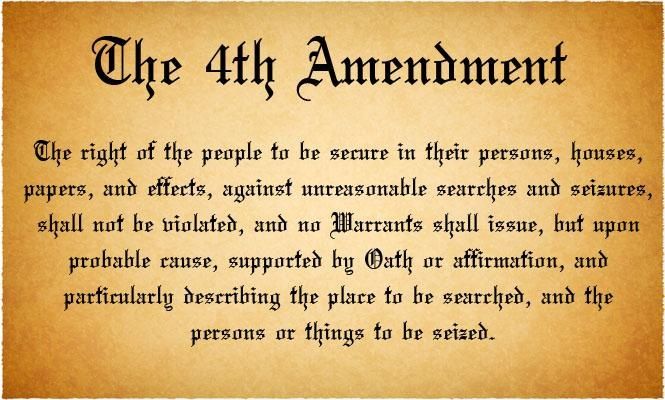
The tenuous legal theory permitting the U.S. government to conduct surveillance on U.S. citizen data (emails, texts, phone calls, messages etc.) rests on the unconstitutional ability of the government to intercept your “private papers” with the use of the Foreign Intelligence Surveillance Act, specifically FISA-702.  The “702” aspect is the term for U.S. citizen intercepted.

The authority for the United States government to capture the electronic records of all Americans without warrant falls under the auspices of FISA-702.  The current authority expires in April of 2026.  The 702 authorities have been abused to conduct political surveillance for just about everything in Washington DC.  Millions of unauthorized searches have been identified; it is unconstitutional.

Politico, an outlet for the concerns of the administrative state, begins the new year by noting there is increased resistance to the reauthorization.  However, in order to carry out the domestic national security agenda of the Trump administration, the Deep State considers JD Vance, Marco Rubio and others as likely supporters for reauthorization.

(Politico) – […] During the last reauthorization debate in 2024, then-candidate Trump urged Congress to “kill” the Foreign Intelligence Surveillance Act, the larger spy law that Section 702 is nested under. Trump’s decision frustrated supporters of the program — in part because they believe he conflated the foreign-target spy program with the broader surveillance law that was not up for reauthorization.

A crucial Biggs-sponsored House amendment that would have added a warrant requirement for any communications involving Americans failed on a 212-212 tie, with Speaker Mike Johnson casting a rare and decisive vote to kill it.

Now the spy powers fight is a major headache for Johnson, who infuriated privacy hawks with his 2024 amendment vote after having advocated for more surveillance guardrails as a former member of the Judiciary Committee.

Judiciary Committee Republicans — led by Rep. Jim Jordan of Ohio, a close Trump ally — have started discussing how to approach the reauthorization during their weekly meetings. Jordan said in an interview he is again hoping to impose a warrant requirement for searches involving Americans as well as a ban on data brokers selling consumer information to law enforcement.

He said he has “had some discussions over this past year with some members of the administration” on this issue and plans to meet alongside House Intelligence Committee Chair Rick Crawford (R-Ark.) with White House officials on the matter early next year.

Lawmakers on both sides of the debate are carefully watching Crawford, who opposed the warrant requirement in 2024 — along with every other House Intelligence Committee Republican. But Johnson has since added five Republicans to the panel who each voted for the Biggs amendment.

A committee spokesperson said Crawford is working with House leadership, Jordan, the Senate and the administration “to determine the best way forward to extend 702 authority.”

There are still, however, a majority of Intelligence Committee Republicans who are working to extend the program without adding a warrant requirement — and they are hoping administration officials whom they view as allies, including Vice President JD Vance, CIA Director John Ratcliffe and Secretary of State Marco Rubio, will be able to sway Trump. (read more)

Some administrative state defenders will argue this issue with me. However, having researched almost every aspect to the construct, and the argument, I am confident FISA-702 authority underpins the much bigger, quasi-constitutional justification for the wholesale collection of U.S. citizen metadata.  Without the 702 authority, the legal justification for the apparatus of surveillance no longer exists.  It really is that simple.

The only way the government can justify the capture of U.S. Citizen data is if there is some quasi-constitutional or national security reason for it.  That’s where FISA-702 comes in.

Take away “702” search authority, and the data collection argument collapses; ANY “incidental” search of the database then loses any plausible legal justification.  702 is the camel’s nose under the tent that forms the baseline for all data records to be intercepted, stored and ultimately available for review.

This is a very key component to fully understand.  Most practical applications of surveillance are contingent upon the capture of electronic records for tracking.  Ex. – if domestic travel records are considered private papers (never argued yet), then government agencies have no right to exploit them without a valid search warrant underpinned by a national security justification.  The government, not private sector – government, tracking people becomes more difficult if privacy rules are applied.

The legal aspect runs through the 4th Amendment, which -while historically undefined in the modern era- likely stirs in the background of the recent TSA decision to provide a $45 opt-out, for the use of REAL ID in domestic transit (interstate commerce application notwithstanding).

The Fourth Amendment aspect to the ‘warrantless’ government capture of American citizen records has never been fully argued in court; the modern definitions are opaque, and the govt has a vested interest in retaining the untested status quo.

The Intelligence Community (IC) has told Congress, particularly the House and Senate Intelligence Committees, that all hell will break loose if they don’t reauthorize full electronic surveillance of Americans.

Congress has historically been scared of the “seven ways from Sunday” IC.  However, now Director of National Intelligence Tulsi Gabbard is attempting to change things; specifically change things as they pertain to the domestic use of the intelligence agencies.

As the counterargument is made, House Speaker Mike Johnson, and all of the key participants, are siloed from understanding that 702 has nothing to do with incidental collection of American data, whilst the honorable IC were doing foreign intercepts.

According to intelligence experts, Speaker Johnson and most Republicans believe the IC justification, and perhaps many of them pretend not to know the alternatives.  I do not buy this argument, because too much recent evidence exists to sell the story that Congress is unknowing of how this metadata capture is being continually exploited.

The only way to really test congressional knowledge is to question them.  No one is questioning them.

In my opinion, the politicians and their key staff pretend they cannot fathom how the FBI, DOJ, NSD, DHS and contractors use this database to conduct political and “other” (think corporate espionage for sale) surveillance.  When you engage with them, you realize they really do put on a great show proclaiming the IC is full of honorable rank-and-file, trying to walk a fine line between the 4th Amendment and exploitation.  The counter position is akin to them living in a DC bubble.

The IC argument is now something akin to how we have let thousands of terrorists into the country through the southern border crisis.  They say: “My god, we need to monitor the terrorists, and if you take away the 702, the foreign terror cells will activate and start killing us all.  Do you want that blood on your hands?”   You cannot take away surveillance tools.

Then you overlay the FISA 702 reauthorization argument, as used as a bargaining chip by the same people who don’t want to get caught up in the surveillance.

The DC conversations end up like, “Ok, we’ll reauthorize it, but you cannot use it against us – and all the sex parties and perverted stuff we do when no one is around; you must promise to keep our secrets hidden“…  Then, just like the 2024 reauthorization change, they exempt themselves.

The IC agree to accept a reauthorization that exempts Congress.   The IC keep the process – just promise not to use it against Congress.   This outlook is what we see visible in the CR bill extension that included forbidding the FBI from seeking search warrants against Senator’s telecommunications, and this outlook is highlighted by Elise Stefanik demanding that Congress be notified if any federal candidate for office is under investigation.   The Big Club protects the Big Club.

Unfortunately, ‘We The People’ do not have many friends in DC on this issue, other than a very small group in/around Tulsi Gabbard’s office, and they are constantly under attack.

The DC UniParty will attempt to reauthorize 702 to continue exploiting their surveillance authority. Do not forget, now we have over 10,000 log-in portals with access to the NSA database exist, including the workstation at Perkins Coie that tied into the NSA database {GO DEEP}.

After spending several years asking every representative of consequence why they support the FISA-702 process, I can tell you every one of them says they believe it is needed, because the IC tells them there are just too many domestic terror threats that need to be monitored.

It is almost impossible to find a person in DC who will forcefully try to stop FISA-702 reauthorization.

If you ask me why in hindsight, I now take the position that FISA-702 is the gateway to the massive surveillance system currently being put into place using Real ID and the AI facial recognition software provided by Palantir (CIA exploit).  In essence, the gateway that allows the full-scale surveillance state, is opened by the prior authorization of FISA-702 that negates any 4th Amendment protection.

BIG Why? Because all of the surveillance mechanisms within the network being updated and enhanced by AI search and capture, comes from the IC being allowed to exploit the NSA database.  That same database access allowance is the targeting mechanism for FISA-702.  If warrantless searches of the NSA database were stopped, the Palantir/IC and Tech Bro collaboration could hit a brick wall.

The significance of this FISA-702 issue is much bigger than most can appreciate.

This surveillance underpinning also reconciles many of the puzzled faces when it comes to who is permitted nomination and who is not.  The DC Deep State confirmed both Kash Patel to be Donald Trump’s FBI Director (SSCI), and Pam Bondi to be U.S. Attorney General (SJC).  Both Bondi and Patel are expressed believers in the value of FISA-702.

You might even remember this odd question from October of 2025 that came out of nowhere.  Attorney General Bondi literally read a script on the issue that was prepared for her.  WATCH:


Additionally, the nomination of Tulsi Gabbard to be Director of National Intelligence was initially opposed by the Senate Select Committee on Intelligence (SSCI), until she acquiesced and agreed there was value in the FISA-702 process.

We have a few weeks before things get really ugly, but they will get ugly.

Deals will be cut.  Offers will be made. Corruption throughout this argument will run amok.

In the background of every headline, that will surface over the next two months, this issue will enmesh.

We need to watch closely how National Security Advisor Marco Rubio, Director of National Intelligence Tulsi Gabbard and Vice President JD Vance respond to the surfacing issues.

All of the modern surveillance mechanisms, within the U.S. government network currently being updated and enhanced by AI search and capture, come from the gateway of 702; ie. govt being allowed to exploit the NSA database against Americans.

If warrantless searches of the NSA database are legally stopped, or no longer authorized, the gate closes and the DHS, Palantir/IC and Tech Bro surveillance collaboration hit a brick wall.

This is my hill!