Sunday, October 26, 2025

Trump: The Fifth Horseman of the Bureaucracies’ Apocalypse


If you’re a Court watcher, a political junkie, a constitutional scholar—or, in fact, just have a pulse—10 am Monday, December 8th will be the judicial equivalent of the Superbowl. Although even that might be underselling it a little because they play the Super Bowl every year, and we’ve been waiting for this game for almost a century—the overturning of Humphrey’s Executor, a 1935 Supreme Court decision.

Yes, the stakes are that high: Who does the Constitution grant the power to govern the executive branch—our elected president, or an unelected deep-state bureaucratic tyranny?

Let me explain. Humphrey’s was a direct assault on the very foundation of the Constitution, specifically, Article II, Section 1, first sentence:

The executive Power shall be vested in a President of the United States of America.

As the great Antonin Scalia would write over 50 years later about that sentence in his solo dissent in Morrison v. Olsen, a case on the constitutionality of the Independent Counsel, “That does not mean some of the executive power, but all of the executive power.” As we might expect from one of the Court’s most influential Originalists, his criticism echoed the voice of the Founders canonized in the Federalist Papers (emphasis mine):

Energy in the Executive is a leading character in the definition of good government. A feeble Executive implies a feeble execution of the government … feeble execution is bad execution … a government ill executed, must be, in practice, a bad government.

[The unitary executive] may be destroyed in two ways: either by vesting the power in two or more magistrates of equal dignity and authority; or by vesting it ostensibly in one man, subject, in whole or in part, to the control and co-operation of others, in the capacity of counsellors to him. 

To understand the full scope of the Sophoclean tragedy of Humphrey’s, let’s turn back the clock to the Great Depression.

One in four Americans was out of work. In desperation, FDR had assembled a “Braintrust” that, policy-wise, largely resembled a coalition of Bernie Sanders, Elizabeth Warren, and AOC, and, with it, his New Deal was trampling the Constitution with brazen acts of hubris—making it illegal to own gold, abolishing the gold standard, and abrogating gold contracts, to name a few things it did. Worse still, while Europe and the rest of the world were largely recovering, FDR’s policies were not just ineffective; they only deepened and lengthened the Depression.

There were a few holdouts. One of the five FTC Commissioners, William Humphrey, was an unabashed anti-New Dealer who refused to implement FDR’s egregious policies. FDR asked for his resignation. When he refused, FDR fired him. As if the gods themselves had intervened to protect the Constitution, before Humphrey himself could file suit, he was struck dead by a heart attack.

His estate, however, in a nakedly opportunistic money grab, filed suit for his salary that would have been paid if he had not been fired and not died. That status gave the case its name: Humphrey’s “Executor.”

The suit was laughable on its face. Not even 10 years earlier, SCOTUS ruled on essentially the same case. Myers v. US addressed the fact that Coolidge had fired the Postmaster General. The corpulent William Howard Taft, our only president to sit on the Court, or get stuck in a bathtub for that matter, delivered the opinion:

Removal…is an executive function…like the power to appoint,” [denying removal would] “infringe on the separation of powers,” [Article II gave] “the President the sole power of removal in his responsibility for the conduct of the executive branch,” [and that] “the President is required to take care that the laws be faithfully executed; he cannot do this unless he may remove at will all officers whom he appoints.”

Yet, shockingly, despite a still largely conservative Court, Humphrey’s won. Why did the Court flip so soon after the Myers decision?

By 1935, the Court was literally at war with FDR’s New Deal. In 1935, it had declared four of FDR’s programs unconstitutional, and had three more queued up to overturn in the next session. The New Dealers had branded the core conservative bloc the Four Horsemen of the Apocalypse. How prophetic “apocalypse” would prove, but ironically, not for their resistance to the New Deal.

These justices despised FDR and thought they alone were the last line of defense in guarding the Constitution they had sworn an oath to uphold. When Humphrey’s came before them, they were faced with a Hobson’s choice: rule in favor of FDR, and, without administrative resistance, his New Deal would be a fait accompli; rule against, and the Constitution would be irrevocably gutted. For the pyrrhic victory of reining in FDR, they had sold their souls to the devil.

The opinion itself was authored by one of the Horsemen, George Sutherland, who shamelessly commits the freshman debating sin of begging the question. Asked to determine if Congress has the authority to set rules encumbering the President, he simply asserts the answer he’s supposed to be arguing, “the authority of Congress...cannot well be doubted”:

The authority of Congress, in creating quasi-legislative or quasi-judicial agencies, to require them to act in discharge of their duties independently of executive control cannot well be doubted, and that authority includes, as an appropriate incident, power to fix the period during which they shall continue in office, and to forbid their removal except for cause in the meantime.

With this opinion, the Horsemen had unleashed a Trojan Horse, opened a Pandora’s Box, and committed an original sin—take your pick—that has given rise to the unconstitutional leviathan that is our administrative state. No more would there be three branches of government; now there would be quasi-legislative and quasi-judicial agencies—a fourth branch—a bureaucratic empire anathema to the founding.

An exasperated Scalia would write that sometimes assaults on the Constitution “come clad, so to speak, in sheep’s clothing,” but in Humphrey’s“this wolf came as a wolf.” But aside from Scalia’s lone dissent, Humphrey’swould go almost entirely unchallenged until Seila Law v. CFPB (2020) landed in front of Trump’s newly conservative Court.

Asked if the Consumer Financial Protection Bureau, a Dem monstrosity conjured up in the wake of the 2008 financial debacle, could have its Director unaccountable to the President, Roberts would equivocate. Always reluctant to use constitutional principle when a clever nuance will do—remember, “it’s a tax”—he wrote the opinion invalidating the Director’s protection, but leaving Humphrey’s intact by differentiating the FTC commissioners from the CFPB Director—there were five commissioners, but only one director.

Thomas, conversely, never reluctant to assert constitutional principle where a clever nuance would suffice, wrote in his concurrence:

The decision in Humphrey’s Executor poses a direct threat to our constitutional structure and, as a result, the liberty of the American people.The problem is that the Court’s premise was entirely wrong. The Constitution does not permit the creation of officers exercising “quasi-legislative” and “quasi-judicial powers” in “quasi-legislative” and “quasi-judicial agencies.” No such powers or agencies exist.

The stars have finally aligned in Slaughter v Trump. Trump fired FTC commissioners just as FDR had. There can be no nuanced decision here—this is the exact same case as Humphrey’s, resurrected and in the crosshairs.

Thomas wrote in Seila, joined by Gorsuch, “Today, the Court does enough to resolve this case, but in the future, we should reconsider Humphrey’s Executor in toto. And I hope that we will have the will to do so.”

Mark your calendar, that chance, and the chance to reclaim our Constitution, is December 8th.


Podcast and entertainment thread for Oct 26


May the days you deal with pain be short and end well.

Government—Necessary and Intolerant


“Our founders, in the words of Thomas Paine, recognized that, Government, even inits best state, is but a necessary evil; in its worst state, an intolerable one.” — Walter E. Williams

I think we can all—maybe—agree that government is, as Thomas Paine said, “necessary.” Occasionally…um, rarely…uh, once in a lifetime?...government does something good. “If all men were angels,” James Madison said, “we wouldn’t need government.” But, woe is humanity, some people (we call them “Democrats”) refuse to be angels, and thus we sometimes must call upon the forceful hand of government to protect us from those non-angels who would do us harm. And sometimes governments succeed in doing that.

And sometimes, in doing it, governments do more harm than good.

Everything the government does it does by force. It must have money to operate, and eventually, it gets that money by forcefully taking it from its citizens. I don’t know anybody who pays taxes out of the goodness of their hearts. Yes, we generally consider that having police, fire departments, infrastructure for the economy, a military to protect us from foreign (and sometimes domestic) monsters are necessary, “good,” things. But how many of you add a little extra every year to how much taxes you pay because you want to do more “good”? Most people I know strive to pay as little in taxes as possible, and a whole bunch of Americans don’t pay any at all and hope they can get away with it. We don’t pay taxes because we love the government and love giving it money. The IRS doesn’t exist as a church or charitable organization.

Our Founding Fathers were believers in freedom, so much so that they led the world through the principles they proclaimed in the Declaration of Independence, in the abolition of chattel slavery. And they believed the greatest enemy of freedom was “power,” or government, because government must have some power to accomplish its purposes. Government passes laws, and laws restrict freedom—that’s what makes government dangerous or “evil.” Of course, some laws are necessary because there exist the non-angels out there (Democrats) who, without restraint or the fear of punishment, will abuse freedom and harm others. But still, to the Founders of America, there is only so much “power” in a political system. People's “power”—your right to do as you choose—is called “freedom.” Government “power”—the right of government to restrict our choices—was called “tyranny.” True “freedom” is a virtuous freedom—people doing the right things because they are the right things to do in harmony with the virtuous laws God gave us. A country doesn’t need laws against virtue, only against evil. Thus, the more virtuous the people are, the less government force is necessary. Hence, the most freedom possible.

This is why John Adams wrote, “Our Constitution was made only for a moral and religious people. It is wholly inadequate to the government of any other.” Because the Founders believed in freedom, they limited the power of that entity that can restrict freedom—government. But by limiting government, a country needs moral, virtuous, religious people. The less virtue in the people, the more government will be necessary. If you haven’t noticed that in 21st-century America, then you’ve been asleep for almost 25 years.

And, of course, the problem becomes even more severe if the government is composed of non-angelic people. James Madison made this abundantly clear: “The aim of every political constitution is, or ought to be, first to obtain for rulers men who possess the most wisdom to discern, and the most virtue to pursue, the common good of the society, and in the next place, to take the most effectual precautions for keeping them virtuous whilst they continue to hold their public trust.” The first thing we must do—if we must have a government—is to make sure we select the men with the most wisdom and virtue, and the second thing is to make sure they stay that way as long as they hold public office.

Do any of you readers see that in Congress, Washington, D.C., or even in your state or local governments?

Madison would have been greatly disappointed (if he saw America today) with another matter he believed in: “I go on the great republican principle, that the people will have virtue and intelligence to select men of virtue and wisdom. Is there no virtue among us?” If the people aren’t virtuous, chances are pretty good they aren’t going to elect virtuous leaders. Indeed, “is there no virtue among us?”

So, yes, at its best, government is a necessary and dangerous evil. It takes away our freedoms; in some cases, that is good (we don’t want murderers having the freedom to murder). Government becomes necessary in such cases. But if government leaders are as non-angelic as the people government is designed to protect against, then who protects us against government? It will become evil in the “necessary” things it is supposed to do. And when the government is filled with Democrats (evil people), it can, in its worst state, as Thomas Paine said, become intolerable. As it was under Joe Biden.

Our Founding Fathers taught us what to do—be virtuous. A virtuous people will be free and won’t need much government. A virtuous people will elect men of virtue and make sure they remain that way in their term of office. But if there is no virtue among us…a necessary evil becomes an intolerable one.

“The future and success of America is not in this Constitution, but in the laws of God upon which this Constitution is founded” (James Madison). Yes, we’ve forgotten—and ignored—that as well.


Urban Barbarism


Across the United States, the trajectory of inner cities has been one of “inexorable decline” — a descent from centers of economic growth, cultural splendor, and communal solidarity into fragmented, dystopian environments marked by neglect and anarchy. Like mirror images of downtown Port-au-Prince, these urban landscapes, far from civic greatness, have become wastelands defined by abandoned structures, pervasive insecurity, and social disintegration (aggravated by the “homelessness crisis”).

The emblematic example of Detroit crystallizes the narrative of urban decline — a Democrat-run city, yesterday’s “Motown”, that is synonymous with town hall corruption, economic ruin, demographic shift, widespread arson, and the withdrawal of state and municipal authorities. Rather than a localized phenomenon, such decline is a symptom of a broader “civilizational regression” whose consequences reverberate through the generations, threatening the very foundations of social order.

At the root of this decline lies the collapse of traditional industries. Without an active business community to generate prosperity, nobody will stay behind but demagogues and welfare dependents. Deindustrialization — collective redundancy precipitated by automation, globalization, and corporate restructuring — undermined the primary economic engines that provided stable employment, nurtured a middle-class constituency, and generated municipal revenues essential for public services. The economic downturn left entire neighborhoods in a state of social distrust, cultural confusion, and civilizational self-doubt.

Accompanying economic upheavals were demographic shifts. The phenomenon known as “suburban flight” saw predominantly white, middle-class populations abandon downtown areas for suburban enclaves. The depletion of the urban tax base through this demographic shift deprived cities of the fiscal capacity necessary to sustain essential public services — education, policing, sanitation — that constitute the minimal framework for social order and civic functionality. Economic extraction made inner cities vulnerable to further erosion by rapacious, anti-meritocratic countercultures and the victim narratives of identity politics.

Public housing policies, initially conceived as remedies for urban poverty, paradoxically exacerbated social fragmentation. High-density, monolithic housing projects, frequently underfunded and poorly maintained, became concentrated pockets of social pathology. These environments incubated gangs, drug markets, and endemic violence, while also accelerating the disintegration of social networks and traditional family structures. Concurrent social phenomena — rising single-parent households, the erosion of communal religious institutions, and the succession of drug epidemics — further dismantled the fragile social capital of urban neighborhoods, leaving communities deprived of cohesive moral frameworks or collective resilience.

Social engineering notwithstanding, this deterioration culminated in the emergence of what may be termed “urban barbarism” — a Haitian-style breakdown of the civilizational norms and values that historically underpinned urban life. Savage behavior manifests acutely in the proliferation of “gangster culture”, which operates as both symptom and agent of decline.

The figure of the gangster, glorified in certain cultural milieus, embodies an antisocial rejection of law, order, and communal responsibility. This subculture valorizes violence, material ostentation, and the pursuit of immediate gratification over long-term stability and social cohesion. Such “values” undermine the normative foundations of civic life, fostering an environment where lawlessness becomes normalized and communal trust dissolves. 

The “degeneration of civic culture” is evident in the normalization of social parasitism, vandalism, the systematic defiance of legal authority, and widespread disengagement from communal governance. Public spaces intended for social interaction and collective identity have succumbed to neglect and crime, symbolizing the larger collapse of social order. The civic infrastructure that could sustain neighborhoods — respect for public property, adherence to shared norms, participation in governance — has largely disintegrated, replaced by atomized, antagonistic social relations.

In parallel, urban educational institutions, critical to social reproduction and upward mobility, have suffered catastrophic decline. Urban schools are overwhelmed by perceived resource deficits, broken discipline, and vandalism-violence. These “demoralized institutions” fail to provide stable, disciplined environments conducive to learning and development. Curricula, where present, rarely impart the civic education or practical skills necessary to counteract the broader moral degeneracy.

The failure of education in these contexts exacerbates the “cycle of marginalization”, as successive generations become trapped within an environment that offers limited prospects for advancement or social integration. This educational collapse thus contributes to the entrenchment of urban barbarism, as the socialization functions necessary for cultivating responsible citizenship and civic engagement falter.

The weakening of “civilizational resistance to barbarism” is a particularly grave dimension of this urban crisis. The institutions and cultural norms that historically constituted bulwarks against social disintegration have been systematically eroded.

Law enforcement, while indispensable for maintaining order, is maliciously portrayed as illegitimate or antagonistic within marginalized communities, impairing effective policing and public safety. Religious and civic organizations, once centers of communal cohesion and moral guidance, have decreased in influence amid broader value drifts — and demographic shifts. This institutional failure facilitates the ascendancy of nihilistic and antisocial ideologies, undermining efforts to restore social order or communal solidarity.

The loss of “civilizational resilience” may largely represent the failure of Democrat party policies or actors. However, it also signals a systemic vulnerability within modern urban society. The fragile social contract that binds individuals to collective norms and institutions appears increasingly tenuous in these contexts, rendering urban centers susceptible to social fragmentation, violence, and decline. The failure to contain or reverse these dynamics portends the emergence of permanent zones of urban anarchy, which in turn jeopardize the stability of the broader social and political order.

The intergenerational implications of urban decline are stark. For the youth raised within these environments, exposure to chronic insecurity, fractured social networks, and institutional failure severely constrains developmental opportunities and life trajectories.

Self-victimization, normalized violence, the ubiquity of parasitic or illicit economies, and the absence of stable, positive social institutions inculcate patterns of behavior antithetical to civic participation and social mobility. Such conditions perpetuate cycles of poverty, marginalization, and social exclusion, threatening to replicate the dynamics of decline indefinitely. The erosion of hope and opportunity among urban youth undermines individual well-being and minimizes the potential for societal regeneration.

From an anthropological perspective, the contemporary inner city crisis can be interpreted as a “contest between order and chaos, civilization and barbarism”. The persistent urban decline and social disintegration evident in Democratic-run cities represent a regression from the fragile gains of modernity towards a reversion marked by social atomization, institutional collapse, and endemic violence. The spatial segregation and social isolation of marginalized populations within these urban wastelands exacerbate this dynamic, creating conditions conducive to the entrenchment of antisocial norms and behaviors.

The fragility of urban civilization thus becomes apparent in these zones of neglect and decline. The institutions and cultural frameworks that sustain public order and social cohesion are shown to be neither natural nor inevitable but contingent upon continuous maintenance and renewal. Their failure exposes the latent vulnerabilities of urban societies and raises fundamental questions about the resilience of modern civilization in the face of moral heterogeneity, institutional failure, and social disintegration.

The consequences extend beyond localized urban environments. Strategic exploitation of urban decline by social activists, who equate economic inequality with “social injustice” (i.e., sowing division for their own purposes), contributes to political polarization, social unrest, and the erosion of trust in democratic institutions. Whatever the historical truth, perceived marginalization fosters alienation and resentment. The potential for the diffusion of urban barbarism beyond its immediate geographic confines presents a challenge to national cohesion and the long-term viability of pluralistic, democratic societies.

The entrenchment of welfare dependency, social fragmentation, and moral degeneracy suggests that the inner cities of the United States may be undergoing a protracted period of decline, with few signs of spontaneous regeneration. The persistence of these conditions raises critical concerns about the future of urban civilization and the capacity of contemporary societies to uphold the norms and institutions necessary for collective life.

The ongoing decline of American inner cities represents a profound civilizational challenge — the fatal confluence of sociocultural dislocation, failure of Democrat party leadership (partly ideologically inspired, partly cynical-opportunistic), and moral degeneracy. The outbreak of urban barbarism, the collapse of educational institutions, and the erosion of civilizational resistance underscore the precariousness of social order within these environments. Intergenerational ramifications are severe, threatening to entrench cycles of dysfunction and marginalization.

Broader societal implications concern the resilience and future trajectory of modern civilization itself. Developments compel sober reflection on the fragility of the urban condition and the systemic vulnerabilities that imperil the continuance of ordered, communal life.


🎭 𝐖𝟑𝐏 𝓓𝓐𝓘𝓛𝓨 𝓗𝓾𝓶𝓸𝓻, 𝓜𝓾𝓼𝓲𝓬, 𝓐𝓻𝓽, 𝓞𝓟𝓔𝓝 𝓣𝓗𝓡𝓔𝓐𝓓


Welcome to 

The 𝐖𝟑𝐏 𝓓𝓐𝓘𝓛𝓨 𝓗𝓾𝓶𝓸𝓻, 𝓜𝓾𝓼𝓲𝓬, 𝓐𝓻𝓽, 𝓞𝓟𝓔𝓝 𝓣𝓗𝓡𝓔𝓐𝓓 

Here’s a place to share cartoons, jokes, music, art, nature, 
man-made wonders, and whatever else you can think of. 

No politics or divisive posts on this thread. 

This feature will appear every day at 1pm mountain time. 


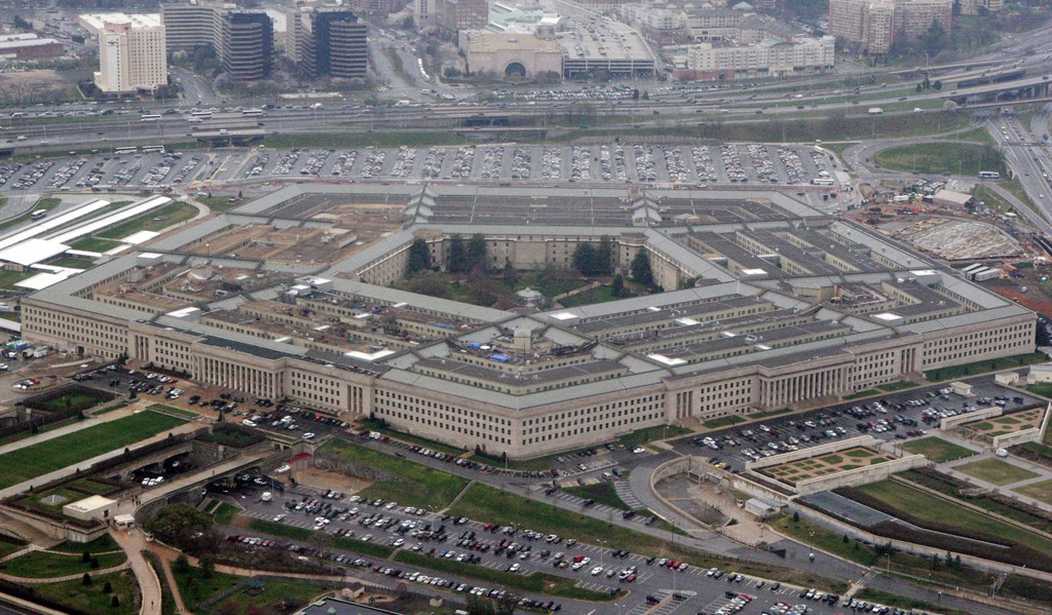
A General Dilemma the War Department Must Remedy


RedState 

In the classic movie, White Christmas, we hear a question presented in song about what to do with “so many one and two and three and four-star generals unemployed,” following the military downsizing in the immediate aftermath of WWII. Today, a more pressing question looms: What shall we do with so many generals whose loyalty seems directed more toward personal ambition and institutional self-preservation than to the Constitution?

At the height of WWII, America won a global war with only seven four-star generals commanding a force that numbered over 12 million. Today’s active-duty military force is a fraction of that size, numbering roughly 1.4 million. Yet it now employs 44 four-star officers. Each one of them attained promotion to the highest levels by either acquiescing to, or enthusiastically embracing, radical social doctrines that aim to destroy the nation from within. Fortunately, a few of these generals were quietly sidelined and retired in 2025. But many others, whose actions betray their oaths to the Constitution, remain in positions of immense power.

Lt. Gen. Chris Laneve exemplifies this troubling trend. Not only did he comply with the full range of illegal COVID edicts, but as a division commander he also signed a 2023 “pride” month letter that presented a distorted version of American history.

“From the founding fathers of our nation through the Global War on Terrorism LBGTQ+ [sic] service members have fought with pride to defend our rights and freedoms.”

The letter went on to parrot the prevalent themes from critical theory, calling on all members of the famed 82nd Airborne Division to advance the cause of social justice as a “strategic advantage.”

Laneve currently serves as the senior military assistant to the Secretary of War, and is now nominated to become the Army’s Vice Chief of Staff. Thus far, Laneve has not publicly disavowed or distanced himself from the revolutionary viewpoint he recently celebrated.

Similarly, Gen. Kenneth Wilsbach, a staunch advocate for diversity, equity, and inclusion (DEI) initiatives, was nominated by President Trump to become the next Air Force Chief of Staff. Wilsbach consistently prioritized intersectional diversity as a key focus of his management style. Like Laneve, Wilsbach has not publicly repudiated his alignment with critical theory, leaving us no choice but to conclude that he remains committed to these divisive ideologies.

A small number of generals have been shown the door during the second Trump administration, but in subdued fashion. In 2010 Stan McChrystal was the last military general to be publicly relieved by a president. This was over things said about the Obama administration by members of McChrystal’s staff. Far worse has been said of Trump by many across the ranks in open office settings and on social media. It appears that their commanders are generally being left alone, as some generals take it upon themselves to trash their civilian superiors in press reports—the latest example showing up in The Washington Times.

The general calamity of our day is not entirely unique. Consider what Sir. Winston Churchill observed in his essay titled "Mass Effects in Modern Life," exactly one century ago.

“Instead our Generals are to be found on the day of battle at their desks in their offices fifty or sixty miles from the front, anxiously listening to the trickle of the telephone for all the world as if they were spectators with large holdings when the market is disturbed… No; he is not the hero. He is the manager of a stock market, or a stock yard.”

The current “forever war” has provided ample evidence of the inadequacies of many senior officers. Traditionally, generals were held accountable for battlefield failures, just as CEOs are fired for driving their companies toward bankruptcy. Battlefield failure in our age has paradoxically become a credential for promotion.

But what about character? This is a rare moment in history where we can evaluate the moral integrity and constitutional commitment of our top officers based on their actions during the COVID crisis and their enthusiastic support for DEI initiatives. The question is simple: who among them resisted unlawful orders or refused to cooperate with unconstitutional COVID mandates, DEI policies that violate the Civil Rights Act of 1964, and the ideological assault on conservatives in the ranks? The answer: not one. How many resigned publicly rather than violate their oaths? Again, not one.

Far too many among the officer class openly embraced neo-Marxist doctrines that call for the nation to be decolonizeddismantled, and deconstructed. We must take them at their word where loyalties lay. Not one publicly reversed position, nor offered any explanation for his or her activism in recent years. Even should any among them attempt explanation, excuses of just doing what one had to do in the recent past are never morally-acceptable excuses for military officers. Resisting unlawful orders is foundational to preserving an army of free men rather than reckless mercenaries.

This reality is not lost on top civilian defense officials. Yet they seem hesitant to clean house. Perhaps they are concerned about the difficulties of replacing these senior officers. The solution, however, is simple, just as it was before the corporatization of military talent management in the post-WWII era. Our nation’s top leadership must begin by relieving incompetent officers, retraining or releasing them into civilian life, and promoting real leaders. As always, history offers valuable lessons.

In 1862, President Abraham Lincoln relieved Gen. George McClellan, who had proven a weak battlefield leader and politically antagonistic to his civilian superiors. Lincoln found better leadership by looking outside the traditional military career path. Ulysses S. Grant, for example, went from resigning as a captain in 1854 to being reinstated as a full colonel seven years later, ultimately becoming the only general capable of defeating the formidable Robert E. Lee. Grant would not have had enough time in service to make it to the rank of lieutenant colonel in today’s Army. Likewise, Joshua Lawrence Chamberlain was not far removed from his time as a civilian college professor when commissioned into the Army as a lieutenant colonel and put in command of the 20th Maine Volunteer Infantry Regiment. The academic helped turn likely union defeat at Gettysburg into victory, and went on to become a brigadier general before the Civil War’s end. American military tradition is replete with many such examples in which rank and command followed capability over box checks. Excuses that defend holding on to incapable and politically-hostile senior officers over manning concerns is like asking the gardener not to remove a termite-infested root because you don’t have a bag of dirt on hand to immediately fill the hole. The talent needed to get the job exists for those willing to look beyond the reach of their own arms. 

I commend Secretary of War Pete Hegseth’s recent address to military leadership, in which he called for accountability and the reinstatement of basic military standards. But such rhetoric must be followed by decisive action. Uniformed partisans, determined to undermine the will of the voters, do not respond to speeches; they respond to the application of power. The tools exist to deal with these renegades, but the question remains: Is there the will to use them?

America is in a moment that the current Praetorian Guard can be tamed for a generation, and the military reoriented to public service. I ask you, dear reader, to join me in asking our elected leaders and their appointees at the War Department to exercise lawful authority to break up the unaccountable cabal of Pentagon careerists and restore public accountability as a tenet honored both by the public and those who run the armed services. There is a battle for the military’s soul. We must win it to prevent the enemies of ordered liberty from turning the nation’s defenders against us and future generations.


Chicago Mayor Brandon Johnson Asks Reporter if the Word Illegal Alien is 'Sci-Fi' Term


Chicago Mayor Brandon Johnson melted down after a reporter asked a question that used the term “illegal alien.” 

Johnson said:  “We don’t have illegals. Aliens — I don’t know if that’s from some sort of sci-fi message you wish you’d had. The legal term for my people was slaves — you want me to use that term too? Let’s get the language right.  We’re talking about undocumented individuals who are human beings. The last thing I’m going to do is accept racist, nasty language to describe them.”

Chicago is a sanctuary city, meaning that it won’t partner with immigration officers who deport illegal aliens unless those people are wanted on a criminal warrant by local or federal authorities, if they have been convicted of a serious crime and remain in the United States illegally, or if they are a clear threat to public safety or national security.

Townhall’s Guy Benson reacted: 

In an interview with Fox News, Illinois Gov. J.B. Pritzker refused to admit that Chicago has a problem with violent crime. 

Former Illinois Gov. Rod Blagovich, a Democrat, slammed violence in Chicago. 

Blagovich was convicted of fraud for trying to fill the seat of Barack Obama, but was pardoned by President Trump. 

Trump has sent troops to reduce violent crime in Chicago, as well as Washington D.C. and Portland. 

This month, federal agents arrested an illegal immigrant who placed a $10,000 bounty on the head of a federal agent, Townhall reported


Two Defendants Convicted of Conspiring to Provide Material Support to ISIS


In federal court in Brooklyn, New York, Abdullah At Taqi, 26, of Queens, was convicted by a jury on all counts of an indictment charging him and co-defendant Mohamad David Hashimi with conspiring and attempting to provide material support to the Islamic State of Iraq and al-Sham, a designated foreign terrorist organization, and conspiring to launder money.

Previously, on Oct. 6, as jury selection was scheduled to begin, Hashimi pleaded guilty to all counts of the indictment.

As proven at trial, At Taqi sent 15 separate Bitcoin transactions to Osama Obeida, also known as Osama Abu Obayda, a self-proclaimed ISIS member, over the course of nearly a year. In conversations with an online confidential source. At Taqi stated that he used cryptocurrency to send money “unnoticed” through a “brother,” meaning an ISIS supporter, he spoke to on an encrypted communications platform. At Taqi confirmed that the “brother” was “from Dawlah,” referring to ISIS.

“Today, a federal jury convicted Abdullah At Taqi for conspiring to fund ISIS, a terrorist organization that has unleashed terror and unimaginable brutality across the globe,” said Assistant Attorney General for National Security John A. Eisenberg. “Taqi conspired to support the group and its atrocities by funneling cryptocurrency to ISIS fighters, hoping they would establish a stronghold in the Middle East from which the group could destabilize the entire region. This conviction reflects the Department’s commitment to holding accountable those who knowingly finance terrorism.”

Later, At Taqi told CHS-1 that he had gotten back in touch with the “brother” through whom he had been sending cryptocurrency and assured CHS-1 that the brother was “from Dawlah.” 

“An exceptional team uncovered the defendants’ use of electronic currency to bankroll an abhorrent organization that harbors deep-seated animosity toward America,” said Deputy Attorney General Todd Blanche. “They intended to procure weapons for terrorism and now their actions will result in incarceration. Justice has been served.”

The brother with whom At Taqi was communicating was Obeida. In introducing CHS-1 to Obeida, At Taqi informed CHS-1 that he had confirmed CHS-1 was trustworthy to the “brother,” Obeida, and at the same time, he vouched for the “brother” to CHS-1, indicating that he had vouched for each individual’s support for ISIS.

“The defendants used Bitcoin, PayPal and GoFundMe to fund ISIS’s deadly mission,” said U.S. Attorney Joseph Nocella Jr. for the Eastern District of New York. “ISIS relies on supporters, like the defendants, to sponsor its terrorist aims, which is why our office and our law enforcement partners are working tirelessly to disrupt that pipeline and prosecute those who provide material support to terrorist organizations and their evildoers.”

Obeida confided to CHS-1 that he had known At Taqi for two years and that At Taqi regularly sent money to Obeida. Obeida sent CHS-1 the below photograph of an ISIS flag and weapons with CHS-1’s online screenname and the date, to prove that the photograph was real, just taken, and that the money given to Obeida from people like the defendant was used to buy weapons for ISIS fighters.

Other messages show Obeida instructing At Taqi to delete messages and change his IP address.

Hashimi was a member of a group chat for ISIS supporters on an encrypted platform. In early April 2021, members of Group Chat‑1 discussed posting links that purported to be raising funds for humanitarian causes, but from which the money would actually be diverted to help the “mujahideen,” an Arabic term used by ISIS supporters to refer to ISIS fighters. 

A co-conspirator posted a Bitcoin address, and another member of Group Chat-1 posted a link to a PayPal campaign, both of which were controlled by Obeida. In response, Hashimi told people to be careful sending links because they could be detected and arrested by law enforcement.

Through Bitcoin, PayPal, and GoFundMe, the defendants transferred thousands of dollars to Obeida, the person At Taqi identified as being “from Dawlah,” a reference to ISIS. At Taqi, Hashimi, and a third co-defendant, Seema Rahman, along with co-conspirator Khalilullah Yousuf, contributed more than $24,000 to Obeida’s Bitcoin address, with Yousuf contributing $20,347.89, At Taqi contributing $2,769.35, and Rahman contributing $927.51.

 The four co-conspirators also sent more than $1,000 to the PayPal account associated with Obeida, with Rahman contributing approximately $550, At Taqi contributing approximately $480, and Hashimi contributing $55. In addition, both Yousuf and Rahman created multiple GoFundMe fundraising campaigns purporting to collect money for charitable causes. Hashimi contributed $364 and At Taqi contributed $200 through the Yousuf-created GoFundMe campaigns, while Rahman raised approximately $10,000 through the GoFundMe campaigns that she created, and then wired the proceeds, approximately $10,024, to individuals connected to Obeida via Western Union.

At sentencing, each defendant faces a maximum penalty of 60 years in prison.

Rahman pleaded guilty in January 2025 to conspiring to provide material support to a foreign terrorist organization and is awaiting sentencing. Yousuf was arrested and prosecuted in Canada.

The FBI New York Field Office is investigating the case.

Assistant U.S. Attorneys Nina C. Gupta, Gilbert M. Rein, and Ellen H. Sise for the Eastern District of New York are in charge of the prosecution, with assistance from Trial Attorney Alicia Cook of the Department of Justice’s Counterterrorism Section and Paralegal Specialist Magdalena St. Surin.


Thank You, Chuck Schumer: USDA Says SNAP Benefits Will Run Out, With No Emergency Fund to Pull From


RedState 

Who didn't see this coming? Senate Minority Leader Chuck Schumer (D-NY) has kept the government shut down for 25 days, with air traffic controllers, Department of Health and Human Services and Immigration and Customs Enforcement, and non-essential federal workers already missing their paychecks. This late in the game, government benefit programs will now be affected. One of the first in line: Supplemental Nutrition Assistance Program (SNAP). 

If the shutdown is not resolved, recipients of the program will see a cessation of their benefits starting November 1. According to a U.S. Department of Agriculture memo, they will not be using the $6 billion contingency fund to make up for that deficit, as that fund is meant to cover disasters and true emergencies.

Cue the hue, cry, and headlines: Trump is focused on building his ballroom, while single mothers and the poor are hardest hit. One legacy news outlet has already gone there.

The US Department of Agriculture says it will not tap into its $6 billion contingency fund to cover food stamp benefits next month if the shutdown continues, according to an agency memo obtained by CNN. That means that roughly 42 million Americans will not receive critical food assistance from the Supplemental Nutrition Assistance Program, or SNAP, in November, unless the agency shifts its position.

However, when asked whether he would direct USDA to fund food stamps next month, President Donald Trump told reporters late Friday, “Yeah, everybody is going to be in good shape, yep.” The president did not provide specific details.

Trump’s comments appear to conflict with the agency’s memo, which stated that “contingency funds are not legally available to cover regular benefits.”

“SNAP contingency funds are only available to supplement regular monthly benefits when amounts have been appropriated for, but are insufficient to cover, benefits,” the memo says. “The contingency fund is not available to support FY 2026 regular benefits, because the appropriation for regular benefits no longer exists.”

At least another legacy outlet bothered to mention that the Democrats are the reason the government remains shut down. It is also the Democrats who have upped the ante. They are holding Americans hostage for those 22 million people who will supposedly suffer if they don't receive those Affordable Care Act subsidies, yet now they want 42 million food assistance recipients to also bear the brunt. It makes no logical sense, but this is the Democrat Party we're talking about. 

Whatever the case, it paints a grim picture.

The big picture: Now in its 24th day, the shutdown threatens to take a real toll not just on federal workers who are going without paychecks, but also many of the nation's neediest citizens.

The SNAP freeze could kick in as an increasing number of Americans are going hungry and relying on food banks as the economy cools.

Senate Democrats essentially shut down the government by demanding that the Republicans who control Congress extend Affordable Care Act subsidies. Without the subsidies, health care costs could soar for 22 million Americans on ACA plans.

Now the shutdown could pit the needs of those 22 million ACA enrollees against those of the 42 million who could go without food assistance starting Nov. 1.

But ultimately, it's still Trump's fault, and he better fix it... or what? We already have anti-ICE protests and "No Kings" protests. Are those affected families going to now mount a SNAP protest? It's not beyond the realm of possibility. 

What they're saying: The liberal group Center for American Progress released an analysis Thursday that argued Trump has a legal obligation to continue funding SNAP, and accused him of cruelty.

"From terminating funding used to purchase food for schools and food banks to passing the largest cuts in SNAP history, the administration has made it clear that its goal is to take food away from hungry families — and that sentiment is extending to the USDA's approach to the shutdown," it wrote.

Friction point: The group said Trump should move money around the budget to pay for SNAP just as he did with WIC, but the USDA OMB said more transfers to WIC will be needed.

"This administration will not allow Democrats to jeopardize funding for school meals and infant formula in order to prolong their shutdown," the USDA memo said.

According to reports, the USDA memo also asserts that should the government remain shut down, states that choose to cover SNAP benefits will not be reimbursed. So, should November 1 arrive with this reality is in place, the messaging war is going to get even more interesting.