Saturday, May 3, 2025

Democrats’ ‘Dark Woke’ Rebrand Proves They Still Have No Idea Why Voters Like Trump


If the Democrats won’t give up their moral fantasy, then all they have left is to double down. 


You thought Democrats already made being rude and obnoxious their party platform? Well, get ready for “dark woke” — the double-down no one asked for, least of all the easygoing centrists Democrats will have to win back in the midterms. 

The New York Times introduced the term, previously confined to the web, to a wider audience last week in a strategy piece detailing how Democrats plan to “push back against Trump.” It’s “Dark Brandon” — then-President Biden’s antagonistic alter ego Democrats tried and failed to meme into existence during the 2024 race — replicated at scale. Party insiders are reportedly telling members to step “outside the bounds of political correctness” and “embrace a new form of combative rhetoric” with an eye toward future races.

Of course, this doesn’t mean embracing the politically inconvenient truths most voters yearn for — say, admitting a woman is a biological human female. Instead, “dark woke” is about being “crass,” “rude,” and even “swearing” as a “shortcut to authenticity.” Case in point: Rep. Jasmine Crockett, D-Texas, calling her state’s disabled governor, Greg Abbott, “Governor Hot Wheels.” 

Basically, the plan is to replicate what Democrats believe to be the entirety of Donald Trump’s political appeal — performative cruelty — by accepting the difficult but necessary choice to finally abandon the ostensible high road they’ve taken these past 10 years. It’s a basic hero story, the good guys learning to get their hands dirty to defeat the villain. But this self-flattering premise is packed with faulty assumptions, and it’s bound to fail before it even escapes its own echo chamber. 

Democrats seem to believe the fairytale they tell about themselves. “When they go low, we go high,” Michelle Obama famously said in 2016, a slogan that has since defined the party’s collective internal monologue. In this formula, being “woke” is just basic human decency: caring about “equity,” human dignity, etc. — what good people do. In truth, however, there’s very little difference between “woke” and “dark woke.” Both require going on national television and calling me, you, and anyone else who thinks like we do Nazi-fascist-domestic-extremists. Last time I checked, that’s still pretty “rude,” and given that it’s a cynical lie, it’s certainly not taking the high road. Yet if you truly believe you’re the victim of your own moral backbone, then “dark woke” becomes a workable strategy. 

“Republicans have essentially put Democrats in a respectability prison,” Bhavik Lathia, a Democrat communications strategist, explained to the Times.“There is an extreme imbalance in strategy that allows Republicans to say stuff that really grabs voters’ attention, where we’re stuck saying boring pablum.”

In truth, it’s the party’s own self-conception that limits them. Democrats created this “respectability prison,” where ideas like voter ID and border security become wildly unacceptable, in order to attack and delegitimize Republicans. They can’t pivot and adopt the policies of the “bad guys;” all they can do is dig in while tweaking the messaging strategy to appeal to what they think voters want to hear. 

Although here, too, Democrats are wildly off-base. Their Avengers-style moral framework doesn’t stop at their self-conception but extends to their foes as well, preventing them from seeing that Trump and his voters have more complex motivations than pure malice. Voters respond to Trump not because they think he’s mean, rude, crass, or any of the other negative characteristics Democrats see in him. They respond because he speaks to genuine concerns that elite Democrats (and many Republicans) have ignored for decades. And he treats the harmful, often fabricated, issues favored by the swamp with the scorn they deserve. This isn’t “dark”-anything, it’s just telling the truth. 

In other words, Trump’s crass persona doesn’t make him sound authentic; he sounds authentic because he isn’t filtering his naturally crass persona. And he’s doing it with what millions of people see as their interests in mind. Simply copying an “authentic” style without anything authentic to back it up is unlikely to pay dividends for Democrats. Most people won’t notice any difference between “woke” and “dark woke.” They’ll just hear some old scolding. 

Dropping an extra F-bomb into already heightened left-wing rhetoric might fire up some blue-haired types, but it won’t do much to alleviate normal voters’ “exhaustion” with politics altogether. If you’re a centrist voter who likes Trump’s policies but not his style, you won’t be won over by similar talk from Democrats. And if you already love Trump, then further rudeness (at your expense, no less) won’t finally make you see the leftist light. Perhaps “dark woke” is really just about driving turnout among a disenchanted base, but even the far-left radicals likely won’t be moved. These true-believers want to see the guillotine return to politics, a final solution for racists and fascists. They want action and won’t be moved by a simple messaging strategy.  

“Dark woke” represents a failing party’s desperate attempt to refuse to look in the mirror. If the Democrats won’t give up their moral fantasy, then all they have left is to double down. 

Delusions of grandeur certainly go hand in hand with politics, but in this case, no messaging strategy can dig Democrats out of the hole they’ve dug for themselves. Yet they can dig in even deeper, and with midterms still over a year away, they have plenty of time to do it. 


X22, And we Know, and more- May 3rd


Trump 2.0: An Imperial Presidency, or the People’s President?


Donald Trump once said, “I run the country and the world,” and his critics quickly pounced on America’s imperial president, and the man who would be king. Like many things POTUS says, this needs to be taken with a grain of salt mixed in with a lot of context. It used to be a truism that the American President ran the world, or at least much of it -- with the phrase “leader of the free world” ubiquitous across party lines.

Indeed, the American President did run the world from the end of the Cold War to around when Russia began to reassert itself 15 or so years ago within its former Soviet territories. From the end of WWII through the fall of the Berlin Wall, America ran half the world -- and it was the most economically productive half, so much so that by the end of the Cold War, the other half of the planet wanted to join our side. From the Soviet collapse in 1991 through to the Twin Towers' collapse on 9/11, America did rule the world, or most of it anyway. But since around 2014, when Russia began its re-expansion, America's supremacy has been gradually eroded -- fueled more by China's meteoric global rise than Russia's more limited resurgence -- with a potential bifurcation of world politics into familiar Cold War era blocs underway.

Indeed, President Trump's "America First" vision as it translates into foreign, defense, and security policy is increasingly hemispheric in its focus (with new potential "hotspots" for armed confrontation being in the Americas, such as our old military stomping ground in Panama or new ones like Greenland and maybe even Canada), with his "Liberation Day" tariffs potentially decoupling America's economy from the global economy. Indeed, before long, the President may be back to running just the Americas (and potentially, only North America) as in the days of the Monroe Doctrine.

Whether the American President runs our planet has a lot to do with what state the world is in: Is it wartime? If so, our military power combined with both our economic vitality and insulated heartland geography makes it true regardless of which party holds the White House, or how much the President wants to run the planet. George W. Bush wanted to reset American foreign, defense, and security policy through a hemispheric lens (much as President Trump campaigned to do and is now implementing) -- but 9/11 came along and dragged him kicking and screaming into a global military-diplomatic leadership role at the head of a vast coalition of diverse countries united in a war against the roots of terror, facing off against an asymmetric array of non-state actors and rogue regimes opposed to western values. President Clinton, in contrast, came to office after the Cold War ended, so he could focus on economic issues, including expanding the globalized economic system. It's mostly about timing and whether fate cooperates with the POTUS or thwarts his or her ambitions.

Some American presidents come to power craving the mantle of Lincoln or Roosevelt, becoming a larger-than-life historical figure destined to be memorialized on Mt. Rushmore. Others are focused on domestic issues such as the economy, or furthering the social justice/civil rights movement, and completing the story of America's march toward greater equality and inclusivity.

But in the end, it has more to do with what fate throws their way and whether they rise to meet the challenge or not. For instance, President Obama ran for the Presidency to fulfill the dreams of millions of civil rights marchers and achieve the vision that Martin Luther King, Jr. had for America. But he made a competent wartime president, hunting down and dispatching arch-terror master Osama bin Laden, and crushing ISIS through a shadow war waged around the world and in the fractured postwar landscapes of post-Saddam Iraq and civil-war embroiled Syria, while sustaining for his full eight years the long, slow and increasingly attritional war in Afghanistan against the Taliban.

Looking back on Trump 1.0, we see a world in which multiple wars came to an end, and in which humanity could unite to battle the COVID-19 global pandemic, closing borders and mothballing our entire economy while fast-tracking innovative vaccine development through Project Warp Speed. Now, with a renewed emphasis on hemispheric security and restoring the American heartland to economic vitality (and decoupling America from the globalized system that turned the heartland into a broken-hearted land), we'll likely see the part of the world that Trump 2.0 will run being much  closer to home than during the period of globalist expansion after the Cold War -- but by making peace with the world's great powers regardless of their domestic political values, American influence will still be felt around the world, even in those places where we don't "run the world."

So, does President Trump run the world? His critics might say this is a typo, that he does not run but instead “ru[i]ns” the world. But the President Trump I admire is the one who rallied the American heartland to stand up and stop the assault on American values, American faith, and American liberty. By tackling the shallow and self-serving "deep state" (as many refer to the insular government bureaucracies that have become unaccountable and self-perpetuating through their undemocratic networks of cronyism and nepotism) and the "DEI mafia," President Trump is prioritizing his administration's effort to bring America back from the brink of self-inflicted ruin and back onto the path of renewal. His focus is first and foremost on "Making America Great Again," not running the world -- hence his willingness to put America's interests and its values first, to the surprise of many allies who came to perceive the American government as decoupled from the American people and thus easily swayed to subvert the interests and values of the people. President Trump is aware of America's military supremacy, our unlimited imagination, and our enduring economic vitality, and is therefore aware of how great the world perceives America to be, which is the foundation of our enduring influence. It's nice to have a President who is proud of America and willing to put America first again.

Critics of President Trump toss around the term "imperial" - and his own policy ideas on reclaiming the Panama Canal, annexing Greenland, Canada becoming our 51st state, or taking over Gaza and depopulating it certainly encourage discussion of a neo-imperial America and a President who governs like a king -- but if you look at the substance of his policies, we see a President willing to truly put America and its people first, and letting the world beyond North America take inspiration -- not orders -- from us.


Hitler had Goebbels, China has the US Legacy Media

Free image, Pixabay license

President Trump gave a wonderfully encouraging speech at a rally celebrating his first 100 days in office, where he spoke of numerous actions his administration has already accomplished.  The speech covered the progress that Trump is making to return common sense, decency, protection, and logical thought to America.

Prior to his rally, President Trump granted an “exclusive” interview with ABC’s Senior National Correspondent, Terry Moran.  Watching the attitude and hearing the questions of Moran made you think of Hitler’s chief propagandistJoseph Goebbels, the Minister of Propaganda for Nazi Germany from 1933 to 1945.  The interview made one ask, “For whom is ABC News really working?”  They’re obviously not working to help the American people, nor the president.

Remember in 2019, Yulchiro Kakutani, Washington Free Beacon reporter, posted an article accusing the Chinese Communist Party (CCP) of “routinely” breaking “federal law by not disclosing how much it spent to publish regime propaganda” through an advertisement section titled China Daily.  China Dailylooked like regular news being published in numerous U.S. newspapers like the New York Times, the Washington Post, and the Wall Street Journal.  A spokesman for the Washington Post stated the newspaper has run China Dailyads for “more than 30 years,” but research shows the CCP didn’t disclose its activities to the Department of Justice until 2012, violating federal law, and continued to fail to provide breakdowns of spending activities, which further violates federal law.

In 2019 Kakutani reported the CCP “has run more than 700 online ads designed to look like news articles and purchased 500 print pages in six American newspapers over the last seven years.”  At the time Rep. Jim Banks, R-IN, (now a senator), charged that American newspapers have “traded credibility for ad revenue… These outlets claim to support democracy, but they’ve participated in a cover-up for an ongoing communist-run genocide.”  The Free Beacon stated, “Democracy died in the darkness, but it pays well.”

Kakutani continued by saying, China Daily is “flush with money… including $11.8 million that the paper’s Beijing office wired to the U.S. branch over the past year [2019].”

Post spokesperson defended the ads claiming the Post gives “wide latitude” to advertisers if the ads don’t break any laws.

Well, these ads broke federal law.

In 2021 the China Daily reported its activities as required by U.S. law. Financial reports showed the New York Times received $50,000; Foreign Policymagazine received $291,000; The Des Moines Register received $34,600; CQ-Roll Call received $76,000; $700,000 to Timemagazine; $371,577 to Financial Times; $272,000 to Los Angeles Times; and over $1 million to others.  China Daily spent $11,002,628 on advertising in U.S. newspapers and $265,822 advertising on Twitter.  The Daily Caller reported CCP-controlled China Daily paid more than $4.6 million to the Washington Post and nearly $6 million to the Wall Street Journal.

From November 2016 to April 2020 payments were made to the Seattle Times, the Atlanta Journal-Constitution, the Chicago Tribune, the Houston Chronicle, the Boston Globe and $657,523 to the Los Angeles Times.

Election year 2020 from May to OctoberChina Daily spent over $2 million in advertising and $4.4 million in printing, distribution and administration.  Newspapers receiving this money included the Los Angeles Times $340,000, the Wall Street Journal $85,000, $100,000 to Foreign Policy magazine  with $110,000 paid to the Los Angeles Times, $92,000 paid to the Houston Chronicle, and $76,000 paid to the Boston Globe for printing cost.

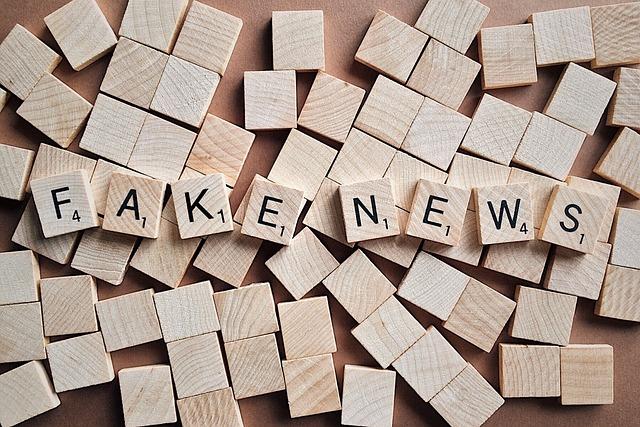
Is it any wonder Trump calls legacy media “fake news”?

Returning to the ABC interview with Trump, Moran, or perhaps better, “Moron,” kept trying to press Trump on what Trump called a “stupid question.”  Concerning Secretary of Defense Pete Hegseth, Moran asked Trump, “Did you take him to the woodshed?”  Moran was speaking to the use of the encrypted messaging Signal app, deemed “best practice” for “highly targeted” government officials according to Biden-era documentation.  Even the CIA director stated, “Signal was loaded onto my computer at the CIA,” and was considered “as a permissible work use.”  It should be noted this app was deemed most appropriate by the Biden administration — after he lost the 2024 election.  What a coincidence.

Concerning Moran’s question about the “woodshed,” Trump said, “I had a good talk with him, and whatever I said, I probably wouldn’t be inclined to tell you, but we had a good talk.”

Pressing further, as any good propagandist would, Moran stated, “You have 100% confidence in Pete Hegseth.”  Trump answered,

I don’t have 100% confidence in anything, okay?  Anything.  Do I have 100% — it’s a stupid question.

[snip]

Only a liar would have 100% confidence.  I don’t have 100% confidence that we’re gonna finish this interview.

Speaking of stupid questions, Moran asked Trump about Trump’s decision to revoke security clearances for former members of Biden’s administration, Joe Biden, Kamala Harris, Hillary Clinton, and a host of others.  Instead of asking why these people had their security clearances revoked, a better question to ask is, “Why would anyone be allowed to keep a security clearance, who is no longer serving in a government position that requires a security clearance?”  People interested in keeping security clearances after their position has ended, should be questioned as to whether they are planning to sell information, or find out things for insider trading, like the former CIA Director of the Counterterrorist Center, who joined the International Energy Group Burisma, which formerly employed Hunter Biden, with Biden’s own State Department calling the organization “corrupt.”

Who would even question the removal of no longer needed security clearances, other than someone who wants U.S. secret information, like China?  So, for whom does Moran work?

Moran even badgered Trump about the deportation of illegal alien criminal gangs stating, “Under our law, every person who gets deported gets a hearing.”  Trump responded, “when Biden allowed 21 million people to flow into a country… did we give them a hearing when they came in?”

Trump is correct.  A vetting is required for legal immigration.  These people are illegal immigrants.  Trump put in place an Executive Order classifying certain groups as Foreign Terrorist Organizations.  Secretary of State Marco Rubio, following the president’s order and following the law, did the research and posted on the Federal Register which groups were Foreign Terrorist Organizations.  By law, at that point, they are subject to immediate deportation.  Considering the crimes that some of these people have committed, deportation seems very lenient.

Moran asked Trump if he trusted Vladimir Putin.  Trump responded, “I don’t trust you.  Look at you.  You’re so happy to do the interview, and then you start hitting me with these fake questions.”

And then there were many more “stupid” questions causing Trump to say to Moran “you are not being very nice.”

Why does ABC News have access to the president?

The reason that President Trump acts the way he does is that unprecedented times call for unprecedented actions.

Unfortunately, instead of covering the truth, legacy media is selling out our country and democracy — for a buck.


๐ŸŽญ ๐–๐Ÿ‘๐ ๐““๐“๐“˜๐“›๐“จ ๐“—๐“พ๐“ถ๐“ธ๐“ป, ๐“œ๐“พ๐“ผ๐“ฒ๐“ฌ, ๐“๐“ป๐“ฝ, ๐“ž๐“Ÿ๐“”๐“ ๐“ฃ๐“—๐“ก๐“”๐“๐““


Welcome to 

The ๐–๐Ÿ‘๐ ๐““๐“๐“˜๐“›๐“จ ๐“—๐“พ๐“ถ๐“ธ๐“ป, ๐“œ๐“พ๐“ผ๐“ฒ๐“ฌ, ๐“๐“ป๐“ฝ, ๐“ž๐“Ÿ๐“”๐“ ๐“ฃ๐“—๐“ก๐“”๐“๐““ 

Here’s a place to share cartoons, jokes, music, art, nature, 
man-made wonders, and whatever else you can think of. 

No politics or divisive posts on this thread. 

This feature will appear every day at 1pm mountain time. 


Discrimination by Design: The DEI Logic No One Wants to Face

Discrimination by Design: The DEI Logic No One Wants to Face

By Theodore Dalrymple 


One of the things that most surprises me about proponents of diversity, equity, and inclusion as a guide to policy, especially in universities where intelligent people are supposed to abound, is that positive discrimination, which is an inevitable corollary of DEI, entails negative discrimination. You cannot, after all, discriminate in favour of some without discriminating against others.

This is not a very difficult thought: on the contrary, it is obvious. The question then becomes: Why do so many people seem to take no notice of it when they claim to be offended by discrimination against people of any kind?

It is a good idea, when arguing against a policy with which you disagree, to think of the best that can be said for it. In the case of DEI, it would go something like the following.

In an unequal society, some young people start off with many more advantages than others, and disadvantaged young people are often congregated together in recognizable social groups. If a young person from such a group nevertheless does well at school, though not as well as someone from a more advantaged group, it is reasonable to suppose that has not only as much ability as the advantaged person but has shown more grit in overcoming his disadvantages. Therefore, he is to be preferred as a candidate where there is a competition for limited places, and in preferring him to the more advantaged candidate, moreover, the disadvantaged group from which he comes will be aided to rise to parity with the more advantaged group.

This all presupposes a theory of history, society, and human psychology that is simplistic to the point of coarseness, but it has a certain demagogic appeal. It appeals most, however, to a certain class that has grown ever larger: that is to say, the administrative bureaucratic class. It gives it the right, and the duty, to develop and impose endless procedures.

It is no coincidence, as Marxists used to say, that this policy was followed, if not invented, by the Soviets. A “correct” social background, which is to say a proletarian or peasant background, became necessary for admission to institutions of higher learning which, combined with a vast expansion in numbers and the imposition of strict ideological uniformity, soon led to a steep decline in quality. Only for those studies of direct application to the development of weaponry were criteria of strictly proven ability and achievement adhered to. Considerations of social—or more accurately, political—engineering were otherwise paramount.

Now it so happens that I was reading recently the two books about the Soviet Union in the 1930s by the French Nobel-prize winning author, Andrรฉ Gide: “Return From The USSR” and “Revisions to My Return from the USSR,” dating from 1936 and 1937 respectively.

Gide, like most French intellectuals, was a sympathizer, one might almost say an unthinking sympathizer, with the Soviet Union, but even though he was treated like royalty when he went there in 1936, he returned something of a critic, particularly of the lack of intellectual freedom. His first book was severely criticized by other writers and intellectuals almost as an act of treason to the cause, to which he replied, much better informed, in his second book, in which he criticized the Soviet Union much more severely—and accurately.

His description of Soviet bureaucracy is of particular interest in our time, bearing in mind the huge, even grotesque, overgrowth of bureaucracy in universities (but not only in universities). Here is what Gide wrote:

“Some claim that Stalin himself has become a slave to this bureaucracy, initially created to manage, then to dominate. There is nothing more difficult to get rid of than a sinecure, or than good-for-nothings of no personal worth. Already in 1929, Ordzhonikidze [the prominent Soviet politician and old friend of Stalin, like him a Georgian, who was either murdered or committed suicide in the year of Gide’s second book] was startled by this ‘colossal number of useless people’ who wish to know nothing of real socialism, and work only to prevent is success. ‘People who don’t know what to do and of whom no one has any need are put into the administration,’ said Ordzhonikidze. But the more incapable they are, the more Stalin can count on their conformist devotion; for they owe their good situation only to his favour. They are, it goes without saying, warm supporters of the regime. In serving Stalin’s good fortune, they are serving their own.”

If we replace “who wish to know nothing of real socialism, and work only to prevent its success” with “who wish to know nothing of independent scholarship, and work only to prevent its being carried out,” and replace Stalin with the university president or trustees, the analogy is very close.

In 1936, Pravda itself, not exactly a stern critic of the Soviet system, alluded to the fact that 14 percent of the employees of mechanized farms were bureaucrats (better paid than farm workers). By the standards of modern American universities, this was astonishingly efficient. Stanford, for example, has 17,529 students but 18,369 administrative staff, or about eight administrators for every member of the teaching staff. Ordzhonikidze would be turning in his grave, but Stalin would be whooping with delight. He always believed that the West was doomed, and here is proof.

What is true of universities is true of other institutions, particularly, but not only, state or public ones. This does not mean that all the good-for-nothings are personally dishonest. The human mind is capable of persuading itself of anything and then of forgetting that such persuasion was ever needed. I have myself listened to senior bureaucrats say that they are passionately committed to such-and-such a department, and then, the following week, argue with equal conviction for the imperative need to shut it down forthwith. Their intellectual convictions derive from the orders they receive from on high and are required to carry out, rationalizing them at once as they carry them out so that they do not have to feel bad about themselves.

Man is not so much the rational animal, as the rationalizing one.

First published in the Epoch Times


Good Intentions: Bad Results

Good Intentions: Bad Results

AP Photo/J. Scott Applewhite

Government makes most things worse.

Lyndon Johnson launched a War on Poverty; Richard Nixon a War on Drugs.

Both had good intentions, but their "wars" do more harm than good.

I believed the War on Poverty would lift people out of poverty.

At the time I was a naive Princeton student who believed my professors when they said, "It's wrong that in this rich country, people are poor, so government should fix that. Targeted programs will lift people out of poverty."

Have they?

We've spent more than $30 trillion so far. Some people were helped.

When welfare began, the poverty rate dropped ... dropped for seven years.

But then progress stopped. Since the 1970s, the number of Americans living in poverty rose and fell, but the initial success hasn't repeated.

That's because the handouts encourage people to become dependent. Welfare even discouraged marriage because a single parent gets a bigger check.

As a result, welfare created something never seen before in America: a permanent "underclass" -- generations raised without fathers, generations who stay poor and passive.

It's happened because people "are basically told, 'you can't take care of yourself'... It doesn't encourage them to be ambitious," says Yaron Brook, head of the Ayn Rand Institute, in my new video.

"Once you start paying people not to work ... they don't expect to take responsibility for their own lives."

The War on Drugs also had unintended consequences.

"When you launch a war on drugs ... you create huge profits for cartels because there's so much at stake," says Brook.

That led to more illegal drugs, and "massive corruption among police."

I ask, just "let everybody take whatever poison they want?"

"Yes," says Brook, echoing Ayn Rand, who said it is "the responsibility of the individual not to take the kind of things ... which destroy his mind."

Brook and I disagree about how to protect the environment. It's one area where I think we do need government. Our air and water are cleaner now because the Environmental Protection Agency set some rules.

Brook says we could have accomplished that without the EPA, if individuals filed lawsuits.

"You pollute in some way that is clearly making me sick, we have legal redress to deal with that ... But once you give it into the hands of bureaucrats ... they want to regulate and control every activity that we're engaged in."

He cites California's wildfires and water shortages as an example of "government gone wild." (That's also the title of my new book.)

Government has grown wildly. Even with DOGE cuts, it will still grow. It always does.

The EPA once imposed useful rules, but regulators always want more. Today, EPA should stand for Enough Protection Already!

"Northern California has plenty of water," says Brook. "In the old days, they used to move massive amounts of water from the north to south. ... These days, there's still a lot of water available in the north that cannot be moved south because of some tiny little fish."

That's the delta smelt, protected by the Endangered Species Act.

"In the name of some little fish, they're willing to shut down huge improvements to human life."

If it's not the smelt, it's an endangered plant. Power companies wanted to install fire-resistant metal poles.

"They can't widen fire lanes because there's some plant that they had to uproot,"

"They were shut down by environmentalists because of this crazy plant ... (also) they can't widen fire lanes. The consequence, of course, is the burning down of thousands of homes. ... When you place the value of a plant above the value of human life, that leads to destruction of human life."

Brook's point is not that people shouldn't try to help the poor, the addicted, and the planet; it's that individuals do it better than government ever will.

"All these government programs that regulate and control, they institutionalize mediocrity at best."


Secretary of State Marco Rubio Discusses Status of Globe with Geopolitical Consequence


I’m not sure why they choose Hannity but given that Secretary of State Marco Rubio is now also the interim National Security Advisor, it’s worth quickly visiting his perspectives in this new dual role. WATCH (prompted):


Springtime for Trump-Hitler

Springtime for Trump-Hitler

By Abe Greenwald for Commentary 


Here we go again. Another Donald-Trump-as-dictator media cycle is upon us. Last week, Larry David wrote a satirical piece for the New York Timescomparing his fellow comic Bill Maher’s dinner with Trump to dining with, and being charmed by, Adolf Hitler. Liberal law professor and Democratic adviser Laurence Tribe told CNN’s Wolf Blitzer that Trump’s crackdown on Harvard  is redolent of tactics used by Hitler, Viktor Orban, and Recep Tayyip ErdoฤŸan. At the Guardian, Simon Tisdall compares Trump to Saddam Hussein, Slobodan Milosevic, Bashar al-Assad, Muammar Gaddafi, and Vladimir Putin and says of Trump, “In key respects, he’s worse.”  


Yes, Trump, just like Hitler, is trying to use the federal purse strings, immigration enforcement, and tax law to rein in or deport genocidal anti-Semites. Just like Putin and Milosevic, Trump is putting months of effort into an idealistic attempt at ending a war of invasion. And just like Assad, he’s negotiating (pointlessly) to get Iran to give up its nuclear ambitions. 


But, of course, Trump is worse than all these men combined because, in Tisdall’s worlds, of his greater “willingness and capacity to harm the world’s poorest and most vulnerable, wreak global economic mayhem and threaten nuclear annihilation.” 


In my last newsletter, I wrote that Trump-watching can get kind of boring. Let it be known, however, that watching Trump’s enemies lose their mind never gets old. 


It’s interesting to watch because hypocrisy is always riveting. People who sat on their hands (at best) for a year and a half while a wave of exterminationist terror-support broke across the U.S. are now bracing themselves for a Nazi takeover. Those who ignored or defended the Biden administration’s campaign of partisan vengeance are now warning of authoritarianism. The same commentariat that watched Joe Biden gift Afghanistan to the Taliban, invite Putin’s invasion of Ukraine, and enrich Iran in the run-up to October 7 are suddenly losing it over global instability. We all enjoy the hypocrite’s moment of unmasking.    


The Trump-Hitler talk is also fascinating because it raises an important question: Why can’t Trump’s liberal critics stick to fighting him on legitimate ground? It’s something his conservative detractors do all the time. There’s so much to work with. You can argue that Trump is flirting with unconstitutional action, emboldening bad actors abroad, weakening ties with our allies, causing global economic tumult, weaponizing his own Justice Department, and disrupting the necessary functions of the federal government—all without comparing him to history’s greatest mass murderers. 


Here’s the answer: They can’t critique Trump’s policies and actions strictly on the factual details because, for them, the very fact of Trump’s being in the White House, yet again, casts a shadow so vast that all the particulars of his presidency become lost in the darkness. 


Stop calling it Trump Derangement Syndrome. That’s too vague and blandly reminiscent of less pathological episodes of liberal pathology. This is more consequential. What we’re actually looking at deserves the old psychoanalytic diagnosis of “Hysterical Blindness.” The people who can’t see in Trump anything but a reincarnated monster are still suffering from the unresolved trauma caused by finding out that everyone in the country didn’t agree with them back in 2016, when Trump was first elected. That was the equivalent of being told that world as they knew it was an illusion. A trauma that massive—it’s unlikely they’ll ever get over it.


As with many psychoanalytic conditions, the Hysterical Blindness of the Trump-traumatized is self-sustaining. Every time the Trump-Hitler chorus speaks up, they give Trump a boost he didn’t know he needed. They are made foolish. They go too far in their countermeasures, and he benefits by comparison. The man they call worse than Hitler ends up looking less unhinged than they do. And that irony is the final compelling element of the whole spectacle. Compare Trump to the founder of Nazism and your name is forever linked with minimizing the enormity of the Holocaust. Trump, for his part, just moves on.

The Racial Scaremongering Isn't Doing the Job It Used to for the Democrats


One of the most constantly used and powerful tools of the Democrat Party was fear. 

For decades, the media assisted in carrying out wild accusations and allegations of overt and unapologetic racism coming from the Republican Party, no matter how silly it was. A great example being Joe Biden's claim to the NAACP that Republicans were going to put "y'all back in chains." 

Thanks to the legacy media, so many of these things would just assault the minds of Americans, including the black community, who were always told unmitigated racism dressed in a white hood was waiting for them around every corner. Hatred for the Republican Party among the black community was pretty evident, especially in the exit polls. 

But in the recent past, many black people have been asking what it is the Democrats are doing to help. Time after time, they put their trust in Democrat politicians, and neighborhoods that needed action the most were still awful years later. Then Donald Trump came along, and those questions got louder. Trump actually did improve their lives, and not with free handouts like the Democrats like to rely on, but with opportunities. 

Fast-forward to today, and black Republican voters are a bit more common than they used to be. What's more, they're openly telling CNN that despite all the fearmongering the press is doing, they have no regrets. 

In a recent interview with Van Jones, black Trump voters sang the president's praises even as Van Jones was attempting to get them to speak negatively about him using the left's favorite weapon, race-based fearmongering. 

“Donald Trump’s team went in, they took down Harriet Tubman’s pictures for a quick minute,” Jones said. “They’re trying to, like, knock out the black museums. What does that have to do with the price of eggs, and how does that impact you?”

“In some ways, it’s a slap in the face. In other ways, I don’t care,” said voter Seth Dawkins. “I care more about how I’m going to take care of my children.”


Dawkins laid out something very plain: that he doesn't care if Trump does things that make him mad personally (in fact, Dawkins liked the fact that Trump is an "a**hole"), all that matters is that he's better off under Trump than he was under Democrats. Results are what's shaping his opinion, not perceived fears. 

And it's not like the left still isn't trying to scare people. 

Here was Amber Ruffin, a woman who I'm told is a comedian. While on "The View," she poured out that leftist fearmongering Kool-Aid like it was going bad. 

"I’m Black; I’m terrified. I’m scared for my trans friends. People we know and love—our neighbors—are being disappeared. That was the goal, and he did it."

Ruffin went on to say she feels less welcome in her "home" than she did under Biden and that the feeling of fear and unease was the point. Trump making people feel like they're in danger, and could be "disappeared" at any moment, was what he wanted, according to Ruffin. What's more, as she spoke, you could hear the women of "The View" validating her the entire time. 


But who believes this anymore? 

Too many, to be sure, but let's be absolutely real; even the people who say they believe this stuff don't. If they did, they wouldn't be so out in the open saying things like this so comfortably. Moreover, as they continue to say these things, more and more people like Dawkins tune out. Many in the black community are just as happy to remove illegal aliens and have an economic turnaround as white people were. 

I think we're really seeing a change-up here. While I think the black community will still predominantly lean Democrat for a few more election cycles, something is going to break when all the fears the Democrats attempted to force on the black community never come to pass, and the Republicans continue to show results. 

And when that happens, the black 


Equity, Racial Equality, and Wealth Redistribution

Equity, Racial Equality, and Wealth Redistribution


Wanjiru Njoya For Mises.org


EquityLudwig von Mises warned that socialists are constantly changing their terminology to disguise their schemes, all of which are designed to undermine individual liberty and private property. Regardless of the terminology they use, their ultimate goal is to vest as much property as possible in the hands of the state or—failing that—to grant the state increasing power to assign and control private property. One major way in which the state controls private property is through wealth redistribution. The Marxist “permanent revolution” is therefore mounted through various forms of wealth redistribution. The idea of the “permanent revolution” is that all revolutions that lead towards “the dictatorship of the proletariat” are connected, each building on the gains made by the previous revolution. In “The Permanent Revolution,” Trotsky wrote:

For an indefinitely long time and in constant internal struggle, all social relations undergo transformation. Society keeps on changing its skin. Each stage of transformation stems directly from the preceding. This process necessarily retains a political character, that is, it develops through collisions between various groups in the society which is in transformation. Outbreaks of civil war and foreign wars alternate with periods of ‘peaceful’ reform. Revolutions in economy, technique, science, the family, morals and everyday life develop in complex reciprocal action and do not allow society to achieve equilibrium. Therein lies the permanent character of the socialist revolution as such.

The notion of “equity,” which is familiar to many as a component of “diversity, equity and inclusiveness,” should be seen in that light—it is merely the latest terminology used to justify wealth redistribution and thereby advance the permanent revolution. Equity, as used in the context of DEI, expresses the idea of “substantive equality,” which states that formal equality or equality before the law does not suffice. The argument is that equality should be “real”—people should actually be equal in reality, not just equal in theory.

The “substantive equality” arguments used to justify DEI have provided the rationale for promoting equal outcomes, which, in turn, requires the redistribution of wealth. Wealth redistribution is a goal that appeals to egalitarians because it expresses ideals to which egalitarians are already committed. Even though they may not consider themselves “socialists,” because they consider property rights to be worth defending at least to some extent, they nevertheless support the idea that outcomes should be equalized as part of substantive equality. In this way, under various guises, the ideal of “equality” has played a central role in advancing the Marxist permanent revolution. A good example of how wealth redistribution undermines property rights by adopting the mantle of equality can be seen in the Radical Republican rhetoric of the post-bellum United States.

Confiscation of Confederate Property 

The confiscation of private property under the Confiscation Act of 1861 was not originally justified in the language of wealth redistribution. Rather, it was explicitly framed as part of Lincoln’s war effort. Its goal was stated as: “to allow the federal government to seize property, including slave property, being used to support the Confederate rebellion.” Further laws were later enacted during the war, granting power to “seize the property of rebels”:

SEC. 5. And be it further enacted, That, to insure the speedy termination of the present rebellion, it shall be the duty of the President of the United States to cause the seizure of all the estate and property, money, stocks, credits, and effects of the persons hereinafter named in this section, and to apply and use the same and the proceeds thereof for the support of the army of the United States…

The “persons hereinafter named” included Confederate officers as well as anyone who “shall hereafter assist and give aid and comfort to such rebellion.” Court proceedings were to be instituted for due process, to ensure that “said property, whether real or personal, shall be found to have belonged to a person engaged in rebellion, or who has given aid or comfort thereto.” If so, the property was to be “condemned as enemies’ property and become the property of the United States.” After the war, this power to seize the property of rebels gradually lost its connection to the war or to punishing the rebellion, and became increasingly redistributive in its aims and rhetoric.

In his article “Forty Acres and Mule,” Walter Fleming explains how the power to seize enemy property was at first understood as a form of “confiscation and division of property” to punish those who had participated in the rebellion. Thaddeus Stevens—the leading proponent of confiscating Confederate property—stated that the aim was “to pay the expenses of the war, to punish the Confederates, and to provide for ‘loyalists’ and for the blacks. The white people of the South, Steven said in 1863, were entitled to no rights of person or property.”

Over time, the idea that the confiscated property should be given to the freed slaves assumed increasing political importance. The Freedmen’s Bureau was established to hold property confiscated from the “rebels” and provide support for the freedmen, through such measures as parceling out land and providing them with regular food supplies. The political rhetoric became more blatantly redistributionist, emphasizing the desire to seize property from the vanquished foe and award it to the freed slaves. Fleming notes that:

[Thaddeus] Stevens, in a speech to his constituents at Lancaster, Pennsylvania, in the summer of 1865, declared that each negro family ought to receive forty acres of land, and that sufficient land should be secured by confiscating the estates of those Confederates who had owned over two hundred acres, and by seizing the lands belonging the Southern States.

The Radical Republicans appear to have lost all interest in whether the property owners “gave aid and comfort” to the rebels and were soon more concerned with how much property white Southerners owned. The goal was to split larger farms into smaller parcels to facilitate redistribution. Stevens reiterated this view in Congress, and as Fleming observes, “as time went on he was more and more strongly in favor of it.” After displacing Andrew Johnson, the Radical Republican faction became the most influential group in the Republican Party, all of whom were in favor of “confiscation from whites and provision for the blacks.” By this point, the policy was explicitly one of wealth redistribution—confiscating property from whites to give to blacks—disguised as justice for freed slaves. This was not expressed as a general desire to give federal property to freed slaves, but was specifically aimed at seizing private property owned by Confederate sympathizers for redistribution on the same pattern as the precedent set in 1865. Fleming notes that,

The barns, storehouses, offices, dwellings, public buildings, court-houses, hospitals, prisons, armories, arsenals, ironworks, boats, mills, factories, and all kinds of supplies used by or intended for the use of the Confederacy were seized and, for the most part, after June 2d, 1865, were given for the use of the blacks. Church and school buildings belonging to the whites were given to the missionaries for the negroes. Property in the hands of the Bureau was sold or rented, and the proceeds applied to the support of the blacks or given directly to them. Naturally, the negroes thought that they were in permanent possession, and the policy of the Bureau encouraged them in this belief.

The cautionary tale to derive from this history lies in the conflict over property rights that soon erupted. Fleming explains how disputes over property title soon descended into violence and racial strife, as the “rebels”—who were the vast majority of white Southerners—secured their titles and the blacks, to whom this property had been promised, felt that they had been cheated. The effects of this disastrous attempt to achieve justice through expropriation reverberate to this day.