Sunday, April 13, 2025

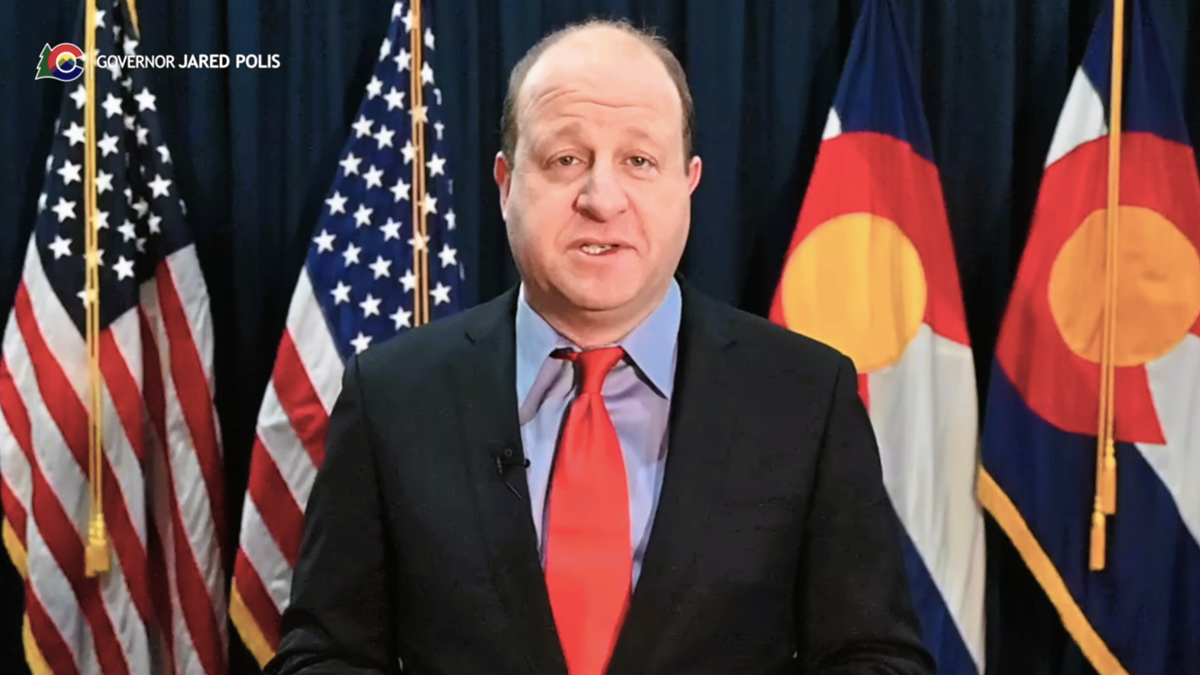
Colorado governor signs controversial gun control bill


(The Center Square) – Colorado Gov. Jared Polis Thursday signed a controversial gun control bill that requires a permit and safety training to buy firearms that accept detachable magazines.

Senate Bill 25-003 was originally a ban on the sale or purchase of most semi-automatic rifles or shotguns that take detachable magazines. But it was amended to allow for purchases if the buyer gets a “firearms safety course eligibility card” from their sheriff department and completes a firearm education course.

The bill also prohibits the purchase and sale of all rapid fire conversion devices, like bump stocks and binary triggers.

“I am focused on improving public safety and making Colorado one of the top 10 safest states in the country,” the Democratic governor said in a statement. “This bill ensures that our Second Amendment rights are protected and that Coloradans can continue to purchase the gun of their choice for sport, hunting, self-defense or home defense. I am confident that this bill contributes to improving public safety in our state by helping to ensure an educated and trained gun owner community, including gun safety and safe storage.”

Polis said the law isn’t a ban.

“High-capacity magazines are what put the ‘mass’ into mass shootings, which is why over a decade ago Colorado Democrats passed legislation to prohibit magazines that hold over 15 rounds of ammunition,” bill sponsor Sen. Tom Sullivan, D-Centennial, whose son was killed in the 2012 Aurora theater shooting, said a news release Thursday. “This legislation is another in the list of policies I have worked on to develop evidence-based solutions and reduce gun violence of all types. The people of Colorado have mandated that we do something about the public health crisis that is gun violence, so that’s what we’re going to do.”

Rep. Meg Froelich, D-Englewood, who also sponsored SB 25-003, said the law requires purchasers  to complete “a rigorous safety training course and acquire a permit to purchase the most deadly weapons on the market to ensure that they are not a danger to themselves or our communities.”

Republicans in the legislature and the California State Shooting Association had urged Polis to veto SB 25-003. The association Thursday condemned Polis’ decision to sign the bill and said the new law represents “a direct assault on the Second Amendment rights of law-abiding Coloradans.”

The law “imposes unprecedented restrictions on the purchase of semi-automatic firearms through a burdensome permit-to-purchase scheme,” the association said in a statement sent to The Center Square.

The California State Shooting Association said Polis was aligning with anti-gun radicals over the will of the people.

“The Colorado State Shooting Association is actively exploring every legal option to challenge this unconstitutional law,” CSSA President Ray Elliott said. “Our legal team is preparing to contest Senate Bill 3, and we are committed to pursuing justice through every available avenue.”

Additionally, the association will work to elect pro-Second Amendment legislators in 2026 to replace those who voted for SB 25-003, CSSA Executive Director Huey Laugesen said.

https://www.thecentersquare.com/colorado/article_4b51ac27-35fe-4823-bfef-7032ca3fdd04.html

Wrong, Colonel, the Concerns Are Yours!


If you grow up in a military family, like I did, you don't just learn the rank structure or how to fold a flag. You grow up with an inherent respect for duty, service, and the rules that govern both. One of the biggest rules? Keep your politics to yourself when you're in uniform.

So when the story broke this week about the 821st Space Base Group commander at Pituffik Space Base in Greenland being relieved of duty after a snarky, partisan email targeting U.S. Vice President JD Vance, I wasn’t surprised. I was disgusted.

Colonel Susan Meyers, in a wildly inappropriate and insubordinate move, decided to flex her self-righteousness in a private email chain following Vice President Vance's visit to the base. Her message, which became public, aimed at the Vice President in a tone that can only be described as condescending, partisan, and unbecoming of an officer in the United States Armed Forces.

Let’s set the record straight: Vice President Vance was on an official visit. He represented the elected government of the United States and, in his executive role, engaged in strategic oversight of critical military assets abroad. Colonel Meyers’ job wasn’t to editorialize or belittle him behind his back. Her job was to provide support, transparency, and respect to a duly elected representative of the American people.

In the military, we have a clear chain of command. Civilians run the show, and our armed forces are tasked with carrying out the lawful orders of that civilian leadership. That means whether you personally voted for the sitting administration or not, your job is to serve them—faithfully, apolitically, and without editorial comment.

Colonel Meyers apparently missed that memo.

She seems to have believed that she could carve out a little fiefdom on the frozen tundra of Greenland and rule it with her own ideological compass. Unfortunately for her, that’s not how the U.S. military works. And lucky for her, she got off with just a reassignment. She could have been staring down a court-martial if she had pulled that stunt under other circumstances or during wartime.

This isn’t just about one rogue officer with a superiority complex. This is about preserving the integrity of the most respected institution in American life: our military. Americans still trust the armed forces, in large part, because they have traditionally kept themselves above the political fray. When that trust is violated by overt partisanship from within, it damages more than just the career of one officer. It threatens the entire institution.

The Trump administration, especially those advising on military readiness and strategic global presence, understands the enormous strategic value of Greenland. With China sniffing around the Arctic and Russia continuing its saber-rattling, Greenland isn’t some remote outpost to be ignored. It is a critical asset in the new geopolitical landscape.

Denmark, admirable though its intentions may be, simply doesn't have the resources or strategic will to develop the island. The United States does. Under the leadership of the current administration, a sober, serious effort is underway to increase our presence there, improve the infrastructure, and work alongside the Greenlandic people to help them prosper.

Colonel Meyers’ email not only betrayed a disdain for Vice President Vance, it implicitly mocked the United States' larger vision for Greenland's future. A vision where the people of Greenland benefit from U.S. investment and cooperation. A vision where the island is not abandoned to neglect but brought into the fold of 21st-century development.

Instead of recognizing that opportunity and supporting her chain of command, she chose to indulge her inner Mean Girls club and shoot off a message dripping with "know-it-all" snark. It was petty. It was insubordinate. And it was a disgrace to the uniform she wears.

That uniform is the greatest on the face of the earth. It represents more than just rank or position. It represents the blood, sweat, and sacrifice of generations who have died to keep us free. It should never be worn lightly, nor should it be politicized by those entrusted with its honor.

Colonel Meyers doesn’t work for Joe Biden. Or Lloyd Austin. Or whomever her political crush may be. She works for the United States of America. Her Commander-in-Chief is the President. Her duty is to the Constitution. And her loyalty, at all times, must be to the mission—not her ideology.

She should be a cautionary tale to every officer, enlisted member, or Pentagon pencil-pusher who thinks they can toe the line of partisanship without consequence. The American people deserve a military that reflects their values and carries out their will—not one that tries to undermine it from within.

Do you want to make political commentary? Great. Take off the uniform, resign your commission, and join the ranks of everyday civilians who have every right to say what they think.

But if you wear that uniform, you don't get to editorialize, tweet, or email your snide political observations. You get to serve.

The military isn't a social club. It's not an influencer platform. It's a calling. A sacred trust. And when that trust is broken, the consequences should be swift and serious.

Colonel Meyers got lucky. She should've been court-martialed.

America deserves better. And thankfully, this time, the system worked to deliver it.


And we Know, On the Fringe, and more- April 13


The Bodycam Presidency


Michigan governor and would-be 2028 presidential hopeful Gretchen Whitmer angered fellow Democrats on April 9th when she traveled to the White House as scheduled to meet privately with President Trump. The presumptive purpose for the meeting was to discuss tariffs and other Michigan-related matters.

That’s not how it turned out, however. It wasn’t a private meeting at all. Instead, Whitmer was forced to the periphery of the Oval Office as the president signed executive orders and presided over one of his now routine media scrums. While he did squeeze some conversation in with Whitmer, along with some gracious praise of her, you don’t have to be a body language expert to sense her obvious discomfort with the whole situation. She knew how this sort of impromptu photo op would play to her base.

In his first term, President Trump might have invited someone like Whitmer to his office and actually had that private meeting, allowing her to leave and later reframe her own version of it all for the media, setting the narrative regardless of Trump’s version of events.

If nothing else, Trump has proven to be a quick study. Since 2016, he has gone from novice outsider to one of the most skilled politicians America has seen in a very long time. So much so that he’s playing the game at a level no one has imagined.

Trump knows what life is like when lived in a fishbowl. He’s used to it. He’s comfortable with it. He thrives on it. But if he made any mistakes in his first term, it was trusting some of the wrong people and, perhaps more importantly, trusting existing processes. He underestimated just how corrupt the system is, and in due course, he exposed it.

The price he paid for this was to have to endure the damaging Charlottesville “fine people” hoax, the “Russia Russia” hoax, two politically contrived impeachments, among other forms of political sabotage. All of which were designed to distract and derail his presidency.

In 2025, solidly into his second term, it’s clear that Trump has decided to change the process. A big part of this is to bring transparency to the Oval Office that has never been seen. Call it the “bodycam presidency.”

The Lessons of Bodycams

In recent years, there has been a push among criminal justice advocacy organizations to make police more accountable by mandating that they wear body cameras while on duty.  Defense attorneys felt that such bodycam footage would help their cases where they had hoped to catch police red-handed in excessive use of force, or in violation of police procedure and the law.

According to the National Institute of Justice, at least one-third of municipal police departments require body-worn cameras on their police officers. While there are numerous studies on their effectiveness to various results, the consensus is that police bodycams improve accountability for both officer and suspect. More often, rather than catching police in the act of some impropriety, the cameras have proven to be a valuable tool in law enforcement giving prosecutors better evidence at trial.

Transparency Protects Some, Exposes Others

These same dynamics apply to the Trump transparency strategy. The more the president conducts business in front of the media, he’s not only making himself more accountable, but he’s doing the same with everyone he meets.  As Whitmer seemed to make clear, this can cause a certain level of discomfort for those not used to this level of transparency.

But Trump doesn’t limit such treatment only to political rivals or Democrats. The day before Trump met with Whitmer, Israeli prime minister Benjamin Netanyahu received the same treatment in his own meeting with Trump.

While it’s obvious the two men share a very close political relationship, Trump still appeared to spring new information on Netanyahu in full view of the cameras at the White House. He appeared to tell the media and Netanyahu almost simultaneously that the U.S. would keep certain tariffs in place on Israel.

In February, when the two men met, Trump seemed to visibly surprise Netanyahu with his own vision for peace in Gaza and U.S. involvement.

As much as Trump criticizes the media and frames them as “fake news,” he uses them more skillfully than most. He’s mastered the art of negotiating through the media, and compelling the media to cover things they normally would rather bury. He’s used his accessibility to the media to take away their own plausible deniability. Media “fact checkers” can try to twist the facts as much as they want, but with Trump Presidency 2.0 there’s almost always a video record of what he actually said or did. For the people who meet with him, he’s practically removed the opportunity for those who might try to recharacterize what they talked about, or what Trump may have said to them.

In conducting the vast majority of presidential business under lights and in front of cameras, it’s tempting to conclude that it’s just Trump being the ultimate showman. But the strategic advantage this gives him is that he’s creating a verifiable, undeniable public record on certain matters that simply cannot be disputed at some later date.

The strategic objective appears to be to protect himself, his administration, and his agenda, while possibly exposing anyone who might dare to reframe their interactions with him later.

Like those police who wear bodycams, the president knows that through increased transparency he can better minimize the chances for future baseless allegations from those who might try to sink his presidency.


Kick Me!


Donald Trump is right: for decades the U.S. has been mistreated by a whole host of countries. His predecessors did not act to fix the problem.

Donald Trump has stated many times over the course of his life that the U.S. is getting “ripped off”, “cheated”, or taken advantage of. Are these claims true? And if so, why?

Let’s take a little tour around the globe and see how the U.S. is being treated by friends and foe alike.

*Trade. As President Trump has pointed out, for over 30 years, the U.S. does not enjoy fair trade. Many countries have high barriers to entry for American products, from beef to cars. China joining the World Trade Organization caused a seismic shift in which—if one were to analyze the tens of thousands of products in a typical Walmart Supercenter, maybe half or more (excluding food)—would either be made in China or have a fair percentage of components made in China. The U.S. and China have become like hockey fighters who hold onto each other with one hand and pummel each other with the other. China needs the U.S. market. Years ago, China tried in vain to develop its internal markets as a buffer to downturns in the West. Nothing can replace American buying power. The recent raise to 145 percent tariffs on Chinese goods may be a real game-changer. China may be the worst, but it is not the only country to rig its trade, currency and internal markets to its advantage.

Even Canada and Mexico use tariffs and other barriers to their favor, though NAFTA was sold as a free and fair trade agreement. That these and other countries protect their internal markets is no surprise. The big surprise is that the U.S. under multiple presidents over 40 years has never moved aggressively to also protect its people and industries. It would appear that a certain disdain of the leadership class for the working man may have made the disappearance of factories and the loss of manufacturing jobs uninteresting to the ones who could have protected American workers. One might add that the unions helped get their members such good pay and benefits that moving to much cheaper Mexico and China simply became an economic no-brainer.

While trade is the topic of the day, with Trump’s tariff threats and the stock markets trying to become Six Flags over Wall Street, it is not the only area of international interactions where the U.S. has been on the losing end for decades.

*NATO. The biggest fear after World War II was millions of Russian soldiers pouring over the border to take Western Europe. NATO was “to keep the Americans in, the Russians out and the Germans down.” The U.S. shouldered a disproportionate role in the alliance both in terms of manpower and defense spending contributions. The Europeans never spent on defense as required and were more than happy to let the U.S. protect them as they directed their money at social programs or infrastructure. The chutzpah went off scale when Germany signed a large-scale energy agreement with Russia. So here was the U.S. with a large commitment of men and equipment protecting Germany from Russia, while the two of them were making economic deals together. Donald Trump was the first president to publicly demand that European countries spend on defense as required by the treaty; through his efforts, billions of dollars have been added to defense budgets of member states. The Ukraine war and Trump’s cajoling have exposed how completely unprepared European armies are for any serious combat. They always assumed that America would save them.

*Ukraine. After Russia’s invasion, the U.S. began sending billions of dollars in weaponry to the Ukrainians. And while most people in the U.S. would probably agree that helping the Ukrainians fight off the Russians was a good move for the U.S., something strange happened. During recent money transfers, it was reported that large sums of money were being delivered to Kiev for pensions. While the U.S. might wish to send Javelin missiles, why would U.S. taxpayers be on the hook for some foreign pensions? Stories abound of weapons sent by the U.S. being sold on the black market and/or Ukrainians taking advantage of American largesse to get rich. There are claims of kickbacks to politicians, and while the U.S. has sent over $160 billion dollars in aid, Zelensky claims to have received less than $80 billion worth of goods. That should be a troubling claim.

*Other Nations. Through the work of DOGE, we have learned that billions in Medicaid and other funds have been sent to Europe and other points overseas. Nobody seems to know why Medicaid funds would end up there. When USAID was mortally wounded, countries all over the world publicly warned of disaster due to reduced U.S. funding. From Australian universities to Egyptian NGOs, cries went out about lost U.S. money. Did that funding help the U.S. or advance its interests? Or did it help a subset of actors who used those monies to advance their agenda internationally?

After World War II, the U.S. took an outsized position in world affairs. From the Marshall Plan to naval patrols of the world’s oceans, the U.S. filled roles that no other country in the world could or wanted. Over the decades, nations just took the U.S.’s positions for granted. NATO countries could spend their money on social benefits instead of tanks, because Uncle Sam had a lot of tanks in Europe. China could produce and sell to the U.S. because Americans like cheap products and didn’t care where they were produced. Canadians could have massive tariffs on U.S. dairy products and still be considered such nice neighbors. Donald Trump is the first president to not only point out imbalances that work against the U.S., but he is the first to demand that international relations be fair and benefit the U.S. Just as three presidents before him said that they would move the U.S. embassy to Jerusalem, Trump was the one to actually do it. And he did it efficiently: he converted a new consulate building into the embassy. Maybe the only expense was the official plaque outside the entrance.

Imagine one day you discover that when your house was built 50 years ago, the contractor ran the water and electricity to your neighbor: all of these years, you have been paying his utility bills. One day, you tell him that you are going to disconnect him from your systems. He is outraged. “This is how it always has been!” “How dare you change the status quo!” “Why should I pay when you can afford it?” These are the reactions of the world when confronted with higher defense spending or reciprocal tariffs to match those they place on U.S. goods. When El Al was looking for new planes, the company was reminded how much the U.S. gives Israel in aid. El Al wisely chose Boeing over Airbus planes for its fleet. Donald Trump wants the U.S. to win and he is playing hardball now. After decades of U.S. apathy in the face of unbalanced relations, the world does not know how to handle Hurricane Donald. 


🎭 𝐖𝟑𝐏 𝓓𝓐𝓘𝓛𝓨 𝓗𝓾𝓶𝓸𝓻, 𝓜𝓾𝓼𝓲𝓬, 𝓐𝓻𝓽, 𝓞𝓟𝓔𝓝 𝓣𝓗𝓡𝓔𝓐𝓓


Welcome to 

The 𝐖𝟑𝐏 𝓓𝓐𝓘𝓛𝓨 𝓗𝓾𝓶𝓸𝓻, 𝓜𝓾𝓼𝓲𝓬, 𝓐𝓻𝓽, 𝓞𝓟𝓔𝓝 𝓣𝓗𝓡𝓔𝓐𝓓 

Here’s a place to share cartoons, jokes, music, art, nature, 
man-made wonders, and whatever else you can think of. 

No politics or divisive posts on this thread. 

This feature will appear every day at 1pm mountain time. 


The Left’s Marxist Resistance


Whether they admit it or not, most Democrat leaders are Marxists, and they justify their resistance to Trump’s reforms on the basis of Marxist ideas.  They oppose renewing and expanding the Trump tax cuts because those cuts, they believe, benefit the rich over the poor.  Elizabeth Warren and others on the left support a wealth tax — the seizure of a percentage of total assets of affluent Americans.  Their proposals for taxing unrealized capital gains, for a minimum tax on the rich, and other new taxes all assume that affluent Americans have grown rich on the backs of the poor.  It is exactly what Karl Marx meant when he wrote in The Communist Manifesto of “the exploitation of the laborer ... [who] is set upon by ... the bourgeoisie, the landlord, the shopkeeper, the pawnbroker, etc.”

In theory, Marxism seizes wealth from the rich and transfers it to workers.  In reality, in every case where Marxism has actually been tried, wealth and the means to produce it are controlled by the State, not the workers.  The only winners under Marxism are those who run the State, and never in 200 years has there been a Marxist ruler who shared wealth on an equal basis with the poor or who willingly returned power to the common people.  Democrats resist Trump’s reforms because he aims to expose the lie of Marxism: the fraudulent idea that Democrat programs for the poor have done the poor any good.  Instead, they have enriched Democrat leaders themselves and the enormous cohort of bureaucrats, academics, media, and others on the left.

The left’s resistance has turned violent, with firebombing of Tesla dealerships, death threats, assassination attempts, and violent protests at several universities.  Very few Democrats have wholeheartedly condemned this violence, and some have urged the public to continue it.

Why is the left so violently opposed to Trump’s policies?  Why did Democrats immediately turn to resistance instead of cooperation?

It is because Trump is shifting the nation’s thinking away from Marxism.  Trump often speaks of restoring the American Dream, as he did on April 2 in his Rose Garden speech on tariffs.  The American Dream is an idea that goes back to our nation’s founding, with Jefferson’s defense of the rights“of life, liberty and the pursuit of happiness,” an idea echoed by Presidents Jackson, Coolidge, and Reagan.  When President Trump spoke of making America wealthy again, he was repeating a quintessential conservative idea: that America is a providential society blessed with unlimited resources and that opportunity is a God-given right.  That idea flies in the face of Marxism, and Democrats have chosen Marxism over the American Dream.

Democrats have always opposed Republican presidents.  They opposed Reagan, but even that opposition was not as heated as it is now.  When Democrats raised paddles with the word “Resist” during Trump’s address to Congress, they revealed what they were about.  They were not taking issue with particular policies that might be debated and left to compromise; they resist Trump on the more general ground that he is unapologetic in his defense of American capitalism.

Democrats claim to care about the poor, but they did not stand to honor the ordinary Americans whom Trump invited to his congressional address.  They sat with their arms folded across their chests and raised their little paddles as a sign of resistance.  It made them look silly and weak.

It’s crucial to understand that left-wing resistance is based on the fear that Trump, by his success, will actually restore our nation’s faith in free-market economics.  Democrats have been leading America on a long march toward socialism for more than a century and they refuse to give it up.  Wilson instituted the personal income tax in 1913; FDR created an alphabet soup of agencies, supposedly to assist the poor; LBJ expanded those bureaucracies, including Medicare and Medicaid; Jimmy Carter added Title IX; Clinton attempted socialized medicine and “welfare without work” until he was reined in by voters at the polls; Obama and Biden picked up where Clinton failed. 

None of those Democrats had a whole lot to say about the American Dream because that dream is based on the opportunity that capitalism affords the poor.  Democrat resistance has always failed to recognize  that capitalism is a better pathway to wealth than government handouts.  Eighteen percent of U.S. households are millionaires; the vast majority of these millionaires, somewhere between 80 and 90 percent, are self-made, and it would be hard to believe that many of them were created by the kind of government programs that Bernie Sanders and AOC believe in and want to expand.

The reality is that Democrats are Marxists because they want government to control almost all wealth.  When asked how much more the wealthy should pay, Democrats do not respond.  As a start, Elizabeth Warren’s wealth tax would collect two to three percent each year of the total wealth of those with more than $50 million in assets — but like all new taxes, the wealth tax would start small and eventually apply to everyone.  There is no limit to what Democrats would confiscate — perhaps even 100 percent of private wealth.  This is the very definition of communism.

Unlike Trump’s subtle and transparent supply-side economic policies, the left’s “economic policy,” if you can call it that, does not focus on investing more capital and producing more goods.  It consists of nothing more than stealing existing capital and distributing it to political clients in return for votes.  It is no more subtle than what Lenin did when he seized the means of production, including agricultural production and private property, and condemned the rich to poverty and starvation.

Ordinary Americans realize how dangerous and immoral Marxism is.  They recognize that taxation, beyond a basic level necessary for national defense and other essential and constitutional functions, is wrong.  They also know that new forms of taxation meant to apply only to the rich will eventually apply to themselves, as did the personal income tax, which initially applied to only a few citizens.

Why has the left so uniformly fallen into the mode of resistance?  Why is there almost no effort to negotiate or compromise?  It’s because, by way of his commitment to America First,  Trump undermines their Marxist agenda.  America First equates with individual opportunity and personal freedom — not exactly the hallmarks of communism.  Liberals dream of global egalitarianism, with Americans no better off than Ugandans and with the state controlling most of the property and capital — and Trump stands in their way.

The success of Trump’s policies will put a stop to Marxism in America, at least for a while, just as the success of Reagan’s two terms set communism back on its heels until a new generation of socialists that included Kamala Harris and Elizabeth Warren stepped up and pretended that communism could do no harm.  From the left’s point of view, Trump must not be allowed to succeed even if the country fails.  “Resist” is the byword on the left because Trump’s success, and the success of America, will put the final nail in the coffin of Marxism.


It’s Not Easy Being Green

 Climate alarmism, cloaked in pseudoscience and moral posturing, masks a deeper agenda of power, profit, and control—often at the expense of truth and prosperity.

Writing recently in The Spectator WorldJoel Kotkin noted, “The crux of the green dilemma lies in part with the realities of physics as well as geopolitics.” You can say that again. The physics part has to do with “energy density.” Fossil fuels have a very high energy density; solar and wind power, not so much. Kotkin quotes Christian Bruch, the CEO of Siemens Energy, who estimates that green energy “requires ten times as much material to work effectively, regardless of whether the wind is blowing or the sun is shining.” The ineluctable pressure of that physical fact leads to subterfuge, fantasy, and outright lying. Kotkin also quotes John F. Clauser, a Nobel Laureate in physics, who tartly observed that “Climate science has metastasized into massive shock-journalistic pseudoscience.”

Indeed. In 2019, the commentator Rob Henderson coined the phrase “luxury beliefs,” beliefs that confer social status because only the well-off can afford to entertain them. “In the past,” Henderson wrote, “upper-class Americans used to display their social status with luxury goods. Today, they do it with luxury beliefs.” A belief that we are in the midst of a “climate emergency” is one such belief. Keir Starmer, the Prime Minister of Great Britain, can pretend that the sky is falling and promise to lead Britain into the promised land of “net-zero” emissions by 2050. But he won’t have to worry about heating his house or the cost of petrol for his car.

Al Gore can lecture the world about “inconvenient truths,” but cynics note that one major effect of his proselytizing on behalf of climate extremism has been to line his own pockets with that other green stuff, US dollars, and plenty of them. In 2000, Gore had a net worth of about $1.7 million. By 2012, he had amassed a fortune of some $250 million. Nice work if you can get it.

Regular readers may recall my fondness for the philosopher Harvey Mansfield’s observation that “environmentalism is school prayer for liberals.” Professor Mansfield delivered that mot more than thirty years ago. It seemed almost quaint at the time. It was, I thought, a comparison that had the advantage of being both true (environmentalism really did seem like a religion for certain leftists) and amusing (how deliciously wicked to put a bunch of white, elite, college-educated leftists under the same rhetorical light as the Bible-thumpers they abominated). Ha, I mean to say, ha!

Well, I am not laughing now. In the intervening years, the eco-nuts went from being a lunatic fringe to being lunatics at the center of power. Forget about Al Gore (if only we could): sure, he was vice president, but that was in another country (or so it seems) and besides . . . I trust that many readers will catch the allusion to Marlowe via T. S. Eliot. Despite his former proximity to the seat of power, Al Gore is relevant these days partly as comic relief, partly as an object lesson in the cynical manipulation of public credulity for the sake of personal enrichment. The collections come early and often in the Church of Gore. Who knew that pseudoscience, wrapped in the mantle of anti-capitalist moral self-regard, could pay so well?

But I digress. The issue is not Al Gore but the institutionalization of a radical, anti-growth ideology that was, until the election of Donald Trump, at the center of American political power, abetted by yes-men in the media and the academy. They parrot the party line in exchange for a chance to bathe in the warm effluvium of self-congratulation followed by a brisk turn on the soapbox of moral denunciation.

I thought about this unedifying spectacle the other day when I chanced upon “Environmental Activists Turn Up the Rhetorical Heat,” an earlier essay by Joel Kotkin for The Orange County Register. “The green movement’s real agenda,” Kotkin points out, “is far more radical than generally presumed.” And what is the green movement’s “real agenda”? It involves, as part of its emotional fuel, what the former Sierra Club President Adam Werbach called “misanthropic nostalgia,” a “deeply felt ambivalence,” to quote another eco-crusader, “toward the human race and our presence here on planet Earth.”

If that seems extreme, consider this statement from the Schumann Distinguished Scholar at Middlebury College (cross that college off the list), i.e., Bill McKibben, author of The End of Nature and other exercises in hectoring alarmism: “Meaning has been in decline for a long time, almost since the start of civilization.” Worse luck for us! No, really, titters aside, stop and think about that statement (from McKibben’s book Enough—again, if only!): “Meaning has been in decline for a long time, almost since the start of civilization.” So what do you think, Bill? Would the world be more meaningful if we could only obliterate civilization and return to the primordial ooze? What about your tenure? What about your royalties?

Returning to some pre-civilizational state in which the world was not cluttered up with humans building things might be the long-term goal of enviro-loons like McKibben. For the immediate future, plunging the Third World deeper into poverty while shackling the engines of economic prosperity in Europe and America is enough to be getting on with.

In a way, this is old news. Consider, to take one prominent example, Paul Ehrlich’s neo-Malthusian jeremiad, The Population Bomb. Published in that annus horribilis 1968, it is a fittingly fatuous contribution to that most fatuous of years. “In the 1970s and 1980s,” Ehrlich wrote, “hundreds of millions of people will starve to death in spite of any crash programs embarked upon now. . . . We are today involved in the events leading to famine and ecocatastrophe.” Of the world’s poor, he skirls, “a minimum” (Ehrlich’s emphasis) of ten million, mostly children, will starve to death every year in the 1970s. And that’s just for starters. Those tens of millions are but “a handful” of the hundreds of millions slated for starvation because (as per Little Father Time in Jude the Obscure) “we are too menny.”

Back in the 1970s, Paul Ehrlich was warning about the coming ice age. That was before the hysteria formerly known as “global warming” (now called “climate change,” since the globe hasn’t been cooperating on the warming front for more than twenty-five years). But there are two things to note about the modus operandi of Ehrlich and his like-minded extremists. 1) Whatever their campaign du jour—overpopulation, global warming, or global cooling—it’s always too late. “Nothing can prevent a substantial increase in the world death rate,” Ehrlich intones at the beginning of The Population Bomb. Should we all just pack up and go home then? All is lost. The sky is falling. Mass starvation is imminent and unavoidable. Nothing can prevent it. Nevertheless, you don’t want to let a good crisis go to waste™. Although nothing can be done, we need to “take immediate action at home and promote immediate action worldwide.”

What sort of action? “Population control,” for starters. And this brings us to 2): No matter what the crisis, massive government intervention is always the answer. Ehrlich (albeit with shaky grammar) would have us denude the planet of humans “hopefully through changes in our value system, but by compulsion if voluntary methods fail” (my emphasis).

“By compulsion”: there, in a single phrase, you have the secret to the appeal of climate hysteria to the Left. Where’s Robespierre when you need him? The world is ending, Comrade, and although there is nothing you can do about it, a whole alphabet soup of government agencies is here to dictate what kind of car you drive, how you heat your home, where your electricity comes from, what you may eat or drink, and on and on and on.

Considered as a political movement, environmentalism may, as Harvey Mansfield said, betray a religious or cult-like aspect. But for every true believer in the religion of Gaia, there is a squadron of cynical opportunists eager to exploit the new paganism of earth-worship for decidedly secular ends. We’ve heard a lot about the radical community organizer Saul Alinsky in recent years. A fundamental rule of thumb for a paid-up Alinskyite radical is that “the issue is never the real issue.” In the present context, that means that “climate change” is largely a pretext. For some, it is a pretext for personal enrichment. Think again about Al Gore, who peddles the philosophy of Chicken Little on the one hand and has managed to rake in hundreds of millions of dollars by exploiting various government-subsidized “green energy” initiatives on the other.

Climate alarmism can also be a pretext for the redistribution of wealth on a global scale. You can never be green enough, Comrade, and climate change offers a potent pretext for the consolidation of governmental power. It is, as one wag put it, the “killer app” for extending governmental control. Like the House of the Lord, governmental control is a domicile of many mansions, from intrusive, prosperity-sapping regulation to the silencing, intimidation, dismissal, and even the legal prosecution of critics.

Indeed, in its transformation of critics into heretics, we see once again the religious or cult-like aspect of radical environmentalism. One argues with a critic. One must silence or destroy a heretic. Galileo would have understood exactly how this new Inquisition would proceed. And this brings me to one of the most frightening aspects of the gospel of climate change: its subordination of independent scientific inquiry to partisan political imperatives.

Scientific inquiry depends upon the freedom to pursue the truth wherever it leads, regardless of political ideology or vested interest. Recently, climate hysterics and their political and academic enablers have begun describing those who disagree with them about the science of climate change as “climate deniers.” The echo of “holocaust deniers” is deliberate and pernicious. A “holocaust denier” is someone who denies a historical enormity. But a so-called “climate denier” is merely someone who disputes an ideological construct masquerading as a scientific truth. The irony, of course, is that this farce should proceed in an era in which science and technology have remade the world for the benefit of mankind. Climate-change hysteria takes issue with those benefits, which is why it has also been a pretext for the systematic attack on specific industries and technologies—the coal industry, for example, or fracking.

Al Gore is just a cynical mountebank, and Paul Ehrlich and Bill McKibben are just crackpot writers. Have you heard about John Holdren? Allow us to introduce you to the man who was President Obama’s top science adviser. Holdren was Assistant to the President for Science and Technology, Director of the White House Office of Science and Technology Policy, and Co-Chair of the President’s Council of Advisors on Science and Technology. He is also an acolyte of Paul Ehrlich and the co-author, with Paul and Ann Ehrlich, of Ecoscience: Population, Resources, Environment, another doomsday scenario in which the specter of overpopulation and putative exhaustion of the world’s resources is paraded in a cornucopia of imminent apocalyptic fantasy.

Never mind that the world’s chief population problem these days is collapsing birth rates throughout the industrialized world. In another thirty or forty years, there might still be a country called Italy, for example, but precious few Italians. But according to Holdren and the Ehrlichs, “compulsory population-control laws, even including laws requiring compulsory abortion,” might be just around the corner. Such interventions, they speculate, “could be sustained under the existing Constitution if the population crisis became sufficiently severe to endanger the society.” But never fear! “If effective action,” such as voluntary sterilization, “is taken promptly against population growth, perhaps the need for the more extreme involuntary or repressive measures can be averted in most countries” (my emphasis).

For the Ehrlichs and Holdren, though, the need for such “coercive control” is far from unimaginable. (Indeed, they note that “the potential effectiveness of those least acceptable measures may be great.”) They dream about “an armed international organization, a global analogue of a police force” to provide security, and they cheerfully note that “the first step” on the road to this utopia “necessarily involves partial surrender of sovereignty to an international organization.” Other steps include “a massive campaign . . . to restore a high-quality environment in North America and to de-develop the United States.” “De-develop”? Yes, that’s right. The authors note sadly that the idea of “de-development,” like the idea of mandatory sterilization, has met with “considerable misunderstanding and resistance.” They are not, they explain, anti-technology. They just want to put an end to technology they don’t like—“giant automobiles,” for example, or “plastic wrappings” or “disposable packages and containers.” Their list is long and varied. “Environmentalism is school prayer for liberals.” It’s enough to make one indulge in a bit of selective misanthropic nostalgia.

Fortunately, Donald Trump is now president. Instead of climate hysteria, we have the cheerful exploitation of our energy resources (“drill, baby, drill”) and even a return to sanity in the matter of water pressure for your home shower, dishwasher, and washing machine. It couldn’t come soon enough.

https://amgreatness.com/2025/04/13/its-not-easy-being-green/