Saturday, March 22, 2025

As It Was Then, So It Is Now—Too Late for Conciliation

 
   March 22, 2025  in  Minding the Campus
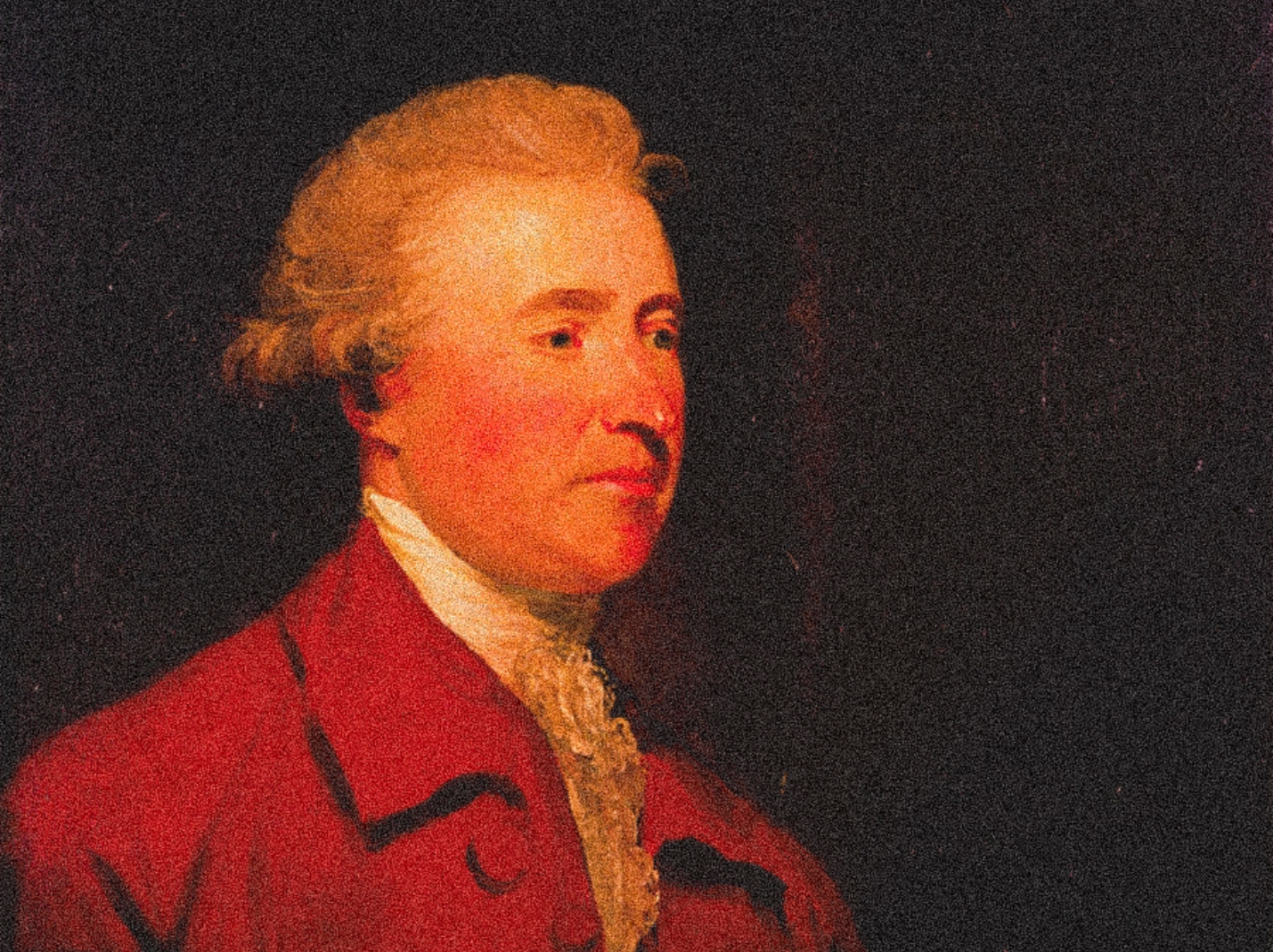
On March 22, 1775, Edmund Burke delivered one of his great Parliamentary orations on Conciliation with America. Britain and America were rushing to war, and Burke pulled out the stops to make an extraordinary peroration for peace. Britain’s current policy was worse than unjust—it was doomed to fail. Peace must be achieved, argued Burke, by a change of policy on the part of Great Britain.

Burke’s audience was the House of Commons, not America. To them, therefore, he described America’s spirit of liberty both in flattering terms—and as an objective fact which politicians must account for in their policies.

In this character of the Americans, a love of freedom is the predominating feature which marks and distinguishes the whole; and as an ardent is always a jealous affection, your Colonies become suspicious, restive, and untractable whenever they see the least attempt to wrest from them by force, or shuffle from them by chicane, what they think the only advantage worth living for. This fierce spirit of liberty is stronger in the English Colonies probably than in any other people of the earth …the people of the Colonies are descendants of Englishmen. England, Sir, is a nation which still, I hope, respects, and formerly adored, her freedom. The Colonists emigrated from you when this part of your character was most predominant; and they took this bias and direction the moment they parted from your hands. They are therefore not only devoted to liberty, but to liberty according to English ideas, and on English principles … The people are Protestants; and of that kind which is the most adverse to all implicit submission of mind and opinion. This is a persuasion not only favorable to liberty, but built upon it.

Americans must look back with delight upon this portrait—as flattering to us as Burke’s artistic contemporary George Romney’s portraits were of his noble patrons. Burke also meant to flatter his auditors; Cousin Jonathan over the water was just John Bull distilled. But it was part of a larger argument of prudence and accommodation: Cousin Jonathan loves his liberty, he is one of some swiftly increasing millions three thousand long miles away from the center of our power, and we must govern him accordingly.

Burke advocated that Parliament use the lightest of reins—that it rescind the Boston Port Bill and all other needless—as he saw them—aggravations of the American colonists. Cease to irritate the Americans, and they would return to their natural love of England.

The Americans will have no interest contrary to the grandeur and glory of England, when they are not oppressed by the weight of it; and they will rather be inclined to respect the acts of a superintending legislature when they see them the acts of that power which is itself the security, not the rival, of their secondary importance… for all service, whether of revenue, trade, or empire—my trust is in her interest in the British Constitution. My hold of the Colonies is in the close affection which grows from common names, from kindred blood, from similar privileges, and equal protection. These are ties which, though light as air, are as strong as links of iron. Let the Colonists always keep the idea of their civil rights associated with your government,—they will cling and grapple to you, and no force under heaven will be of power to tear them from their allegiance.

Burke’s speech is magnificent, and there are some great truths in it. Indeed it is true that Americans were greatly imbued with a love of libertyand that the heirs of Oliver Cromwell in New England and of Algernon Sidney in Virginia were not likely to acquiesce for long in coercive English rule. So, too, is it true that a British policy based on loose rein and trust in affection toward Great Britain could work. The entire nineteenth- and twentieth-century British imperial policy of devolution, of Dominion and Commonwealth, was based upon Burke’s a prioris—and worked. In 1939, Britain’s Dominions freely voted to join Britain in war against Nazi Germany—in Canada, in Australia, in New Zealand, even in South Africa, where the Afrikaner voting majority had much reason to dislike the British who had conquered them. A long-term British policy of trust in colonial affection could and did work.

[RELATED: The American Revolution Series]

Yet, Burke’s argument is not entirely persuasive. Set aside that it is a liberal speech in the worst sense as well as the best—a speech that argues for weakness from principle, that shrinks far too readily from the exercise of force in the exercise of the national interest, that urges reasonable men to bend to the will or the unreasonable. Burke does not realize that Cousin Jonathan already had lost too much of his love for Great Britain—and irretrievably. Neither does Burke remark that Cousin Jonathan  had also been reading French books, and increasingly he thought of his rights as natural to all mankind, and not just the rights of Englishmen. And then, he is gravely mistaken in his contention that Americans will have no interest contrary to the grandeur and glory of England. Our forefathers in the 1770s had an intelligent appreciation that the entire North American continent north of Mexico was up for grabs and a rational ambition that the empire to come be centered from Boston to Charleston and not from London. In 1775, neither affection nor interest still bound America to Britain.

Burke’s speech was magnificent, wrong-headed—and ineffective.

The majority of Britain’s Parliament was set on confrontation with the colonies. What little affection truculent Cousin Jonathan still had for Britain would leak away with the bloodshed at Lexington and Concord. Perhaps Britain might have succeeded had it set out in 1763 to make America a loving Dominion avant la lettre—but by 1775, such a policy could not succeed. The beauty of Burke’s words could not hold back the British Empire from its trans-Atlantic civil war.

In 2025, we are in the middle of a—more bloodless—civil war across the American imperium.

The Patriot rebels have seized control of the White House—but they face entrenched and mighty opponents in the bureaucracy, the judiciary, half the state governments, civil society, and the Old Regime’s client bureaucracies that rule Europe and our other protectorates. The Patriots’ only true source of power is the American people—but that is a mighty champion.

How do the lines of affection and interest run? When should coercion and confrontation be used, and when should conciliation and the loose rein? The protagonists of our conflicts today must ponder these questions, with Burke’s wisdom only fitfully reliable as a guide.

Perhaps we should substitute the phrase the federal government for England: “The Americans will have no interest contrary to the grandeur and glory of the federal government, when they are not oppressed by the weight of it.” Will Americans be conciliated to our federal government if it is depoliticized? Will they be happy with an expansive federal government purging its woke excrescences? Or is their disaffection so deep that they would rather all grandeur and glory belong to the American people and not to its government?

I hesitate to identify one person as the Edmund Burke of our day—amiable, well-meaning, but ultimately out of touch with the temper of the times. I suspect my own policy recommendations are a mixture of Tom Paine and Edmund Burke, and many of us who start out as Paines end up as Burkes. I do fear that Oren Cass, whom I generally support, and many of whose policies to reform conservative economic policy are revolutionary, may be showing a too-Burkean caution in his recent reservations about the Department of Government Efficiency. But if I name Cass, it is because I see him as I see myself—someone caught off guard by just how swiftly the Patriots of our day have moved to put into effect the American people’s disaffection with a government that has been perverted into an institutionalized conspiracy against their liberty.

I suspect that it is far too late in the day to conciliate the American people to our federal government. But we shall soon discover the truth of the matter.

Follow David Randall on X, and for more articles on the American Revolution, see our series here

https://www.mindingthecampus.org/2025/03/22/as-it-was-then-so-it-is-now-too-late-for-conciliation/


President Trump’s Siberian Shuffle: Playing the Long Game with Russia


The spectacle of global diplomacy rarely produces moments of unvarnished clarity, but when President Donald Trump met Ukrainian President Volodymyr Zelensky in Washington on February 28, the message could not have been starker: the war in Ukraine is no longer sustainable, and a deal must be struck before defeat becomes inevitable. Despite the lofty rhetoric surrounding indefinite support for Kyiv, President Trump laid down an uncomfortable truth—Ukraine is losing momentum. The country is under pressure from Russia, with reports suggesting that as many as 100,000 Ukrainian soldiers face prosecution for refusing to continue fighting. Without a settlement, Ukraine risks collapse, undoing the resilience it has displayed thus far. While Ukraine has managed to hold Russia at bay and achieve a notable moral victory, reality has set in. Realpolitik, President Trump holds, now demands a realistic peace deal.

The situation is far from simple. The EU’s historical mishandling of Ukraine, which mirrors its missteps during the dissolution of Yugoslavia, has exacerbated the crisis. While the Russian invasion is indefensible, the window for peace must be seized before it closes and throws the world into chaos. President Trump’s approach to this dilemma is as pragmatic as it is unsentimental. He made it clear that the United States will not engage in direct military action to expel Russia, knowing that doing so risks triggering World War III.

The Strategic Importance of the Critical Minerals Deal

Initially, Zelensky miscalculated a pivotal element of American strategy: the critical minerals agreement between the U.S. and Ukraine. This deal is central to the evolving U.S. policy in Europe. President Trump sees it as an implicit security guarantee. By winning access to Ukraine’s rich mineral resources, the U.S. establishes economic and industrial interests without deploying boots on the ground in the region. The agreement effectively allows an American protection shield in Ukraine without the need for military confrontation with Russia.

The Components of President Trump’s Peace Plan

President Trump’s broader strategy is taking shape. His plan calls for a comprehensive agreement: the recognition of Russian sovereignty over Crimea and Donbas, Ukraine’s accession to the European Single Market, and the stationing of European—rather than American—peacekeeping forces at Ukraine’s borders with Russia.

From a tactical standpoint, this outcome is a win-win for all parties. Russia secures its Black Sea position and gains control over Ukraine’s eastern regions, which are rich in basic minerals, such as titanium and non-ferrous metals, crucial for Russia’s aerospace and defense sectors.  Ukraine would gain economic integration with Europe and a security framework that avoids NATO troops. The western part of Ukraine, rich in specialty minerals like nickel, graphite, lithium, and uranium, would remain firmly under U.S. control. Specialty minerals are of significant interest to a range of industries. The deployment of European peacekeeping forces would finally grant Europe the long-sought geopolitical role it has struggled to attain.

In addition, the reconstruction of Ukraine would provide the U.S. with deal currency. With contracts worth $324 billion earmarked for U.S. companies, the deal would offer economic opportunities, creating a new market for American firms. This would provide a significant boost to the U.S. economy and also give President Trump the leverage to bring British industry (BP, Shell, Rio Tinto) into the fold, compensating the UK for its security endeavors.

From a strategic point of view, the Trump plan represents an American victory on the geopolitical stage. With NATO’s recent expansion to include Sweden and Finland, Russia is now encircled by Western powers to the north, losing access to critical Northern seas routes. Its primary naval force is confined to the Arctic, where Arkhangelsk remains frozen for much of the year. A settlement over Ukraine would force Russia to shift its focus southward, where it would inevitably find itself caught in the U.S.-China strategic rivalry. Additionally, while Russia secures a foothold in the Black Sea, it will face direct competition with Turkey for control over key waterways, weakening its longstanding geopolitical alignment with Ankara.

The London Summit and Europe’s Strategic Defeat

Meanwhile, the European summit on Ukraine, held in London on March 2, has irreversibly altered the continent’s geopolitical trajectory. Europe’s long-standing ambition to carve out an independent geopolitical role has been dealt a decisive blow. The exclusion of key countries like the Baltic States, Hungary, Slovakia, and Greece underscores the end of the “ever closer union.” Greece’s absence, in particular, reflects the desire not to upset its delicate relationship with Turkey, with Ankara’s engagement seen as a way to destabilize Russia’s strategic position in the Balkans.

British Prime Minister Sir Keir Starmer, eager for relevance, pushed his own ceasefire proposal at the summit. However, this appeared more as a political gesture than a serious policy shift, in light of President Trump’s already articulated terms. While Sir Keir sought the spotlight in London, Lord Peter Mandelson, the British ambassador to the U.S., was in Washington doing the real diplomatic heavy lifting. In a pointed interview with ABC News, Lord Mandelson said,

President Zelensky must unequivocally back the initiative that President Trump is taking to end the war and bring a just and lasting peace. I think that Ukraine should be the first to commit to a ceasefire and defy the Russians to follow,

before adding,

and then, as part of the unfolding plan for this negotiation, the Europeans and perhaps some other countries too, have got to consider how they are going to put forces on the ground to play their part in providing enduring security and deterrence for Ukraine.

Lord Mandelson’s words reflect a broader reality: while Europe dithers, the U.S. is firmly in control of the peace process.

The Monroe Doctrine Redux: U.S. Leverage Over Russia

Hidden by the agreement on a limited ceasefire and prisoner swap, the conversation between President Trump and Russian President Vladimir Putin on March 18, revealed the end game behind this strategic shift. According to the U.S. readout, a peace settlement in Ukraine could pave the way for economic cooperation between the U.S. and Russia. This is neither an act of goodwill nor an ideological concession but a recalibration of global influence. President Trump recognizes that, with China’s growing dominance, isolating Russia is unsustainable. Instead, offering economic incentives creates strategic leverage. The US aims to support Russia’s development in Siberia in exchange for access to its mineral resources, seeking to weaken Moscow’s growing alignment with Beijing.

The normalization of U.S.-Russia relations also entails a crackdown on Iran, with Moscow agreeing to restrict Tehran's nuclear ambitions—a significant concession in the Middle East in exchange for U.S. mediation to end the war in Ukraine.

These developments reflect the essence of the Monroe Doctrine—limiting adversarial influence through selective engagement. Despite his defiant posture, Putin understands economic imperatives. If President Trump presents a viable alternative to China’s, Moscow may reconsider its trajectory. Critics may dismiss this as mere transactional diplomacy, but in geopolitics, transactions shape outcomes.


Democrats have a major problem and they can't fake their way out of it

 Nobody is buying what Democrats are selling


Following an election in which voters overwhelmingly rejected the fake competence of Vice President Kamala Harris and the fake lucidity of President Joe Biden, Democrats have opted to double down on fake.

Choreographed dance videos, duplicate social media posts, contrived town hall protesters and a sudden newfound aversion to zero-emission vehicles all scream insincerity. There is nothing genuine about it.

This week, a devastating split screen went viral, featuring the erstwhile faces of Senators Schumer, Warren, and Booker, who had each recorded videos of themselves trying to sound natural while reading word-for-word from the exact same script. The words, (of unknown authorship), were emblematic of the lack of authenticity plaguing the flailing party.


No one is buying what Democrats are selling; it’s all fake. The outrage over some of Trump’s most popular policies is a sham. The juxtaposition of impotent Democrats against the breakneck pace of the current Trump administration does them no favors.

LEARNING FROM JOE LIEBERMAN TO REPAIR THE AMERICAN BREACH

Voters can see that while Trump and Vance are having fun, Democrats are having conniptions. The contrast is stark. As the president and vice president appear to enjoy their verbal jousting with media and protesters, the progressive left seem to be losing their minds, flailing with fake tears of exasperation.


Democrats can’t fake cool.

The reality is, their leaders come across childish, insincere, and desperate, not to mention old, tired, grumpy, and totally out of touch. Who can relate to the likes of Schumer, Sanders, Durbin, and Warren?

Meanwhile, their protestors have lost the plot, projecting an embrace of violence, lawlessness, and government corruption. The party offers no home for traditional liberal Democrats, working-class people, privacy advocates, anti-war leftists, or Israel-supporting Jews.
Their carefully curated and choreographed messaging bears no resemblance to the urgent demands of a year ago. Supposedly, Democrats were all about electric vehicles. Not anymore.


Remember how Transportation Secretary Pete Buttigieg was administering billions of dollars to build a national network of electric charging stations? (Americans got nothing for this boondoggle.) Democrats even advocated legislation to eliminate gas-powered vehicles in favor of electric vehicles. AOC personally bought a Tesla.

Now, the message has reversed. Alas, their fealty to electric cars was also fake. Teslas are now bad; protesting and destroying them is good. Chaos is fine when they do it.


Democratic women at the Joint Session of Congress wore pink, in theory, to support women, but they can’t define what a woman is, nor could they possibly support excluding men from participating in women’s sports. Their fake support of women falls apart when they actually have to stand up for women.


When President Trump tried to speak of the golden age of America that night, the Democrats couldn’t muster the strength to applaud. They failed to stand for a young cancer fighter, a man fulfilling his dream of attending West Point, a female victim of deep fake bullying pushing back, or a 95-year-old mother whose son was back from being held in Russia. Who are the Democrats really fighting for with their "resistance" movement?
In 2024, they defended censorship to deal with "misinformation" on social media – now they care deeply about the free speech of Hamas supporters, a designated terrorist organization, on US soil. Videos circulate of Democrats who previously criticized waste, fraud, and abuse now fighting to keep the gravy train running. We can all see that they’ve done a 180 from opposing to defending waste. The duplicity is lost on no one.

Coming off of a presidential campaign in which they all pretended to love Kamala Harris, who couldn’t string together an authentic sentence, these latest antics ooze insincerity.


Contrast that with a President Trump who cheerfully pops in on White House tours, has candid, almost daily exchanges with the press, works the McDonald’s drive-through window, and shares irreverent memes on social media. It’s not even a fair fight. Donald Trump is unapologetically himself.


Voters are finished with the Democrats’ choreographed and curated leadership model. 
Their consultants, some of whom are their family members, are getting rich, but their efforts to rebuild and refresh their party are going backwards.

The party’s whole premise was based on division and class warfare. It was not about the very principles that make our country great.

Far be it from me to give the Democrats advice. As long as they keep doing what they’re doing, the republic is likely safe from their fake leadership.


Original article source:    


X22, On the Fringe, and more- March 22


The Kneecapping of President Trump’s Agenda Isn’t Happening by Mistake


As Trump works to implement his campaign promise of deporting gang members and foreign terrorists out of American communities, leftist judges are usurping democracy with unprecedented injunctions. They’ve tossed aside that Trump is a duly elected president, put back in the White House by the American people. Not only did he win the electoral college, locking down the so-called “blue wall,” but he also secured the popular vote in a national election just four months ago.

In fact, new analysis from Blue Rose Research shows if every registered voter had participated in the election, Trump would have won in an even bigger landslide.

“Democrats cannot rebuild a national majority merely by juicing higher turnout, since registered voters as a whole were more pro-Trump in 2024 than those who actually showed up at the polls. Nevertheless, many progressives have attributed Harris’s loss to depressed turnout among Democratic voters specifically. They point to the fact that, between 2020 and 2024, the Democratic presidential nominee’s vote total fell by significantly more than Trump’s tally increased,” Vox reports. "If all registered voters had turned out, then Donald Trump would’ve won the popular vote by 5 points [instead of 1.7 points]."

Democrats lost in November and are suffering a catastrophic, multi-generational shift away from their political party.

But the kneecapping of Trump’s agenda isn’t happening by mistake.

During his time as Senate Majority Leader, Democrat Chuck Schumer packed the judiciary with judges not dedicated to upholding the rule of law, but to thwarting Trump’s second term if he won in November.

“The good news here is we did put 235 judges, progressive judges, judges not under the control of Trump on the bench last year and they are ruling against Trump. Time after time after time,” Schumer admitted during an interview with PBS News Hour this week. “They restored the money to NIH, they required that 8000 federal employees have to come back. We’re in over 100 lawsuits against them and we’re having a good deal of success.”

Because they can’t win elections on their policies, ideas or vision for the country, Democrats are resorting to lawfare. They're ignoring the decisions of Americans they believe have voted incorrectly, or engaged in "wrongthink" on behalf of the Make America Great Again movement. It’s a bad, undemocratic strategy and blatantly unconstitutional.

“It takes 5 Supreme Court justices to issue a ruling that affects the whole nation. Yet lone District Court judges assume the authority to unilaterally dictate the policies of the entire executive branch of government,” White House Deputy Chief of Staff Stephen Miller says. “Think about the work that goes into electing a president - The idea that a single district court judge can claim the powers of the president on Court matters of the executive branch policy is legitimately insane.”

Insane indeed, and an issue Congress, currently led by Republicans, must work to stop. The Supreme Court must also quickly clarify the executive powers of the president and get the lower courts under control.


Most College Presidents Want Tenure Gone

Most College Presidents Want Tenure Gone

AP Photo/Yuki Iwamura, File

College presidents, behind closed doors and outside the earshot of the people who supposedly work for them, often are as contemptuous of the academics they shill for as the rest of us. 

Many share our contempt for the same reason as we have developed it--academics are, as a class, totally insane and often equally stupid. And many more are just tired of the hassle of dealing with obnoxious, entitled, and insane twits who think they know better than everyone else and who insult and degrade anybody who disagrees with them. 

College presidents find themselves in a bind--even the ideologically corrupt ones who secretly or not-so-secretly agree politically with their professors. 

Activists demand that college administrators hire who they want, fire who they want, offend parents when they want them to, and endure untold numbers of headaches that come from vandalism, violent protests, "occupations," and all the idiocy attached to campus protests. It makes running an institution difficult, to say the least. 

Worse, the general public has grown to hate academic institutions, and that attitude is finally sinking in and affecting campus finances. Prestige is the most important currency in academia because all other currencies, including cold-hard cash, derive from the prestige attached to names like "Harvard" and "Columbia." People donate, endow chairs, have buildings built in their names, and push for government funding, all based on the prestige attached to a college or university's name. 

Prestige translates into billions of dollars of cash every year. This is why Trump can suspend just a fraction of Columbia's grants and have it cost them half a billion dollars. If he went whole hog, about $4 billion would evaporate. 

That is just ONE school. Multiply that out to all the big colleges and universities and the scale of money involved in paying for prestige--and that is what all these government grants are really based on, not on expected results--is astronomical. Grantors and donors can't really evaluate the quality of education or any particular research--half of all scientific research is pure bunk right now, or even fraudulent--so the people distributing the money do it based on a reputation for quality. 

How's that working out for Higher Ed these days? Not so well, and much of the problem is the activism of staff or the low-performing hangers-on who got tenure and are now coasting as if they were public school teachers hiding behind the skirts of Randi Weingarten. 

No wonder College and University presidents secretly want tenure ditched. It has nothing to do with academic freedom--screaming "Kill the Jews" and "Decolonize America" may be free speech, but it certainly isn't ACADEMIC discourse--it is a grunt, not a reasoned position open for debate and contributes nothing that a masked, keffiyeh-wearing blue-haired trans activist couldn't add to the public discourse. Listen to an academic activist, and it's clear they aren't scholars researching or teaching but activists adding nothing to the search for truth. 

Unfortunately for these academic 'leaders," they helped create this cohort of screaming academic nonentities, and getting rid of tenure at prestigious universities is a pipe dream. These presidents are constrained by their own prior choices to please the academic mob, and now their primary job--begging for money--is made impossibly hard because they enabled a mob mentality in academia. 

Of course, that it is their own fault doesn't change the dilemma, both for the presidents and for society as a whole. Society benefits from a healthy college and university system--pumping out well-educated and skilled thinkers and researchers is one of the ways the United States rocketed to the top of the world economy and built a free and prosperous society. 

We need great higher education institutions. Badly. 

Unfortunately, for the most part, we don't have them. Instead, we have a Harvard that snapped up David Hogg as a great catch, and a Columbia that coddles terrorists. 


🎭 𝐖𝟑𝐏 𝓓𝓐𝓘𝓛𝓨 𝓗𝓾𝓶𝓸𝓻, 𝓜𝓾𝓼𝓲𝓬, 𝓐𝓻𝓽, 𝓞𝓟𝓔𝓝 𝓣𝓗𝓡𝓔𝓐𝓓


Welcome to 

The 𝐖𝟑𝐏 𝓓𝓐𝓘𝓛𝓨 𝓗𝓾𝓶𝓸𝓻, 𝓜𝓾𝓼𝓲𝓬, 𝓐𝓻𝓽, 𝓞𝓟𝓔𝓝 𝓣𝓗𝓡𝓔𝓐𝓓 

Here’s a place to share cartoons, jokes, music, art, nature, 
man-made wonders, and whatever else you can think of. 

No politics or divisive posts on this thread. 

This feature will appear every day at 1pm mountain time. 


The Progressive Abundance Agenda vs. Progressives

The Progressive Abundance Agenda vs. Progressives

Left: Senate Minority Leader Chuck Schumer (D., N.Y.) holds a press conference in Washington, D.C., January 14, 2025. Right: Journalist Ezra Klein speaks during the Families USA's Health Action conference in Washington, D.C., January 23, 2014.(Elizabeth Frantz/Reuters, Alex Wong/Getty Images)none

There is an emerging debate on the Left over the degree to which the tenets of popular progressivism have contributed to the Democratic Party’s political woes. When it comes to the progressive activist class’s boutique cultural bugbears, the debate has been decisively won by their critics. But there is an economic component to this critique, too, and the outcome of that contest is far from certain.

At the vanguard of the movement aimed at guiding the Democratic Party toward pro-growth economic policy prescriptions, we find figures like New York Times opinion writer Ezra Klein and The Atlantic essayist Derek Thompson. Their new book, Abundance, builds on the authors’ previous works advocating “supply-side progressivism.” They advocate a cure to the ills of a regulatory framework that yields sclerosis and a remedy to the common but delusional left-wing supposition that building, inventing, developing, and producing comes at the expense of the nation’s neediest citizens.

The introduction of a fresh idea into the intra-progressive discourse is a welcome development. It will have to contend with many obstacles if it is to be widely adopted by the authors’ political allies. Foremost among them is the Democratic Party’s thuddingly unimaginative leadership caste, which remains wedded to the embittering economic misconception that the economy is a zero-sum game and success is to be, to some extent, resented.

Former vice-presidential candidate Tim Walz exemplified this outlook amid his thus far unsuccessful effort to reintroduce himself to the voting public. “They’ve got that little stock app,” he recently said of the wonders contained on his iPhone. “I added Tesla to it to give me a little boost during the day.” His audience ate it up. “Two-twenty-five and dropping,” he exclaimed.

It shouldn’t be surprising that Elon Musk’s publicly traded electric car company’s value has declined as he has made himself a politically polarizing figure. Indeed, it’s an odd marketing ploy to alienate your existing customer base and attempt to substitute it with one that was skeptical of his product before Musk’s political makeover. But what Walz is taking perverse satisfaction in isn’t just Musk’s misfortune but that of his shareholders, too, and everyone else who will suffer from the destruction of potential wealth.

Put simply, it’s good for everyone when productive enterprises create value for their firms, generate and invest capital, and grow the American economic pie. It is not just morally deficient to celebrate the misfortune of the investor class, a category into which over 60 percent of American adults fit. It’s also politically foolish.

Walz’s judgmental lapse is common among his fellow Democratic elders. Following his failure to conjure unattainable political victories from nothing, Senate Minority Leader Chuck Schumer’s political brand is in free fall. In a bid to rehabilitate his reputation among the irrational progressive activist set, the New York Democrat committed an error that mirrors Walz’s.

In an appearance on ABC’s The View this week, Schumer mockedtaxpayers who might chafe under the burdens federal and state governments impose on them around this time each year. “You know what their attitude is?” he asked the hosts. “I made my money all by myself,” he continued, adopting a theatrically petulant demeanor and a fake voice meant to convey a mulish obstinacy. “How dare your government take my money from me? I don’t want to pay taxes?”

He continued: “I built my company with my bare hands. How dare your government tell me how I should treat my customers, the land and water that I own, or my employees,” Schumer said with unveiled contempt for his imaginary foil.

“They hate government. Government’s a barrier to people — a barrier to stop them from doing things,” the senator concluded, bizarrely enough, in defense of the public sector. “They want to destroy it. We are not letting them do it, and we’re united.”

It is a testament to the Democratic Party’s institutional lethargy that someone whose political instincts are consistently this deficient could achieve the position he presently occupies. It’s bad enough that Schumer would reprise Barack Obama’s ill-considered attack on the fruits of individual productivity — although, somehow, with even more condescension — but to do so at tax season is monumentally dense. Republicans built a whole nominating convention around their opposition to the mentality crystalized in, “You didn’t build that.” The GOP is all but sure to hang Schumer’s gaffe around Democratic necks in next year’s midterm elections.

And yet, there is clearly a much bigger Democratic audience for politics of envy articulated by Walz and Schumer than there is for the progressive abundance agenda. That isn’t a cultural accident but an outgrowth of a political philosophy that regards economic success as a form of theft. Embedded in these remarks by Walz, Schumer, and even Obama is the assumption that individual achievement is a result of governmental beneficence — either that which the government bestows, like public infrastructure projects and grants, or that which government generously declines to extract from the public.

Klein and Thompson have set out to excise from progressive politics the Left’s attachment to the notion that wealth creation is a fundamentally exploitative enterprise. It’s a noble endeavor but a fraught one. As long as progressives take more satisfaction from their neighbors’ misfortune than their triumphs, the left-wing abundance agenda will find few takers.


"This Was an UNFORGIVABLE Screw-Up... | Victor Davis Hanson"

For years, they told us the border crisis was inevitable.

Twelve million illegal immigrants? "Nothing we can do." California’s financial ruin? "Just a rough patch." Soaring crime, failing schools, and skyrocketing energy costs? "Trust the experts." Now, even the architects of these disasters are admitting what we knew all along—they lied. They knew Biden was unfit. They knew open borders would overwhelm the system. They knew California’s high taxes and reckless spending would drive the middle class out. And they did it anyway. Victor Davis Hanson breaks down the staggering consequences of a state—and a nation—being deliberately run into the ground.

The question now isn’t just who’s responsible. It’s whether we can ever fix what they’ve broken. 🚨 Watch now before the next lie takes hold.


Republicans, Don’t Buy Democrats’ Lies About Medicaid ‘Cuts’

Republicans, Don’t Buy Democrats’ Lies About Medicaid ‘Cuts’

BY: CHRISTOPHER JACOBS for The Federalist 


Democrats call any reduction in government spending a ‘cut.’ Republicans shouldn’t fall for it.


I have previously written in these pages that conservatives shouldn’t buy into the “leftist trope” when talking about “massive Medicaid cuts.” But it’s worth dissecting this issue in detail to explain how Democrats distort rhetoric and reality regarding government spending, and how conservatives can avoid falling into that trap.


There are numerous reasons why conservatives shouldn’t talk about a budget reconciliation bill as “cutting” Medicaid — and those reasons go far beyond the fact that the House-passed budget resolution itself mentions “Medicaid” not at all. The resolution calls for the House Energy and Commerce Committee to find $880 billion in deficit reduction over 10 years. While the text does not mention Medicaid, the list of programs within the committee’s jurisdictionsuggests that much of those savings will end up coming from Medicaid and/or Medicare.


Rather than playing semantic games that “Medicaid” doesn’t appear in the budget resolution, which will only come back to bite conservatives when they have to outline specific deficit reduction proposals, policymakers should instead make an affirmative case for reform. The policies being envisioned would not “cut” Medicaid but rather slow the growth of a program that has exploded beyond recognition over the last several years.


Medicaid Spending Will Keep Growing]


The most recent Congressional Budget Office (CBO) economic baseline, released early this year, tells the story. According to CBO, federal spending on Medicaid will total $656 billion in the current fiscal year, which ends on Sept. 30. Over the upcoming decade (2026 through 2035), federal Medicaid spending will total nearly $8.6 trillion.


Simple math indicates that, if federal Medicaid spending remained at current-year levels over the decade, it would total $6.56 trillion. Instead, CBO says federal Medicaid spending over that period will total $8.6 trillion, or over $2 trillion more than if program spending remained flat.


Even if the House Energy and Commerce Committee generates its entire $880 billion in directed deficit reduction from within Medicaid, the program will still grow by more than $1 trillion over the coming decade. If that constitutes a “cut,” I would hate to see what “growth” means.


Estimated Medicaid Spending Exploded by $817 Billion in a Matter of Months


The CBO baseline holds another revealing nugget. As I have previously noted here and elsewhere, the budget office in January increased its 10-year estimate of Medicaid spending by $817 billion. That’s a 12 percent increase in projected spending just since CBO released its last Medicaid baseline, all the way back in … June.


You read that right: Between last June and this January, CBO projected a double-digit increase in estimated Medicaid spending. And that projected $817 billion increase is more than the budgets of most federal agencies, even before the Department of Government Efficiency took steps to reduce wasteful federal spending.


To put it another way, Republicans can achieve virtually all of their intended deficit reduction — $817 billion of the total $880 billion savings target — if they just revert Medicaid policies to what they were last June. Correct me if I’m wrong, but I didn’t see anyone dying in the streets from lack of Medicaid coverage last June. So why do the press and Democrats (but I repeat myself) seem certain that Republican budget proposals will cause untold harm to millions? Moreover, why do lawmakers like Sen. Josh Hawley, R-Mo., buy into this mentality by accepting Democrats’ “cuts” rhetoric?


Biden Created the Medicaid Spending Explosion


As I have noted elsewhere, much of the $817 billion increase in projected spending came from various regulatory proposals put forward by the Biden administration, many of which were finalized just last year. Precise estimates for these proposals vary, but the numerous Biden-era regulations that will increase Medicaid spending include:

  • Requiring Medicaid programs to cover GLP-1 drugs for obesity: $11 billion.
  • managed care rule that gives states matching funds for increasing payments to hospitals and other Medicaid providers: At least $17.6 billion, and as much as $83.6 billion, between now and 2028; another estimateclaims that repealing this provision would save the federal government $140 billion over 10 years.
  • Medicaid access rule that reduces state flexibility to implement anti-fraud policies: $22 billion between now and 2028; another estimatequotes a $75 billion savings over 10 years from full repeal.
  • nursing home rule that will increase costs for facilities, while imposing unfunded mandates on state Medicaid programs: $16.5 billion; another estimate claims $25 billion in savings from repeal.

These regulatory proposals increasing Medicaid spending come on top of all the other Biden spending via the administrative state, from myriad student loan “forgiveness” plans to Obamacare subsidies for illegal immigrants, another Obamacare subsidy expansion that violated federal law, and on and on. 


To call all these costly regulations a “spending spree” would put it mildly. Just as conservatives have advocated for returning to pre-Covid appropriations levels, they have every reason to support unwinding this breathtaking binge — not least because, as noted above, merely returning Medicaid to the spending levels of this past June would generate significant savings.


Stop Playing Democrats’ Game


If your boss said he hoped to give you a 10 percent raise at the end of the year, but when December came around, you only got a 5 percent raise instead, you wouldn’t go complain that your pay got “cut.” If you did, you might not get another paycheck at all.


That’s exactly what Democrats have done with Medicaid. The Biden administration helped generate an explosion in Medicaid spending via stealth changes in regulations. When Republicans now put forward proposals trying to rein in some — not all, but merely some — of that additional spending, Democrats scream bloody murder.


An Ivy League graduate like Hawley knows better than to fall for this semantic big-spending trap by calling any reduction in government spending a “cut.” Smart conservatives would be wise to rely on facts to make a compelling case for reform.