Wednesday, February 5, 2025

Top 5 Failed Democrat Initiatives That Cost Americans a Fortune


On January 29, White House Press Secretary Karoline Leavitt labeled the Biden administration as "drunken sailors" for its controversial spending habits. Later that day President Trump revealed that under the Democrats the U.S. allocated $50 million for purchasing condoms for the people of Gaza, which is the hometown of our fiercest enemy, Hamas, and a substantial investment in the World Health Organization, often a vocal critique of America.

The Biden-Harris era was marked by failed Bidenomics and a steep decline in financial well-being for the majority of American families. The figures speak for themselves. Inflation rates hit highs of 8% in 2022. The national debt saw an increase from $27.8 trillion in January 2021 to $33 trillion in January 2025. 

The way the Democrats spend money is reckless and has a direct impact on the economy. There are five controversial initiatives of the Biden-Harris administration that resulted in dramatic failures and cost American taxpayers a fortune.

The CHIPS Act

The CHIPS Act was designed to provide the domestic semiconductor industry with $79 billion in subsidies and loans. However, the initiative failed to deliver. Once a dominant player in consumer and professional CPUs, Intel is now caught in a very unfavorable situation. 

The bill was marred by woke climate and environmental requirements that hindered the development of the industry in the U.S. Moreover, necessary actions against leading semiconductor manufacturers, such as Taiwan, were not taken in a timely manner. 

The idea behind the CHIPS Act is sound, and we must work on securing our leadership in computer and AI technologies. The new administration is fully aware of this and will take a different approach by imposing various tariffs.

Affordable Connectivity Program

The Broadband Connectivity Act, with its Affordable Connectivity Program, is a $42 billion initiative aimed at improving broadband internet access for households across the country. Initially, the bill had bipartisan support and held great promise for making a better living for many Americans.

Alas, the reality turned out to be completely different. Democrats pushed diversity, equity, and inclusion (DEI) requirements and failed to establish fast and convenient verification processes for applicants. This predetermined that the initiative would be inefficient. As of January 2025, many communities are reported to face hurdles due to inadequate connectivity.

Inflation Reduction Act

The Inflation Reduction Act, an incredible $1.2 Trillion dollar initiative that pundits dubbed a "last-minute spending spree." Given the current economic climate marked by high inflation rates, such a surge in spending taxpayer money is not just a controversial move, but a dire threat to the Trump’s administration’s efforts to address issue.

Student Loan Forgiveness

Announced in August 2022, the initiative is aimed to forgive up to $20,000 in federal student loans for eligible borrowers. The program, part of Biden’s campaign promises and often ruled unconstitutional by federal courts and the Supreme Court, was eventually said to disproportionally benefit higher-income individuals who attended college. It cost taxpayers around $316 billion.

Failed Military Foreign Policy

The withdrawal from Afghanistan in August 2021 marked a pivotal moment in American foreign policy. Some pundits argue the move portrayed the United States under Joe Biden as a weak and militarily incapable nation. In other words, a loser whose opinions and interests might be easily ignored by China or Russia. 

The U.S. left behind approximately $7 billion worth of military equipment. It included about 80 helicopters, 600 armored vehicles, and other assets like some 350,000 weapons. The American military presence in Afghanistan provided a vital influence tool in the region as well as served as a remote frontier to combat serious threats like ISIS terrorists far from our borders. 

Moreover, almost 20 years of military operations in Afghanistan cost U.S. taxpayers an incredible $2.3 trillion. All the efforts, all the lives of American soldiers given to establish a robust defense against terrorist threat were wasted by the Biden administration. 

Joe Biden’s reaction to the war in Ukraine, which broke out in early 2022, has been a heavy burden on the U.S. budget with more than $200 billion worth of military and direct financial aid. The Biden administration clearly underperformed as the White House neither proposed a sustainable victory plan to defeat Putin nor negotiated for peace. 

Despite numerous statements from prominent Democrats that Russia must be stopped, the flow of donations in money and materials seemed to have no ultimate purpose and the support was given only because of the argument that something had to be done. Furthermore, Democrats ordered federal and state agencies to make donations, like firefighting equipment provided by California’s First Responders and others. 

It is unclear whether those donations had any significant impact on the LA Fire Department’s ability to counter devastating wildfires that hit the West Coast in early 2025, but they highlight the fact that massive support from the U.S. helped fuel corruption and money laundering in Ukraine. 

As a result, Biden’s actions on Ukraine not only failed to stop the hostilities and defeat Russia but also left the Trump administration with a very complicated mess. Thankfully, today Donald Trump is actively seeking peace.

Lessons Learned

These are just five instances of Democrat-inspired initiatives that cost Americans a hefty sum with little or no result. The Biden-Harris administration, as well as the Democrat party, must be held accountable for their inefficiency and incompetence. After four years of disaster, Americans are completely fed up with politicians and policies that serve minority interests and corporations rather than the American people. 

This is why President Donald Trump won the 2024 election and why the GOP must learn from these cases, deliver for America, and never spend like drunken sailors.


X22, And we Know, and more- Feb 5


Radicals Have Burned California Before

 In the Golden State, good intentions have often paved the way to disaster.

When I think about the recent tragedy of the California fires—and the questions we all have about what went wrong—there is one story I keep coming back to.

A few years ago, an amateur botanist was hiking above the Palisades neighborhood of Los Angeles when he noticed several shrubs had been flattened by construction work. What he had stumbled across was an effort by the LA Department of Water and Power to replace the wooden poles of power lines with steel ones. The old ones, you see, were a fire hazard.

But the hiker was more worried about those flattened shrubs, which turned out to be a rare plant called Braunton’s milk vetch. And so he rallied environmental groups—which ensured that the fire safety project got put on pause.

To me, this episode captures something fundamental about California: Its path to ruin is paved with the noblest intentions.

The Golden State was once the place where industry and imagination locked arms and showed us how great the American experiment could be. It secured our democracy by manufacturing and engineering the weapons that won the Second World War. It built the dream factory of Hollywood and the workshop of the future that we call Silicon Valley. Without California, The American Century would never have begun.

But in our current century, and 50 years of Democrat rule, California has fallen apart—largely thanks to progressive policies attempting to make the world a better place. Tent cities have popped up under bridges and beside freeways; in just the past 10 years, homelessness has risen by over 50 percent. Downtown San Francisco has also become the site of multiple open-air drug markets. Opioid overdose deaths reached an all-time high in the city in 2023. Violent crime has risen, too: As of 2022, rates were 31 percent higher in California than in the U.S. as a whole. Last month’s fires were only the latest reminder that the state is burning up.

To understand how the state unraveled, we need to go back to a decade of despair and decadence: the 1970s. The dark turn began—where else—in the petri dish of progressivism that is San Francisco, which around this time gave birth to the hippie movement. If you want to understand how the radical left can burrow deeply into a state’s bureaucracy, courts, and political machines, look no further than the San Fran ’70s.


California has been a battleground before, and it all began with the summer of love. The year was 1967; the setting, San Francisco’s Haight-Ashbury neighborhood, a magnet for the dreamers, Vietnam vets, and fans of the new psychedelic rock. It was a wild time. Marijuana plants were everywhere. Communes cooked dinner for anyone who wanted it. A group called The Diggers opened a store where everything was free. The hippies were remodeling their little corner of society. They wanted to spread peace.

But the high didn’t last long. Haight-Ashbury became a magnet not only for the dreamers, but also for the lost, the reviled, and the damaged. Hearing tales of free love—and free food—runaways, pimps, biker gangs, and smack dealers flooded the hippie mecca. The cult leader Charles Manson hung his hat in Haight-Ashbury.

Violence followed, inevitably. There was the Zodiac Killer, who murdered five people then started writing disturbing letters to the San Francisco Chronicle about how, in the afterlife, his victims would be his eternal slaves. Then there were the Zebra killers, black militants who randomly murdered white people between 1973 and 1974: At the height of the frenzy, San Franciscans on some nights were advised by the city not to leave their homes. And as if the Zebra and Zodiac killers were not enough, on February 13, 1974, Patricia Hearst—an heiress and granddaughter of newspaper magnate William Randolph Hearst—was kidnapped by a revolutionary New Left group known as the Symbionese Liberation Army. (She reemerged 19 months later.)

The veneer of civilization was peeling away, and the average Californian blamed one man: San Francisco mayor Joseph Alioto. He was a Democrat, but a traditional one: the kind who runs on a platform of being tough on crime. Nevertheless, the people wanted regime change.

Enter: George Moscone, a fun-loving, charismatic California state senator. In 1975, he began campaigning to be the next mayor of San Francisco. He appealed to the traditional constituencies like the labor unions, but he also embraced the legendary gay activist Harvey Milk. He appealed to environmentalists, hippies, and other radicals who were on the outside looking in. It was a political coalition as experimental as any of the art being made across California at the time.

In David Talbot’s history of the San Fran ’70s, Season of the Witch, he describes Moscone’s visit to a commune, where the candidate was given the “ultimate Haight-Ashbury test:” a “pillow-sized reefer.” He and his staff were sitting at a giant wooden table with some hippies while the joint was being passed around. One of Moscone’s aides tried to intercept it, to save the future mayor from violating federal and city law, but Moscone was having none of it.

“Wait a minute,” he said.

Then he proceeded to take a huge toke.

“The whole room burst into applause,” Talbot writes. “The candidate passed the test. The Haight was in his column.”

Moscone’s rival in the race was John Barbagelata, a realtor who wanted to return San Francisco to what it was like before the hippie invasion. But Moscone had an advantage: The 1975 mayoral election was the first race under a new law that limited campaign spending to just over $120,000. This tempered the influence of the wealthy downtown real estate developers and lawyers who had powered Alioto’s campaigns in 1967 and 1971, and would naturally get behind Barbagelata.

In a runoff on December 11, 1975, Moscone beat Barbagelata—albeit narrowly. In a city of 700,000 people, the margin was 4,315 votes.

Many of Moscone’s moves were admirable. He got rid of the mayor’s limousine and announced that his door would always be open for any San Franciscan who wanted to talk. He appointed Milk to the powerful board of permit appeals, making him the first openly gay city commissioner in the U.S.

But other reforms were ill-considered. Moscone appointed Charles Gain—a so-called “sociological cop”—to be the chief of police. One of Gain’s first moves was to remove the American flag that hung outside the commissioner’s office and replace it with a plant. He also insisted on repainting all the police cars baby blue. And, in the fall of 1977, he attended something known as the Hookers Ball, “the social event of the year for heterosexuals, bisexuals, trisexuals, transexuals, nonsexuals, and other minorities who feel they are discriminated against.” Gain was photographed wedged between one of the city’s prostitues and someone calling herself “Wonder Whore,” a superhero with a dildo in her holster.

San Francisco’s rank-and-file cops couldn’t stand Gain, whose policy interventions were rarely relevant to the actual fighting of crime. Their attitude was best captured in the 1971 movie Dirty Harry, in which Clint Eastwood played Inspector Harry Callahan, who doesn’t care for the mayor’s passive approach to crime. He’s got his own approach—killing the bad guys.

Moscone, who stood by Gain, was exactly the kind of do-gooder liberal who Dirty Harry despised. Whereas his predecessor sent SWAT teams to the Haight communes, the new mayor shared a joint there. But he was popular in the city because he was willing to share power with the left-wing street organizers and political activists that had been relegated to the margins.

To build a new San Francisco, Moscone was willing to work with anyone—and I mean anyone.

Take the Reverend Jim Jones. He’d been the leader of a religious cult known as Peoples Temple for a couple of decades by the time Moscone welcomed him into his administration in 1975.

Jones was considered a progressive leader in a very progressive city. His church catered to the poorest San Franciscans, and he dressed his sermons in the vocabulary of social justice. Radicals like Angela Davis and Black Panther leader Bobby Seale considered him an ally. But Jones was not actually interested in progress. He was interested in power, and cultivated relationships with politicians accordingly. At the time, it sometimes felt as if every major leader in San Francisco was an ally of Jones. Milk considered Jones a friend. Governor Jerry Brown praised his work with the community. Rosalynn Carter, Jimmy Carter’s wife and First Lady at the time, appeared with him at a Democratic fundraiser.

Often, he got powerful people on his side by doing them favors. For instance, during the mayoral election, Jones bussed hundreds of members of the Peoples Temple from all over California to vote for Moscone. In return, the new mayor appointed him head of the San Francisco Housing Authority Commission.

Moscone also hired Tim Stoen, another member of Peoples Temple, to work in City Hall as a deputy district attorney. This allowed Jones to defend himself. When the San Francisco Police Department began investigating his cult, conducting sensitive interviews with defectors who shared stories of humiliating sexual rituals and the corporal punishment of children, Stoen allegedly leaked the information to Jones, who retaliated against the whistleblowers.

Nowadays, of course, Jones is best known for being responsible for the deaths of 918 people, after he forced them to drink a fruit-flavored cyanide cocktail in the jungles of Guyana. He’d decamped there from San Francisco in 1978, urging his followers to accompany him. They called their new settlement Jonestown.

Relatives were alarmed by the sudden emigration of their family members, and appealed for help. On November 18, 1978, California congressman Leo Ryan arrived in Guyana to investigate, accompanied by a group of journalists. The trip did not end well: Ryan, along with three journalists and a church defector, were shot and killed on a jungle airstrip by members of Peoples Temple. This was the end for Jones. He told his followers it was time to kill themselves, in a final revolutionary act. Those who refused, including hundreds of children, were made to drink the poison. Chillingly, Jones recorded audio of the whole barbaric event.

But this horrendous experience didn’t come out of nowhere. Long before these atrocities, there was evidence of the cult’s depravity. Defectors had told reporters of beatings, and leaving the church was thought to be a death sentence. San Francisco’s political leaders should have known better.

There is a parallel here to the struggles of modern California Democrats. Just as Moscone’s compassion for the downtrodden blinded him to the darkness of the Peoples Temple, compassion for addicts and vagrants has blinded leaders in Los Angeles and San Francisco leaders to open drug abuse and tent cities. The road to ruin, remember, is paved with good intentions.


The dark side of Moscone’s legacy is often airbrushed out of the history of San Francisco. The reason is simple. Just nine days after the Jonestown massacre, he was assassinated in San Francisco, along with Milk. It was future Senator Dianne Feinstein, then a city supervisor, who found Milk’s body—and it was she who appeared at City Hall to give San Franciscans the news: Two beloved political leaders had been shot dead.

In a decade of death cults and domestic terror, the man behind the most high-profile murders in San Francisco turned out to be a conservative, clean-cut former cop and firefighter named Dan White. He was angry that the mayor had replaced him on the board of supervisors. At least that is what he said at first. Much later, White would admit that he was actually motivated by what he saw as the moral rot in San Francisco.

White ended up getting only five years in prison. He made the case that he was not in his right mind the day he pulled the trigger, with the help of a food scientist who peddled a debunked theory that a drop in blood sugar could cause temporary insanity. In what came to be known as “the Twinkie defense,” his lawyers claimed that White was plunged into depressive states after bingeing on sugary drinks and snacks. And in one of those only-in-California moments, it actually worked.

When the verdict was announced, San Francisco suffered its own bout of temporary insanity. Gay supporters of Milk began a march to City Hall. As more joined, they began breaking windows and smashing police cars. It was a fitting end to a decade of chaos.

After the assassinations, Feinstein was named mayor and presided over a period of both calm and plague. The AIDS crisis was arriving, and the bacchanalian revelry of the San Fran ’70s came to a somber close. Feinstein undid some of Moscone’s reforms—she fired Police Chief Gain for example—but, by this point, the radicals had firmly established themselves inside the halls of power. You’d think the Jim Jones catastrophe would make a lot of voters question whether it might be time to teach the Democrats a lesson, but Moscone’s murder made him a martyr, erasing his wrongdoing. In the 50 years since, California has acted like a one-party state.

After Moscone, many Republican voters who helped elect Governor Ronald Reagan in 1966 moved out of the state as taxes rose and the quality of services declined. Willie Brown, Moscone’s longtime ally, would emerge as one of the most powerful political bosses in the state, eventually mentoring—and briefly dating—a young prosecutor named Kamala Harris. After two terms as mayor, Feinstein would be elected to the U.S. Senate, a seat she held long into her senescence until she died in office at the age of 90.

Meanwhile, it has taken time to see the damage wrought by the one-party Golden State, partly because of the tech boom and the infusion of trillions of dollars into Silicon Valley in the 1990s and 2000s. By the end of the 2010s, the renaissance was fading, and San Francisco, like California itself, was struggling. In the Tenderloin district and elsewhere, streets were filled with human feces, fentanyl addicts slept (and sometimes died) on sidewalks, and chain stores were ransacked by organized shoplifting gangs. The combination of dysfunctional government, disorder, and high taxes has proved unsustainable.

It’s a similar story in Los Angeles. Karen Bass, who was voted in as mayor in 2022, said her first priority would be dealing with the tent cities that plagued the city. The plan was to help the homeless get temporary housing at low-end motels, but it was so poorly considered that some of the caseworkers employed to enact it had to sleep in their cars because the rents were so high. Even more disastrously, while Bass was funding motels for the homeless, she was also cutting the fire department budget. Good intentions paved the way to disaster.

Now the fires are contained, the voters of California have a choice. Will they continue to empower a party that has failed them time and time again? A party that, with the best of intentions, paints cop cars baby blue and saves Braunton’s milk vetch at the expense of the Palisades? Or will they demand a change?

There is reason to hope. In Los Angeles, the radical District Attorney George Gascón lost his reelection in November. London Breed, the super-progressive mayor of San Francisco, was sent packing as well. And in 2023, the voters recalled Chesa Boudin, a district attorney raised by unrepentant domestic terrorists. Last month, the publisher of the Los Angeles Times said he regrets the paper’s endorsement of Karen Bass in 2022.

I hope the trend continues. Because if the fires become California’s death spiral, it’s not just a tragedy to the largest state in our union. It’s the end of an American dream that has sustained our great republic for nearly 200 years.

https://www.thefp.com/p/eli-lake-breaking-history-radicals-have-burned-california-before-karen-bass-gavin-newsom?utm_campaign=260347&utm_source=cross-post&r=rd3ao&utm_medium=email

Trump’s Freeze of USAID Is a Blow to Global Leftist Empire


Jarrett Stepman | |  The Daily Signal

 The Trump administration is putting a stick of dynamite under the deep state, and Democrats are apoplectic.

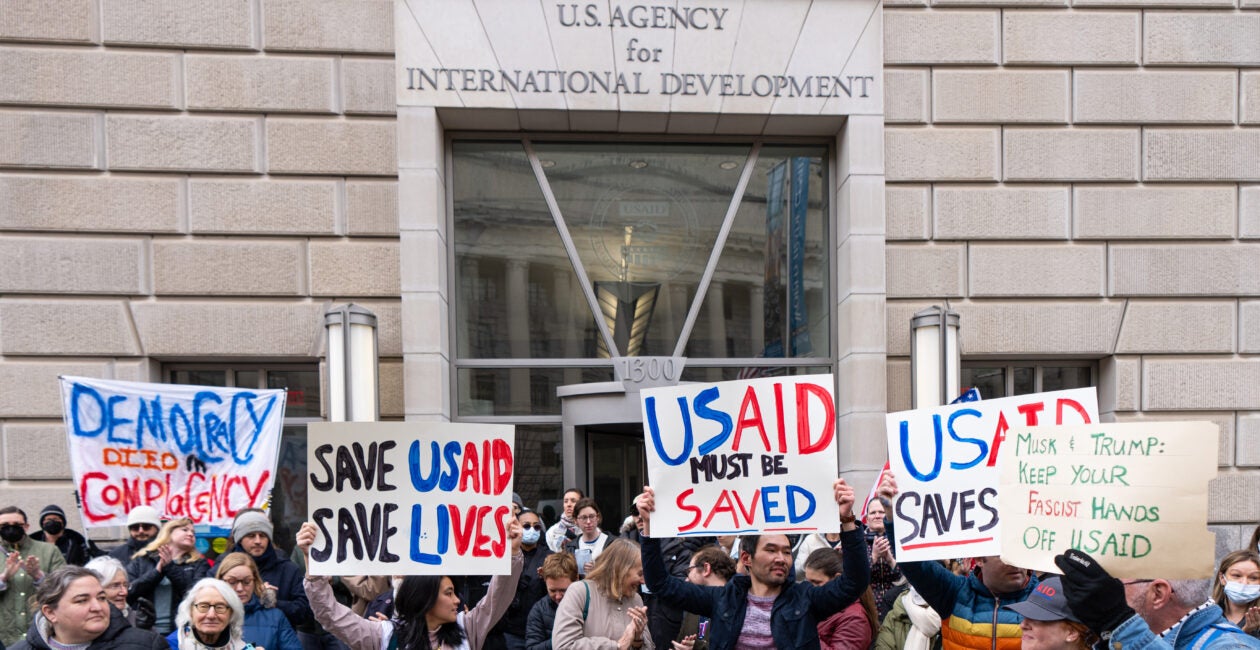
On Tuesday, President Donald Trump put nearly all District of Columbia-based employees of the U.S. Agency for International Development on leave. According to Politico, this amounts to about 1,400 people in addition to 600 employees who were put on leave starting Sunday.

This comes after the Trump administration put a 90-day freeze on all foreign assistance.

The Daily Signal depends on the support of readers like you. Donate now

Trump, Secretary of State Marco Rubio, and entrepreneur Elon Musk—who runs the newly created Department of Government Efficiency—have spent the last few days excoriating USAID for wasting millions of taxpayer dollars on useless or downright pernicious projects around the globe.

Rubio explained what the problem with USAID is in an interview with Fox News on Monday.

“They have evolved into an agency that they believes that they’re not even a U.S. government agency, that they are … a global charity, that they take the taxpayer money and they spend it as a global charity, irrespective of whether it is in the national interest or not,” Rubio said.

He noted that embassies around the world complain that USAID is not only uncooperative but that it undermines the governments the U.S. wants to work with. Rubio said that the agency operates as if its master is the “globe” and not the U.S., which is a departure from the intent of the original statute that created it.

Rubio, who is putting the operation of USAID under his authority, said the goal has been to reform the agency, but right now, there is “rank insubordination.” The attitude of the employees, Rubio said, is that they work for themselves, not the American people or their elected officials.

This is why the administration had to take dramatic steps to temporarily freeze the agency, Rubio explained. It’s a significant blow that’s stunned Democrats who aren’t used to Republicans challenging the Left’s unaccountable administrative machine so directly.

The Left is banking heavily that it can make the USAID freeze an issue to turn the American people against the Trump administration. [more]

Please see the rest of the article at:

https://www.dailysignal.com/2025/02/04/trumps-freeze-usaid-is-blow-global-leftist-empire/


Don't Forget to Recommend
and Follow us at our

W3P Homepage


The Biggest Threat to Trump Is Other Republicans


The defeated Democrats are so screwed up that they installed David Hogg as their second-in-command at the DNC, so these dorks are not going to be our biggest problem. Neither is the regime media, which is totally confused and baffled both at Donald Trump’s popularity and at the sheer speed and volume of his assault on the Establishment. No, our biggest problem in making America great again is going to be other Republicans.

We can’t take our foot off the pedal. We can’t slow down. We can’t hesitate. Right now, we have the initiative and the momentum, and we have to keep driving on. It’s exhilarating. Most of us don’t feel no ways tired at all the winning. But not all of us. Within the Republican Party are folks who are distinctly uncomfortable with the concept of winning. These are the status quo folks, the people who liked things as they were before Donald Trump gave voice to the marginalized and ignored Republican base. 

Trump wants to win. He wants to change things. But many Republicans don’t. If you’re a representative or a senator, you have a pretty good life. And, if you’ll look at the statistics, you’re almost a shoo-in to be reelected so you can keep the gravy train rolling down the tracks for ten, 20, even 30 or more years. As for the old-school conservative media folks, it’s also a pretty sweet gig. You just keep cranking out the same squishy, inoffensive content and enjoying the cocktail party invitations. Maintaining the status quo is an incredibly attractive option to them. Disrupting the status quo, however, is scary. It’s dangerous to their sinecures, so there are a substantial number of people who should be with us who are ambivalent about all the winning.

If we’re going to be stopped, we will not be stopped by a frontal assault from the Democrats or by the negative reporting of the regime media that wants to install a very different regime. We will be stopped by the friction generated by people on our side who are afraid to go faster and farther. Bit by bit, betrayal and cop-out by betrayal and cop-out, they will slow us down and eventually stop us from moving forward with our campaign of American renewal.

No one really expected Trump to do what he said he would do, although "promises made, promises kept" has been his value proposition from the beginning. At a conscious level, they knew that Donald Trump was preparing to make big changes if he won the election. They just couldn’t believe he would really do it. But then, Trump had four years to think through how to do it even as the Democrats tried to either throw him in jail for the rest of his life or see him killed. And we wanted him to do it. We’ve been discussing the kind of stuff that Donald Trump has been doing for decades. I know. I’ve been in the conservative movement for decades. This is all a dream come true. It’s what we’ve been dreaming of, and it almost doesn’t feel real sometimes. 

But it is real. For some people, it’s too real. It’s too much. They just can’t handle all the winning, particularly because it disrupts their world. It’s scary. At some level, they want to slow or stop what we’re doing. You can see it in how some Republicans are presuming to deny Donald Trump his Cabinet picks because they are just as disruptive as he promised they would be. Pete Hegseth was nobody’s idea of a conventional Defense Secretary. Usually, we got some half-wit former general or some suit off the Raytheon board, or both, to do the job and never change a thing. But Donald Trump wants to rebuild our military, so he got a guy who understands how to apply combat boots to the fourth point of contact of the uncooperative to get in there and make changes. Three Republican senators voted against him. It would’ve been more if the other senators felt they could safely vote their way, but we didn’t give them their way. We made it clear to the likes of Joni Ernst that should she betray the President, she was going to pay at the ballot box. She wisely conformed. 

But now we have Tulsi Gabbard and RFK, Jr., coming up, and supporting them might just be too much to ask of some of these soft Republicans. Should they tank one or both nominations, that would represent the first real defeat for Trump since he took office. Sure, the Democrats like to paint that government funding order and rescission as a defeat, but that order is going to be back better than ever with all the issues addressed in the next draft, so it doesn’t really count as a defeat. But losing a nominee or two is a defeat, and we can’t lose a nominee without Republicans causing it.

We’re also starting to see Republicans start to get squeamish about other initiatives. Some are upset about pardoning all the J6 political prisoners. There was the tariff Cassandras. Others are concerned because maybe we’re going too far in rooting out DEI root and branch. But we’re not. 

We’ve only wounded that ideology, but we haven’t killed it yet. It’s on the ground, but the best time to hit your enemy is when he’s down. We need to finish it. No mercy. This idea that we somehow have to quit fighting because it’s unseemly to comprehensively defeat our enemies has no place in the current Republican Party. Remember, this is a battle to the death. These people want to destroy us. The whole trans thing started out as live and let live – “OK, you want to pretend you’re a girl, fine, just leave me alone” – and became them not only telling us that we had to lie to keep our jobs but also give them access to our women and children. We are far beyond living and letting live – we offered it, and they rejected it, so now there’s a new deal. You don’t get to be a freaky weirdo and expect us to tolerate it.

But there are Republicans who are just not built for that kind of firmness. They don’t want to be called “mean.” They don’t want to be called “bigots.” They just want to go along and get along, but it’s not that kind of world. We can’t allow our enemies’ epithets to guide our decision-making, and we can’t allow the people who are too weak or lazy to fight for change to slow down those of us who are neither. 

Our problem is not going to be the Democrats. They’re spinning their wheels, unable to adapt. Our problem is not going to be the regime media. No one listens to it anymore. Our problem is going to be our own fellow Republicans, and we must make it absolutely clear that modified “Starship Troopers” rulesapply: Everybody fights, nobody quits, and if you don’t do your job, we primary you.


First Articles of Impeachment Will Be Introduced by Failed Impeachment Article Writer

 The congressman previously issued three of his own impeachment articles during the first term.

Articles of impeachment will soon be introduced against President Trump by a self-proclaimed expert on the matter — the same lawmaker responsible for laying the groundwork for the president’s first impeachment with a number of doomed articles. 

Congressman Al Green, a Texas Democrat who notoriously waves his cane when he bellows on the House floor, announced he would introduce the articles of impeachment on Wednesday. On Tuesday night, the president — at a press conference alongside Prime Minster Netanyahu — announced that America would “take over” the Gaza Strip and redevelop it after the war. 

“I rise to announce that the movement to impeach the president has begun,” Mr. Green. “I rise to announce that I will bring articles of impeachment against the president for dastardly deeds proposed and dastardly deeds done.”

“I see Democrats are busy doing the people’s business,” Vice President Vance wrote on X in response to Mr. Green’s announcement. 

The Texas congressman has been a prolific supporter of impeaching Mr. Trump over the course of the two Trump administrations. His first attempt to do so was in the summer of 2017 after Mr. Trump fired his FBI director, James Comey. Mr. Green announced that he had introduced the articles in a speech on the House floor, though he immediately tabled his own articles and they never came up for a vote. 

The next attempt came just two months later in December of that same year, when Mr. Green and Congressman Brad Sherman introduced articles to impeach Mr. Trump for his remarks made at Charlottesville, Virginia. That attempt failed, with 364 House members, including 126 Democrats, voting against it. 

The next impeachment push came in July 2019 after Mr. Trump told the notorious “Squad” to “go back” to where they came from, even though three of the women had been born in the United States. 

“The President of the United States is a racist, a bigot, a misogynist, as well as an invidious prevaricator,” Mr. Green said in a statement at the time, announcing he wanted to impeach the president for his remarks. “To say that Donald John Trump is unfit for the Office of the President of the United States is an understatement. He is unfit for public office.”

Once again, his fellow Democrats joined with Republicans to kill their colleague’s impeachment articles even though Democrats controlled the House at the time. In total, 332 House members voted to table those articles, with 137 Democrats voting against it and just 95 voting in favor. 

On Wednesday, Mr. Green announced his next ill-fated impeachment attempt, and claimed the mantle of the expert on impeaching Mr. Trump during his floor speech. He also conceded that he stands alone on this issue. 

“When the people demand it, it will be done. I did it before!” Mr. Green declared. “I laid the foundation for impeachment, and it was done. Nobody knows more about it than I, and I know that it is time for us to lay the foundation again. On some issues, it is better to stand alone, than not stand at all. On this issue, I stand alone, but I stand for justice.”

Mr. Green isn’t just an expert in starting impeachment proceedings — he’s an expert in stopping them as well. In 2024, the House Republican conference was trying to impeach the former homeland security secretary, Alejandro Mayorkas for the migrant crisis. When their resolution came to the floor, a small group of GOP lawmakers joined with all Democrats in voting against the articles, though Democrats were still one vote shy of killing the articles outright. 

At the time, Mr. Green was hospitalized for a minor medical issue. As Democrats were just one vote away from a tie — which results in failure in the House — Mr. Green was wheeled on to the House floor in a hospital gown to cast his no vote and kill the articles of impeachment that day. The Republicans would later successfully impeach Mr. Mayorkas, though that effort then died in the Senate. 

https://www.nysun.com/article/first-articles-of-impeachment-will-be-introduced-by-failed-impeachment-article-writer