People have asked why we focus so much sunlight and attention toward the network silos that operate the Intelligence Community (IC) and as an outcome the national security focus of government. The answer is simple, as Mary McCord herself admitted publicly, the IC are the background approver for every weaponized approach of government, including the DOJ.
With that in mind, CTH has painstakingly made the case –with details and receipts– for a process of removing the IC silos from influence over the Office of The President. The Chief Executive must control all elements of national security policy and implementation.
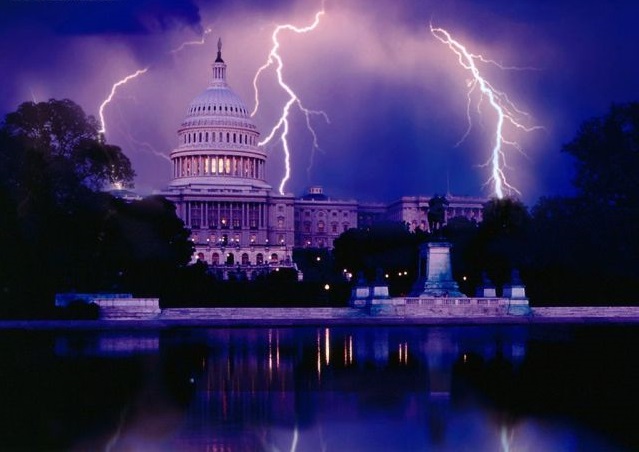 Thankfully, the Supreme Court recently affirmed the plenary power of the executive branch, and the unitary power of the President in controlling every system within that branch of government.
That ruling (presidential immunity) further bolstered the solution we have continuously proposed. The IC silos must be decoupled from the Executive office definitions of national security, until such a time as the IC institutions can be bought to heel.
The most effective way to confront a rogue, hostile and corrupt IC apparatus is to take away their power. The best way to remove their power is to use their primary weapon, their silo structure, against them.
Turn each silo into an irrelevant echo-chamber by using the White House National Security Council as their replacement. Regardless of what triggers the various IC silo embeds try to pull (CIA, NSA, FBI, DIA, etc.) let them shoot blanks by removing their power over policy and process.
If the IC is isolated from influence, eventually the Legislative Branch, specifically the Senate Select Committee on Intelligence and the House Permanent Select Committee on Intelligence, will realize the ‘Seven Ways from Sunday’ group no longer hold power. The IC becomes a crew stomping their feet while no one pays attention.
This approach would be affected by restructuring the President’s National Security Council (NSC), the National Security Advisor (NSA Mike Waltz) and working with the Office of the Director of National Intelligence (DNI Tulsi Gabbard), in a synergistic process. The IC become simply information functionaries. The Nat Sec Council then validates and defines the information, creates the definitions of national security interest, and initiates the guidance to President Trump, who ultimately triggers any action.
Until yesterday there were only a few subtle signs that this ‘silo isolation’ approach was being accepted as the most effective optimal solution to the problem within the intelligence apparatus. However, yesterday President Trump signed an Executive Order [SEE HERE] doing exactly the type of restructuring that is needed.
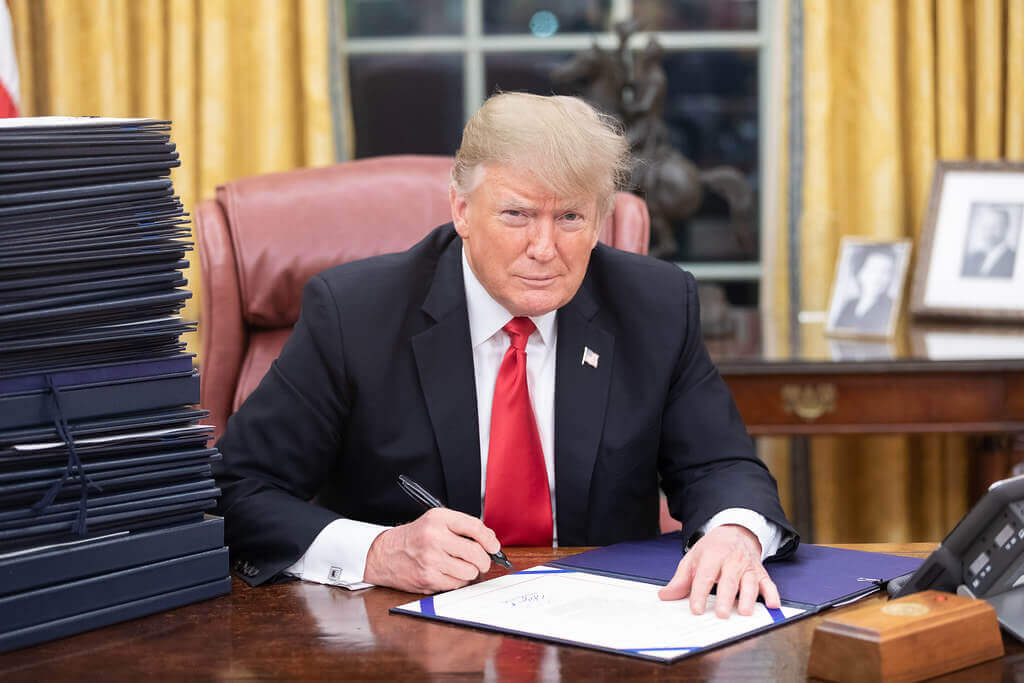 The XO is technical and deep in the weeds, but this is the process that has the greatest likelihood of success.
SUBJECT: Organization of the National Security Council and Subcommittees
By the authority vested in me as President by the Constitution and the laws of the United States of America, I hereby direct the following:
As President, my highest priority and responsibility is to ensure the safety and security of the United States and its people. The national and homeland security threats facing the United States are complex and rapidly evolving. These issues often do not fit neatly into the categories that single departments and agencies are designed to optimally address, a fact recognized and exploited by our strategic competitors and adversaries in their adoption of whole-of-government and even whole-of-society approaches.
The United States Government’s decision-making structures and processes to address national security challenges must therefore be equally adaptive and comprehensive. They must be able to competently design and execute cooperative and integrated interagency solutions to address these problems, and protect and advance the national interests of the United States. Therefore, to advise and assist me in this endeavor, I hereby direct that my system for national security policy development, decision-making, implementation, and monitoring shall be organized as set forth in this Memorandum. This Memorandum prevails over any prior orders, directives, memoranda, or other Presidential guidance related to the organization of the National Security Council (NSC or Council).
A. The National Security Council and Supporting Staff
1. Functions, Responsibilities, and Chairs.
(a) Functions and Responsibilities. The National Security Act of 1947, as amended (the Act), established the NSC to advise the President with respect to the integration of domestic, foreign, and military policies relating to national security. The Homeland Security Council (HSC) has the distinct purpose of advising the President on matters pertaining to homeland security. The NSC shall convene as the HSC on topic areas agreed to in advance by the Assistant to the President for National Security Affairs (National Security Advisor) and the Assistant to the President for Homeland Security (Homeland Security Advisor). Along with its subordinate committees and staff, the NSC shall be the President’s principal means for coordinating Executive departments and agencies in the development and implementation of national and homeland security policies, strategies, activities, and functions, their integration across departments and agencies within their purview, and for long-term strategic planning.
(b) Chairs. The President will chair the NSC. When the President is absent from a meeting of the Council, he may appoint a Cabinet-level official to chair.
2. NSC Staffing Responsibilities of the National Security Advisor.
(a) Role of the National Security Advisor. The National Security Advisor shall be responsible, as appropriate and at the President’s direction, for determining the agenda for the NSC, ensuring that the necessary papers are prepared, and recording and communicating Council actions and Presidential decisions in a timely manner.
(b) Role of the Homeland Security Advisor. When convened as the HSC, the duties referenced in subsection (2)(a) shall be the responsibility of the Homeland Security Advisor.
3. Designating NSC Members, Attendees, and Invitees.
(a) Membership. The NSC membership consists of the statutory members set forth in section 101(c)(1) of the Act (50 U.S.C. 3021(c)(1)):
The President;
The Vice President;
The Secretary of State;
The Secretary of the Treasury;
The Secretary of Defense;
The Secretary of Energy;
The Director of the Office of Pandemic Preparedness and Response Policy;
and additional members hereby designated by the President pursuant to section 101(c)(1) of the Act:
The Attorney General;
The Secretary of the Interior;
Chief of Staff to the President (White House Chief of Staff); and
The National Security Advisor.
When the NSC convenes as the HSC, members shall also include:
The Secretary of Homeland Security; and
13) The Homeland Security Advisor.
(b) NSC Meeting Attendees. The National Security Advisor retains the discretion to determine the attendee list for all meetings of the NSC, including by requesting the attendance of any senior official of the Executive Branch. The Homeland Security Advisor retains this same discretion when the NSC convenes as the HSC. This discretion shall be exercised based on the policy relevance of attendees to the issues being considered, the need for secrecy on sensitive matters, staffing requirements, and other considerations.
As regular practice, the National Security Advisor and Homeland Security Advisor shall include as additional non-voting attendees:
The Director of National Intelligence (non-voting advisor);
The Assistant to the President and Principal Deputy National Security Advisor (non-voting advisor and principal notetaker) or, when convening as the HSC, the Deputy Homeland Security Advisor (non-voting advisor and principal notetaker);
The Chairman of the Joint Chiefs of Staff (non-voting advisor); and
The Director of the Central Intelligence Agency (non-voting advisor).
(c) NSC Regular Invitees. Unless specifically restricted, these officials are invited to attend any NSC and HSC meeting as non-voting advisors:
The Assistant to the President and Counsel to the President;
The Assistant to the President and Deputy Chief of Staff for Policy;
The Assistant to the President for Policy; and
The Deputy Counsel to the President for National Security Affairs and Legal Counsel to the National Security Advisor.
4. Right to Propose Agenda Items.
Any NSC member attending a meeting in a voting capacity may propose, in advance and in accordance with a timeline set by the National Security Advisor or his designee, agenda items for their consideration.[1] The National Security Advisor will determine whether to include these items on the agenda. The Homeland Security Advisor shall have this same discretion when the Council is convened as the HSC.
5. The National Security Council Staff.
(a) Staff Fusion. There is a single NSC staff within the Executive Office of the President (EOP) that serves both the NSC on national security matters and the HSC when the Council is considering homeland security matters. The staff is headed by a single Executive Secretary, in accordance with section 101(e)(1) of the National Security Act of 1947 (50 U.S.C. 3021(e)(1)) and section 905 of the Homeland Security Act of 2002 (6 U.S.C. 495).
(b) Purpose. The purposes of the National Security Advisor and subordinate staff are to
(i) advise and assist the President in the course of conducting activities that relate to or affect the carrying out of the President’s constitutional, statutory, or other official or ceremonial duties pertaining to national or homeland security, pursuant to the Presidential Records Act of 1978, as amended;[2]
(ii) advise and assist the other members of the NSC (and the NSC when convening as the HSC), and others in the White House;
(iii) help the President plan and set priorities, in accordance with section II of the Message of the President in the Reorganization Plan No. 1 of 1977;
(iv) advise and make recommendations to the President with respect to, and establish, integrated domestic, foreign, and military policies and procedures for the departments, agencies, and functions of the Government relating to national and homeland security, pursuant to sections 2 and 101(b)(1) of the Act (50 U.S.C. 3002, 3021(b)(1));
(v) coordinate, facilitate, monitor, oversee, and review Administration policies and their implementation with respect to national security, and make resulting recommendations to the President;
(vi) help the President resolve major conflicts among departments and agencies with regard to national security, in accordance with section II of the Message of the President in the Reorganization Plan No. 1 of 1977.
(c) Fair, Balanced, and Thorough Processes. In accordance with sections I and II of the Message of the President in the Reorganization Plan No. 1 of 1977, the NSC staff shall ensure that the processes it organizes, coordinates, and manages fairly and thoroughly gather the facts, intelligence, and other relevant information necessary to NSC decisions; fully analyze the issues; consider a full range of views and options; assess the prospects, risks, costs, and implications of each option; and distill these options for the President, other NSC principals, and senior officials participating in the subsidiary committees of the NSC or HSC, in a fair, balanced, and organized way. The National Security Advisor and subordinate NSC staff shall represent the views and differences of NSC principals and other senior officials to the President with accuracy and fidelity.
(d) Policy Development. In accordance with sections I and II of the Message of the President in the Reorganization Plan No. 1 of 1977,[8] the NSC staff shall facilitate the development and refinement of interagency policy options, and develop additional options besides those proposed by departments and agencies as necessary, both to complement, supplement, and enhance their work, and to offer the President and other NSC principals and other senior officials a sufficiently broad menu of operationally feasible options for consideration, deliberation, and decision.
B. The Principals Committee
1. Principals Committee Establishment.
(a) (i) Functions and Responsibilities. The Principals Committee (PC) shall continue to serve as the Cabinet-level senior interagency forum for considering policy issues that affect the national security interests of the United States. The PC shall develop options and recommendations for the President on national security and homeland security matters requiring the President’s attention, and with the Committee’s full consensus shall set priorities, issue policy guidance, and facilitate coordination and integration on national security policy and implementation issues as appropriate that do not require Presidential attention.[9] Issues involving matters that are statutorily authorized for decision by a principal, or delegated to a principal by the President, can be coordinated and decided by the principals without requiring Presidential attention.
(ii) Voting and NSC Referral. Consensus is reached when all voting (i.e., non-advisory) attendees present either vote affirmatively for the same decisional option or formally abstain, and all such votes shall be recorded and minuted. Issues for which the Committee fails to reach consensus shall be referred to the NSC for decision, with a formal nonconcurrence required by at least one non-advisory attendee present for such a referral. Whether an issue requires Presidential attention, and the Committee attendees’ positions on the issue itself, shall be separately polled. If a voting attendee does not concur with the determination that Presidential consideration is not required, the issue shall be referred, along with the results of the PC’s deliberation on the issue itself and its recommendations, to deliberation by the NSC.
(b) Role of the National Security Advisor. The PC shall be convened and chaired by the National Security Advisor. The Chair shall determine the agenda, location, and meeting materials, in consultation with the appropriate attendees.
(c) Substitute Chairs. At his sole discretion, the National Security Advisor may delegate authority to convene and chair or co-chair the PC to an appropriate attendee of the NSC or EOP policy council senior official. The Homeland Security Advisor, who is Chair when the PC considers matters that would be raised to the NSC convening as the HSC, may similarly delegate such duties.
(d) Right to Propose Agenda Items. Any PC member attending in a voting capacity may propose, in advance and in accordance with a timeline set by the Chair, agenda items for consideration by the PC. The Chair will determine which, if any, shall be included.
2. Executive Secretary Responsibilities and Process.
(a) Responsibilities. The Executive Secretary shall ensure that the necessary papers are prepared, serve as executive secretary of the PC, and shall record and communicate accurately, and in a timely manner, the Committee’s conclusions and decisions, what was not decided, and any responsibilities for implementation by departments and agencies or taskings to the Deputies Committee or subsidiary policy coordination committees that have been agreed or assigned, if appropriate.[10] The Executive Secretary shall generally be assisted in these tasks by the senior directors and other NSC staff by the senior directors and other NSC staff.
(b) Dispute Resolution Process. If a PC voting attendee disputes that the conclusions or decisions of the PC were correctly minuted, this must be communicated in writing to the Executive Secretary and the National Security Advisor (and any substitute Chair if appropriate) within three business days, although those officials may allow additional time if exigent or extenuating circumstances require it. If resolution of the dispute cannot be achieved, and any necessary amended report of the PC proceedings was issued within a week of the dispute being communicated, the disputing attendee may appeal the matter to the White House Chief of Staff or, should that official so designate, to the White House Deputy Chief of Staff for Policy, whose decision shall be final.
3. Principals Committee Attendees and Invitees.
(a) Principals Committee Attendees.
(i) The National Security Advisor retains the discretion to determine the attendee list for all PC meetings on national security. The Homeland Security Advisor retains this same discretion when chairing the PC. This discretion shall be exercised based on the policy relevance of attendees to the issues being considered, the need for secrecy on sensitive matters, staffing needs, and other considerations. As regular practice, the National Security Advisor and Homeland Security Advisor shall include as additional non-voting attendees:
1) The Director of National Intelligence;
2) The Chairman of the Joint Chiefs of Staff;
3) The Director of the Central Intelligence Agency;
4) The Principal Deputy National Security Advisor;
5) the National Security Advisor to the Vice President; and
6) The Executive Secretary (principal notetaker).
(ii) PC Regular Invitees. Unless specifically restricted, these officials are invited to attend any PC meeting as non-voting advisors:
The Assistant to the President and Counselor to the President;
The Assistant to the President and Deputy Chief of Staff for Policy;
The Assistant to the President for Policy; and
The Deputy Counsel to the President for National Security Affairs and Legal Counsel to the National Security Advisor.
(iii) Staffing Invitees. At the discretion of the Chair, staff members of the NSC or other appropriate EOP policy councils may be invited to attend specific PC meetings to assist the Executive Secretary in the performance of their executive secretary duties.
C. The Deputies Committee
1. Deputies Committee Establishment.
(a) Functions and Responsibilities. The Deputies Committee (DC) shall continue to serve as the senior sub-Cabinet interagency forum for consideration of and, where appropriate, decision making on, policy issues that affect the national security interests of the United States. The DC shall review and monitor the work of the interagency national security process, including the interagency groups established pursuant to section D below. The DC shall work to ensure that issues brought before the NSC, the NSC when convening as the HSC, and the PC have been properly analyzed and prepared for decision. The DC shall also focus significant attention on monitoring the implementation of these policies and decisions and shall conduct periodic reviews of the Administration’s major national security and foreign policy initiatives.
(b) Role of the Principal Deputy National Security Advisor. The DC shall be convened and chaired by the Principal Deputy National Security Advisor. The Chair shall determine the location, agenda, and meeting materials in consultation with the DC attendees.
(c) Substitute Chairs. At his sole discretion, the Principal Deputy National Security Advisor may delegate authority to convene and chair or co-chair the DC to an appropriate regular attendee of the DC or other appropriate EOP official. The Deputy Assistant to the President for Homeland Security (Deputy Homeland Security Advisor) shall chair meetings when considering issues that would be raised when the NSC is convened as the HSC. The Deputy Homeland Security Advisor has similar delegatory authority.
(d) Right to Propose Agenda Items. Any DC member attending in a voting capacity may propose, in advance and in accordance with a timeline set by the Chair, agenda items for consideration by the DC. The Chair will determine which, if any, shall be included.
2. Executive Secretary Responsibilities and Process.
(a) General. The Executive Secretary shall ensure that the necessary papers are prepared, and shall record and communicate accurately, and in a timely manner, the Committee’s conclusions and decisions, what was not decided, and any responsibilities for implementation by departments and agencies or taskings to subsidiary policy coordination committees that have been agreed or assigned, if appropriate. The Executive Secretary shall generally be assisted in this task by the senior directors and other NSC staff.
(b) Dispute Resolution Process. If a DC voting attendee disputes that the conclusions or decisions of the DC were correctly minuted, this must be communicated in writing to the Executive Secretary and the Principal Deputy National Security Advisor or the Deputy Homeland Security Advisor, as relevant, within three business days, although those officials may allow additional time if exigent or extenuating circumstances require it. If resolution of the dispute cannot be achieved, and any necessary amended report of the PC proceedings issued within a week of the dispute being communicated, the disputing attendee may appeal the matter to the White House Chief of Staff, or should that official so designate, the White House Deputy Chief of Staff for Policy, whose decision shall be final.
3. Designating Deputies Committee Regular Attendees and Invitees.
(a) Deputies Committee Attendees. The Principal Deputy National Security Advisor retains the discretion to determine the attendee list for all DC meetings.
The Deputy Homeland Security Advisor retains this same discretion when chairing DC meetings. This discretion shall be exercised based on the policy relevance of attendees to the issues being considered, the need for secrecy on sensitive matters, staffing needs, and other considerations.
As regular practice, the Principal Deputy National Security Advisor shall include as DC attendees:
The Deputy Secretary of State;
The Deputy Secretary of the Treasury;
The Deputy Secretary of Defense;
The Deputy Attorney General;
The Deputy Secretary of Energy;
The Deputy Director of National Intelligence (non-voting advisor);
The Vice Chairman of the Joint Chiefs of Staff (non-voting advisor);
The Deputy Director of the Central Intelligence Agency (non-voting advisor);
The Executive Secretary of the NSC (non-voting advisor and principal notetaker); and
The National Security Advisor to the Vice President.
When homeland security issues are on the DC agenda, the DC’s regular attendees will also include:
11) The Deputy Secretary of Homeland Security; and
12) The Deputy Homeland Security Advisor (chair).
(b) DC Regular Invitees. These officials are invited to attend any DC meeting:
The Deputy Director of the Office of Management and Budget; and
The Deputy Assistant to the President and Senior Policy Strategist.
D. Policy Coordination Committees
Management of the development and implementation of national security policies by multiple Executive departments and agencies typically shall be accomplished by Policy Coordination Committees (PCCs), with participation primarily occurring at the Assistant Secretary level. As the main day-to-day fora for interagency coordination and integration of national security policies, PCCs shall develop and provide policy options and analyses for consideration by higher echelon committees of the national security system. PCCs shall ensure timely responses to, and implementation and monitoring of, decisions, directives, objectives, instructions, inquiries, tasking, and policy guidance of and by the President, National Security Advisor, and the higher-echelon committees of the national security system.
PCCs shall be established at the direction of the National Security Advisor or Homeland Security Advisor, in consultation with the White House Chief of Staff or her designee. Members of the NSC staff will chair the PCCs.
PCCs shall review, coordinate, integrate, and monitor the implementation of Presidential decisions in their respective national security and homeland security policy areas. The Chair of each PCC, in consultation with the Executive Secretary, shall invite representatives of departments and agencies to attend meetings of the PCC where appropriate. The Chair of each PCC, with the agreement of the Executive Secretary, may establish subordinate working groups to assist that PCC in the performance of its duties.
Interagency Policy Committees (IPCs) chartered under the aegis of the process established by National Security Memorandum-2 (NSM–2) may continue to be operated as PCCs by the NSC staff until renewed or discontinued by the National Security Advisor.
E. General
(a) The President and the Vice President may attend any meeting of any entity established by or under this directive.
(b) This document is part of a series of National Security Policy Memoranda, which have replaced both National Security Memoranda and National Security Study Memoranda as the instrument for communicating relevant Presidential decisions. This directive shall supersede all other existing Presidential directives and guidance on the organization or support of the NSC and the HSC where they conflict, including National Security Memorandum–2 of February 4, 2021 (Memorandum on Renewing the National Security Council System), which is hereby revoked. This document shall be interpreted in concert with any Presidential directives governing other policy councils and offices in the EOP mentioned herein, and with any Presidential directives signed hereafter that implement this document or those Presidential directives.
[SOURCE]
This process hinges upon the execution of National Security Advisor Mike Waltz.
We will watch closely.


 In the nation’s history, no majority coalition has endured without the backing of the Great Middle. From farmers and tradesmen to industrial workers and middle managers to, today, information-age workers and blue-collar folk, a lasting GOP majority happens only with America’s broad middle as the base.