 | Why Jews Wrote Your Favorite Christmas Songs The Free Press Episode |
I
love Christmas—the parties, the spirit of charity, the lights glowing
on modest row houses, the tree at Rockefeller Center, even the schmaltzy
movies. What I really love, though, is the music.
I
am Jewish, so you won’t find me dragging a small Douglas fir into my
living room. I will not attend midnight mass or keep an advent calendar.
On Christmas Day, I eat wonton soup and sweet and sour chicken at a
Chinese restaurant, as is my people’s tradition. But the music of the
season is a balm and a bop. And it’s not only infectious; it’s secular.
Think of the most beloved Christmas songs, like “Let It Snow! Let It Snow! Let It Snow!”

It’s about winter and romance: “When we finally kiss goodnight / How you'll hate going out in the storm.” There’s
no mention of Nazareth, three wise men, frankincense, or myrrh. It’s
warm and homey, but vaguely sexy too. Cheeky and charming, and not
remotely Christian. Any American can relate.
Or “The Christmas Song,”
with references to Santa, turkey, and mistletoe; it doesn’t feel like
revelation so much as cocktail hour. It’s not about Christ. It’s about
Christmas.

What’s
most surprising, however, is that the Americans who wrote those two
Christmas standards—and most of the other seasonal classics—were, like
Jesus himself, Jews.
They
were often children of parents who fled Russia and elsewhere in Eastern
Europe during the great wave of immigration between 1880 and 1920.
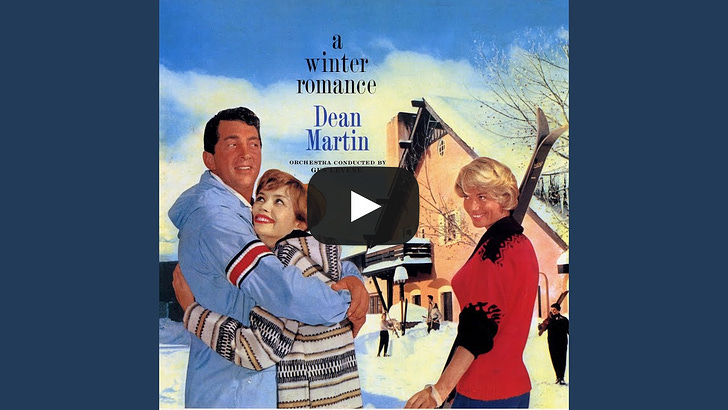
There’s Sammy Cahn, who wrote “Let It Snow.”
The son of Galician Jewish immigrants, Cahn rose to become Sinatra’s
favorite lyricist. There’s also Mel Tormé, the singer and songwriter
who, with Bob Wells, penned “The Christmas Song,”
more commonly known as “Chestnuts Roasting on an Open Fire.” His
father, William Torma, a Jewish cantor, emigrated from Belarus in the
early 20th century. Frank Loesser, a titan of Broadway and Hollywood
musicals who composed the slightly naughty “Baby, It’s Cold Outside,” was born into a middle-class Jewish family. His father left Germany in the 1890s to avoid serving in the Kaiser’s military.
Johnny Marks gave us “Rudolph, the Red-Nosed Reindeer,” “A Holly Jolly Christmas,” and “Rockin’ Around The Christmas Tree,”
a yuletide bubblegum favorite introduced in the 1950s by Brenda Lee.
Marks, too, was one of the chosen ones. “He was Jewish and didn’t even
believe in Christmas,” Lee told Billboard Magazine years later. “And all that would come out of him was Christmas music!”
“All
everyone’s favorite Christmas songs were written by Jews, and this is a
fact,” David Lehman, a poet and editor and the author of A Fine Romance: Jewish Songwriters, American Songs, told me. “The most famous example being “White Christmas” by Irving Berlin.”

In his novel Operation Shylock, the Jewish American novelist Philip Roth parodies this phenomenon and its chief architect, Berlin:
The
radio was playing “Easter Parade” and I thought, But this is Jewish
genius on a par with the Ten Commandments. God gave Moses the Ten
Commandments and then he gave to Irving Berlin “Easter Parade” and
“White Christmas.” The two holidays that celebrate the divinity of
Christ—the divinity that’s the very heart of the Jewish rejection of
Christianity—and what does Irving Berlin brilliantly do? He de-Christs
them both! Easter he turns into a fashion show and Christmas into a
holiday about snow. Gone is the gore and the murder of Christ—down with
the crucifix and up with the bonnet! He turns their religion into
schlock. But nicely! Nicely! So nicely the goyim don’t even know what
hit ’em. They love it. Everybody loves it.
I think Roth gets it wrong. Berlin’s “White Christmas”
isn’t a rebuke to Christianity. It’s a magic trick of universality
which is specifically American. It’s a testament to America itself that
these songs by Jews about Christmas are so jauntily peaceful. Because at
least historically, Christmas was a time of terror for my people in
Europe.
“Medieval
rulers would use Christmas as an occasion to put out anti-Jewish
legislation because it would be a time when it would be received with
great applause,” Rabbi Ari Lamm told me. “And so Christmas is a time
when the Jewish community remembers feeling great fear.”
That
is not the case in America today. Christmas in the U.S. can be
criticized for its commercialism. But it is open to Americans of all
faiths. And it’s stitched together by a great canon of songs that mark
the season every year—written mostly by Jews. The question is why?
To answer that question, you have to go back to the very beginning of American Christmas music.
Turns out, Americans weren’t always the most Christmassy of Christians. The Puritans even made celebrating Christmas a criminal offense
in the Massachusetts Bay colony in 1659 because back in Europe it had
been an occasion for drunkenness and debauchery. St. Nicholas, who would
later transform into Santa Claus, retained his old-world sensibilities
by meting out judgment to children every December. The bad kids were beaten with a rod from a birch tree.
But by 1823, American Christmas was beginning to crystallize with Clement Moore’s poem A Visit from St. Nicholas.
Santa had become a jolly man with a sleigh who handed out gifts. And by
the late 1800s, the building blocks for modern American Christmas were
all there. But the music was not.
“There was just almost no music done other than classical music,” John McWhorter, New York Times columnist and linguistics professor at Columbia University, told me. “The good music hadn’t happened yet.”
The
good music started with vaudeville, the variety shows that blew up in
New York in the 1880s. But it really wasn’t until ragtime, the
piano-based predecessor to jazz perfectly suited to mechanical player
pianos of the era, that the bones of popular recorded music would begin
to form. The giants of the genre were black Americans like Scott Joplin,
composer of the famous “Maple Leaf Rag.”
The
popularity of ragtime coincided with the invention of the gramophone,
the early version of the record player. Around the start of the 20th
century, the modern record industry was born when Emile Berliner figured
out how to mass-produce the shellac discs that were the first records,
replacing the cylinders that Thomas Edison’s first phonograph machine
used to play recorded sound.
This
innovation—combined with the music of black Americans and the mass
migration of European immigrants to the United States—created the
conditions for the birth of the American songbook, a collection of timeless music
that began around 1920 and petered out in the early 1960s. We know it
largely as the stuff of Broadway and big Hollywood musicals such as Guys and Dolls, Oklahoma!, and Singin’ in the Rain.
Until rock and roll, this
was American pop music. And this is the exact period when you get the
bulk of the great American Christmas songs, written mostly by a minority
who don’t celebrate Christmas.
Much
of the Jewish migration to the U.S. at the start of the 20th century
came from the Pale of Settlement, the area ruled until the Russian
Revolution by the Romanov dynasty. Jews were segregated into isolated
towns known as shtetls where they were marginalized and often subjected
to pogroms. Imagine, then, these people arriving at Ellis Island, where
they were greeted by opportunity, diversity, and technology, finally
free to express themselves in a new land.
They
brought with them the Jewish musical tradition: the cantorial minor
keys found in Jewish prayer. It’s no accident that Harold Arlen (born
Chaim Arluck), the composer of “Somewhere Over the Rainbow” and “Stormy
Weather,” was the son of a cantor.
Then,
there was the Yiddish language, a hybrid tongue with words plucked from
German, Hebrew, and other languages. Yiddish lends itself to surprising
rhymes and pleasant meter. In this respect Yiddish is a lot like
American music itself—an alchemy of cultures that create a delightful
and unexpected new combination.
So it’s this combination of factors—the Yiddish language, the freedom America afforded Jewish immigrants, and the haunting minor key found in Jewish prayer—that help explain why Jews wrote so many of the great American songs.
They
gave us the American songbook. George and Ira Gershwin, the brothers
who wrote “I Got Rhythm.” Richard Rodgers and Oscar Hammerstein II, who
together wrote “The Sound of Music” and many other unforgettable
Broadway shows. The great Jerome Kern, one of the first breakout stars
of New York’s Tin Pan Alley, who composed the scores for “Show Boat” and
“Swing Time,” two of the first major modern musicals.
But
if there was one man who embodied the alchemy of the Jewish American
experience in a single life, it was Irving Berlin, the greatest American
composer of them all.
Born
in Tyumen, Siberia, on May 11, 1888, Irving Berlin said his earliest
memory was of watching his family home burn to the ground in a pogrom.
The family fled Siberia for Belarus, eventually immigrating in 1893 by
steamship to New York City. They moved into a cramped tenement on the
Lower East Side with no running water.
The
young Berlin had to grow up quickly. His father, a rabbi, cantor, and
kosher butcher, died when Berlin was 13. He left home as an adolescent
and began his musical career as a busker, singing songs for pennies in
the Bowery, often transposing the lyrics of popular tunes into raunchy
doggerel for the men who frequented burlesques, bordellos, and bars. He
would sleep in squalid boarding homes for boys, where at any moment his
few possessions could be stolen. When Berlin was 14, he got a steady job
as a singing waiter. Patrons would literally throw coins at his feet.
Berlin
had no formal musical training. He taught himself piano at the saloons
where he waited tables, learning to play only on the black keys in
F-sharp. One of his first investments was a “transposing piano” that
allowed him to play in F-sharp and change it to any key he wanted. It
had a large disc to shift the key that resembled a steering wheel. He
called the instrument his Buick, and he composed his masterpieces on it
for decades.
Berlin adored ragtime. He slipped references to the genre into his songs of this period. His 1911 breakout hit, “Alexander’s Ragtime Band,”
a tribute to the music he loved, made Berlin wealthy and an
international celebrity. At the age of 23, he was a self-made success.
And he would remain the central figure of American music for the next 40
years.
Jerome Kern once remarked that “Irving Berlin has no place in American music. He is American music.”
Berlin’s melancholic masterpiece, of course, is “White Christmas,”
and he didn’t write it until he was in his 50s, when his career might
have been winding down. The original was recorded in 1942 by Bing Crosby
with the Ken Darby singers. “White Christmas” is still thought to be
the biggest-selling single in the history of recorded music, bigger than
“Billie Jean,” “I Want to Hold Your Hand,” or anything Elvis ever released.
It
was serendipitous that a song about winter raced up the hit parade as
American troops were at war in deserts and jungles, longing for the
tranquility of a snowy holiday.
Poet Carl Sandburg, writing for the Chicago Daily Times,
captured what this meant for the GIs overseas. “Away down under, this
latest hit of Irving Berlin catches us where we love peace,” he wrote. “The
Nazi theory and doctrine that man in his blood is naturally warlike, so
much so that he should call war a blessing, we don’t like it. . . The
hopes and prayers are that we will see the beginnings of a hundred years
of white Christmases—with no blood spots of needless agony and death on
the snow.”
According to Laurence Bergreen’s 1996 biography of Berlin, As Thousands Cheer, as
soon as Berlin finished writing, he excitedly told his assistant it
wasn’t just the best song he ever wrote, but the best song ever written.
Just this month, on December 6, a new version
of this crown jewel of American Christmas music was released, a duet
with a risen-from-the-dead Bing Crosby and a contemporary superstar, V, a
member of the K-pop band BTS. It’s not my favorite version. The video
features staggeringly bad animation of Bing as Santa, and if you listen
really closely during the song, you can probably hear V cashing his
check.

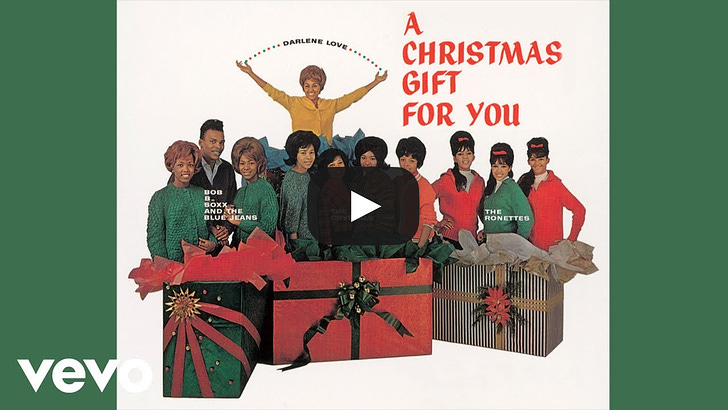
Nevertheless, through the years, “White Christmas” has been like a rite of passage for artists from Otis Redding to The Drifters to a somber Elvis and, of course, Ella Fitzgerald. My favorite version is Darlene Love’s, produced by Phil Spector.
Christmas
classics continue to be reinvented, generation after generation. And
this tells us something about America. Unlike Europe, where symphonies
and operas are meant to be played to the exacting specifications of the
composer, the American songbook continues to be improvised,
reinterpreted and tinkered with. This great mixing is what makes
American music so magnificent.
The
American songbook is a precious heirloom. And so is the American
Christmas music we know today. In 1954, when Irving Berlin was 66, he
told The Washington Post that while he didn’t celebrate Christmas as a child on the Lower East Side, he still felt connected to the holiday.
“I
bounded across the street to my friendly neighbors, the O’Haras, and
shared their goodies,” he said. “This was my first sight of a Christmas
tree. The O’Haras were very poor and later, as I grew used to their
annual tree, I realized they had to buy one with broken branches and
small height. But for me that first tree seemed to tower to heaven.”
“What
an unbelievable accomplishment the American version [of Christmas] is
relative to everything that came before,” said Rabbi Lamm. “Everybody is
a part of it. And we're going to sing a bunch of songs written by Jews
and we're going to play them in every mall, restaurant and office and
private home in the country. What an unbelievable, almost unimaginable
achievement on the part of American culture. It’s something that we as a
nation should be very proud of.”
https://www.thefp.com/p/eli-lake-jews-wrote-your-favorite-christmas-songs-irving-berlin?utm_campaign=email-post&r=rd3ao&utm_source=substack&utm_medium=email
So
this Christmas, even though there’s no tree in my home, no mistletoe,
and no presents to be exchanged, this holiday doesn’t exclude me. I live
in a country so welcoming of Jews that it allowed my people—as they
fled the horrors of the old world—to build a new American Christmas,
whose songs are reinvented and perfected every season.


 There is some good news for Democrats about this loss. First, this landslide ended their power to impose those misguided policies on the citizenry by use of authoritarian and social pressure controls (previously, anyone speaking out faced job loss, ostracization, doxing, and other punishments) and exposed just how weak their control was. That power change could never have occurred incrementally. This will make the party more, not less, appealing to ordinary Americans.